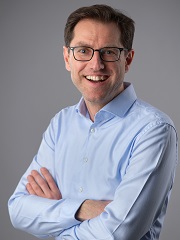
Nicolas Cambier is a Visiting Professor at Vrije Universiteit Amsterdam, affiliated with the Faculty of Science's Artificial Intelligence department and the Network Institute. His research focuses on swarm robotics, collective behavior, and evolutionary systems. He explores topics like emergent communication, modular robotics, and prosociality in robotic swarms. Key areas include task-driven language evolution, adaptive decision-making, and environmental interaction in constrained environments. His work bridges theoretical models with practical implementations, emphasizing self-organization and cultural evolution in synthetic systems. Recent contributions address challenges in heterogeneous swarms, skill acquisition in modular robots, and decision-making without prior knowledge. He collaborates widely, with publications in IEEE Robotics and Automation Letters, Nature Communications, and top conferences like GECCO and Distributed Autonomous Robotic Systems. Research interests span robotics, artificial intelligence, and evolutionary computation, with applications to both theoretical frameworks and real-world robotic systems. His studies often involve agent-based simulations and embodied evolution approaches to understand complex collective phenomena.
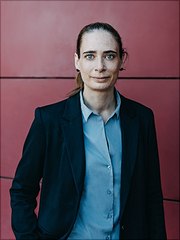
Prof. Dr. Sören Laue is a Professor of Machine Learning at the University of Hamburg's Department of Informatics. His research focuses on optimization algorithms, machine learning frameworks, and high-performance computing. He leads the Machine Learning research group and developed the GENO optimization framework and the Matrix Calculus toolset. His work emphasizes GPU acceleration, tensor operations, and scalable solutions for classical machine learning problems. Projects: GENO solver (Python-based optimization), Matrix Calculus (derivative computation), and SQL-based tensor operations. Key Research Themes: Optimization frameworks, GPU computing, neural network scalability, and algorithm design. Selected recent publications highlight contributions to tensor calculus benchmarks, GPU-optimized machine learning pipelines, and novel optimization methods. His work bridges theoretical foundations and practical software tools for the machine learning community.
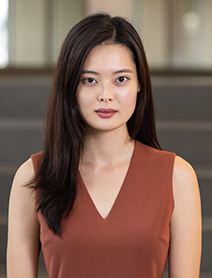
Prof. Dr. Anne Lauscher is an Associate Professor of Data Science at the University of Hamburg Business School, specializing in fair, inclusive, and sustainable conversational AI systems. Her research focuses on improving algorithmic fairness through demographic factors in NLP systems and exploring ethical implications of large language models. She holds a PhD from the University of Mannheim, where her work on computational argumentation was awarded summa cum laude, and has conducted research at Grammarly and the Allen Institute for AI. Key contributions include gender-fair machine translation datasets (e.g., Building Bridges), bias detection frameworks (e.g., SHADES), and multilingual benchmarking tools like MultiQ. Her work has been recognized with the Maria Gräfin von Linden-Award and inclusion in the '100 Brilliant Women in AI Ethics' list. Research spans ethical NLP, multilingual AI, and societal impacts of AI technologies. Education: PhD in Data and Web Science (University of Mannheim, 2021), Postdoc at Bocconi University's NLP group (2021-2022). Academic roles include adjunct positions and international collaborations across Europe and the US. Research Interests: Conversational AI fairness, multilingual NLP systems, ethical AI evaluation, bias mitigation in LLMs, and interdisciplinary applications of machine learning in scientific discovery. Publications (select highlights): Over 55 peer-reviewed works in top-tier venues like ACL, EMNLP, and AAAI. Recent focus on LLM hallucination analysis, cross-cultural NLP benchmarks, and gender-neutral language resources. Awards: 2021 Maria Gräfin von Linden-Award (Baden-Württemberg), 2023 '100 Brilliant Women in AI Ethics', 2022 Dissertation Award Nominee (GI). Labs/Teams: Leads the UHH Data Science Research Group, collaborating with industry partners like Grammarly and academic institutions worldwide. Active in initiatives promoting gender equity in STEM and sustainable AI development.
Dr. Jackie Cha serves as an Assistant Professor in the Department of Industrial Engineering within Clemson University's College of Engineering, Computing and Applied Sciences. Her research bridges human factors engineering with healthcare innovation, focusing on surgical robotics, physiological signal analysis, and wearable medical technologies to enhance clinical performance and safety. Her academic foundation includes advanced degrees from leading institutions: Ph.D. in Industrial Engineering from Purdue University M.S.E. in Biomedical Engineering from the University of Michigan B.S.E. in Biomedical Engineering from the University of Michigan Cha's research program centers on quantifying human performance in high-stakes medical environments through sensor-based metrics. She investigates nontechnical skills in surgical teams, mental workload during robotic procedures, and ergonomics of exoskeleton implementation in operating rooms. Her work integrates physiological signals, eye-tracking, and proximity sensors to develop objective assessment tools for surgical proficiency and team dynamics. Analysis of her 2023-2025 publications reveals consistent thematic focus on human-robot collaboration in surgery, with emerging trends in AI-driven workload detection (s-DResNet), neural correlates of surgical expertise, and environmental factors affecting robotic surgery outcomes. Key methodological approaches include scoping reviews of human-robot interaction metrics, mixed-methods evaluations of exoskeleton efficacy, and extended reality applications for nontechnical skills training. She leads the ECHO Lab (Engineering for Clinical and Human Outcomes) at Clemson, which develops translational solutions for healthcare human factors challenges. Her lab's work spans from fundamental physiological signal analysis to applied interventions in operating rooms and emergency medical settings.
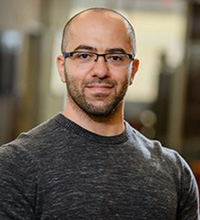
Dr. M.Z. Naser is an Assistant Professor in the Glenn Department of Civil Engineering at Clemson University. His research focuses on causal and explainable machine learning methodologies applied to structural engineering, materials science, and fire safety. He holds a PhD from Michigan State University and an M.S. from the American University of Sharjah. Naser teaches courses such as Machine Learning for Civil Engineers and Structural Fire Engineering, emphasizing interdisciplinary innovation. His work bridges data-driven analysis with domain-specific knowledge to address challenges in resilient infrastructure design, including fire-resistant materials, structural retrofits, and AI-driven decision-making. Education: PhD, Michigan State University; M.S., American University of Sharjah Research Themes: Explainable AI, Fire Engineering, Structural Materials, Causal Inference Key Projects: Developing SPINEX framework, wildfire classification models, and cognitive infrastructure systems Recent publications analyze over 1000 fire tests to uncover spalling mechanisms, explore synthetic fire tests via GANs, and benchmark automated ML platforms. His work on causal diagrams for civil engineers and firefighter algorithms highlights contributions to both theory and practical applications. Naser also advocates for integrating AI into engineering education, emphasizing ethical and transparent model deployment.
Marco Valtorta is a Professor and Graduate Director in the Department of Computer Science and Engineering at the University of South Carolina’s Molinaroli College of Engineering and Computing. He specializes in Artificial Intelligence, with a focus on normative reasoning under uncertainty, Bayesian networks, causal models, and computational complexity. His work includes developing algorithms for structure learning in graphical models, causal inference, and applications in multiagent systems. Education: Ph.D., Computer Science, Duke University (1987) M.A., Computer Science, Duke University (1984) Laurea, Electrical Engineering, Politecnico di Milano (1980) Research Interests: Dr. Valtorta’s work integrates logical and probabilistic reasoning, with contributions to causal models, chain graphs, and adversarial machine learning. His funded projects include collaborations with the Office of Naval Research (ONR), IARPA, and the U.S. Department of Agriculture (USDA). Notable collaborations include applying Bayesian networks to healthcare and developing frameworks for trustworthiness assessment in AI systems. Grants & Collaborations: Multi-institution IARPA project on Wigmorean/Bayesian networks for argumentation ONR-funded research on Markov properties of directed hypergraphs with Dr. Linyuan Lu Causal analysis for performance modeling of configurable systems His recent publications emphasize causal inference in AI, automated evaluation of text and sentiment analysis systems, and robustness of foundation models. He has pioneered algorithms for learning chain graphs and addressing adversarial attacks in probabilistic models.
Tae Eun Kim is an Associate Professor in Maritime Safety Management at UiT The Arctic University of Norway, working within the Department of Technology and Security. Her research, teaching, and industrial collaboration focus on maritime safety and human factors, with particular expertise in maritime safety management, accident analysis, Maritime Autonomous Surface Ships (MASS), and human factors in maritime operations. Dr. Kim's research spans four interconnected domains: maritime safety management and leadership, maritime accident and casualty analysis, Maritime Autonomous Surface Ships (MASS), and human factors in maritime operations. She has developed assessment instruments like the Safety Leadership Self-Efficacy Scale (SLSES) and conducted STAMP-based causal analyses of maritime accidents. Her work on MASS addresses safety challenges in mixed navigational environments and examines leadership competencies for autonomous shipping operations. Her human factors research explores how technological advancements impact navigators' performance, crew dynamics, and safety outcomes, including gender parity issues in the maritime industry. Dr. Kim's publication record reveals a strong focus on the intersection of maritime safety, technology, and human performance. Her recent work increasingly addresses autonomous shipping technologies, with numerous publications on AI decision transparency, learning analytics in maritime simulator training, and multi-modal data analysis for nautical skill development. She has conducted systematic reviews on simulator training approaches and scenario design, contributing significantly to methodology development in maritime education and training. Her research demonstrates a clear trajectory toward integrating emerging technologies with traditional maritime safety practices as the industry transitions toward greater automation. Dr. Kim is actively involved in several significant research projects, including the i-MASTER EU Horizon Europe Research and Innovation Project, the REFRAME project, and the SPRICE project (Multidisciplinary approach for spray icing modelling). She is a member of both the Advanced Maritime Ship Operations research group and the Maritime Safety Science (MARSCI) Research Group, demonstrating her commitment to collaborative research in maritime safety science. Dr. Kim teaches several specialized courses at UiT, including SVF-3206 Safety Management and Accident Investigation, TEK-3014 Navigation Technology, MFA-2100 Maritime Digitalization, MFA-8010 Maritime HTO (Human-Technology-Organisation) and Innovation, and MFA-2018 Maritime Administration and Leadership. Her teaching portfolio reflects the interdisciplinary nature of her expertise, bridging engineering, safety science, and organizational behavior in maritime contexts.
Ronald D. Haynes is a Full Professor and Chair of Scientific Computing Graduate Programs in the Department of Mathematics and Statistics at Memorial University of Newfoundland. He leads research in numerical methods for PDEs and industrial-scale optimization problems. His work develops advanced domain decomposition techniques, adaptive mesh methods, and parallel computing approaches for solving complex physical systems. Applications include modeling pitting corrosion of materials, predicting rock strength for drilling optimization, and simulating multiphase fluid flows in porous media. Recent publications demonstrate innovations in mesh adaptation, parallel algorithms, and machine learning applications for industrial problems. Collaborative projects have addressed reservoir simulation, drill bit analysis, and corrosion prediction through integrated computational approaches. Professor Haynes has received the President's Award for Outstanding Research (2018) and Dean of Science Distinguished Teaching Award (2017). He serves as Co-editor-in-chief of the CAIMS Mathematics in Science and Industry Journal and was President-Elect of the Canadian Applied and Industrial Mathematics Society (2023-2025). He maintains active doctoral supervision with current research groups focusing on domain decomposition methods, closest point algorithms, and optimization techniques. Industry partnerships include projects with ExxonMobil and Global Maritime addressing drilling optimization and mooring design challenges.
Wolfgang Bösch is a Professor at Graz University of Technology's Institute of Microwave and Photonic Engineering, specializing in advanced RF components and measurement techniques. His research advances high-frequency systems through innovations in antenna technology and electromagnetic theory. Research domains include: metamaterial-based antennas, precision measurement calibration, microwave filter optimization, and 3D-printed RF components. Recent work demonstrates strong focus on millimeter-wave systems and reconfigurable antenna arrays. Publications highlight expertise in: machine learning for filter design, metasurface applications, PCB transitions for high-frequency systems, and uncertainty quantification in RF engineering. Research consistently addresses miniaturization and performance optimization challenges. Awards recognize contributions to measurement science and antenna design: Fellow of IET, Houska Prize, and best paper awards. Current laboratories investigate liquid crystal antenna systems and error calibration methodologies for next-generation wireless systems.
Reza Fotouhi is a Professor in the Department of Mechanical Engineering at the University of Saskatchewan, specializing in Robotics (Dynamics and Control), Structural Dynamics and Vibrations, Computational Mechanics, and Biomechanics. He leads research in agricultural robotics, finite element modeling, and teleoperated systems. Education: BSc, MSc (Iran) MSc, PhD (University of Saskatchewan) His research focuses on human-robot interaction, vibration control for flexible manipulators, composite material applications, and teleultrasound systems. He has developed mobile platforms for crop phenotyping and optimized control strategies for robotic arms. Recent Article Trends: His work spans telerobotic medical systems, agricultural automation, advanced control algorithms (e.g., Particle Swarm Optimization), and structural analysis of composite materials. Key subfields include musculoskeletal imaging, path planning, and dynamic modeling of flexible systems. Research Groups: Applied Mechanics and Machine Design Control Systems, Robotics and Fluid Power Engineering for Agriculture
Marina Freire-Gormaly is an Assistant Professor in the Mechanical Engineering Department at York University's Lassonde School of Engineering. Her research focuses on renewable energy-powered water treatment systems, machine learning for smart design, advanced manufacturing, and sustainable engineering solutions for remote communities. She holds a PhD and M.A.Sc. from the University of Toronto, specializing in carbon capture and storage technologies. She has worked on nuclear energy projects at Ontario Power Generation and contributed to World Bank sustainability assessments. She currently chairs the Canadian Society of Mechanical Engineers' Student and Young Professional Affairs committee. Education: PhD in Mechanical Engineering, University of Toronto M.A.Sc. in Mechanical Engineering, University of Toronto Research Interests: She pioneers solar-powered reverse osmosis systems, energy recovery mechanisms, and IoT-driven smart systems. Her lab explores nanotechnology applications in environmental sustainability, including carbon capture and aquatic remediation. She integrates machine learning for optimizing energy-water nexus challenges in off-grid regions. Key Contributions: Developed models for membrane fouling in desalination systems, advanced pore network characterization for geologic CO2 storage, and designed automated renewable energy systems. Her work bridges engineering innovation with global sustainability goals. Grants & Collaborations: Engages with industries like Honda Canada and Trane Canada on sustainability initiatives. Supervises graduate students in emerging areas like nanobubble technology and direct air capture systems. Lab Activities: The Freire-Gormaly Lab focuses on clean energy-water systems, with current projects involving nano-technology for space applications (Canadian Space Agency collaboration) and life cycle assessments of carbon storage technologies.
Aydin Aysu is an Associate Professor at the Department of Electrical and Computer Engineering, College of Engineering, North Carolina State University. His research focuses on hardware-based security , applied cryptography , and computer architecture , with an emphasis on secure systems to counter advanced cyber threats. Ph.D. in Computer Engineering, Virginia Tech (2016) M.S. in Electrical Engineering, Sabanci University, Turkey (2010) B.S. in Microelectronics Engineering, Sabanci University, Turkey (2008) Aysu’s work addresses hardware vulnerabilities through secure design automation, side-channel attack mitigation, and next-generation cryptographic systems. His research extends to AI/ML security , FPGA security , and quantum-resistant cryptography . Notable scientific awards include: NSF CAREER Award (2020) University Faculty Scholars (2024) Bennett Faculty Fellow Award (2020) Best Paper Awards at DATE Conference (2020), ACM GLSVLSI (2019), and others Aysu leads the Hardware Cybersecurity Research Lab (HECTOR) , focusing on pre-silicon security analysis, secure accelerator sharing, and societal impacts of cybersecurity. He actively mentors Ph.D. students and collaborates on funded research projects like the SATC: CORE: SMALL grant.
Joseph Ramsey is a Researcher in the Department of Philosophy at Carnegie Mellon University , affiliated with the Dietrich College of Humanities and Social Sciences . He serves as Director of Research Computing and has been instrumental in developing computational infrastructure and algorithms for causal inference. Core projects: Tetrad (causal search algorithms), AProS (proof generator for logic), Causality Lab , and Laboratory for Symbolic and Educational Computing . His research spans causal modeling, algorithm design, and applications in neuroscience, bioinformatics, and education. He has contributed to software tools like Causal-learn and Py-Tetrad , enabling scalable causal discovery in high-dimensional datasets. He has received funding from NASA, NSF, and the University of Pittsburgh for projects ranging from Martian rover software to glaucoma detection models. His work integrates philosophy, computer science, and applied statistics.
Vivy Suhendra serves as Associate Professor of Practice and Programme Director for Master Programmes at the National University of Singapore's School of Computing, while also holding the position of Assistant Dean for Graduate Studies. Previously, she led the Singapore Cybersecurity Consortium (SGCSC) as Executive Director from 2016 to 2022, driving collaborative cybersecurity research between academia, industry, and government agencies. Her career at NUS spans over two decades, beginning as a Research Assistant before advancing to her current leadership roles. Her academic credentials include: Ph.D. in Computer Science, National University of Singapore (2009). Thesis: "Memory Optimizations for Time-predictable Embedded Software". Advisors: Abhik Roychoudhury and Tulika Mitra. B.Comp. (Honors) in Computer Science, National University of Singapore (2004). Dr. Suhendra's research integrates Software Assurance, Cybersecurity, Security and Privacy, and Embedded Systems domains. Her work bridges theoretical foundations with practical applications, particularly in national cybersecurity ecosystem development, smart grid security protocols, denial-of-service mitigation techniques, and real-time embedded system optimization. This interdisciplinary approach enables innovative solutions for critical infrastructure protection and time-predictable software execution in multi-core environments. Her 14 selected publications (2004-2020) demonstrate an evolving research trajectory from foundational embedded systems timing analysis to applied cybersecurity solutions. Early work focused on memory optimization for predictable execution in multi-core embedded systems, which naturally transitioned into cybersecurity applications for smart grids, cloud environments, and national infrastructure. This progression highlights her ability to translate low-level system expertise into high-impact security frameworks for complex real-world systems. Scientific recognition includes: Microsoft Research Asia Fellowship (2006) Valedictorian at NUS School of Computing Ph.D. Commencement (2010) While specific graduate student advising details aren't provided, her leadership as SGCSC Executive Director involved extensive mentorship across academic-industry partnerships. She has also contributed significantly to the research community through roles including Conference Chair for ESEC/FSE 2022 and Workshops Committee Member for ICSE 2024. Dr. Suhendra established the Singapore Cybersecurity Consortium as a national platform for collaborative R&D during her directorship (2016-2022). Though no personal laboratory is specified, her research leadership manifests through cross-institutional teams focused on cybersecurity innovation, particularly in critical infrastructure protection and embedded systems security where she maintains active publication records.
Neville Hogan is a Professor of Mechanical Engineering and Brain & Cognitive Sciences at MIT, and Director of the Newman Laboratory for Biomechanics and Human Rehabilitation. He holds a Ph.D. from MIT and has been a faculty member since 1979, leading roles in the Mechanical Engineering department's System Dynamics and Control division. His research bridges biology and engineering, focusing on motor neuroscience, rehabilitation robotics, and human-robot interaction. He co-founded Interactive Motion Technologies, Inc. and is a board member at Advanced Mechanical Technologies, Inc. Education: Dip. Eng. (Dublin College of Technology), M.S., M.E., and Ph.D. (MIT) Research interests include developing robots for neurological rehabilitation, such as gentle physiotherapy devices for stroke patients. His work emphasizes physically cooperative machines and human balance control analysis. Awards include Honorary Doctorates from Delft University and Dublin Institute of Technology, and the Silver Medal from Ireland’s Royal Academy of Medicine. Awards: Honorary Doctorates, Silver Medal, and other distinctions Led the Newman Lab, focusing on biomechanics and human rehabilitation. Advised numerous students (not listed here). His publications explore dynamic primitives, impedance control, and human-robot interaction, with applications in exoskeletons and rehabilitation therapies.