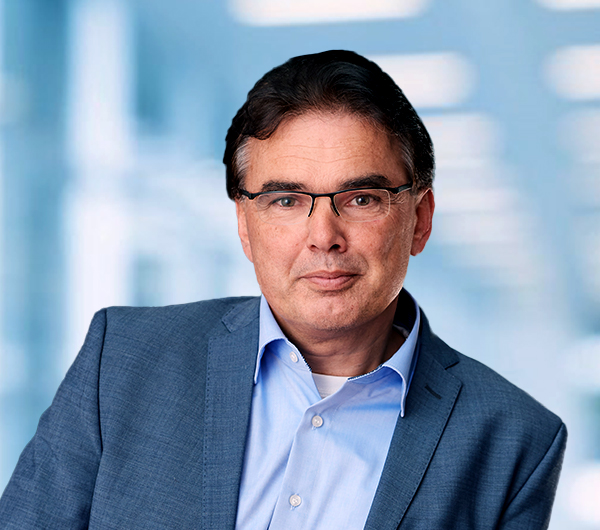
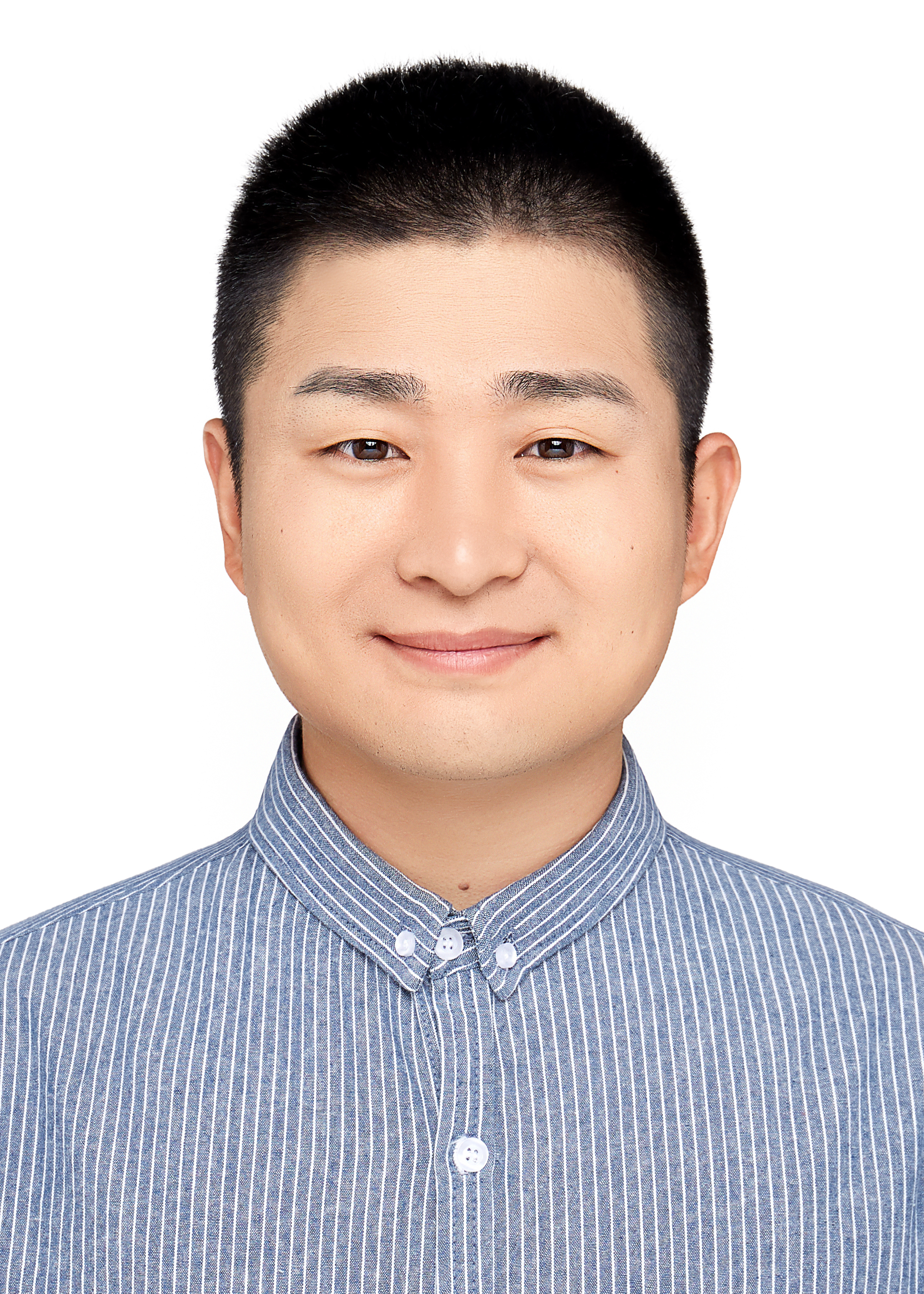
Olivier Festor is a Researcher at INRIA (French National Institute for Research in Digital Science and Technology), specializing in network security, cloud computing, and IoT. His work focuses on developing scalable solutions for modern network challenges, including in-network computation, cloud service security, and anomaly detection. Research Interests: Dr. Festor investigates vulnerabilities in distributed systems, designs protocols for efficient data processing (e.g., stateful in-network computation), and pioneers frameworks for IoT threat emulation. His recent work emphasizes cloud gaming optimization, automated security for service migrations, and darknet-based threat intelligence. Publication Trends: Over 200 publications (1993–2024) reflect a shift toward cloud/IoT security and programmable networks. Recent articles prioritize machine learning for traffic classification, TOSCA-based cloud orchestration, and P4-enabled data planes, highlighting applied research with industry relevance.
Konstantin Korovin is a Reader at the Department of Computer Science, The University of Manchester. He has held various academic roles including Senior Lecturer (2015-2023), Royal Society University Research Fellow (2007-2015), and Research Associate (2004-2007). Current research focuses on automated theorem proving , machine learning integration , and verification of hardware/software . His work includes developing systems like iProver , iProver-ML , and SMLP , which combine formal methods with ML techniques. Key contributions span non-linear constraint solving , quantified Boolean logic , and DNA computing . He has won over 20 international awards, including SMT-COMP and CASC categories. Scientific Awards : Ackermann Award, Best Thesis Prize, Best Paper at FroCoS'19, CASC and SMT-COMP prizes. He supervises PhD and postdoc researchers, with alumni working at Intel, Google, and MathWorks. His tools are applied in industry, notably by Intel for hardware optimization.
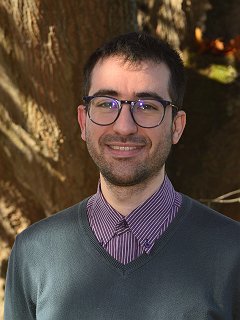
Prof. Jürgen Jasperneite is the director of Fraunhofer IOSB-INA in Lemgo and a board member of the Institute for Industrial Information Technology (inIT) at Ostwestfalen-Lippe University of Applied Sciences (TH OWL). He holds the Professorship for Computer Networks and focuses on industrial communication systems for cyber-physical systems and IoT. Current affiliations: Fraunhofer IOSB-INA (Director), inIT (Board Member), TH OWL (Professor) International collaborations: Guest Professor at Midsweden University (2021–present), Research Fellow at Stanford University (2017–present) Research Interests include: Distributed real-time communication and processing 5G/6G integration into industrial networks Time-Sensitive Networking (TSN) and Ethernet migration Semantic interoperability and IT security SmartFactoryOWL and Industry 4.0 testbeds Zero-touch management and network digital twins His work spans manufacturing, process automation, logistics, and urban mobility , with a focus on bridging information technology (IT) and operational technology (OT) through standards like OPC UA and PROFINET. Scientific Recognition : IEEE Senior Member (since 2006) Over 250 publications and conference leadership roles Best Paper Awards at IEEE ISPCS (2007), IEEE ETFA (2012), GI Echtzeit (2014) Founding director of Germany's first Fraunhofer application center for industrial automation Contact: computernetworks@init-owl.de
Rubi Debnath is a researcher at the Technische Universität München (TUM) affiliated with the Department of Embedded Systems and Internet of Things . They focus on Time-Sensitive Networking (TSN) , Machine Learning for TSN , and Optimization of TSN Scheduling Algorithms using heuristics, ILP, and DRL. Specializes in TSN Scheduling , Runtime Reconfiguration , and Wireless-TSN Actively teaches IoT Security , Software Architecture for Distributed Embedded Systems , and System Design for IoT since Winter Semester 2018/2019 Supervised over 15 Master's and Bachelor's theses on TSN, ML, and 5G-TSN integration Developed simulation frameworks like CyclicSim and 5GTQ Research Trends : Recent publications address TSN scheduling optimization , ML-assisted traffic classification , and 5G-TSN integration , with a focus on low-latency communication and industrial automation . Scientific Awards : IEEE ComSoc Four Minute PhD Thesis Competition - Third Prize Winner (Round 2), Round 1 Winner Global Fellows Program - Imperial College London, TUM, and NTU Singapore Advising and Grants : Supervised 15+ theses on TSN, ML, and 5G-TSN. Involved in the 6G Research Hub "6G-Life" and nIoVe cybersecurity framework for IoT.
Vincent Bode is a researcher and teaching assistant at the Chair of Computer Architecture and Parallel Systems at the Technical University of Munich (TUM) . His work focuses on benchmarking and optimizing Data Distribution Service (DDS) middleware for Industrial IoT applications, particularly through the DDS-Perf project in collaboration with Siemens .
Myra Cohen is a Professor and the Lanh and Oanh Nguyen Chair in Software Engineering in the Department of Computer Science at Iowa State University. Previously, she held the position of Susan J. Rosowski Professor at the University of Nebraska-Lincoln where she was a member of the ESQuaReD software engineering research group. She serves on the ASE Steering Committee and has held leadership roles including general chair of ASE 2015 and program co-chair for ICST 2019 and ESEC/FSE 2020. Dr. Cohen earned her Ph.D. from the University of Auckland, New Zealand, her M.S. from the University of Vermont, and her B.S. from the School of Agriculture and Life Sciences at Cornell University. Her academic journey includes lecturing positions at both the University of Auckland and University of Vermont during her graduate studies. Her research spans several interconnected domains focused on software quality and assurance. A significant portion of her work addresses software testing challenges in highly-configurable systems, where she applies search-based techniques and combinatorial designs to create efficient test suites. More recently, her research has expanded into innovative areas including software testing for biological systems, quantum computing applications, and security testing through genetic improvement techniques. Her work demonstrates a consistent theme of addressing complex verification challenges through creative application of formal methods and automated techniques. Analysis of her recent publications reveals a growing focus on emerging domains including quantum software testing, molecular/biological computing systems, and assurance cases for safety-critical systems. She has increasingly incorporated AI techniques, particularly large language models, into traditional software engineering problems while maintaining her foundational work in configurable systems and metamorphic testing. NSF CAREER award recipient AFOSR Young Investigator Award recipient ACM Distinguished Scientist Recipient of 4 ACM Distinguished Paper awards Dr. Cohen has served as chair and committee member for numerous conferences including ASE, ICSE, ISSTA, ESEC/FSE, and ICST. She has mentored numerous students through the doctoral symposiums and student research competitions at major software engineering conferences. Her research has been supported by significant grants including those from NSF and AFOSR. She leads the LaVA-OPs (Laboratory for Variability-Aware Assurance and Testing of Organic Programs) research group at Iowa State University, which focuses on testing challenges in biological and organic computing systems.
Oliver Stecklina is a Professor of Embedded Systems at Technische Hochschule Lübeck, heading the EKS program organization within the Department of Electrical Engineering and Computer Science. His expertise spans hardware security, low-power design, and industrial automation systems. Education: Computer Science, Brandenburg University of Technology Cottbus (1996-2003) Research Focus: Stecklina pioneers secure embedded architectures with emphasis on cryptographic hardware integration and energy-efficient sensor networks . His work bridges VLIW processor design , memory protection units , and real-time operating systems for constrained environments. Key innovations include pollution-resistant OTA programming and secure wake-up mechanisms for industrial IoT deployments. Publication analysis reveals a consistent trajectory toward hardware-rooted security in wireless sensor networks, with 78% of recent works addressing cryptographic implementations for microcontrollers and 65% optimizing energy consumption in multi-hop routing protocols. Awards: No scientific awards documented in source materials. Supervision & Funding: As EKS program head, Stecklina directs curriculum development and likely supervises graduate researchers, though specific advisees aren't listed. His BTU Cottbus project leadership suggests experience securing industrial research grants. Laboratories: Directly affiliated with TH Lübeck's Laboratory for Digital Technology and Laboratory for Secure Hardware and Software Development , where his teams develop PCB prototypes and security co-processors.
Yintong Huo is an Assistant Professor at the School of Computing & Information Systems, Singapore Management University (SMU), where he leads research in intelligent software engineering. He received his PhD from The Chinese University of Hong Kong (CUHK) in 2024 under Prof. Michael R. Lyu and holds a Bachelor's degree from the University of Electronic Science and Technology of China. His research focuses on empowering AI models (particularly LLMs) for software development, testing, and operations, with two flagship projects: LogPAI (open-source AI platform for automated log analysis) and WebPAI (multimodal intelligence for automatic webpage development). His work spans log analysis, code intelligence, UI generation from prototypes, and configuration diagnostics. Huo's publication record shows strong trends in leveraging multimodal LLMs for practical software engineering challenges, with recent work on interactive webpage generation (Interaction2Code), configuration logging (ConfLogger), and log parsing (LILAC). His research bridges theoretical AI advancements with real-world system reliability needs. ICSE Distinguished Reviewer Award (2025) ISSRE Distinguished Reviewer Award (2024) IEEE Open Software Services Award (2022) ACM SIGSOFT CAPS Travel Grants National Scholarship (2019) Huo actively supervises PhD students (including Shi Ying Chang and Dan Huang) and research engineers. His lab has secured funding for multiple projects including WebPAI and LogPAI. He serves on program committees for major conferences (ASE, ICSE, FSE) and reviews for top journals. Current projects include dynamic webpage generation and configuration diagnostics, with ongoing work on small language models for logging systems. Huo leads the LogPAI and WebPAI research groups, developing open-source tools for automated log analysis and multimodal UI code generation. The LogPAI project has garnered over 3,000 GitHub stars and 70,000 downloads. His team collaborates with industry partners on AIOps challenges and is expanding into configuration diagnostics through the ConfLogger project.
Jie Lu is an Associate Professor at the Institute of Computing Technology of the Chinese Academy of Sciences (ICT, CAS), where he leads research in software security and program analysis. His work focuses on developing advanced program analysis techniques to improve software reliability and security, with applications in cloud systems, distributed environments, and modern web applications. Dr. Lu's research interests include: Software Security: Focusing on vulnerability detection and prevention in open-source software Program Analysis: Specializing in static/dynamic analysis techniques and context-sensitive pointer analysis Cloud Systems: Researching distributed system security, crash-recovery, and concurrency bug detection His recent publications demonstrate a strong focus on practical security solutions for real-world systems. The research spans Kubernetes ecosystems, PHP applications, Linux kernel security, Java web applications, and Windows IPC systems. A notable trend is the development of precise static analysis techniques that balance efficiency with accuracy, addressing the longstanding challenge in program analysis. His work often bridges theoretical advances with practical implementations that have been adopted by industry. Dr. Lu has received several prestigious awards: ACM SIGSOFT Distinguished Paper Award 2025 Best Paper Honorable Mention at CCS 2022 Chinese Academy of Sciences Outstanding Doctoral Dissertation 2021 Chinese Academy of Sciences President's Special Award 2020 ICT New Hundred Stars 2020 Dr. Lu actively mentors students and researchers, recruiting PhD candidates, Master students, and research interns interested in software security and program analysis. His research has been supported by the National Natural Science Foundation of China, CCF-Huawei Innovation Research Plan, and CCF-Ant Research Fund. The Program Analysis Group (ICT-PAG) at the National Key Laboratory of Processor has successfully identified numerous errors and vulnerabilities in popular open-source applications, with over 200 severe bugs confirmed by the open-source community and assigned more than 100 CVE numbers. His research group, the Program Analysis Group (ICT-PAG), is based in the National Key Laboratory of Processor at ICT, CAS. The group has achieved significant impact through both academic publications in top venues (SOSP, CCS, USENIX Security, NDSS, OOPSLA, ISSTA, FSE, ASE, TSE) and practical applications in leading IT companies and government organizations.
Shiva Nejati is a Professor at the School of Electrical Engineering and Computer Science at the University of Ottawa, where he leads research in software engineering with a focus on verification and analysis of cyber-physical systems. Previously, he served as a senior scientist (2012-2019) at the SnT Center, University of Luxembourg, and as a scientist (2009-2012) at the Simula Research Laboratory. He earned his M.Sc. and Ph.D. from the University of Toronto in 2003 and 2008, respectively. His research interests span Software Testing and Verification, Cyber Physical Systems, Applications of AI to Software Engineering, and Search-based Software Engineering. Nejati's work draws on techniques from formal software modeling, meta-heuristics optimization, machine learning, system engineering, and empirical methods. He has extensively worked on testing and fault localization of cyber physical systems, particularly applied to autonomous vehicles and IoT systems, while also exploring requirements traceability, automated configuration of product line systems, and simulation modeling of CPS. His recent publications demonstrate a strong trend toward integrating artificial intelligence with traditional software verification techniques, particularly for complex cyber-physical systems. His work bridges search-based testing with formal verification methods to address the challenges of testing compute-intensive models in domains like autonomous vehicles and satellite systems. The research shows increasing focus on applying machine learning to solve longstanding problems in software testing and requirements engineering. Nejati serves in significant leadership roles across major software engineering conferences, including PC Chair for ASE 2026, General Chair for CASCON 2026, and various program committee and organizing committee roles for ICSE, ISSTA, MODELS, and other top-tier conferences. He is also an Associate Editor for EMSE Journal and ASE Journal, and previously served on the IEEE Transactions on Software Engineering editorial board. He teaches advanced courses including 'AI-enabled Software Verification and Testing' and 'Software Construction' at the University of Ottawa, while leading the Sedna lab which focuses on verification, analysis, and testing of complex systems. His research is conducted in close collaboration with industry partners across telecommunication, maritime, energy, automotive, and aerospace sectors.
Austin Mordahl is an Assistant Professor in the Department of Computer Science at the University of Illinois Chicago. His research focuses on improving the usability and reliability of software quality assurance tools, particularly static analyses and fuzz testing. Dr. Mordahl actively seeks students interested in cutting-edge research in software engineering at UIC. Dr. Mordahl's research interests span multiple areas of software engineering with a particular emphasis on: Static Analysis and Taint Analysis for software security Automated Testing techniques including fuzz testing Improving the usability and reliability of software quality assurance tools Configurable static analysis tools and their behavior Applying machine learning to triage and configure static analysis tools Lifting static analysis to work on software product lines Improving evaluations of fuzz testing tools His recent publications demonstrate a strong focus on addressing challenges in configurable static analysis tools, with particular attention to nondeterministic behavior, configuration spaces, and automatic testing and debugging approaches. Mordahl's work bridges theoretical foundations with practical applications, aiming to make software quality assurance tools more accessible and effective for developers. Dr. Mordahl has received several prestigious awards for his work: NSF Graduate Research Fellowship Awardee (2020) Eugene McDermott Graduate Research Fellowship Awardee (2020) ICSE 2019 Student Research Competition Winner Dr. Mordahl is actively involved in mentoring and seeks students interested in software engineering research. He has served on numerous program committees for top software engineering conferences including ICSE, ASE, ISSTA, and PLDI. His service to the academic community extends to artifact evaluation committees, demonstrating his commitment to research reproducibility and rigor.
Djamel Eddine Khelladi is a CNRS Researcher at the IRISA laboratory within the DIVERSE team at University of Rennes, specializing in software engineering with emphasis on model-driven techniques and empirical validation. His work bridges theoretical frameworks and industrial-scale applications, particularly in evolving software ecosystems. His academic foundation includes a Ph.D. from Sorbonne University (formerly University Pierre et Marie Curie) at the Laboratory of Computer Science of Paris 6 (LIP6), followed by postdoctoral research at Johannes Kepler University Linz's Institute for Software Systems Engineering. This trajectory established his expertise in software evolution and model-driven approaches. Khelladi's research centers on software evolution challenges, particularly model-code co-evolution in highly-configurable systems like the Linux kernel. He develops scalable analysis tools (e.g., HyperAST, HyperDiff) and investigates empirical phenomena in build systems, configuration management, and polyglot programming environments. Recent work increasingly integrates large language models for automated co-evolution tasks while maintaining rigorous empirical validation. His publication trends reveal a consistent focus on practical tooling for software evolution, with growing exploration of AI-assisted engineering. Key themes include scalability in software history analysis, reproducibility in configurable systems, and debugging multi-language environments, often using Linux kernel ecosystems as testbeds. As an active community contributor, Khelladi serves on program committees for ASE, ICSE, and ESEC/FSE while advancing research through the DIVERSE team at IRISA. This group specializes in variability-intensive software systems, providing the collaborative environment for his empirical and tool-building research.