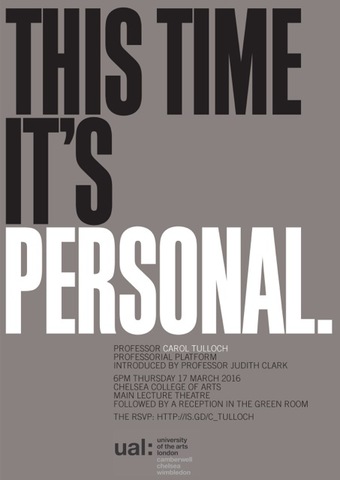
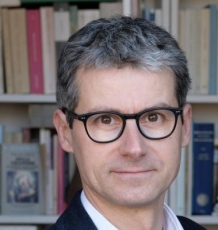
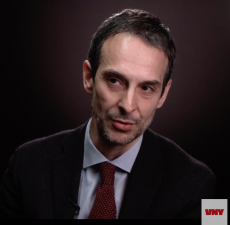
Carol Tulloch is a Professor of Dress, Diaspora, and Transnationalism at the University of the Arts London (UAL), based in the School of Design at Chelsea, Camberwell, and Wimbledon (CCW) Colleges of Arts. She holds an Honorary Senior Research Fellow position at the Victoria and Albert Museum and sits on the boards of Autograph and the Museum of London. Her research focuses on style narratives, cultural heritage, and diasporic identity, particularly within the African diaspora. Tulloch has curated major exhibitions like Black British Style (V&A, 2004) and Rock Against Racism (Autograph, 2015), and authored influential books including The Birth of Cool (2016) and The Persistence of Taste (2018). Her academic work bridges art, fashion, and cultural studies, emphasizing auto/biographical approaches and everyday practices. Tulloch has supervised PhD students exploring topics such as Afrofuturism, diasporic identity, and Nepali migrant creativity. She has received grants from the British Academy and AHRC for projects like Dress and the African Diaspora (2006–2007). Her curatorial and scholarly contributions address anti-racism, transnational art, and the intersection of personal archives with collective memory. Tulloch’s work is featured in venues like Tate Liverpool and the Open Arts Journal, and she has participated in BBC Radio 4’s Art of Now .
Kristina Richardson is the John L. Nau Professor of the History and Principles of Democracy and Professor of History and Middle Eastern and South Asian Languages and Cultures at the University of Virginia. She holds an AB in History from Princeton University (2003), an MA (2005) and PhD (2008) in Near Eastern Studies from the University of Michigan. Her research focuses on medieval Islamic history, particularly marginalized groups such as people with disabilities, Romani (Ghuraba'), enslaved laborers, and artisans. Recent work explores premodern narratives of race in Basra (637–1000 CE) and the global history of printing technologies. 2022 Dan David Prize 2023 Monica H. Green Prize Supported by NEH, Mellon Foundation, Marie Curie Foundation, and CUNY Her publications span fields including disability studies, Romani migration, sign language systems, and medieval urban minorities. Notably, she co-edited the journal Der Islam and was named a 2024–2025 Phi Beta Kappa Visiting Scholar.
Barry Cooper is Professor of Music at the University of Manchester , specializing in Beethoven studies and Baroque music. His research spans medieval to 19th-century music, with a focus on editing early music and source collections. Education: DPhil in Music from University College, Oxford (1974) Academic Roles: Lecturer at St Andrews (1974) → University of Aberdeen → University of Manchester (1990–present) Key Achievements: Reconstructed Beethoven's unfinished Tenth Symphony (1988), edited Beethoven's 35 Piano Sonatas (2007), discovered 'Tantum ergo' hymn (2012), awarded honorary doctorate (University of Tucumán, 2017) His research output includes 71 publications, with recent works analyzing Beethoven's sketchbooks, performance practices, and cross-cultural influences (e.g., Ukrainian connections in Opp. 105/107). The 2024 publication The Creation of Beethoven's Nine Symphonies consolidates decades of symphonic analysis. Scientific Awards : Doctor honoris causa (University of Tucumán, 2017) Huésped de Honor (National University of Paraguay, 2017) Visiting Professor (National University of Paraguay, 2017) Cooper actively supervises PhD students and collaborates with the Creative Manchester research initiative on historical musicology projects.
Christine Martin is a Lecturer at the Musicological Institute , University of Tübingen, since 2007. She serves as a Research Assistant in the third-party funded New Schubert Edition project since 2018, focusing on Schubert's autographs through the Schubert Digital portal. Her academic journey includes a PhD (2000) from the University of Music and Performing Arts Frankfurt/M., a Master's in Musicology (1998) from Frankfurt/M., Heidelberg, and Turin, and roles at institutions like the German Historical Institute in Rome (1988) and RISM Frankfurt (1989–1998). Research Interests: Centered on 19th-century musicology, particularly Schubert's operatic works , Händel's sacred compositions , and historical editorial practices . She explores textual-musical interactions in art songs, parody techniques in Baroque compositions, and cross-cultural influences in European opera traditions. Her work bridges manuscript studies, critical editions, and digital humanities. Publications & Contributions: Key works include analyses of Schubert’s choral compositions, Brahms’ reception of Schubert, Handel’s oratorios, and Mozart’s motets. She contributes to critical editions of Schubert’s operas ( Rosamunde , Fierabras ) and participates in the New Schubert Edition project since 2003. Her research spans from 18th-century operatic adaptations to digital archiving of autographs . Scientific Awards & Memberships: Member, German Schubert Society (2012) Member, International Schubert Society (2003) Member, Society for Music Research (1985) Labs & Teams: Collaborates with the University of Tübingen's Musicological Institute and the Academy of Sciences and Literature, Mainz , contributing to digital musicology and international editorial projects like Schubert Digital .
Serenella Baggio is a Full Professor of Italian Language History at the Department of Literature and Philosophy of the University of Trento. She has been at the University of Trento since 2002, initially as Associate Professor and since 2021 as Full Professor. She coordinates the Italian Writing courses and has been a member of the doctoral school 'Le forme del testo' since 2002, while also supervising numerous master's and doctoral theses through double-degree programs with institutions like Technische Universität Dresden and University of Augsburg. Baggio earned her Bachelor's Degree from the University of Padua with a thesis on 'Color and Word between the Middle Ages and the Renaissance' (1978). She obtained her Postgraduate Diploma in Modern Philology (1987) and Doctorate in Romance and Italian Philology (1987), both from the University of Padua. Her academic journey included teaching Italian at the University of Würzburg (1979-1983) and in Italian high schools (1984-2001) before joining the University of Trento. Professor Baggio's research focuses on the language of non-literary texts and the comparison between literary and non-literary language from the origins to the 20th century. Her work spans multiple areas including: color terminology (cromonimia), artistic lexicon between Middle Ages and Renaissance, popular literature, popular writings (letters, diaries, memories from migration and WWI), medical vernacularizations, medieval lapidaries, Boccaccio's Decameron, medieval syntax, regional languages, linguistic atlases, language contact, and Trentino dialects. She has made significant contributions to the study of popular writing through archives like the Cinquetti Archive and psychiatric hospital archives in Trentino. Her research bridges historical linguistics with sociolinguistic perspectives, often focusing on marginalized voices and non-standard language varieties. Her recent publications (2019-2021) demonstrate continued engagement with historical linguistics, particularly focusing on WWI language documentation, Trentino's linguistic heritage, and the analysis of spoken language in historical texts. She has worked extensively with sound archives like the Phonogrammarchiv in Vienna, examining historical recordings of Italian dialects. Her publications show a consistent pattern of interdisciplinary work connecting linguistic analysis with historical, anthropological, and sociological perspectives. Baggio has coordinated significant research projects including an Erasmus program with UBO-Brest, France, and a DFG project with TU Dresden on Italian manuscript collections. Her work with IPRASE on monitoring linguistic competencies and with the Trentino Popular Writing Archive demonstrates her commitment to applied linguistics and community engagement. She has been actively involved in creating linguistic laboratories across Trentino through the 'Formare formatori' project and has contributed to the establishment of the Trentino Giscel group. Her collaboration with museums and cultural institutions, particularly on popular writings and historical archives, shows her dedication to making linguistic research accessible beyond academia. She has organized numerous conferences including 'Lingue naturali, lingue inventate' (2019) and 'Lingua franca, lingue franche' (2021), and has participated in academic radio programs like 'La lingua batte' (Radio3, 2017) and 'Zazà' (Radio3, 2020), demonstrating her commitment to public scholarship.
Sara Lenzi is a Lecturer at the Faculty of Engineering, University of Deusto, where she has been employed full-time since 2017. Her academic activities encompass undergraduate and postgraduate teaching, research, and extensive service contributions to the international design and sonification communities. She co-founded the Data Sonification Archive, a leading crowdsourced repository for sonification projects, and serves on the International Advisory Council of the Design Research Society. Her research integrates data sonification, audio engineering, and design methodologies with applications spanning urban soundscapes, healthcare environments, climate adaptation, and AI-driven anomaly detection. Key interdisciplinary themes include: Multimodal data representation through integrated sonification-visualization frameworks Machine listening for analyzing urban and medical soundscapes Design-driven tools for enhancing human-data interaction Transdisciplinary approaches to climate resilience and sustainable infrastructure Recent publications (2022-2025) demonstrate a strong focus on applied sonification in healthcare, environmental science, and cybersecurity. Her work frequently employs AI/ML techniques, emphasizes user-centered design, and addresses real-world challenges like sleep quality analysis and climate adaptation. Theoretical contributions include foundational frameworks for autographic sonification and cross-sensory data mapping. Dr. Lenzi has chaired six international conferences in design research and audio engineering. She has supervised six Master's theses and one PhD dissertation. As Co-Principal Investigator, she contributed to grant applications totaling €1.2M with institutions including City University of Hong Kong and TU Delft. Entrepreneurially, she previously secured €3M in private investment prior to her academic career. She leads initiatives through the Data Sonification Archive and collaborates on projects involving networked sensing systems, participatory design, and sensory ethnography. Her future research directions likely involve scaling sonification frameworks for global environmental monitoring and enhancing AI-driven soundscape analysis tools.
David Watt is a Professor in the Department of English, Theatre, Film & Media at the University of Manitoba's Faculty of Arts. His research explores the cultural and historical significance of books, focusing on medieval literature, manuscript studies, and print culture. He works extensively with the University of Manitoba's rare book collections, particularly those at St John's College, examining their role in settler-colonial history and reconciliation efforts. Education: D.Phil (English), University of Oxford (2004) M.St (Medieval English), University of Oxford (2001) MA (English), University of Alberta (1999) BA (Hons) (English), University of Alberta (1998) His research investigates how medieval texts generate reader responses and the evolution of books as meaningful objects, with a focus on Thomas Hoccleve's works and medieval manuscripts in Canadian collections. His recent publications analyze laughter theory in medieval literature, manuscript provenance, and the cultural implications of book history. He has received multiple teaching awards, including the Students' Teacher Recognition Award (2023) and Fellow of the Year from St John's College (2022, 2013). His outreach includes directing the University of Manitoba Institute for the Humanities and organizing exhibitions like The Making of Thomas Hoccleve in Manitoba (2018). Scientific Awards: 2023 - Students' Teacher Recognition Award 2022 & 2013 - Fellow of the Year, St John's College 2011 - Graduate Students' Association Teaching Award 2009 - Arts Teaching Excellence Award (New Faculty) & University 1 Teaching Excellence Award Currently accepting graduate students, he teaches courses on print culture and advanced literary studies, emphasizing collaborative learning and archival engagement.
Dr. Lucy Turner is a Lecturer in the Department of Music at Columbia University, where she earned her PhD in Historical Musicology (2022). She holds a BM in violin performance from Vanderbilt University’s Blair School of Music and an MM in violin performance from Boston University. Her research focuses on Beethoven’s chamber works, Classical form, and manuscript studies. She teaches Masterpieces of Western Music in Columbia’s Core curriculum. Her published article explores Beethoven’s 'Harp' Quartet autograph, and forthcoming work examines the 'opus concept' in Viennese chamber music and form in the 'Archduke' Trio. Education: PhD in Historical Musicology, Columbia University (2022) BM in Violin Performance (Musicology Concentration), Vanderbilt University (Blair School of Music) MM in Violin Performance, Boston University Research Interests: Dr. Turner analyzes musical form, temporality, and nationalist aesthetics in Classical-era works, with a focus on Beethoven’s chamber music. Her work combines score analysis with manuscript study to uncover expressive dimensions in 19th-century compositions.
June Schlueter is a distinguished academic specializing in Early Modern Literature, with a Ph.D. from Columbia University. Her teaching focuses on Shakespeare and early modern England, alongside modern drama. Research interests centered on early modern autograph albums and cross-cultural exchanges between English actors in Germany during Shakespeare’s era. Co-editor of Shakespeare Bulletin (1982-2003) and author/editor of 16 books, including The Album Amicorum and the London of Shakespeare’s Time (2011). Her recent publications examine Renaissance manuscripts, Tudor tomb art, and Shakespeare’s visual representation, reflecting interdisciplinary approaches to literary and historical artifacts. She has received prestigious accolades such as the Fulbright Professorship, National Endowment for the Humanities Grants, the Jones Lecture Award, and the Lindback Award for scholarly excellence.
Dr. Janine Droese is a Researcher at the University of Hamburg, affiliated with the Cluster of Excellence 'Understanding Written Artefacts (UWA)' and the Centre for the Study of Manuscript Cultures (CSMC). Her work focuses on manuscript albums, musicology, and cultural history. She leads the project RFC04: 'Creating Music Albums as Originals Made of Originals' within the UWA cluster. Research interests include the cultural contexts of manuscripts, music history, and interdisciplinary approaches to cultural artifacts. Her studies explore topics like 19th-century public albums, Renaissance motet paintings, and the concept of 'originators' in manuscript creation. She co-edited the volume Manuscript Albums and their Cultural Contexts (2024). Dr. Droese has organized events such as lectures on Felix Mendelssohn Bartholdy's albums and participatory initiatives like Girls' & Boys' Day 2025. Her work bridges musicology, art history, and cultural theory, emphasizing material culture and collaborative processes in artifact production.
Professor Fozia Bora serves as Professor of Islamic History at the School of Languages, Cultures and Societies, University of Leeds, specializing in Arabic historiography, medieval Islamic world book cultures, community curation in heritage sectors, and local/global histories of Yorkshire's Muslim communities. Her work bridges academic scholarship with public engagement through decolonial frameworks and inclusive pedagogy. Her academic credentials include: DPhil in Oriental Studies, University of Oxford MPhil in Oriental Studies, University of Oxford BA Hons in English, University of Oxford Chartered Management Institute Level 5 Certificate in Coaching & Mentoring Research focuses on two interconnected strands: medieval Islamic history (Fatimid, Ayyubid, Mamluk eras, 12th-15th centuries CE) and contemporary Muslim communities in West Yorkshire. Her pioneering monograph reinterprets chronicles as archives through "archivality," while her collaborative "Somali Village in Colonial Bradford" project excavates 1904 ethnographic troupe records to challenge colonial narratives and empower community curation. She actively integrates historical analysis with modern social contexts. Publications reveal consistent engagement with medieval Islamic textual preservation and historiographical methods, evolving toward contemporary applications like Qur'anic manuscript analysis. Her work consistently examines how historical narratives inform modern Muslim identity and community formation, particularly through public scholarship platforms. Key recognitions include: Women of Achievement Award (University of Leeds, 2021) for community research engagement Royal Asiatic Society Staunton Prize for historiographical research on Fatimid libraries She has supervised over ten PhD/MA students to completion across diverse topics from medieval historiography to contemporary gender studies. Major research funding includes LAHRI, Brotherton Library, ESRC/LSSI Impact Acceleration Account, and School of LCS awards for the Somali Village project, supported by University of Bradford, Bradford Literature Festival, and Bradford City of Culture 2025 partnerships. Active in Arabic History and Gender research groups at Leeds, she co-founded the Iqbal Centre and maintains critical partnerships with Bradford institutions for community-centered heritage work, emphasizing collaborative knowledge production beyond traditional academic boundaries.
Sonia Boadas Cabarrocas is a researcher in the Department of Spanish Studies, specializing in early modern Spanish literature with a focus on Lope de Vega's autographs, manuscript studies, and the application of digital humanities techniques. She leads and collaborates on projects such as 'HEURESIS' (focusing on literary text creation through manuscripts and new technologies) and 'PROLOPE' (Lope de Vega Studies Centre). Her work bridges traditional literary analysis with cutting-edge technologies like AI for authorship attribution. Notable contributions include research on Lope de Vega's dramatic manuscripts, the integration of artificial intelligence in calligraphic analysis, and interdisciplinary studies on Golden Age Spanish literature. Her projects often involve collaboration with international scholars and institutions, emphasizing both preservation and innovative methodologies. She has actively participated in research grants such as 'Teatro 100%' and 'Monarchia,' exploring themes like textual criticism, cultural heritage, and intertextuality in early modern works. Her research outputs span articles, book chapters, and collaborative projects, reflecting her commitment to advancing the study of Spanish Golden Age literature.
Matteo Motolese is a Full Professor of Italian Linguistics at the Department of Modern Literature and Culture, Sapienza University of Rome. He specializes in the history of the Italian language from the Trecento to the Novecento, focusing on literary language, grammatical codification, and the relationship between philology and historical linguistics. Key research projects: Autographs of Italian Men of Letters (director 2009-present), Linguistic Archive of Renaissance Italian Writers Teaches: Institutions of Italian Language History (12 CFU), Methods and Problems of Italian Linguistics (12 CFU) His recent research explores autograph manuscripts, grammaticalization processes, and error analysis in language history. Publications include edited volumes on Italian writing practices and historical dictionaries. Scientific distinctions include: Premio Pavese per la Saggistica (2021) for Storia dell'italiano scritto FIRB-Futuro in Ricerca grant (2010) National member of Accademia Nazionale dell'Arcadia (2021) He coordinates the national PhD program in Linguistics (2021-24) and participates in international editorial boards including Lingua e Stile and Bollettino d'Italianistica .
Emilio Russo is a Professor at the Department of Modern Literature and Culture within the Faculty of Arts and Philosophy at Sapienza University of Rome . He is a leading scholar in Italian literature, with a focus on Renaissance and Baroque studies, textual criticism, and digital humanities initiatives. Email: emilio.russo@uniroma1.it Office Hours: Thursdays 12-2 PM (Studio A, 4th floor) and previously 11-13 AM (Studio A, 3rd floor) Russo's research spans: Italian literary history from origins to late 19th century Digital preservation of autograph manuscripts Torquato Tasso studies and intertextuality Epistolary traditions and critical methodologies Baroque aesthetics in Marino's works Philological approaches to unfinished texts His recent publications (2021-2025) explore digital Renaissance environments, manuscript analysis, and intersections between philosophy and literature. Russo leads the Manuscripts and Author Libraries Online: Torquato Tasso research project, emphasizing digital critical editions and cultural network mapping.
Anja Wolkenhauer is a Professor of Latin Philology at the University of Tübingen's Faculty of Humanities, with a research focus spanning Latin studies, cultural history of timekeeping, and early modern media. Her work bridges antiquity and Renaissance through interdisciplinary approaches to text-image relationships, mnemonics, and forgery analysis. Key affiliations: Warburg-Melchior-Olearius Foundation, Tübingen School of Education Research initiatives: 'Teaching Research Projects' integrating pedagogy with scholarly output Her research explores: Temporal concepts in Roman literature and culture Metaphorical language in Augustan poetry Mnemonics as educational tools across 2000 years Printer's marks and emblematics as early media Recent publications analyze collaborative authorship in Premodern texts, Latin translation practices, and textual-material relationships in Renaissance prints. She actively supervises advanced Latin research projects and develops educational frameworks for classical languages.