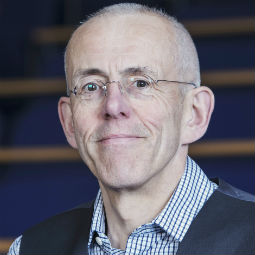
Dr. Mathew Todres is a Senior Lecturer in Management at the School of Business, Faculty of Business and Law, University of Wollongong. His research focuses on Management, Change Management, International Business Management, and Strategic Management, with a particular emphasis on Social Entrepreneurship and Workplace Value Congruence. He has conducted action research in Social Enterprise Development and published in journals such as the Social Enterprise Journal and Journal of Business Ethics . Dr. Todres currently supervises PhD candidates Douglas Opoku Agyeman (Micro Entrepreneurship in West Africa) and Grant Hughes (Sports Management). He has received a University of Wollongong Faculty of Business Start-Up Grant (2018). His peer-reviewed work spans organizational behavior, narrative analysis, and social enterprise innovation. His research interests include autoethnographic analysis, narratological analysis, and the application of social theory to entrepreneurial practices. Dr. Todres has contributed to journals such as Medical Education and serves as a reviewer for Journal of Spirituality, Leadership, and Management , among others. His work bridges theoretical frameworks with practical applications in organizational dynamics and social impact initiatives.
Irene Albers is a full Professor at Free University of Berlin's Department of Philosophy and Humanities, holding dual appointments at the Peter Szondi Institute for General and Comparative Literature and Institute for Romance Philology since 2004. She chairs both the Examination Board and Doctoral Committee for General and Comparative Literature, serves as Trustee of Studienstiftung des deutschen Volkes since 2004/05, and has been Principal Investigator for the Friedrich-Schlegel Graduate School for Literary Studies and Cluster Languages of Emotion since 2007. Her research bridges comparative literature, anthropology, and visual culture with institutional leadership spanning editorial projects and international conferences. Her educational background includes: Born in Bremen (1967) Romance Studies, Philosophy, and German Studies at Universities of Tübingen, Tours, and Konstanz M.A. from University of Konstanz (1993) Ph.D. from University of Konstanz (1999) on literature and photography in Émile Zola, Proust, and Claude Simon Albers' core research examines literary anthropology through colonial/postcolonial lenses, focusing on French literary engagement with Africa, surrealism, and literature-photography intersections. She pioneered studies on Michel Leiris' ethnological poetics and Claude Simon's photographic techniques, extending to historical emotion research (anatomy of affects, body language) and romance novella traditions. Her work consistently challenges Eurocentric literary canons through primitivism critique and heteronomy aesthetics, emphasizing textual restitution and cultural reclamation. Recent publications (2018-2025) reveal a sharp turn toward colonial restitution ethics, particularly in oral literature provenance. Articles increasingly analyze literature as colonial loot, connecting French modernism with African/Caribbean contexts through collaborative projects with anthropologists like Eléonore Devevey. This trajectory builds from earlier surrealist studies to concrete frameworks for decolonizing literary scholarship, spotlighting institutional complicity in cultural appropriation while advancing symmetrized modernity revisions. Scientific awards include: Senior Fellow and Prize Winner of the Zukunftskolleg, University of Konstanz (2009) Albers supervises master's and doctoral students through dedicated AVL colloquia while securing major research funding as Principal Investigator for Friedrich-Schlegel Graduate School (2007-present) and Cluster Languages of Emotion (2007-2012). Her current DFG-funded project 'Literature as Colonial Loot?' with Andreas Schmid pioneers philological provenance research. Earlier, she contributed to Collaborative Research Center 511 'Literature and Anthropology' (Konstanz, 1999-2002) and DFG-funded conferences on Claude Simon. She leads the DramaNet research project and co-edits the 'machina' series at transcript Verlag since 2010. As board member (2007-2009) and deputy (2008-2012) of Cluster Languages of Emotion, she coordinates Area D 'Cultural Codings of Emotions'. Her Zukunftskolleg fellowship (2012-2013) and Marcel Proust Society collaborations underscore sustained engagement with literary anthropology networks.
Stacy Holman Jones is a Professor of Theatre and Performance in the School of Languages, Literatures, Cultures and Linguistics at Monash University. With over 23 years of academic experience, she has developed an international reputation for leadership in performance studies, particularly in feminist and queer theory, new materialist research, and critical arts-based methodologies. Her educational background includes a PhD in Communication/Performance Studies from the University of Texas at Austin (2001), an MA in Communication from California State University Sacramento (1996), and a BA in Humanities (1988). Professor Jones's research focuses on performance as socially, culturally, and politically resistive and transformative activity. She is a recognized leader in critical autoethnography and has published over 100 articles, book chapters, and editorials, as well as authored, co-authored, and edited 14 books including the influential Handbook of Autoethnography (2013, 2021) and Queering Autoethnography (2018). Her work spans cultural critique, social inclusion, education, resilience building, designing for social impact, and enhancing health and wellbeing among minoritarian communities. Analysis of her recent publications reveals a strong trajectory toward creative ecological approaches to mental health, collaborative autoethnographic methods, and innovative design for social impact. Her research increasingly integrates performance studies with mental health applications, particularly in educational settings, while maintaining strong connections to queer theory, new materialisms, and critical autoethnography. International Congress of Qualitative Inquiry's Special Career Award National Communication Association's Distinguished Service Award in Performance Studies Janice Hocker Rushing Early Career Research Award Organization for the Study of Communication, Language, and Gender Feminist Teacher/Mentor Award Over the Rainbow Recommended Book List for Queering Autoethnography (2019) International Congress of Qualitative Inquiry Qualitative Book Award, Honourable Mention (2020) Multiple Good Design Awards for 'The Tomorrow Party' (2024) Professor Jones has been part of 3 successful ARC applications totaling $1,353,604, including as Lead CI for DP200102876 Staging Australian Women's Lives (2020-2023). She is currently accepting PhD students with supervision interests in theatre and performance studies, social change and social justice, and health and wellbeing research. She serves as the founding editor of Departures in Critical Qualitative Research and has been actively involved in professional organizations including serving as President of the International Congress of Qualitative Inquiry (2015-2018). Her current research activities include multiple collaborative projects such as 'Playing Transitions - Settling and Belonging in School together' (2024-2027), 'Learning Creates: Tomorrow Party' (2024), and 'Canopy: Creative partnerships for policy advocacy in Climate and Health' (2024), demonstrating her commitment to interdisciplinary, impact-focused research that bridges theory and creative practice.
Marisa Exter serves as Associate Professor of Learning Design and Technology within Purdue University's Department of Curriculum and Instruction since 2020, following promotion from Assistant Professor (2013-2020). With 15+ years of software design and development experience, she holds dual expertise in Computer Science (BS/MS) and Instructional Systems Technology (PhD). Her educational foundation includes: PhD in Instructional Systems Technology, Indiana University (2011) MS in Computer Science, Illinois Institute of Technology (2003) BS in Computer Science, Elmhurst College (1999) Dr. Exter's research pioneers transdisciplinary educational innovation , focusing on how design processes transform technology-creation fields like Instructional Design, Computing, and Engineering. She investigates formal and non-formal learning experiences to enhance undergraduate education through interdisciplinary programs, while simultaneously examining online graduate program structures that support adult learners' connection to faculty and peers. Her work integrates heutagogical principles for lifelong learning and rigorously documents design successes/failures through scholarly design cases. Analysis of her 15 most recent publications reveals accelerating focus on dispositional development in computing professions , competency-based curriculum models, and transdisciplinary experience design. Her methodological evolution includes increased use of Q methodology and collaborative autoethnography to capture diverse perspectives in educational innovation. As Purdue PI for a $3M multi-institutional computing competencies grant and co-coordinator of AECT's Summer Research Symposium, she drives national curriculum reform. Her mentorship approach cultivates the Exploring Disruptive Education research family group, which investigates interdisciplinary design processes across technology-rich learning environments. Professional service spans Computing Curriculum 2020 Task Force leadership and ACM/AERA membership. The Exploring Disruptive Education research collective she co-leads operates as an interdisciplinary incubator for educational innovation. This team examines how design thinking transforms learning experiences through technology integration, with particular emphasis on creating connections between formal education and industry practices in computing and engineering fields.
Sara Scott Shields is an Associate Professor and Associate Dean of Academic Affairs in the Department of Art Education at Florida State University (FSU), part of the College of Fine Arts. She holds a PhD in Art Education from the University of Georgia, and earlier degrees from East Carolina University. Her career spans 14 years of teaching at secondary and college levels, with a focus on integrating visual journaling, contemporary art, and community history into civically engaged pedagogy. Shields has been recognized with national awards including the Southeastern Higher Educator of the Year (2019) and Florida Higher Educator of the Year (2018). Education: PhD in Art Education, University of Georgia (Advisor: Dr. Tracie Costantino) MAEd in Art Education, East Carolina University (Advisor: Dr. Alice Arnold) BFA in Art Education and Ceramics, East Carolina University (Advisors: Dr. Nancy House and Seo Eo) Research Focus: Shields’ work emphasizes civically engaged art education , leveraging visual journaling and arts-based research to foster socially just educational practices. She explores how art can bridge personal/community histories with contemporary issues, empowering students and educators to engage in civic discourse. Her interdisciplinary approach integrates qualitative methods, practitioner research, and curriculum design. Recent Scholarship Trends: Her publications (2018–2025) highlight resilience during crises (e.g., pandemic impacts), youth-led artistic research, and digital-age pedagogical strategies. Notable works include frameworks for civically engaged art education and studies on graduate student identity in academia. Awards & Contributions: National & regional teaching awards Leadership in art education policy Advocacy for equity in arts curriculum Teaching & Mentorship: Shields instructs core art education courses such as Contemporary Issues in Art Education and Arts-Based Research . She mentors pre-service teachers in designing inclusive, community-oriented curricula. Labs/Teams: Active in FSU’s Art Education Department, contributing to interdisciplinary initiatives and community art projects.
James Warren Boyd is an Adjunct Professor (part-time) at the University of San Francisco (USF), specializing in rhetoric and communication studies. He previously held roles as Lecturer and Director of programs at San Francisco State University (SFSU), including the English Tutoring Center and Early Start/Directed Self-Placement initiatives. His expertise focuses on university writing pedagogy, creative writing (memoir), and autoethnographic/queer performance studies. Education: MA in Communication Studies, San Francisco State University (2011) MA in English, San Francisco State University (2003) Certificate in Teaching College Composition (2001) BA in History, UCLA (1991) His research interests integrate college composition methodologies with performance studies, emphasizing critical pedagogy and queer identity expression. His creative works explore themes of memory, ecology, and spirituality through narrative forms. Awards: USF Distinguished Adjunct Teaching Award (2017) SFSU Lecturer Emeritus (2024) Teaching and grant work include Peace Corps service as Faculty at NKJO Teacher Training College in Poland. His creative publications span literary journals like Cream City Review and Big Muddy , blending academic rigor with artistic innovation.
Karleen Pendleton Jiménez is a Professor of Education, Gender, and Social Justice at Trent University. Her interdisciplinary work bridges education, gender studies, and creative writing, focusing on queer and feminist pedagogies, Chicana identity, and fat studies. She is recognized for her Lambda Literary Award-nominated books, including Are You a Boy or a Girl? and How to Get a Girl Pregnant , as well as her award-winning animated film Tomboy . Her research explores sociocultural influences on learning, LGBTQ+ youth identities, and transgressive gender expression in schools. Key Awards: Vice Versa Awards for Excellence, American Library Association Recognition Recent Work: Digital storytelling projects on queer embodiment, ecojustice education, and trans/fat body studies Teaching: Courses on gender, sexuality, and education, including Transgender Feminisms and Community Learning: Relationships, Creativity, Action Her films and creative works address intersectional identities, challenging norms around gender, race, and family. She advocates for inclusive education through narrative and embodied research methodologies.
Dr. Bill Baker is a Senior Lecturer in Drama, Visual Arts & Music Education at the University of Tasmania's School of Education, College of Arts, Law and Education (CALE). With a career spanning 35 years, he specializes in arts education, technology-enhanced learning (TELT), and the scholarship of teaching and learning (SoTL). His research focuses on youth resilience through arts participation, particularly in community youth orchestras, and the preparation of pre-service teachers in arts pedagogy. Dr. Baker holds a Doctor of Education (RMIT, 2002), a Master of Education (Arts Administration, RMIT, 1997), and a Bachelor of Music Education (University of Melbourne, 1988). He has received multiple awards, including Senior Fellow of the Higher Education Academy (2019) and Honorary Life Member of the Australian Society for Music Education (2021). His funded projects include the Tasmanian Community Fund Grant and Australia-ASEAN Council grants for youth orchestra research. His peer-reviewed publications (over 40) address arts education, online teaching methodologies, and the social impacts of music participation. Current research collaborations include partnerships with the Tasmanian Youth Orchestra and institutions like University of Southern Queensland and The University of Melbourne. Dr. Baker supervises HDR students in arts participation, leadership, and teacher education reforms. Scientific Awards: Vice Chancellor's Teaching Excellence Award Vice Chancellor’s Citation for Outstanding Contribution to Student Learning CALE Teaching Excellence Award Senior Fellow, Higher Education Academy (UK) Honorary Life Member, Australian Society for Music Education Supervision & Teaching: Dr. Baker has supervised numerous HDR students, including completed PhDs on contemporary music pedagogy and Masters theses on visual arts education. He coordinates units in the Master of Teaching and Bachelor of Education degrees, emphasizing technology integration and reflective practice.
Gabrielle (Gabie) Durepos is an Associate Professor in the Department of Business and Tourism at Mount Saint Vincent University in Halifax, Nova Scotia. She holds a BCOMM from Mount Allison University, an MA from Lancaster University, and a PhD in Business Administration from Saint Mary's University. She joined Mount Saint Vincent University in 2014 after teaching at Saint Mary's University (2006-2009) and St. Francis Xavier University (2009-2014). Her research focuses on organizational history, critical historiography, the history of management thought, methodology, and gender and diversity. Durepos has developed a critical organizational history approach called ANTi-History to reveal the role of history in liberationary politics. She has published extensively in journals such as Management & Organizational History, Journal of Management History, Critical Perspectives on International Business, and Organization. Durepos has co-authored the book ANTi-History: Theorizing the Past, History, and Historiography in Management and Organizational Studies and co-edited both the Sage Encyclopedia of Case Study Research and the SAGE Major Work on Case Study Methods in Business Research. Her research examines critical approaches to case study methodology and the contribution of feminist, poststructuralist, and other critical perspectives to organizational history. Her current research projects include a critical Organizational History of a Provincial Museum Complex in Nova Scotia and she serves as co-investigator on a major Social Sciences and Humanities Research Council grant studying the development of management thought in Canada. Her recent publications focus on archival silences, contextual approaches to historical research, and the application of ANTi-History methodology. ANTi-History: Theorizing the Past, History, and Historiography in Management and Organizational Studies (2012) Sage Encyclopedia of Case Study Research (2010) Case Study Methods in Business Research (2013) Durepos teaches courses in Communications Management, Gender and Management, Macro and Micro Organizational Behaviour, Industrial Relations, and Introduction to Business. She has received multiple research grants including a SSHRC Institutional Grant and University Council for Research Grants. Her methodological contributions to historical organization studies have positioned her as a leading scholar in critical approaches to management history.
Russell Warhurst is an Adjunct Professor at Northumbria University, with additional roles at the Institute of International Trade and Law (Moscow) and Aalto University Business School (Finland). He holds a PhD from 2006 focusing on workplace learning. His career spans academic roles at Newcastle Polytechnic, Leeds Business School, and the University of Chester, alongside industry experience with BMW-Rover Group and public-private partnerships. Research interests include workplace learning, leadership development, organizational learning, and later-career dynamics. Key themes in his work address identity formation through reflection, HRD (Human Resource Development) frameworks, and well-being in professional contexts. Recent publications (2021-2025) emphasize identity-theory applications, later-career inclusion, and educational methodologies in HRM. He co-edits books on managerial identities and contributes to journals like Studies in Higher Education and Human Resource Development Review . Currently supervising two PhD students examining millennial leadership and workplace learning in the Nigerian Air Force. Academic qualifications include a CIPD Chartered Membership and a PGCert in Research Methods.
Magdalena Kazubowski-Houston is an Associate Professor and Graduate Program Director in the Department of Theatre at York University's School of the Arts, Media, Performance & Design. She holds a PhD in Anthropology/Theatre from Simon Fraser University. Her work bridges performance studies, anthropology, and research-creation, focusing on experimental ethnographic methodologies. She co-founded the Centre for Imaginative Ethnography (CIE) and the Emergent Futures CoLab (EFC). Research interests include performance ethnography with marginalized communities (Romani populations, Holocaust survivors), grief studies, disability anthropology, and futures anthropology. Her notable works include Staging Strife (2010) and Randia’s Quiet Theatre (forthcoming). She received multiple awards for her innovative methods and teaching excellence. Her collaborative projects involve transdisciplinary teams and community partnerships, emphasizing ethical representation and activist praxis. Current research explores aging, migration, and environmental anthropology through dramatic storytelling.
Janice Howard is a Senior Lecturer in Fine Art at the School of Arts, Oxford Brookes University. She teaches on MFA and BA (Hons) Fine Art programmes and supervises PhD by practice students. Additionally, she serves as the Liaison Manager for collaborative Art and Design programmes. Her educational background includes a PhD by Published Work from Oxford Brookes University, an MA, a Postgraduate Diploma, and a BFA. She studied Fine Art at The Ruskin School of Fine Art, Oxford University, and 'alternative-media' at the Slade School of Fine Art under notable artists. Janice's research spans video installation, sound, photography, performance, drawing, and text, rooted in feminist phenomenology. Her work explores themes such as anxiety, fear, loss, illness, liminality, and the haptic through autoethnography and film/video methods. Recent projects like 'Encounters with Illness' use autobiographical video art to reflect on aging and disease. She has supervised multiple PhD students, including Jo Thomas and Aya Kasai, and currently supervises Catherine Ross and Anne Griffiths. Janice is also an active external examiner and consultant for Higher Education programmes. Her exhibitions and research impact include international presentations at venues such as the Whitworth Gallery Manchester and the Serpentine Gallery London. She contributes to academic discourse through book chapters and conferences, focusing on interdisciplinary embodiments and the politics of vulnerability. Senior Fellow of the Higher Education Academy (SFHEA)
Associate Professor Dominic Redfern is an artist and academic in RMIT University's School of Art. His practice centers on video works exploring site, screen, and identity, with a focus on natural history and place. He has exhibited globally, including at Tate Modern, Te Tuhi Centre (New Zealand), and the Art Institute of Chicago. Current roles include senior supervision of five doctoral students and active research collaborations across Australia and internationally. Research interests span video art, performance, and environmental engagement. Key projects include Man Cave (2025), Immaculate Dust (2024), and Concentric: Working Title (2011). Awards include an ARC Linkage Grant (2013) and residencies in Finland, France, and Japan. His work interrogates posthumanism, hybrid identities, and socially engaged art practices. Supervision: Five current PhD candidates Grants: Over $1M in ARC and state funding Residencies: Estonia Academy of Arts (2025), Police Point (2024) Publications: 34 outputs including Public Art Dialogue and London Screendance Festival works Notable exhibitions include Tokyo Wonder Site (2013), Berlin's Hamburger Bahnof (2011), and the 2011 ReelDance Awards. His noise installation (2022) addresses mental health through audio-visual abstraction. Ongoing projects explore Chinese-Australian hybridity and ecological entanglements.
Sophie Tamas is an Associate Professor cross-appointed between Canadian Studies and the Department of Geography and Environmental Studies within the Faculty of Arts and Social Sciences at Carleton University. She is currently on leave. Her educational qualifications are: B.I.S. from the University of Waterloo M.A. from Carleton University PhD from Carleton University Dr. Tamas specializes in emotional geographies, autoethnography, and the ethical complexities of personal narrative across academic, artistic, and therapeutic domains. Her methodological approach integrates feminist, Indigenous, and arts-based perspectives with trauma-informed and new materialist theories to investigate subjectivity and knowledge construction. Analysis of her recent scholarly output reveals a consistent focus on narrative techniques and emotional landscapes, particularly examining how material practices like scrapbooking mediate experiences of trauma and loss. Her work critically engages with the boundaries of self-disclosure in research contexts. Her notable scientific awards include: SSHRC Postdoctoral Fellowship Banting Postdoctoral Fellowship As a dedicated mentor, Dr. Tamas supervises graduate students in Canadian Studies and Geography programs. Her research initiatives are bolstered by significant grant funding: Advising: Guides MA and PhD candidates in emotional geography and narrative research methodologies. Grants: Principal investigator on projects funded by SSHRC and the Banting Postdoctoral Fellowships program. She co-founded The Emotional Geography Collective and is developing an arts-based research laboratory focused on creative approaches to processing trauma and loss.
Nick Sorensen is Professor of Improvisation at Bath Spa University, where he currently serves as Interim Head of the School of Writing, Publishing and the Humanities. He joined Bath Spa in 2008 after extensive experience working in secondary schools, including six years as a headteacher, and as an educational consultant. His academic journey includes a BA (Hons) in English and Drama from the University of Exeter, a PGCE from Goldsmiths College, London, an MA in Education from the University of Sussex, and a PhD from Bath Spa University. Sorensen's research centers around teacher education and professional development with a particular focus on improvisation as a fundamental element of teacher expertise. His book The Improvising Teacher: reconceptualising pedagogy, expertise and professionalism (2023) offers a radical reconceptualization of improvisation as core to teaching expertise. His research explores how expert teachers navigate complex classroom situations through improvisational thinking and action. His recent publications reveal a consistent focus on the intersection of improvisation, expertise, and professional practice in education. The articles demonstrate his theoretical development of the 'improvising teacher' concept and its application across various educational contexts, from music education to teacher training systems. His work increasingly bridges educational theory with practical applications for teacher development. Senior Fellow HEA AHRC Peer Review College (2016-2023) Sorensen has contributed to the development of the Paper Nations creative writing project and was a member of its Governance Group. He previously served as Assistant Dean of the Institute for Education at Bath Spa University. His educational consultancy company, The Improvising School, supports musicians, teachers, leaders and writers in developing their creativity. As a musician, Sorensen is a skilled saxophonist who has performed internationally with the transcultural music project Kusanganisa and has collaborated with notable jazz musicians including Pee Wee Ellis and Fred Wesley. His performance background deeply informs his educational research on improvisation.