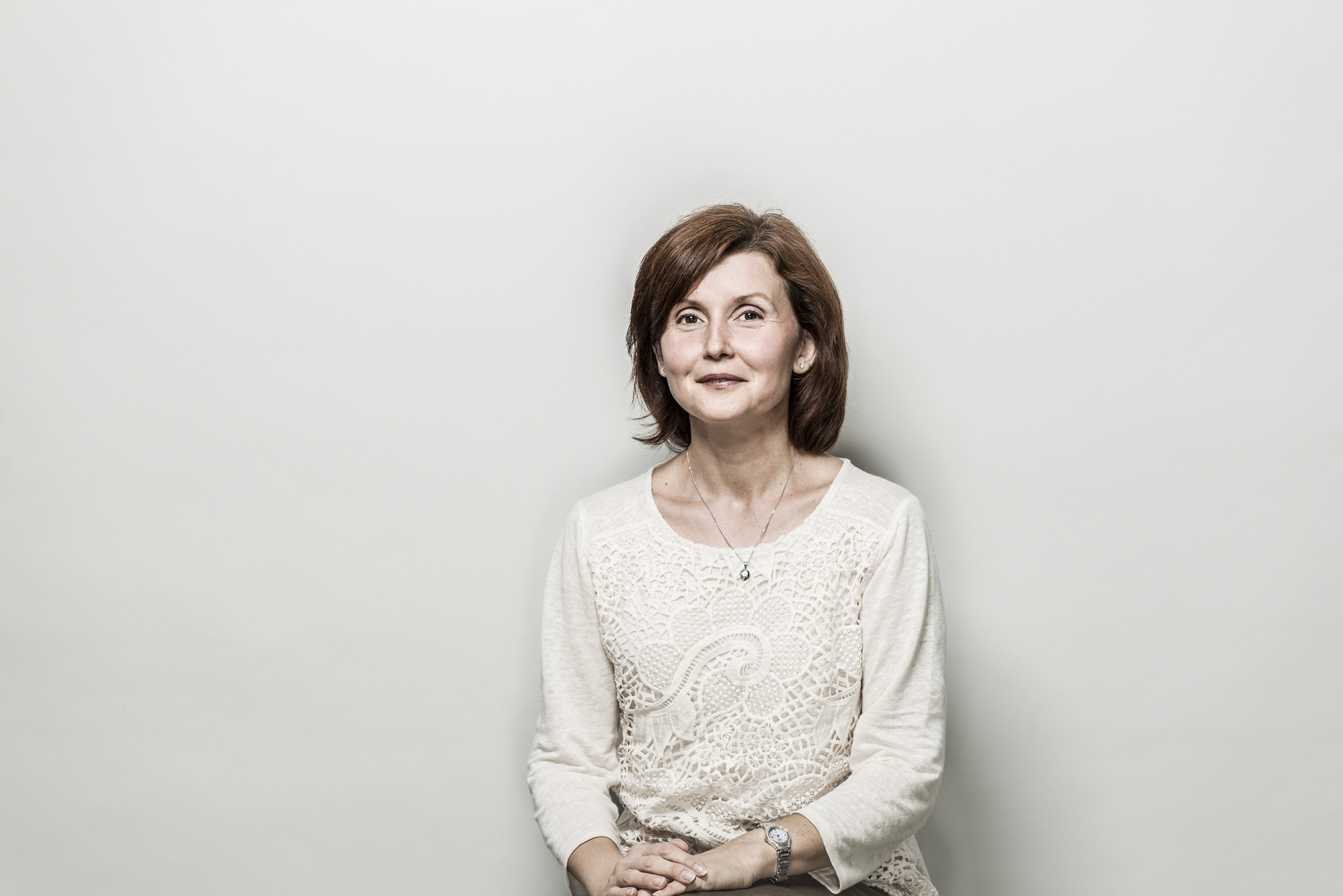
Stephan Eckstein is a junior professor in the Department of Mathematics at the University of Tübingen and a member of the university's machine learning cluster. His research bridges probability theory and machine learning with particular focus on stochastic optimization and numerical approximation. Research interests include: Optimal transport theory and its computational aspects Regularization techniques for high-dimensional problems Causal models and probabilistic structures Graphical models in machine learning Graph neural networks Recent publications analyze dimensional stability in optimal transport, exponential convergence rates for Sinkhorn algorithms, and causal modeling in financial time series generation. Contact: stephan.eckstein@uni-tuebingen.de
Dr. Mo Lotfollahi is a Group Leader in the Cellular Genomics Programme at the Wellcome Sanger Institute and an Adjunct Associate Professor at the Cambridge Centre for AI in Medicine , University of Cambridge. His research focuses on leveraging Artificial Intelligence and Single-Cell Genomics to engineer cells and model their responses to diseases and perturbations. PhD in Machine Learning & Computational Biology from Technical University of Munich Research Interests include: Biologically informed deep learning Single-cell multi-omic data integration Perturbation response modeling AI-assisted drug discovery Spatial transcriptomics Scientific Awards : Bayer Foundation Early Excellence in Science Award for developing ML algorithms in single-cell omics MDSI Best Paper of the Year Award for transfer learning in single-cell data mapping Lab & Collaborations : The Artificial Intelligence for Cell Engineering (AICE) Lab at Cambridge includes 10+ PhD students and postdocs working on interdisciplinary projects. He collaborates extensively with Relation Therapeutics , Meta AI , and Helmholtz Munich .
Jörn Hees is a Professor at the German Research Center for Artificial Intelligence (DFKI), affiliated with the Smart Data & Knowledge Services department. His work bridges deep learning, linked data, and knowledge graphs, with projects like TreeSatAI (AI for environmental monitoring) and DeFuseNN (deep network fusion). Research Interests : Deep learning, machine learning, data mining, knowledge graphs, semantic web, linked data, and association modeling. Projects : TreeSatAI (remote sensing AI), MInD (machine intelligence for digital transformation), DeFuseNN (neural network fusion), MOM (multimedia opinion mining). Recent publications focus on outlier detection for tabular data (Fin-Fed-OD, RECol), super-resolution techniques, and transformer-based models. He actively develops open-source tools like the RDFLib Python library and Graph Pattern Learner for SPARQL query generation. No scientific awards are explicitly mentioned in the available data.
Sebastiano Vascon is an Associate Professor in the Department of Computer Science at Ca' Foscari University of Venice, with research spanning artificial intelligence, machine learning, and computer vision. His work emphasizes graph-based methods, game theory, and deep learning, applied to cross-disciplinary domains including climate change, environmental science, Polar Science, and cultural heritage restoration. His research integrates theoretical AI advances with real-world industrial applications, focusing on trajectory forecasting, time-series compression, climate risk assessment, and puzzle-based cultural heritage reconstruction. Recent publications reveal a strong trend toward solving complex environmental and archaeological challenges through neural networks, graph theory, and 3D vision, often bridging game-theoretic principles with practical AI deployment. Vascon holds significant academic service roles including Area Chair for CVPR 2025, BMVC 2025, ECCV 2024, and Program Chair for Fusion 2024. He serves as Associate Editor for Frontiers and has chaired major conferences including BMVC (2022-2024) and WACV 2021, demonstrating leadership in the global AI community.
Dr. Conor Houghton is an Associate Professor in Computer Science at the University of Bristol, affiliated with the School of Engineering Mathematics and Technology. His work bridges computational neuroscience, machine learning, and artificial intelligence. He explores neural mechanisms in cognition, language evolution, and network dynamics through interdisciplinary methods. Research interests include neural coding, evolutionary models, and applications of deep learning to cognitive processes. Key research themes involve modeling neural systems (e.g., cerebellar circuits, auditory processing), analyzing spike train data, and developing algorithms for information processing. His publications span topics like Bayesian inference in neural systems, cooperative evolutionary dynamics, and sparse autoencoder architectures. Collaborations with colleagues in neuroscience and computer science highlight his interdisciplinary approach. Publications demonstrate expertise in computational neuroscience (e.g., cerebellar state estimation, synaptic plasticity) and machine learning (e.g., reservoir computing, language models). His work often combines theoretical models with empirical data analysis, addressing questions in both biological and artificial systems.
Seonyeong Park is a Research Assistant Professor in the Department of Bioengineering at the University of Illinois Urbana-Champaign (UIUC), holding this position since January 2024. Previously, they served as a Research Scientist (2023–2024), Postdoctoral Research Associate (2019–2023), and held postdoctoral roles at Washington University in St. Louis (2017–2019). Education: PhD in Electrical and Computer Engineering from Virginia Commonwealth University (2017), M.S. and B.S. in Information and Communications Engineering from Pukyong National University (2013 and 2011, respectively). Research Focus: Specializes in biomedical imaging, particularly learning-based image reconstruction, computational modeling of biological tissues, and photoacoustic computed tomography. Key interests include optimizing optical fluence distribution in breast imaging, developing stochastic numerical phantoms for computational studies, and addressing clinical challenges in transcranial imaging. Key Contributions: Over 15 peer-reviewed publications in top journals/conferences like Photoacoustics , Journal of Biomedical Optics , and SPIE conferences. Notable work includes: Benchmarking deep learning approaches for photoacoustic reconstruction Developing numerical phantoms for breast cancer imaging Aberration correction methods in transcranial imaging Awards: 2022 Innovator Award (AWIS-CAC) Seno Medical Best Paper Award (2022) Professional Activities: Member of SPIE and Association for Women in Science. Active in invited lectures on optoacoustic tomography and imaging trials.
Johannes De Smedt is an Assistant Professor (tenure track) at the Faculty of Economics and Business (FEB) at KU Leuven, affiliated with the Information Systems Engineering Research Group (LIRIS). He leads the education commission for the OC Handelsingenieur in de beleidsinformatica program at the FEB's Leuven campus and is a member of Leuven.AI, the university's artificial intelligence institute. His work focuses on advancing process mining, AI-driven decision support systems, and data-aware business process optimization. Research interests include predictive process monitoring, adversarial machine learning for process analytics, object-centric event log analysis, and human resource analytics through process mining. He explores applications in employee mobility, bankruptcy prediction, and explainable AI for business processes. Notable contributions include developing methodologies for synthetic time series generation, adversarial robustness in process models, and integrating decision models with business process frameworks. His work bridges theoretical advancements with practical implementation in domains like healthcare, education, and finance. Recent publications emphasize trustworthy AI practices and scalable data preparation techniques for complex process data. No scientific awards are explicitly listed in the provided information. Advising and grants sections remain unpopulated in the available data. His research is anchored in the LIRIS group, collaborating on projects like MERODE for data-aware process systems and the iDOCEM framework for object-centric event logging standards.
Brian Odegaard is an Assistant Professor in the Department of Psychology at the University of Florida, affiliated with the College of Liberal Arts & Sciences. His research focuses on understanding how attention and metacognition influence perceptual decision-making and the neural basis of conscious experience. Key areas include peripheral vision perception, multisensory integration, and reality monitoring in humans and AI. Education Ph.D., Psychology (Behavioral Neuroscience & Computational Cognition), UCLA, 2015 M.A., Psychology, UCLA, 2011 B.A., Psychology & Music (Piano Performance), Calvin College, 2009 Research Interests Dr. Odegaard investigates: Perceptual decision-making in peripheral vision, funded by the Office of Naval Research Reality monitoring in humans and large language models Multisensory integration mechanisms and their neural substrates Consciousness theories and their empirical validity Computational modeling of metacognitive processes Key Contributions Recent work includes studies on color perception in peripheral vision, metacognitive sensitivity in AI collaboration, and critiques of Integrated Information Theory. His team uses virtual reality and psychophysical methods to explore visual change detection and saccadic dynamics. Awards & Funding Young Investigator Award, Office of Naval Research Funding from Templeton World Charity Foundation Lab & Collaborations He leads the Perception, Attention, and Consciousness Lab at UF, training graduate students like Saurabh Ranjan (reality monitoring), Joseph Pruitt (peripheral vision), and Trevor Caruso (performance-matched paradigms). Collaborations include Alan Lee (Lingnan University) on change blindness and David Rosenthal (CUNY) on consciousness theories.
Dr. Chen Kan is an Associate Professor in the Department of Industrial, Manufacturing, and Systems Engineering at The University of Texas at Arlington. His research integrates data science with engineering for advanced manufacturing and smart health applications. He is affiliated with the Center on Stochastic Modeling, Optimization, and Statistics (COSMOS) and leads the Sensing, Analytics, and Intelligence Laboratory (SAIL). PhD in Industrial Engineering (2018), Penn State University MS in Industrial Engineering (2012), University of South Florida BS in Electrical Engineering (2010), China University of Mining and Technology Dr. Kan’s research focuses on sensor-based modeling, anomaly detection, and machine learning for manufacturing systems and biomedical applications. His work spans additive manufacturing, metamaterials, ECG signal analysis, and IoT-enabled smart systems. Recent projects include blockchain-integrated security for cyber-physical manufacturing and AI-driven driver readiness monitoring. His publications emphasize 3D point cloud analytics, dynamic network modeling, and deep learning applications in manufacturing and healthcare. Key trends include cybersecurity in AM (2023-2025), metamaterials optimization (2022-2024), and ECG anomaly detection (2012-2023). Scientific awards include: SME Susan Smyth Outstanding Young Manufacturing Engineer Award (2024) NSF CAREER Award (2025) NSF CPS Program Travel Support (2024) Dr. Kan has advised five PhD students and secured over $325k in federal grants, including NSF and USDOT funding. His lab SAIL develops methodologies for real-time process monitoring and optimization across manufacturing and healthcare domains.
Steve Lomber is Professor of Psychology and Neuroscience at the University of Texas at Arlington and Director of the Cerebral Systems Laboratory . His work integrates psychophysics, high-field fMRI, single-unit electrophysiology, neuroanatomy, and reversible cryogenic deactivation to study how auditory cortex is organized and how it reorganizes after deafness or cochlear implant stimulation. Education Ph.D. in Anatomy, Boston University School of Medicine, 1994 B.Sc. in Neuroscience, University of Rochester, 1988 Research Focus Dr. Lomber’s program asks how sensory experience shapes brain development and cortical plasticity. Using feline and human models, his laboratory investigates: Cortical plasticity after developmental vs. adult-onset deafness Functional and structural changes triggered by cochlear prosthetic input Cross-modal reorganization where auditory cortex mediates enhanced vision or multisensory processing Technological and methodological advances in high-field fMRI and automated neuroimaging pipelines for translational auditory neuroscience Scientific Awards & Honors 2024 Pioneer Award for Basic Science Research , Association for Research in Otolaryngology (ARO) 2024 President’s Award , Canadian Academy of Audiology Fellow , Association for Psychological Science (2017) Professional Service & Funding Leadership Board of Directors, Canadian Academy of Audiology (2018–2024) Scientific Program Chair, Annual ARO Meeting (2020–2024) Program Committee Member, 2025 International Conference on Auditory Cortex Laboratory & Collaborative Teams As head of the Cerebral Systems Laboratory , Dr. Lomber leads a multidisciplinary group of post-doctoral fellows, graduate students, and research technicians. Ongoing collaborations span institutions in North America and Europe, exploiting high-field 9.4 T fMRI, large-scale electrophysiology arrays, and reversible cryoloop deactivation to advance understanding of auditory-cortical function and to optimize outcomes for cochlear implant users.
Oscar Deniz is a Full Professor at the University of Castilla-La Mancha (UCLM) and a prominent researcher in computer vision and machine learning. He leads research within VISILAB, focusing on applications in medical imaging, security systems, and adversarial example detection. He has held visiting researcher positions at Carnegie Mellon University, Imperial College London, and Leica Biosystems. Deniz is affiliated with IEEE (Senior Member), AAAI, SIANI, CEA-IFAC, AEPIA, AERFAI-IAPR, and the Computer Vision Foundation. His academic contributions include over 50 publications, two books on OpenCV, and leadership in European projects like 'Eyes of Things' (awarded multiple prizes including Google’s 2016 IoT Award and the 2019 European Commission Innovation Award). He coordinates projects such as BONSEYES and AIDPATH, advancing digital pathology and edge computing. His work integrates AI into microscopy, weapon detection, and medical diagnostics. Research interests span deep learning, medical image processing, and security technologies. Notable achievements include developing the BUS-UCLM dataset for breast ultrasound lesions and MicroHikari3D, an affordable automated microscopy platform. Awards include the Marie Curie Fellowship and runner-up recognition for his PhD work in computer vision. Deniz teaches courses like Computer Vision and Computer Science fundamentals, and his lab’s innovations are adopted by companies like Existor and incorporated into OpenCV. He actively reviews for EU programs (Eurostars, H2020 TULIPP) and contributes to academic journals like PLoS ONE.
Priyanka Kakade is a Lecturer in Electronics and Communication Engineering at Sheffield Hallam University's Department of Engineering and Mathematics, part of the College of Business, Technology and Engineering. She serves as Course Leader for the Degree Apprenticeship BEng Electrical and Electronic Engineering Technology program. Her academic career includes a B.Tech. from SNDT University (2007), M.Sc. in Photonic Communications (2008-2013), and a PhD in Optical Communications from the University of Nottingham (UK). Her research focuses on numerical modeling of optical systems, with expertise in optical amplification/regeneration, FSO communication, and OFC systems. Notable projects include burst mode regenerator applications for long-haul OFC, dual-stage EDFA designs, and atmospheric turbulence mitigation in FSO systems. Recently, she contributed to aeronautical engineering projects involving optical data backup systems and direct fusion drive feasibility analysis. Teaching responsibilities span BEng and MSc modules in communication engineering, analogue/digital electronics, and railway communications. She received the BTE College's 2023-2024 Outstanding Academic Advisor Award and became a Fellow of the Higher Education Academy (FHEA) in 2023. Education: B.Tech. in Electronics and Communication Engineering, SNDT University (2007) M.Sc. in Photonic Communications, University of Nottingham (2013) PhD in Optical Communications, University of Nottingham (2013) Awards: BTE College's Outstanding Academic Advisor Award (2023-2024) FHEA Fellowship (2023) Research publications emphasize optical communication system optimization, with recent work in quantum-based GNSS satellite selection and direct fusion drive feasibility. Teaching innovations include rubric-based assessment methodologies.
Dr. Olamide Jogunola is a Senior Lecturer in Cyber Security in the Department of Computing and Mathematics at Manchester Metropolitan University. She holds a B.Eng. in Electrical Engineering from University of Ilorin, M.Sc. in Networking and Data Communication from Kingston University, and Ph.D. in Electrical Engineering from Manchester Metropolitan University. Her research focuses on cybersecurity for distributed critical infrastructures like smart grids. Research Focus: Investigates blockchain and AI applications for privacy and uncertainty modeling in distributed systems. Current projects examine secure smart contracts, federated learning for intrusion detection, and cyber resilience in IoT-enabled infrastructures. Grant Leadership: Principal Investigator for multiple projects including the £228K 'AI-enabled smart EV charging infrastructure' (Innovate UK/KTP) and £5K EPSRC/SuperGen Network project. Secured over £500K in research funding across 8 projects including EU Horizon 2020 and DFID initiatives. Teaching: Leads undergraduate and postgraduate units in Networks, Computer Networks and Security, and HPC & Big Data. Supervises PhD research on blockchain applications, AI security, and peer-to-peer energy trading.
Bin Yang is a Professor at the Department of Computer Science, Aalborg University, affiliated with The Technical Faculty of IT and Design. His research focuses on data engineering, artificial intelligence, and machine learning, with emphasis on spatiotemporal data analysis, representation learning, and time series forecasting. He leads projects like aSTEP (spatio-temporal data analytics) and Light-AI for Cognitive Power Electronics. Key contributions include advancements in trajectory data processing, anomaly detection, and lightweight neural architectures. Research interests span machine learning, data mining, intelligent transport systems, and material science applications. Notable awards include the IJCAI 2019 Distinguished PC Member and Sapere Aude Research Leader (2018). He has supervised six PhD students and contributed to over 119 publications. His work is supported by grants from Villum Foundation and EU initiatives. Yang is involved in interdisciplinary collaborations, including data-driven decision-making frameworks and environmental monitoring systems. Labs and teams include the Daisy Center for Data-intensive Systems and AI for the People initiatives. Projects emphasize real-world applications in smart cities, traffic forecasting, and sustainable technologies. His research bridges theoretical foundations with practical implementations in domains like oceanography and crowdsourcing systems.
Natalija Vlajic is an Associate Professor in the Department of Electrical Engineering and Computer Science at York University's Lassonde School of Engineering. She holds a PhD in Electrical Engineering from the University of Ottawa and an M.Sc. in Electrical and Computer Engineering from the University of Manitoba. Dr. Vlajic is a highly accomplished researcher with over 80 publications in international conferences and journals, specializing in cybersecurity with a focus on industrial control systems. Her primary research interests include network and information security, communication systems and network protocols, cybersecurity of industrial systems, machine learning applications in security, and system performance evaluation. She has made significant contributions to the understanding of security risk management, bot and DDoS attacks, user privacy, IoT security, and sensor networks. Her work bridges theoretical security concepts with practical applications in critical infrastructure protection. Dr. Vlajic's recent publications demonstrate a strong focus on Industrial Control Systems security, particularly addressing vulnerabilities through innovative approaches like risk-based cryptoperiod optimization, attack tree modeling using MITRE ATT&CK framework, and advanced bot detection techniques. Her research combines traditional security methodologies with machine learning and data analytics to develop more robust protection mechanisms for critical infrastructure. NSERC University Faculty Award Faculty-Wide Excellence in Teaching Award Departmental Mildred Baptist Teaching Award Best Poster Award at ACM/IEEE ICCPS (2023) Best Paper Award at HoTSoS (2018) Dr. Vlajic actively mentors graduate students including Gabriele Cianfarani, Melina Najimi, Stefan Petrovic, Shadi Sadeghpour, Daniel Brown, and Jazdeep Sarai. Her research group has received significant recognition, with students presenting at major conferences like GradCon hosted by Waterloo's Cybersecurity and Privacy Institute. She serves as a co-editor for the IEEE Communications Magazine special issue on Security of Communication Protocols in Industrial Control Systems. Her research is conducted through the Security Research at York (SecRAY) initiative, focusing on practical security solutions for industrial systems, web applications, and IoT environments. The group maintains strong industry connections and collaborates on real-world security challenges, particularly in the domain of critical infrastructure protection.