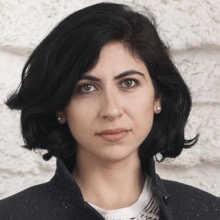
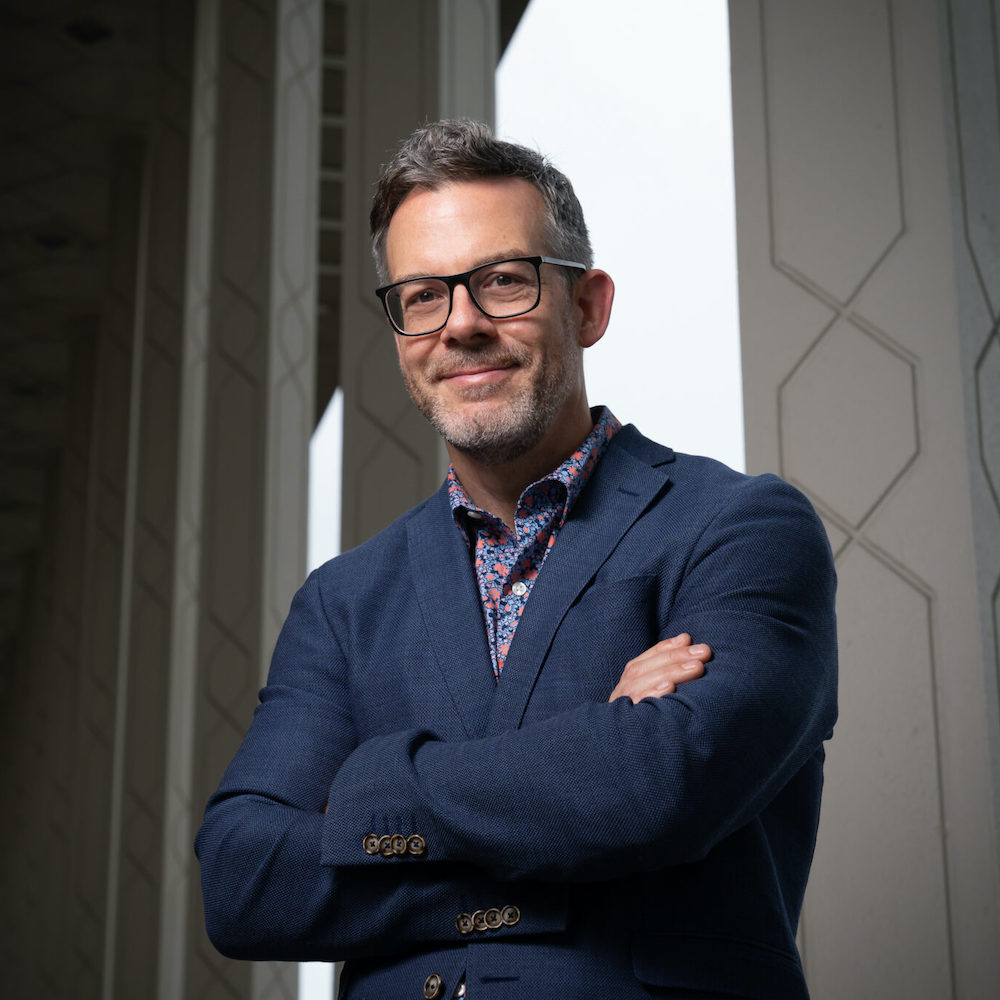
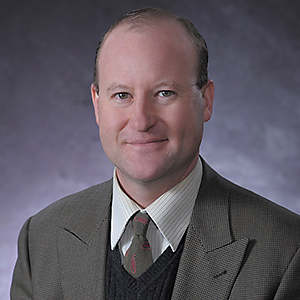
Ina Lyftingsmo Kristiansen is a Doctoral Research Fellow at the Department of Political Science, University of Oslo, specializing in comparative politics and autocratic regimes. Her research focuses on elite dynamics, bureaucratic politics in autocracies, and regime change through quantitative methods. Key Research Areas: Autocratization, Gulf monarchies, Northeast Asia, political elite data collection Courses Taught: STV1020 (Political Analysis), STV2350 (Autocratic Politics), STV4030A (Digital Data in Political Science), STV4550 (Topics in Autocratic Politics) Education: MPhil in Peace and Conflict Studies (Oslo), BA in Comparative Politics (Bergen), International Relations and Korean studies (Ewha Womans University) Skills: Proficient in R, Norwegian (Native), English (Fluent), Korean (B2), Arabic (B2), French (B1) Her publications address competency dynamics in autocratic cabinets and datasets on government social profiles. She contributes to the Comparative Institutions and Regimes (CIR) research group.
Francesco Tacchi is a Research Fellow at the Department of Humanities , Ca' Foscari University of Venice . His work focuses on Religious Studies , European History , and Catholic Church History , with particular emphasis on Vatican Diplomacy , Modernist Crisis , and Post-WWII Church-State Relations . Vatican Diplomacy (1945-1962) Comparative Analysis of Jesuit Journals Catholic Responses to Socialism Integralism Debates under Pius X His scientific publications (2014-2025) examine topics like: State Intervention in Economy (Jesuit Journals) German-Italian Bishop Cohorts Modernist Crisis in Catholic Orders Encyclical 'Singulari quadam' Formation
Bilge YABANCI is a Research Fellow at the Department of Philosophy and Cultural Heritage, Ca' Foscari University of Venice, with affiliations at Northwestern University (USA) through a Marie Skłodowska-Curie Global Fellowship. Her interdisciplinary research bridges political science, sociology, and political psychology , focusing on civil society under autocratization, populism, affective mobilization, and performance in political movements. Ph.D. in Politics, University of Bath (UK) MSc in European Affairs, Lund University (Sweden) BSc in International Relations (Hons.), Middle East Technical University (Turkey) Her recent work combines fieldwork, network analysis, surveys, and online experiments to develop policy-relevant strategies for migrant/refugee inclusion, challenging racialized attitudes through empirical social science. She has pioneered research on government-oriented civil society organizations in Turkey, analyzing their role in authoritarian consolidation and resistance. Key scientific awards include: Marie Skłodowska-Curie Global Fellowship (2022-2024) Marie Curie European Fellowship (2019-2021) Open Society Fellow (2017-2019) Swedish Institute Post-doctoral Fellowship (2017-2018) Graduation with High Honor, METU (2006) She has conducted extensive comparative research across 7 countries, with special emphasis on authoritarian neoliberalism in Turkey and Southeastern Europe. Her teaching includes Qualitative Research Methodology and European Studies.
Haakon Gjerløw is a Senior Researcher at the Peace Research Institute Oslo (PRIO), focusing on political institutions, domestic politics, mass mobilization, and human development. He specializes in data collection and empirical analysis within comparative politics and political economy, with a particular emphasis on electoral autocracies and humanitarian crises. Education: PhD Fellow at the University of Oslo (Department of Political Science, 2015–2019) Research Interests: Political institutions and electoral dispute dynamics Mass mobilization and democratization processes Human development in refugee contexts (e.g., Rohingya education access) Impact of informal institutions during crises Governance and accountability in autocratic regimes Project Leadership: Principal investigator for the Norwegian Research Council-funded project Elite Political Dynamics in Electoral Autocracies (ELITE) (2021–2025). Involved in education-focused projects like EducAid and studies on pandemic-driven educational disruptions in Bangladesh. Scientific Contributions: Recent articles analyze electoral litigation in Zambia, mass mobilization datasets, and education access during the pandemic. His work bridges empirical data collection with theoretical testing in comparative politics. Scientific Awards: Secured Research Council of Norway funding for the ELITE project (2020) Media Engagement: Regularly contributes opinion pieces to Norwegian media (e.g., Aftenposten , NRK ) on topics including TikTok’s political risks, evidence-based policymaking, and the Nobel Peace Prize’s role in mass mobilization. Institutional Affiliation: Collaborates with practitioners in development programs and humanitarian aid, leveraging PRIO’s interdisciplinary networks to integrate practice with science.
Lars Lott serves as a Research Fellow at FAU Erlangen-Nürnberg's Institute of Political Science within the Faculty of Humanities, Social Sciences, and Theology, holding a concurrent position as Research Associate at the Varieties of Democracy Institute, Gothenburg University since 2023. His academic journey began at Heidelberg University where he earned his B.A. (2015) and M.A. (2017) in Political Science and Public Law before completing his doctorate in 2021. B.A. Political Science and Public Law, Heidelberg University (2015) M.A. Political Science and Public Law, Heidelberg University (2017) Ph.D. Political Science, Heidelberg University (2021) Dr. Lott's research program centers on autocratic regimes and academic freedom, with particular emphasis on conceptualizing and measuring regime transformations and exploring the political economy of inequality. His work bridges theoretical political science with practical measurement challenges, developing innovative methodologies for tracking democratic erosion and academic freedom worldwide. Through his involvement with the Academic Freedom Index project, he has pioneered approaches to quantifying scholarly freedoms across diverse political contexts. His publication record reveals a strong focus on academic freedom measurement techniques and autocratization processes, with recent works (2023-2025) examining democratic resilience frameworks, episodic analysis of academic freedom trends, and methodological innovations in expert data collection. The research demonstrates increasing sophistication in measurement approaches while maintaining strong connections to real-world policy applications. As a key contributor to the Academic Freedom Index project, Dr. Lott has co-authored multiple annual updates that have become essential references for scholars and policymakers tracking global trends in academic freedom. His work on student-led replication studies also demonstrates commitment to methodological rigor and training the next generation of political scientists. Currently leading research on academic freedom growth and decline episodes, Dr. Lott continues to advance our understanding of how authoritarian regimes impact scholarly environments while developing practical tools for monitoring these dynamics worldwide. His collaborative work with the V-Dem Institute positions him at the forefront of efforts to quantify and understand democratic backsliding and authoritarian consolidation.
Chris Blattman is the Ramalee E. Pearson Professor of Global Conflict Studies at the University of Chicago's Harris School of Public Policy and a Research Associate at the National Bureau of Economic Research (NBER). He is also affiliated with the Abdul Latif Jameel Poverty Action Lab (J-PAL), where he serves as Co-Chair of the Crime, Violence, and Conflict sector, Co-Chair of the Crime and Violence Initiative, and Co-Chair of J-PAL North America's Crime and Violence Prevention portfolio. Research Focus Blattman investigates the root causes of poverty, violence, and conflict in developing societies, using field experiments to test interventions. His work spans three key areas: Conflict Dynamics : Examining gang governance, state-building, and war economies in Colombia, Liberia, and Uganda. Violence Prevention : Evaluating cognitive behavioral therapy and employment programs for high-risk groups in Chicago and Medellín. Poverty Alleviation : Assessing long-term impacts of cash transfers and entrepreneurship support in Ethiopia and Uganda. His interdisciplinary approach combines economics, political science, and behavioral psychology. Publication Insights Blattman's recent articles (2020–2025) cluster around experimental evaluations of social interventions. Predominant themes include: Crime reduction via behavioral therapies and policing alternatives (e.g., READI Chicago study). Economic development through industrial labor and cash grants in Africa. Conflict prediction/resolution in fragile states, with a geographic focus on Latin America. His work frequently appears in top economics and political science journals. Awards and Recognition Blattman's contributions have earned distinctions including: Robert O. Keohane Award for research on child soldiering coercion. Named professorship at the University of Chicago. Media coverage in NPR, The Economist, and Foreign Affairs for his policy-relevant findings. Advising and Grants He mentors J-PAL scholars and has secured major funding (e.g., a US$16 million UK government grant for conflict/governance research). His projects emphasize partnerships with local institutions to ensure scalable solutions.
Dr. Dan Paget is an Assistant Professor in Politics at the University of Sussex, School of Law, Politics and Sociology, where he serves as Principal Investigator of NEWREPUBLIC, a five-year €1.5 million project funded by the European Research Council (ERC) as a Starting Grant beginning in January 2026. His research focuses on contemporary democratic and authoritarian ideologies, examining how democracy and autocracy are conceptualized, critiqued, and legitimized in political discourse. He specializes in political communication with particular emphasis on the role of mass rallies in political communication, especially in African contexts. Dr. Paget challenges conventional understandings of authoritarian populism by introducing the concept of 'elitist plebeianism' to describe how authoritarian leaders construct narratives of legitimacy that simultaneously emphasize leader superiority and connection to ordinary citizens. Dr. Paget's principal site of research is Tanzania, where he has spent more than a decade chronicling political struggles. He has published extensively on Tanzania's leading opposition party, Chadema, and the authoritarian turn under Presidents Magufuli and Hassan. His research analyzes how authoritarian regimes construct narratives of legitimacy and how opposition movements develop effective mobilizing ideologies. His scholarly work appears in leading journals including Journal of Democracy, Government and Opposition, and Democratization, with significant citations and media attention. His research has been cited over 300 times according to available metrics, with multiple articles receiving coverage in news outlets, policy sources, and academic platforms. Principal Investigator: NEWREPUBLIC (ERC Starting Grant, €1.5M, 2026-2031) British Academy Grant: 'Priming Republican Attitudes?' (2025-2027) ESRC Grant: 'Mythmaking, Mega-events, and Coercion' (External Fellow, 2025-2026) At Sussex, Dr. Paget convenes 'Communicating Politics,' 'Contesting Authoritarianism,' and 'Authoritarianism and its Critics,' while contributing to 'Modern Political Thought' and Foundation Year teaching. He maintains regular office hours and actively seeks to connect his research with practitioners working on anti-authoritarian movements worldwide.
Felipe Soza serves as Assistant Professor of Classics at Williams College since 2023, specializing in Ancient Mediterranean history with emphasis on Greek and Greco-Roman political structures, urban development, and cross-cultural historiographical traditions. His academic credentials include: B.A. in History from Pontificia Universidad Católica of Chile (2009) B.A. in Philosophy from Pontificia Universidad Católica of Chile (2010) M.Phil. from University of Oxford (2016) Ph.D. from Harvard University (2023) Soza's research integrates classical studies with Latin American intellectual history, examining autocratic systems in antiquity alongside the reception of classical traditions in modern Latin America. His methodological approach combines textual analysis with material evidence through epigraphy and numismatics, particularly regarding urban life in Greek and Roman contexts. This dual focus creates a distinctive bridge between Mediterranean antiquity and contemporary historiographical practices. His publication record demonstrates consistent scholarly output across both ancient history and transnational historiography, with recent work analyzing Spartan imperialism through Thucydidean frameworks and documenting Chilean academic exile communities. These publications reflect his commitment to interdisciplinary methodologies connecting classical philology with modern intellectual history. No scientific awards were documented in available institutional materials. While Soza teaches core courses in Greek language and classical history, specific details regarding student advising portfolios and research grant acquisitions were not provided in the source documentation. He currently serves on the Classics Department Faculty Steering Committee, contributing to academic governance at Williams College.
Marc GUYOT is a Professor in the Economics Department at ESSEC Business School, France, where he has taught since 2007 (becoming a full Professor in 2011). He holds a Doctorate in Economics from Sciences Po Paris (1994) and has specialized in defense economics, macroeconomics, and economic policy analysis. His academic journey includes serving as Director of Specialized Management Programs at ESSEC Executive Education (2002-2007) and as Academic Director (2002-2008). Professor GUYOT's research interests span defense economics (from his early career), public debt management, inflation dynamics, labor market economics, and European industrial policy. His work consistently applies economic principles to contemporary policy challenges, with a particular focus on market-oriented solutions. Since 2013, he has collaborated extensively with Radu Vranceanu as a regular columnist for La Tribune newspaper, producing approximately 20-30 policy analyses annually that bridge academic economics and public discourse. His recent publications (2022-2024) reveal a strong focus on geopolitical economic issues, European debt sustainability, inflation management, and industrial policy challenges. Rather than traditional academic journal articles, Professor GUYOT has channeled his expertise through media commentary, making complex economic concepts accessible to policymakers and the general public while maintaining academic rigor. His analyses often critique populist economic policies and protectionist measures, advocating instead for structural reforms and market-based solutions to Europe's economic challenges. Professor GUYOT's academic contributions include co-authoring several books, notably Economie managériale (2008), and numerous scholarly articles in journals such as Defense and Peace Economics and Revue française d'économie . His early work focused on European defense integration, evolving toward broader macroeconomic and policy analysis in recent years. As an educator at ESSEC Business School, Professor GUYOT brings his policy expertise into the classroom, likely teaching courses related to macroeconomics, public policy, and industrial economics. His extensive media presence suggests an ability to connect theoretical economic concepts with real-world applications, providing valuable context for students navigating complex economic landscapes.
Espen Geelmuyden Rød is a Visiting Researcher at Uppsala University's Department of Peace and Conflict Research. His research quantitatively analyzes political violence, democratization processes, and digital technology's impact on social movements. Ongoing projects include leading studies on protest escalation dynamics, climate policy impacts on unrest, and mobilization patterns in democratic movements. Research Focus: Rød specializes in conflict early-warning systems, protest data analysis, and authoritarian regime behaviors. Key methodologies include statistical modeling of violence predictors, dataset development for repressive actors, and evaluating internet influences on political activism. His work bridges computational methods with peace/conflict theory. Publication Trends: Recent articles (2015-2025) demonstrate evolving expertise in predictive conflict modeling and digital activism. Dominant themes include protest escalation mechanisms in autocracies, election-related violence forecasting, and climate policy impacts on social unrest. Methodological contributions feature prominently in dataset creation and model validation frameworks.
Eric Lohr serves as Chair of the History Department at American University, where he teaches graduate courses including HIST-751 Graduate Research Seminar. Previously, he taught at Harvard University as an assistant professor of History from 2000-2003. His academic journey includes a PhD in History from Harvard University, an MA in Russian and East European Studies from Harvard, and dual undergraduate degrees in History and Economics from the University of Wisconsin at Madison. Lohr's research focuses primarily on Russian history, with special emphasis on World War I, citizenship in Imperial Russia, and the revolutionary process of 1917. His work examines how Russian mobilization for war and subsequent demobilization served as key drivers of revolutionary change. His scholarship explores themes of nationalism, economic policy during wartime, Jewish-Russian relations, and the transformation of citizenship from empire to Soviet Union. Lohr is currently working on The Brothers Trubetskoi: Between Tsar and Revolution and Russian Autocracy: A History , alongside his general study of Russia's World War I experience. His publications demonstrate consistent engagement with major historical questions about the Russian Empire's final years, with particular attention to how war reshaped social, political, and legal structures. The temporal pattern of his work shows increasing focus on citizenship and subjecthood concepts following his early research on economic nationalism and wartime violence. Visiting Scholar, L'Ecole des Haute Etudes en Sciences Sociales, Paris (2006) Kennan Institute Research Fellowship, Woodrow Wilson Center (2005) Post-Doctoral Fellow, Davis Center for Russian Studies, Harvard (1999-1999) Derek Bok Center Award for Distinction in Teaching, Harvard University (1996) Lohr has been actively engaged in professional service including advising the Hillary Clinton presidential campaign on Russian and European foreign relations (2007-2008) and consulting for Radio Free Europe/Radio Liberty programming. His professional presentations span major research institutions worldwide including the Woodrow Wilson Center, Columbia University, Humboldt University, and the Kyiv-Mohyla Academy. His expertise has been sought by media outlets including CFR.org and Wisconsin Public Radio, particularly regarding the 2008 Georgia-Russia conflict.
Michal Habaj serves as Associate Professor in the Department of Classical Studies at Masaryk University's Faculty of Arts, Brno, with correspondence address at Arna Nováka 1/1, 602 00 Brno. His academic profile centers on rigorous analysis of ancient Greek and Roman civilizations, leveraging primary historical sources to explore political structures and military dynamics. His research spans Ancient historiography (particularly Herodotus and Thucydides) Spartan and Athenian political/military systems Roman Republican politics (Cicero, Mark Antony, Sulla) Empire formation and collapse in antiquity Climate's influence on ancient societies Recent work examines Persian War decision-making, Peloponnesian War consequences, and late Republican Roman strategies through textual analysis and contextual reconstruction. Analysis of his 15 most recent publications reveals consistent focus on leadership dynamics in crisis situations across Greek and Roman history. Key trends include reinterpretation of Herodotus' council debates, examination of Spartan decline post-Peloponnesian War, and reconstruction of political maneuvers during Rome's transition from Republic to Empire, often highlighting parallels between ancient and modern governance challenges. As a designated supervisor, Dr. Habaj mentors students in classical studies though specific advisees aren't publicly listed. His scholarly impact manifests through 37+ publications including peer-reviewed articles in Historia and Athenaeum , monographs on Sparta and Roman politics, and organization of academic forums like the Colloquium Brunense-Vindobonense fostering Czech-Slovak scholarly collaboration.
Peter Wessel Hansen serves as an Archivist and Guest Researcher at the SAXO-Institute within the Faculty of Humanities at the University of Copenhagen. His scholarly work focuses on poverty systems, complaint cultures, and urban dynamics in early modern Denmark, particularly examining social stratification and honor systems in 18th-century Copenhagen through micro-analytical approaches. Hansen's research interests converge at the intersection of cultural history, social history, and urban studies, with emphasis on how marginalized groups navigated autocratic systems. As co-Principal Investigator of the Copenhagen Complains project, he investigates complaint mechanisms as tools for shaping urban order in eighteenth-century Europe, analyzing how citizens used petitions to influence governance without formal representation. His methodology combines archival analysis with life-writing studies to reconstruct social experiences. Recent publications demonstrate consistent thematic focus on complaint culture as a lens for understanding social agency, with recurring exploration of poverty narratives, bodily materiality, and urban governance. This body of work reveals sophisticated analysis of how ordinary citizens negotiated power structures through documented grievances, contributing significantly to historical sociology and urban studies. Hansen actively collaborates within research networks, notably with U. Langen and L. V. Perner on the Copenhagen Complains initiative. His work integrates historical complaint records with spatial analysis to map social interactions in premodern Copenhagen, revealing patterns of citizen-state negotiation that reshape understanding of urban development in autocratic contexts.
Erik Vollmann is a Research Associate at the Institute of Political Science at the Technical University of Dresden since April 2022, specializing in legitimacy processes and governance structures across democratic and authoritarian contexts. Previously, he worked as a Research Associate at FAU Erlangen-Nürnberg from August 2017 to March 2022 on a DFG-funded project on decentralization in the Arab world and served as a Research Fellow at Université Hassan I in Settat, Morocco from December 2018. His educational background includes: Master of Arts in Political Science from FAU Erlangen-Nürnberg (completed 2017) Bachelor of Arts in Political Science from TU Chemnitz (completed 2015) Additional studies in Psychology at FAU Erlangen-Nürnberg Vollmann's research focuses on legitimacy and legitimation processes, political culture, and identity construction across political systems. He has extensively studied democracy and authoritarian research, particularly regime persistence, change, and backsliding. His work on political communication, local governance, and decentralization in the MENA region examines how formal institutions interact with informal networks. He also analyzes migration policy and discourse, public policy, subnational public finance, and austerity measures, with methodological expertise in qualitative and quantitative discourse research conducted in challenging political environments. His publication record demonstrates a strong focus on decentralization in authoritarian contexts, particularly in Morocco and Jordan. He has explored how local governance reforms can serve as legitimation strategies for authoritarian regimes, examining the interplay between formal institutions and informal elite networks. His work consistently bridges theoretical frameworks with empirical field research, offering nuanced insights into governance dynamics in restrictive political environments. Vollmann actively contributes to the academic community through memberships in the German Working Group on the Middle East (DAVO), the German Political Science Association (DVPW), and the International Political Science Association (IPSA). He serves as ERASMUS Coordinator and holds module responsibility for Political Systems at TU Dresden. Additionally, he chairs Alumni Politics Erlangen and represents the Institute of Political Science, demonstrating his commitment to academic community building. As an educator, Vollmann teaches courses on Political Systems, Empirical Democracy and Autocracy Research, Discursive Legitimation and Political Communication, and European Political Economy. His teaching reflects his research expertise, connecting theoretical concepts with contemporary political challenges while emphasizing methodological rigor in political science research.