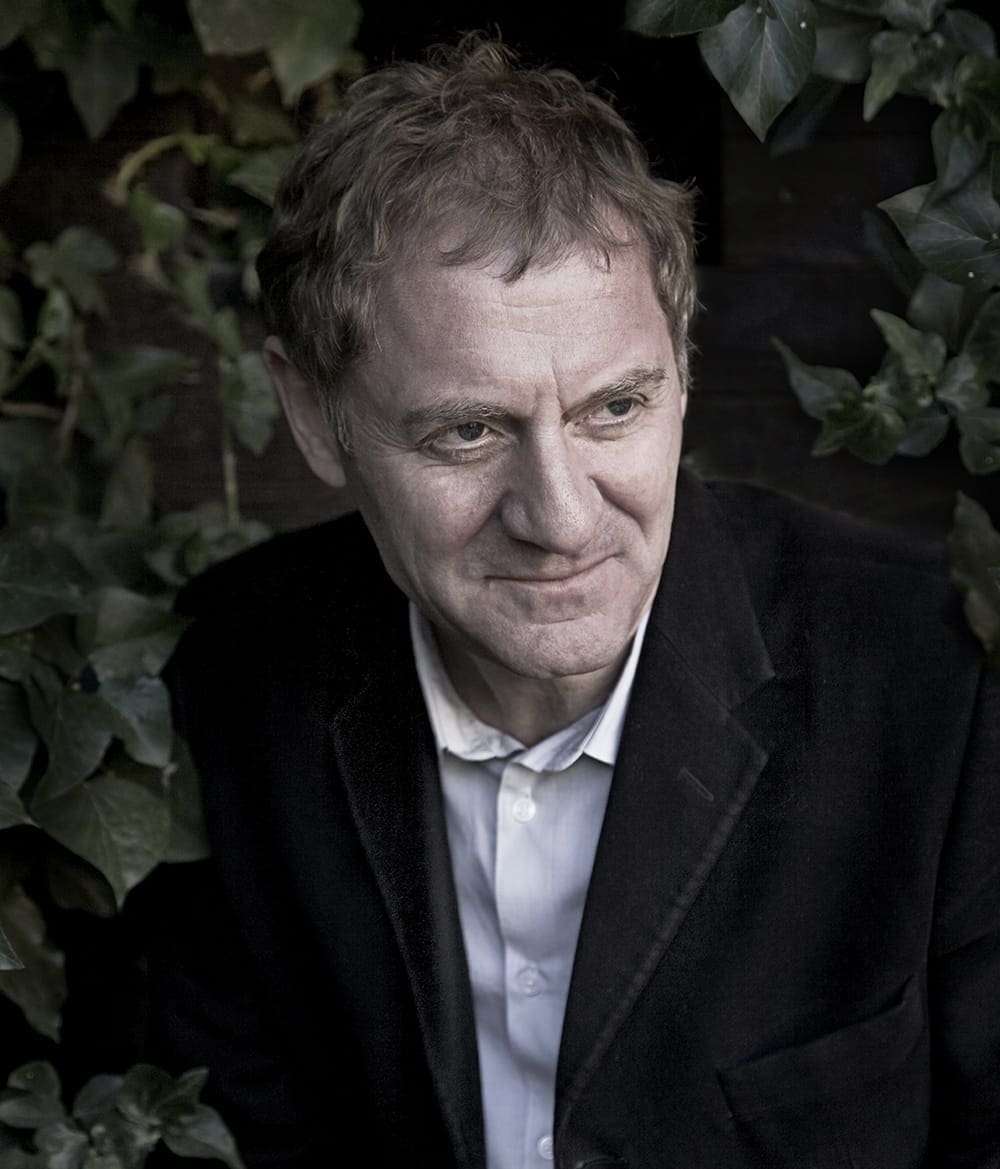
Andrew Motion is the Homewood Professor of the Arts at Johns Hopkins University’s Krieger School of Arts & Sciences. He previously held the position of Professor of Creative Writing at Royal Holloway, University of London, from which he moved to his current role in 2015. Motion is a celebrated poet, biographer, and essayist, having served as the UK Poet Laureate from 1999 to 2009. He was knighted in 2009 for his contributions to poetry. His research interests span poetry, literary biography, and creative writing. He has authored biographies of prominent figures like Philip Larkin and John Keats, as well as two volumes of autobiography and a collection of essays. Motion co-edited *The Penguin Book of Elegy* with Stephen Regan, reflecting his engagement with elegiac literature. Motion’s publications include recent works such as *New and Selected Poems 1977-2023* (2023) and *Waders* (2024). His earlier notable works include *In the Blood* (2006) and *Sleeping on Islands* (2023). He has co-founded initiatives like the Poetry Archive and Poetry by Heart, demonstrating his commitment to preserving and promoting poetry. No formal advisees or grants are explicitly documented in the provided text.
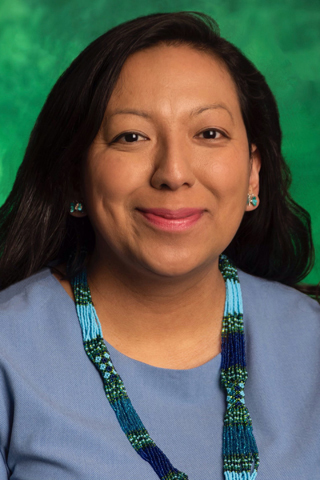
Jennifer Gómez Menjívar is Professor and Director of the M.A. in Media Industries and Critical Cultural Studies at the University of North Texas. Her research examines historical and ethno-linguistic movements influencing text production, circulation, and reception across print media, screen cultures, and digital communities. With over 18 years of teaching experience, she previously held positions at international organizations including the UNECE and UNDP. Her scholarly interests span media linguistics, film adaptation, digital activism, hemispheric animation histories, Indigenous sovereignty media, and Spanish-language media. Her publications demonstrate interdisciplinary work bridging media studies, cultural history, and postcolonial theory. Her extensive publication record includes books such as Tropical Tongues: Language Ideologies, Endangerment, and Minority Languages in Belize (2018) and Black in Print: Plotting the Coordinates of Blackness in Central America (2023), as well as co-edited volumes on Indigenous technology and hemispheric Blackness. She received a Senior Research Fellowship at Freie University Berlin for her upcoming work on Indigenous sovereignty media. Gómez Menjívar teaches courses including Introduction to Graduate Studies in Media Arts, Women in Film, and Global Media. She also mentors students in critical media analysis and serves as faculty advisor for media research projects.
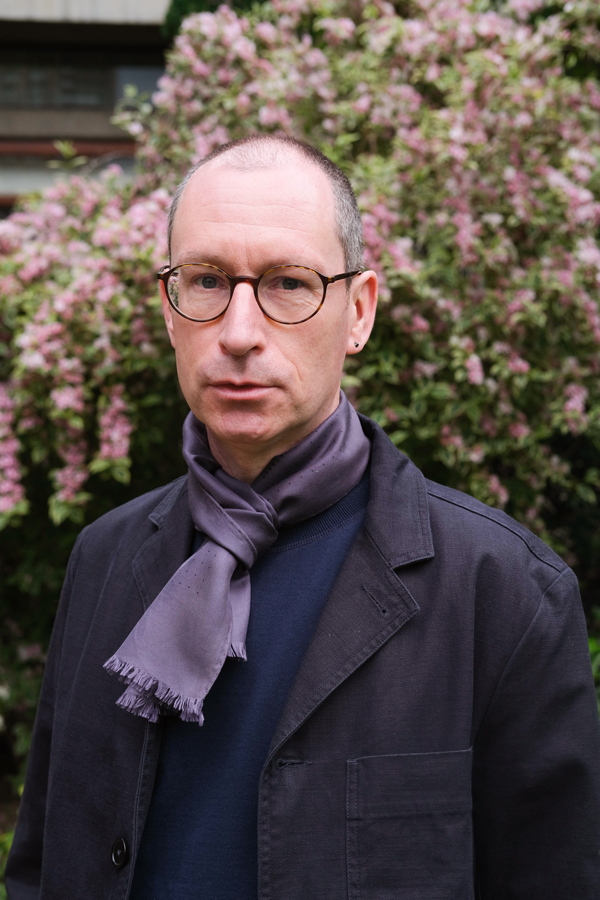
Professor Brian Dillon is the Professor of Creative Writing and Director of Creative Writing at Queen Mary University of London's School of English and Drama. Previously, he served as Head of the Writing Programme at the Royal College of Art. He holds a PhD from the University of Kent (1999) and has authored numerous books blending creative nonfiction, literary criticism, and art analysis. His research focuses on the essay form, autobiography, literature-visual arts intersections, and writing about illness. Key publications include *Suppose a Sentence* (2020), an experimental essay collection analyzing literary sentences, and *Affinities* (2023), exploring photographic imagery. Current projects include a study of Kate Bush's *Hounds of Love* and an essay on education. Dillon frequently contributes to *The Guardian*, *London Review of Books*, and *Artforum*, and has curated exhibitions for Tate and Hayward Galleries. His awards and fellowships are not explicitly listed here, but his work has been widely exhibited and published internationally. He supervises doctoral students in creative writing and related fields, emphasizing interdisciplinary approaches to literature and art. Public engagement includes talks at institutions like the British Museum and Pompidou Centre, and appearances on BBC Radio 3 and RTE Radio. His work bridges academic critique with accessible creative writing, making complex themes engaging for broader audiences.
Sunny Xiang is an Associate Professor of English at Yale University, where she teaches and conducts research at the intersection of literature, race, war, and empire. Her work critically examines U.S. military empire in Asia and the Pacific, particularly through aesthetic, cultural, and documentary forms from the mid-twentieth century. She is affiliated with the Department of English in the Faculty of Arts and Sciences at Yale. Ph.D., University of California, Berkeley B.A., Northwestern University Her research focuses on the cultural genealogies of American empire, with an emphasis on how war and militarism shape perception, knowledge, and everyday life. Key areas include Cold War aesthetics, Asian American studies, Pacific studies, critical militarization studies, and feminist science studies. She is particularly interested in how literary and cultural forms reveal the intimate, quotidian, and often invisible operations of empire. Her publications span journals such as ASAP/Journal , Radical History Review , PMLA , and Public Books . Her first book, Tonal Intelligence: The Aesthetics of Asian Inscrutability During the Long Cold War (Columbia University Press, 2020), explores the visual and narrative trope of Oriental inscrutability in relation to U.S. intelligence operations. Her current project, Chemical Apophenia: Air Conspiracies and Skin Connections in the Toxic Tropics , investigates how WWII military science in the Pacific generated new paradigms for detecting toxicity. The articles reflect a consistent engagement with themes of militarized domesticity, aesthetic excess, diasporic memory, and the entanglement of fashion, food, and war in imperial contexts. Mundane Militarisms: War, Archives, and Everyday Life (2024) Militarized Comfort: How to Feel Naked While Wearing Clothes (2023) Bikinis and Other Atomic Incidents: The Synthetic Life of the Nuclear Pacific (2022) Wars of Contemporary Life (2020) Global China as Genre (2019) Sunny Xiang has not been mentioned in relation to any scientific awards or fellowships in the provided text. She teaches courses such as War and Everyday Life, Readings in Comparative World English Literatures, and The Teaching of English. While her advisees or research teams are not listed, her scholarship demonstrates deep engagement with interdisciplinary methodologies and collaborative work, such as with the Mundane Militarisms Collective. She has not indicated any lab affiliations, but her research involves critical archival work and analysis of visual, literary, and cultural materials.
Ksana Blank is a Senior Lecturer at Princeton University’s Department of Slavic Languages and Literatures. She coordinates the Russian Language Program and directs the Princeton-in-Petersburg Program, fostering academic exchange and interdisciplinary research. With a PhD in Russian Literature (Columbia University, 1997) and a BA in French Philology (St. Petersburg State University, 1979), her academic career spans over two decades at Princeton, preceded by teaching roles at Hunter College and Middlebury College Russian Summer School. Education: PhD, Russian Literature, Columbia University (1997) BA, French Philology, St. Petersburg State University (1979) Her research centers on Russian literature, emphasizing stylistic analysis and interdisciplinary connections with music, visual arts, folklore, and religious philosophy. Notable works include studies on Dostoevsky’s dialectics, Gogol’s The Nose , and the interplay between Russian modernism and Western art movements. She has authored multiple books and articles, many translated into Russian, and has published in academic journals across Russia, Europe, and China. Recent publications explore Dostoevsky’s paradoxes, Gogol’s linguistic innovation, and the intersection of Russian literature with music (Shostakovich), art (Malevich), and philosophy. Her 2023 book Парадоксы классики expands traditional interpretations of classic works through interdisciplinary lenses, while her 2021 The Nose guide deciphers Gogol’s wordplay and its narrative function. Earlier works address Tolstoy’s spiritual crisis and Bakhtinian dialogism in Russian literary theory. While no scientific awards are listed, her contributions to pedagogy include advanced Russian language courses and graduate-level Tolstoy studies. She currently works on Leo Tolstoy’s The Prisoner of the Caucasus and teaches courses on Russian literature, spirituality, and translation.
Dr. Stephan Lesker is a Researcher at the Institute for German Studies within the Faculty of Philosophy at the University of Rostock, serving as a research and teaching assistant to Prof. Dr. Lutz Hagestedt at the Chair of Modern and Contemporary Literature since April 2015. His educational background includes: Bachelor of Arts in German and Philosophy, University of Rostock (2005-2008), thesis on narrative aspects in Edgar Hilsenrath's Jossel Wassermann's Homecoming Master of Arts in German and Linguistic Communication/Communication Disorders, University of Rostock (2011), thesis on crisis experiences in Hermann Hesse and Ernst Jünger Dr. Lesker's research centers on 20th-century German literature with specialized focus on narrative theory, media staging and simulation (particularly in Rainald Goetz and Walter Kempowski), and the complex interplay between autobiography and fiction. His scholarly approach examines how literary texts negotiate historical representation and personal narrative boundaries through theoretical frameworks of simulation and mediality. Analysis of his recent publications reveals sustained engagement with German literary figures Matthias Claudius and Walter Kempowski, exploring themes of intellectual history, travel literature, and the tension between factual and fictional elements. His editorial work on the Kempowski Yearbook and contributions to Claudius scholarship demonstrate methodological consistency in examining autobiographical impulses within literary production. No scientific awards were documented. Information regarding student advising, research grants, or laboratory teams was not provided in the source materials.
Adrienne Raphel is a Lecturer in the Department of English at Baruch College, part of the Weissman School of Arts and Sciences at The City University of New York (CUNY). She holds a Ph.D. in English Literature from Harvard University, an M.F.A. in Creative Writing (Poetry) from the University of Iowa, and a B.A. in English Literature and Creative Writing from Princeton University. Her research and creative work intersect contemporary culture, poetry, and the history of wordplay. She explores modernist literature, dark academia, and the evolution of puzzles like crosswords and board games as cultural artifacts. Raphel's recent publications highlight crosswords, poetry, and literary criticism, reflecting her interests in generational trends, linguistic innovation, and urban themes. Her articles analyze cultural phenomena through the lens of games, literature, and media. She has received prestigious awards, including: Visiting Fellowship at the American Library in Paris (2023) James Merrill Writer in Residence (2023) Writer in Residence at The Mastheads (2018) Raphel serves on the Awards and Honors Committee and teaches courses such as Writing II and Great Works of Literature I. She has contributed to media outlets like The New Yorker , The New York Times , and The Paris Review .
Charles M. Stang is Professor of Early Christian Thought at Harvard Divinity School and Director of the Center for the Study of World Religions, positions he has held since joining the faculty in 2008 and becoming director in 2017 respectively. His academic home is firmly within Harvard University's religious studies ecosystem, where he has established himself as a leading scholar in ancient Christian thought and Mediterranean religious history. His educational background includes an AB from Harvard College, an MDiv from the University of Chicago, and a ThD from Harvard Divinity School. This rigorous training across prestigious institutions has equipped him with interdisciplinary perspectives that inform his boundary-crossing scholarship. Stang's research interrogates the intersections of early Christian thought with broader Mediterranean philosophical traditions, with particular emphasis on apophatic theology, Gnosticism, and Syriac Christianity. His work consistently challenges reductionist approaches to religious studies, advocating instead for what he terms an 'expansive anthropology, ontology and epistemology' that recognizes religion's capacity to transcend mundane frameworks. He has developed a distinctive theoretical framework around 'transcendence and transformation'—concepts he argues should form the core of religious studies in the contemporary academy. His publications reveal a trajectory from focused historical studies of early Christian texts toward more expansive theoretical interventions in religious studies methodology. While his early work centered on figures like Dionysius the Areopagite and Evagrius Ponticus, his recent scholarship increasingly engages with contemporary questions about religion's role in the humanities and the urgent need for what he calls 'superhumanities' that acknowledge dimensions of reality beyond conventional academic frameworks. Manfred Lautenschläger Award for Theological Promise (2013) for Apophasis and Pseudonymity in Dionysius the Areopagite As Director of the Center for the Study of World Religions, Stang has launched the 'Transcendence and Transformation' initiative, positioning the center as both a scholarly hub and a conceptual beacon for reimagining religious studies. His vision frames religious studies not as a marginal discipline but as essential to revitalizing the humanities through its unique capacity to engage with dimensions of reality that conventional academic frameworks often overlook. The Center functions as what Stang describes as 'a beacon, a harbour, and a record' for this reconceptualization of religious inquiry.
Dr. Kaye Mitchell is a Senior Lecturer in Contemporary Literature within the Department of English and American Studies at the University of Manchester. She serves as Co-Director of the Centre for New Writing and is affiliated with the Centre for the Study of Sexuality and Culture. Her academic career spans over fifteen years at Manchester, following previous teaching at the University of Westminster. Her educational background includes a BA in English Literature from Queen Mary University of London, an MA in Philosophy from Birkbeck, and a PhD from Birkbeck completed in 2004. She has held visiting positions including a Visiting Scholar at NYU in 2011 and an 18-month Humboldt Experienced Research Fellowship in Berlin from 2014-2015. Dr. Mitchell's research focuses on contemporary literature with particular emphasis on gender and sexuality studies, literary theory, and experimental writing by women. Her work explores the relationships between form, meaning, and gender/sexual identity and representation. She has published extensively on topics including literary intention, women's experimental writing, and the politics and poetics of shame in contemporary literature. She is currently working on a monograph titled Gendered Experiments which analyzes gender ramifications of literary experiment through strategies of appropriation, constraint, and excess. Her research output shows a consistent trajectory toward increasingly specialized work on women's writing, gender, and experimental literary forms. The publications demonstrate interdisciplinary connections between literary studies, gender theory, and affect studies, with particular attention to how negative affects like shame operate within contemporary literary texts. Humboldt Experienced Research Fellowship (2014-2015) Co-Editor of Contemporary Women's Writing (OUP journal) Member of editorial boards for Open Gender Journal and C21 Dr. Mitchell actively supervises PhD students working on diverse topics spanning gender studies, contemporary literature, and experimental writing. Her external engagement includes talks at major festivals and events including Ladyfest Manchester, Queer Up North, Homotopia, and the Manchester Literature Festival. She also participates in the annual Sexuality Summer School through her affiliation with the Centre for the Study of Sexuality and Culture.
Jochen Hellbeck is a Distinguished Professor of History and Vice Chair for Graduate Education in the Department of History at Rutgers University's School of Arts and Sciences, where he has been teaching since 2003. He holds a Ph.D. from Columbia University and specializes in the history of the Soviet Union, with particular focus on individual life stories and the shaping of the self in modern Europe. Professor Hellbeck's research centers on the place and self-understandings of individuals during cataclysmic 20th century events, including the Russian Revolution, Stalin's terror regime, and World War II. His work examines how narratives of redemptive violence and transformation attached themselves to individuals on the ground, revealing how authors of diaries and personal texts became co-authors of the revolutionary script. More recently, he has explored comparative and transnational aspects of how Soviet, German, and British states mobilized citizens during World War II, highlighting the centrality of the Soviet war effort to the broader history of the conflict. His acclaimed book Stalingrad: The City that Defeated the Third Reich (2015) was the first Western study to probe the meaning of the Battle of Stalingrad for Soviet soldiers and civilians. The book draws on dozens of oral histories recorded by Moscow historians during and after the battle. Hellbeck's research consistently focuses on personal narratives and eyewitness accounts to provide grounded perspectives on major historical events. Morphomata Fellowship, Cologne (2019) Guggenheim Fellowship (2017) Short list, non-fiction prize of the Moscow Book Fair (2017) Davis Center Fellowship, Princeton (2016) Damals prize for best historical monograph (2013) American Academy in Berlin Fellowship (2009) Rutgers Board of Trustees Fellowship for Scholarly Excellence (2007) Michigan Society of Fellows (1997-1999) As a member of the Rutgers graduate faculty, Professor Hellbeck works with students interested in modern Russia and the Soviet Union, and in transnational explorations of Communism, World War II, and the Cold War. He encourages prospective graduate students to contact him before application deadlines. His website, Facing Stalingrad , features portraits and voices of veterans he interviewed during his research.
Mustafa Kirca serves as Associate Professor of English and Comparative Literature at Çankaya University in Ankara, Turkey, where he is affiliated with the Department of Translation and Interpreting Studies. His academic profile demonstrates extensive engagement with contemporary literary theory, postcolonial studies, and comparative literature, with particular focus on the Turkish context. Kirca's research interests span postmodernist fiction, postcolonial theory, literary translation, gender studies, and cultural identity. His scholarly work consistently examines the intersections between literature, philosophy, and cultural politics, with special attention to how global literary phenomena are received and transformed in Turkish intellectual contexts. He has made significant contributions to understanding the relationship between translation studies and comparative literature, advocating for border-crossing approaches that challenge traditional disciplinary boundaries. Analysis of Kirca's publications reveals consistent engagement with postcolonial narrative strategies, particularly textual decolonization approaches that challenge Eurocentric discourses. His work frequently examines how contemporary authors like Murakami, Rushdie, and Carter negotiate cultural hybridity and identity formation. A notable thread throughout his scholarship is the examination of how literary texts engage with philosophical concepts, from Kierkegaardian existentialism to postmodern historiography, often through the lens of translation and cross-cultural reception. Kirca has co-edited several significant scholarly collections including Iris Murdoch and Her Work: Critical Essays (2010), B/Orders Unbound: Marginality, Ethnicity and Identity in Literatures (2017), and Multicultural Narratives: Traces and Perspectives (2018), demonstrating his collaborative scholarly approach and broad intellectual interests. His editorial work has created important platforms for interdisciplinary dialogue in literary and cultural studies. As an active academic, Kirca has contributed to numerous conferences on Language, Literature and Culture, with particular emphasis on how contemporary literature engages with themes of fear, identity, and cultural transformation in the post-millennial era. His work demonstrates consistent scholarly productivity with publications spanning from 2009 to the present, including the forthcoming 2025 work on Murakami's Killing Commendatore .
Dr. Karen Cochrane is an Assistant Professor at the University of Waterloo, specializing in Human-Computer Interaction (HCI) with a focus on wearable and tangible computing for mental health and accessibility. Her research integrates soma design, autoethnography, and design fiction to address the needs of underrepresented communities, particularly those with disabilities. Key projects include developing assistive technologies for queer/crip identities, accessible gaming wearables, and tactile interfaces for sensory exploration. She explores embodied experiences through multidisciplinary approaches, blending traditional craft practices with modern computational tools. Her work prioritizes participatory design methodologies, collaborating with occupational therapists, disabled communities, and neurodivergent individuals to co-create inclusive technologies. Recent innovations include VARitouch (a haptic feedback device), Breathing Scarf (for emotional regulation), and adaptive switches for children with motor disabilities. Her research extends into sensory narratives, exploring how fabric and data can articulate bodily experiences through projects like Sensory Data Dialogues and Queer/Crip Body Mapping. While no formal grants or awards are listed, her publications reflect a strong focus on ethical technology, accessibility, and embodied interaction. Current projects emphasize the intersection of wearable tech with identity expression, mindfulness practices, and neuromotor rehabilitation. She actively designs prototypes that bridge clinical needs with creative technology solutions, though specific lab affiliations or team collaborations are not detailed in available texts.
Aysha Hidayatullah is an Associate Professor in the Department of Theology and Religious Studies at the University of San Francisco's College of Arts & Sciences. She teaches undergraduate courses focusing on gender, sexuality, race, ethics, and religious studies within Islamic traditions. PhD, Religious Studies, University of California, Santa Barbara, 2009 MA, Religious Studies, University of California, Santa Barbara, 2005 BA, Women's Studies and English, Emory University, 2001 Her research explores feminist exegesis of the Qur'an , constructions of gender and sexuality in Islamic traditions , and the body in Islamic ritual practices . She also examines literary representations of Muslims, particularly through feminist theological frameworks and methodologies in Islamic studies. Key themes in her publications include interfaith collaboration , Qur'anic hermeneutics , and gendered narratives in Islamic history . Her work addresses intersections of religion, gender, and race in both historical and contemporary contexts. 2023, Collective Achievement Award, University of San Francisco 2019, James Catiggay Changemaker Award, University of San Francisco 2017, Distinguished Teaching Award, University of San Francisco & Faculty Association 2016-2017, Dean's Scholar Award, College of Arts and Sciences 2015, Ignatian Service Award, University of San Francisco
Laura Fine is a Professor of English and holds the Norma Rose Chair in English at Meredith College. She specializes in literary analysis with a focus on gender, race, and cultural dynamics in American and Southern literature. Her research explores themes such as identity formation, social critique, and narrative structure in works by authors like Harper Lee, Jesmyn Ward, and Bonnie Jo Campbell. She actively contributes to academic conferences and publications, balancing her scholarly work with department leadership and undergraduate education. Dr. Fine earned her B.A. from the University of Minnesota, followed by M.A. and Ph.D. degrees from the University of California at Davis. Her teaching philosophy emphasizes connecting students to literary themes through small-class discussions, fostering critical thinking and effective communication. Her research spans contemporary and classic texts, with publications analyzing gender in modern American fiction, race in Southern Gothic narratives, and postcolonial identity in works like Jhumpa Lahiri’s stories. Recent work includes a chapter on rape culture in Bonnie Jo Campbell’s fiction and re-evaluations of Harper Lee’s legacy. As department head, Fine prioritizes community-building among English majors, faculty, and staff. She has contributed to major reference works like the Encyclopedia Britannica and engages with public discourse through platforms like The Conversation.
Dr. Emily Cuming is a Senior Lecturer in the Humanities and Social Science school at Liverpool John Moores University , specializing in British literature, culture, and social history from the 19th century to the present. Her research focuses on maritime relations, working-class girlhood, life writing, and representations of domestic spaces including council estates, slums, and bedsits. PhD, MA, BA in English & Russian from University of Manchester (2006, 2002, 2001) Editor of Key Words: A Journal of Cultural Materialism Co-leader of the Home and Domestic Cultures research network Committee member of the Research Institute for Literature and Cultural History Board member of the Centre for Port and Maritime History Her research combines literary analysis with historical and cultural studies, emphasizing material culture, port cities, and marginalized voices. Recent publications include Maritime Relations: Life, Labour and Literature at the Water’s Edge, 1830-1914 (Cambridge University Press, forthcoming 2025) and Housing, Class and Gender in Modern British Writing, 1880-2012 (CUP, 2016). She has received multiple research grants including AHRC Connected Communities funding and Liverpool John Moores University QR awards. Dr. Cuming teaches undergraduate modules on Life Stories , Representing Domestic Space , and Waterscapes , as well as MA courses on Place: Imagining Place in Modern Times . She supervises three PhD projects and welcomes new supervisees in her research areas. 2025: Enhancing Research Cultures funding for 'The Sinking of the Lancastria' 2024: Editorial board member of Journal of Victorian Culture 2023: NCCPE Engage Prize for 'Around the Toilet' project 2022: Caird Short-term Research Fellowship 2016: NCCPE Engage Prize winner