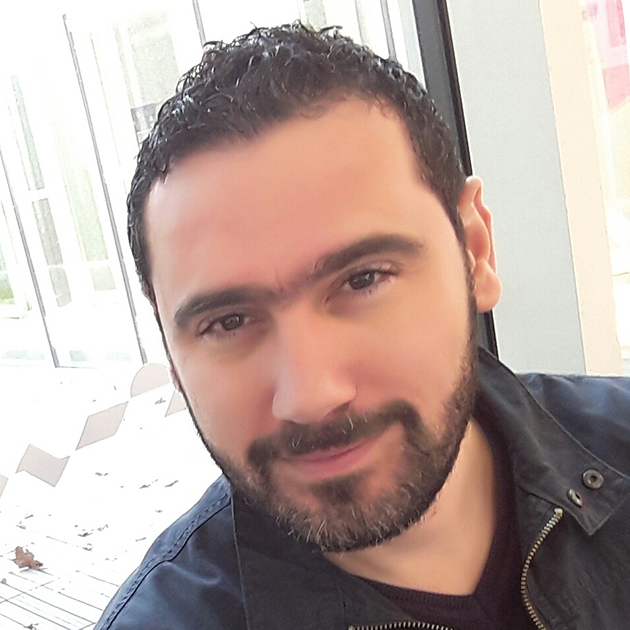
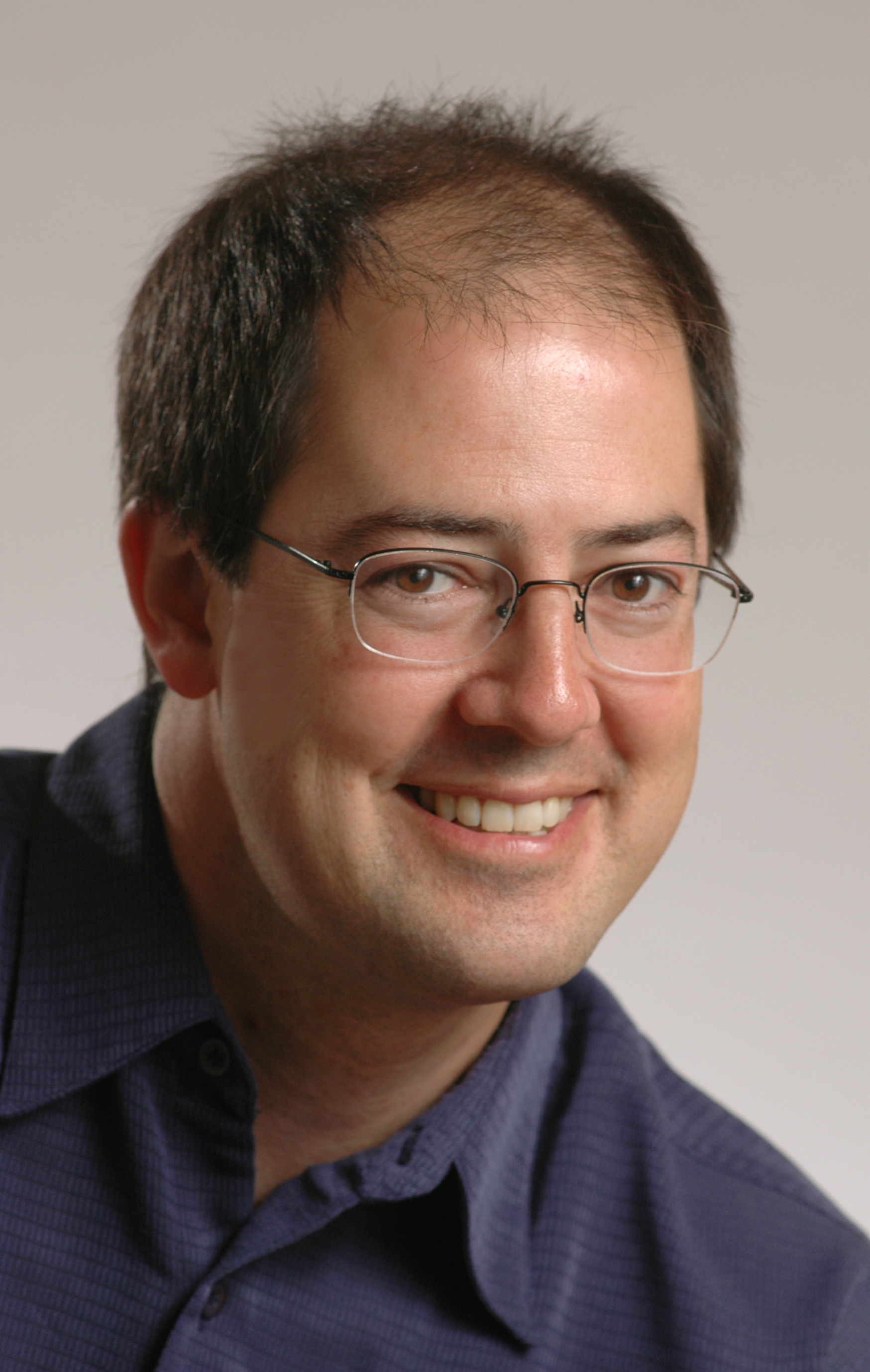
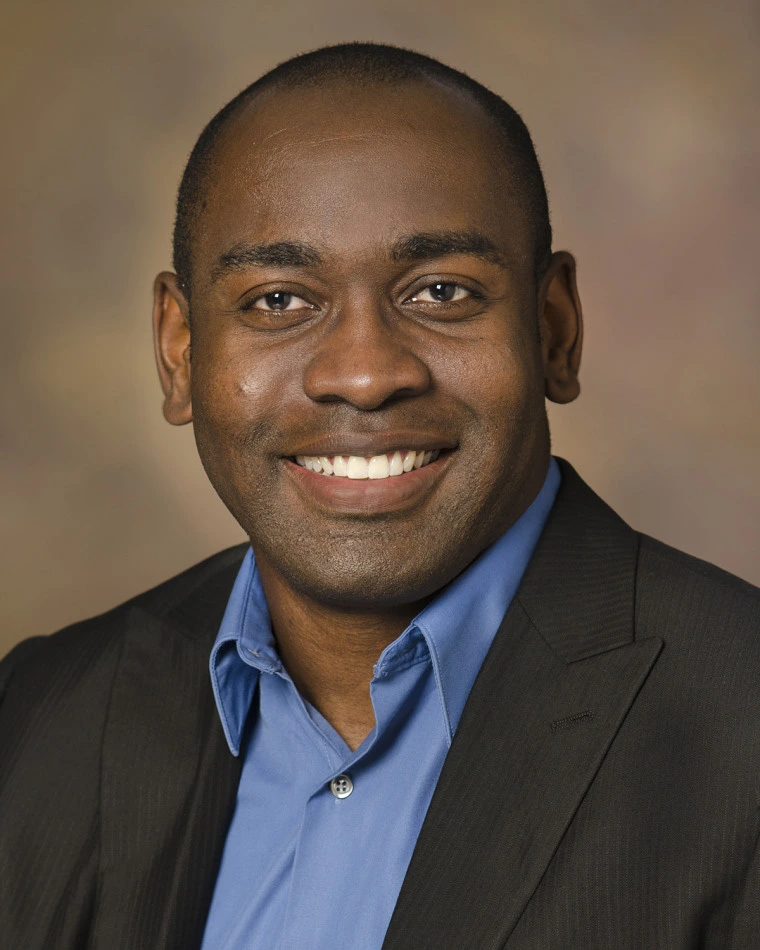
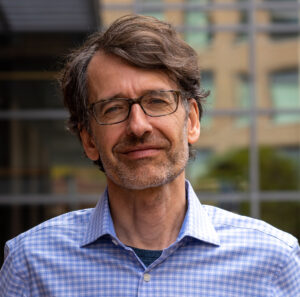
David Mazières is a Professor at Stanford University , affiliated with the School of Engineering and the Department of Computer Science . He serves as a software engineer at the Stellar Development Foundation . His work bridges academic research and industry applications in distributed systems and security. University: Stanford University Academic Rank: Professor Email: dm@scs.stanford.edu Research Interests: David Mazières' research focuses on distributed systems , cryptocurrencies , and computer security . Key areas include consensus protocols (e.g., Stellar ), low-latency scheduling ( Syrup , Shinjuku ), and cryptographic techniques for privacy and security ( SafetyPin , CCFI ). Key Achievements: His notable works include: TCP-ENO (RFC 8547) for secure transport protocols Stellar Consensus Protocol for decentralized finance SOSP 1999 Best Paper for 'Separating key management from file system security' Teaching Contributions: He has taught core and advanced courses at Stanford since 2005, including CS212 (Operating Systems) , CS240h (Functional Systems in Haskell) , and CS251 (Cryptocurrencies and Blockchain Technologies) . Previously taught courses at NYU (2001-2005).
Walter W. Powell is the Jacks Family Professor of Education at Stanford University, with courtesy appointments in Sociology, Organizational Behavior, Management Science and Engineering, and Communication. He serves as Faculty Co-Director of the Stanford Center on Philanthropy and Civil Society (PACS), which he co-founded in 2006, and leads the Civic Life of Cities Lab examining civil society organizations across global metropolitan areas. Powell is also an External Faculty member at the Santa Fe Institute and co-directs the CASBS summer institute on Organizations with MIT's Bob Gibbons. His educational background includes a PhD in Sociology from SUNY-Stony Brook (1978), an MA in Sociology from the same institution (1975), and a BA from Florida State University (1971). Powell's research fundamentally explores how ideas and practices transfer across organizational boundaries, with particular emphasis on network structures that enable or constrain knowledge diffusion. His work spans organizational theory, institutional analysis, university-industry relations, economic sociology, and comparative analysis of nonprofit, public, and private institutional forms. Powell's publications reveal consistent focus on network dynamics and institutional evolution, particularly examining how organizations navigate between market, hierarchy, and network governance structures. His research demonstrates how knowledge spillovers operate within biotechnology clusters, how institutional isomorphism shapes organizational fields, and how civil society organizations adapt to technological and economic pressures across different urban contexts. Dean's Award for Excellence in Graduate Teaching (2018-19) Max Weber Award for "Neither Market Nor Hierarchy" Viviana Zelizer Prize for "Network Dynamics and Field Evolution" Administrative Science Quarterly Recognition Member of Swedish Royal Academy of Science Member of The British Academy Member of American Academy of Arts and Sciences Honorary Degrees from Uppsala University, Copenhagen Business School, and Aalto University Powell has made substantial contributions to graduate education, receiving Stanford's highest teaching honor. His leadership of PACS and SCANCOR (1999-2010) demonstrates sustained commitment to advancing organizational research through collaborative initiatives. He supervises postdoctoral fellows and runs annual PhD workshops in Europe, fostering the next generation of organizational scholars. His research has been supported by grants enabling comparative studies of university-industry relations and civil society across multiple national contexts. Through the Civic Life of Cities Lab at PACS, Powell directs comparative research on civil society organizations across seven global cities, examining how these organizations navigate technological change, economic pressures, and political environments. His work bridges theoretical organizational sociology with practical applications in philanthropy, civil society development, and knowledge transfer between academic and commercial sectors.
Nirupam Roy is an Assistant Professor at the Department of Computer Science, University of Maryland, College Park, and Director of the iCoSMoS research lab. His work bridges wireless networking, mobile computing, and acoustic sensing with applications in IoT, localization, healthcare, security, and wearables. Research Focus: Wireless Networking & Mobile Sensing Awards: Best paper award, MobiSys 2022 Best demo award, MobiSys 2021 CSL Ph.D. Thesis Award, UIUC 2019 Students: Nakul Garg, Yang Bai, Irtaza Shahid, Harshvardhan Takawale, Aritrik Ghosh, Ayushi Mishra, Sumbul Zehra, Justin Goodman Grants: NSF CAREER award (2023), Meta Research Award (2023)
Dr. Euijin (Alley) Choo is an Assistant Professor in the Department of Computer Science at the University of Alberta, specializing in data-driven cybersecurity and big data analytics. Her research focuses on AI-based cybersecurity solutions, anomaly detection in network traffic, and adversarial attacks on federated learning systems. She holds a Ph.D. from North Carolina State University and has held roles at Qatar Computing Research Institute, Korea University, and the University of Missouri-Rolla. Education: Ph.D., Computer Science, North Carolina State University (2015) M.S., Computer Science & Engineering, Korea University (2008) B.S. Dual Degree in Computer Science & Mathematics, Korea University (2006) Research Interests: Security and big data analysis intersections Federated learning security and privacy Anomaly detection in network logs and enterprise systems Malware/phishing detection using graph inference AI-driven threat intelligence aggregation Recent Grants: Mitacs Accelerate Program Grant: Fraud Detection in Financial Graphs ($60,000, 2025) National CyberSecurity Consortium Grant: IntruderInsight ($2M, 2025-2027) NSERC Discovery Grant: Threat Detection Framework ($180,000, 2025-2031) Awards: Best Paper Award at DBSEC 2015 NSERC Early Career Researcher Award (2025) Provost Fellowship (NC State, 2009-2010) Labs/Teams: Leads the Data-driven Network and Cyber Security (DANS) Lab, focusing on federated learning defenses, compromised entity detection, and malicious domain analysis.
Rida Khatoun is a Professor in Cybersecurity at the Computer Sciences and Networks (Infres) Department at Télécom Paris. He holds a M.Sc. in Computer Engineering and a Ph.D. from the University of Technology of Troyes (UTT), France, awarded in 2004 and 2008, respectively. His research focuses on cybersecurity in networks, including cloud computing security, IoT security, vehicular networks security, intrusion detection systems, and blockchain technology. He has taught at Telecom Paris since 2014, Shanghai Jiao Tong University (SJTU) since 2016, and other institutions in China and France since 2005. His work spans theoretical frameworks and practical solutions for network security challenges. Key research areas include DDoS attack detection, vehicular communication security, and cryptographic protocols. He leads the Cybersecurity and Cryptography (C²) research team and is affiliated with the Laboratoire Traitement et Communication de l'Information (LTCI). His contributions include developing secure routing protocols (e.g., ASROP), statistical trust systems in wireless networks, and blockchain-based authentication for IoT. He has authored over 115 publications, including peer-reviewed articles and conference proceedings, with recent work addressing vehicular platooning security, TLS handshake optimization for C-ITS, and machine learning for cyberbullying detection. Rida’s academic activities include teaching courses on network security protocols, wireless network fundamentals, and QoS mechanisms. He collaborates internationally, contributing to smart city cybersecurity architectures and 6G programmable communications. His research emphasizes practical cybersecurity solutions for emerging technologies, ensuring robust protection against evolving threats in vehicular, IoT, and cloud environments.
Kristofer Pister is a Professor in the Department of Electrical Engineering and Computer Sciences at the University of California, Berkeley. He co-directs the Berkeley Sensor and Actuator Center (BSAC) and the Ubiquitous Swarm Lab. His career spans groundbreaking innovations in Micro/Nano Electro Mechanical Systems (MEMS), Control Systems, and Low-Power Circuits, with a focus on Smart Dust and synthetic insects. Education: Ph.D. and M.S. in EECS from UC Berkeley (1992, 1989); B.A. in Applied Physics from UC San Diego (1986). His research areas include MEMS , Control Systems , Robotics , and Integrated Circuits , with recent work on self-powered micro-sensors, crystal-free radios, and interplanetary swarm networks. Key awards include the ISA Albert F. Sperry Founder Award (2009) , Alexander Schwarzkopf Prize (2006) , and the NSF CAREER Award (1996) . He has authored numerous influential publications in wireless sensor networks and microrobotics. His lab, Ubiquitous Swarm Lab , explores distributed robotics and swarm intelligence. Pister emphasizes open collaboration in research, ethical conduct in academia, and efficient resource utilization for graduate students.
Ambuj Varshney is an Assistant Professor at the National University of Singapore (NUS) School of Computing , leading the WEISER research group . His work bridges electronics, wireless communication, computer science, and AI with a focus on creating ultra-low-power embedded systems for sustainable IoT deployments. University of California, Berkeley: Postdoctoral Scholar (2020-2022) Uppsala University: PhD in Sustainable Networked Systems NXP Semiconductors: Software Engineer (prior to PhD) Bachelors in Information & Communication Technology Research interests center on overcoming wireless systems' energy asymmetry through tunnel diode oscillators , LiFi-RF hybrid networks , and battery-free communication architectures . His group develops STICORS —sticker-like computers for industrial and medical monitoring. Recent publications demonstrate AudioCast 's FM-band utilization for 130m transmission, TunnelSense 's vital monitoring, and PixelGen 's diffusion model cameras. These works combine IoT sustainability, spectrum efficiency, and hardware innovation . 2024: Google Research Scholar Award 2023: MobiSys Best Demonstration 2021: Berkeley FORM+FUND Fellowship 2019: ABB's $300K Research Award As an educator, he teaches CS4222 Wireless Networking and CS5272 Embedded Software Design . Past students include Wenqing Yan (NUS/UCB PhD), Qiao Yukai , and Kunjun Li . His team collaborates with Prabal Dutta (UCB), Christian Rohner (Uppsala), and Prateek Saxena (NUS).
Tosiron Adegbija is an Associate Professor in the Department of Electrical and Computer Engineering at the University of Arizona, where he serves as Director of Graduate Studies and Thomas R. Brown Endowed Fellow. He is a member of the Graduate Faculty and actively contributes to research and teaching in computer architecture and embedded systems. Education: PhD in Electrical and Computer Engineering, University of Florida, 2015 MS in Electrical and Computer Engineering, University of Florida, 2011 BS in Electrical Engineering, University of Ilorin, Nigeria, 2005 His research centers on energy-efficient computing with a focus on bio-inspired computer architecture , including spiking neural network (SNN) accelerators and in-memory computing. He also explores domain-specific architectures , adaptable memory systems , and microprocessor optimizations for IoT . His work leverages novel memory technologies like STT-RAM to enhance performance and reduce energy consumption in embedded and resource-constrained systems. Recent publications highlight trends in hybrid SNN acceleration, domain-specific accelerator generation, and system-level design space exploration. His research is increasingly focused on neuromorphic computing, automated hardware design, and ultra-efficient architectures using emerging materials like antiferromagnetic tunnel junctions. Scientific Awards: National Science Foundation (NSF) CAREER Award (2019) Elected IEEE Senior Member (2020) Best Paper Award at IEEE ISVLSI (2014) Teaching Award, University of Arizona (2018) ACM GLSVLSI Travel Award (2015) He advises numerous graduate and undergraduate students, many of whom have pursued careers at institutions like Pacific Northwest National Labs, Micron Technology, and Amazon. He has secured significant funding, including a $1.9M NSF FuSE2 grant for energy-efficient computing. His lab collaborates with UA Physics, CMU, and UNL. He has also developed educational tools for Chipyard and RISC-V, supporting hands-on learning in computer architecture. Labs and Research Teams: Leads a research group focused on bio-inspired and domain-specific computing, fostering innovation in energy-efficient hardware. The lab emphasizes hardware/software co-design, neuromorphic engineering, and real-world deployment in IoT and biomedical applications.
Christian Poellabauer is a Professor at Florida International University (FIU) in the Knight Foundation School of Computing and Information Sciences, serving as Interim Associate Dean for Research and Graduate Studies in the College of Engineering & Computing. He holds a Ph.D. from Georgia Institute of Technology (2004) and a Diplom-Ingenieur from TU Vienna (1998). His research focuses on mobile sensing, data analytics, and healthcare technologies, leading the MOSAIC Lab which develops solutions for healthcare, IoT, and smart cities. He previously led the Mobile Computing Lab at the University of Notre Dame and held leadership roles in data science institutes. Research Interests: His work spans digital biomarkers for neurodegenerative diseases, speech analysis for mental health, wearable device authentication, and wireless sensor networks. The MOSAIC Lab addresses challenges like real-time sensor data analysis on constrained devices and translating insights into clinical applications. Teaching: He has taught courses on Operating Systems, Mobile Computing, and Smart Health at both FIU and Notre Dame. Recent courses include COP4610 (Operating Systems Principles) and COP5614 (Graduate Operating Systems) at FIU. Service: He serves as Associate Editor for IEEE Transactions on Network Science and Engineering, and has organized conferences like ICNC 2023 and IEEE MASS 2021. His academic service includes roles on editorial boards and technical program committees for major conferences in distributed computing and networking. Advising & Labs: Advises current Ph.D. students in areas like multi-modal sensing for affective computing and mental health crowdsensing. Past students have pursued roles in academia and industry (e.g., Rose-Hulman Institute of Technology, Facebook, Microsoft). The MOSAIC Lab collaborates on projects like digital clinical outcome assessments and motor impairment detection.
Mauro Conti is a Full Professor at the University of Padua, Italy, where he serves as Editor-in-chief of IEEE TIFS, UniPD Academic Advisor for Entrepreneurship Development, Study Program Coordinator of the MSc degree in Cybersecurity, Head of the SPRITZ Security and Privacy Research Group, and Director of the UniPD node of CINI Cybersecurity National Lab. He also maintains affiliations with TU Delft (NL) and the University of Washington (USA). Additionally, he is the CEO and co-founder of CHISITO and co-founder of DYALOGHI. His research focuses on security and privacy for wireless resource-constrained mobile devices (WSNs, RFIDs, and smartphones), computer system security, computer forensics, access control, and distributed and networked systems. Professor Conti has published extensively in top security venues including ACM CCS, IEEE S&P, NDSS, and USENIX Security, with recent work covering topics such as battery authentication, federated learning privacy, private set intersections, USB peripheral fingerprinting, and ATM PIN inference. He has received numerous prestigious awards including IEEE Fellow, Young Academy of Europe Fellow, EU Marie Curie Fellow, and DAAD Fellow. Professor Conti has advised over 100 students at various levels including PhD, MSc, and BSc, many of whom have gone on to successful careers in academia and industry. His research has been supported by multiple European Commission projects, university grants, and industry collaborations with companies like Cisco and Intel.
Stanislaw Jarecki is an Associate Professor of Computer Science at the Donald Bren School of Information and Computer Sciences (ICS) at the University of California, Irvine (UCI). He joined UCI in 2003 after earning his Ph.D. in Computer Science from MIT in 2001 under Prof. Shafi Goldwasser. His research focuses on applied and distributed cryptography, with significant contributions to threshold cryptography, secure computation, and password-authenticated key exchange (PAKE) protocols such as OPAQUE, which secures 2 billion WhatsApp users. He also worked at Intertrust’s StarLab and Stanford’s applied cryptography group under Prof. Dan Boneh. Education: Ph.D., Massachusetts Institute of Technology, 2001. Research Interests: Distributed cryptography, secure multi-party computation, privacy-preserving protocols, threshold security, blockchain applications, and efficient cryptographic primitives. His work emphasizes practical solutions for real-world systems, including protocols resilient to server compromises and scalable encryption methods. Awards: 2023 IACR Fellow for contributions to distributed cryptography and efficient secure computation. Advising and Grants: Jarecki’s research has been supported by grants including NSF SaTC programs. He advises students on cryptographic protocol design and security mechanisms. His work on OPAQUE and CHIC protocols exemplifies his focus on bridging theoretical cryptography with practical implementation. Labs/Teams: Leads a research group focused on applied cryptography and security within ICS at UCI, collaborating on projects like secure computation, privacy-preserving data processing, and cryptographic protocol development.
Stephanie Wilson is a Professor of Human-Computer Interaction at City St George's, University of London, and Co-Director of the Centre for HCI Design (HCID). She co-founded the EPSRC Centre for Doctoral Training in Diversity in Data Visualization (DIVERSE CDT) and contributes to the Institute for Creativity and AI. Her research emphasizes inclusive interaction design, data visualization, co-design, and innovative digital technologies for healthcare, particularly for people with aphasia. She has supervised 17 PhD students to completion and led significant projects like EVA Park and INCA, which explore accessible virtual worlds and digital tools for aphasia. Her work has earned multiple awards, including ACM SIGCHI Honorable Mention Awards and the Tech4Good Accessibility Award Finalist. Stephanie has secured over £10 million in research funding, including grants from EPSRC and Innovate UK, and actively contributes to academic governance through roles like Chair of the Research Degrees Committee and establishing the Women++ group. She advocates for participatory design and ethical research practices in healthcare technology.
Robin Kravets is a Professor in the Department of Computer Science at the University of Illinois at Urbana-Champaign, where she leads the Mobius research group. She earned her Ph.D. in Computer Science from the Georgia Institute of Technology in August 1999. Her office is located at 3114 Siebel Center for Comp Sci, and she can be contacted via email at rhk@illinois.edu or phone at (217) 244-6026. Courses Taught: CS 438 (ECE 438) - Communication Networks CS 498 WN3 (CS 498 WN4) - Wireless IoT Lab CS 591 PH2 (CS 591 PHD) - PhD Orientation Seminar CS 591 SCH - PhD Job Search Prep CS 591 WN - Wireless Networking Seminar ECE 439 (CS 439) - Wireless Networks ENG 572 - Professional Practicum Research Focus: Dr. Kravets specializes in wireless and mobile systems, with emphasis on IoT security, energy-efficient networking, and privacy-preserving protocols. Her work addresses challenges in dense network environments, vehicular communication, and low-power devices, often leveraging probabilistic models and adaptive protocols to enhance system resilience. Publication Trends: Her recent articles (2016-present) predominantly explore wireless IoT security (e.g., MAC randomization defenses, BLE optimization) and practical applications in environmental sensing/retail. Earlier work (2007-2015) established foundations in vehicular networks, disruption-tolerant communication, and energy-aware protocols. Leadership: She directs the Mobius Group, which develops solutions for mobile and IoT systems, including projects like IVP (Illinois Vehicular Project) and contributions to standards in pervasive computing.
Ke Xu is a Professor in the Department of Computer Science at Tsinghua University's School of Information Science and Technology. With extensive research contributions in network security, privacy-preserving technologies, and machine learning applications for networking, Professor Xu has established himself as a leading researcher in computer science. Professor Xu's research interests span network security, privacy-preserving technologies, machine learning for networking, federated learning, internet protocols, encrypted traffic analysis, blockchain applications, and AI in networking. His work bridges theoretical foundations with practical implementations, focusing on real-world security challenges and network optimization problems. He has developed novel frameworks for secure network operations, privacy-preserving data sharing, and efficient AI deployment in distributed environments. Professor Xu's publication record shows a clear trend toward integrating artificial intelligence with traditional networking challenges. His recent work explores federated learning security, encrypted traffic analysis using deep learning, and novel approaches to network security that leverage machine learning techniques. The interdisciplinary nature of his research spans computer networking, security, privacy, and artificial intelligence. Professor Xu has received recognition for his contributions to network security and privacy-preserving technologies through publications in top-tier venues including IEEE journals, ACM conferences, and security symposia. His work has appeared in IEEE Transactions on Dependable and Secure Computing, IEEE/ACM Transactions on Networking, and security conferences like CCS and NDSS. Professor Xu actively collaborates with researchers across institutions, supervising students and junior researchers in exploring cutting-edge problems in network security and AI. His research has been supported by significant grants focusing on network security, privacy, and intelligent networking infrastructure. He leads projects that address fundamental challenges in secure communication, privacy-preserving data analysis, and intelligent network management. Professor Xu is involved with research laboratories focusing on network security and intelligent systems at Tsinghua University. His team works on developing practical security solutions, privacy frameworks, and AI-enhanced networking protocols that address real-world challenges in today's increasingly connected world.
Amir Rahmati is an Assistant Professor in the Department of Computer Science at Stony Brook University , where he directs the Ethos Security and Privacy Lab and contributes to the Stony Brook National Security Institute . His research focuses on system security , with specific emphasis on the security and privacy challenges of emerging technologies such as IoT , AR , and ML systems . Teaching: Instructor of SBU102: Computer Security (Spring 2025) Collaborations: Frequent collaborations with institutions like University of Michigan, University of Toronto, and IEEE/USENIX conferences. Rahmati’s research addresses security vulnerabilities in resource-constrained devices and real-world ML applications. His work includes adversarial robustness in neural networks, attack synthesis on medical devices, and privacy-preserving frameworks for IoT ecosystems. Trends in his publications reveal a focus on practical system design to mitigate security threats in cyber-physical systems , augmented reality , and blockchain technologies . Prospective students: Rahmati seeks researchers with expertise in hardware/software, machine learning, network protocols, and security to tackle system-stack challenges in his lab.