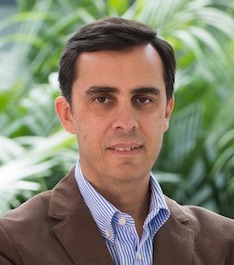
Miguel Pupo Correia is a Full Professor in the Department of Computer Science and Engineering at Instituto Superior Técnico, University of Lisbon. He serves as President of the Executive Committee of INESC-ID and is a researcher in the Distributed, Parallel and Secure Systems (DPSS) group. He represents Portugal in the European Blockchain Partnership (EBP) and holds roles in Associação .PT. He holds a PhD in Computer Science from the University of Lisbon Faculty of Sciences. His research focuses on cybersecurity, dependability in distributed systems, and their applications in blockchain, cloud, and mobile environments. Key projects include TRUSTyFOOD, BIG, and MAFTIA, among others. He is an Associate Editor for IEEE Transactions on Computers and a Senior Member of IEEE. His work spans blockchain interoperability, secure cloud storage, intrusion detection, and fault-tolerant algorithms. Notable contributions include BlockSim (a blockchain simulator) and SRX (SGX data recovery). He has over 200 publications and leads initiatives like BLOCKCHAIN.PT to advance Portugal’s blockchain adoption.
Tarek Gaber is a prominent academic researcher affiliated with the Faculty of Computers and Informatics at Suez Canal University and leads the Scientific Research Group in Egypt (SRGE). He maintains strong collaborative ties with international institutions including the University of Salford, Frankfurt University of Applied Sciences, and Ain Shams University, reflecting a globally engaged research profile. His research spans artificial intelligence, cybersecurity, blockchain, and smart systems with applications in agriculture, healthcare, aerospace, and industrial automation. Key areas include biometric authentication, satellite communication security, plant identification, and IoT-based monitoring systems. The body of his recent work demonstrates a trend toward secure, intelligent, and decentralized systems, particularly in using blockchain for space communications and federated learning for medical data. His publications appear in high-impact journals such as Computers and Industrial Engineering , Signal, Image and Video Processing , and Aerospace , with a strong citation record and an H-index categorized as 'Very High'. National Research Foundation National Institutes of Health Consejo Nacional de Ciencia y Tecnología Princess Nourah Bint Abdulrahman University International Atomic Energy Agency Deanship of Scientific Research, King Faisal University Wellcome Trust Nelson Mandela Metropolitan University VLIRUOS Petroleum Technology Development Fund He has supervised numerous research projects and likely mentors students through the Scientific Research Group in Egypt. While specific advisees are not listed, his leadership role implies active academic guidance. Dr. Gaber is associated with advanced research facilities and has contributed to over 100 publications. His work is supported by diverse international sponsors, highlighting the global relevance and interdisciplinary nature of his research.
Stine Lindahl Jacobsen is an Associate Professor at Aalborg University's Department Department of Communication and Psychology within the Faculty of Humanities and Social Sciences . She leads the Art, Aesthetics & Health section since 2022, focusing on music therapy applications for vulnerable populations. Her research explores music therapy for children and adolescents psychometric tool development (APCI) arts-based health interventions interdisciplinary collaboration She has supervised PhD students since 2016 and contributed to 105+ publications. Key awards: SparNord Fondens Forskningspris 2013 Recent work focuses on AI-assisted rehabilitation music, family dynamics, and well-being capacity building through arts.
Jiaxin Pan is a Professor at the University of Kassel, Germany, and holds a part-time Associate Professor position at the Norwegian University of Science and Technology (NTNU) under the Department of Mathematical Sciences. His research focuses on cryptography, including cryptographic systems with mathematically sound proofs, identity-based encryption, zero-knowledge proof systems, and lattice-based cryptography. He obtained his PhD from Ruhr-Universität Bochum and was a postdoc at the Karlsruhe Institute of Technology. **Education & Career**: PhD in Cryptography from Ruhr-Universität Bochum (2016), Postdoctoral Researcher at KIT (2016–2021), Associate Professor at NTNU (prior to moving to Kassel). Current roles include Program Committee member for top conferences like CRYPTO, Eurocrypt, and Asiacrypt. **Research Interests**: Tight security proofs, cryptographic protocols, quantum-resistant lattice-based systems, and privacy-preserving technologies like attribute-based encryption and zero-knowledge proofs. His work emphasizes bridging theoretical foundations and practical applications in cryptography. **Grants & Awards**: NTNU Outstanding Academic Fellows Programme (Career Development Award, 2022–2026) Young Research Talent Project (FRIPRO, 2021–2026) Peder Sather Grant (joint with Sanjam Garg, 2021–2023) **Professional Activities**: Program Committee roles for CRYPTO, Eurocrypt, Asiacrypt, and others. Editor for IACR Communications in Cryptology (2025). Reviewer for leading journals and conferences including STOC, TCC, and the Journal of Cryptology.
Alfredo Perez, Ph.D., is an Associate Professor and Graduate Program Chair for MS CS Education in the College of Information Science & Technology at the University of Nebraska at Omaha. He holds a doctorate and M.Sc. in Computer Science from the University of South Florida (2011, 2009) and a B.Sc. in Systems Engineering from Universidad del Norte, Barranquilla (2006). Education: Ph.D., Computer Science & Engineering, University of South Florida (2011) M.Sc., Computer Science & Engineering, University of South Florida (2009) B.Sc., Systems Engineering, Universidad del Norte, Barranquilla (2006) Dr. Perez's research focuses on privacy, mobile/ubiquitous computing, and computer science education. His recent work explores blockchain security, IoT privacy frameworks, and machine learning for malware detection. He also investigates formal modeling techniques for secure systems and wearables' facial privacy solutions. His publications reveal trends in privacy-preserving IoT architectures , blockchain applications , machine learning security , and formal verification methods . Research spans from technical implementations to societal impacts of privacy technologies. Scientific Recognition: IEEE Senior Member Member, U.S. National Academy of Inventors Dr. Perez has served on technical committees for journals/conferences like Elsevier Computer Communications and reviewed grants for the National Science Foundation. His teaching expertise covers computer programming, machine learning, and CS teacher education.
Dr. Yifan Zhou serves as a Lecturer in Structural Engineering within the Department of Civil, Environmental and Mining Engineering at The University of Western Australia's School of Engineering. Her academic appointment integrates teaching responsibilities with active research in advanced structural systems. Education PhD in Structural Engineering, University of Sydney (dissertation focused on stainless steel–concrete composite structures) Her research program centers on the performance and design of steel/composite structural systems, with growing emphasis on interdisciplinary applications. Key research thrusts include: (1) Mechanical behavior of stainless steel composite elements under extreme loads; (2) Integration of machine learning for structural health monitoring; (3) Sensor technology applications in predictive maintenance; (4) Development of data-informed design methodologies. This work directly contributes to UN Sustainable Development Goals related to sustainable infrastructure. Recent publications (2021-2025) demonstrate consistent focus on stainless steel composite structures, evolving from fundamental beam/column mechanics toward machine learning applications in marine environments. The research trajectory shows increasing interdisciplinary collaboration while maintaining core structural engineering rigor. Dr. Zhou actively supervises HDR candidates as indicated by her acceptance of PhD students through UWA's research portal. Her teaching portfolio includes coordinating CIVL3404/4404 Structural Steel and CIVL5552 Civil Structural Design Project, featuring industry-integrated pedagogies and authentic assessments. Professional engagement includes membership on Standards Australia Committee panel for AS/NZS 2327 revision, translating research into national design standards. This positions her work at the critical interface between academic research and engineering practice.
Maria Corradini is an Associate Professor and Arrell Chair in Food Quality at the Department of Food Science, University of Guelph. Her work focuses on developing protocols and mathematical models to assess food quality and safety across supply chains. She holds affiliations with Ontario Agricultural College and has collaborated internationally in Argentina, China, and the U.S. Education: MSc and PhD in Food Science from University of Massachusetts – Amherst. Previous positions include Assistant Research Professor at Rutgers University and faculty at Universidad Argentina de la Empresa since 2008. Research interests include food photophysics, modeling non-linear kinetics, and data integration. Notable projects involve fluorescence fingerprinting for detecting food fraud (e.g., maple syrup adulteration), 3D food printing to reduce waste, and acrylamide reduction in baked goods. She has authored over 115 peer-reviewed articles and educational kits promoting STEM. Awards: Fulbright Scholarship, Monica Mourier de Archibald Scholarship, ArgenInta Award Grants: Principal investigator/co-PI on international food safety projects Labs/Teams: Leads research on food quality prediction using luminescence and digital twins, collaborating with industry partners to implement safer food practices.
Anastasija Collen is a Lecturer at the Research Institute for Statistics and Information Science at the University of Geneva . She holds a Ph.D. from the same institution and specializes in cybersecurity, IoT security, and automotive systems. Her work focuses on developing secure architectures, cryptographic protocols, and regulatory frameworks for connected and automated vehicles. Her research spans Automotive cybersecurity standards and certifications Trust modeling in distributed networks Blockchain applications for IoT security Human-centric risk visualization Data privacy compliance (GDPR) Recent publications emphasize secure automotive systems , including trusted platform modules (TPM), lightweight cryptographic protocols (LOKI-2), and certification roadmaps. She also explores IoT security through frameworks like anomaly-based intrusion detection and blockchain-enhanced defense mechanisms. Collen’s work has been presented at conferences such as IEEE ICCP , ARES , and IEEE EuroS&PW , with over 40 peer-reviewed articles since 2018. She maintains an active presence on ResearchGate and Google Scholar .
Hannah Cao is a Senior Lecturer in Computer Science Education and Director of Online Studies at King's College London's Department of Informatics. She holds a PhD from the National University of Singapore and prior academic roles including Principal Lecturer at the University of Hertfordshire, Research Fellow at NUS, and Assistant Professor at Huazhong University of Science and Technology. She is a Senior Fellow of the Higher Education Academy (SFHEA). Her research focuses on Computer Networks (Future Networking, IoT Protocol Design, Quantum-based Mobile Ad Hoc Networks), Cyber Security (Authentication Protocols, IoT Security, Blockchain Applications), and Distance Learning (Online Pedagogy, Academic Integrity, E-Learning Security). She leads initiatives in cybersecurity education innovation, including leveraging AI and blockchain for threat intelligence and curriculum design. Recent work includes studies on post-pandemic education impacts, SDN/P4 protocol evaluation, and inclusive group assessment strategies. She contributes to interdisciplinary research hubs like the Trusted Autonomous Systems Hub and King's Cybersecurity Centre, focusing on trustworthy systems and FinTech intersections. Awards include SFHEA recognition for educational excellence. Her 80+ publications span peer-reviewed journals/conferences, with emphasis on network security, education technology, and protocol design.
Qingzhao Zhang is an incoming Assistant Professor in the Department of Electrical and Computer Engineering at the University of Arizona, starting in Fall 2025. Previously, he completed his Ph.D. at the University of Michigan under the supervision of Professor Z. Morley Mao. His academic journey bridges computer science, electrical engineering, and cybersecurity disciplines with a focus on practical security applications. Dr. Zhang's research spans computer security at the intersection of system security, artificial intelligence, and cyber-physical systems. His work addresses critical security challenges in safety-critical applications, particularly connected and autonomous vehicles. His research methodology combines formal verification, system building, and security analysis to develop practical solutions for real-world security problems. His expertise extends to blockchain security, industrial control systems, and AI security, demonstrating a broad yet cohesive research vision. Analysis of Zhang's recent publications reveals a consistent focus on security challenges in emerging technologies, with a particular emphasis on autonomous systems. His work demonstrates strong technical depth across multiple domains, from low-level network protocols to high-level AI systems. The trajectory of his research shows increasing sophistication in addressing complex security problems in cyber-physical systems, with recent work expanding into large language model security. Reviewer for ICLR 2025, ICRA 2025, ACM Multimedia 2024 Artifact Evaluation Reviewer for Usenix Security 2022 Pre-Review Task Force for NSDI 2025 Teaching experience in Multidisciplinary Design Program at University of Michigan (2022-2023) Dr. Zhang is actively recruiting PhD students for Fall 2026 and research interns. His research group focuses on developing security solutions for next-generation AI and cyber-physical systems, with particular emphasis on autonomous vehicles and critical infrastructure security. He maintains strong industry connections through his applied research in automotive security and blockchain technologies.
Thibaut Vandervelden is a Researcher at Vrije Universiteit Brussel's Faculty of Engineering, Department of Electronics and Informatics. His work focuses on hardware security, embedded systems, and cryptographic implementations for resource-constrained environments. With an h-index of 4, he has produced significant research output since 2019, primarily in Sensors, IEEE Access, and Future Generation Computer Systems. His research interests center on practical security implementations for IoT devices and embedded systems, with particular expertise in Rust programming for secure embedded development, cryptographic protocol optimization, and network security for low-power wireless networks. His work bridges theoretical security concepts with practical implementation challenges in constrained environments. Analysis of his recent publications reveals a strong trend toward secure embedded systems development, with increasing focus on Rust programming language applications, zero-knowledge proofs for privacy-preserving systems, and optimization of cryptographic operations for IoT devices. His research demonstrates consistent collaboration with colleagues including Ruben De Smet, An Braeken, and Kris Steenhaut. Scientific recognition includes: IACR RWC'21 Cryptohackathon on Functional Encryption: 2nd prize (2021) Vandervelden actively participates in research community building through organizing workshops like RustIEC and presenting at events focused on embedded systems security. His work has been referenced in Wikipedia pages and garnered attention across academic and professional platforms, with media contributions on cybersecurity research in Flanders. He leads and participates in research teams focused on wireless community development and the Internet of Batteryless Things, contributing to both theoretical frameworks and practical implementations in hardware security.
David Tyler is an Associate Professor in the Department of Sport Management at the University of Massachusetts Amherst’s Isenberg School of Management, where he also serves as Honors Program Director. Previously, he held positions at Western Carolina University (2011–2020). His academic background includes a PhD in Management (Sport Management) from UMass Amherst (2013), an MBA (2006), an MS in Sport Management (2006), and a BA in Government and Spanish from the University of Notre Dame (2001). **Education**: PhD Management (Sport Management), University of Massachusetts Amherst, 2013 MS Sport Management, University of Massachusetts Amherst, 2006 MBA, University of Massachusetts Amherst, 2006 BA Government and Spanish, University of Notre Dame, 2001 **Research Focus**: Tyler’s work centers on sport rivalry dynamics, fan identification, and consumption communities. He explores how geographic proximity, historical conflicts, and shared values shape fan loyalty and animosity. His research also examines sponsorship strategies in Formula One racing and the psychological underpinnings of fan behavior, including schadenfreude and paradoxical betting patterns. **Awards**: Best Professional Research Paper, Sport Marketing Association (2019) Faculty Research Award, Western Carolina University (2018) Paper of the Year in Sport Marketing, AMA (2017) Creative Teaching Award, Western Carolina College of Business (2017) **Advising & Grants**: Tyler has advised numerous student researchers and secured grants supporting rivalry studies. His work with over 30,000 fan survey respondents forms the basis of the Rivalry Research project, a free public dataset analyzing global sport rivalries. **Affiliations**: He collaborates with institutions like the University of Massachusetts Amherst IRB (Protocol #2410) and Northern Kentucky University (Protocol #916). His research team offers consultancy for businesses and leagues seeking insights into fan psychology and marketing strategies.
Daniele Antonioli is an Assistant Professor at EURECOM, affiliated with the Software & System Security (S3) group. His research spans applied system security and privacy, focusing on wireless communication (Bluetooth, Wi-Fi), embedded and mobile systems (e.g., smartphones, cars, fitness trackers), and cyber-physical systems like industrial control systems. His research interests include Applied System Security , Privacy , Wireless Communication Security , Embedded Systems Security , Automotive Security , IoT Security , Applied Cryptography , and Threat Modeling . His work frequently targets real-world protocols and proprietary systems, uncovering critical vulnerabilities in Bluetooth (e.g., KNOB, BIAS, BLURtooth), FIDO2 (CTRAPS), and IoT ecosystems (BreakMi, E-Spoofer). Recent publications demonstrate a strong trend in automotive and IoT security , protocol-level attacks , and privacy-preserving technologies , with work published in top venues like IEEE S&P, ACM CCS, NDSS, and USENIX Security. He has contributed to the DP3T/GAEN contact tracing framework, now used in Android and iOS. Mille E Una Lode Award CLUSIT Award'22 He has advised multiple PhD and Master’s students and received grants from the German Research Foundation (DFG). He teaches courses such as Mobile System Security and a Bluetooth-focused course at EURECOM. He has also been active in the research community, serving as Associate Editor for ACM TOPS and co-chairing NDSS'26 Artifact Evaluation. He leads or contributes to research projects including the AttackDefense Framework (ADF) , ENCOPIA , and ORSHIN , focusing on threat modeling, privacy assurance, and resilient IoT systems.
Salvador Garrigues Mateo is a Professor at the University of Valencia in the Faculty of Chemistry and Department of Analytical Chemistry . He leads the research group SOLINQUIANA (Solutions & Innovation in Analytical Chemistry) , focusing on green analytical chemistry and innovative spectroscopic methods. Education: PhD in Analytical Chemistry from the University of Valencia (1993) with a thesis on Quantitative analysis by Fourier Transform Infrared Spectrometry . Research Interests: Green Analytical Chemistry, Fourier Transform Infrared Spectroscopy (FTIR), Ion Mobility Spectrometry (IMS), environmental and biomedical analysis, sample preparation techniques, and forensic chemistry. His recent publications highlight trends in environmental analysis (wastewater drug monitoring, bioaerosol assessment), forensic chemistry (illicit drug detection, synthetic cannabinoids), and green sample preparation (natural sorbents, microextraction techniques). He also contributes to food analysis (oil degradation, essential oil authentication) and biomedical applications (urinalysis for drug exposure, serum diagnostics). His work emphasizes green chemistry principles , focusing on reducing solvent consumption, developing non-invasive testing protocols, and applying chemometrics for improved analytical accuracy. He has published extensively on spectroscopic methods for both environmental and clinical applications, often combining FTIR with ion mobility spectrometry for enhanced detection capabilities. Contact: salvador.garrigues@uv.es
Stephanie Schnurr is a Professor in the Department of Applied Linguistics at the University of Warwick, Faculty of Social Sciences. Her research centers on professional and medical communication, with a strong focus on leadership discourse, gender, humour, politeness, identity construction, and cross-cultural dynamics. She actively supervises PhD and postdoctoral researchers and collaborates internationally across disciplines. Her research interests include analyzing how leadership is constructed through discourse in diverse settings such as workplaces, healthcare, and sports. She investigates the strategic use of humour, gender ideologies, cultural influences, and identity negotiation in interactions. Her work spans organizational, medical, and educational contexts, often using discourse and narrative analysis to uncover power relations and social practices. She is particularly known for her studies in multicultural Hong Kong and more recently in sports environments like boxing and Formula One. The recent publications reflect a strong trend in leadership discourse, medical communication (especially hospital discharge processes), gender and identity, and humour in institutional settings. Her work bridges applied linguistics, organizational studies, and health communication, often employing qualitative and discourse-analytic methods to explore real-world interactions. Stephanie Schnurr has been involved in significant research projects funded by ESRC, Innovate UK, and the Rugby Football Union, focusing on coaching language in sports and improving discharge communication in healthcare. She is a founding co-lead of the Academic Mobilities and Immobilities research network and contributes to key journals like Leadership , Discourse and Communication , and Journal of Pragmatics . She also collaborates on major publications including edited volumes and special journal issues on globalization, gender, and organizational narratives. She leads and participates in interdisciplinary research teams, particularly within the Sports, Culture and Communication Research Cluster at Warwick. Her projects involve collaboration with colleagues across the UK, Belgium, France, and Denmark, focusing on discourse in professional contexts, academic mobility, and communication in healthcare and sports.