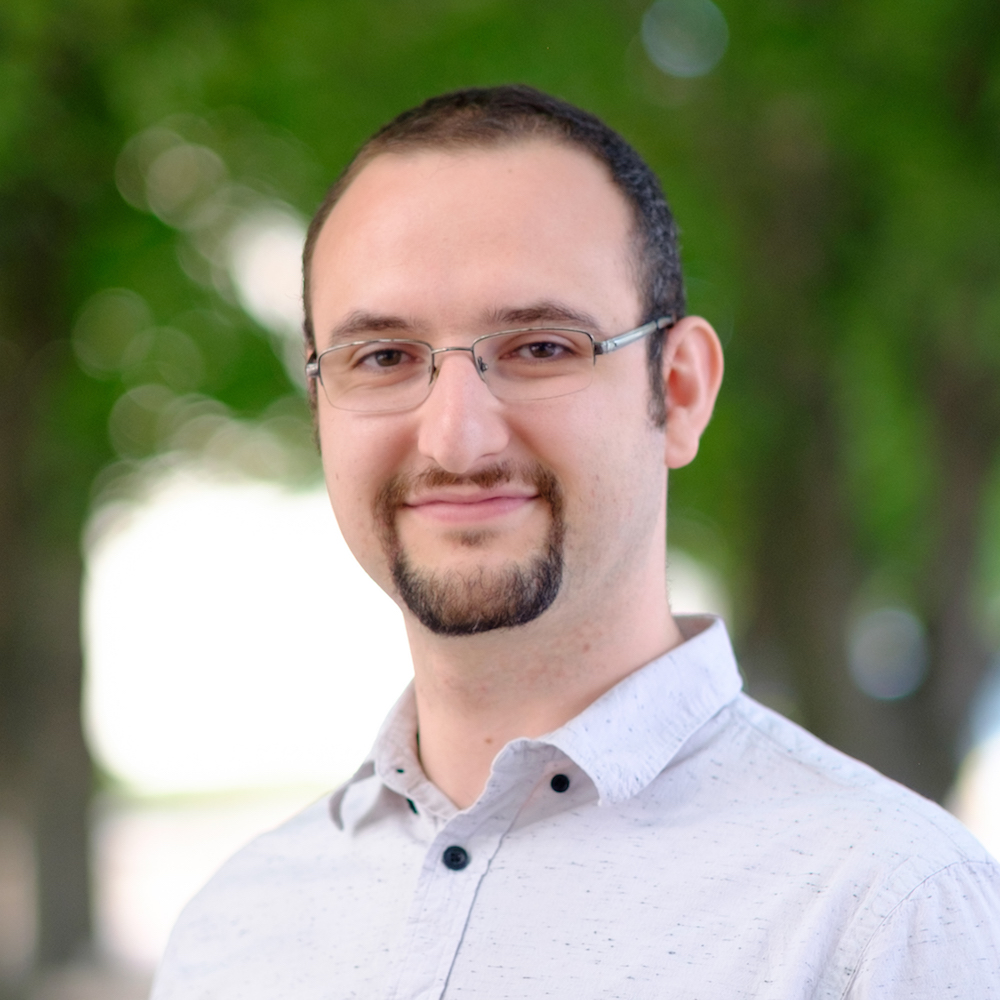
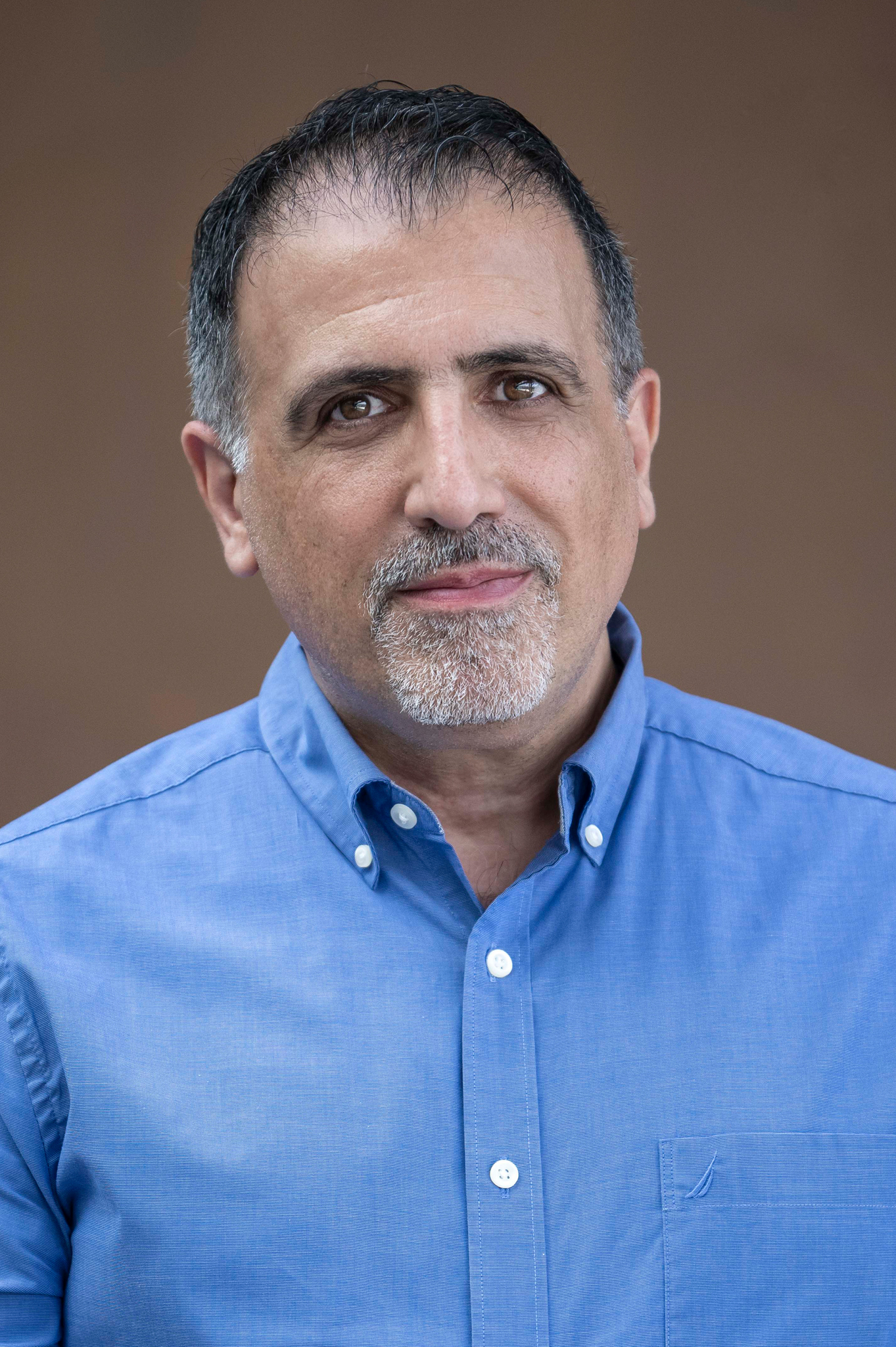
Dr. Siwei Lyu is a SUNY Distinguished Professor and SUNY Empire Innovation Professor in the Department of Computer Science and Engineering at the University at Buffalo. He serves as Co-Director of the Center for Information Integrity (CII) and Director of the UB Media Forensic Lab (UB MDFL). His research focuses on digital media forensics, computer vision, and machine learning, with significant contributions to counter-deepfake technologies. Education includes a PhD in Computer Science from Dartmouth College (2005), MS from Peking University (2000), and BS in Information Science from Peking University (1997). He has held academic positions at the University at Albany and New York University. His work spans media forensics, adversarial machine learning, and AI security. Notable achievements include developing the Celeb-DF dataset, leading NSF-funded projects, and testifying before U.S. and NYS legislative bodies on disinformation threats. Over $11.3M in grants have supported his research on AI-generated media detection, including a $5M NSF Convergence Accelerator grant. Key awards include IEEE and IAPR Fellowships, Google Faculty Award, and SUNY Chancellor's Research Award. He has authored 230+ papers, 4 patents, and serves on editorial boards of top journals and conferences (e.g., CVPR, ICCV).
Onur Varol is an Assistant Professor at Sabanci University's Computer Science Department and leads the VIRAL Lab, which focuses on computational social science, network science, and machine learning. He has affiliations with the Center of Excellence for Data Analytics. His research spans social bot detection, misinformation analysis, and online behavior modeling.
Dr. Stephen King is a Professor and Chairperson of the Department of Communication at St. Edward's University's School of Arts and Humanities, with nearly thirty years of teaching experience across institutions including Eastern Illinois University and Delta State University. His academic journey includes leadership roles as department chair at Eastern Illinois University (2013-2018) and coordinator at Delta State University (2000-2013). Ph.D. in Speech Communication, Indiana University (1997) M.A. in Communication, University of New Mexico (1990) B.A. in Communication, Boise State University (1987) Dr. King's research merges rhetoric , public memory , and cultural tourism , focusing on social movements and musical genres like blues, reggae, and country. He has published extensively on how Mississippi promotes blues and civil rights heritage, examining authenticity, mythmaking, and racial reconciliation. His 2023 book Terror and Truth: Civil Rights Tourism and the Mississippi Movement (co-authored with Dr. Roger D. Gatchet) expands this work. His scholarship has earned multiple Top Paper Awards from the National Communication Association and Southern States Communication Association, the William Winter Scholar designation (2007), and the Mississippi Humanities Council Teaching Award (2010-2011). As a Research Fellow at the University of the West Indies (1994), he explored reggae's rhetorical role in Jamaican identity. He serves on the editorial board of Rock Music Studies and reviews for journals including Popular Music and Society . Dr. King's teaching spans rhetorical theory , communication research methods , and public speaking . He has volunteered with Habitat for Humanity and coached youth soccer, demonstrating commitment to both academic and community service.
Dr. Tatsuya Mori is a Professor at the Department of Computer Science and Communication Engineering , Faculty of Science and Engineering, Waseda University . He also holds visiting researcher positions at RIKEN Center for Advanced Intelligence Project (since 2018) and National Institute of Information and Communications Technology (since 2019). Education: Ph.D. in Information Science (2005), Waseda University Research Interests: Spanning information security and privacy across emerging technologies like autonomous driving , AI , 3D sensing , VR , biometric measurement , and Web3 . His work focuses on offensive security and interdisciplinary research , including physical-layer attacks on sensors and behavioral studies on phishing detection. Scientific Awards: Recipient of multiple prestigious awards, including the Distinguished Paper Award Runners-Up at IEEE EuroS&P 2024 , IPSJ Outstanding Paper Award 2024 , and CSS2024 Concept Research Prize . His research has been recognized in top conferences like USENIX Security , NDSS , and ACM CCS . Professional Leadership: Active in academic governance as Chief Investigator for NISC Working Groups and Committee Member for JST Research Areas . He serves on program committees for NDSS , IMC , and ACM CCS .
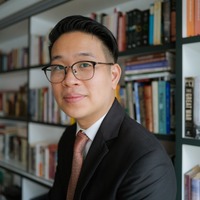
Dr. Hongxuan Lin serves as an Assistant Professor in the Department of Southeast Asian Studies at the National University of Singapore (NUS), Faculty of Arts and Social Sciences. His academic work centers on the complex relationship between Islam and Marxism in Indonesia, with broader interests in progressive Islamic discourses across the Muslim world. As a faculty member at one of Asia's premier research universities, Dr. Lin contributes significantly to Southeast Asian studies through his research, teaching, and publications. Dr. Lin earned his Doctor of Philosophy in History from the University of Washington, Seattle, between 2015 and 2020. His doctoral research focused on Indonesian intellectual history, examining how Muslim identity and Marxist analytical frameworks coexisted in the minds of Indonesian nationalists during the anti-colonial struggle and early republic period. His supervisors were Laurie J. Sears, Christoph Giebel, and Vicente L. Rafael, all prominent scholars in Southeast Asian studies. Dr. Lin's research primarily investigates the intersection of Islam and Marxism in Indonesia from 1915 to 1965, exploring conciliatory discourses where Marxist ideas were theorized as compatible with Islam within frameworks of anti-colonial resistance. He examines how Indonesian intellectuals adapted global political currents to local contexts, challenging state-driven narratives that position Islam and Marxism as mutually exclusive. His work also considers women's contributions to these discourses and is expanding to study the circulation of progressive Islamic ideas across the Indian Ocean region connecting Egypt, Arabia, Iran, South Asia, and the Malay Archipelago. His research reveals how progressive Islamic thinkers addressed socio-economic inequity, women's rights, intercommunal tolerance, and religious governance. Dr. Lin's publications demonstrate a consistent focus on Southeast Asian political history, particularly Indonesia's intellectual landscape during the colonial and post-colonial periods. His scholarship reveals patterns of creative adaptation where Indonesian thinkers engaged with global political currents while transforming them for local contexts. A notable trend across his work is the examination of transnational intellectual networks that connected Southeast Asia with broader global movements, showing how ideas traveled and were transformed across borders. His research challenges simplistic narratives about religious and political identity, revealing instead complex intellectual traditions that defy easy categorization. Dr. Lin is multilingual with proficiency in Indonesian (reading, writing, speaking, and understanding), Chinese (Mandarin) (reading, writing, speaking, and understanding), Dutch (reading), and French (reading). This linguistic capability supports his research across multiple archives and sources in different languages, enhancing the depth and authenticity of his historical analysis. His work bridges multiple disciplinary approaches including history, political science, religious studies, and post-colonial theory.
Tim Harper is a Professor of the History of Southeast Asia at the University of Cambridge, serving as Head of the School of the Humanities and Social Sciences. He is a Fellow of Magdalene College and Director of the Centre for History and Economics. His research focuses on Southeast Asian colonial and postcolonial history, with a particular emphasis on anti-imperial movements, nationalism, and the British Empire's decline. He has authored seminal works such as Underground Asia: Global Revolutionaries and the Assault on Empire (2020) and co-authored Forgotten Armies (2004) and Forgotten Wars (2007) with Christopher Bayly. His articles explore themes like colonial resistance, diaspora networks, and the socio-political dynamics of decolonization in Southeast Asia. Harper's scholarship challenges traditional narratives of empire, highlighting grassroots movements and transnational networks. His work bridges academic rigor with accessible storytelling, as seen in Underground Asia , which reinterprets 20th-century imperialism through the lens of radical underground networks. His research also examines education, state governance, and environmental politics in colonial contexts. He actively contributes to interdisciplinary initiatives at the Centre for History and Economics, fostering collaboration between historians and economists.
Dr Jan Woudstra is an Honorary Professor at the University of Sheffield's School of Architecture and Landscape. With a PhD in Landscape Architecture from University College London and a background in landscape design, horticulture, and conservation, he has taught landscape architecture and history since 1995 and part-time at the Architectural Association School of Architecture from 1988-2005. Education: PhD, MA (Conservation), Dip Hort (Kew) Research Focus: History and theory of modern movement landscape architecture, planting design, hard landscape detailing, and international design trends Supervision: Claudia Leticia Martínez Velarde, Lei Gao, Kairan Li, Sang Jung Yoon, Vivienne Rose Parrott, Jijun Zhao, Manoochehr Salahi Moghadam, Hossein Donyavi, Sally O’Halloran Contact: j.woudstra@sheffield.ac.uk | Arts Tower, Floor 12, Western Bank, Sheffield, S10 2TN His research emphasizes landscape conservation, sustainability, and social equitability, with case studies on designers like Christopher Tunnard, Peter Shepheard, and Robert Marnock. He explores the tension between memory and innovation in historic landscapes. Recent publications address Buddhist pilgrimage sites, Scandinavian design, and historical planting techniques. Collaborations with Peter Blundell Jones and others analyze the interplay between architecture and landscape.
Unn Røyneland is a Professor of Scandinavian Linguistics and Multilingualism at the University of Oslo 's Faculty of Humanities . She is affiliated with the Center for Multilingualism in Society Across the Lifespan (MultiLing) and has been a key figure in Norwegian language policy and standardization efforts, including the Nynorsk 2011 orthographic revision . Current Research Focus: Multilingual and multilectal practices on social media Dialect acquisition among migrants Dialect levelling and language attitudes Language and embodiment Multiethnolectal speech styles Language policy and planning Ongoing Projects: Multilectal Literacy in Education (2020-2025) (RCN-funded, Co-PI) Multilectal Practices on Social Media (2020) (with Øystein A. Vangsnes) Urban Talk and Text (MultiLing Core-group project, 2021) AquaAurora (2021, UiT The Arctic University of Norway) Her scholarly work spans 15+ years of research output, with recent publications analyzing: Language activism and social justice (2024) Multilingualism across the lifespan (2022) Migration-induced dialect acquisition (2020) Youth multilingual practices in digital spaces (2018) Nynorsk standardization processes (2016) Multiethnolectal speech patterns (2008-2010) As Co-Chief Editor of the LME Linguistic Minorities in Europe Online series at De Gruyter, she continues shaping academic discourse in multilingualism studies.
Olga Fernández López is an Associate Professor at the Department of History and Theory of Art, Universidad Autónoma de Madrid, and holds a PhD in Geography and History (History of Art) from Universidad Complutense de Madrid (UCM). She collaborates with institutions including Intermediae (Matadero Madrid), CA2M Madrid, and Andalusian Center for Contemporary Art Seville. PhD Curating Contemporary Art, Royal College of Art (2017) PhD in History of Art, UCM Master’s in Cultural Management, Fundación Ortega y Gasset Her research focuses on: History of exhibition models and curatorial practice Contemporary art in Spain and Latin America Visual culture and political philosophy Museum decolonization Recent publications explore: Urban curatorial practices (2016-2021) Postwar European visual culture (2019) Decolonial exhibition strategies (2020) Scientific awards include: Salvador de Madariaga grant (2020) for research at Columbia University Key projects: PUBLISHERS: Publics of Contemporary Art (2019-2021) European Forum for Advanced Practices (2019-2022) Decentralized Modernities: Cold War Art (2018-2020)
Dr. Nilanjan Banerjee is a Professor in the Department of Computer Science and Electrical Engineering at the University of Maryland, Baltimore County (UMBC). He leads the Mobile, Pervasive, and Sensor System Lab, focusing on embedded and distributed systems for mobile, pervasive, and sustainability-based computing. His research spans renewable energy-driven systems, health diagnostics, mobile usability, and experimental testbed design. He holds a Ph.D. in Computer Science from the University of Massachusetts (2009), an M.S. from the same institution (2007), and a B.Tech. (Hons) from the Indian Institute of Technology (2004). Dr. Banerjee's work emphasizes interdisciplinary innovation, including low-power wearable devices for health monitoring (e.g., RestEaZe), cybersecurity frameworks for embedded systems (e.g., CARE), and sensor-based solutions for environmental sustainability. His contributions address challenges in mobility, energy efficiency, and accessibility, such as the Presight sidewalk localization system for visually impaired riders and the Inviz gesture-recognition textile sensors. His recent publications (2018–2021) reflect a focus on health technology, cybersecurity, and sustainable systems. Notable trends include: Integration of machine learning with sensor data for medical applications (e.g., sleep analysis, infection detection) Development of lightweight security protocols for embedded devices Exploration of renewable energy solutions for mobile and sensor networks No scientific awards are explicitly listed in the provided text. His academic advising and grant activities are not detailed here, but his lab's active research suggests significant collaborative projects. The lab also pioneers educational strategies in mobile app development and inclusive faculty recruitment through peer education programs like STRIDE.
Monica Sklar is an Associate Professor and Curator of the Historic Clothing and Textiles Collection at the University of Georgia, affiliated with the College of Family and Consumer Sciences and the Department of Textiles, Merchandising and Interiors. She holds a Ph.D. in Design-History & Culture from the University of Minnesota (2010). Education: Ph.D. in Design-History & Culture, University of Minnesota (2010) Research Interests: Dr. Sklar’s work focuses on subcultural identity formation through dress, museum digitization practices, and post-custodial archiving. Her research explores how aesthetics, production, and consumption shape communities, particularly in late-20th century U.S. subcultures like punk. She also investigates metadata frameworks for improving accessibility to cultural heritage collections. Articles Overview: Her recent publications analyze punk fashion’s cyclical influence, user experience challenges in museum archives, and Syrian clothing preservation. Key themes include cultural heritage preservation, digital humanities applications, and the intersection of fashion with consumer behavior and identity. Awards & Grants: Recipient of the Outstanding Graduate Student of the Year Award (2010, University of Minnesota) UGA Jr. Faculty Research Grant, Pasold Foundation, and Willson Center funding Advising & Grants: Mentored multiple graduate and undergraduate students in research projects, including those winning Costume Society of America awards. Active in securing institutional and private grants to support her work. Labs/Teams: Curates the Historic Clothing and Textiles Collection at UGA and leads initiatives like the Inter-Institutional Archive Search Portal. Serves as Vice President of Education for the Costume Society of America, advocating for diversity and educational outreach in fashion studies.
Trysh Travis is an Associate Professor of Women’s Studies at the University of Florida. Her research focuses on the gendered history of medicine, therapeutic cultures, and recovery movements. She earned an MA from the Bread Loaf School of English and a PhD in American Studies from Yale University. Her work has been supported by the Mellon Foundation and the National Endowment for the Humanities. She co-founded the translational humanities project Points with UF colleague Joseph Spillane and serves as Managing Editor Emerita. Key publications include The Language of the Heart: Twelve-Step Recovery from Alcoholics Anonymous to Oprah Winfrey (2009) and co-editing Rethinking Therapeutic Culture (2016). Her articles explore topics ranging from opioid treatment legacies to feminist critiques of drug policy. Education: PhD in American Studies (Yale University), MA in English (Bread Loaf School of English) Grants: Mellon Foundation, National Endowment for the Humanities Key Projects: Co-founder of Points blog, author/co-editor of influential books on recovery culture Travis’s research bridges literary history and cultural analysis, emphasizing intersections of gender, medicine, and therapeutic practices. Her work critiques historical and contemporary recovery narratives, interrogating how therapeutic frameworks shape identities and social norms. Recent scholarship addresses opioid policy legacies and the role of whiteness in cultural discourse.
Joe F. Khalil is a Professor in Residence at Northwestern University in Qatar's Communication Program. His research focuses on digital media industries, Arab television, youth culture, and alternative media in the Middle East. He co-authored influential works like *The Digital Double Bind* (Oxford UP, 2024) and co-edited *The Handbook of Media and Culture in the Middle East* (2023). His interdisciplinary work bridges media industries, digital cultures, and sociopolitical dynamics. **Education**: PhD in Mass Communication from Southern Illinois University (Carbondale), MA in Telecommunications from Ohio University. **Research Interests**: Digital media transformation, Arab TV industries, youth-generated media, rap culture, and global media power structures. **Grants & Awards**: Recipient of Qatar National Research Fund grants (2015-2016), Smith Richardson Foundation grant (2008), and fellowships at institutions including LSE and SOAS. Active in IAMCR and ICA. **Teaching**: Designs courses on global media, Arab TV industries, production research, and webseries development. Mentors students in both academic and professional pathways. **Professional Experience**: Former TV executive and radio DJ, with media expertise spanning Qatar, Lebanon, Saudi Arabia, and the U.S. Regular commentator on Al Jazeera and BBC, addressing Arab media and youth issues.
Meeyoung Cha is a Professor at KAIST and Scientific Director of the Max Planck Institute for Security and Privacy (MPI-SP) in Bochum, Germany. Her research focuses on Data Science for Humanity, encompassing computational social science, misinformation dynamics, and human-machine interaction. She holds a PhD in Computer Science from KAIST (2008) and previously served as Chief Investigator at the Institute for Basic Science and Visiting Professor at Facebook. Her work addresses societal challenges such as poverty mapping, fraud detection, and AI ethics. Key achievements include best paper awards and recognition like the Hong Jin-Ki Creator Award (2024) and Test-of-Time Awards (ACM IMC 2022, AAAI ICWSM 2020). Research interests span AI ethics, social media analysis, and interdisciplinary applications of machine learning. Notable projects include modeling climate risks via satellite imagery and analyzing chatbot interactions' societal impacts. She leads the MPI-SP's Data Science for Humanity Group, mentoring over 20 students across PhD and postdoc programs. Education: PhD in Computer Science (KAIST, 2008) Affiliations: MPI-SP (Germany), KAIST Key Awards: Hong Jin-Ki Creator Award, Korean Young Information Scientist Award, Test-of-Time Awards Her publications bridge computational methods with societal issues, including climate modeling, protein engineering, and algorithmic fairness. Current projects explore geospatial AI for economic development and ethical AI design frameworks.
David Brakke is the Joe R. Engle Chair in the History of Christianity and Professor of History at The Ohio State University's Department of History, housed within the College of Arts and Sciences. His expertise spans ancient Christianity, with a focus on asceticism, monasticism, Gnosticism, biblical interpretation, and Egyptian Christianity. Brakke earned his B.A. in English from the University of Virginia (1983), M.Div. from Harvard University (1986), and Ph.D. in Religious Studies from Yale University (1992). Before joining OSU in 2012, he was a professor and department chair at Indiana University's Religious Studies Department. His research explores the social and cultural dimensions of early Christian practices, including monasticism’s role in forming virtuous identities and the definition of Gnosticism. Brakke has authored influential books like *The Gnostics* (2010) and *Demons and the Making of the Monk* (2006), recognized with academic accolades such as the Choice Outstanding Academic Title and Guggenheim Fellowship. He currently serves as president of the North American Patristics Society and contributes to scholarly publications like the *Journal of Early Christian Studies*. His current projects include studies on early Christian scriptural practices and translations of Nag Hammadi texts. Brakke’s work integrates textual analysis with historical context, examining how early Christians navigated theological debates, institutional hierarchies, and cultural shifts. He has held grants from the NEH and National Humanities Center, among others. His professional network includes leadership roles in global scholarly organizations, reflecting his impact on Patristics and Coptic Studies. Despite being on leave during the 2023–2024 academic year, his contributions to understanding early Christian history remain foundational.