Yvonne Coady is a Professor in the Department of Computer Science at the University of Victoria. She leads the MOD(ularity) Squad, focusing on system infrastructure modularity, mixed reality systems, and geospatial computing. Her research spans scalable distributed systems, immersive technologies, and AI-driven applications. She has co-authored over 170 papers and supervised numerous graduate students. Research interests include citizen science integration, advanced software modularity, and cloud computing architectures. Collaborations include projects with IBM, Ericsson, and Urthecast, addressing Earth observation, urban planning, and virtual reality analytics. Recognized with the 2015 Knowledge Mobilization Award, her work emphasizes real-world impact through industry partnerships. Current projects explore immersive applications via VR/AR, such as the RAVR and SAVR initiatives, and accessibility-enhanced interfaces. She also investigates geospatial computing for environmental monitoring and disaster response. Awards and grants include NSERC Collaborative Research and Mitacs Accelerate funding. Grants: NSERC grants (2023-2024), Mitacs projects (2020-2024) Labs/Teams: MOD(ularity) Squad, RAVR (Research in Augmented and Virtual Reality) Key Collaborations: Ocean Networks Canada, SALA Lab (UBC)
Dr. Tom Williams is Associate Professor of Computer Science and Director of the MIRRORLab at Colorado School of Mines. His research program centers on natural language-based human-robot interaction with emphasis on ethical, social, and contextual dimensions of communication. Williams investigates how robots can understand and generate context-sensitive language, particularly in morally complex situations. Current projects explore role-based moral reasoning, politeness strategies, and cultural variations in human-robot interaction. His work integrates cognitive science, artificial intelligence, and human-computer interaction methodologies. He has received significant recognition including NSF CAREER, NASA Early Career Faculty, and AFOSR Young Investigator awards. Williams teaches courses in Human-Robot Interaction, Robot Ethics, and Computer Vision, maintaining international collaborations on socially intelligent robotic systems.
Dr. H. Sebnem Düzgün is a Full Professor and Fred Banfield Distinguished Chair in Mining Engineering at the Colorado School of Mines. She holds a joint appointment in the Department of Computer Science and serves as Associate Department Head of Mining Engineering. Her roles further include Associate Director of the GIS and Geoinformatics program and coordinator of the geoscience section in the Data Science program. Additionally, she leads the mineral supply chain pillar of the Mines Global Future Initiative (GEFI). Dr. Düzgün's educational background includes a B.Sc., M.Sc., and Ph.D. in Mining Engineering from Middle East Technical University (METU), Turkey, and a Diploma in Analysis and Management of Geological Risks from the University of Geneva. She has also conducted postdoctoral research at institutions such as the Norwegian Geotechnical Institute and the Karlsruhe Institute of Technology. Her research focuses on systems dynamics modeling , mineral supply chain resiliency , decarbonization strategies , sustainability , big data analytics , and GIS/remote sensing applications . She also explores AI and machine learning in geosciences, mine safety , and autonomous operations , with interdisciplinary contributions to resilience engineering and environmental monitoring. Dr. Düzgün's recent publications emphasize system safety in mining , AI-driven geothermal exploration , mineral supply chain transparency , and post-disaster urban resilience . Her work bridges geospatial technologies with environmental sustainability and risk mitigation strategies . 100 Globally Inspiring Women in Mining (2020) Elates Fellow, Drexel University (ELATES Program) Newmont STEM Equity Instructional Fellow Mines’ University Public Fellow 100 Resilience Fellows in Engineering Program (TU Delft) Dr. Düzgün has received significant research support, including the Alexander von Humboldt Experienced Researcher Grant (2014) , enabling her work at Karlsruhe Institute of Technology. Her leadership in interdisciplinary initiatives reflects her commitment to advancing STEM equity and academic technology. She leads the mineral supply chain pillar within the Mines Global Future Initiative (GEFI) and founded a startup focusing on AI-driven solutions for resource exploration. Her collaborations span academic, corporate, and governmental sectors to address global challenges in mining and sustainability.
Victoria Lush is a Research Associate at Aston University, affiliated with the College of Engineering and Physical Sciences and the Aston Centre for Artificial Intelligence Research and Application. Her research focuses on geospatial data quality, environmental data management, and AI-driven solutions for urban and healthcare challenges. She completed her PhD in 2015 on visualizing geospatial dataset quality, advised by Professors Lumsden and Bastin. Her work bridges computer science, environmental science, and healthcare. Key areas include FAIR compliance in citizen science data, digital twin applications for sustainability, and traffic modeling using genetic programming. She co-authored the 'GEO Label' framework for geospatial metadata quality visualization, recognized by a Best Paper Award at the 2018 International Conference on Trust Management. Lush’s recent projects address Green Deal Data Space challenges, integrating geospatial and sensor data for environmental policy support. She also pioneers augmented reality tools for mental healthcare accessibility and develops machine learning approaches for urban infrastructure optimization. Her interdisciplinary collaborations span geospatial engineering, AI ethics, and healthcare technology, reflecting a commitment to impactful data-driven solutions for societal challenges.
Jeff Moersch serves as Assistant Professor in the Department of Earth and Planetary Sciences at the University of Tennessee, Knoxville, specializing in planetary surface processes and remote sensing with emphasis on Mars exploration. His interdisciplinary work bridges spacecraft mission operations, terrestrial analog studies, and instrument development. Bachelor’s in Physics, Cornell University Master’s in Geology, Arizona State University Master’s in Astronomy, Cornell University Ph.D. in Astronomy, Cornell University Dr. Moersch’s research investigates Martian surface environment evolution through mineralogic composition analysis using infrared spectroscopy, while simultaneously advancing spacecraft instrument capabilities. His dual focus encompasses interpreting orbital/surface data from missions like Mars Odyssey and Mars Exploration Rovers, and conducting Earth-based validation studies in Mars analog terrains including Iceland and Chile’s Atacama Desert. This approach integrates field geology, laboratory spectroscopy, and drone-based thermal imaging to develop robust methodologies for planetary exploration. Recent publication trends (2023–2025) demonstrate increasing emphasis on drone/UAV applications for planetary surface characterization, thermal inertia analysis of Martian dunes and alluvial fans, and biosignature detection frameworks in terrestrial analogs. His work consistently addresses critical knowledge gaps in Mars’ hydrological history and surface processes through innovative remote sensing techniques. No scientific awards were mentioned in the provided source material. While specific student mentoring details are absent from the source text, Dr. Moersch’s leadership in NASA mission science teams (Voyager 2, Galileo, Mars Observer, Deep Space 2, Mars Odyssey, Mars Exploration Rover) indicates substantial grant-funded research activity. His work frequently involves collaborative field campaigns in international Mars analog sites requiring multidisciplinary teams. His research group conducts drone-based thermophysical investigations and instrument development projects, notably testing planetary exploration methodologies at Holuhraun, Iceland, and Salar de Pajonales, Chile. Current efforts focus on rover-aircraft exploration networks and AI-enhanced data analysis systems for future Mars missions.
Robert Bruce is a Lecturer in the Department of Engineering at Sonoma State University, part of the College of Science, Technology and Business. He has taught undergraduate and graduate courses in Computer Science, Computer Engineering, and Information Science at multiple institutions including San Jose State University, Santa Clara University, and Dominican University. With over 15 years of academic experience, he has supervised 63 student capstone/thesis projects. His professional background includes Visual Effects industry work as a systems programmer and digital artist with four feature film credits, as well as co-founding multiple tech startups with seed funding. His research focuses on Augmented/Virtual Reality, Distributed Computing, Information Retrieval, Robotics, and IoT. Education background includes a B.S. in Computer Science (with Mathematics minor) from Sonoma State University and an MLIS from San Jose State University. No explicit scientific awards are listed, though his work spans interdisciplinary collaborations in education technology and space exploration. Active in presenting at conferences since 2006, his publications address topics ranging from VR in space to library terminology education.
Sarah Fdili-Alaoui is Reader (Associate Professor) at University of the Arts London's Creative Computing Institute, specializing in interaction design, dance technology, and embodied computing. With 30+ years as a choreographer and Laban Movement Analyst, she pioneers research at the intersection of dance and technology. Key research areas: Interactive dance performance systems Somatic interfaces for creative practice Movement computing for dance documentation Critical approaches to AI in arts Recent publications (2022-2025) focus on bodily awareness in HCI, creative AI applications, and counter-choreographies for data awareness. Articles demonstrate strong methodological innovation through autoethnography, soma design, and practice-led approaches. Awarded Best Paper at CHI 2024 and DIS 2024. Leads the ANR-funded Living Archive project on dance preservation and PEPR Ensemble initiative for AI-art collaborations. Supervises 7 PhD students in projects spanning soft robotics, archival AI, and maternal-cyborg interfaces.
Eric Wetzel is an Associate Professor at the McWhorter School of Building Science , Auburn University, within the College of Architecture, Design and Construction (CADC) . He specializes in Construction Robotics , BIM/VR/AR Visualization , Active Learning Technologies , and Project Controls . As Director of the Construction Automation, Robotics & Visualization (CARV) Lab , he leads innovation in construction automation using robotics like the Boston Dynamics SPOT (named 'Mac') for material tracking, LiDAR scanning, and site documentation. Dr. Wetzel holds a Ph.D. in Environmental Design and Planning from Virginia Tech (2016), an MBC from Auburn University (2009), and a B.S. in Construction Management from Western Kentucky University (2008). He teaches undergraduate and graduate courses including Estimating, Advanced Research Methods, and Scheduling, emphasizing active learning and technology integration in education. His research focuses on autonomous construction systems , robotics applications , and transformative pedagogy . He has secured grants such as the CADC Seed Grant (2024–25) and collaborates with the Auburn RFID Lab to advance material localization algorithms. His work bridges academia and industry through initiatives like the CARV Lab's traveling road shows, engaging K-12 students in STEM. Key projects include developing the Core Temperature Visualization System (COTVIS) , exploring RFID-based inventory management, and creating a Building Readiness Rating Index for pandemic resilience. He actively promotes safety in construction through BIM-driven frameworks and contract management research. Dr. Wetzel advises students like Ph.D. candidate Muhammad Umer and supports Auburn's competition teams' national/international wins. His contributions span construction technology, educational innovation, and interdisciplinary collaboration to address industry challenges.
Markian Pahuta MD PhD is an Associate Professor of Surgery at McMaster University and an orthopaedic spine surgeon at Hamilton General Hospital, Ontario. Board-certified by the American Board of Orthopaedic Surgery, he completed his MD at the University of Toronto (2004-2008), residency at the University of Ottawa (2008-2015), a Clinician-Investigator Program (2011-2013), and a spine-surgery fellowship at the University Health Network/University of Toronto (2015-2016), followed by a PhD at the University of Ottawa (2013-2019). His practice and research cover the entire spectrum of spinal disorders, with a recent focus on degenerative cervical myelopathy, spinal trauma, oncology, adult deformity, health-economic valuation, and technology-enhanced surgical training. Education & Training PhD, University of Ottawa, 2013-2019 Clinical Fellowship in Spine Surgery, University Health Network/University of Toronto, 2015-2016 Clinician Investigator Program, University of Ottawa, 2011-2013 MD, University of Toronto, 2004-2008 Orthopaedic Surgery Residency, University of Ottawa, 2008-2015 Diplomate, American Board of Orthopaedic Surgery, 2019-2029 Research Interests Dr Pahuta leads Canada-wide observational studies through the Canadian Spine Outcomes and Research Network (CSORN) examining wait-times, opioid utilisation, complication rates, and cost-effectiveness of spine surgery. He publishes systematic reviews and health-economic analyses that define utility scores for metastatic epidural spinal cord compression and degenerative cervical myelopathy, enabling cost-utility and budget-impact evaluations. His surgical oncology work clarifies optimal treatment strategies for patients with intermediate SIN scores and establishes consensus terminology for cancer-related spine pain. He explores augmented- and virtual-reality platforms to enhance competency-based training of spine surgeons and investigates AI-driven automation of spinopelvic parameter measurement. Across more than 120 peer-reviewed articles since 2008, his recent output (2022-2025) clusters into four dominant themes: (1) large-scale prospective cohort analyses of Canadian elective and traumatic spine populations; (2) health-services and economic evaluations that translate patient-reported outcome scores into policy-relevant utility metrics; (3) systematic reviews and meta-analyses that synthesise complication rates, survivorship, and comparative effectiveness of cervical and lumbar procedures; and (4) innovation studies on robotics, navigation, and immersive technologies in surgical education. Scientific Awards & Recognition No specific prizes or named lectureships are listed in the supplied material; however, his work is frequently cited in national guidelines and picked up by mainstream Canadian media (>30 news outlets for one 2023 study). Grants & Advising While explicit grant numbers are not provided, he is the principal architect of multiple CSORN analyses, indicating sustained national funding. No individual graduate students or post-doctoral fellows are named in the available text. Laboratory & Team Dr Pahuta collaborates with the McMaster Spine Program, the CSORN national consortium, the AO Spine Knowledge Forum, and international working groups developing consensus frameworks such as OSCO-M. These multi-institutional teams link clinicians, epidemiologists, health economists, and data scientists across more than 20 Canadian centres and multiple international sites.
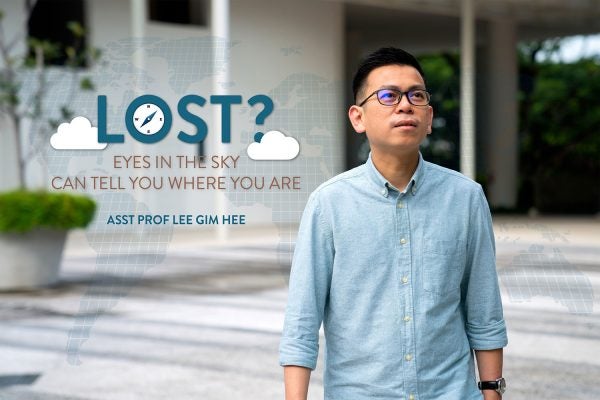
Gim Hee Lee is an Associate Professor at the Department of Computer Science, National University of Singapore (NUS) School of Computing. He heads the Computer Vision and Robotic Perception (CVRP) Laboratory and holds affiliations with the NUS Graduate School for Integrative Sciences and Engineering (NGS) and the NUS Institute of Data Science (IDS). Previously, he was a researcher at Mitsubishi Electric Research Laboratories (MERL) in the USA and worked at DSO National Laboratories in Singapore. Education Dr.sc. in Computer Science from ETH Zurich M.Eng. in Mechanical Engineering from National University of Singapore B.Eng. in Mechanical Engineering (1st Class Honors) from National University of Singapore Research Interests Professor Lee's research focuses on Computer Vision , Robotic Perception , and Machine Learning , with specialization in dynamic 3D scene reconstruction, event camera applications, and cross-view geo-localization. His work bridges theoretical advances with real-world applications in autonomous systems and augmented reality, particularly through neural scene representations and geometric computer vision techniques. Scientific Awards Faculty Teaching Excellence Award (AY 2018/19 and AY 2017/18) CVPR 2014 Doctoral Consortium Travel Award Finalist for IROS 2012 Best Paper Award Finalist for IROS 2012 Best Video Award Advising and Service Professor Lee serves as Associate Editor for IJCV and has held Area Chair positions for major conferences including CVPR, ICCV, ECCV, and NeurIPS. He chaired Program Committees for 3DV 2022 and served as Demo Chair for CVPR 2023. His research on the Cross-View Matching Network (CVM-Net) demonstrated real-time ground-to-aerial geo-localization in moving vehicles, establishing a benchmark for subsequent research in this field. Laboratories He leads the Computer Vision and Robotic Perception (CVRP) Laboratory at NUS, which develops cutting-edge solutions for 3D scene understanding, event-based vision, and robotic navigation. The lab's work includes acquiring high-quality datasets for dynamic scene reconstruction and advancing neural representations for real-world applications.
Dr Joel Fredericks is a Senior Lecturer in Design at The University of Sydney’s School of Architecture, Design and Planning, and Program Director for the Bachelor of Design (Interaction Design) and Bachelor of Design Computing programs. He holds a PhD and BRTP (Hons) qualifications. His research focuses on the intersection of people, place, and technology, emphasizing community engagement, co-design methodologies, and non-human perspectives in urban and digital environments. He is affiliated with the Sydney Environment Institute and Sydney Southeast Asia Centre, reflecting his commitment to sustainability and regional research. His work addresses challenges in smart cities, participatory design, and emerging technologies, often exploring inclusive frameworks for citizen engagement. Recent grants include projects on crisis resilience using immersive technologies and AI, and Southeast Asia-focused community engagement initiatives. Fredericks’ publications span smart city design patterns, participatory urban planning, and the role of technology in fostering sustainability. His work bridges academic research with practical applications, advocating for equitable technological integration in urban spaces. He has collaborated on projects like the Media Architecture Compendium and co-edited works on smart engagement ecosystems. His research trends emphasize digital inclusion, ethical technology use, and systemic urban planning. Key themes include leveraging AI for community resilience, redefining urban safety through gendered perspectives, and creating accessible metaverse environments. Grants like the 2025 Sydney Environment Institute project highlight his focus on crisis preparedness through technology. Fredericks’ advising and grants reflect his interdisciplinary approach, linking design, technology, and environmental science. He actively contributes to labs and teams advancing participatory design principles in global contexts, particularly in Asia-Pacific regions through the Sydney Southeast Asia Centre.
Dr Soojeong Yoo is a Lecturer in Design at the University of Sydney’s School of Architecture, Design and Planning. She holds a PhD in Human-Computer Interaction from the University of Sydney and a B.Com (Hons) from the Human Interface Technology Laboratory Australia at the University of Tasmania. Her research focuses on immersive technologies, including VR/AR applications in healthcare, education, and everyday contexts. She is a member of the Sydney Southeast Asia Centre and actively contributes to interdisciplinary projects. Education: PhD in Human-Computer Interaction, University of Sydney (School of Computer Science) Bachelor of Commerce (Honours), Human Interface Technology Laboratory Australia, University of Tasmania Research Interests: Her work explores the intersection of technology and human behavior, with a focus on: - Designing inclusive VR/AR systems for healthcare and education - Enhancing physical activity through exergames and motion tracking - Surgical training using AR-guided simulations - Ethical and accessibility considerations in immersive technologies Grants & Projects: Advancing Crisis Resilience in Southeast Asia (2024): Explores immersive tech for crisis management Cardiometabolic Health Initiative (2020): Personalized dietary recommendations via tech Publications Overview: Recent work addresses AR in surgery, wearable tech adoption, and metaverse accessibility. She has published on topics like AR-guided laparoscopic surgery, drone-assisted elderly care, and digital ethnography of AR usage patterns. Labs & Collaborations: Collaborates with medical professionals, engineers, and designers across disciplines. Engaged in Sydney Southeast Asia Centre initiatives linking technology and regional development.
Victor Adrian Prisacariu is an Associate Professor of Engineering Science at the University of Oxford. He holds a BSc from Gheorghe Asachi Technical University, Iasi, Romania, and a DPhil from Oxford. Previously, he served as an EPSRC Postdoctoral Researcher and Dyson Senior Research Fellow. His current research focuses on real-time computer vision techniques for AR/VR on mobile platforms, with emphasis on semantic visual tracking, 3D reconstruction, and SLAM. He co-founded 6D.ai (acquired by Niantic), developing crowdsourced 3D mapping technologies. He leads the Active Vision Lab, which explores computational vision applications in robotics, wearable computing, and navigation. His work bridges academia and industry, emphasizing scalable solutions for real-world AR/VR challenges. Education : BSc (First Class Honors) in Computer Engineering, Gheorghe Asachi Technical University (2008) DPhil in Engineering Science, University of Oxford (2012) Research Interests : AR/VR system optimization for mobile and wearable devices Real-time 3D reconstruction and semantic mapping SLAM algorithms for navigation and localization Computer vision techniques for scene understanding and object tracking Industry-academia collaboration in AR/VR technologies Key Projects : Active Vision Lab Code Repository (AVLCode) 6D.ai SDK (Niantic's real-time 3D semantic mapping) Development of Gaussian splatting techniques for efficient 3D rendering Awards & Recognition : Contributions acknowledged in CVPR 2025 Best Paper Award (group recognition) Lab & Teams : The Active Vision Lab collaborates on projects like 3D reconstruction, visual localization, and AR system development. His work integrates academic rigor with industry-driven applications through partnerships like Niantic.
Dr. Ekaterina Ivanova is a Lecturer (Assistant Professor) in Human-Machine Interaction at Queen Mary University of London's School of Electronic Engineering and Computer Science. She is affiliated with the Centre for Human-Centred Computing, focusing on multimodal human-robot interaction, haptic communication, and user-centred robotics for medical applications. Her research integrates robotics, data science, neuroscience, and clinical expertise to develop assistive technologies. Teaching: She teaches modules such as ECS7029P Research Methods and ECS733P Interactive System Design, emphasizing interdisciplinary and hands-on approaches. Research Interests: Her work spans haptic communication, neurorehabilitation, and robot-assisted motor learning. Recent studies explore human-robot collaboration in training, sensory augmentation, and motor performance optimization. Grants: Improving motor learning via haptic human-human and human-robot interaction (Royal Society, £12,000) Multimodal human-human Interaction in Negotiation Tasks (Royal Society, £12,000) UKRI CDT in Artificial Intelligence and Music (EPSRC, £6.5M) Labs/Teams: Active contributor to the Centre for Human-Centred Computing, collaborating on projects like supernumerary limb systems and haptic social interaction.
Dr. Stefan Poslad is a Senior Lecturer in the School of Electronic Engineering and Computer Science at Queen Mary University of London (QMUL), affiliated with the Centre for Multimodal AI and IoT2US Lab. He specializes in IoT, Ubiquitous Computing, and Artificial Intelligence, focusing on smart devices, distributed systems security, and human-centric technologies. His teaching includes modules like Introduction to IoT and Mobile Services, emphasizing hands-on experience with system architectures and middleware. Research interests span IoT applications, pervasive computing, and privacy-preserving technologies. Notable projects include developing localization systems (e.g., ARLO, BEV-Locator) and health monitoring frameworks using UWB and radar sensors. He has contributed to urban mobility studies, environmental sensing, and wearable technologies, such as soft tactile displays using electroactive polymers. Poslad has received recognition as an Alan Turing Fellow and ranks among the top 2% of global scientists. His work integrates AI, IoT, and cybersecurity to address real-world challenges like smart cities and healthcare. He leads the IoT2US Lab, fostering interdisciplinary research on ubiquitous computing and its societal impacts.