Robert Likamwa is an Associate Professor at Arizona State University, affiliated with the School of Arts, Media and Engineering and the School of Electrical, Computer and Energy Engineering. His research focuses on the intersection of mobile computing, augmented reality, and sensor design through Meteor Studio. Ph.D., Rice University M.S., Rice University B.S., Rice University His work spans three core research arcs: (i) advanced visual capture systems, (ii) hybrid virtual-physical immersion through sensory augmentation, and (iii) data-driven frameworks for AR/VR storytelling. He explores mobile operating systems, low-power architectures, computational imaging, and holographic computing. Recent publications analyze multi-resolution visual sensing, geospatial cross-virtuality collaboration, planetary data visualization, spatial audio optimization, and multi-sensory virtual environments. His 2013 paper on energy-proportional image sensors received the Best Paper Award at ACM MobiSys. Best Paper Award, ACM MobiSys 2013 LiKamWa advises graduate students through research and thesis courses and leads grants related to mobile vision systems, haptic interfaces, and energy-efficient sensor design. He directs Meteor Studio, a research group focused on immersive technology innovation.
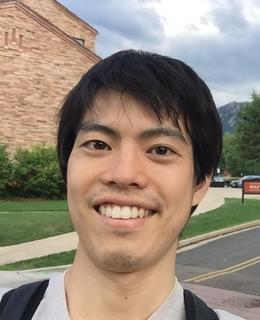
Ryo Suzuki is an Assistant Professor in the Department of Computer Science at the University of Calgary's Faculty of Science. His research focuses on Human-Computer Interaction (HCI) and robotics, particularly in tangible user interfaces, swarm robotics, and shape-changing interfaces. He holds a PhD in Computer Science from the University of Colorado Boulder (2020) and has conducted research internships at Stanford University, UC Berkeley, the University of Tokyo, and Adobe Research. His educational background includes advanced coursework in robotics and HCI, with a strong emphasis on interdisciplinary innovation. He teaches courses such as Human-Computer Interaction II, Human-Robot Interaction, and Special Topics in Mixed Reality Application Design. Research interests include designing novel interfaces for AR/VR/MR systems, haptic feedback mechanisms, and collaborative robotics. His work often bridges physical and digital spaces, such as through projects like LiftTiles (shape-changing building blocks) and RoomShift (room-scale haptic environments). Key awards include the UIST 2020 Honorable Mention Paper Award, DIS 2019 Best Paper Award, and the Ministry of Internal Affairs and Communications in Japan Innovation Award. His research has been featured in IEEE Computer Graphics and Applications, TechXplore, and Wired. He actively explores future work in symbiotic AI systems, AI-in-the-loop AR applications, and scalable shape-changing robotics. His lab emphasizes hands-on prototyping and user-centered design principles.
Ethan Mollick is the Ralph J. Roberts Distinguished Faculty Scholar, Rowan Fellow, and Associate Professor of Management at the Wharton School of the University of Pennsylvania. He serves as Co-Director of the Generative AI Labs at Wharton, where he researches AI's impact on work, entrepreneurship, and education. His academic background includes a PhD and MBA from MIT's Sloan School of Management and a bachelor's degree from Harvard University. Mollick's research spans artificial intelligence applications in business and education, entrepreneurship dynamics, and innovation management. He explores how generative AI transforms classroom education through simulations like PitchQuest, and investigates startup funding disparities with a focus on gender representation. His work on the 'jagged technological frontier' demonstrates how humans integrate AI capabilities through Centaur and Cyborg approaches. His publications reveal consistent focus on practical AI implementation, with recent work examining prompt engineering for diverse idea generation, AI-assisted teaching strategies, and gender representation tipping points in venture capital. The research shows increasing emphasis on educational applications since 2022, coinciding with the ChatGPT breakthrough. MBA Professor of the Year Award, Poets & Quants (2024) Named to TIME Magazine's Most Influential People in Artificial Intelligence ASQ Award for Scholarly Contribution (2024) Greif Research Impact Award (2020) McGraw-Hill/Academy of Management Innovation in Entrepreneurship Pedagogy Award (2016) As Co-Director of Wharton's Generative AI Labs, Mollick leads prototype development and research on human-AI collaboration. His teaching includes Technology Strategy, Entrepreneurship, and Innovation courses where he implements AI simulations. He has advised numerous organizations and co-founded a startup prior to academia, bringing practical experience to his research on solo versus team ventures. Mollick directs Wharton Interactive's game development initiatives, creating educational simulations including PitchQuest (AI-powered VC simulator), The Saturn Parable (crisis management), and The Entrepreneurship Game. His lab work focuses on creating scalable AI educational tools that provide personalized learning experiences through simulated practice environments.
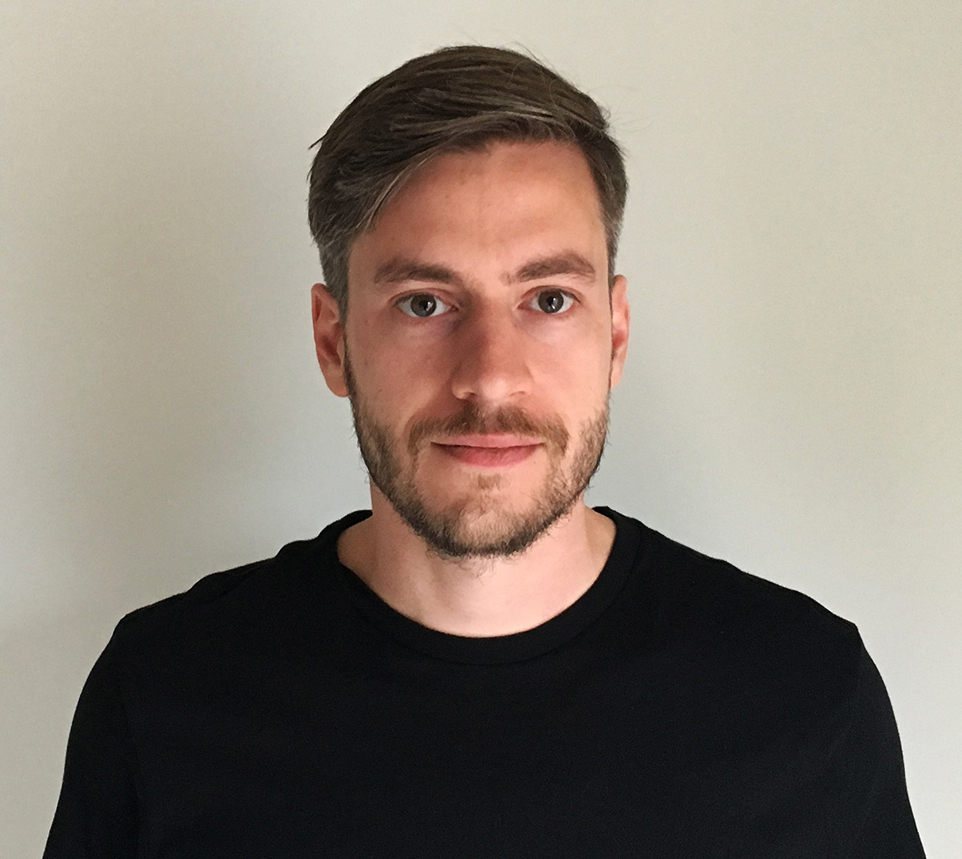
Dr. Benjamin Busam is a Senior Research Scientist at the Technical University of Munich , affiliated with the Chair for Computer Science Applications in Medicine under Prof. Nassir Navab. Starting September 2025, he will hold the Professorship for Photogrammetry and Remote Sensing at TUM. His career includes leadership roles at FRAMOS Imaging Systems and Huawei Research in London. Education: Mathematics (TUM), Mathematics and Physics (ParisTech, University of Melbourne), PhD in Mathematics (TUM, 2014) His research focuses on 3D computer vision , multi-modal sensor fusion , and their applications in collaborative robotics and augmented reality . He specializes in projective geometry , 6D pose estimation , and neural radiance fields , with a particular emphasis on photometrically challenging environments. Recent publications highlight advancements in 3D scene understanding , neural rendering , and medical imaging , often leveraging machine learning and vision-language models . His work has been recognized through awards like the EMVA Young Professional Award (2015) and Innovation Pioneer of the Year (2019) , along with multiple Outstanding Reviewer distinctions at leading conferences. Dr. Busam has supervised numerous PhD and MSc students on topics including 6D pose estimation , medical augmented reality , and robotic ultrasound , collaborating with institutions like MIT , École Polytechnique , and University of Padova .
Mohsen Lesani is an Associate Professor in the Computer Science and Engineering Department at the University of California, Santa Cruz's Baskin School of Engineering. His research focuses on reliability and security of software systems, particularly concurrent and distributed systems, with recent emphasis on secure replicated systems and distributed machine learning. Dr. Lesani received his PhD from UCLA, MS in artificial intelligence from Sharif University of Technology, and BS in software engineering from University of Tehran. He was previously a postdoc at MIT. His educational background provides a strong foundation for his interdisciplinary research spanning programming languages, distributed systems, and security. His research interests center on creating reliable and secure distributed systems. Current projects include resilient and secure distributed systems, heterogeneous and reconfigurable secure distributed systems, automatic analysis and synthesis of replicated objects, verification of distributed systems, data analytics, secure exchange across blockchains, machine learning for performance models, domain-specific languages and type systems, and automatic fence insertion for concurrent systems. His work bridges theoretical foundations with practical implementations to address real-world challenges in distributed computing. Lesani's research has been recognized with several prestigious awards including the NSF CAREER award in 2020 and DARPA YFA award in 2022. His work has also received the SIGPLAN Research Highlight in 2019, a distinguished paper award at OOPSLA 2018, and a best paper award at ISSRE 2015. These accolades reflect the impact and quality of his contributions to the field. He actively mentors PhD students in the Safe and Secure Software (S3) lab, including Xiao Li, Eric Chan, Javad Saber-Latibari, and Tejas Mane. His research has been supported by multiple NSF grants, demonstrating sustained funding for his innovative work. Lesani serves on program committees for major conferences including POPL, PLDI, OOPSLA, and DISC, contributing to the academic community. Lesani leads the Safe and Secure Software (S3) lab at UC Santa Cruz, where his team works on cutting-edge research in distributed systems, programming languages, and security. The lab fosters a collaborative environment where theoretical insights are translated into practical systems that address real-world challenges in reliability and security of distributed applications.
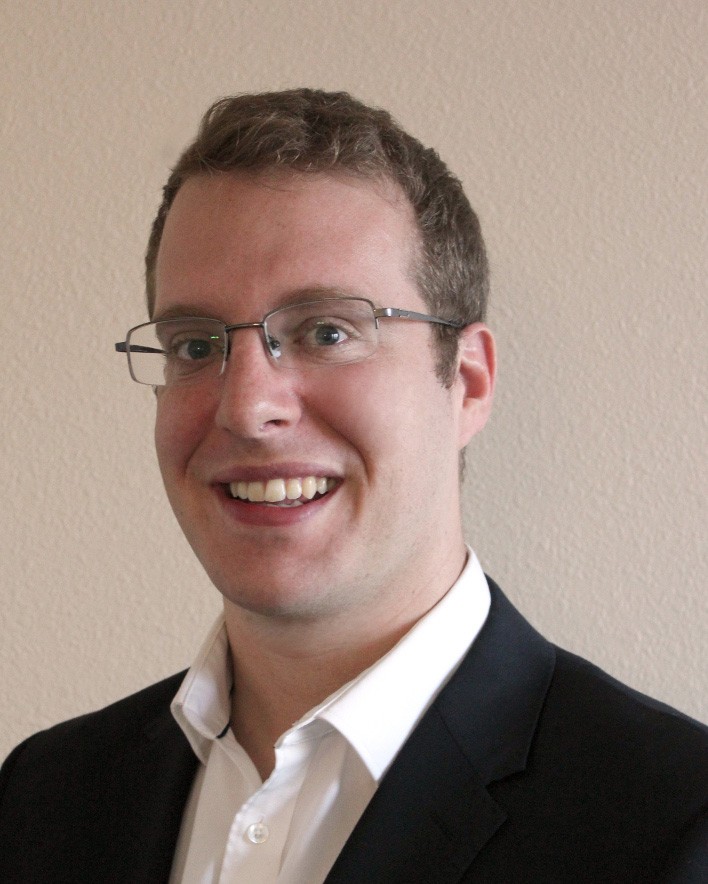
David Lindlbauer is an Assistant Professor at the Human-Computer Interaction Institute (HCII) within Carnegie Mellon University's School of Computer Science. He leads the Augmented Perception Lab and co-directs the CMU Extended Reality Technology Center (XRTC) . His research bridges Human-Computer Interaction, Computer Graphics, and Computer Vision to create adaptive interfaces that enhance human-digital interaction. Education : PhD (summa cum laude) from Technische Universität Berlin , MSc and BSc from University of Applied Sciences Upper Austria Previous Affiliation : Postdoctoral Researcher at ETH Zurich (2018-2020) David's research focuses on understanding human perception of digital information and developing computational approaches to optimize AR/VR interface usability. Key areas include: Context-aware adaptive interfaces Visual saliency and attention modeling Spatial audio-haptic systems Optimal placement algorithms Object manipulation in Remixed Reality Diminished/ambient MR interfaces His 15 most recent publications (2024-2025) span topics in adaptive XR interfaces, multimodal notifications, haptic systems, and spatial cognition. These works appear at venues like ACM CHI, ACM UIST, IEEE VR, and Frontiers in VR. Common themes include: Machine learning for interface adaptation Human factors in XR design Real-time environment analysis Privacy-aware display systems Collaborative MR interfaces Accessibility enhancements Scientific Recognition : Best Paper Honorable Mention Award (ACM CHI 2024) Best Paper Award (ACM ISS 2023) ETH Zurich Postdoctoral Fellowship Multiple best paper recognitions at CHI, UIST, and IEEE VR Teaching & Leadership : Course developer for CMU's "Interactive Extended Reality" Mentor for NASA SUITS Challenge team Co-chair roles at CHI and UIST Overseeing PhD students and research interns
David Lindlbauer is an Assistant Professor at Carnegie Mellon University's Human-Computer Interaction Institute (HCII), where he leads the Augmented Perception Lab and co-directs the CMU Extended Reality Technology Center. His research focuses on advancing Mixed Reality (MR) and Extended Reality (XR) interfaces through computational interaction methods that optimize spatial, temporal, and multimodal feedback.
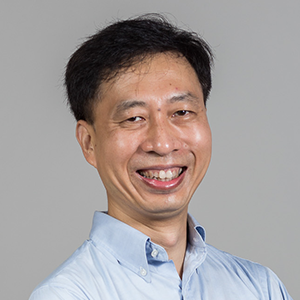
David Hsu is Provost's Chair Professor in the Department of Computer Science at the National University of Singapore (NUS) School of Computing, where he founded and directs the NUS Artificial Intelligence Laboratory (NUSAIL) and leads the Smart Systems Institute. His academic leadership includes chairing major conferences such as Robotics: Science & Systems (2015) and IEEE ICRA (2016), alongside editorial roles in IEEE Transactions on Robotics and the Journal of Artificial Intelligence Research. He earned a B.Sc. in Computer Science & Mathematics from the University of British Columbia and a Ph.D. in Computer Science from Stanford University. His research spans robotics, AI, and computational biology, with recent focus on robot planning under uncertainty and human-robot collaboration. Current work integrates machine learning with decision-theoretic planning to enable robust human-robot co-existence in unstructured environments. Analysis of his 2023-2025 publications reveals dominant trends in deformable object manipulation (e.g., clothes handling via semantic keypoints), open-world navigation using scene graphs, and LLM-driven multi-agent reasoning for complex tasks. Key innovations include perspective-aware visual grounding for human-centric interaction and functional object arrangement through compositional generative models, reflecting a strong emphasis on real-world applicability. His scientific contributions have earned prestigious recognition: IJCAI-JAIR Best Paper Prize (2022) for foundational AI research Robotics: Science & Systems Test of Time Award (2021) IEEE Fellowship (2018) for contributions to robotic planning RSS Best Systems Paper Award (2017) RoboCup Best Paper Award at IROS (2015) Humanitarian Robotics Award at ICRA (2015) As director of the Adaptive Computing Laboratory, Hsu drives research on fundamental computational frameworks for human-robot interaction. The lab's work on uncertainty-aware decision-making has secured significant research funding through grants from Singapore's National Research Foundation and industry partnerships with robotics firms. While specific student names aren't publicized, his leadership in the NUSAIL indicates extensive mentorship of doctoral candidates in AI and robotics.
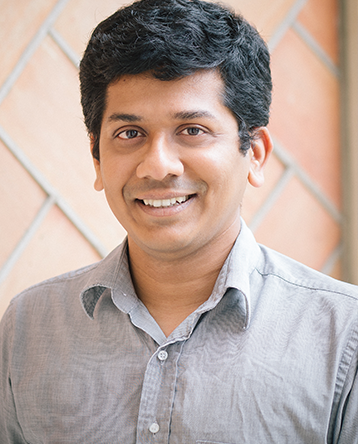
Aswin Sankaranarayanan is a Professor in the Department of Electrical and Computer Engineering at Carnegie Mellon University (CMU) , where he leads the Image Science Lab . His research focuses on computational photography , 3D shape estimation , and novel imaging system design . He earned his Ph.D. in Electrical and Computer Engineering (2009) from the University of Maryland and completed a postdoctoral fellowship at Rice University (2012) . Research Themes: Developing imaging systems that exploit low-dimensional signal models to overcome traditional sensing limitations Co-design of optics and processing algorithms for efficient sensing Application of non-linear signal models to high-dimensional data Advancing compressed sensing and big data processing techniques Scientific Recognition: SIGGRAPH 2023 Best Paper Award (Split-Lohmann Multifocal Displays) CVPR 2019 Best Paper Award (Fermat Paths for NLOS Reconstruction) NSF CAREER Award (2017) Dean’s Early Career Fellowship (2018-2021) Herschel Rich Invention Award (2016) Technical Contributions: His recent publications reveal expertise in non-line-of-sight shape reconstruction , VR/AR display systems , and biomedical imaging . Collaborations span institutions like University College London and University of Toronto.
Jan Borchers is a full professor of computer science and head of the Media Computing Group, an endowed Chair in the Computer Science Department at RWTH Aachen University. He serves as deputy member of the Faculty Council for Mathematics, Computer Science and Natural Sciences (2024-2026) and previously headed the Computer Science Department's Examination Board from 2015 until February 2025. Borchers established his research group in 2003, pioneering modern HCI academic research and teaching in Germany, and opened Germany's first Fab Lab in 2009. Borchers received his PhD 'summa cum laude' in computer science from Darmstadt University of Technology in 2000. Before joining RWTH Aachen, he held faculty positions at Stanford University and ETH Zurich. His PhD thesis, 'A Pattern Approach to Interaction Design,' became the first book to bring design patterns to HCI. His research focuses on Human-Computer Interaction with particular interest in new user interfaces for soft robotics, textile user interfaces, 3D printing and personal fabrication, augmented reality, wearable and tangible computing, interfaces for software development, deceptive patterns, and interactive guides and exhibits. He is a member of ACM, SIGCHI, SIGCHI Germany, and GI, and introduced the Interactivity format to the CHI conference in 2005. Recent publications reveal a strong emphasis on deceptive patterns/dark patterns in UI design, textile interfaces, and the impact of generative AI on creative teamwork. His work spans from fundamental research in interaction techniques to practical applications in smart homes, accessibility, and children's interfaces, with a consistent focus on usability and user-centered design. IDC 2025 Best Work in Progress: 'If They Have No Choice, They'll Accept!' CHI'25 Student Games Competition Winner: 'The Deceptive Dungeon' RWTH-Wissenschaftsnacht 2024 Best Science Slam: 'Usability: 4 Prinzipien guter User Interfaces' Multiple CHI/UIST Honorable Mentions and Best Paper awards spanning two decades Author of influential books including 'A Pattern Approach to Interaction Design' and 'Arduino In A Nutshell' Borchers has provided extensive consulting, training, and user interface design services to major clients including AirBus, Apple, ARD, Bayer, Children's Museum Boston, Daimler, Handelsblatt, OTIS, Scout24, TEDx, and Deutsche Telekom. He actively organizes the Computer Science Department's weekly Faculty Lunch since 2003 and coordinates the department's public relations and web presence since 2010. He leads the Media Computing Group, which has become a leading German lab in terms of archival publications at CHI, the top international conference in HCI. Since March 2025, he serves as faculty patron for TechLabs Aachen, a student initiative providing practical digital skills training.
Brad Hayes is an Associate Professor of Computer Science at the University of Colorado Boulder within the College of Engineering and Applied Science, where he directs the Collaborative AI and Robotics (CAIRO) Laboratory. He also serves as Chief Technology Officer at Circadence, leading efforts in developing AI-enabled products for cybersecurity training and assessment. Undergraduate degree from Boston College PhD in Computer Science from Yale University Postdoctoral Associate at MIT Professor Hayes' research focuses on developing techniques that enable autonomous agents and robots to learn from and collaborate with humans safely, reliably, and productively. His work occurs at the intersection of pervasive and personalized artificial intelligence, human-robot teaming, and decision support. He has made significant contributions to collaborative robotics, dependable explainable AI, and imitation learning, with applications spanning manufacturing, healthcare, disaster response, autonomous vehicles, and space exploration. His recent publications reveal a strong emphasis on human-robot interaction, with particular focus on improving predictability in collaborative tasks, developing explainable AI systems that build trust, leveraging augmented and virtual reality for enhanced collaboration, and creating more efficient learning algorithms from human demonstrations. His work increasingly integrates large language models and advanced neural network architectures while maintaining a strong human-centered design approach. Sustainability Recognition (2025) for computational efficiency in motion planning Best Student Paper Runner-up at AAMAS 2022 Nominated for Best Technical Paper at HRI 2024 Best Technical Paper Runner-up at HRI 2019 Hayes has successfully mentored numerous graduate students through the CAIRO Lab, including multiple PhD graduates in 2024 alone. His lab receives funding from various organizations supporting research in human-robot interaction and collaborative AI. He frequently collaborates with industry partners and has established connections with major technology companies through his research and speaking engagements. The CAIRO Lab, under Hayes' direction, is a vibrant research environment focused on turning theoretical concepts into practical applications through hands-on work with real robots and human participants. The lab's research spans multiple domains including manufacturing, disaster response, autonomous vehicles, and space exploration, with a consistent emphasis on safe and effective human-machine teaming.
Dominic Thibault is an Assistant Professor at the Faculty of Music, Université de Montréal . His research-creation explores human-machine interaction in musical contexts, focusing on embodied cognition through electroacoustic compositions, audiovisual performances, and musical software development. Co-director, Laboratoire Formes·Ondes Active member, CIRMMT (Centre for Interdisciplinary Research in Music Media and Technology) Research axis leader, Expanded Musical Practice (CIRMMT) Member, Québecor Millénium entrepreneurship committee Scientific committee member, ACFAS
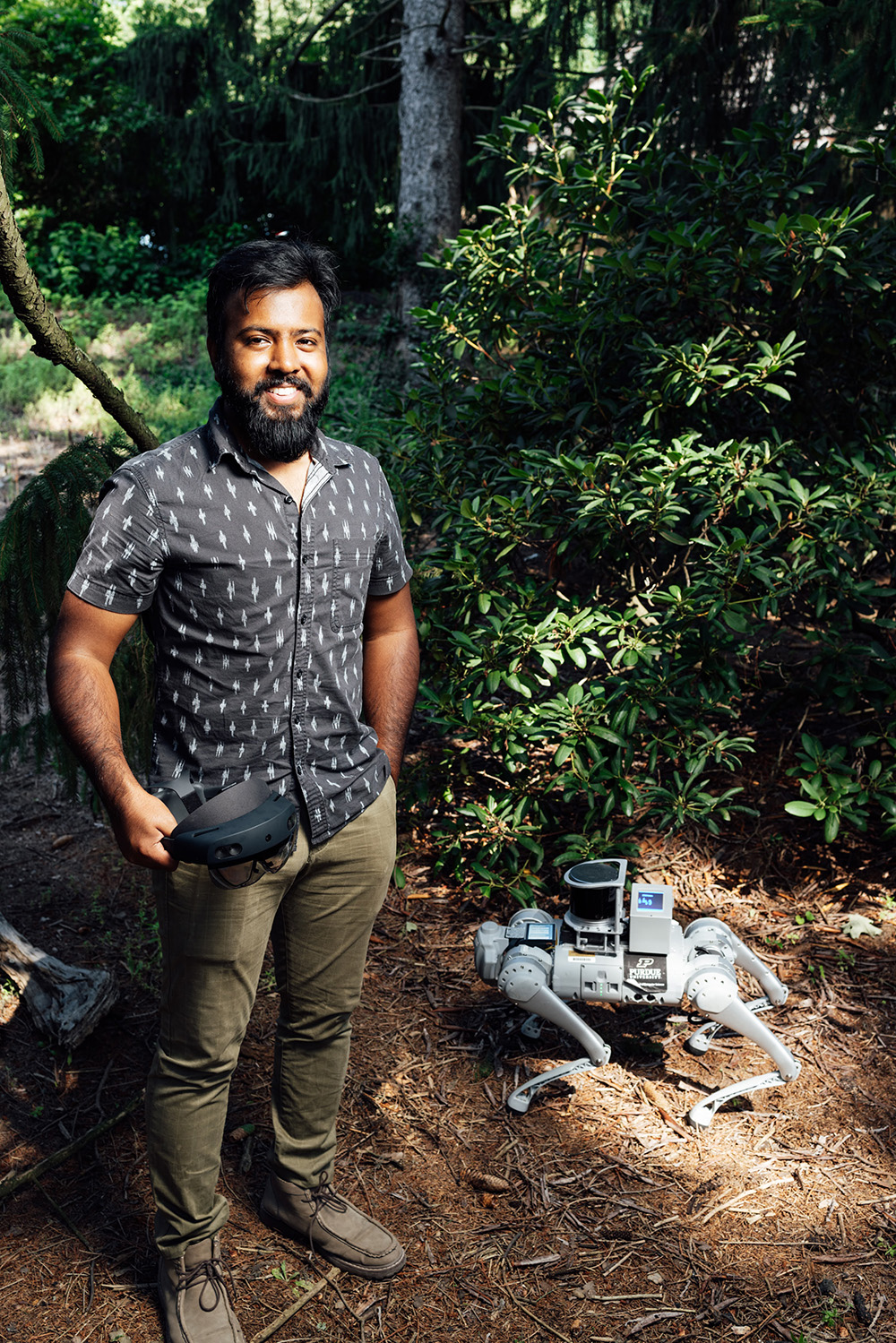
Dr. Aniket Bera is an Associate Professor in Computer Science at Purdue University and holds an Adjunct Associate Professor role at the University of Maryland at College Park (UMIACS). He directs the IDEAS Lab at Purdue and previously served as a Research Assistant Professor at UNC Chapel Hill. His research focuses on Affective Computing, Computer Graphics (AR/VR), AI & Robotics, Social Robotics, and medical AI applications for mental health diagnostics. Affiliations: Purdue University (Primary), University of Maryland (Adjunct), UMIACS Career: Joined Purdue in 2017, extensive industry collaborations with Disney Research, Intel, and C-DAC Research Interests: Affective Computing: Emotion perception via gait analysis, speech, and facial/body expressions AR/VR: Redirected walking, virtual environments, and human motion modeling Medical AI: AI-driven mental health detection systems (e.g., VidSole dataset) in collaboration with medical schools Key Contributions: Developed Project Dost (mental health initiative) Received 2020 Brain & Behavior Seed Grant ($X) for emotion-gait research Authored 65+ papers (1,800+ citations) with awards at IEEE VR 2021 Funding & Leadership: Serves as Senior Editor for IEEE RA-L (Planning/Simulation) Conference Chair for ACM SIGGRAPH MIG 2022 Labs/Teams: IDEAS Lab (Purdue), UMD GAMMA Group
Dr. Frederick Li is an Associate Professor in the Department of Computer Science at Durham University, UK. He holds editorial roles as Associate Editor of Frontiers in Education (Digital Education) and Editorial Board Member of Virtual Reality & Intelligent Hardware. His research focuses on Computer Graphics, Machine Learning, Geometric Modelling, Collaborative Virtual Environments, Visual Aesthetics, and Educational Technologies. He earned his B.A. (Hons) and M.Phil. from The Hong Kong Polytechnic University and his Ph.D. in Computer Graphics from City University of Hong Kong. Prior roles include Assistant Professor at HK PolyU and project manager of a Hong Kong Government ITF-funded project. **Education**: B.A. (Computing Studies) and M.Phil. from HK PolyU; Ph.D. in Computer Graphics (CityU Hong Kong). **Research Interests**: His work spans mesh saliency detection, human-object interaction recognition, cloud modeling, face beautification, and educational technology. Recent achievements include awards for papers (e.g., Best Paper at ITiCSE 2014) and recognition such as EPSRC Peer Review College membership. He leads Durham's Undergraduate Board of Examiners and has been an external examiner at Northumbria University. **Awards**: Best Paper (ACM ITiCSE 2014), Outstanding Paper (ICALT 2013), EPSRC Peer Review College (2024), Outstanding BMVC 2024 Reviewer. **Grants & Labs**: His research is supported by grants from EPSRC and others. He collaborates with the Centre for Vision and Visual Cognition, VIViD, and AIHS group at Durham.
Stephane Cotin is a Research Director at Inria and leader of the MIMESIS team, specializing in real-time physics-based medical simulations. His work focuses on surgical training, planning, and image-guided therapy, with over 200 scientific articles and the development of the open-source SOFA framework. He co-founded InSimo, Twinical, and EVE, and previously held roles at Harvard Medical School and Mitsubishi Electric Research Lab. Cotin’s research bridges imaging, robotics, and medicine to improve healthcare outcomes, emphasizing patient-specific biophysical modeling and real-time computation. His awards include the Academy of Sciences Award (2018) and Dirk Bartz Medical Prize (2015). He has advised numerous PhD students and led projects like MediTwin and PREMYOM, advancing digital twin technologies for precision medicine.