Mikko Sams is a Senior Advisor and Researcher at the Department of Neuroscience and Biomedical Engineering , Aalto University. His work bridges cognitive neuroscience, psychology, and multisensory processing, with a focus on emotion, empathy, and audiovisual integration. Research Themes: Emotion mapping, social cognition, brain synchronization during naturalistic stimuli, empathy mechanisms, and cultural influences on perception. Methodologies: fMRI, MEG, ERP, and behavioral studies using films, narratives, and music as stimuli. Recent publications highlight his exploration of emotional valence across cultures, political polarization in neural responses, and body maps of emotions . Sams investigates how audiovisual speech perception and social interaction modulate brain activity, often collaborating with interdisciplinary teams. His work extends to design science , examining empathy in human-technology interaction, and cognitive disorders , analyzing neural patterns in autism and psychosis. Despite extensive collaborations, no formal student list or awards are explicitly mentioned in the data. The research emphasizes functional connectivity , intersubject synchronization , and neuroplasticity in both healthy and clinical populations.
Ana Rita Batista is an academic researcher affiliated with UMass Chan Medical School, where she serves as an Instructor in the Department of Neurology at the T.H. Chan School of Medicine. She is also associated with the NeuroNexus Institute within the same institution. Her research focuses on gene therapy applications for neurogenetic disorders. Batista earned a Master of Science (MSc) in Biochemistry and a Doctor of Philosophy (PhD) in Biomedical Sciences from the University of Porto, Portugal. These credentials establish her foundation in molecular mechanisms and biomedical research. Research Interests: Gene therapy, neurology, molecular biology, neurodegenerative diseases, AAV vectors, and therapeutic development Publication Trends: Over the past decade, Batista has contributed to advancing adeno-associated virus (AAV) gene therapy for neurological conditions. Her work spans neurogenetic disorders (Huntington's disease, Tay-Sachs, GM1 gangliosidosis), focusing on vector delivery, therapeutic monitoring, and safety profiles. Collaborations: Batista has worked extensively with Dr. Miguel Sena-Esteves, Dr. Terence Flotte, and Dr. Heather Gray-Edwards. Her publications often appear in journals related to molecular therapy, human gene therapy, and neurogenetics. Techniques: Her research utilizes advanced methodologies including focused ultrasound for blood-brain barrier disruption, real-time MR tracking of gene therapies, and in vivo gene editing approaches in murine and feline models.
Adam Gazzaley is the David Dolby Distinguished Professor of Neurology, Physiology, and Psychiatry at the University of California, San Francisco (UCSF) School of Medicine, where he serves as Founder & Executive Director of Neuroscape, a translational neuroscience center. His work bridges cognitive neuroscience, technology development, and clinical applications. His research focuses on cognitive control mechanisms , neuroplasticity , and technology-driven interventions for cognitive disorders. Key areas include attention, memory, aging, and the development of closed-loop video games integrated with VR/AR, physiological monitoring, and brain stimulation. Recent work explores psychedelic neuroscience in aging populations and digital therapeutics for multiple sclerosis. Notable trends across his 160+ publications show increasing focus on digital biomarkers , personalized cognitive training , and translational applications of neuroplasticity principles. His work spans basic neuroscience (fMRI/EEG/TMS methodologies) to clinical implementation (FDA-cleared digital therapeutics). 2015 SfN Science Educator Award 2020 Global Gaming Citizen Honor Newsweek's 2021 America’s Greatest Disruptors 2017 PROSE Award for The Distracted Mind As Chief Science Advisor of Akili Interactive and co-founder of JAZZ Venture Partners, he translates research into commercial applications. He has advised Apple, GE, Nielsen, Deloitte, and Magic Leap, and served on the President's Council on Fitness, Sports & Nutrition. His Neuroscape lab develops open-source cognitive assessment tools while advancing rigorous placebo-controlled trials of digital interventions.
Dr. Robin Gerrits is a cognitive neuroscientist and postdoctoral researcher affiliated with the Max Planck Institute for Human Cognitive and Brain Sciences (MPI CBS) in Leipzig, Germany, and the CoPla Lab at Ghent University. His research focuses on cerebral (language) laterality, hemispheric specialization, and individual differences in brain organization. He has received personal research funding from the Marie Skłodowska-Curie Actions and the Research Foundation - Flanders (FWO). Education: PhD in Psychology, Ghent University (2016–2020) Postgraduate, Advanced Medical Imaging, KU Leuven (2015–2016) MA/BA in Speech Therapy and Audiology Sciences, KU Leuven (2011–2015) Research Trends : Gerrits' work bridges molecular neurobiology, neuroimaging, and clinical applications. His recent publications investigate the acetylcholine-norepinephrine axis in functional lateralization, neurostimulation for dyslexia, and synaptic network dynamics in psychiatric conditions. His studies employ multimodal methodologies (TMS, fMRI, PET) to probe causal neural interactions and biomarkers. Scientific Contributions : Awards: Personal grants from Marie Curie and FWO Collaborations: Active in international networks (Yale, Rutgers, KU Leuven) Lab Affiliations: CoPla Lab (MPI CBS), Ghent University's Experimental Psychology department
Quentin Gaucher serves as an Associate Professor of Neuroscience at the University of Oxford, affiliated with the Department of Physiology, Anatomy and Genetics (DPAG) within the Medical Sciences Division. He is an active member of the Walker Group, collaborating closely with Kerry Walker on auditory neuroscience research. His work bridges experimental neurophysiology and cognitive neuroscience to investigate fundamental mechanisms of sound processing. Dr. Gaucher's research focuses on neural encoding of communication sounds in the auditory cortex, with particular emphasis on neuromodulation by neurotransmitters like noradrenaline, cortical inhibition mechanisms, and the relationship between local field potentials and spiking activity. His methodology combines electrophysiological recordings in animal models (primarily guinea pigs), multi-electrode array technology, and computational analysis to decode how the brain processes complex auditory signals. This work has significant implications for understanding sensory processing disorders and neural basis of communication. Analysis of his publication record reveals consistent expertise in auditory neuroscience, with recurring themes of neural representation of communication sounds, information coding in cortical circuits, and cross-disciplinary integration of physiological data with cognitive models. His research demonstrates technical innovation in characterizing neural encoding properties and analyzing neural redundancy. Within the Walker Group at Oxford, Gaucher contributes to a collaborative research environment focused on advanced neurophysiological techniques for auditory system investigation. The group maintains strong technical capabilities in electrophysiology and computational modeling. While specific details about student supervision and grant funding aren't publicly documented in the source material, his active research program and faculty position indicate ongoing involvement in mentoring graduate students and securing research support through standard academic channels.
Simone Falk is a Full Professor in the Department of Linguistics and Translation at the Faculty of Arts and Sciences, University of Montreal. She holds the prestigious Canada Research Chair in Interdisciplinary Studies on Rhythm and Language Acquisition and is a member of BRAMS (International Laboratory for Brain, Music and Sound Research) and the Centre for Research on Brain, Language and Music (CRBLM). Her research focuses on the interface between language and music, with particular emphasis on rhythmic phenomena in communication, language acquisition, and speech pathology. Drawing from experimental linguistics, neuroscience (including EEG), cognitive science, and movement sciences, her work examines how rhythmic and temporal predictions influence language processing. Key research areas include characterizing developmental speech and language deficits, understanding verbal and motor coordination between speakers, and developing music-based interventions for speech pathology. Analysis of her recent publications reveals a strong focus on the neural and cognitive mechanisms underlying speech rhythm, with particular attention to stuttering, infant language development, and the therapeutic potential of musical training. Her work spans multiple disciplines, connecting linguistics, neuroscience, and clinical applications, with a growing emphasis on translational research that bridges basic science with clinical practice in speech-language pathology. Scientific Awards: Canada Research Chair in Interdisciplinary Studies on Rhythm and Language Acquisition Professor Falk actively supervises graduate students, with recent master's theses focusing on topics such as adjective agreement processing in adolescents, rhythmic coordination during alternating reading tasks, and music-speech transfer effects. Her extensive grant portfolio includes multiple major projects funded by Canadian and Quebec research agencies (CRSNG, CRSH, FRQSC, FRQNT), with a current focus on rhythm's role in speech perception and production (2021-2027), group singing for communication disorders (2023-2025), and stuttering choir interventions (2020-2024). She leads research within the BRAMS laboratory and CRBLM, collaborating with speech-language pathologists and clinicians to develop novel intervention approaches for communication disorders based on musical training, singing, and rhythmic interaction. Her work has significant implications for understanding the fundamental connections between rhythm, language, and movement in both typical development and clinical populations.
Gudrun Schwarzer is a Professor of Developmental Psychology at the Department of Developmental Psychology, Faculty 06 Psychology and Sports Science, Justus-Liebig-University Giessen, Germany. With a habilitation in Psychology (University of Tübingen, 1999) and a professorship since 2003, her research spans infant cognition, emotional development, language acquisition, and the interplay between motor skills and cognitive abilities. She leads a research team investigating how sensory-motor experiences shape predictive processing and social-emotional development in children. Education: Diploma in Psychology (University of Marburg, 1988), Dr. phil. nat. (University of Frankfurt/Main, 1991) Her research focuses on developmental changes in emotional perception, mental rotation, reinforcement learning, and the impact of music training on executive functions. She examines cross-domain interactions between motor, cognitive, and emotional systems, particularly in infants and preschoolers. Recent publications highlight her work on multimodal emotion processing , perceptual narrowing in speech and face recognition, and the effects of locomotion training on cognitive development. Her studies often employ longitudinal designs and integrate behavioral, neuroimaging, and computational approaches. Scientific Awards: Heinz-Heckhausen-Award (DGPs, 1991), DFG scholarship (1997-1998), Volkswagen Foundation funding (1988-1991) She has led an Independent Research Group at the Max Planck Society and maintains ongoing collaborations in developmental neuroscience. Her lab at Giessen University investigates sensorimotor integration, early language-emotion interactions, and interventions for developmental disorders.
Paul Walker is a Professor at Wayne State University School of Medicine, with academic appointments since 1990 and promotion to Professor in 2002. He holds formal education including a BS in Biology (Albright College, 1983), PhD in Anatomy (Temple University, 1987), and postdoctoral training in Neuroscience at Rutgers University (1987-1990). Current research focus: Medical education methodology Prior research focus: Basal ganglia neurochemistry Key projects: Medical Gross Anatomy curriculum development His scientific contributions span Dopamine receptor interactions in movement disorders and Neurochemical mapping of brain structures. Recent work explores neurotransmitter dynamics in sensory integration. Administrative Roles Director, Medical Gross Anatomy course (2015-present) Contributor, Medical Neuroscience curriculum Director, CME course in Surgical Anatomy of the Head & Neck
Hugo Schnack is an Assistant Professor at Utrecht University's College of Humanities, affiliated with the Department of Languages, Literature and Communication. His research bridges Linguistics , Neuroimaging , and Machine Learning , focusing on brain-behavior relationships in health and mental disorders. Specializes in Schizophrenia and Developmental Dyslexia prediction via neuroimaging Developed Psychosis Prognosis Predictor and ePODIUM infant dyslexia model Active in Neuroanatomy , Machine Learning , and Clinical Data Analysis His publications span Psychological Medicine , Nature Neuroscience , Schizophrenia Bulletin , and Frontiers in Psychology . Key themes include: Individualized brain modeling for psychiatric and developmental disorders Machine learning applications in neuroimaging and clinical prediction Structural brain analysis across lifespan and sex differences Contact: h.g.schnack@uu.nl . See full UU research portal for detailed output.
Pascal Gaillard is an Associate Professor at the University of Toulouse - Jean Jaurès, where he conducts research at the CLLE Lab (Cognition, Languages, Language, Ergonomics, UMR5263) in the "Language and Cognitive Processes" Team, while teaching in the Music Department at the National Higher Institute for Teaching and Education in Toulouse - Midi-Pyrénées (INSPE). His academic career spans over two decades, beginning as an Assistant Professor in Musicology at Université de Toulouse - Le Mirail from 1998 to 2000, before becoming an Associate Professor at the University of Toulouse since 2002. His educational background includes: PhD in Musicology and Auditory Perception (1996-2000) from Université de Toulouse - Le Mirail / Université de Paris - Jussieu Master (DEA) in Musicology - Ethnomusicology (1993-1994) from Université de Toulouse - Le Mirail Maîtrise in Musicology - Ethnomusicology (1989-1990) from Université de Toulouse - Le Mirail Licence in Musicology (1985-1989) from Université de Toulouse - Le Mirail Dr. Gaillard's research focuses on auditory perception and cognitive processes, particularly the categorization of sounds. His work spans multiple domains including musical timbre perception, speech perception in individuals with age-related hearing loss, environmental sound recognition, and auditory processing in deaf individuals with cochlear implants. He has pioneered studies on how humans organize their sound world through categorization, drawing on prototypical categorization theory developed by Rosch (1976). A key insight from his research is that auditory categorization is dynamic rather than fixed, varying according to listener needs, tasks, and action goals. His recent publications demonstrate a strong interdisciplinary approach, bridging music cognition, clinical audiology, and cognitive neuroscience. There's a clear trend toward applied research with clinical implications, particularly for deaf children with cochlear implants, as evidenced by multiple studies on humanoid robots for speech-language training. His work also shows increasing integration of computational approaches, including transfer learning for music preference prediction and ontology-based data management. Dr. Gaillard has secured numerous research grants from prestigious funding bodies including the French National Research Agency (ANR), Occitanie Regional Council, and ANSES. Current projects include "The hospital and its 'Beeps': evaluation of the hearing health of caregivers" (2025-2028), "SILENCE - Comparative acoustics: earth, planets and extreme environments" (2024-2026), and "Rehabilitation of age-related hearing loss: evolution of cognitive load in a 3D virtual environment - AgeHear" (2020-2024). He directs the "Cognition, Behavior and Use" facilities (CCU) which include specialized auditory booths for research. Since 2003, he has developed TCL-LabX, experimental software for conducting categorization studies. His research collaborations span international boundaries, working with labs in France, Canada, and the Netherlands, as well as industry partners in aeronautics and healthcare sectors.
Ayan Sengupta, Ph.D. is an Assistant Professor in the Department of Health Physics and Diagnostic Sciences at the University of Nevada, Las Vegas , where he began in Fall 2024. He teaches Comprehensive Medical Imaging , MRI Physics , Radiation Science , and Dosimetry for both undergraduate and graduate programs. Educational Background Bachelor’s degree in Engineering (India) Master’s degree in Computer Science, specializing in medical image processing, University of Nebraska Ph.D. in Neuroimaging, Otto-von-Guericke University, Germany (supported by DFG Research Scholarship) Postdoctoral research, University of Cambridge & Sir Peter Mansfield Imaging Centre, United Kingdom Lifetime Honorary Affiliate, Hughes Hall, University of Cambridge Research Fellow, Royal Holloway, University of London Research Focus Dr. Sengupta’s work centers on cutting-edge neuroimaging, particularly ultra-high-field 7 T human fMRI . He leverages machine learning and artificial intelligence to decode how the brain represents visual and tactile information. At UNLV he is establishing a program on accessible low-field MRI systems for primary care and is pioneering novel imaging and AI techniques for dementia biomarkers . Publication Landscape Across 20 peer-reviewed works, a clear arc emerges: pioneering 7 T fMRI methodologies (motion correction, resolution optimization), constructing probabilistic atlases of somatosensory digit maps, and integrating computational approaches (decoding orientation, musical genres). Recent efforts extend to low-field MRI accessibility and AI-driven dementia biomarkers , reflecting a translational trajectory from high-field neuroscience to clinical impact. Scientific Honors DFG (Deutsche Forschungsgemeinschaft) Research Scholarship Lifetime Honorary Affiliate, Hughes Hall, University of Cambridge Current Activities & Future Directions Dr. Sengupta is actively building his laboratory at UNLV, acquiring funding and collaborators to advance low-field MRI systems and AI-based dementia diagnostics. While no specific students are named in the provided text, his program is expected to recruit graduate researchers as infrastructure develops.
Matthew Leonard is an Associate Professor at the University of California, San Francisco (UCSF) School of Medicine, affiliated with the UCSF Weill Institute for Neurosciences . With a PhD in Cognitive Science from UC San Diego, his work focuses on neural systems in auditory and speech categorization , leveraging intracranial recordings and neuromodulation techniques like vagus nerve stimulation. Education: BA (Cognitive Science, Occidental College), MS & PhD (Cognitive Science, UC San Diego) His research spans auditory neuroscience , speech processing , and cognitive neurosurgery , supported by grants such as NIH R01DC015504 and DARPA N66001-17-2-4008. Key contributions include understanding neural encoding of speech sounds, cortical dynamics in bilingualism, and ethical considerations in intracranial electrophysiology. Recent publications analyze melody encoding and single-neuron speech representation , with collaborations across UCSF , UCSD , and UCI . He works in the Chang Lab , advancing brain-computer interfaces and neural rehabilitation . His work has strong implications for speech disorders , language acquisition , and neuroethics , with over 150 citations on his 2019 Neuron paper alone.
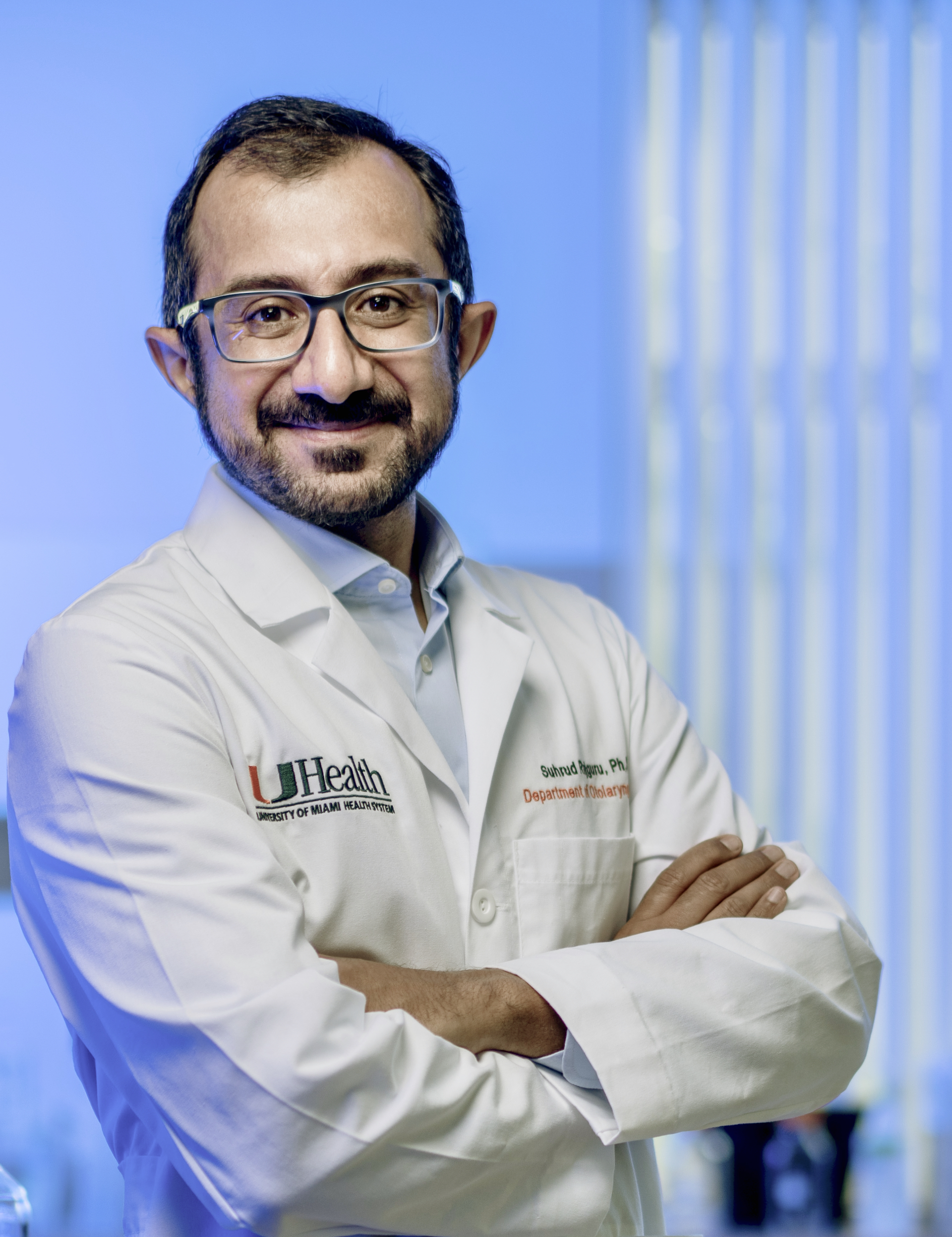
Suhrud M Rajguru is a Professor in the College of Engineering at the University of Miami, holding dual appointments in Biomedical Engineering and Otolaryngology/Head & Neck Surgery. His research focuses on neuroprotection strategies for auditory and vestibular systems, particularly targeting noise-induced hearing loss (NIHL) and cochlear injury. Assistant Vice Provost for Research Workforce Development Director of the University of Miami CTSI Workforce Development Research Interests encompass therapeutic hypothermia, apoptosis inhibition, and biomedical device development for inner ear protection. His work bridges computational modeling, molecular biology, and clinical translation to address NIHL mechanisms and interventions. Mild Therapeutic Hypothermia (MTH) for cochlear and vestibular protection Transcriptomic analysis of hypothermia-induced neuroprotection Vestibular system damage in occupational noise-exposed populations Novel medical devices (e.g., transcanal catheter, cooling neck collar) Link between NIHL and neurodegenerative diseases like Alzheimer's Article Trends highlight MTH as a central theme, with applications in cochlear injury, vestibular system protection, and pharmacological strategies like pan-caspase inhibition. Studies range from rodent models to human clinical trials, emphasizing translational research. Grants & Research include work supported by the University of Miami CTSI and collaborative efforts with institutions like the Miller School of Medicine. His lab investigates biomarkers for NIHL and develops non-invasive otoprotective therapies.
Robb Rutledge is an Assistant Professor of Psychology and Psychiatry at Yale University, where he directs the Rutledge Lab within the Department of Psychology. He is also a member of the Wu Tsai Institute at Yale. His research combines computational modeling with neuroimaging, pharmacology, and smartphone-based data collection to study the relationship between decision making and emotion across the lifespan. Dr. Rutledge completed his BSc in Biology at Caltech and his PhD in Neural Science at New York University under Paul Glimcher. He conducted postdoctoral research at University College London's Wellcome Trust Centre for Neuroimaging with Ray Dolan and Peter Dayan. Prior to joining Yale, he was a Group Leader at the Max Planck Centre for Computational Psychiatry and Ageing Research at UCL. His research focuses on computational models of subjective feelings, particularly happiness. His lab developed the influential equation that happiness depends not on absolute outcomes but on whether events exceed recent expectations. This work has been extended to understand relationships between happiness, learning, social inequality, major depression, intrinsic reward, and neural mechanisms including dopamine signaling. Current projects examine how happiness relates to effort, music, language, and decision-making processes. His lab uses innovative methods including smartphone apps like Happiness Quest, which has engaged over 100,000 participants worldwide. Recent publications demonstrate how language sentiment predicts depressive symptoms and how surprising sounds influence risky decision making, reflecting his lab's focus on computational psychiatry approaches to understanding mood disorders. MRC Career Development Award Society for Neuroeconomics Early Career Award APS Janet Taylor Spence Award for Transformative Early Career Contributions The Rutledge Lab actively mentors numerous PhD students, postdoctoral researchers, and technicians, with alumni now holding positions at institutions worldwide. The lab collaborates extensively with researchers at Mount Sinai, UCL, Trinity College Dublin, and the University of Minnesota, and regularly participates in the Computational Psychiatry Conference. Dr. Rutledge's work bridges computational neuroscience, clinical psychiatry, and real-world applications through digital mental health tools.
Lidiya Talbot is a Visiting Researcher in the School of Biological and Medical Sciences at Oxford Brookes University, affiliated with Professor Nicola Ragge's team. Her work focuses on the genetic basis of rare developmental conditions, particularly human eye disorders. Research Expertise: Molecular genetics, bioinformatics, auditory processing disorder, next-generation sequencing, and translational research. She employs cutting-edge bioinformatic techniques for large-scale genomic data analysis. Publications: Recent work includes studies on evolutionarily conserved non-coding sequences in eye development (2024, Nature Communications), reflecting her interest in identifying missing heritability in developmental disorders. Professional Memberships: Full Member of the Genetics Society