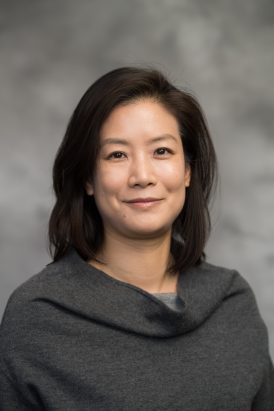
Elisa Raffaella Ferrè is an honorary Research Associate at the UCL Institute of Cognitive Neuroscience. Her research focuses on multisensory interactions between vestibular, visual, and somatosensory systems, particularly addressing how the brain processes terrestrial gravity to guide behavior. She employs methods including EEG, fMRI, virtual reality, and psychophysics. Committee roles: UK Space Life and Biomedical Sciences Association (UK SpaceLABS), European Low Gravity Research Association (ELGRA), Experimental Psychology Society (EPS), and British Psychology Society Research Board. Engagement: Public talks, BBC Science Focus features, and art/science projects like VESTIBULAR_1 and The Zero Gravity Band. Her work explores cognitive and perceptual effects in non-terrestrial gravity contexts, with grants from the UK British Academy, Royal Society, European Space Agency, and others. Projects include cybersickness reduction and vestibular alterations in microgravity.
Professor Vlad Strukov holds a faculty position at the University of Leeds, specifically within the School of Languages, Cultures and Societies under the Faculty of Arts, Humanities and Cultures. His research expertise spans Film and Visual Culture , Queer Visual Culture , Digital Media , and Global South/Global East studies, with a focus on Russia and transnational contexts. Academic Rank: Professor Responsibilities: Equality, Diversity and Inclusion Coordinator His research interests integrate Contemporary Art & Curating , Streaming Media , and Muslim Cultures , emphasizing Alternative Modernities . Key thematic concerns include: Queer subjectivities in post-Soviet cinema Soft power in BRICS cultural production Digital media's impact on memory and geopolitics Visual representation of the Arctic Media archaeology and technological transitions Recent publications examine Sakha (Yakutia) Cinema and Global Cultural Reorientations (2025), queer silences in art (2022), and digital media's role in reinterpreting classical literature (2009). His work bridges film theory, digital humanities, and queer studies, with a focus on Russia's cultural positioning in global networks. Current postgraduate researchers include Afnan Alasmari and Marta Wójtowicz . No scientific awards are explicitly documented in the source text.
Danielle Chammas, MD , is an Associate Clinical Professor in the University of California, San Francisco School of Medicine within the Department of Medicine . Her work focuses on integrating psychological principles into palliative care delivery. Education: MD from University of California, San Francisco (2010) Current faculty position since 2025 Research interests center on palliative care communication, particularly around emotional support, coping mechanisms, and therapeutic relationships in serious illness. Key themes include: Psychotherapeutic applications in clinical settings Couple dynamics during terminal diagnoses Humor as coping strategy Addressing patient sexuality in palliative contexts Existential aspects of loneliness Publication trends (2020-2025) show interdisciplinary engagement across medicine, psychology, and nursing, with recent emphasis on dyadic support systems and communication frameworks. Notable collaborations include Michael Rabow , Tami Rowen , Alan Shindel , and Neha Goyal at UCSF. Key research areas identified through concept mapping include: Hospice and Palliative Care Nursing Physician-Patient Relations Cancer Care Facilities Adaptation to Serious Illness Narrative Medicine approaches Telemedicine applications
Mark J. Schnitzer is the Anne T. and Robert M. Bass Professor at Stanford University, with primary faculty appointments in the Departments of Biology, Applied Physics, and Neurosurgery within the School of Humanities and Sciences . He co-directs Stanford's Cracking the Neural Code Program and holds affiliations with the Bio-X , Wu Tsai Neurosciences Institute , and multiple graduate programs. Research focuses on neural circuit dynamics and optical imaging innovations for studying learning, memory, and motor behaviors in awake animals Develops high-resolution fluorescence microscopes and miniaturized imaging systems for clinical translation Scientific contributions include: 2019 Nature Methods Method of the Year for miniature fluorescence microscope HHMI Investigator (2008) NIH Director's Pioneer Award (2007) Allen Distinguished Investigator Award (2010) Teaching roles include: Advanced Imaging Lab in Biophysics (APPPHYS 232/BIO 132) Introduction to Biophysics (APPPHYS 205/BIO 126) Multiple independent study and graduate research courses Laboratory affiliations span biomedical engineering , neuroscience , and molecular imaging initiatives at Stanford.
Giuseppina Emma Puglisi is an external lecturer at the Department of Energy (DENERG) of Politecnico di Torino, specializing in interdisciplinary research at the intersection of acoustics, environmental engineering, and medical technologies . Her work focuses on speech intelligibility in complex acoustic environments, particularly for cochlear implant users, and the development of multi-sensor systems for monitoring indoor environmental quality (IEQ) in university and office settings. Research Themes : Classroom acoustics, virtual reality for auditory testing, face mask noise effects, climate-responsive architecture. Leadership : Participated in organizing committees for major acoustics conferences like Forum Acusticum 2023 and serves as Associate Editor for Frontiers in Built Environment . Her recent publications validate virtual reality tools for acoustic assessment and explore cross-linguistic soundscape descriptors. Awards include the Best Paper Award (European Acoustics Association, 2021) and grants for young researchers. She supervises PhD students Virginia Isabella Fissore and Angela Guastamacchia in projects related to IEQ and clinical acoustics.
Se-Mi Oh is an Associate Professor in the Department of Asian Languages and Cultures at the University of Michigan. She specializes in cultural history of modern and contemporary Korea, integrating urban humanities and visual studies methodologies. Education: Ph.D. from Columbia University Email: smoh@umich.edu Office: 202 South Thayer Street, Ann Arbor, MI 48104-1608 Her research examines the intersection of history and space, focusing on: Decoding urban environments as historical texts Japanese colonialism's spatial discursive production in Seoul Ecological reimagining of the Han River Sensory registers in deconstructing colonial visual regimes Key publication trends include: Interdisciplinary approaches combining history, semiotics, and urban studies Critical analysis of architectural surfaces and auditory history Postindustrial ecological interventions in urban planning
Ken Norman is the Huo Professor in Computational and Theoretical Neuroscience at Princeton University, with affiliations at the Princeton Neuroscience Institute and the Department of Psychology. He employs computational modeling and neuroimaging techniques to investigate the neural mechanisms underlying learning and memory. PhD: Harvard University Research Interests focus on decoding neural activity patterns through fMRI and EEG, developing machine learning algorithms for data mining neural signatures, and exploring real-time neurofeedback methods. His work bridges computational neuroscience, cognitive psychology, and artificial intelligence, with specific attention to memory consolidation during sleep, event boundary detection in narratives, and cross-modal memory representations. Scientific Contributions include the development of the Princeton Computational Memory Lab, which investigates learning rules, memory timestamping, and intentional forgetting mechanisms. Articles published between 2021-2025 reveal trends in episodic memory modeling, REM sleep effects, and neurofeedback applications for depression treatment. Psychonomic Society Mid-Career Award Graduate Mentoring Award Advising includes mentoring PhD students like Cody Dong and Ariadne Letrou, who explore questions about neural learning rules and sleep-memory interactions. His research has been supported by grants including a $16M Princeton-Rutgers collaboration on mental illness.
Gudrun Schwarzer is a Professor of Developmental Psychology at the Department of Developmental Psychology, Faculty 06 Psychology and Sports Science, Justus-Liebig-University Giessen, Germany. With a habilitation in Psychology (University of Tübingen, 1999) and a professorship since 2003, her research spans infant cognition, emotional development, language acquisition, and the interplay between motor skills and cognitive abilities. She leads a research team investigating how sensory-motor experiences shape predictive processing and social-emotional development in children. Education: Diploma in Psychology (University of Marburg, 1988), Dr. phil. nat. (University of Frankfurt/Main, 1991) Her research focuses on developmental changes in emotional perception, mental rotation, reinforcement learning, and the impact of music training on executive functions. She examines cross-domain interactions between motor, cognitive, and emotional systems, particularly in infants and preschoolers. Recent publications highlight her work on multimodal emotion processing , perceptual narrowing in speech and face recognition, and the effects of locomotion training on cognitive development. Her studies often employ longitudinal designs and integrate behavioral, neuroimaging, and computational approaches. Scientific Awards: Heinz-Heckhausen-Award (DGPs, 1991), DFG scholarship (1997-1998), Volkswagen Foundation funding (1988-1991) She has led an Independent Research Group at the Max Planck Society and maintains ongoing collaborations in developmental neuroscience. Her lab at Giessen University investigates sensorimotor integration, early language-emotion interactions, and interventions for developmental disorders.
Paul Walker is a Professor at Wayne State University School of Medicine, with academic appointments since 1990 and promotion to Professor in 2002. He holds formal education including a BS in Biology (Albright College, 1983), PhD in Anatomy (Temple University, 1987), and postdoctoral training in Neuroscience at Rutgers University (1987-1990). Current research focus: Medical education methodology Prior research focus: Basal ganglia neurochemistry Key projects: Medical Gross Anatomy curriculum development His scientific contributions span Dopamine receptor interactions in movement disorders and Neurochemical mapping of brain structures. Recent work explores neurotransmitter dynamics in sensory integration. Administrative Roles Director, Medical Gross Anatomy course (2015-present) Contributor, Medical Neuroscience curriculum Director, CME course in Surgical Anatomy of the Head & Neck
Carolin Breuer M.Sc. is a Research Assistant at the Institute of Hearing Technology and Acoustics (IHTA) at RWTH Aachen University, specializing in audio-visual interaction, auditory scene analysis, binaural technology, and psychoacoustics. Her work focuses on auditory selective attention in virtual reality classroom environments, investigating how noise, room acoustics, and visual cues affect cognitive performance. Her research centers on realistic classroom noise scenarios and their impact on auditory attention, leveraging virtual reality to simulate educational environments. Key themes include voice quality effects on student perception, binaural rendering for noise simulation, and audiovisual coherence in immersive settings. She examines how factors like room reverberation and visual priming influence speech perception, memory, and listening effort in students. Breuer's recent publications (2023-2025) demonstrate a strong trend toward VR-based experimental paradigms for studying cognitive load in educational contexts. Her work bridges acoustics, cognitive psychology, and educational technology, with recurring subfields including binaural hearing, psychoacoustics, and classroom noise modeling. She actively contributes to the AUDICTIVE project (Priority Program SPP2236) advancing auditory cognition research. As a research supervisor, Breuer has guided multiple master's theses on auditory selective attention paradigms and audiovisual interaction in VR. Her work is conducted within IHTA's advanced facilities for acoustic virtual reality and auralization, supporting experiments in noise generation, real-time processing, and immersive classroom simulations.
Dr. Manuj Yadav is a Post Doctoral Researcher at the Chair for Hearing Technology and Acoustics , RWTH Aachen University, Germany. His work focuses on acoustic virtual reality , room acoustics , and psychoacoustics with applications in workplace environments, auditorium design, and vocal performance studies. Research Themes : Auditory distraction in open-plan offices, autophonic perception, speech intelligibility metrics, and retroreflective architectural design Projects : Involved in the Priority Program SPP2236 - AUDICTIVE (Auditory Cognition in Interactive Virtual Environments) Recent publications analyze indoor environmental quality in hybrid workspaces, biophilic sound interventions for stress recovery, and acoustic retroreflection in modern and historical architecture. His experimental studies employ auralization techniques and virtual reality to simulate real-world acoustic environments for empirical testing. Key Collaborations : RWTH Aachen University’s Institute of Hearing Technology and Acoustics (IHTA), University of New South Wales Technical Expertise : Acoustic measurement protocols, ISO 3382-3 compliance, binaural simulation systems
Ana Pires is a cognitive psychologist and Research Fellow at ITI-LARSyS, with affiliations at the Universitat Autónoma de Barcelona (PhD in Psychology), Universidade de La República (Co-PI of the 'Interaction and Perception' research line), and Instituto Superior Técnico / Universidade de Lisboa as a Post-Doc researcher in the Faculty of Sciences and LASIGE. Her career spans multiple institutions across Spain, Uruguay, and Portugal, focusing on inclusive educational technology for children with mixed visual abilities. PhD in Psychology (Universitat Autónoma de Barcelona) Research Fellow (ITI-LARSyS) Co-PI (Universidade de La República) Post-Doc Researcher (Instituto Superior Técnico, Universidade de Lisboa) Her research bridges Human-Computer Interaction and Educational Technology to create Inclusive Design solutions. Key projects include: TACTOPI : Multisensory environment for computational thinking CETA : Tangible interaction device for mathematics DCitizens : Digital Civics innovation in Lisbon Accembly : Spatial programming for visually impaired children Her work emphasizes participatory design and user-centered approaches , incorporating tangible interfaces , auditory/haptic feedback , and collaborative learning . Google Scholar shows 25+ peer-reviewed publications since 2009, with recent focus on: AI education through tangible storytelling Ethical frameworks for community-based design Neurodiverse classroom interventions Gamification for mental health awareness Assistive robotics for aging populations Mathematical learning through physical manipulatives While no explicit scientific awards are documented in the text, her 15 most recent articles (2024-2025) demonstrate continuous funding and research activity. She actively engages with families, educators, and cross-disciplinary teams (psychologists, designers, computer scientists) in developing and evaluating accessible technologies.
Pascal Gaillard is an Associate Professor at the University of Toulouse - Jean Jaurès, where he conducts research at the CLLE Lab (Cognition, Languages, Language, Ergonomics, UMR5263) in the "Language and Cognitive Processes" Team, while teaching in the Music Department at the National Higher Institute for Teaching and Education in Toulouse - Midi-Pyrénées (INSPE). His academic career spans over two decades, beginning as an Assistant Professor in Musicology at Université de Toulouse - Le Mirail from 1998 to 2000, before becoming an Associate Professor at the University of Toulouse since 2002. His educational background includes: PhD in Musicology and Auditory Perception (1996-2000) from Université de Toulouse - Le Mirail / Université de Paris - Jussieu Master (DEA) in Musicology - Ethnomusicology (1993-1994) from Université de Toulouse - Le Mirail Maîtrise in Musicology - Ethnomusicology (1989-1990) from Université de Toulouse - Le Mirail Licence in Musicology (1985-1989) from Université de Toulouse - Le Mirail Dr. Gaillard's research focuses on auditory perception and cognitive processes, particularly the categorization of sounds. His work spans multiple domains including musical timbre perception, speech perception in individuals with age-related hearing loss, environmental sound recognition, and auditory processing in deaf individuals with cochlear implants. He has pioneered studies on how humans organize their sound world through categorization, drawing on prototypical categorization theory developed by Rosch (1976). A key insight from his research is that auditory categorization is dynamic rather than fixed, varying according to listener needs, tasks, and action goals. His recent publications demonstrate a strong interdisciplinary approach, bridging music cognition, clinical audiology, and cognitive neuroscience. There's a clear trend toward applied research with clinical implications, particularly for deaf children with cochlear implants, as evidenced by multiple studies on humanoid robots for speech-language training. His work also shows increasing integration of computational approaches, including transfer learning for music preference prediction and ontology-based data management. Dr. Gaillard has secured numerous research grants from prestigious funding bodies including the French National Research Agency (ANR), Occitanie Regional Council, and ANSES. Current projects include "The hospital and its 'Beeps': evaluation of the hearing health of caregivers" (2025-2028), "SILENCE - Comparative acoustics: earth, planets and extreme environments" (2024-2026), and "Rehabilitation of age-related hearing loss: evolution of cognitive load in a 3D virtual environment - AgeHear" (2020-2024). He directs the "Cognition, Behavior and Use" facilities (CCU) which include specialized auditory booths for research. Since 2003, he has developed TCL-LabX, experimental software for conducting categorization studies. His research collaborations span international boundaries, working with labs in France, Canada, and the Netherlands, as well as industry partners in aeronautics and healthcare sectors.
Hiroyasu Iwata is Professor at Waseda University's Faculty of Science and Engineering, School of Creative Science and Engineering. He serves as Director of the Frontier Mechanical Engineering Research Institute and Director of Global Robot Academia Institute. Holding a Dr. Engineering degree from Waseda University, his research spans intelligent machines, medical robotics, and rehabilitation engineering, with over 256 publications and an h-index of 22. His research focuses on human-robot symbiosis with emphasis on humanoid robotics, tactile perception, and medical applications. Iwata develops systems for rehabilitation, tele-operated medical procedures, and human-coordinated machine systems that enhance human capabilities. His recent work explores VR applications for cognitive rehabilitation, particularly for stroke patients with spatial neglect, and human augmentation through supernumerary robotic limbs. Iwata's publications reveal strong interdisciplinary trends across medical robotics, virtual reality applications, and human augmentation technologies. His research bridges engineering and medical fields with particular focus on stroke rehabilitation, echocardiography robotics, and VR training systems for cognitive and physical rehabilitation. Best Paper Award, Robotics Society of Japan (2018) Multiple Outstanding Presentation Awards from Society of Instrument and Control Engineers (2017) Grand Prize, System Control Fair 2017 Executive Committee (2017) The Young Scientists' Prize from Minister of Education, Culture, Sports, Science and Technology (2009) Distinguished Achievement Award from Waseda University (2007) Iwata actively collaborates with medical institutions including Nippon Medical School through joint symposia on medical-science-engineering collaboration. His laboratory conducts research on robotic echocardiography, VR rehabilitation systems, and supernumerary robotic limbs, securing funding for projects that translate engineering innovations into medical applications. He directs the Frontier Mechanical Engineering Research Institute and Global Robot Academia Institute at Waseda University, fostering interdisciplinary collaboration between engineering and medical fields. Through the Nippon Medical School and Waseda University Joint Symposium series, his work promotes the integration of robotics, medicine, and engineering for clinical applications.
Difeng Yu is a Postdoc in the Human-Centred Computing section at the Department of Computer Science, University of Copenhagen. Located at Sigurdsgade 41, Copenhagen N, Yu contributes to advancing VR interaction techniques through empirical and theoretical research. His work spans multiple subfields of immersive technology, with a particular focus on selection methods and user embodiment. Research Interests: Virtual Reality interaction design Human-Computer Interaction (HCI) theory Movement mapping and motor learning 3D object selection techniques Haptic feedback in immersive environments Recent publications demonstrate a progression from foundational VR interaction challenges (2018-2019) to advanced applications in consumer VR (2022-2024) and cutting-edge research on perceptual illusions (2025). Key trends include the development of predictive models for selection tasks, exploration of multi-modal interaction techniques, and evaluation of user experience metrics like presence and engagement.