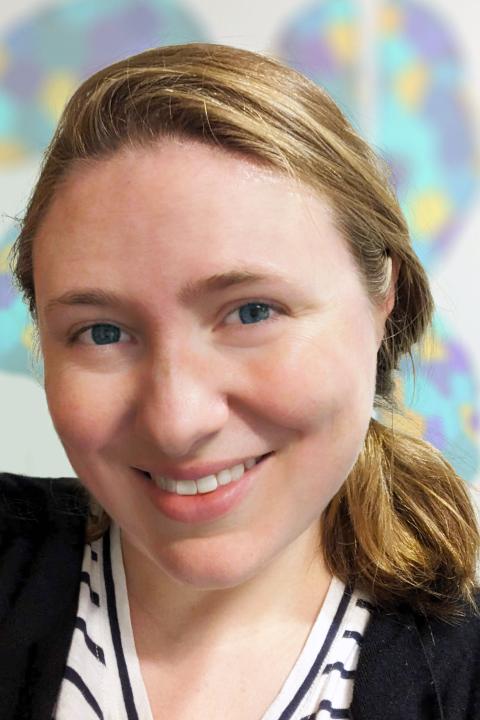
Mr. Ira Marriott Haresign is a Post Doctoral Research Associate at the University of East London, School of Psychology. Their research focuses on developmental psychology, cognitive neuroscience, and inter-brain coordination during early social interactions. PhD in Psychology from University of East London Research interests include: Inter-brain synchrony during child-caregiver interactions Developmental dynamics of visual and auditory attention Neural entrainment in real-world contexts Role of behavioral contingency in attention control Recent publications highlight trends in: EEG hyperscanning for studying interpersonal neural dynamics Temporal and oscillatory mechanisms in infant attention Impact of social interaction on neural development Methodological advancements in developmental neuroscience Notable contributions include methodological frameworks for analyzing neural entrainment and empirical studies on attentional inertia and foraging behaviors in infants.
Dr. Kate Christison-Lagay is an Assistant Professor in the Department of Biological Sciences at the University of New Hampshire (UNH), part of the College of Life Sciences and Agriculture. She holds a Ph.D. in Neuroscience from the University of Pennsylvania. Her research focuses on neural mechanisms underlying sensory perception, particularly in auditory and visual systems, and conscious awareness. She teaches courses such as Neuroscience and Behavior (NSB 500), Neurobiology Laboratory (NSB 501), and Neuroethology (ZOOL 777W). Education: Ph.D., Neuroscience, University of Pennsylvania Research Interests: Dr. Christison-Lagay investigates how the brain processes sensory information to generate conscious perception. Her work spans auditory and visual modalities, with emphasis on neural networks involved in stimulus detection, attentional modulation, and cross-modal integration. Techniques include electrophysiological recordings, EEG analysis, and clinical trials involving thalamic stimulation for neurological conditions. Recent studies explore the role of cortical-subcortical interactions in visual awareness and auditory categorization in non-human primates. Publications: Her recent work includes studies on auditory perception mechanisms, visual consciousness networks, and translational neuroscience approaches to epilepsy treatment. Key themes involve understanding neural correlates of conscious experience across sensory domains. Grants & Advising: No specific grants or advisees are listed in the provided materials. She is affiliated with UNH's Biological Sciences department, located in Rudman Hall. Labs/Teams: Affiliated with UNH's Biological Sciences research facilities, though specific lab names are not mentioned in the profile.
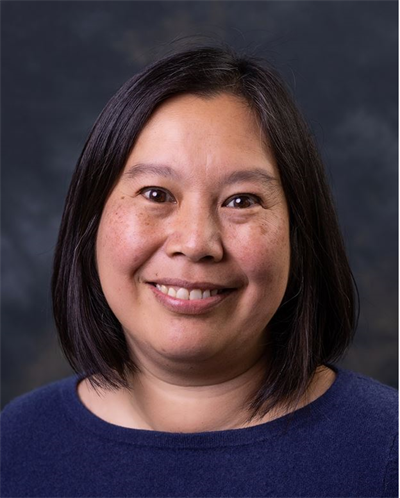
Anne Pycha is Associate Professor in the Linguistics Department at the University of Wisconsin-Milwaukee. She directs the Phonology Laboratory and received the 2022 UWM Office of Research/UWM Foundation Research Award. Education: Ph.D. in Linguistics (UC Berkeley), B.A. in Religious Studies (Brown University) Research focuses on speech perception and production processes, with specific interests in phonological processing, morphological effects on perception, coarticulation patterns, and laboratory phonology methodology. Recent work examines how face masks and artificial intelligence systems impact speech communication. Publications consistently investigate how phonological structure interacts with perception, memory, and production, utilizing experimental methods across diverse linguistic contexts. Awards: UWM Office of Research/UWM Foundation Research Award (2022) Directs the UWM Phonology Lab (Johnston Hall G32) supporting experimental research on speech phenomena.
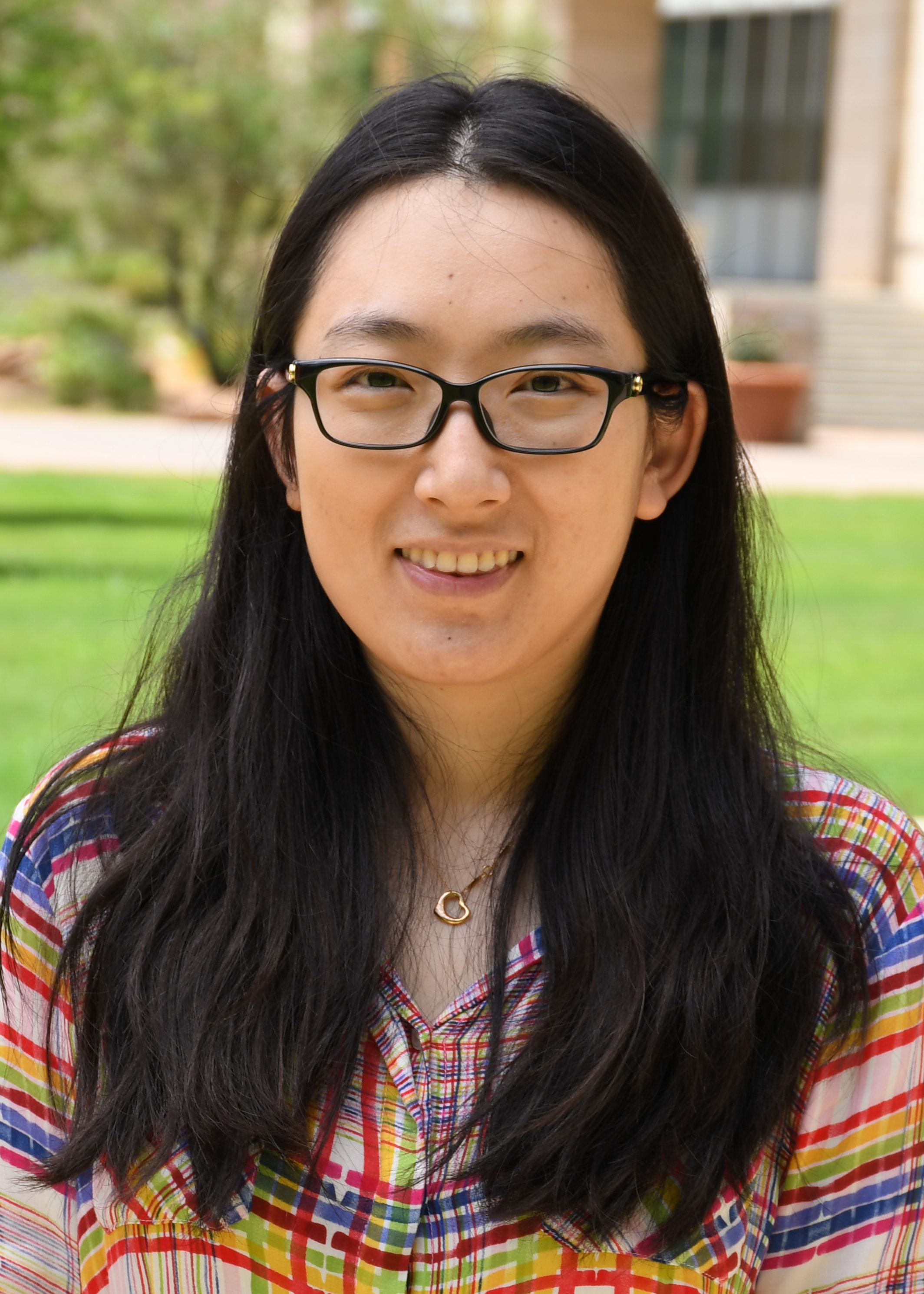
Ming Li is an Associate Professor in the Department of Computer Science and Engineering at The University of Texas at Arlington. Her research focuses on networking, mobile systems (e.g., VR/XR), and cybersecurity, with an emphasis on applied AI, sensing, and computing. She holds a PhD from Mississippi State University and has held prior faculty positions at the University of Nevada Reno. Her work has been funded by NSF, DoT, and NIH, and she has received prestigious awards including NSF CRII and CAREER grants, as well as the N2Women Rising Star in Networking and Communications honor (2023). Education: PhD in Electrical and Computer Engineering, Mississippi State University, 2014 M.E. in Electrical Engineering, Beijing University of Posts and Telecommunications, 2010 B.E. in Electrical Engineering, Sun Yat-sen University, 2007 Research Interests: Dr. Li’s work spans IoT security, mobile computing, privacy-preserving computing, and human-centric systems. Her recent projects include developing VR-based authentication methods, detecting GPS trackers via EMR, and creating tools for cyclist safety using acoustic sensing. She has published over 35 papers in top venues like ACM CCS, INFOCOM, and IEEE journals. Recent Publications Trends: Her recent work emphasizes hardware security (e.g., EMR-based attacks), VR/XR system improvements, and smart city applications. Key areas include user authentication via novel sensing modalities, adversarial attack detection, and privacy-preserving techniques in IoT and crowdsourcing systems. Awards & Recognition: NSF CAREER Award (2020) N2Women Rising Star (2023) 40 Under 40 by Arlington City (2023) Best Paper Awards at IEEE Globecom’15 and DASC’17 Advising & Grants: Dr. Li has advised numerous graduate students, many of whom have gone on to academic and industry positions. Her grants include an NSF-funded project on privacy-aware VR QoE assessment and a DoT grant for cyclist safety. She also serves on editorial boards (e.g., IEEE Transactions on Vehicular Technology) and TPC roles for conferences like INFOCOM, NDSS, and CCS. Labs & Teams: Her research group, MobiSec Lab, focuses on mobile and network security, with active projects in wearable computing, edge AI, and smart infrastructure. Collaborations include work with the National Institute of Standards and Technology (NIST) on privacy metrics and with transportation agencies on vulnerable road user safety.
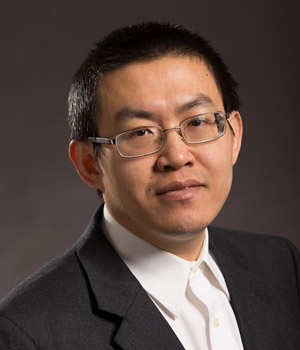
Yi Hu is an Associate Professor in the Department of Electrical Engineering and Computer Science at University of Wisconsin-Milwaukee's College of Engineering & Applied Science, where he also serves as Department Chair. His research focuses on developing signal processing algorithms to improve auditory technologies. Education: PhD in Electrical Engineering, University of Texas at Dallas (2003) MS in Electrical Engineering, University of Science and Technology of China (2000) BS in Electrical Engineering, University of Science and Technology of China (1997) Research Interests: Dr. Hu specializes in biomedical signal processing with applications in audiology, particularly noise reduction algorithms for cochlear implants, hearing aid fitting methods, and clinical smartphone applications. His work bridges electrical engineering and clinical audiology to enhance speech intelligibility for hearing-impaired individuals. Publications: His extensive publication record demonstrates consistent focus on signal processing techniques for auditory applications, with recent work expanding into psychoacoustics and linguistic processing. Research spans biomedical engineering, acoustics, and clinical audiology, with notable contributions to noise suppression methods and speech intelligibility modeling.
Mimi Kao is an Associate Professor in the Department of Biology at Tufts University and a member of the Neuroscience Program at the Tufts Graduate School of Biomedical Sciences. She holds a PhD in Neuroscience from the University of California, San Francisco, and specializes in the neural basis of vocal communication. Her research investigates how experience shapes behavior, focusing on neural mechanisms of vocal learning in songbirds as a model for understanding motor skill acquisition and modification. Current projects examine auditory feedback processing in basal ganglia-thalamo-cortical circuits, neural correlates of song plasticity, and comparative aspects of juvenile versus adult learning. Professor Kao's research employs behavioral, neurophysiological, and computational approaches to study feedback-driven vocal modification. Recent publications demonstrate work on auditory-motor integration, rhythm perception, and neural circuit manipulation techniques. She teaches courses in neurobiology and physiology and mentors graduate and undergraduate researchers. Her laboratory develops novel methods for chronic neural recording and manipulation during vocal behavior.
Matthew A. Xu-Friedman is a Professor in the Department of Biological Sciences at the University at Buffalo, part of the College of Arts and Sciences. His research focuses on synaptic plasticity mechanisms in the auditory system, particularly in auditory nerve synapses of the mouse cochlear nucleus. He investigates activity- and neuromodulator-dependent plasticity using electrophysiology and calcium imaging in brain slices, with in vivo recordings to study functional effects. His lab developed the mafPC software suite for electrophysiological data acquisition and analysis, widely used in neuroscience research. Education: BS from Yale University, PhD from Cornell University, and postdoctoral training at Harvard Medical School. Research Interests : Synaptic dynamics, auditory signal processing, neuromodulation in auditory circuits, and the impact of hearing loss on synaptic function. The lab explores how synaptic plasticity modulates neural communication in the auditory pathway, with implications for understanding hearing disorders and neural adaptation. Lab Contributions : The Xu-Friedman Lab's mafPC software facilitates complex stimulation paradigms and data collection. Their work has been featured in Journal of Neuroscience , Nature Communications , and highlighted in Science360 and the Academic Minute. Recent studies include investigations into age-related auditory changes, noise exposure effects, and GABAergic modulation in sound localization circuits. Collaborations and Software : The lab actively collaborates internationally, encouraging feature suggestions for mafPC. Publications using their software are requested to acknowledge its use in methods sections.
Dr. Patricia Bestelmeyer is a Senior Lecturer in Psychology at Bangor University's School of Psychology and Sport Science. She is an active member of the Institute of Cognitive Neuroscience and the Bangor Imaging Unit, where she conducts research on the neuroanatomical and temporal underpinnings of voice perception. Dr. Bestelmeyer earned her BSc, MRes, and PhD from the University of Aberdeen and is a Fellow of the Higher Education Academy. Her academic journey has focused on cognitive neuroscience with particular emphasis on auditory processing and social perception. Her research primarily investigates how we perceive paralinguistic aspects of voice, including emotional content, speaker identity, and regional accents. Using neuroimaging techniques such as fMRI and EEG, as well as transcranial magnetic stimulation (TMS), she aims to advance cognitive models in voice perception. Her work spans multiple domains including auditory emotion (in voice, speech prosody, and music), speaker identity recognition, and the social implications of regional accents. Recent publications demonstrate her expertise in understanding how emotional expressions are processed in autism spectrum disorder, how regional accents influence social biases, and how neural representations of voice identity operate. Dr. Bestelmeyer teaches a Year 3 module on "The Neuroscience of Hearing" and actively supervises undergraduate and postgraduate research students. She welcomes PhD students interested in projects related to cognitive and affective neuroscience of voice and face perception, music perception, and auditory object perception. Her laboratory work involves the Bangor Imaging Unit where she conducts neuroimaging studies. She has developed assessment tools such as the Bangor Voice Matching Test for evaluating voice perception abilities. Her research often involves collaborations with international teams studying autism spectrum disorder, emotional processing, and multisensory integration.
Dr. Nelson J Trujillo Barreto is a Reader (Associate Professor) in Computational Neuroscience at Manchester Metropolitan University's Faculty of Health and Education. He holds a BSc (Hons) in Nuclear Physics from the Higher Institute for Nuclear Science and Technology of Havana (1995) and a PhD in Physical Sciences from Havana University (2006). Previously, he served as Head of Brain Dynamics at the Cuban Neuroscience Centre (2007-2014) and held an EPSRC Research Fellowship at the University of Manchester. His research focuses on computational modeling of brain dynamics using multimodal approaches including fMRI, EEG, and brain stimulation techniques. Key interests include: Mechanisms of motor control and movement disorders Neurological conditions (Parkinson's, MS, epilepsy) Machine learning applications in neuroscience Optimization of brain stimulation therapies His recent publications (2023-2025) demonstrate strong methodological innovation in EEG analysis, brain connectivity modeling, and clinical translation of computational neuroscience. Research consistently addresses neurodevelopmental disorders, pain perception, and hallucination mechanisms through advanced signal processing. Dr. Trujillo Barreto actively advises PhD candidates including Yuping Yang and Jessica Haigh, and maintains collaborations with leading institutions such as UCL's Functional Imaging Lab and Max Planck Institute. He serves on peer review panels for EPSRC, European Commission, and multiple international research agencies. He directs the Brain Dynamics Lab where his team integrates wireless neuroimaging, motion capture, and computational modeling to study movement disorders and develop therapeutic interventions.
Dr. Jiang Liu is an Associate Professor in the Department of Languages, Literatures and Cultures and Linguistics Program at the University of South Carolina, where he also serves as the Chinese Program Director. He holds a Ph.D. in Linguistics from the University of Kansas, a B.A. in English Language and Linguistics from Lancaster University, and completed undergraduate studies in English literature at Guangdong University of Foreign Studies. His research explores language acquisition mechanisms across multiple domains: Psycholinguistic processes in native and non-native speakers Neural correlates of Chinese character recognition Tonal perception and production in Mandarin Technology-enhanced language pedagogy Cross-linguistic influence in bilingualism He currently investigates emotion prosody processing and the impact of talker variability on lexical development. Analysis of Dr. Liu's recent publications reveals consistent focus on psycholinguistic mechanisms of second language acquisition, particularly examining tonal processing, lexical development, and neurocognitive aspects of Chinese character recognition. His experimental approaches frequently incorporate electrophysiological measures and perceptual training paradigms. Honors include: National Science Foundation Fellowship for measurement methodology (2022-2023) Editor's Choice Award for Lingua paper on discourse dynamics (2021) College Research Initiative grant recipient (2020) Linguistic Society of America Fellowship (2013) Multiple doctoral research awards His leadership includes directing the Chinese Flagship Program at Minnesota (2014-2017), serving on East Point Academy's Board of Directors, and supervising PhD students in NSF-funded projects examining emotional prosody processing. He maintains active collaborations with researchers at Carnegie Mellon University and Chinese institutions on lexical development and tonal acquisition studies.
Dr. Johannes Schul is a Professor of Biological Sciences at the University of Missouri, affiliated with the College of Arts and Science. He holds a PhD from Philipps-University Marburg (Germany, 1994). His research focuses on the neuroethology and evolution of acoustic communication systems in insects and amphibians, particularly studying the neuronal basis of pattern recognition and the evolutionary mechanisms behind novel trait diversification. Key areas include the interplay between sensory systems and evolutionary processes in tettigoniids and treefrogs. Research interests span neurobiological mechanisms (e.g., auditory stream segregation, stimulus-specific adaptation in neurons) and evolutionary questions (e.g., polyploid speciation in gray treefrogs, acoustic signal divergence in Neoconocephalus katydids). He has explored how predation avoidance (ultrasound detection in insects) interacts with mating signals. His work bridges proximate (neurobiological) and ultimate (evolutionary) explanations of communication systems. Dr. Schul has been recognized with awards including the UM President’s Award for Innovative Teaching (2019) and AAAS Fellowship (2019). His publications span over 30 years, emphasizing interdisciplinary approaches to understanding animal behavior and communication. He actively contributes to STEM education initiatives, such as the Summer Institutes on Scientific Teaching (Yale, 2017). His research often combines field studies, neurophysiological recordings, and molecular genetics. Notable projects include acoustic monitoring of pollinators (bumble bees) and the genomic analysis of polyploid complexes in treefrogs. While not explicitly listed, his work likely involves collaborations with labs focusing on sensory ecology and evolutionary genomics.
Dr. Christian O'Reilly is an Assistant Professor in the Department of Computer Science and Engineering at the University of South Carolina's Molinaroli College of Engineering and Computing, with joint appointments at the Artificial Intelligence Institute (AIISC) and Carolina Autism and Neurodevelopmental (CAN) Research Center. He holds a B.Ing in Electrical Engineering (2008), M.Sc.A in Biomedical Engineering (2011), and Ph.D. in Biomedical Engineering (2012) from Polytechnique Montréal. His interdisciplinary research focuses on understanding the brain across spatial and temporal scales to address neurodevelopmental disorders like autism. Research approaches include: Analytical techniques: EEG source reconstruction and functional connectivity Computational modeling: Point neurons, morphologically-detailed neurons, neural masses Bayesian model-driven analyses to infer latent biological variables Novel applications of artificial intelligence in neuroscience Development of biologically-inspired neural networks His extensive publication record spans computational neuroscience, neurodevelopmental disorders, EEG analysis methods, and AI applications in neuroscience, with recent work focusing on multimodal data integration, neurobiological modeling, and translational applications for autism spectrum disorder. Dr. O'Reilly leads the Laboratory for Integrative Neuroscience Analysis (LINA) and has received the Penn Criminology Thesis Award for his work on defense counsel impacts on sentencing outcomes.
Dr Sally Morfill is a Senior Lecturer in the Design Department at Manchester School of Art, Manchester Metropolitan University. She contributes to MA Design programs while supervising PhD candidates and serves as a member of the Materials & Making/Community, Culture & Heritage research group. Her work explores intersections between drawing, language, and technology through hybrid analogue-digital methodologies. PhD, Manchester Metropolitan University (2019) MA (Royal College of Art), BA (Manchester Polytechnic) Research focuses on: Visualizing co-speech gestures through 2D/3D drawing Relationships between drawing actions and written language Interdisciplinary collaborations with dance practitioners and composers Development of collaborative educational frameworks Her practice extends to curatorial work with Five Years artist-run organization, emphasizing unfinished propositions in art. Notable award: International Collaborative Research Residency (2019). Collaborations include Susan Giles (sculpture), Karen Wood (dance), Matthew Lee Knowles (composition), and Ana Čavić (poetry).
Dr. Andrew Dunn is a Senior Lecturer in Psychology at Nottingham Trent University's School of Social Sciences. He specializes in perception, memory, and attention with a focus on evolutionary psychology, developmental psychology, and perceptual illusions. His research explores how humans process facial, vocal, and bodily cues in social and environmental contexts. Education: BSc Psychology (Hons) from University of York (1996-1999) PhD in Psychology from University of York (1999-2002), focusing on vision for action and perception Research Interests: Person perception (faces, voices, bodies) Evolved mechanisms in social cognition Contextual effects on perception Body shape preferences and mate choice Spatial memory and exclusivity effects Publications: Over 40 articles spanning perception, cognition, and evolutionary psychology. Recent work includes studies on body dissatisfaction, forensic voice discrimination, and the integration of multisensory cues in mate selection. Awards & Grants: Visual Sciences Society Travel Grant (2002) QR Ref Funding for facial/voice databases (2018) BPS Summer Student Bursary (2018) Advising & Leadership: Supervised 13 PhD students Programme leader for MSc/MRes Psychological Research Methods Chair of School Research Ethics Committee External Roles: Editor of Journal of Evolutionary Psychology and Culture and Evolution External examiner at Sheffield, Northampton, and Strathclyde Universities Member of British Psychological Society's Cognitive Section committee
Dr. Holger Hennig is a Researcher in the Department of Systems Biology and Bioinformatics at the University of Rostock , Germany, with affiliations at the Imaging Platform (Broad Institute of MIT and Harvard) , USA. His work bridges machine learning and biomedical imaging to develop label-free diagnostic tools for diseases like leukemia and cardiovascular conditions. Research Focus: High-throughput imaging flow cytometry (IFC) , deep learning for cell cycle analysis, and precision medicine applications in clinical studies. Scientific Contributions: Pioneered open-source analysis pipelines for IFC data, advanced computer vision in hematology, and developed multi-omics integration methods. Awards: Amnis Travel Stipend (2016) DFG Postdoctoral Fellowships (2011, 2012) Research stipend from Boston University (2008) Otto-Haxel Award for Master's thesis (2004) Collaborations: Works with Prof. Anne Carpenter (Broad Institute), Prof. Paul Rees (Swansea University), and Prof. Fabian Theis (Helmholtz Center Munich) on machine learning and single-cell analysis projects.