Matthew Leonard is an Associate Professor at the University of California, San Francisco (UCSF) School of Medicine, affiliated with the UCSF Weill Institute for Neurosciences . With a PhD in Cognitive Science from UC San Diego, his work focuses on neural systems in auditory and speech categorization , leveraging intracranial recordings and neuromodulation techniques like vagus nerve stimulation. Education: BA (Cognitive Science, Occidental College), MS & PhD (Cognitive Science, UC San Diego) His research spans auditory neuroscience , speech processing , and cognitive neurosurgery , supported by grants such as NIH R01DC015504 and DARPA N66001-17-2-4008. Key contributions include understanding neural encoding of speech sounds, cortical dynamics in bilingualism, and ethical considerations in intracranial electrophysiology. Recent publications analyze melody encoding and single-neuron speech representation , with collaborations across UCSF , UCSD , and UCI . He works in the Chang Lab , advancing brain-computer interfaces and neural rehabilitation . His work has strong implications for speech disorders , language acquisition , and neuroethics , with over 150 citations on his 2019 Neuron paper alone.
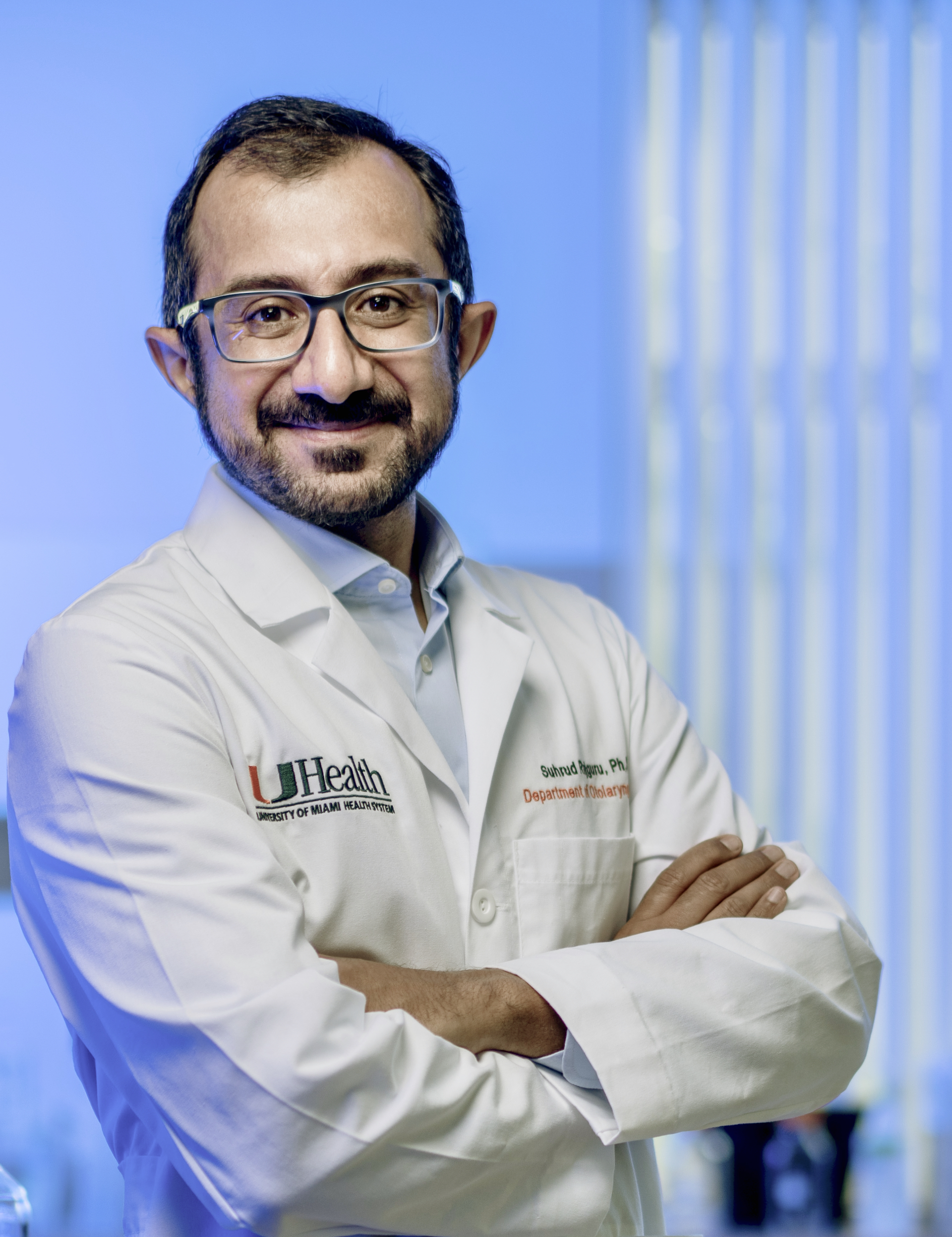
Suhrud M Rajguru is a Professor in the College of Engineering at the University of Miami, holding dual appointments in Biomedical Engineering and Otolaryngology/Head & Neck Surgery. His research focuses on neuroprotection strategies for auditory and vestibular systems, particularly targeting noise-induced hearing loss (NIHL) and cochlear injury. Assistant Vice Provost for Research Workforce Development Director of the University of Miami CTSI Workforce Development Research Interests encompass therapeutic hypothermia, apoptosis inhibition, and biomedical device development for inner ear protection. His work bridges computational modeling, molecular biology, and clinical translation to address NIHL mechanisms and interventions. Mild Therapeutic Hypothermia (MTH) for cochlear and vestibular protection Transcriptomic analysis of hypothermia-induced neuroprotection Vestibular system damage in occupational noise-exposed populations Novel medical devices (e.g., transcanal catheter, cooling neck collar) Link between NIHL and neurodegenerative diseases like Alzheimer's Article Trends highlight MTH as a central theme, with applications in cochlear injury, vestibular system protection, and pharmacological strategies like pan-caspase inhibition. Studies range from rodent models to human clinical trials, emphasizing translational research. Grants & Research include work supported by the University of Miami CTSI and collaborative efforts with institutions like the Miller School of Medicine. His lab investigates biomarkers for NIHL and develops non-invasive otoprotective therapies.
Robb Rutledge is an Assistant Professor of Psychology and Psychiatry at Yale University, where he directs the Rutledge Lab within the Department of Psychology. He is also a member of the Wu Tsai Institute at Yale. His research combines computational modeling with neuroimaging, pharmacology, and smartphone-based data collection to study the relationship between decision making and emotion across the lifespan. Dr. Rutledge completed his BSc in Biology at Caltech and his PhD in Neural Science at New York University under Paul Glimcher. He conducted postdoctoral research at University College London's Wellcome Trust Centre for Neuroimaging with Ray Dolan and Peter Dayan. Prior to joining Yale, he was a Group Leader at the Max Planck Centre for Computational Psychiatry and Ageing Research at UCL. His research focuses on computational models of subjective feelings, particularly happiness. His lab developed the influential equation that happiness depends not on absolute outcomes but on whether events exceed recent expectations. This work has been extended to understand relationships between happiness, learning, social inequality, major depression, intrinsic reward, and neural mechanisms including dopamine signaling. Current projects examine how happiness relates to effort, music, language, and decision-making processes. His lab uses innovative methods including smartphone apps like Happiness Quest, which has engaged over 100,000 participants worldwide. Recent publications demonstrate how language sentiment predicts depressive symptoms and how surprising sounds influence risky decision making, reflecting his lab's focus on computational psychiatry approaches to understanding mood disorders. MRC Career Development Award Society for Neuroeconomics Early Career Award APS Janet Taylor Spence Award for Transformative Early Career Contributions The Rutledge Lab actively mentors numerous PhD students, postdoctoral researchers, and technicians, with alumni now holding positions at institutions worldwide. The lab collaborates extensively with researchers at Mount Sinai, UCL, Trinity College Dublin, and the University of Minnesota, and regularly participates in the Computational Psychiatry Conference. Dr. Rutledge's work bridges computational neuroscience, clinical psychiatry, and real-world applications through digital mental health tools.
Dr. Fangyi Chen is an Associate Professor in the Department of Biomedical Engineering at Southern University of Science and Technology (SUSTech), where she has been faculty since 2012. She previously served as Executive Chair of the Department of Biomedical Engineering from 2016 to 2018. Her research focuses on auditory and vestibular physiology, with particular emphasis on developing innovative methods for evaluating hearing and balance function in model organisms. Dr. Chen received her academic training at prestigious institutions: BS in Biomedical Engineering from Tsinghua University (1997) MS in Biomedical Engineering from Tsinghua University (2000) PhD in Electrical Engineering from Boston University (2005) Postdoctoral training at Oregon Health and Science University (2005-2006) Dr. Chen's research program centers on auditory and vestibular physiology, with several major themes. She has pioneered the development of vestibular function testing systems for zebrafish and mice that use eye movements as primary parameters, enabling automated, quantitative, and precise evaluation of vestibular damage. Her work spans multiple disciplines including hearing physiology , vestibular function , inner ear hair cell development , mechanisms of vertigo and tinnitus , and animal behavior analysis . Her research instruments are used by institutions such as Stanford University, the University of Virginia, Creighton University, and Tsinghua University. Analysis of Dr. Chen's recent publications reveals a strong focus on translational research bridging basic science and clinical applications. Her work frequently employs zebrafish and mouse models to study hearing and balance disorders, with particular attention to hair cell development and regeneration , vestibular function assessment , and genetic models of hearing loss . Many of her publications appear in high-impact journals including Nature Neuroscience, Journal of Neuroscience, and Frontiers in Cellular Neuroscience, demonstrating the significance of her contributions to the field. Dr. Chen has received notable recognition for her work: The Recruitment Program of Global Youth Experts, China central government (2012) Postdoctoral Fellow, Cochlear Mechanics Lab, Oregon Hearing Research Center (2005-2006) Dean's Award for the best Poster in Science and Technology Day, Boston University (2003) Dean's Fellowship, College of Engineering, Boston University (2000-2001) Dr. Chen has been actively involved in mentoring students and securing research funding. Her laboratory has developed specialized equipment for vestibular function testing that is now used by multiple international institutions, indicating successful technology transfer and research impact. She has established collaborations with researchers across various disciplines, including neuroscience, genetics, and biomedical engineering. Her research team focuses on developing and applying advanced techniques for auditory and vestibular assessment, with particular expertise in video-oculography, behavioral analysis, and molecular approaches to study sensory function. The lab maintains specialized facilities for working with zebrafish and mouse models, including equipment for precise vestibular function testing without surgical intervention.
Denys J.C. Matthies is an Associate Professor at Technical University of Applied Sciences Lübeck and affiliated with Fraunhofer IMTE Lübeck . He specializes in Human-Computer Interaction , particularly focusing on Wearable Computing , Tactile Feedback Systems , and Activity Recognition through smart footwear and body-worn sensors. Key Collaborations: Augmented Human Lab (NUS), Fraunhofer IGD, City University of Hong Kong Research Themes: Smart wearables, haptic interfaces, physiological sensing, assistive technologies His recent work explores: PhantomFolds (2025) - Spatial tactile feedback via fingernail-mounted LRAs PAVES (2025) - Pneumatic terrain simulation in VR Cyber-Placebo (2024) - Ethical implications of fake-AI in CPHS He has contributed to smart footwear systems like ShoeTect2.0 (2024) and SurfSole (2024), integrating capacitive sensing with neural networks for real-time activity and surface recognition. His work spans medical applications (e.g., 2025 study on hepatic encephalopathy screening) and novel interaction paradigms (e.g., Kavy conversational AI 2024).
Elena Tenenbaum is an Assistant Professor in Psychiatry and Behavioral Sciences and Psychology and Neuroscience at Duke University, where she is also a Faculty Network Member of the Duke Institute for Brain Sciences . Her research focuses on language acquisition and cognitive development in children with autism spectrum disorder (ASD) , particularly those who are minimally verbal. She employs eye-tracking , EEG , and remote assessment tools to investigate social attention, audio-visual processing, and executive function in ASD. Education: Ph.D. in Psychology from Brown University (2011), Clinical Psychology respecialization at Suffolk University. Her work bridges neuroscience and clinical psychology to understand ASD heterogeneity, with a focus on early intervention and perinatal influences . Recent publications highlight scalable remote methodologies like the RISE Battery for infant cognitive studies and LVIS for assessing communicative competence in low-verbal ASD. She has received grants including the Meeting on Language in Autism (2025-2028) and Shenoy Undergraduate Research Fellowship in Neuroscience (2025-2026). Awards include fellowships and research grants for ASD and developmental disorders. Her lab collaborates on digital phenotyping , audio-visual synchrony , and social attention mechanisms .
Walter Metzner is a Professor in the Department of Integrative Biology and Physiology at the University of California, Los Angeles (UCLA), with affiliations to the Brain Research Institute and the Neuroengineering Training Program in Neuroscience. His research bridges neuroscience, animal behavior, and sensory physiology. Research Focus: Neural mechanisms of echolocation in bats, auditory feedback control, vocal-respiratory coupling, and the impact of environmental noise on acoustic communication. Key Contributions: Studies on Doppler-shift compensation, duration-sensitive neurons in inferior colliculus, and lipidosis in captive bats. Collaborations: Partnered with institutions in China, Germany, and the U.S. on multidisciplinary ecological and neurophysiological projects. Contact: Email metzner@ucla.edu | Phone (310) 206-2023 | Office: LSB 4365, UCLA, CA 90095.
Aysenil Belger, PhD, is a Professor and Director of Neuroimaging Research in Psychiatry at the University of North Carolina at Chapel Hill's School of Medicine, Department of Psychiatry. She holds a joint appointment as Adjunct Associate Professor of Radiology at Duke University's Brain Imaging and Analysis Center. Her research employs multimodal neuroimaging (fMRI, EEG, fNIRS) and neuropsychological methods to investigate cortical circuits underlying attention, executive function, and emotion processing in neuropsychiatric disorders. Dr. Belger completed her BS at Ege University, followed by MA and PhD degrees at the University of Illinois at Urbana-Champaign. Her current work focuses on neural abnormalities in autism, schizophrenia, mood disorders, and PTSD, with recent investigations into stress regulation in adolescence and psychosis risk prediction. Her research integrates experimental psychology with neurophysiological assessments to examine sensory and cognitive impairments across disorders. Key investigations include electrophysiological markers in autism, neural oscillatory abnormalities in schizophrenia, and the impact of early childhood trauma on adult brain function. She actively mentors trainees across academic levels and teaches Cognitive Clinical Neuroscience at UNC. Recent publications demonstrate a methodological focus on dynamic functional connectivity, multimodal data fusion, and neurophysiological biomarker validation. Her work frequently employs machine learning approaches for psychosis prediction and emphasizes translational applications for precision psychiatry. Common themes include neural oscillatory dynamics, stress response systems, cortico-subcortical network interactions, and neurodevelopmental trajectories.
Dr. Alev Erisir is the Chair of the Department of Psychology at the University of Virginia , where she has conducted extensive research on synaptic organization, neuroplasticity, and neurodegenerative mechanisms. Her work spans visual neuroscience, gustatory system development, and neurodevelopmental disorders, utilizing advanced imaging and animal models to explore neural circuitry. Dr. Erisir’s research focuses on synaptic plasticity , neurodegenerative diseases , and neural development , with recurring themes in mitochondrial dynamics , experience-dependent plasticity , and gustatory circuitry . She employs tree shrews and mice as primary models, integrating optical coherence tomography , electron microscopy , and immunohistochemistry to study synaptic and retinal structures. Recent publications highlight her exploration of tau oligomerization in Alzheimer’s disease , mitochondrial dysfunction , and maternal/paternal influences on neurodevelopment . Her 2023–2025 articles emphasize cross-species neuroanatomy , microglial roles in synaptic pruning , and ultrastructural synaptic remodeling . No scientific awards or student advisement data were explicitly mentioned in the provided texts.
Aline Frey is a Lecturer at Aix-Marseille University, affiliated with both the Psychology and Neuroscience Research Center and the INSPE (Institute of Higher Education and Teaching) of Aix-Marseille. She conducts research on the impact of musical practice and singing on children's cognitive development and academic learning. Her work focuses on understanding how rhythm, music, and creative activities influence various aspects of children's development including handwriting, reading, and cognitive skills. She teaches learning psychology to future teachers and is a member of the LaMA (Language and Music in Action) research team. Dr. Frey's research interests span cognitive development, educational psychology, and music cognition. She investigates how musical practice and rhythmic activities affect children's handwriting, reading abilities, and overall cognitive development. Her work particularly examines these relationships in children from diverse backgrounds, including those with learning difficulties such as dyslexia and those from disadvantaged socioeconomic backgrounds. Through longitudinal studies and experimental designs, she explores the potential of music and creative activities as educational interventions that can enhance learning outcomes. Her recent publications reveal a strong focus on the intersection of music, rhythm, and cognitive development in educational contexts. Frey's research demonstrates how rhythmic cues influence handwriting kinematics differently across age groups and skill levels. She has conducted significant work on choral singing and creative writing interventions for children from low socioeconomic backgrounds, showing positive impacts on cognitive development and creative thinking. Her methodological approach often combines behavioral measures with neuroimaging techniques like EEG to understand the underlying neural mechanisms. Dr. Frey is actively involved in the LaMA (Language and Music in Action) research team, where she collaborates with interdisciplinary researchers to investigate the connections between language, music, and cognitive development. Her work has practical implications for educational practices, particularly in developing interventions that leverage music and creative activities to support children's learning and development across various domains.
Rodrigo Braga is an Assistant Professor of Neurology at Northwestern University's Feinberg School of Medicine in Chicago, where he leads the Human Cognitive Neuroscience Lab (Braga Lab). His academic journey includes an NIH Pathway to Independence Award (K99) as an Instructor at Stanford University working with Josef Parvizi and Russ Poldrack, and a Sir Henry Wellcome Postdoctoral Fellowship at Harvard University with Randy Buckner. He completed his PhD under the supervision of Dr. Robert Leech and Prof. Richard Wise. Dr. Braga's research focuses on unraveling the detailed organization of human brain networks, particularly association cortices that are expanded in humans and serve advanced cognitive functions like language, episodic memory, and social cognition. His groundbreaking work has demonstrated that canonical brain networks such as the default mode network actually comprise multiple parallel, closely interdigitated networks when resolved within individuals at high resolution. He employs individual-level whole-brain network mapping using fMRI combined with intracranial recordings and stimulation to understand how distributed networks interact during cognition. His publication record reveals a strong focus on brain network organization across multiple cognitive domains. Analysis of his 15 most recent articles shows consistent investigation of individual differences in brain architecture, with particular emphasis on network dissociation in episodic versus social cognition, multisensory integration, and the role of transmodal cortex in network integration. His work bridges basic neuroscience with clinical applications in neurologic and psychiatric disorders. NIH Pathway to Independence Award (K99) Sir Henry Wellcome Postdoctoral Fellowship Dr. Braga's research program is supported by significant grant funding, including the NIH K99 award that facilitated his transition to independence. His lab develops innovative methods to combine individual-level network mapping with intracranial recordings, suggesting substantial research infrastructure. While specific students aren't listed in the source material, his position as an independent principal investigator indicates he likely mentors graduate students and postdoctoral fellows in cognitive neuroscience. The Human Cognitive Neuroscience Lab (Braga Lab) specializes in high-resolution mapping of individual brain networks. Dr. Braga's approach of preserving individual brain circuitry rather than relying on group averages has revealed new organizational principles of the brain, including the discovery that what were thought to be single networks actually contain multiple parallel architectures when examined at sufficient resolution within individuals. His lab's work has implications for understanding both normal cognitive function and neurological disorders.
Dr. Peter A. Wasiuk is an Assistant Professor in the Department of Communication Disorders at Southern Connecticut State University. He holds dual credentials in clinical audiology and cognitive psychology, focusing on auditory perception and speech recognition challenges. Completed Au.D. at University of Massachusetts Amherst (2018) Ph.D. in Psychological Sciences from Case Western Reserve University (2022) Collaborator with Dr. Emily Buss at University of North Carolina at Chapel Hill His research examines how individuals perceive and comprehend spoken language in noisy environments, using behavioral experiments and computational modeling across populations like hearing-impaired individuals, aging adults, and those with diverse linguistic backgrounds. He develops clinical diagnostics and personalized interventions to enhance real-world listening experiences. Recent publications analyze spatial separation effects, frequency contour similarity, and computational glimpsing models for speech-in-speech recognition. Grants include interprofessional education initiatives and studies on autism spectrum auditory processing. Co-Principal Investigator on $7,500 CT State University grant (2024-2025) Recipient of multiple Southern Connecticut State University grants ($3,610-$8,500) Dr. Wasiuk teaches hearing science, clinical audiology, and research methods, emphasizing student-centered learning. He contributes to the Speech and Auditory Research Lab (SpAR Lab) and integrates simulated learning tools into audiology education.
Laura L. Koenig is a Professor in the Department of Communication Sciences and Disorders at the Ruth S. Ammon College of Education and Health Sciences, Adelphi University. She holds a Ph.D. from City University of New York (1998), an A.M. from the University of Pennsylvania (1991), and an A.B. from the University of Chicago (1987). Her office is located in the Hy Weinberg Center, and she can be contacted via email at lkoenig@adelphi.edu or phone at 516.877.4776. Dr. Koenig's research spans speech aerodynamics, respiratory control, laryngeal function across age groups, typical/atypical speech development, and aging effects on speech production . She develops novel measurement protocols and collaborates internationally on studies involving cochlear implants and speech disorders. Her work integrates linguistics, physiology, and clinical applications to understand speech coordination and articulation. Recent publications (2015-2023) focus on acoustic analysis of fricatives/vowels, speech intelligibility with face masks, voice quality relationships with respiration, and cross-linguistic studies (Polish, German, Greek). Key trends include pediatric speech perception, physiological aspects of prosody, and clinical phonetics, employing advanced methodologies in acoustics and electropalatography. Dr. Koenig maintains active collaborations with researchers in Berlin, Dresden (Germany), Thessaloniki (Greece), and Montclair State University. These partnerships focus on speech production protocols, cochlear implant outcomes, and childhood apraxia of speech. She teaches courses in Phonetics, Speech Science, Anatomy and Physiology, and Research Methods.
Molly Losh serves as the Jo Ann G. and Peter F. Dolle Professor of Learning Disabilities in the Roxelyn and Richard Pepper Department of Communication Sciences and Disorders and Associate Dean for Research at Northwestern University's School of Communication, where she directs the Neurodevelopmental Diversity Lab. Her educational background includes: PhD in Developmental Psychology from UC Berkeley BA in Psychology from San Diego State University Dr. Losh's research centers on autism spectrum disorder (ASD) and related neurodevelopmental conditions, with emphasis on language/communication impairments spanning diagnostic boundaries. Her lab identifies cognitive mechanisms underlying social-communicative differences in autism, bridging observable behaviors and biological underpinnings to advance understanding of etiology. This work employs multi-method approaches including eye-tracking, acoustic analysis, and computational modeling. Analysis of her recent publications (2023-2025) reveals intensifying focus on computational/AI methods for speech analysis, particularly in prosody, pragmatic language, and narrative ability. A consistent theme is examination of the broad autism phenotype in first-degree relatives and FMR1 gene contributions in Fragile X syndrome, with growing cross-cultural and cross-linguistic dimensions. Dr. Losh currently leads three major NIH-funded projects: R01MH091131 (2019-2024): Family-genetic study of autism and Fragile X syndrome examining FMR1 gene roles R01DC010191 (2016-2021): Identification of linguistic markers for autism genetic liability R03DC018644 (2020-2022): Computational analysis of prosody in ASD using machine learning Her Neurodevelopmental Diversity Lab conducts integrated research on visual attention, audio-motor synchronization, and pragmatic language through family studies, with active translation of findings to clinical assessment frameworks.
Einat Liebenthal, D.Sc. is an Assistant Professor of Psychiatry at Harvard Medical School and Associate Director of the Functional Neuroimaging and Bioinformatics Lab in the Institute for Technology in Psychiatry at McLean Hospital. Her research focuses on understanding verbal and non-verbal communication through digital behavioral measures and multimodal neuroimaging techniques. Harvard Medical School - Department of Psychiatry McLean Hospital - Functional Neuroimaging & Bioinformatics Lab Institute for Technology in Psychiatry Education: BSc in Biology, Hebrew University (1990) MSc in Neuroscience, Hebrew University (1993) DSc in Neuroscience, Technion Israel Institute for Technology (1997) Post-Doctoral Fellowship in Speech Electrophysiology, Albert Einstein College of Medicine (1997-1999) Dr. Liebenthal's research centers on cognitive neuroscience approaches to understanding language and emotion processing. Her work investigates the functional organization of the human brain for spoken language perception and the abnormal interactions of language and emotion neurocircuits in psychotic disorders. She has pioneered naturalistic approaches for dynamic assessment of verbal and non-verbal communication in real-world settings, with applications for individuals with language impairments. Her research employs behavioral, multimodal neurobiological, and computational methods to characterize language at multiple levels and identify phenotypes of language malfunction in neurological and mental conditions. Analysis of Dr. Liebenthal's recent publications reveals a consistent focus on language processing in psychiatric disorders, particularly psychosis. Her work integrates multimodal neuroimaging (fMRI, EEG) with computational linguistics to develop digital phenotyping approaches for mental health assessment. Recent projects include movie-watching fMRI paradigms for language mapping, computational analysis of spoken language in psychosis, and development of the Dynamic Affective Movie Clip Database (DynAMoS) for emotion research. Her methodological contributions to EEG-fMRI integration and naturalistic neuroimaging approaches represent significant advances in the field. Dr. Liebenthal actively mentors students through research opportunities in her lab, with current projects focusing on naturalistic assessment of language and emotion, and movie-watching fMRI for mapping language and emotion brain networks. Her research is supported by the National Institutes of Health / National Institute on Deafness and Other Communication Disorders and the Brain & Behavior Foundation. She leads the Functional Neuroimaging & Bioinformatics Lab at McLean Hospital's Imaging Center, where her team develops innovative approaches to assess language and emotion functions in individuals with neurological and psychiatric disorders. The lab employs a multidisciplinary approach combining cognitive neuroscience, computational methods, and clinical psychiatry to create scalable, neuroscientifically-grounded diagnostic and interventional methods.