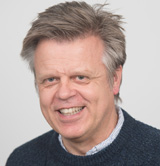
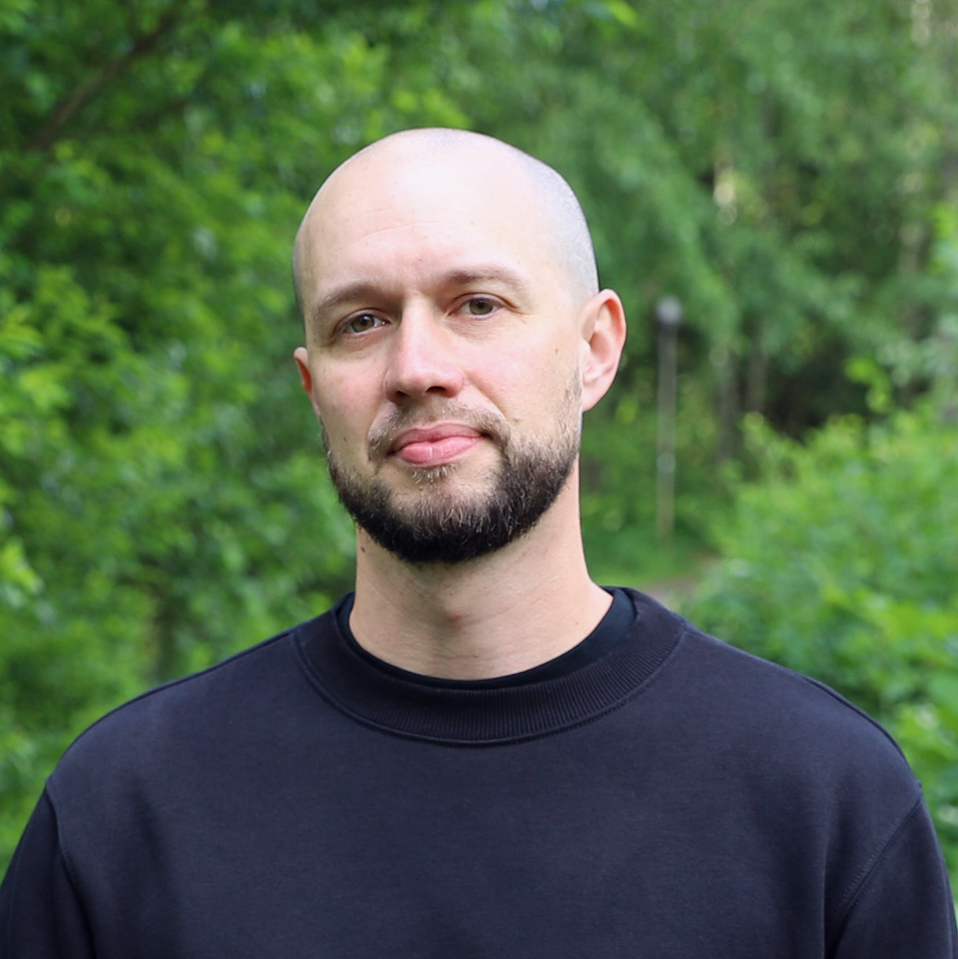
Patrik Wikman is a Research Fellow at the Neuroscience Research Center of the University of Helsinki . He supervises doctoral candidates in programs like Brain & Mind and Human Behavior . His research focuses on Psychology and Neuroscience , particularly auditory, visual, and audiovisual attention mechanisms. Wikman's recent articles highlight multimodal perception , neural processing , and database creation for studying eating behaviors. His work bridges fMRI evidence , genetic associations in dyslexia, and natural auditory perception in humans and animal models. He leads projects such as Wikman SKR 2024-2025 (Finnish Cultural Foundation funding) and contributes to initiatives like Äänicocktail and Harmony of the brain . Wikman actively reviews for journals including Brain Research and Frontiers in Neuroscience , with over 29 academic activities documented.
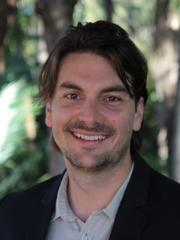
Garrett Cardon serves as an Assistant Professor in Communication Disorders at Brigham Young University, with a primary research affiliation in the Neuroscience program within the College of Life Sciences. His work bridges cognitive neuroscience and clinical audiology, focusing on brain-behavior relationships using EEG and MRI/fMRI methodologies to investigate sensory processing in neurodevelopmental conditions and hearing disorders. Dr. Cardon's research centers on autism spectrum disorder and hearing loss, with specific expertise in atypical sensory processing, cortical plasticity, and empathy dynamics. He examines how sensory difficulties, intolerance of uncertainty, and anxiety interrelate in autistic children while studying cross-modal reorganization in cochlear implant users. His innovative approach combines scientific rigor with artistic representations to facilitate empathy between autistic and neurotypical individuals, addressing the double empathy problem through interdisciplinary frameworks. Analysis of his 15 most recent publications (2018-2025) reveals three dominant research trajectories: (1) Neurophysiological correlates of sensory processing in autism, including intolerance of uncertainty and pandemic-related stress impacts; (2) Cortical plasticity mechanisms in hearing loss across pediatric and adult populations, particularly cross-modal reorganization in cochlear implant recipients; and (3) Clinical applications of auditory evoked potentials in auditory neuropathy spectrum disorder. His work consistently integrates electrophysiological measures like ABR and CAEP with behavioral outcomes. Information regarding scientific awards, student advising activities, grant funding, and laboratory teams was not provided in the source material.
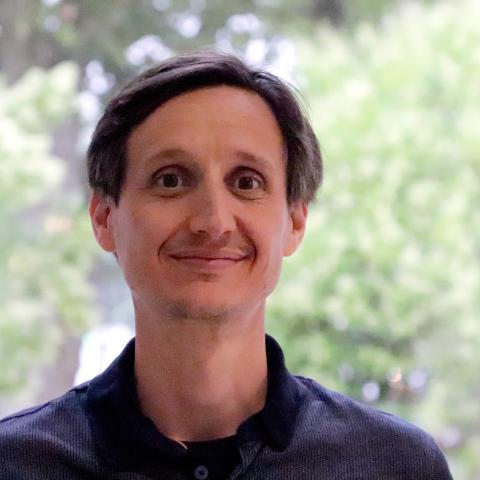
Professor Kevin M O'Dell is a leading academic at the University of Glasgow , holding the title of Professor of Behaviour Genetics in the School of Life Sciences , Molecular Biosciences department . With over two decades of research spanning genetics, mitochondrial pathology, and neurobiology, his work has significantly advanced understanding of human genetic disorders through Drosophila melanogaster models. Specializes in sex-specific behavior and mitochondrial disease research Recipient of prestigious Wellcome Trust and BBSRC grants International conference speaker (USA, Belgium, France, England) Member of Genetics Society (1995-present) His research program integrates mitochondrial dysfunction studies with genetic rescue mechanisms , focusing on disorders like deafness and myotonic dystrophy. Key contributions include developing Drosophila models for human diseases and investigating gene dosage effects in phenotypic expression. Scientific awards and funding include: Wellcome Trust grant (2013-2015) for confocal microscopy BBSRC grant (2003-2006) for molecular biosciences research His publications demonstrate consistent leadership in mitochondrial disease modeling (2001-2014), with collaborative work spanning biochemistry, neurogenetics, and developmental biology. The research shows particular focus on ANT1 deficiency , oxidative phosphorylation defects , and temperature-sensitive neurological mutations .
Redwan Farooq is a Clinical Research Fellow and DPhil Student at the Nuffield Department of Clinical Neurosciences (NDCN), part of the University of Oxford's Medical Sciences Division. His research focuses on neuroimmunological diseases, particularly multiple sclerosis (MS), integrating bioinformatics and high-throughput single-cell multi-omics techniques. After earning his MB BChir and MA in Neuroscience from the University of Cambridge, he completed clinical training in London teaching hospitals, specializing in Neurology. His work is supported by a Clinical Research Fellowship funded by the Association of British Neurologists and Guarantors of Brain. His research bridges clinical neurology and computational biology, addressing immune dysfunction in MS and auditory neuroscience mechanisms through projects like ITD-specific adaptation studies and frequency following response analysis. His publications span neurology, hematology, and auditory science. Scientific Awards: Clinical Research Fellowship (Association of British Neurologists, Guarantors of Brain)
Dr Christopher Papic is a Research Fellow at The University of Queensland's RECOVER Injury Research Centre within the Faculty of Health, Medicine and Behavioural Sciences. He is also an Affiliate of the Centre for Innovation in Pain and Health Research (CIPHeR) and holds an honorary academic position at the University of New England as a Lecturer in Clinical Exercise Physiology. With 10 years of clinical experience as an Exercise Physiologist (ESSA), he specializes in musculoskeletal rehabilitation and pain management following traumatic injuries. Education: Bachelor of Exercise and Nutrition Sciences, University of Sydney Masters (Research) of Exercise and Sport Science, University of Sydney Doctor of Philosophy of Exercise and Sport Science, University of Sydney Dr Papic has a dual research focus spanning sports biomechanics (particularly swimming performance) and health outcomes following road traffic injuries. His work in implementation science centers on translating research into practice, notably through the development of Australian whiplash clinical guidelines. He co-leads the 'Knowledge translation, education and implementation' theme for CIPHeR, focusing on optimizing pain management after traumatic injury. His publication record demonstrates expertise across two seemingly disparate fields: swimming biomechanics and rehabilitation medicine. The swimming research focuses on hydrodynamics, drag measurement, and technique optimization, while his clinical work addresses pain management, work incapacity after traffic injuries, and guideline implementation. This unique interdisciplinary approach bridges sports science with clinical rehabilitation. Scientific Recognition: World Physiotherapy Congress 2023 - Best Paper Award Presentations at International Association for the Study of Pain 2024 Workshop presentations at Australian Physiotherapy Association 2023 and Australian Pain Society 2024 Dr Papic is actively involved in knowledge translation, with his whiplash guidelines informing training packages used by insurance claims managers across Australia and the Netherlands. He currently supervises students and has secured funding from the Motor Accident Insurance Commission for projects including 'StressModex' for inpatient care following orthopedic road trauma and the 'RISE' text messaging pilot study for road traffic injury recovery. His clinical background as an Exercise Physiologist informs both his research methodology and practical implementation strategies. Dr Papic leads international guideline development efforts for chronic non-specific neck pain and has created the MyWhiplashNavigator platform with educational resources for healthcare professionals and insurers. His work bridges biomechanical research with clinical application, creating measurable impact in both sports performance and trauma rehabilitation fields.
Fiona Kathryn Leith is an Adjunct Research Fellow at the UWA Medical School, University of Western Australia, and affiliated with the UWA Centre for Ear Science. Her research focuses on genetic hearing disorders, particularly Usher syndrome, using stem cell models and therapeutic development. Education: Doctor of Philosophy, UWA Medical School Research Interests: Leith's work integrates molecular genetics, stem cell biology, and clinical translation to address hearing restoration. Key areas include: Induced pluripotent stem cell (iPSC) modeling of Usher syndrome MYO7A variant pathogenesis in autosomal recessive hearing loss Stem cell-based therapies for cochlear and vestibular disorders Clinical trial design for auditory therapeutics Regenerative approaches for spiral ganglion and cochlear repair Research Trends: Her 2023-2025 publications reveal a trajectory from foundational iPSC model development (2024) to comprehensive therapeutic reviews (2023, 2025), emphasizing translational bridges between genetic mechanisms and clinical applications for hearing disorders. Scientific Awards: No awards documented in source material Advising and Grants: No student advisement or grant information is specified in available records, though collaborative projects indicate multi-investigator funding mechanisms. Labs and Teams: Leith operates within the UWA Centre for Ear Science research ecosystem, collaborating with Marcus Atlas (otology), Fred Chen (ophthalmology), and Simon McLenachan (stem cell biology) on cross-disciplinary hearing restoration initiatives.
Prof. Dr. sc. nat. Elke van der Meer is a Senior Professor at the Institute of Psychology, Humboldt University of Berlin. With a career spanning over four decades, she has made significant contributions to cognitive psychology, psycholinguistics, and temporal perception research. Her work integrates psychometrics, behavioral experiments, and neuroimaging techniques like fMRI and ERP to explore event knowledge, attention mechanisms, and differential psychological aspects in conditions such as Parkinson's and dyslexia. Education: Diploma in Psychology (1974), Humboldt University of Berlin; Dr. rer. nat. (1979) on analogy recognition; Habilitation (1983) on concept knowledge usage. Research: Focuses on knowledge representation, psychological time processing, and environmental perception. Key methodologies include pupillometry, eye tracking, and neural connectivity studies. Publications: 15 most recent works span pitch discrimination, temporal focus scales, analogical reasoning, and migration-related delinquency studies. Her research bridges cognitive science with urban ecology and educational psychology. Leadership: Served as Managing Director of the Institute (2004-2006), Principal Investigator in multiple graduate programs, and held editorial roles in key psychology journals.
Jean-Baptiste Eichenlaub is an Associate Professor at Université Savoie Mont Blanc (USMB), affiliated with the Laboratoire de Psychologie et NeuroCognition (LPNC). Previously, he held postdoctoral positions at Massachusetts General Hospital/Harvard Medical School and Swansea University. His work spans sleep research , cognitive neuroscience , and neural correlates of dreaming , with a focus on memory consolidation , dream recall frequency , and REM sleep mechanisms . Ph.D. in Cognitive Neuroscience (Lyon Neuroscience Research Center, 2011) Master of Physiology & Neuroscience (Lyon University, 2008) Bachelor of Biology (Lyon University, 2006) His research integrates neuroimaging , electrophysiology , and computational tools , exemplified by contributions like the DREAM EEG database and Spinky toolbox for sleep analysis. Recent publications examine sleep habits in preteens , dream-lag effects , and gamma oscillations in NREM sleep . Notable roles include: Junior member, Institut Universitaire de France (2024 - present) Co-responsible - Memory Team (2021 - present) Coordinator - 1st Year Bachelor's in Psychology (2021 - 2024)
Helen Shoemark is a Professor and Director of Music Therapy at the Boyer College of Music and Dance, Temple University . She is also a Senior Fellow in the Department of Paediatrics at the University of Melbourne and a Visiting Fellow at Monash Healthcare, Melbourne. Her work bridges clinical practice and research in music therapy for neonatal and pediatric populations. Education: PhD, University of Melbourne, Australia MMEd, University of Kansas BM, University of Melbourne, Australia Research Interests: Helen focuses on the role of music therapy in fostering maternal-infant bonding, neurodevelopmental support for medically fragile infants, and the integration of maternal voice in NICU settings. Her work also explores pandemic-era adaptations in music therapy delivery, such as telehealth and virtual team dynamics. Recent Publications (Trends): Her research emphasizes family-centered music therapy , auditory interventions in NICU , and neurodevelopmental outcomes for infants. Notable sub-themes include pandemic resilience, cultural influences on therapy, and the feasibility of music-based protocols. Scientific Awards: Senior Fellow, Department of Paediatrics, University of Melbourne Visiting Fellow, Monash Healthcare, Melbourne Leadership & Collaborations: She co-leads cross-institutional projects with collaborators like Dr. Anthony Meadows (Shenandoah University) and Prof. Wendy Magee (Temple University). Helen founded the international Music and the Neuro-Developmentally At-Risk Infant (MANDARI) group and co-led the Applied Music and Neuroscience in Paediatrics Group .
Dr. Nader Pouratian is a Professor and Chair of the Department of Neurological Surgery at UT Southwestern Medical Center , specializing in surgeries for movement disorders, psychiatric conditions, and peripheral nerve injuries. He leads the Pouratian Lab , focusing on brain mapping and restoration techniques. Education: UCLA School of Medicine (MD & PhD in Neuroscience), Residency at University of Virginia , Fellowships in functional neurosurgery and stereotactic procedures. Research Interests: Advanced neuroimaging, cortical stimulation mapping, and developing therapies for neurological conditions using brain-machine interfaces. His recent publications emphasize neurostimulation technologies for Parkinson’s disease, brain connectivity analyses in psychiatric treatments, and radiation therapy optimization for vascular malformations. He serves on editorial boards of journals like Neuromodulation and Neurosurgery . Scientific awards include the Avicenna Award of Excellence (2003), Young Investigator Award (2014), and Best Basic Science Presentation (2015). He is a member of the Congress of Neurological Surgeons and International Neuromodulation Society .
Thierry Artières is a University Professor at Aix-Marseille University, primarily affiliated with École Centrale Marseille (ECM), where he holds multiple leadership positions including Head of the Computer Science teaching unit, Head of the IAAA course of the Computer Science Master's degree, and Head of the IAM course of the 3rd year Computer Science option. He is a key member of the QARMA (Machine Learning) research team within the LIS (Laboratoire d'Informatique et Systèmes) and collaborates with several research institutes including the READ laboratory, Institut de Neurosciences de la Timone (INT), and the ILCB (Institute of Language, Communication and the Brain). His research interests span Machine Learning, Deep Learning, and Artificial Intelligence with applications to neuroscience, medical imaging, and computational biology. His work focuses on understanding brain representations of voice and sound, optimizing MRI acquisition through deep learning, and developing novel machine learning techniques for multi-label classification and generative modeling. He has supervised numerous PhD students including Loris Berthelot, Hamed Benazha, Malek Senoussi, Swetali Nimje, and Charly Lamothe. His recent publications reveal a strong focus on applying deep learning to neuroscience problems, particularly in understanding how the brain processes sound and voice. His work combines theoretical machine learning advances with practical applications in medical imaging and cognitive neuroscience, often through collaborations between computer science and neuroscience laboratories. His research demonstrates a consistent trend toward interdisciplinary work that bridges AI with biological and medical domains. Member of QARMA Machine Learning team at LIS Collaborator with Institut de Neurosciences de la Timone Involved with ILCB Institute (Institute of Language, Communication and the Brain) Supervisor of multiple PhD students and Master's interns Regularly posts about internship opportunities in Machine Learning and AI Professor Artières actively mentors students through PhD positions, Master's internships, and engineering student projects. He has secured funding for multiple research projects, including ANR-funded collaborations with neuroscience institutes. His lab regularly offers 5-6 month internships on cutting-edge topics in machine learning, and he has facilitated numerous research opportunities for students interested in AI and data science careers. He also contributes to understanding the French job market for AI and data science professionals.
Johannes M. Arend serves as an Assistant Professor in the Department of Information and Communications Engineering at Aalto University, Finland. His research centers on virtual acoustics, spatial audio processing, and psychoacoustics, with significant contributions to audio engineering and hearing science applications. His primary research domains include Virtual Acoustics, Spatial Audio, Psychoacoustics, Hearing Science, Acoustics, and Audio Engineering. Leading the Technical Psychoacoustics research group, he investigates sound perception in virtual environments and develops advanced spatial audio techniques. Key methodologies involve spherical microphone array processing, head-related transfer function (HRTF) interpolation, and voice directivity analysis, with applications spanning virtual reality, hearing diagnostics, and audio reproduction systems. Analysis of his 15 most recent publications (2021-2025) reveals consistent focus on spatial audio processing and perceptual validation. Dominant themes include spatial upsampling techniques for microphone arrays (33% of articles), voice directivity modeling with phoneme-level analysis (27%), and HRTF processing for binaural rendering (20%). His work demonstrates strong interdisciplinary integration between audio signal processing, speech science, and virtual reality applications, particularly in developing perceptually validated tools for hearing assessment and spatial audio reproduction. Dr. Arend actively leads the Technical Psychoacoustics research group, directing projects on virtual acoustic environments, spatial hearing assessment, and audio reproduction technologies. His team develops innovative methods for binaural rendering and conducts perceptual studies to validate technical solutions, with recent work focusing on VR-based hearing diagnostics and spatial audio evaluation frameworks.
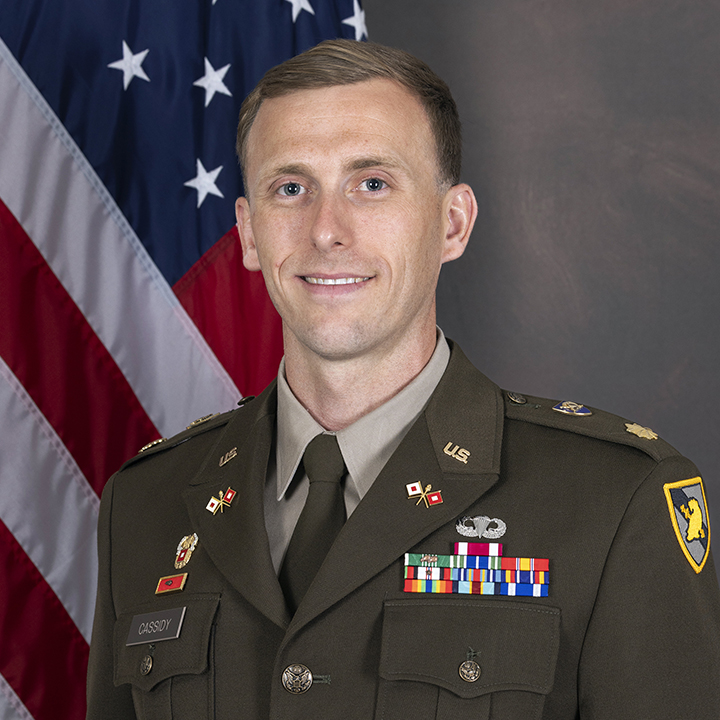
Kenneth S. Cassidy is an instructor in the Department of Behavioral Sciences and Leadership at the United States Military Academy at West Point. A military officer with extensive operational experience, he holds a B.S. from Longwood University (2015), an MBA in Project Management from Liberty University (2019), and an M.S. in Industrial and Systems Engineering - Cognitive Systems Engineering from Ohio State University (2023). His military assignments include roles as Platoon Leader, Executive Officer, and Battalion S6 within the 3rd Armored Brigade Combat Team, 1st Cavalry Division, and 10th Special Forces Group (Airborne). Research Focus: Cassidy's work centers on Resilient human-machine performance strategies Cognitive systems engineering Team coordination under time pressure Adaptive distributed work systems Auditory situation awareness in protective environments Human-AI collaborative assessment Publications Highlight: Recent contributions examine generative AI evaluation methods, auditory perception challenges with hearing protection, and human-machine teaming frameworks. His research bridges military operations with cognitive engineering principles. Operational Background: Deployments to Kuwait (2017) and Afghanistan (2021) inform his practical insights into signal corps operations and special forces communication systems integration.
Mary Pietrowicz is a Teaching Assistant Professor in the Department of Biomedical and Translational Sciences at the University of Illinois and a Senior Research Scientist at the Illinois Applied Research Institute. Her interdisciplinary research integrates computational methods with health sciences, focusing on acoustic and behavioral signal analysis for conditions like ALS, schizophrenia, and depression. She earned a Ph.D. in Computer Science from the University of Illinois, an M.S. in Computer Science from Florida Atlantic University, and a B.S. in Electrical Engineering from Purdue University. Her research explores computational modeling of human expression through speech, movement, and creativity to develop scalable health assessment tools. Key areas include: Machine learning for disease state detection via vocal and kinetic biomarkers Deployable telehealth systems using ubiquitous devices (phones, sensors) Cross-disciplinary applications in neurology, psychiatry, and addiction science Cultural computing through interactive art and sonic installations Her publications reveal a consistent focus on acoustic signal processing applied to neurodegenerative/psychiatric disorders, with innovations in laughter analysis, verbal fluency testing, and real-time health monitoring. Trends include machine learning refinement for clinical diagnostics and multimodal data fusion. She contributes to patented technologies in sensor security, geolocation systems, and speech characterization. At the Illinois Applied Research Institute, she develops deployable health-assessment frameworks and collaborates on interdisciplinary projects bridging engineering, medicine, and digital art.
Joseph 'Beau' Stephens is a Professor in the School of Psychology at Xavier University. He holds a Ph.D. in Psychology from Carnegie Mellon University where he trained at the Center for the Neural Basis of Cognition, and a B.A. in Germanic Studies from Indiana University. Previously, he served for 16 years as faculty at North Carolina A&T State University. Dr. Stephens' research examines cognitive and neural mechanisms underlying auditory/visual perception, speech/language processing, memory systems, decision-making, and cognitive aging. His collaborative work has been funded by the National Institutes of Health, National Science Foundation, and Air Force Research Laboratory. His recent publications demonstrate a strong interdisciplinary focus spanning cybersecurity behavior (2024-2025), memory mechanisms (2013-2021), auditory processing disorders (2020), and cognitive aging (2013-2018). This reflects a consistent integration of experimental psychology with neuroscience and applied human factors research. He directs the Neuro-mechanX Lab and maintains active collaborations across institutions. Current funding sources include federal grants supporting his investigations into sensory processing, learning mechanisms, and age-related cognitive changes.