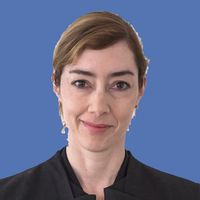
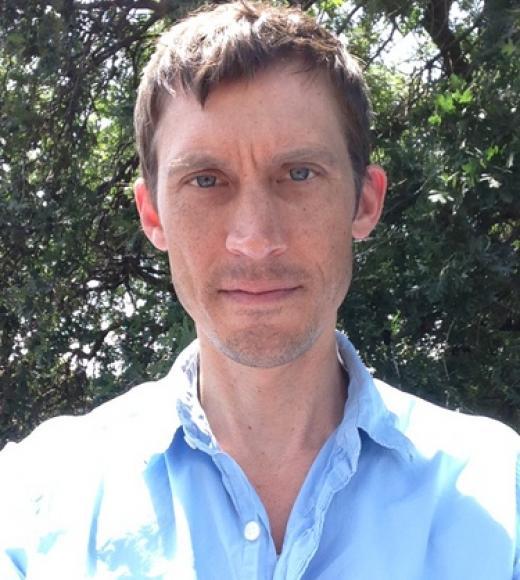
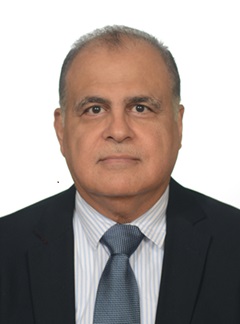
Olga Sorkine-Hornung is a Professor of Computer Science at ETH Zurich and head of the Institute of Visual Computing. She leads the Interactive Geometry Lab, focusing on theoretical and practical advancements in digital content creation, geometry processing, and shape modeling. Current position: ETH Zurich, Department of Computer Science Previous roles: Courant Institute (NYU), Technical University of Berlin Education: BSc and PhD from Tel Aviv University, postdoc at TU Berlin Her research spans shape representation, digital fabrication, computer animation, and fundamental geometry processing. Key contributions include Laplacian surface editing, as-rigid-as-possible deformation, and generalized winding numbers. She works on applications in VR, AR, and autonomous systems. Awards include Test of Time Awards (2024), ACM Fellow (2020), ERC Consolidator Grant (2020), and EUROGRAPHICS Young Researcher Award (2008). She has supervised numerous students and co-developed software libraries like libigl and Instant Meshes . Co-chair roles for SIGGRAPH, Eurographics, and Pacific Graphics Editorial board member for ACM Transactions on Graphics and other journals Keynote speaker at VMV, CVPR, and SIAM conferences Her work bridges mathematical rigor with practical implementation, advancing computer graphics and geometry processing through intuitive algorithms that maintain surface detail while enabling efficient computation.
Prof. Dr. Pia Knoeferle is a leading academic at Humboldt-Universität zu Berlin , where she serves as a Professor in the Department of German Language and Linguistics . She is a principal investigator in the Collaborative Research Center (CRC 1412) focused on register phenomena and leads the Reaction Time, Eye-tracking, and EEG Laboratories . Her research spans psycholinguistics , cognitive neuroscience , and computational modeling of language , with a central interest in how real-time language comprehension interacts with social context , formality-register congruence , and morphosyntactic processing . Appointments: Professor at Humboldt-Universität (2024), CRC 1412 member Methodologies: Eye-tracking, EEG, Visual World Paradigm, ERP Her work investigates lifespan language processing (children, adults, older adults) through contextual cue integration , including emotional , spatial , and social context such as gender cues , eye gaze , and facial expressions . Key questions include: How do pragmatic and contextual factors modulate lexical and grammatical processing ? What representations underlie register sensitivity in spoken and written comprehension ? Recent articles (2022-2024) focus on register congruence effects in German sentence processing, age-related differences in formality-register anticipation , and interactions between register and morphosyntactic knowledge . Using eye-tracking and visual world paradigms , her team examines incremental integration of socially-situated context with verb-argument relations and grammatical constraints . Findings suggest subtle late-stage register effects and interference between pragmatic and syntactic processing . Her lab collaborates with researchers like Katja Maquate , Valentina Nicole Pescuma , and Camilo Ronderos , contributing to the Frame text of the Second Phase Proposal for CRC 1412 (2020) and subsequent reviews in Frontiers in Psychology (2023). The work emphasizes complementary methods to model register variability across languages , modalities , and cultural contexts .
Lee Miller is a Professor in the Department of Neurobiology, Physiology, and Behavior at the University of California, Davis, College of Biological Sciences. His research integrates neural engineering, physiology, and computational methods to develop communication restoration technologies and investigate sensory processing mechanisms. His primary research interests include neural engineering for speech neuroprosthetics, electrophysiological analysis of speech production, auditory neuroscience, and geometric approaches to neuromuscular signal decoding. He employs surface electromyography (EMG), electroencephalography (EEG), and computational modeling to study brain-machine interfaces for speech restoration and multisensory integration. Recent publications reveal a dominant focus on EMG-based speech neuroprostheses, with geometric and topological analysis of neuromuscular signals emerging as a key methodology. His lab has pioneered non-invasive approaches to speech articulation decoding, created standardized EMG databases, and investigated neural mechanisms of attention in speech-in-noise processing. This work bridges engineering innovation with fundamental neuroscience to address communication disorders. Professor Miller leads the Miller Lab at UC Davis, which specializes in neural engineering for communication restoration. The lab develops real-time speech synthesis systems from neural signals and investigates the physiological basis of speech production and perception using multimodal recording techniques.
Dr. Sander Los is an Associate Professor at the Faculty of Behavioural and Movement Sciences (Department of Cognitive Psychology), Vrije Universiteit Amsterdam. He earned his PhD in 1994 with a thesis on 'On the origin of mixing costs: Exploring information processing in pure and mixed blocks of trials' under Prof. Andries Sanders. His research focuses on temporal dynamics of preparatory processes, co-developing the formalized Multiple Trace Theory (fMTP) to explain temporal preparation across time scales (seconds to days). His work integrates cognitive psychology, neuroscience, and computational modeling to explore attentional mechanisms, statistical learning, and spatiotemporal dynamics. Education: PhD in Cognitive Psychology (VU Amsterdam, 1994), postdoctoral research at VU Amsterdam, progressing to Assistant Professor before his current role. Key research areas include visual attention, response inhibition, and long-term memory. He has published over 40 peer-reviewed articles and serves on editorial boards for journals like Attention, Perception, and Psychophysics and Acta Psychologica . Research Interests: His studies investigate how humans prepare for upcoming events temporally and spatially, with recent work on statistical learning guiding visual attention and computational frameworks for temporal preparation. Collaborations emphasize interdisciplinary approaches to understanding attention allocation and neural underpinnings of timing. Grants & Advising: No explicit grants listed, but active in training students (1 supervised PhD thesis). His courses include Methodology, Research Methods, and Practical Skills for Researchers at VU Amsterdam. Labs/Teams: Works closely with colleagues on the fMTP model and statistical learning projects, emphasizing team-based computational and experimental psychology.
Brian Roberts is a Professor at Aston University's School of Psychology within the College of Health and Life Sciences. His primary research focuses on auditory perception, particularly auditory scene analysis and speech perception. He holds a PhD in Experimental Psychology (Auditory Perception) from the University of Cambridge (1989) and has held academic positions at the University of Birmingham (1993-2001) and Aston University since 2005. His work explores perceptual grouping mechanisms, cochlear implant listening, and the neural bases of auditory phenomena. Affiliations: Cognition & Neuroscience Research Group (CNRG), Centre for Vision and Hearing Research Employment History: Reader at University of Birmingham (2001), Senior Lecturer (1999), Lecturer (1993) Research interests include auditory stream segregation, formant analysis, and the effects of stimulus properties on perceptual organization. He has collaborated internationally, including visiting appointments at Macquarie University (2019) and the University of British Columbia (2011). Notable achievements include being elected a Fellow of the Acoustical Society of America (2009). Recent publications investigate factors influencing stream segregation (2024), asymmetric timbre effects (2023), and lexical bias in consonant identification (2022). Current projects explore sudden changes in auditory stimuli and their impact on perceptual grouping. Grants & Funding: Extensive research grants supporting auditory perception studies (details not explicitly listed) Supervised Work: 4 documented supervisees, though names not provided Labs/Teams: Active in the Auditory Perception Laboratory at Aston University, focusing on psychophysical and computational modeling approaches.
Dr. rer. nat. Thomas Hermann is a faculty member at Bielefeld University's Faculty of Engineering, leading the Ambient Intelligence Group and coordinating the Computer Science program. He specializes in sonification, auditory data science, and smart environments. Head of Ambient Intelligence Working Group Computer Science Program Coordinator Member of multiple academic advisory boards His research focuses on interactive sonification for biomedical applications, quantum systems, and smart environments. Key projects include ECG sonification for cardiac diagnosis, real-time auditory feedback in swimming, and sonic interfaces for AR cooperation. Recent publications span 2025 with Python-based sonification tools ( pya AGen ), quantum system sonification, and ST-elevation myocardial infarction monitoring. He contributes to open-access supplementary materials and interdisciplinary workshops. As a researcher , Hermann develops practical sonification frameworks like Panson for facial behavior analysis, CardioScope for portable ECG monitoring, and Base Cube One for smart environments. His work bridges academic research with industry applications.
Eduardo Mercado III is a Professor in the Department of Psychology at the University at Buffalo, College of Arts and Sciences. His research focuses on bioacoustics, cognitive psychology, and marine ecology, particularly the vocal behavior of humpback whales and its implications for understanding human impact on marine ecosystems. He is also known for his work in perceptual learning, autism spectrum disorder, and comparative cognition. Scientific Awards Guggenheim Fellowship Harvard Radcliffe Institute Fellowship Research Trends His recent publications emphasize bioacoustic analysis of humpback whale songs, including their spectral entropy, cyclical variations, and adaptive adjustments to anthropogenic noise. Additional work explores perceptual learning mechanisms in autism, neural network modeling for acoustic classification, and cognitive processes in canines and rodents. Projects Mercado’s “Singers as Sentinels” project combines acoustic analysis of humpback whale songs with public awareness initiatives about ocean noise pollution. The project will produce a book, Why Whales Sing and Dolphins Don’t , and a web-based interface for public engagement.
Prof. Dr. Harald Reiterer is a leading researcher in Human-Computer Interaction at the University of Konstanz, where he has served as Professor since 2009. His academic journey includes a Ph.D. (1991) and habilitation (1995) from the University of Vienna, followed by roles including Senior Researcher at Fraunhofer FIT and Associate Professor at Konstanz. He currently holds multiple leadership roles: Dean of the Faculty of Sciences , Senator of Section 1 , and Consulting Dean . Ph.D. in Computer Science (University of Vienna, 1991) Venia Legendi (Habilitation) in HCI (University of Vienna, 1995) His research focuses on: Interaction Design for mixed reality environments Information Visualization in immersive contexts Hybrid User Interfaces combining physical and virtual elements 3D Object Manipulation in handheld AR Behavioral Analytics through mHealth interventions Recent work explores: Avatar representation in Augmented Reality (2024) Node selection efficiency in Virtual Reality (2024) Peripheral vision toolkits for Head-Mounted Displays (2023) Hybrid interface optimization for Mixed Reality (2023) Smartphone AR extensions for Spatial Memory (2023) Key scientific contributions: Landeslehrpreis 2021 for interdisciplinary exhibition design Development of Colibri cross-reality toolkit (2023) Foundational work on Re-locations for remote collaboration (2022) He leads numerous projects including: SMARTACT (Smart Mobility, 2015-2023) SFB TRR 161 (2009-2027) on XR interface measurement Blended Library (2011-2015) for future library design
Univ.-Prof. Dr. rer. nat. Michael Vorländer is a full Professor and Chair of Technical Acoustics at the Institute of Technical Acoustics (ITA), Faculty of Electrical Engineering and Information Technology, RWTH Aachen University, Germany. He has been the head of the institute since 1996 and is a leading figure in acoustics research and academic leadership. His extensive service includes being President of the European Acoustics Association (EAA), the International Commission for Acoustics (ICA), the German Acoustical Society (DEGA), and elected President of the Acoustical Society of America (ASA) for 2024–2027. Education: Diplom-Physiker, RWTH Aachen (1984); Dr. rer. nat., RWTH Aachen (1989); Dr.-Ing. habil., TU Dresden (1995) Professional Leadership: Pro-Dean (2007) and Dean (2009) of Faculty of Electrical Engineering and Information Technology, RWTH Aachen; Spokesperson of Professors, RWTH Aachen (2012) Editorial Roles: Editor-in-Chief, Acta Acustica (1998–2003); Editorial Board, Applied Acoustics (since 1996) Michael Vorländer's primary research interests lie in the fields of auralization, room acoustics, building acoustics, psychoacoustics, acoustic measurement technology, and virtual acoustics . His work integrates physical acoustics with human perception, focusing on the simulation and reproduction of sound fields in virtual environments. He leads research in binaural technology, electroacoustics, and auditory scene analysis, with applications in noise research and interactive virtual environments. His group is involved in the Priority Program SPP2236 - AUDICTIVE, focusing on auditory cognition in interactive virtual settings. While specific recent publications are not listed, his research output is extensive, as indicated by links to filtered publications. His body of work consistently bridges theoretical modeling, experimental validation, and practical application in architectural and virtual acoustics, contributing to both engineering standards and perceptual understanding. Michael Vorländer has received numerous scientific awards recognizing his contributions to acoustics, including the prestigious RWB Stephens Medal, W.C. Sabine Medal, and Rayleigh Medal . He is a Fellow of the Acoustical Society of America and holds honorary memberships and awards from acoustical societies in Europe and beyond. He advises doctoral students and leads a multidisciplinary research team at the ITA, fostering collaboration in areas like acoustic virtual reality and spatial audio. His leadership in international societies and editorial boards highlights his role in shaping the global acoustics community. He has been instrumental in advancing research infrastructure and academic collaboration in technical acoustics. The research at his institute is organized into key areas: Acoustic Virtual Reality and Auralization, Binaural Technology and Spatial Audio, Auditory Scene Analysis, Psychoacoustics and Noise Research, Electroacoustics, and Room Acoustics. These labs and teams work on projects ranging from fundamental auditory perception to applied engineering solutions for noise control and virtual sound environments.
Dr. Esam Abdel-Raheem is a Professor in the Department of Electrical and Computer Engineering at the University of Windsor, Faculty of Engineering. His research focuses on digital signal processing, biomedical engineering, cognitive radio networks, and VLSI design. He holds a Ph.D. from the University of Victoria (1995) and is a Professional Engineer (P.Eng.) in Ontario and a Senior Member of IEEE. Education: B.Sc. Electrical Engineering, Ain Shams University (1984) M.Sc. Electrical Engineering, Ain Shams University (1989) Ph.D. Electrical Engineering, University of Victoria (1995) Research Interests: Dr. Abdel-Raheem’s work spans signal processing for communications, biomedical signal processing, and VLSI implementations. He has pioneered algorithms for cognitive radio networks and adaptive filtering. His recent studies leverage deep learning for medical diagnostics (e.g., lung nodule detection, Parkinson’s disease voice analysis) and cognitive radio spectrum sensing. Publications Trends: Recent work emphasizes biomedical applications (e.g., CT scan analysis, diabetic retinopathy detection) and machine learning integration in communications (e.g., federated learning for traffic crowdsourcing). His articles often bridge theoretical signal processing with practical implementations in hardware (e.g., FPGA-based filters). Awards/Grants: Not explicitly listed in the text, though his senior IEEE membership and prolific publications suggest sustained professional recognition. Lab/Teams: While not detailed, his research themes imply involvement in interdisciplinary teams focusing on biomedical engineering, telecommunications, and VLSI design.
Valeria Bruschi is a Researcher at the Department of Information Engineering (DII) within the Faculty of Engineering at Università Politecnica delle Marche (UNIVPM) in Ancona, Italy. Her academic profile was last updated on April 13, 2024, and she maintains her office at the Engineering Faculty on via Brecce Bianche, with contact information including phone +39 071-220-4486 and email v.bruschi@staff.univpm.it. Dr. Bruschi's research spans multiple domains within audio and signal processing, with particular expertise in spatial audio systems, automotive human-computer interaction, and biomedical signal applications. Her work bridges theoretical signal processing techniques with practical implementations across diverse fields including automotive safety systems, hearing aid technology, sleep medicine, and agricultural monitoring. She has made significant contributions to head-related transfer function (HRTF) processing, real-time audio enhancement algorithms, and innovative monitoring systems that utilize acoustic signals for various applications. Analysis of Dr. Bruschi's recent publications reveals a strong trajectory in developing practical audio processing solutions with real-world applications. Her work shows increasing integration of machine learning techniques with traditional signal processing approaches, particularly in areas like driver monitoring systems, snoring detection and cancellation, and spatial audio rendering. A notable trend is her focus on creating lightweight, real-time implementations suitable for embedded systems and practical deployment scenarios, while maintaining high performance standards. Her research consistently demonstrates interdisciplinary collaboration, connecting audio engineering with fields as diverse as automotive safety, sleep medicine, and agricultural technology. Dr. Bruschi actively contributes to advancing audio engineering through her research on equalization techniques, noise reduction systems, and immersive audio technologies. Her work on pulse compression techniques for hearing aid distortion measurement represents an important contribution to audiological assessment methodologies. Her publication record demonstrates consistent scholarly output with increasing impact across multiple application domains, reflecting her ability to translate theoretical signal processing concepts into practical engineering solutions.
Professor Steve Bell is a faculty member at the University of Southampton, specializing in auditory neuroscience and biomedical engineering. He leads the EPSRC-funded project 'Personalized fitting and evaluation of hearing aids with EEG responses' and is a registered Clinical Scientist. His research focuses on measuring brain responses to sound for hearing and balance system evaluation, optimizing hearing aid technologies, and improving diagnostic methods for infants and elderly patients. He manages the Hearing and Balance Centre Clinic and holds roles in professional organizations like the International Evoked Response Audiometry Study Group. Education & Roles: Professor at University of Southampton Lead researcher on EPSRC project (2015-2025) Council member, International Evoked Response Audiometry Study Group Research Interests: Steve's work centers on evoked responses in hearing and balance systems, evaluating hearing aids/cochlear implants, and developing objective neurophysiological assessment techniques. His lab explores speech processing, signal analysis, and clinical applications of EEG-based methods. Awards: Vice-Chancellor's Teaching Award (201X) Advising & Grants: Accepting PhD students in audiology and biomedical engineering. Principal investigator on EPSRC grant £X million. Collaborates with Prof. David Simpson and Dr. Ben Lineton in the Signal Processing Audio and Hearing Group. Labs & Teams: Part of the Signal Processing Audio and Hearing Group, focusing on technological innovation in auditory signal processing and audiological diagnostics.
Nora H Prior, PhD, is a Senior Research Associate in the Psychology Department at Cornell University, focusing on sensory systems, social behavior, and neurogenomics. Her research team explores avian behavioral neuroscience, with expertise in neuroendocrinology, bioacoustics, and comparative psychology. 2020-2021: Sessional Instructor & course designer, University of British Columbia 2018-2021: Postdoctoral Associate, Avian Behavioral Neuroscience Lab (University of Maryland) 2016-2018: Postdoctoral Fellow, Center for Comparative and Evolutionary Biology of Hearing (University of Maryland) 2015: Postdoctoral Fellow, Neuroethology & Bioacoustics Lab (University of Lyon) 2009-2014: PhD Candidate (University of British Columbia) Her research combines neuroendocrinology, bioacoustics, and behavioral ecology to study avian communication, pair bonding, and neurogenomic responses to environmental stressors. Key topics include: Acoustic fine structure in zebra finch communication Neuroendocrine regulation of monogamy and aggression Effects of water restriction on vocal behavior Differential gene expression in extreme physiological states Temporal processing of vocal sequences Perceptual limitations in avian cognition While her publications span from 2010-2025, recent work emphasizes methodological rigor in neuroscience research, environmental impacts on brain development, and neurogenomic resilience in wild birds. Her 2025 paper on Science Democratization addresses systemic challenges in behavioral neuroscience.
Richard Kempter is a Full Professor at the Humboldt-Universität zu Berlin, where he leads the Theoretical Neuroscience research group within the Institute for Theoretical Biology, Department of Biology. His research focuses on the neural basis of learning and memory through computational and mathematical modeling of synapses, neurons, and neural networks. He is affiliated with several major research centers including the Bernstein Center for Computational Neuroscience, the Einstein Center for Neurosciences Berlin, and the CRC 1315 Memory Consolidation. Professor Kempter's research interests span theoretical and computational neuroscience with a particular focus on the neural mechanisms underlying learning and memory. His work employs biophysical modeling and mathematical analysis to study synaptic short- and long-term plasticity, the dynamics of single neurons, and the interaction of neurons in recurrently coupled networks. A key aspect of his research investigates how neural systems maintain a balance between learning susceptibility and stability against pathological activity patterns, with model systems including the hippocampus and early auditory system. His research group has made significant contributions to understanding hippocampal sharp wave-ripple events, phase precession in spatial navigation, auditory processing in barn owls, and memory consolidation mechanisms. The group's work combines theoretical approaches with computer simulations to unravel the computational principles of neural circuits, showing particular interest in how neural tissue remains susceptible to learning while maintaining robust stability against pathological activity patterns. Scholarship of the State of Bavaria (03/1994-12/1995) Emmy Noether Fellowship Part I (09/1999-08/2001), funded by the Deutsche Forschungsgemeinschaft Emmy Noether Fellowship Part II (01/2003-09/2008) Guest Professor , HU Berlin, Department of Biology (10/2008-03/2010) Professor Kempter has advised numerous PhD and Master's students throughout his career, with many continuing in neuroscience research. His group maintains strong connections with experimental laboratories to bridge computational models with empirical findings, particularly in hippocampal function and auditory processing. The Theoretical Neuroscience Lab participates in collaborative projects investigating memory consolidation and neural coding principles, contributing significantly to our understanding of how neural circuits implement computational principles underlying learning and memory.
Alexandre Manuel de Castro Passos de Almeida is an Assistant Professor in the Department of Information Science and Technology at the University Institute of Lisbon (ISCTE-IUL), where he also contributes to the School of Technology and Architecture. He is an Associate Researcher at the Institute of Telecommunications - IUL, actively involved in the Radio Systems Group, focusing on telecommunications and sensor-based environmental monitoring. PhD in Telecommunications, ISCTE-IUL, 2012 His research interests span telecommunications, wireless sensor networks, air quality monitoring, computer architecture, and robotics. He has led and contributed to innovative projects such as ExpoLis, which uses mobile sensor networks on public buses to map urban air pollution. His work bridges engineering and environmental science, aiming to influence urban policy and public health through real-time data systems. The most recent publications highlight a strong trend toward deploying low-cost, mobile sensor networks for environmental monitoring, particularly in urban settings. His work integrates computer systems, signal processing, and sustainable technology, with applications in smart cities, public health, and robotics. Topics like air quality mapping, energy harvesting, and noise-aware robot navigation reflect a multidisciplinary approach to solving real-world problems. He has advised seven Master’s students at ISCTE-IUL, guiding research in sensor networks, air pollution, database performance, robotic navigation, and personal photography assistants. While no specific scientific awards are listed, his contributions to funded research projects and consistent scholarly output indicate recognition in his field. He has held leadership roles in academic governance, including Vice President of the Pedagogical Council, underscoring his institutional engagement. His teaching portfolio includes core courses such as Fundamentals of Computer Architecture, Operating Systems, and Big Data Processing, delivered across multiple undergraduate and postgraduate programs. He is involved in research projects that combine academic innovation with practical urban applications, particularly through the deployment of scalable, open-source environmental sensing systems.