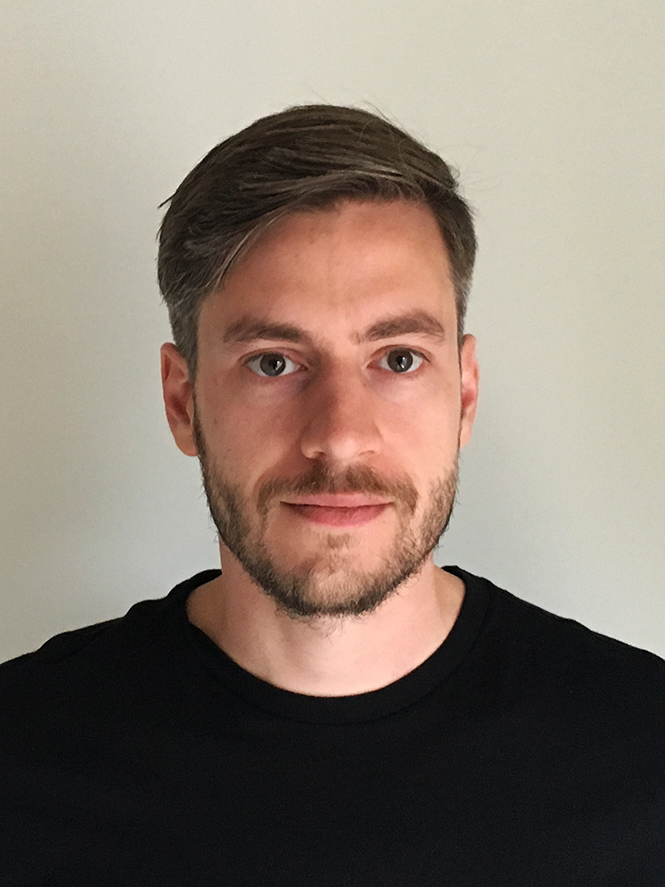
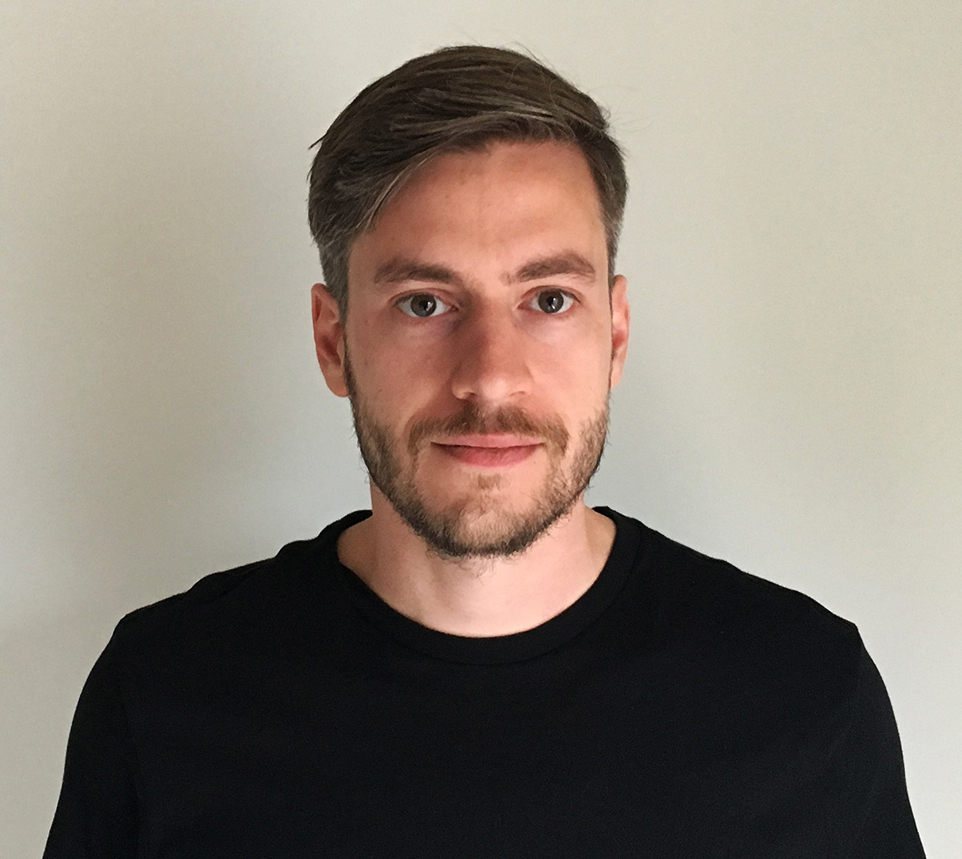
Nicolas Mathevon is a Professor at the University of Saint-Etienne, with a focus on Animal Behavior and Bioacoustics . He currently serves as Director of Studies at Ecole Pratique des Hautes Etudes and leads the ENES Team . His research explores acoustic communication across diverse species, including crocodiles, seals, penguins, and humans, with particular emphasis on vocal recognition, signal evolution, and neurobiological underpinnings. Major collaborations include Dr. T. Aubin (CNRS), Dr. I. Charrier (marine mammals), Dr. N. Grimault (crocodilian bioacoustics), and Prof. D. Reby (human communication). He also co-edits a new book, The Voices of Nature , published by Princeton University Press. His recent work spans ecoacoustic monitoring for conservation, multi-modal communication in crocodiles, and cross-species analysis of distress signals in bonobos, chimps, and humans. Neurobiological studies include brain activation patterns in response to vocalizations and sound localization mechanisms in reptiles. Scientific Awards include senior membership in the Institut universitaire de France .
David Lindlbauer is an Assistant Professor at the Human-Computer Interaction Institute (HCII) of Carnegie Mellon University, where he leads the Augmented Perception Lab and co-directs the CMU Extended Reality Technology Center. His research bridges human perception, extended reality (AR/VR), and computational interaction techniques, focusing on developing systems that dynamically adapt interface elements based on environmental context, user cognition, and task requirements. He completed his PhD at TU Berlin under Prof. Marc Alexa and held a postdoctoral position at ETH Zurich's Advanced Interactive Technologies lab. His work has been published extensively at top venues including ACM CHI, UIST, and IEEE VR, with research themes spanning gaze tracking, spatial audio optimization, haptic feedback, and multimodal notification systems. Media outlets like MIT Technology Review and Fast Company Design have featured his innovations. Dr. Lindlbauer has received prestigious grants from Meta, NSF, and ETH Zurich, and serves on program committees for CHI, UIST, and ISMAR. He has been recognized with Best Paper awards at ISS 2023 and CHI 2016, and his lab develops tools like MineXR for personalized XR interfaces and RealityReplay for temporal change visualization in mixed reality environments.
Mark Lee is an Adjunct Professor in the People Analytics department at NYU’s Tandon School of Engineering, specializing in Technology Management and Innovation. He holds a Ph.D. in Engineering Psychology from Georgia Institute of Technology (1996). Currently, he serves as Head of Research, Analytics, and Business Development at UL ComplianceWire, focusing on pharmaceutical and medical device manufacturing training. His research leverages large datasets to improve healthcare safety through regulatory compliance and best practices. Courses taught include Human Factors Engineering, Workplace Design, and Predictive Analytics. Education: Ph.D. in Engineering Psychology, Georgia Tech (1996) Key Roles: Adjunct Professor, Head of Research at UL ComplianceWire Research Focus: Human Factors, Training Systems Design, Healthcare Compliance His work spans auditory display systems for aviation (e.g., 3D audio cockpit interfaces) and ergonomic design for industrial products. Recent projects emphasize data-driven solutions for regulatory challenges in life sciences. Publications highlight studies on visual search strategies, age-related cognitive performance, and application of signal detection theory in decision-making. He actively collaborates with industry and government entities, exemplified by the FDA-UL Cooperative Research Agreement.
Prof. Torsten Wolfgang Kuhlen serves as a Universitätsprofessor at RWTH Aachen University, leading the Teaching and Research Area for Virtual Reality and Immersive Visualization within the Department of Computer Science. He is affiliated with Chair of Computer Science 12 (High Performance Computing), the Visual Computing Institute, and remains an integral part of the RWTH IT Center where his research group operates one of the world's largest Virtual Reality laboratories including the 30 sqm aixCAVE visualization chamber. The group maintains strong connections with Computational Science & Engineering Division, National High Performance Computing Center for Computational Engineering Science (NHR4CES), and VR in Science and Industry Network NRW e.V. Prof. Kuhlen's research spans virtual reality, immersive visualization, and multimodal 3D user interfaces with applications across simulation science, production technology, neuroscience, and medicine. His work combines basic research on advanced methods and algorithms with interdisciplinary collaborations involving RWTH Aachen institutes, Forschungszentrum Jülich, and industry partners. Recent publications demonstrate strong focus on audiovisual perception, immersive analytics, collaborative virtual environments, and practical VR applications in education and manufacturing. His research group has produced significant work on listening effort in virtual environments, immersive authoring techniques, and VR applications for scientific visualization. Notable projects include VRScenarioBuilder for automated vehicle testing and applications in monitoring additive manufacturing processes. The group actively participates in major conferences including IEEE VIS and EuroVis, with several award-winning contributions. Prof. Kuhlen has advised PhD students including Martin Bellgardt who recently completed his doctoral degree on "Increasing Immersion in Machine Learning Pipelines for Mechanical Engineering". The research group maintains state-of-the-art VR infrastructure including the aixCAVE facility which is open to all RWTH research groups.
David Lindlbauer is an Assistant Professor at Carnegie Mellon University's Human-Computer Interaction Institute (HCII), where he leads the Augmented Perception Lab and co-directs the CMU Extended Reality Technology Center. His research focuses on advancing Mixed Reality (MR) and Extended Reality (XR) interfaces through computational interaction methods that optimize spatial, temporal, and multimodal feedback.
Miguel Nacenta is a Professor in the Department of Computer Science at the University of Victoria (UVic), Canada, and a founding member of the Victoria Interactive eXperiences with Information (VIXI) research group. Previously affiliated with the University of St Andrews (UK), his work bridges Human-Computer Interaction (HCI), Information Visualization, and Cognitive Science. He specializes in designing interactive systems that enhance human cognition, with a focus on Infotypography (using typography to encode data), collaborative problem-solving tools, and perceptual input/output devices. Research Interests: His key areas include cognitive augmentation, visualization techniques for complex tasks, multi-display environments, and tools for constraint problem-solving. Notable projects include the WriteReason tool for essay writing, InfoTypography studies on perceptual typographic parameters, and Solvi for visual constraint modeling. Grants & Collaborations: He collaborates internationally, including with the University of St Andrews on PhD scholarship programs. His work is supported by grants focusing on HCI innovations and accessibility. He actively mentors students (e.g., Adam Binks, Johannes Lang) and supervises postdoctoral researchers. Affiliations: Member of the VIXI group,他曾是St Andrews计算机科学学院的教授, 并参与多个学术服务活动, including conference program committees and journal reviews. Labs & Teams: Leads the VIXI lab at UVic, focusing on interactive technologies for cognitive tasks. Collaborates with industry partners on projects like TypoCartographer for infoTypographic maps and HaptiQ for accessible graph exploration.
Prithvi Ravi Kantan is a full-time Researcher at Aalborg University's Department of Architecture, Design and Media Technology within The Technical Faculty of IT and Design. His work focuses on developing sound-based and multimodal feedback systems for motor rehabilitation, integrating principles from music technology and biomedical engineering. Education: PhD in Embodied Sonification Design (2021-2023) M.Sc. in Sound and Music Computing (2018-2020) B.E. in Electronics and Telecommunications (2009-2013) Research interests include real-time auditory feedback systems for neurological rehabilitation, user-centered design of clinical technologies, and the application of generative music in data sonification. He actively contributes to projects like HearWalk (2023-2027), exploring sound-facilitated motor learning in cerebral palsy patients. Notable achievements include winning the Danish Sound Day Research Pitch Battle (2023) and receiving the Best Student Paper Award at ICAD 2024. His work aligns with UN SDG 3 (Good Health) and SDG 4 (Quality Education). Teaching responsibilities include coordinating bachelor and master-level courses in PBL-based learning, emphasizing interdisciplinary approaches. He has supervised multiple student projects and contributed to over 39 publications since 2013.
David Lindlbauer is an Assistant Professor at the Human-Computer Interaction Institute (HCII) within Carnegie Mellon University's School of Computer Science. He leads the Augmented Perception Lab and co-directs the CMU Extended Reality Technology Center (XRTC) . His research bridges Human-Computer Interaction, Computer Graphics, and Computer Vision to create adaptive interfaces that enhance human-digital interaction. Education : PhD (summa cum laude) from Technische Universität Berlin , MSc and BSc from University of Applied Sciences Upper Austria Previous Affiliation : Postdoctoral Researcher at ETH Zurich (2018-2020) David's research focuses on understanding human perception of digital information and developing computational approaches to optimize AR/VR interface usability. Key areas include: Context-aware adaptive interfaces Visual saliency and attention modeling Spatial audio-haptic systems Optimal placement algorithms Object manipulation in Remixed Reality Diminished/ambient MR interfaces His 15 most recent publications (2024-2025) span topics in adaptive XR interfaces, multimodal notifications, haptic systems, and spatial cognition. These works appear at venues like ACM CHI, ACM UIST, IEEE VR, and Frontiers in VR. Common themes include: Machine learning for interface adaptation Human factors in XR design Real-time environment analysis Privacy-aware display systems Collaborative MR interfaces Accessibility enhancements Scientific Recognition : Best Paper Honorable Mention Award (ACM CHI 2024) Best Paper Award (ACM ISS 2023) ETH Zurich Postdoctoral Fellowship Multiple best paper recognitions at CHI, UIST, and IEEE VR Teaching & Leadership : Course developer for CMU's "Interactive Extended Reality" Mentor for NASA SUITS Challenge team Co-chair roles at CHI and UIST Overseeing PhD students and research interns
Dr. rer. nat. Thomas Hermann is a faculty member at Bielefeld University's Faculty of Engineering, leading the Ambient Intelligence Group and coordinating the Computer Science program. He specializes in sonification, auditory data science, and smart environments. Head of Ambient Intelligence Working Group Computer Science Program Coordinator Member of multiple academic advisory boards His research focuses on interactive sonification for biomedical applications, quantum systems, and smart environments. Key projects include ECG sonification for cardiac diagnosis, real-time auditory feedback in swimming, and sonic interfaces for AR cooperation. Recent publications span 2025 with Python-based sonification tools ( pya AGen ), quantum system sonification, and ST-elevation myocardial infarction monitoring. He contributes to open-access supplementary materials and interdisciplinary workshops. As a researcher , Hermann develops practical sonification frameworks like Panson for facial behavior analysis, CardioScope for portable ECG monitoring, and Base Cube One for smart environments. His work bridges academic research with industry applications.
Ana Serrano is an Associate Professor at Universidad de Zaragoza, Spain, where she is affiliated with the Graphics & Imaging Lab in the EINA (Edificio Ada Byron) school. She earned her PhD at the same institution under the supervision of Prof. Diego Gutierrez and Prof. Belen Masia, and completed a postdoctoral fellowship at the Max-Planck-Institute for Informatics under Prof. Karol Myszkowski. Her research focuses on visual computing , particularly in computational imaging , material appearance perception and editing , and virtual reality . She is especially interested in developing perceptually-driven methods that leverage knowledge of the human perceptual system to enhance user experiences and assist content creation in immersive environments. Her recent publications (2023–2025) span top-tier venues such as SIGGRAPH, CVPR, IEEE TVCG, and Eurographics. These works explore topics like saliency prediction in 3D and 360° video, crossmodal perception in VR, gloss modeling, radiance fields, and perceptual evaluation of immersive content. The research demonstrates a strong integration of machine learning, human perception, and computer graphics to solve real-world problems in visual computing. She has received several prestigious awards, including: Eurographics 2023 Young Researcher Award VGTC VR 2024 Significant New Researcher Award Eurographics 2020 PhD Award Adobe Research Fellowship (honorable mention, 2017) NVIDIA Graduate Fellowship (2018) Ana Serrano actively supervises PhD and Master’s students and has taught courses such as Virtual Reality, Computational Imaging, and Deep Learning applications. She serves as an Associate Editor for Computer Graphics Forum , ACM Transactions on Applied Perception , and Computers and Graphics , and has held leadership roles in major conferences including Eurographics (Tutorials co-chair, 2023), ACM SAP (Program co-chair, 2022), and CEIG (Program co-chair, 2022). Her professional service includes extensive program committee and reviewer roles for SIGGRAPH, IEEE VR, ISMAR, and others. She leads a vibrant research group focused on human perception in virtual environments, with current projects on computational models of attention and perception, integrated with physiological signals. Her lab, the Graphics & Imaging Lab, fosters interdisciplinary collaboration and innovation in visual computing.
Eduardo Mercado III is a Professor in the Department of Psychology at the University at Buffalo, College of Arts and Sciences. His research focuses on bioacoustics, cognitive psychology, and marine ecology, particularly the vocal behavior of humpback whales and its implications for understanding human impact on marine ecosystems. He is also known for his work in perceptual learning, autism spectrum disorder, and comparative cognition. Scientific Awards Guggenheim Fellowship Harvard Radcliffe Institute Fellowship Research Trends His recent publications emphasize bioacoustic analysis of humpback whale songs, including their spectral entropy, cyclical variations, and adaptive adjustments to anthropogenic noise. Additional work explores perceptual learning mechanisms in autism, neural network modeling for acoustic classification, and cognitive processes in canines and rodents. Projects Mercado’s “Singers as Sentinels” project combines acoustic analysis of humpback whale songs with public awareness initiatives about ocean noise pollution. The project will produce a book, Why Whales Sing and Dolphins Don’t , and a web-based interface for public engagement.
Emily Cooper is an Associate Professor of Optometry & Vision Science at the Herbert Wertheim School of Optometry & Vision Science, University of California, Berkeley. She serves as the Chair of the Vision Science PhD Program and is a co-Director of the Center for Innovation in Vision & Optics. Additionally, she is a member of the Helen Wills Neuroscience Institute and a Visiting Faculty Researcher at Google. Dr. Cooper's research focuses on 3D vision, perceptual graphics, AR/VR, computational neuroscience, visual encoding, and display system design. Her work investigates how the visual system processes information to create our perception of the 3D world, with applications in computer graphics, virtual reality, and assistive technologies for people with low vision. Analysis of Dr. Cooper's recent publications (2023-2025) reveals a strong focus on the intersection of vision science and emerging technologies, particularly in augmented reality and assistive vision systems. Her work spans fundamental research on visual perception mechanisms to applied research developing practical technologies for low vision rehabilitation. A significant portion of her recent work addresses visual discomfort in XR displays, perceptual guidelines for AR/VR systems, and innovative approaches to assistive vision technologies that enhance mobility and independence for visually impaired individuals. Dr. Cooper leads an active research laboratory at UC Berkeley's 391 Minor Hall, where she mentors students and collaborators in vision science research. Her lab investigates both basic questions about how vision works and translational questions about improving visual technologies. She has developed perceptual guidelines for optimizing field of view in stereoscopic augmented reality displays and created assistive technologies such as an augmented reality sign-reading assistant for users with reduced vision. Dr. Cooper is also involved in professional activities including co-organizing the Computational Neuroscience: Vision summer course at Cold Spring Harbor Laboratory and working with Community Resources For Science to promote science education.
Prof. Dr. Harald Reiterer is a leading researcher in Human-Computer Interaction at the University of Konstanz, where he has served as Professor since 2009. His academic journey includes a Ph.D. (1991) and habilitation (1995) from the University of Vienna, followed by roles including Senior Researcher at Fraunhofer FIT and Associate Professor at Konstanz. He currently holds multiple leadership roles: Dean of the Faculty of Sciences , Senator of Section 1 , and Consulting Dean . Ph.D. in Computer Science (University of Vienna, 1991) Venia Legendi (Habilitation) in HCI (University of Vienna, 1995) His research focuses on: Interaction Design for mixed reality environments Information Visualization in immersive contexts Hybrid User Interfaces combining physical and virtual elements 3D Object Manipulation in handheld AR Behavioral Analytics through mHealth interventions Recent work explores: Avatar representation in Augmented Reality (2024) Node selection efficiency in Virtual Reality (2024) Peripheral vision toolkits for Head-Mounted Displays (2023) Hybrid interface optimization for Mixed Reality (2023) Smartphone AR extensions for Spatial Memory (2023) Key scientific contributions: Landeslehrpreis 2021 for interdisciplinary exhibition design Development of Colibri cross-reality toolkit (2023) Foundational work on Re-locations for remote collaboration (2022) He leads numerous projects including: SMARTACT (Smart Mobility, 2015-2023) SFB TRR 161 (2009-2027) on XR interface measurement Blended Library (2011-2015) for future library design
Morten Søndergaard is an Associate Professor at Aalborg University’s Department of Communication and Psychology, affiliated with the Faculty of Social Sciences and Humanities. He is part of the Art, Aesthetics & Health Research Laboratory and the MASSHINE initiative. His research focuses on sound art, media art curation, and transdisciplinary practices, emphasizing the exclusion mechanisms in 20th-century art systems and unarchived avant-garde movements. Søndergaard has curated exhibitions globally, including at Kiasma and ZKM, and co-founded the POM conference series and ISACS symposia. He leads the Erasmus Master of Excellence in Media Arts Cultures, collaborating with institutions in Austria, Poland, and Hong Kong. His work bridges art, science, and technology, with recent projects exploring sonic archives and participatory curatorial frameworks. Key collaborations include roles with the European NeMe network, SUNY College New York, and the Momentum Biennial. He has organized over 20 projects since 2008, including the 2025 Momentum Biennial as head curator. His teaching spans media art theory, sound art practices, and curatorial methodologies at both bachelor and master levels. Søndergaard’s research outputs include over 145 publications, with a focus on sound art’s theoretical and practical dimensions. His current projects emphasize ‘uncurating’ methodologies and the reactivation of marginalized avant-garde practices. Notable activities include editorial roles, international conference organization, and advisory roles in art and science networks. His work has been featured in media outlets like Artdaily and the Biennial Foundation, highlighting his contributions to contemporary art discourse and curatorial innovation.
Bart J. Hengeveld is an Assistant Professor at Eindhoven University of Technology (TU/e), affiliated with the Industrial Design department within the Faculty of Industrial Design. He leads the Future Everyday research cluster, focusing on the intersection of sound design and IoT systems. His work explores how embedded technologies can communicate through sound and tangible interaction in ways that enhance human experience. Education: BSc/MSc in Industrial Design Engineering, Delft University of Technology (2003) PhD in Industrial Design, TU/e (2011), with concurrent training in double bass at Codarts Conservatory Research Interests: Acoustic communication in IoT systems Tangible interaction design Social implications of ubiquitous computing Sound as a medium for human-technology interaction Recent Research Trends: Focus on multimodal interfaces combining sound/light/haptics Studies on sound design for healthcare and smart living environments Investigations into ethical and inclusive IoT soundscapes Awards: Two Teacher of the Year awards at TU/e, reflecting his commitment to pedagogical excellence. Advising & Projects: Supervised 113 student projects including interactive installations like 'Naktis' and 'Sonostapp' Leading the €1.5M 'Role of Sound in Hybrid Work Environments' project (2023–2026) Organized TEI 2016 conference and serves on its steering committee Teams/Labs: Core member of TU/e's Future Everyday cluster, collaborating with multidisciplinary teams on embodied interaction research.