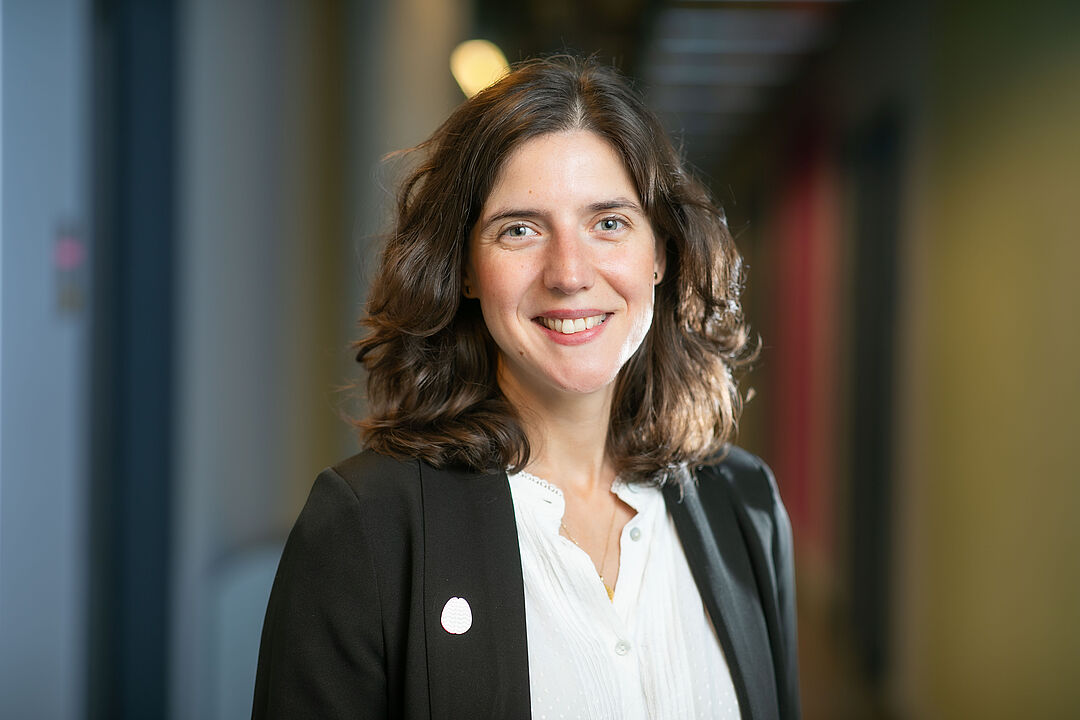
Prof. Waldemar Kolanus leads the Molecular Immunology and Cell Biology department at the University of Bonn's Life & Medical Sciences Institute (LIMES) . His research bridges immunoregulation , stem cell dynamics , and metabolic stress responses in immune cells. Unit 2 member at LIMES Principal investigator in SFB 704 and ImmunoSensation Cluster Leads a multidisciplinary lab with postdocs, PhD students, and technical staff His work focuses on intracellular signaling pathways connecting immune activation to tissue homeostasis, particularly through: Cytohesin proteins in integrin-mediated adhesion and migration TRIM71 in stem cell regulation and congenital hydrocephalus High-salt environments affecting macrophage function Publication trends show expertise in immune cell migration , genetic models , and chemical inhibition , with frequent use of mice and zebrafish for in vivo studies. Key articles explore: TRIM71's dual role in auditory development and germ cell maintenance Cytohesin family's Golgi regulation and insulin signaling Ruxolitinib's off-target migration inhibition of dendritic cells Contact details: Address: LIMES Institute, Carl-Troll-Straße 31, Bonn Email: kolanus.sekretariat@uni-bonn.de Phone: +49 228 73-62788
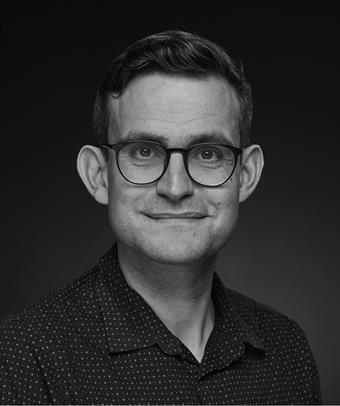
Prof. Torsten Wolfgang Kuhlen serves as a Universitätsprofessor at RWTH Aachen University, leading the Teaching and Research Area for Virtual Reality and Immersive Visualization within the Department of Computer Science. He is affiliated with Chair of Computer Science 12 (High Performance Computing), the Visual Computing Institute, and remains an integral part of the RWTH IT Center where his research group operates one of the world's largest Virtual Reality laboratories including the 30 sqm aixCAVE visualization chamber. The group maintains strong connections with Computational Science & Engineering Division, National High Performance Computing Center for Computational Engineering Science (NHR4CES), and VR in Science and Industry Network NRW e.V. Prof. Kuhlen's research spans virtual reality, immersive visualization, and multimodal 3D user interfaces with applications across simulation science, production technology, neuroscience, and medicine. His work combines basic research on advanced methods and algorithms with interdisciplinary collaborations involving RWTH Aachen institutes, Forschungszentrum Jülich, and industry partners. Recent publications demonstrate strong focus on audiovisual perception, immersive analytics, collaborative virtual environments, and practical VR applications in education and manufacturing. His research group has produced significant work on listening effort in virtual environments, immersive authoring techniques, and VR applications for scientific visualization. Notable projects include VRScenarioBuilder for automated vehicle testing and applications in monitoring additive manufacturing processes. The group actively participates in major conferences including IEEE VIS and EuroVis, with several award-winning contributions. Prof. Kuhlen has advised PhD students including Martin Bellgardt who recently completed his doctoral degree on "Increasing Immersion in Machine Learning Pipelines for Mechanical Engineering". The research group maintains state-of-the-art VR infrastructure including the aixCAVE facility which is open to all RWTH research groups.
Dr. rer. nat. Thomas Hermann is a faculty member at Bielefeld University's Faculty of Engineering, leading the Ambient Intelligence Group and coordinating the Computer Science program. He specializes in sonification, auditory data science, and smart environments. Head of Ambient Intelligence Working Group Computer Science Program Coordinator Member of multiple academic advisory boards His research focuses on interactive sonification for biomedical applications, quantum systems, and smart environments. Key projects include ECG sonification for cardiac diagnosis, real-time auditory feedback in swimming, and sonic interfaces for AR cooperation. Recent publications span 2025 with Python-based sonification tools ( pya AGen ), quantum system sonification, and ST-elevation myocardial infarction monitoring. He contributes to open-access supplementary materials and interdisciplinary workshops. As a researcher , Hermann develops practical sonification frameworks like Panson for facial behavior analysis, CardioScope for portable ECG monitoring, and Base Cube One for smart environments. His work bridges academic research with industry applications.
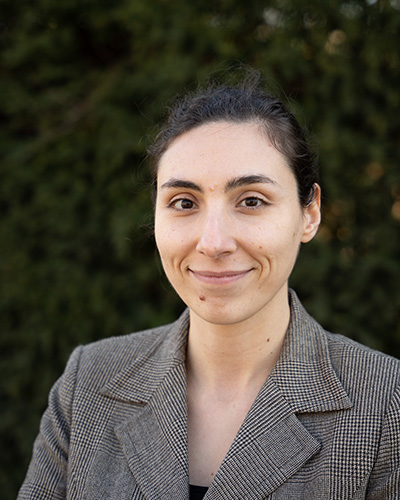
Mariya Toneva is a tenure-track faculty member at the Max Planck Institute for Software Systems , conducting groundbreaking research at the intersection of Machine Learning , Natural Language Processing , and Neuroscience . She leads the Bridging AI and Neuroscience (BrAIN) group , focusing on computational models that align AI systems with human brain processes. Her work aims to enhance both AI capabilities and neuroscience understanding through this cross-disciplinary approach. Actively recruiting postdocs, PhDs, and research interns in areas like code/text representation, brain-AI alignment, and neuroimaging data analysis Collaborator on NIH-funded projects using fMRI and neuropixel data Research Themes : Her group explores neural mechanisms of language processing, event segmentation in narratives, memory reactivation via music, and effective human-AI collaboration frameworks. Key methods include LLM analysis, cross-modal similarity metrics, and naturalistic task-based fMRI studies. Key Publications (2024-2025): Brain-tuned speech models (INTERSPEECH 2025) Cognitive event boundaries in LLMs (Behavioral Research Methods 2025) Music-induced memory reactivation (biorxiv 2024) LLM-brain alignment reasons (EMNLP 2024) Advising : Mentors PhD candidates Omer Moussa (speech processing), Camila Kolling (representational similarity), and Gabriele Merlin (LLM alignment). Collaborates with institutions like MIT, NYU, and ETH Zurich.
Mehrdad Salehi is a researcher at the Chair of Computer Science Applications in Medicine at the Technical University of Munich (TUM) . His work focuses on the intersection of computer science and medical imaging, with expertise in ultrasound technology, deep learning, and surgical navigation systems. Key research areas include sonification of medical data, 3D ultrasound reconstruction, and machine learning-based segmentation. He has contributed to innovative projects like PRO-TIP calibration phantoms and ColibriDoc autonomous docking systems. His publications highlight trends in acoustic feedback mechanisms, neural radiance fields for medical imaging, and real-time image analysis. He can be reached at mehrdad.salehi@tum.de .
Fatma Deniz is a Full Professor (W3) of Computer Science at Technische Universität Berlin, supported by the Berlin Equal Opportunities Program. She leads the Chair of Language and Communication in Biological and Artificial Systems, and is a member of the Berlin Bernstein Center for Computational Neuroscience. Her roles include membership in TU Berlin's Executive Board and the Berlin University Alliance Steering Committee. She holds a Ph.D. (Dr. rer. nat.) from TU Berlin and a Diploma in Computer Science from Technische Universität München, with research training at Caltech and postdoctoral work at UC Berkeley. Her research focuses on understanding neural mechanisms of language processing, integrating computational neuroscience, cognitive science, and artificial intelligence. Key areas include semantic representation dynamics, cross-modal neural alignment, and language learning in bilingual contexts. She has pioneered studies showing the brain's invariant semantic processing across reading and listening modalities. Her grants include an ERC Starting Grant (2023-2028) for studying language learning shifts and a NSF-BMBF CRCNS grant on bilingual representations. She co-edited The Practice of Reproducible Research: Case Studies in Data Science (UC Press, 2017) and contributed to foundational work on reproducible data science methodologies. She has advised projects in neuroimaging, AI ethics, and computational linguistics, and collaborates with institutions like UCSF and the German Academic Exchange Service. Her lab explores neural correlates of language through fMRI, MEG, and machine learning techniques.
Dr. Burkhard Maess is a Research Professor and Group Leader at the Max Planck Institute for Human Cognitive and Brain Sciences, leading the Methods and Development Group Brain Networks. His research focuses on auditory and language processing, signal analysis, and dynamic modeling of neuronal networks. He holds a Diploma in Physics (University of Leipzig, 1987) and a PhD in Physics (University of Leipzig, 1990). His career includes postdoctoral positions at the Academy of Sciences of the GDR and the Free University of Berlin before joining the MPI in 1995. Since 2000, he has led research groups on MEG/EEG signal analysis and cortical network dynamics. His work integrates advanced neuroimaging techniques like MEG and EEG to study sensory processing, neural network dynamics, and the effects of aging on auditory attention. Key contributions include developing high-resolution BEM-FMM methods for source localization and analyzing cross-frequency coupling in neuroscience data. His group also explores spinal cord electrophysiology and the neural underpinnings of perceptual decision-making. Dr. Maess’ research spans cognitive neuroscience, biomedical engineering, and computational modeling, with a focus on bridging empirical findings with theoretical frameworks in neuroscience.
Prof. Dr. Harald Reiterer is a leading researcher in Human-Computer Interaction at the University of Konstanz, where he has served as Professor since 2009. His academic journey includes a Ph.D. (1991) and habilitation (1995) from the University of Vienna, followed by roles including Senior Researcher at Fraunhofer FIT and Associate Professor at Konstanz. He currently holds multiple leadership roles: Dean of the Faculty of Sciences , Senator of Section 1 , and Consulting Dean . Ph.D. in Computer Science (University of Vienna, 1991) Venia Legendi (Habilitation) in HCI (University of Vienna, 1995) His research focuses on: Interaction Design for mixed reality environments Information Visualization in immersive contexts Hybrid User Interfaces combining physical and virtual elements 3D Object Manipulation in handheld AR Behavioral Analytics through mHealth interventions Recent work explores: Avatar representation in Augmented Reality (2024) Node selection efficiency in Virtual Reality (2024) Peripheral vision toolkits for Head-Mounted Displays (2023) Hybrid interface optimization for Mixed Reality (2023) Smartphone AR extensions for Spatial Memory (2023) Key scientific contributions: Landeslehrpreis 2021 for interdisciplinary exhibition design Development of Colibri cross-reality toolkit (2023) Foundational work on Re-locations for remote collaboration (2022) He leads numerous projects including: SMARTACT (Smart Mobility, 2015-2023) SFB TRR 161 (2009-2027) on XR interface measurement Blended Library (2011-2015) for future library design
Dr. Jacek Kudera is a post-doctoral researcher in the Department of Phonetics at the University of Trier, coordinator of the LODinG project at the Trier Center for Digital Humanities, and adjunct faculty at WSB Merito University in Wrocław. His work bridges phonetics, Slavic linguistics, digital humanities, and forensic speech science. Education 2022 – PhD, Department of Language Science and Technology, Saarland University, Germany 2019 – MA (Linguistics), Department of Linguistics, Cognitive Science and Semiotics, Aarhus University, Denmark 2015 – Magister (Slavic Philology), Institute of Slavic Studies, University of Wrocław, Poland Research Interests His research focuses on phonetic and prosodic aspects of Slavic languages , cross-linguistic speech perception , forensic automatic speaker recognition , and human-robot interaction . He employs experimental methods such as eye-tracking, articulatory measurements (EMA), and large-scale digital corpora to investigate how speakers of closely related languages understand one another and how machines can replicate or support this process. Publication Trends Across more than 25 peer-reviewed articles (2014-2025), Kudera has consistently explored Slavic intercomprehension , speech technology evaluation , and digital humanities infrastructure . Recent work (2024-2025) targets voice cloning security , linked open data for linguistics , and mismatch conditions in forensic speaker recognition . Scientific Awards & Fellowships Visegrad Fellowship, University of Presov (2025) Erasmus+ Fellowships (Ostrava 2025, Zagreb 2014, Rijeka 2012-2013) NAWA Fellowship, Polish Academy of Sciences (2022) Nordlys Fellowship, University of Eastern Finland (2018-2019) CEEPUS & additional Central-European mobility grants (2014-2018) Projects & Funding Coordinator : “Mismatch conditions in machine speaker identification” (University of Trier Research Fund, 2024-2025) Coordinator : LODinG – Linked Open Data in the Humanities (Trier Center for Digital Humanities, ongoing) Coordinator : “Patterns: Linguistic Creativity and Variation” (Trier Center for Language and Communication, 2022-2024) Member : SFB 1102 “Information Density and Linguistic Encoding” (Saarland University, DFG, 2019-2022) Member : Digital Atlas of Dialects of Bosnia and Herzegovina (2017-2018) Member : CLARIN-PL & European Roadmap for Research Infrastructures (2014-2017) Labs & Teams He conducts research within the Phonetics Team at the University of Trier , collaborates closely with the Trier Center for Digital Humanities , and maintains affiliations with the Phonetics Group at Saarland University and the WSB Merito University in Wrocław.
Prof. Dr.-Ing. Jochen Steffens is a faculty member at the University of Applied Sciences Düsseldorf , affiliated with the Faculty of Media . His research spans interdisciplinary domains at the intersection of music, soundscapes, and cognitive-affective processes. Research Focus : Music listening behavior, soundscapes, noise perception, music recommendation systems, film music, and the psychological effects of sounds. Teaching : Supervises final theses and offers modules aligned with examination regulations of 2018, including topics in media informatics and mixed reality applications. Technical Contributions : Develops tools for soundscape exploration (e.g., Advanced Soundscape Search) and music information retrieval (MIR) systems for live performance visualization. Methodological Expertise : Utilizes computational music analysis, experience sampling, statistical learning, and multilevel modeling to investigate situational and demographic influences on auditory perception. Applied Research : Explores the impact of room acoustics on customer satisfaction in restaurants, motivational music in sports, and semantic expression in audio branding.
Dr. Sonja Isabel Veith is a Scientific Staff member at the Institute for Special Education, Faculty of Philosophy, Leibniz University Hannover. Her work focuses on research and teaching in the fields of scientific and technical education, with a strong emphasis on phenomenography and inclusive didactics. Phenomenographic Research Science Education Physics & Computer Science Teaching Biomedical Optics Artificial Intelligence Applications Educational Background: M.Sc. in Physics (minor: Meteorology), Leibniz University Hannover B.Sc. in Physics (minor: Computer Science), Leibniz University Hannover Fellow of the International Max Planck Research School on Gravitational Wave Astronomy Dr. Veith's research explores children's perceptions of physics concepts like sound, interdisciplinary science education, and racism-critical teaching methods. She has developed innovative didactic approaches for visualizing sound and integrating computational thinking in elementary education. Her publications show a consistent focus on: Phenomenographic analysis of science concepts Physics education in elementary schools Interdisciplinary teaching methods AI applications in sensor data analysis Historical and societal contexts in science Inclusive didactic frameworks Scientific Honors: Fellow of the International Max Planck Research School on Gravitational Wave Astronomy Dr. Veith has collaborated extensively across disciplines, working with institutions such as the Albert Einstein Institute and Laser Zentrum Hannover. Her career spans multiple domains including physics, computer science, biomedical optics, and educational theory.
Prof. Matthias Schlesewsky is a Professor of Psychology at the University of South Australia. Previously, he held positions as Professor of General Linguistics at the University of Mainz and as a Junior Professor at the University of Marburg. With a unique background in chemistry and a PhD in linguistics, he specializes in interdisciplinary research at the intersection of science and humanities. His research focuses on the neurobiological foundations of language and how language processing evolves across the lifespan. Key interests include sentence comprehension mechanisms, cross-linguistic neurocognitive models, and the interplay between auditory processing and language evolution. Prof. Schlesewsky’s work integrates experimental methods like EEG and eye-tracking to explore real-time language processing. His contributions have advanced understanding of linguistic universals and neural mechanisms underlying language.
Ralf Salomon is a Professor at the Faculty of Computer Science and Electrical Engineering , University of Rostock , Germany. He holds the title of Prof. Dr.-Ing. habil. and is actively involved in research and teaching in embedded systems, localization, and signal processing. University: University of Rostock School: Faculty of Computer Science and Electrical Engineering Position: Full Professor Contact: Room 201, Tel: +49 381 498 7260 His research focuses on high-precision time measurement , ambient assisted living , industrial embedded systems , and localization technologies . He applies bio-inspired principles, particularly from the barn owl auditory system, to develop low-cost, high-accuracy systems. His work spans health monitoring (e.g., fall detection, cochlear implants), sports technology, and animal experimentation systems. The recent publications (2020–2025) show a strong trend in sensor systems , embedded vision , and real-time measurement , with applications in sports, healthcare, and automation. His work combines theoretical innovation with practical implementation, often using FPGAs and microcontrollers. Scientific Awards: No awards mentioned in the provided text. Advising and Grants: He advises students such as Theo Gabloffsky , who co-authors multiple publications and assists in teaching. He has led multiple funded projects including Welisa (DFG Graduate College) , iHeal , CurlDat , and BOUNCE . Many of his projects focus on health, localization, and embedded intelligence. Labs and Teams: He collaborates closely with researchers like Ralf Joost , Matthias Hinkfoth , Gerald Bieber , and Marian Lüder . His team develops FPGA-based systems, embedded sensors, and intelligent algorithms for real-world applications in health, industry, and sports.
Professor Danilo P. Mandic, affiliated with Imperial College London, UK, is a leading researcher in signal processing, machine learning, and biomedical signal analysis. His work spans quaternion algebra, tensor networks, and neural networks for real-world applications. 2025: Published 11+ works on EEG/PPG analysis, quantum learning, and tensor-based LLM compression 2024: Active in interpretable transformers, graph learning for financial data, and hearable devices Research focuses on hypercomplex signal processing, graph neural networks, and medical AI applications. Recent work explores quaternion calculus for signal processing, tensor network structures for LLMs, and hearable device optimization. Key publication trends include: 2025 emphasis on quantum-aware learning, 2024 graph-based time series clustering, and 2023 foundational work on graph CNNs and matched filtering approaches. Collaborates extensively with Dongpo Xu, Sayed Pouria Talebi, Clive Cheong Took, and Tobias Reichenbach on projects involving ear-EEG, ECG enhancement, and financial sentiment analysis.
Stephan Preihs is a postdoctoral researcher and group leader at the Institute of Communications Technology of the Leibniz University Hannover , with a focus on acoustics, digital signal processing, and immersive audio systems. He received his Dipl.-Ing. in electrical engineering (communications engineering) from the same university in 2010 and his Dr.-Ing. in 2016. Education: Dipl.-Ing., Electrical Engineering (Communications Engineering), Leibniz University Hannover (2010) Dr.-Ing., Leibniz University Hannover (2016) Research Interests: Acoustics for immersive audio reproduction Digital signal processing and audio coding Signal detection/classification Psychoacoustic models Audio transmission for PMSE Recent Article Trends: Deep learning in sound source localization Wind turbine noise analysis via immersive audio Advancements in headphone technology Immersion prediction in spatial audio Low-latency communication protocols Scientific Awards: Best Paper Award at IEEE International Workshop on Networked Immersive Audio (2024) AES Show 2024 Best Technical Paper Award AES Spring 2021 Student Paper Award AES Poster Award 2019 AES Convention Student Paper Award 2019 Teaching: Lecturer for '3D Audio - Fundamentals of Spatial Reproduction Systems' Lecturer for 'Applications of Digital Audio Signal Processing' Coordinator of student laboratories in 'Audio Communication and Acoustics' and 'Transmission Technology'