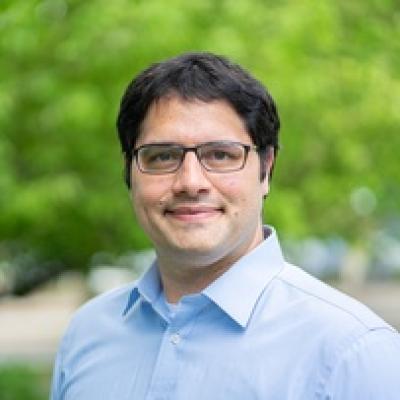
Hiroyuki Iseki is Associate Professor of Urban Studies and Planning at University of Maryland's School of Architecture, Planning and Preservation, and Research Affiliate with the National Center for Smart Growth. His work examines interactions between transportation, land use, equity, and environmental sustainability. Research focuses on: Transit-oriented development impacts on firm location Equity in public transit finance Climate policy implementation in urban planning Active transportation infrastructure analysis Recent publications analyze post-pandemic transit demand shifts, campus multimodal conflicts, and bicycle accessibility modeling. Methodological strengths include spatial econometrics, GIS analysis, and longitudinal data approaches. Work increasingly addresses climate adaptation in transportation planning and EV charging grid impacts. Research contributes to urban policy through WMATA collaborations and Japanese municipal climate planning studies. Current PhD program directorship advances urban planning analytics training.
John (Xuefeng) Jiang is an Eli Broad Endowed Professor in Accounting at Michigan State University's Broad College of Business, holding appointments in the Department of Accounting and Information Systems, with courtesy positions as Professor of Finance and Faculty Affiliate of the law school. He serves as President-Elect of the Financial Accounting and Reporting Section (FARS) of the American Accounting Association and is an associate editor at Management Science. Dr. Jiang received his education from Renmin University of China and the University of Georgia, and has passed the Uniform CPA exams in both China and the United States. His research spans interdisciplinary areas at the interface of accounting and finance, with particular focus on corporate governance, healthcare management, information technology systems, regulation & public policy, and corporate finance. His methodological approach employs natural experiments and novel data sources to address fundamental questions in financial reporting and disclosure. Dr. Jiang's scholarly work has evolved from traditional accounting topics like earnings management and credit ratings to contemporary issues in healthcare management and cybersecurity. His recent publications examine hospital pricing transparency, data breaches in healthcare systems, and the impact of media oversight on hospital behavior, demonstrating his ability to apply accounting principles to emerging real-world challenges. His research has been widely covered by major media outlets including the Wall Street Journal, New York Times, NPR, Forbes, and CBS News. American Accounting Association Distinguished Contribution to Accounting Literature Award (2017) Multiple Outstanding Teacher of the Year awards from graduating students Dr. Jiang has successfully mentored doctoral students who have secured tenure-track positions at the University of Florida, the National University of Singapore, and Miami University. He has served on the FARS steering board from 2018 to 2022 and is actively involved in the academic community as a past President of MSU's Chinese Faculty Club and faculty advisor for the Broad China Business Society.
Philip Thomas is an Associate Professor and Doctoral Program Director at the Manning College of Information and Computer Sciences, University of Massachusetts Amherst. He leads the Autonomous Learning Lab (ALL) and co-founded the Reinforcement Learning Conference (RLC). His research focuses on reinforcement learning, AI safety, and algorithms that ensure safety guarantees for high-risk applications like healthcare and digital marketing. Education: PhD in Computer Science, University of Massachusetts Amherst (2015) MSc in Computer Science, Case Western Reserve University (2009) BSc in Computer Science, Case Western Reserve University (2008) Research Interests: Thomas specializes in designing biologically plausible reinforcement learning algorithms and ensuring safety through frameworks like Qualia Optimization and Seldonian Algorithms . His work emphasizes off-policy evaluation, fairness guarantees, and ethical AI. Recent projects include developing benchmarks for medical decision-making (e.g., ICU-Sepsis) and analyzing adversarial robustness in speech denoising models. Articles Trends: His recent work spans high-confidence policy evaluation, fairness metrics, and algorithmic safety. Key themes include improving benchmarking practices, rethinking eligibility traces, and leveraging state abstraction for consistent off-policy evaluation. Awards & Grants: Armstrong Award Co-PI on Army Research Grant (IoBT), NSF grant (FMitF) Significant funding from Adobe Research Advising & Grants: Thomas has overseen grants totaling millions and mentored students in reinforcement learning and AI safety. His current focus includes exploring qualia optimization for doctoral applications (2026-2027). Labs & Teams: He directs the Autonomous Learning Lab and collaborates on interdisciplinary projects at the Center for Data Science, emphasizing ethical AI and safe machine learning systems.
Abigail Jacobs is an Assistant Professor at the University of Michigan , jointly appointed in the School of Information and the College of Literature, Science, and the Arts . She is also affiliated with the Center for Ethics, Society, and Computing (ESC) and the Michigan Institute for Data Science (MIDAS) . Education: PhD in Computer Science, University of Colorado Boulder (2015-2019) BA in Mathematical Methods in the Social Sciences and Mathematics, Northwestern University (2011-2015) Research Interests: Dr. Jacobs examines measurement and validity in machine learning , focusing on hidden assumptions in AI systems, governance structures in sociotechnical systems, and inequality in algorithmic design. Her work bridges AI, data science, and social science methodologies, emphasizing interdisciplinary collaboration. Recent Publications (2024-2025) explore generative AI evaluation, algorithmic transparency in government (e.g., US Census Bureau), motion capture data ethics, and sociotechnical frameworks for AI governance. Earlier works (2023) address fairness in ranking systems and racial categorization in algorithmic bias studies. Scientific Awards: Microsoft Research AI & Society Fellowship (2024) NSF Graduate Research Fellowship (during PhD) Advising & Grants: She co-advises Ph.D. students Amina Abdu and Meera Desai . Her research includes a Notre Dame-IBM Tech Ethics Lab grant on AI audits and collaborations with institutions like UC Berkeley, Microsoft Research, and the National Academies .
Jim Smith is a Professor in Interactive Artificial Intelligence at the University of the West of England (UWE), Bristol, affiliated with the School of Computing and Creative Technologies and the Department of Computer Science and Creative Technologies. He serves as Director of the Computer Science Research Centre and leads the AI@UWE theme. His research is supported by UKRI, Innovate UK, and partnerships with organizations including Health Data Research UK, Office for National Statistics, NHS Scotland, and DSTL. University: University of the West of England School: School of Computing and Creative Technologies Department: Department of Computer Science and Creative Technologies Role: Professor in Interactive Artificial Intelligence Leadership: Director, Computer Science Research Centre Research Interests : Jim Smith's work focuses on Interactive Artificial Intelligence, particularly at the intersection of AI and privacy preservation when using sensitive data for public good. His research includes statistical disclosure control, privacy leakage from AI models, evolutionary computation, machine learning, and systems that learn through human interaction or self-adaptation. He explores how AI can automate privacy checks in research outputs and assess vulnerabilities in trained models. Recent Publications : His recent work spans AI privacy in trusted research environments (e.g., SACRO, SDC-Reboot), dialogue act classification, human-robot interaction, and visualization of deep learning models. Themes include privacy-preserving AI, automated disclosure control, interactive machine learning, and neuromorphic computing. Machine Learning & Privacy Evolutionary Computation Interactive AI Systems Human-Computer Interaction Statistical Disclosure Control Federated Learning Security Scientific Awards : No specific awards are mentioned in the provided texts. Advising and Grants : He currently supervises PhD students on topics including spatio-temporal air quality modeling, federated learning privacy, and threat detection in mobile networks. He leads Innovate UK and UKRI-funded projects such as SACRO and SDC-Reboot, focusing on AI-driven solutions for data confidentiality in public sector research. Interactive Machine Learning for Claim Settlement (Innovate UK) SDC-Reboot (DARE UK/Health Data Research UK) Threat Identification in Mobile Networks (Ribbon Communications) Labs and Teams : He leads the AI@UWE initiative and the Computer Science Research Centre at UWE. His work involves collaboration through DARE UK and open-source development via the AI-SDC GitHub organization, which hosts tools from SACRO and GRAIMATTER projects.
Moncef Krarti is a Professor in the Department of Architectural Engineering at the University of Colorado Boulder, within the College of Engineering and Applied Science. His professional affiliations include roles as a Professional Engineer (PE) and LEED-AP. Krarti holds a Ph.D. (1987), M.Sc. (1985), and two Diplôme d'Ingénieur degrees (France, 1984/1982). His research focuses on evaluating energy efficiency technologies, optimizing building designs, and analyzing renewable energy systems. Key interests include HVAC controls, building retrofit strategies, and multi-benefit energy programs. Krarti has authored influential textbooks like Energy Audit for Building Systems and Energy Efficient Building Electrical Systems . Recent articles emphasize smart glazing systems, dynamic insulation, and geothermal heat pumps. His work addresses global challenges like urban heat islands and net-zero communities. Krarti has received prestigious awards including ASME Fellow (2015) and a 2023 Fulbright U.S. Scholarship. His research spans residential and commercial sectors, with case studies in Saudi Arabia, France, and the U.S.
Pelin Bolat is an Associate Professor in the Department of Fundamental Sciences at Istanbul Technical University (ITU), College of Maritime Studies. She is actively engaged in maritime cybersecurity, risk assessment, and maritime safety research. Her work is supported by multiple BAP and EU-funded projects, with ongoing research extending into 2025. Her research interests include cybersecurity in maritime navigation systems, dynamic positioning, port state control, and GHG emissions in the maritime sector. She applies advanced methodologies such as fuzzy FUCOM, CORAS framework, and association rule mining to analyze cyber and operational risks. Her recent publications (2023–2025) reflect a strong trend in maritime cybersecurity, focusing on ECDIS, RADAR, ransomware, and cyber hygiene. These works span high-impact journals in maritime engineering and technology, demonstrating interdisciplinary engagement with computer science, safety engineering, and policy analysis. She serves as a principal investigator on several key projects, including cyber risk assessment of bridge navigation equipment and system dynamic modeling of maritime GHG emission measures. She also mentors 15 theses in progress, indicating her active role in student supervision. Her collaborative network includes researchers like Gökhan Kayişoğlu and international partners. While no formal awards are listed, her leadership in EU and BAP projects underscores her academic prominence.
Dr. Nemanja Stanišić is a Full Professor at Singidunum University's Faculty of Business, with a distinguished academic career spanning over 15 years. He holds a Ph.D. in Corporate Finance from Singidunum University (2010), an MBA in Finance from Lincoln University (2007), and a Bachelor's in Accounting from the University of Belgrade (2005). His expertise focuses on Corporate Finance, Banking, Audit, and Applied Statistical Analysis. His research integrates quantitative methods with economic theory, addressing topics such as audit opinion prediction using AI, tourism destination competitiveness, financial distress dynamics, and air pollution health impacts. He co-authored textbooks including Contemporary Exchange and E-business (2010) and Financial Statement Analysis (2024), and served as Editor-in-Chief of The European Journal of Applied Economics . He teaches courses from Financial Accounting to Advanced Financial Engineering at undergraduate, master's, and Ph.D. levels. The 15 most recent publications highlight his interdisciplinary approach: 7 in Finance/Audit, 5 in Tourism/Hospitality, and 3 in Environmental Health. Key trends include applying machine learning to audit quality (2023), multilevel modeling for hospitality satisfaction (2015-2019), and air pollution mortality analysis (2016). His work appears in high-impact journals like Tourism Management (IF 10.125) and Environmental Health (IF 4.986). He held administrative roles including Rector (2020-2021) and Vice President of Singidunum University. He served as Vice Dean for Student Affairs (2010-2011) and participated in TEMPUS projects for educational reform. He mentors graduate students extensively, advising 100+ bachelor's, 57 master's, and 4 doctoral theses, including international candidates. His visiting professorship at Bangkok's ICO NIDA and teaching in Austria-Singidunum joint programs reflect global engagement. Professional development includes advanced training at Utrecht University (Bayesian Modeling, 2019), Stanford (Mentoring, 2010), and NYU (Valuation, 2012). He reviews for top journals like Annals of Tourism Research and Cornell Hospitality Quarterly , with 1017 Google Scholar citations and 349 Scopus citations. Current research involves the Science Fund of Serbia's TOURCOMSERBIA project evaluating tourism competitiveness models.
Eric Green is an Adjunct Assistant Professor in the Department of Civil Engineering at the University of Kentucky , affiliated with the Kentucky Transportation Center . He holds a Ph.D., M.S., and B.S. in Civil Engineering from the same institution. Ph.D., Department of Civil Engineering, University of Kentucky M.S., Department of Civil Engineering, University of Kentucky B.S., Department of Civil Engineering, University of Kentucky His research focuses on highway safety , spatial analysis (GIS) , crash modeling , and software development for traffic safety . Recent work includes text mining for secondary crash detection and GPS-based horizontal curve analysis. Publications highlight trends in crash analysis , Highway Safety Manual methodologies , and data integration for asset management . Key subfields include GIS applications, safety modeling, and automated regression techniques.
Yasmin Kafai is a Professor at the University of Pennsylvania's Graduate School of Education (GSE), Department of Learning Sciences. Her research focuses on computational thinking, AI education, and equitable K-12 computing pedagogy. She has pioneered work on integrating electronic textiles (e-textiles) and participatory design into STEM education to engage youth in critical perspectives of technology. Kafai's recent work emphasizes algorithmic literacy, youth-led auditing of machine learning systems, and bridging technical and societal dimensions of computing. Key research areas include: computational empowerment, AI ethics in education, youth agency in technology design, and culturally responsive computing curricula. Her projects often involve hands-on making activities, such as constructing generative AI models or debugging e-textile systems, to foster both technical and critical understandings. Publications from 2024-2025 highlight trends in youth engagement with generative AI, algorithm auditing frameworks, and the intersection of physical computing with growth mindset practices. She has also explored the role of storytelling methodologies in reimagining computing narratives for marginalized groups. Kafai collaborates extensively with teachers to develop scalable professional development programs addressing equity in CS education. Her work frequently appears in learning sciences and computing education journals, with a focus on practical classroom implementations and systemic educational reforms. Ongoing efforts include designing 'Hour of Code' activities that integrate critical AI literacy and fostering youth as co-designers of ethical technology solutions.
Cyrille Artho is an Associate Professor in the Division of Theoretical Computer Science at KTH Royal Institute of Technology, actively contributing to research in formal methods, software testing, and cybersecurity. His work spans model checking, smart contract security, and concurrent systems verification, with significant contributions to tools like Java Pathfinder and Modbat. PhD from ETH Zurich (2005) with dissertation on multi-threading fault detection Teaches Software Safety and Security, Software Engineering Fundamentals, and supervises degree projects His research focuses on developing formal techniques for safety-critical systems, particularly in blockchain security and distributed applications. Recent work emphasizes smart contract verification, anomaly detection in microservices, and trusted execution environments for secure cloud analytics. The 15 most recent publications reveal a strong trend toward blockchain security (6 articles), formal verification of distributed systems (5), and novel testing methodologies (4), with increasing integration of machine learning for vulnerability detection. As chair of the FTSCS workshop series and contributor to major conferences like ASE and ICST, Artho has significantly shaped the formal methods community. His leadership in organizing workshops demonstrates commitment to advancing safety-critical systems research. Principal investigator for C3.ai DTI Cyber Safety Cage for Networks project Develops Modbat framework for model-based API testing Active in Digital Futures research initiative at KTH
John Hale, Ph.D., is a Professor and Chair of Computer Science at The University of Tulsa's Tandy School of Computer Science, where he holds the Tandy Endowed Chair in Bioinformatics and Computational Biology. He is a founding member of the TU Institute of Bioinformatics and Computational Biology (IBCB) and a faculty research scholar in the Institute for Information Security (iSec). Education: Ph.D., Computer Science, The University of Tulsa (1997) M.S., Computer Science, The University of Tulsa (1992) B.S., Computer Science, The University of Tulsa (1990) Dr. Hale's research spans cybersecurity , bioinformatics , cyber-physical systems , and applied formal methods . His work focuses on neuroinformatics, cyber trust, attack modeling, secure software development, and information privacy. Recent publications highlight trends in large-scale graph analysis for cybersecurity, attack graph generation on high-performance computing clusters, and security frameworks for nuclear reactor control systems. His research also explores hybrid attack graph modeling, reflective deception strategies, and compliance methods for cyber-physical infrastructures. Scientific Awards: 2000 National Science Foundation CAREER Award Dr. Hale has advised numerous research projects and received funding from the U.S. Air Force, Army, NSF, NIH, DARPA, NSA, and NIJ. He has testified before Congress on cybersecurity and holds a patent for anti-piracy technology. His lab work includes developing cyber-physical testbeds and science DMZ security solutions.
Jared Eutsler is an Associate Professor of Accounting in the Department of Accounting at the G. Brint Ryan College of Business, University of North Texas, where he has been a faculty member since 2016. He holds multiple professional certifications including CPA, CMA, CFM, and CFE, and brings industry experience from Ernst & Young and the PCAOB to his academic role. His educational qualifications are: Ph.D. in Business Administration-Accounting from the University of Central Florida Masters in Accountancy and Information Systems from Arizona State University Bachelors in Accountancy from Grand Canyon University Dr. Eutsler specializes in auditing research with core interests in audit regulation, fraud detection mechanisms, and professional skepticism dynamics. His scholarly work examines behavioral aspects of auditor judgment, regulatory impacts on audit quality, and fraud vulnerabilities across contexts including education systems and public health reporting. He has published in premier outlets such as Accounting Organizations and Society and Auditing: A Journal of Practice and Theory, demonstrating methodological diversity through experimental, archival, and case-based approaches. Analysis of his 15 most recent publications reveals consistent focus on auditor-client interactions and regulatory compliance, with growing emphasis on real-world applications. Recent work extends into emerging domains like equity crowdfunding decision-making and politicization of financial reporting data, while maintaining strong connections to foundational auditing principles. His research increasingly employs behavioral experiments to model professional skepticism threats and mitigation strategies in complex audit scenarios. Dr. Eutsler has been recognized with the G. Brint Ryan College of Business Teaching Innovation Award for his excellence in classroom instruction. His professional service includes significant public-sector engagement through the Audit & Finance committee for the City of Corinth and the Board of Directors for Denton County Transportation Authority, where he applies academic expertise to governmental financial oversight. No information on student advising or research grants was provided in the source material. No research labs or specialized teams are mentioned in the available documentation.
Stephanie Wilson is a Professor of Human-Computer Interaction at City St George's, University of London, and Co-Director of the Centre for HCI Design (HCID). She co-founded the EPSRC Centre for Doctoral Training in Diversity in Data Visualization (DIVERSE CDT) and contributes to the Institute for Creativity and AI. Her research emphasizes inclusive interaction design, data visualization, co-design, and innovative digital technologies for healthcare, particularly for people with aphasia. She has supervised 17 PhD students to completion and led significant projects like EVA Park and INCA, which explore accessible virtual worlds and digital tools for aphasia. Her work has earned multiple awards, including ACM SIGCHI Honorable Mention Awards and the Tech4Good Accessibility Award Finalist. Stephanie has secured over £10 million in research funding, including grants from EPSRC and Innovate UK, and actively contributes to academic governance through roles like Chair of the Research Degrees Committee and establishing the Women++ group. She advocates for participatory design and ethical research practices in healthcare technology.
Cindy Steward is a Clinical Assistant Professor of Accountancy at the University of Illinois at Urbana-Champaign's Gies College of Business. She holds dual roles in academia and industry, having previously served as Director of Global Reporting at Archer Daniels Midland Company (2013-2019) and held leadership positions at Illinois Power Company (1980-2000). She earned a B.S. in Accountancy (Highest Honors) from the University of Illinois in 1980 and an MBA from Illinois State University in 2006. Her teaching focuses on advanced financial reporting standards, IFRS, and derivatives accounting. Current courses include ACCY 410 (Advanced Financial Reporting) and ACCY 510 (Financial Reporting Standards), emphasizing critical thinking in accounting policy selection and transaction disclosure. Her professional presentations address challenges in implementing new accounting standards and improving financial transparency. She received the 2019-20 Dean’s Impact Award for her contributions to the Gies College of Business. Her career includes extensive experience in regulatory reporting, compliance, and strategic accounting projects spanning over three decades.