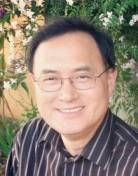
Jim Kosmach is a Clinical Associate Professor in the Department of Electrical and Computer Engineering at the University of Illinois at Chicago. He serves as Director of Undergraduate Studies and focuses on signal processing, communications, and related disciplines. Education : Ph.D. (1998), M.S. (1990) in Electrical Engineering from Georgia Institute of Technology; B.S. in Electrical Engineering from Louisiana Tech University (1988). His research spans signal processing, communications, and multimedia systems, with emphasis on video compression, computer vision, and error-correcting codes. He has contributed to algorithms for Reed-Solomon decoding, motion compensation, and mobile messaging systems. Kosmach’s publications and patents reflect his work on video/audio processing, soft-decision decoding, and cryptographic protection in communication systems. His research trends highlight advancements in mobile technology and data transmission reliability. Kosmach is an IEEE member and holds multiple patents, including systems for video compression, data decoding, and cryptographic protection in communication systems.
Sio Kei Im is an active researcher with a focus on computer science, machine learning, and human-computer interaction. His recent work spans multiple domains including image processing, quantum computing, and virtual reality. Publications address advanced data augmentation (LogicMix), multi-modal quantum watermarking (MMQW), and efficient neural decoding algorithms (TRHyper). Research interests include time series optimization, dialogue summarization, and haptics in VR environments. Collaborations with experts in linguistics, electrical engineering, and software development indicate interdisciplinary expertise. Key contributions involve adaptive algorithms for AI model protection, speaker recognition systems, and real-time 3D rendering techniques.
Juan-Manuel Torres Moreno is an Associate Professor (Maître de Conférences HDR HC) at the University of Avignon (UAPV), where he conducts research in Natural Language Processing at the Laboratoire Informatique d'Avignon (LIA). His academic position includes the HDR (Habilitation à Diriger des Recherches), a post-doctoral qualification in France that enables supervision of PhD students. His primary research interests focus on Natural Language Processing, with particular emphasis on automatic text summarization, sentence generation, and phrase compression algorithms. His work spans both theoretical and applied aspects of NLP, incorporating machine learning techniques and artificial intelligence approaches. His research has significant applications in multilingual processing, text mining, and information extraction systems. Torres Moreno's publication record demonstrates a consistent trajectory in advancing text summarization techniques, with recent work exploring cross-lingual approaches, multimedia content processing, and deep learning applications. His research often bridges the gap between theoretical linguistic concepts and practical implementation, with publications spanning from fundamental NLP algorithms to applied systems for video summarization, speech processing, and multilingual document analysis. He actively collaborates with researchers across multiple institutions including École Polytechnique de Montréal (with 50 joint publications), Laboratoire Informatique d'Avignon (83 publications), and Universidad Nacional Autónoma de México. His work appears in reputable journals such as Computer Speech and Language, Data and Knowledge Engineering, and Pattern Recognition Letters. Within the Laboratoire Informatique d'Avignon, Torres Moreno contributes to the Language Processing research theme, working with colleagues on projects related to multilingual information access, opinion mining, and text analysis. His research group has participated in several evaluation campaigns including DEFT (Défi Fouille de Textes) challenges, focusing on information retrieval and sentiment analysis tasks.
Dr. Masato Inoue is a Professor at the Faculty of Science and Engineering , School of Advanced Science and Engineering at Waseda University. He holds a Doctor of Medical Science from Kyoto University. Education: 2003 - Kyoto University Graduate School of Medicine 2003 - Kyoto University His research spans multiple disciplines at the intersection of Medical Informatics , Bioinformatics , and Statistical Mechanics . Key areas include: Medical Imaging : Developing Bayesian super-resolution algorithms and Prior Ensemble Learning for improved MRI reconstruction Voice Analysis : Creating innovative voice quality quantification systems for clinical diagnostics Genetic Analysis : Advancing haplotype inference methods and gene network modeling Signal Processing : Applying statistical mechanics to diverse problems from coding theory to neuroscience His recent publications (2021-2012) demonstrate consistent contributions to medical imaging algorithms , voice disorder classification , and genetic data analysis . Notable collaborations include work with Kyoto University researchers , Swedish medical institutions , and cross-disciplinary teams in bioengineering.
Peter Lucas Hulen is a Professor in the Music Department at Wabash College , where he has taught for nearly 25 years. His work bridges classical acoustic composition with experimental computer-generated electronic music, informed by his classical training and later shift toward digital techniques. Research interests include: Electronic music history Music technology pedagogy Digital synthesis methods (FM, subtractive, granular) Integration of acoustic and electronic sound Algorithmic composition Interdisciplinary applications His compositions explore: Microtonal scales using superparticular ratios Wireless performance interfaces Choral liturgy adaptation Cultural sound symbolism Speaker array design Temporal structure manipulation Recent works combine academic rigor with technical innovation: 2017: Homage and Refuge , Wobbly 2015: Organum IV 2014: Magnificat , Sitting 328b 2013: Les substances botaniques , Primitive 2012: Lamentationes Jeremiae I He developed a systematic electronic music curriculum including: History and Literature Computer Programming (Max/MSP) Performance Ensembles Theory and Composition
Karlheinz Brandenburg is a Professor at Technische Universität Ilmenau, holding the Chair of Electronic Media Technology since 2000. He serves as Director of the Fraunhofer Institute for Digital Media Technology IDMT (2004–present) and the Institute for Media and Mobile Communications (2012–present). His work focuses on digital audio coding, perceptual measurement techniques, and psychoacoustics, revolutionizing audio compression through the development of MP3 and AAC standards. Born in Erlangen (1954) Dipl.-Ing. in Electrical Engineering (1980) and Dipl.-Math. (1982), both from Friedrich-Alexander University Erlangen-Nuremberg Ph.D. in Electrical Engineering (1989) from the same university His research spans digital media formats, wave field synthesis, and signal analysis, with applications in audio/video compression. He has received 18+ major awards, including: Honorary Ph.D. degrees from Valencia, Lüneburg, and Koblenz-Landau Induction into Internet Hall of Fame (2014) Election to acatech (2014) Fellowships from IEEE (2006) and AES (1994)
Olivia Wiles is a Senior Researcher at DeepMind, focusing on adversarial robustness, distribution shift, and computer vision. She earned her DPhil from the University of Oxford under Andrew Zisserman in the Visual Geometry Group (VGG), following a Computer Science degree at the University of Cambridge. Her work spans view synthesis, self-supervised learning, and robust model design. Education : DPhil (Oxford), Computer Science (Cambridge) Key Collaborators : Georgia Gkioxari, Justin Johnson, Richard Szeliski (FAIR), Andrew Zisserman Current Role : Senior Researcher at DeepMind Her research emphasizes adversarial robustness , 3D reconstruction , and self-supervised learning , with notable contributions to view synthesis (SynSin), image matching (Co-Attention), and robustness under distribution shifts. Publications at CVPR, NeurIPS, and ECCV highlight her work in generative models, physical prediction, and multi-view geometry. Scientific Awards : Best Poster, BMVC 2017 Best Paper, NeurIPS ML Safety Workshop 2022 Outstanding Reviewer, ECCV 2020, ICCV 2020/2021 Olivia contributes to academia via community service, including roles as Area Chair (CVPR, ICCV) and reviewer for top-tier conferences (NeurIPS, SIGGRAPH) and journals (PAMI). Her Google Scholar profile reveals ongoing work in unsupervised physics modeling , GANs , and intuitive physics from visual data.
Hamilton Altstatt serves as the Audio Program Director and Assistant Professor of Practice in the Department of Performing Arts at Clemson University's College of Arts and Humanities. He holds a Bachelor of Science in Mechanical Engineering from Drexel University and a guitar performance degree from the Musician’s Institute in Hollywood. His career spans over 80 interactive titles for companies like Disney Interactive, Knowledge Adventure, and Idealab. Notable projects include sound credits for 'SpongeBob SquarePants,' 'Dinosaur Adventure,' and Steven Spielberg’s 'MovieMaker.' He contributes to animated TV series like 'The Sitting Ducks' and 'Jimmy Neutron,' with music featured globally in media. Prof. Altstatt specializes in the intersection of entertainment and technology, with expertise in audio/video compression, webcasting, and streaming media. He frequently speaks at the annual Streaming Media Conference and operates Greatwaves Digital Media, Inc., offering recording and production services. His work encompasses music composition, sound design, and audio engineering for film, TV, and commercials. Clients include Discovery Channel, Warner Bros., and ABC.
Michael Neri is a Researcher in Audio Signal Processing at Tampere University and a Ph.D. student in Applied Electronics at Roma Tre University. His primary affiliation is with the Department of Signal Processing at Tampere University. He holds a B.Sc. in Information Engineering from the University of Padua (2019) and an M.Sc. in ICT for Internet & Multimedia from the University of Padova (2021). He was a visiting PhD student at Tampere University of Technology in 2023. His research focuses on Audio Processing, Computer Vision, and Deep Learning, with applications in safety and security. Key projects include RAILGAP (EU Horizon 2020), which uses GNSS for rail positioning, INSECTT (ECSEL EU Project) for secure IoT-AI systems, and ISEEYOO (University of Padova Grant) for anomaly detection in Cyber-Physical Systems. He has also contributed to the ESA-funded VOLIERA project on multi-sensor railway positioning. Neri's work spans environmental sound classification, speaker localization, and AI-driven multimedia quality assessments. His research is supported by grants from the European Union and ESA programs. He actively collaborates on projects addressing occupational safety through VR integration and anomaly detection in audio signals. Contact him via michael.neri@tuni.fi or his professional profiles on ResearchGate and GitLab .
Associate Professor Wong Kok Sheik is the Deputy Head (Research) at the School of Information Technology, Monash University Malaysia. He holds a Doctor of Engineering from Shinshu University (Japan) and advanced degrees in Computer Science and Mathematics from Utah State University (USA). His research focuses on multimedia signal processing, cybersecurity, and digital health, with contributions to data hiding, encryption, and smart grid security. He leads a EU-funded WAge project on post-pandemic workplace health interventions. Education: PhD in Engineering, Shinshu University, Japan (2009) Masters in Computer Science & Mathematics, Utah State University, USA (2005-2004) Bachelor of Science, Utah State University, USA (2002) Professional Roles: Associate Editor, IEEE Signal Processing Letters Member, IEEE Signal Processing Society’s IFS Technical Committee Board Member, APSIPA Multimedia Security and Forensics (MSF) Committee His research interests span multimedia forensics, encrypted domain processing, and cybersecurity frameworks. Notable projects include recovery of missing coefficients in compression standards and HDR imaging enhancement. Recent work integrates digital health, addressing workplace mental/physical health in post-pandemic environments. Publications reflect expertise in watermarking, encryption, and biometric security. Key contributions include encryption-resistant data embedding and secure smart grid analytics. Awards include IEEE CES Service Awards (2015, 2016) and Best Paper recognitions. He supervises over 20 PhD/MSc students, focusing on topics like biometric recognition, data hiding, and anomaly detection. Grants include a €2M EU Horizon 2020 project (IDENTITY) and a RM146k smart grid initiative. His teaching emphasizes foundational IT research methods and theoretical computer science.
Sidi Lu is an Assistant Professor in the Department of Computer Science at William & Mary. His research focuses on edge computing, autonomous vehicles, and applied AI, emphasizing reliable and efficient computing systems for transportation and IoT. He joined William & Mary in August 2023 after completing his PhD at Wayne State University, where he specialized in vehicle computing and edge intelligence. Education: PhD in Computer Science, Wayne State University (2023) Exchange Undergrad in Electrical and Computer Engineering, University of California, Riverside B.Eng in Electronic Information Engineering, Xidian University Research Interests: Sidi explores edge computing frameworks for connected vehicles, teleoperation in autonomous systems, and AI-driven solutions for real-world challenges. His work bridges theory and practice, addressing scalability, security, and efficiency in vehicle-edge-cloud ecosystems. Awards & Recognition: Class of 2024 Influencer Recognition (William & Mary) NSF CRII Award (2023) Ralph H. Kummler Award (2022) Dr. Michael E. Conrad Graduate Research Award (2021) Grants & Services: Sidi leads NSF-funded projects and serves on technical committees for top conferences like ACM/IEEE SEC and IEEE MOST. He mentors students in research and organizes events at Grace Hopper Celebrations. Labs & Teams: Director of the Vehicle Computing Lab at William & Mary, focusing on advancing autonomous systems and edge-enabled applications.
Jürgen Wassner is a Professor of Edge Computing and Co-Head of the Competence Center for Intelligent Sensors and Networks at the Lucerne School of Engineering and Architecture (HSLU T&A). He holds a master's degree from Technical University of Dresden and a PhD from ETH Zurich. His career spans industry roles in Silicon Valley Group Inc. and telecommunication R&D before joining academia in 2007. His research focuses on embedded systems, AI at the edge, FPGA/VHDL design, real-time systems, and powerline communication . He leads projects such as 'Visual-Servoing Testbed with AI-Hardware in the Loop' and 'Low-Cost High-Performance Intelligent Camera for Space Debris Mitigation,' collaborating with companies like Diehl Aerospace. Recent publications emphasize wire fault detection using powerline communication, AI-based odor classification systems, and hardware acceleration for CNNs. His work bridges theoretical research with practical applications in avionics, rail freight, and space debris mitigation. Wassner advises Master of Science in Engineering students and has been recognized for his media engagement including a feature in the Luzerner Zeitung. He teaches Digital Design (FPGA, VHDL) and Digital Signal Processing , emphasizing hands-on implementation of cutting-edge systems.
Dr. Ammar Belatreche is a Senior Lecturer in Computer Science and Programme Leader for the MSc Advanced Computer Science at Northumbria University's Department of Computer and Information Sciences. He joined Northumbria University in May 2016 after previous positions as a Research Associate and Lecturer at Ulster University. He is an active member of the Computational Intelligence and Visual Computing (CIVC) research group. Dr. Belatreche earned his PhD in Computer Science from Ulster University in 2007. His professional qualifications include: Member of the Association of Computing Machinery (ACM) since 2012 Fellow of the Higher Education Academy (FHEA) since 2010 Member of the Institute of Electrical & Electronic Engineers (IEEE) since 2009 His research focuses on bio-inspired intelligent systems, machine learning, spiking neural networks, face detection and recognition, structured and unstructured data analytics, capital markets engineering, and image processing. Dr. Belatreche has extensive experience across academic and R&D in these areas, leading numerous research and consultancy projects. His recent work demonstrates a strong emphasis on neuromorphic computing, particularly spiking neural networks and their applications in computer vision, financial analysis, and biometrics. Analysis of his recent publications shows a clear trend toward advancing spiking neural network architectures, with particular focus on quantization, pruning, and binary implementations to improve efficiency. His research spans multiple domains including computer vision (face recognition, palm-vein recognition), financial technology (stock price manipulation detection), and neuromorphic engineering. Many of his recent papers (2024-2025) appear in top-tier conferences like ICLR and journals like IEEE Transactions on Neural Networks and Learning Systems. Dr. Belatreche has received professional recognition including: Fellowship with the Higher Education Academy (FHEA) Role as Associate Editor for the journal Neurocomputing He has successfully supervised or co-supervised 8 PhD students to completion and serves as a Program Committee Member and reviewer for numerous international conferences and journals. As Programme Leader for the MSc Advanced Computer Science, he plays a significant role in shaping postgraduate education in computer science at Northumbria University. His research group work bridges theoretical advances in neural computation with practical applications across multiple domains. Based in CIS 305 at Northumbria University's Newcastle campus, Dr. Belatreche continues to advance research in neuromorphic computing and its applications while contributing to academic leadership through his programme leadership role.
Antonio Servetti is an Assistant Professor at the Department of Control and Computer Engineering (DAUIN) at Politecnico di Torino, Italy, where he has been a faculty member since 2007. He is affiliated with the Internet Media Group (IMG) and the Interdepartmental Center PIC4SeR for Service Robotics. His work bridges multimedia processing, network communications, and web technologies. MS in Computer Engineering, Politecnico di Torino, 1999 PhD in Computer Engineering, Politecnico di Torino, 2004 Visiting Scholar, University of California, Santa Barbara, 2003 His research focuses on speech and audio processing , multimedia communications over wired and wireless networks , and real-time web-based multimedia applications . Key interests include WebRTC, Web Audio, HTTP adaptive streaming, and perceptual quality assessment. He has contributed to the development of secure multimedia transmission techniques, including selective encryption of speech and audio. The recent publications highlight a strong trend toward AI-driven modeling of subjective quality in multimedia, especially through deep learning for image and video quality prediction, understanding observer behavior, and remote music performance systems. His work often involves collaboration with researchers in the VQEG JEG-Hybrid group and the NEXA Center. Best Paper Award, Web Audio Conference 2021 Dr. Servetti has led and contributed to several research projects, including BRIC-2024 (acoustics in educational settings), PNRR HiFiReM (remote music education), and INAR (artistic research). He teaches courses such as 'Web Applications', 'Machine Learning for Vision and Multimedia', and 'Digital Audio Processing' across various engineering programs. He is also involved in educational governance as a member of academic councils for multiple degree programs. He is a core member of the Internet Media Group (IMG) , which focuses on multimedia processing and transmission, and contributes to the VQEG JEG-Hybrid working group on video quality assessment, where he develops frameworks for reproducible research and modeling of human perception.
Dr. Chang Y Choo is a Professor of Electrical Engineering at San José State University, where he also serves as Director of the AI/ML FPGA/DSP Systems Laboratory. His academic career spans over three decades, with previous positions at Worcester Polytechnic Institute and industry experience at Altera Corp. (now Intel). Dr. Choo maintains an active research program focusing on hardware acceleration for AI and signal processing applications, with particular emphasis on FPGA-based implementations for real-world systems. Dr. Choo's educational background includes: Ph.D. in Computer and Systems Engineering, Rensselaer Polytechnic Institute (1986) M.S. in Operations Research and Statistics, Rensselaer Polytechnic Institute (1982) B.S./M.S. in Engineering, Seoul National University, Korea Dr. Choo's research interests center on the intersection of hardware design and artificial intelligence. His work focuses on implementing computer vision, deep learning, and digital signal processing algorithms on specialized hardware platforms including FPGAs, GPUs, and custom ASICs. Current projects include developing real-time illumination/view-independent object recognition systems for autonomous vehicles, wideband acoustic echo cancellation for wearable technology, and FPGA-based accelerators for medical imaging applications. His research bridges theoretical algorithm development with practical hardware implementation constraints. Analysis of Dr. Choo's recent publications reveals a clear trajectory toward increasingly sophisticated hardware-accelerated AI systems. His work has evolved from foundational research in digital signal processing and image compression to cutting-edge applications of deep learning on specialized hardware. Recent publications demonstrate expertise in implementing CNN architectures on FPGAs, developing metabolic syndrome prediction models, and creating food object detection systems using transformer models. This progression reflects the broader field's shift toward hardware-aware AI development. Dr. Choo's significant scientific contributions include multiple patents that have advanced the state of the art in several domains: U.S. Patent No. 9,025,763 (2015): 'Apparatus and Method for cancelling wideband acoustic echo' U.S. Patent Nos. 7,058,675 (2006) and 7,124,161 (2006): 'Apparatus and method for implementing efficient arithmetic circuits in programmable logic devices' U.S. Patent Nos. 5,943,096 (1999) and 6,621,864 (2003): 'Motion vector based frame insertion process' U.S. Patent Nos. 5,832,131 (1998) and 5,991,455 (1999): 'Hashing-based vector quantization' U.S. Patent No. 5,587,710 (1997): 'Syntax based arithmetic coder and decoder' Throughout his career, Dr. Choo has been actively involved in both academic and industry collaborations. He has served as a technical consultant for numerous Silicon Valley companies including National Semiconductor (now Texas Instruments), Philips Semiconductor, Skybox Imaging (acquired by Google), Novariant (now AgJunction), and Ricoh Innovations. His industry experience informs his teaching approach, which emphasizes practical implementation considerations alongside theoretical foundations. Dr. Choo has also served as an expert witness in intellectual property court cases involving audio and video compression algorithms and FPGA hardware. Dr. Choo directs the FPGA/DSP AI/DL Laboratory at San José State University, which focuses on developing hardware-accelerated solutions for real-time AI applications. The lab maintains strong connections with Silicon Valley technology companies and provides students with hands-on experience in cutting-edge hardware design methodologies. Current research directions include autonomous vehicle navigation systems, medical imaging applications, and edge AI deployment strategies.