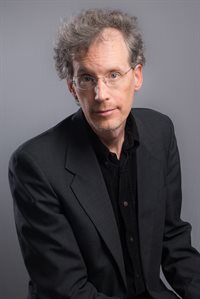
Steven Fenton is a Senior Lecturer and Subject Area Leader in Engineering at the Department of Engineering & Technology, School of Computing and Engineering, University of Huddersfield. He holds a 1st Class Honours degree in Electronic & Information Engineering from the University of Huddersfield and has extensive industry experience in audio engineering, DSP, and embedded systems design. Current research focuses on low power systems, remote health monitoring, audio signal processing, and immersive audio technology. Active member of the Audio Engineering Society and Centre for Audio and Psychoacoustic Engineering. His work spans audio quality measurement , dynamic range optimization , and assistive technologies for the visually impaired. Recent publications highlight innovations in immersive audio mixing and ultra-low energy distributed monitoring systems. Scientific contributions include a Fellow of the Higher Education Academy and an h-index of 67. Available for PhD supervision in engineering and audio technology domains.
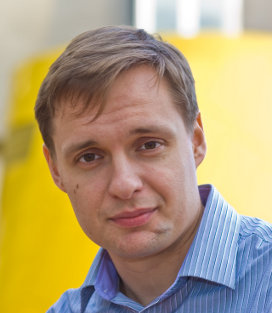
Florian Klein is a Postdoctoral Researcher and Research Assistant at the Electronic Media Technology Group within the Department of Electrical Engineering and Information Technology at Technische Universität Ilmenau. He holds a Dr.-Ing. degree from 2021 and conducts research in spatial audio, binaural synthesis, and auditory perception. Research Interests: His work focuses on psychoacoustics, auditory adaptation, room acoustics, and augmented reality audio. He investigates how listeners perceive and adapt to spatial audio cues, particularly in binaural reproduction systems. His research includes perceptual experiments on externalization, localization, auditory memory, and the impact of room acoustics on virtual auditory experiences. The analysis of his recent publications reveals a strong trend toward understanding perceptual thresholds and memory in spatial audio contexts, with increasing focus on augmented and virtual reality applications. Key themes include just-noticeable differences in reverberation, robust room acoustics estimation, and the creation of open datasets for spatial audio research. Scientific Contributions: Developed methodologies for robust reverberation time estimation in non-ideal conditions. Conducted perceptual studies on auditory memory and room identification. Created and published open datasets (R3VIVAL, SRIR collections) for spatial audio research. Explored perceptual matching of room acoustics for auditory augmented reality. Advising and Grants: While no specific students or grants are mentioned in the provided text, his active publication record and leadership in dataset creation suggest involvement in research projects and potential mentoring of junior researchers. His work is likely supported by institutional or project-based funding related to audio engineering and perception research. Labs and Teams: He is a core member of the Electronic Media Technology Group at TU Ilmenau, working on advanced audio systems and perceptual evaluation. His research utilizes specialized facilities for measuring spatial room impulse responses, including mobile robotic platforms and variable acoustics laboratories.
Professor Bret Battey is a Professor of Audiovisual Composition at De Montfort University, affiliated with the Faculty of Computing, Engineering and Media and the Leicester Media School. He is a core member of the Music Technology and Innovation Research Centre (MTIRC) and the Research Institute of Arts, Design and Performance (ADP). With a background spanning music composition, computer science, and digital arts, he integrates technical and artistic expertise in his work. His research interests include algorithmic music, digital signal processing, audiovisual synthesis, complex systems, feedback mechanisms, chaos theory, and the modeling of Indian classical music. He explores the expressive potential of custom-programmed algorithms to create immersive sound and image compositions. Battey's creative works, such as the Estuaries series and Mercurius , have received international acclaim, earning awards from Prix Ars Electronica, Bourges, Punto y Raya, ICMC, and others. His recent publications and installations focus on generative systems, audiovisual counterpoint, and the interplay between time, space, and perception in multimedia art. Award of Distinction: Video Music, Prix CIME 2023 Best Regional Music (Europe), ICMC 2022 MacDowell Colony Norton Stevens Fellow, 2003 U.S. Fulbright Research Fellowship to India, 2001-2002 Fellow of the Higher Education Academy He has supervised numerous postgraduate research students in areas including audiovisual composition, Indian classical music, and complex systems. He has led internally funded projects such as Haptic Control of Multistate Generative Music Systems and received research leave support. His consultancy includes mentoring for pedagogical software in Indian classical music with NESTA. He is actively involved in the academic community as a reviewer for Computer Music Journal and Organised Sound , and as a selection panel member for international competitions. Bret Battey leads and contributes to research groups including MTIRC and ADP, where he fosters interdisciplinary collaboration between music, technology, and visual arts. His work often involves custom software development, live performance systems, and installations that explore the boundaries of sensory experience and computational creativity.
Jyoti Joshi Dhall is a Senior Lecturer in the Department of Human Centred Computing at Monash University, where she conducts interdisciplinary research at the intersection of artificial intelligence, behavioral analytics, and digital health. Her work contributes to UN Sustainable Development Goals, particularly in health and well-being. Her research focuses on affective computing , multimodal behavior analytics , and human-centered AI , with applications in mental and physical health monitoring. She employs advanced machine learning techniques to analyze behavioral signals such as facial expressions, speech, and body movements for detecting conditions like pain, apathy, and depression. Recent publications show a strong trend in applying deep learning models—such as LSTM-DNN and anomaly detection networks—to clinical and assistive technologies. Her work appears in top-tier venues including IEEE conferences and the ACM Handbook series, reflecting impactful contributions to multimodal user interfaces and emotion-aware systems. She has collaborated with international researchers and her work has been cited in Scopus and referenced in patents. Although no specific awards are listed, her research has attracted attention from news outlets and academic platforms like Mendeley. Jyoti Joshi Dhall advises students and likely supervises research projects in human-centered computing, though specific advisees are not listed. Her research is supported by institutional and possibly external grants, given the scope and publication record. She is part of a broader research network focused on AI for healthcare, contributing to both theoretical and applied advancements in the field. She is affiliated with a research team or lab working on multimodal interaction and affective computing, though the specific lab name is not mentioned in the provided text.
Kalin Stefanov is an ARC DECRA Fellow and Research Fellow in the Department of Human Centred Computing at Monash University. He holds a PhD in Computer Science from KTH Royal Institute of Technology and an MSc in Artificial Intelligence from the University of Amsterdam. His research focuses on Affective Computing, exploring systems that recognize and simulate human affects, with applications in social robotics, neurodiverse communication, and multimodal interaction. He has led projects on sign language translation and large-scale deepfake detection datasets. Key collaborations include work at the University of Southern California’s Institute for Creative Technologies and National Institute of Informatics. He has received accolades such as the Discovery Early Career Researcher Award (2023) and Best Paper Awards (2019, 2024). His research also contributes to UN SDG 4 (Quality Education) through accessible technologies for neurodiverse groups and visually impaired learners. Projects include the 'Active Generation of fingerspelling in Australian Sign Language' and 'Research Towards automated Australian Sign Language translation,' funded by the Australian Research Council. Stefanov’s work spans AI ethics, multimodal data platforms (e.g., OpenSense), and systems for social signal processing in human-robot interaction.
Aleksander Väljamäe is an Associate Professor in Physiological Computing at Tallinn University's School of Digital Technologies (HCI group) and a Grant Consultant at Tartu University. His research focuses on multisensory perception, physiological computing, and neurofeedback applications in brain disorders, BCI, and neurocinema. He has held postdoctoral roles at institutions like Pompeu Fabra University and Graz University, and was a Marie Skłodowska-Curie Fellow (2013–2015). He actively participates in EU projects (e.g., Future BNCI) and art-science collaborations, such as the Multimodal Brain Orchestra. His administrative roles include chairing Tallinn University’s internal research committee and advising for the European Commission and Italian Ministry of Health. Education: PhD in Applied Acoustics (Chalmers University, 2007) M.Sc. in Digital Communication (Chalmers, 2003) BSc in Radio Engineering (Tallinn University of Technology, 2000) Research Interests: Developing novel methods for diagnosing brain disorders (e.g., depression, migraine) using audiovisual media and BCI. Explores wearable technologies, affective computing, and the psychophysiology of emotion. Recent projects include SoniWeight Shoes (2024) and Magic Lining (2019), which investigate body-perception modulation via wearable devices. Grants & Awards: Marie Skłodowska-Curie International Outgoing Fellowship (2013–2015). Active in EU-funded initiatives like POEMS and BrainAble. Labs/Teams: Leads the HCI group at Tallinn University, collaborating with institutions globally. Co-developed the eXperience Induction Machine for mixed-reality interaction studies.
Luis Torres Urgell is a Professor at the Department of Signal Theory and Communications, Universitat Politècnica de Catalunya (UPC), affiliated with the Higher Technical School of Telecommunication Engineering of Barcelona. His research focuses on multimedia systems, image processing, and signal processing with notable contributions to video compression, audio-visual indexing, and computer vision applications. He has been actively involved in numerous competitive research projects, including initiatives on genomic data compression and multimedia security. His work spans over 410 academic activities, including over 140 conference presentations and 78 scientific documents. Notable contributions include advancements in face recognition algorithms, distributed video coding, and the development of tools for automated video summarization in sports content. Torres has also made significant strides in education through project-based learning in telecommunications and the integration of virtual ethnography in social web platforms. He has been recognized as a Senior Member of IEEE and received institutional recognition from UPC for his research contributions. His research has been supported by grants from the Spanish and Catalan governments, including projects under the RIS3CAT strategy and the National Plan for Scientific Research.
Kimiko Ryokai is an Assistant Professor at the UC Berkeley School of Information and the Berkeley Center for New Media. Her research focuses on tangible embodied computing and human-computer interaction (HCI), particularly in educational technology, mental health, and creativity support systems. She has been funded by NSF, Google, and Nokia, and her work has been published in top venues like CHI, SIGGRAPH, and CSCL. Ryokai holds MS and PhD degrees from MIT’s Media Arts & Sciences program and previously worked at IDEO as an interaction designer. Education: M.S. (1999), Ph.D. (2005) in Media Arts & Sciences, MIT Grants: Over $600,000 in funding from NSF, Google, and Nokia for projects like mobile AR learning tools and laughter analysis Research Interests Ryokai investigates how physical and digital systems can enhance learning, creativity, and social interaction. Key projects include: MathMarks : AR tool for math education through environmental exploration GreenHat : Exploring nature via expert-guided AR EnergyBugs : Wearables for children to learn energy harvesting Recent Contributions Recent work emphasizes embodied learning (e.g., Balance Board Math), affective computing (laughter visualization), and tangible interaction design. Her research bridges theory and practice, often involving interdisciplinary teams across education, engineering, and art. Awards & Recognition Best Paper Honorable Mention (ACM CHI 2013, 2011) IDSA Gold Award for Industrial Design (2005) Distinguished Mentor Award (UC Berkeley 2010) Teaching & Mentorship Ryokai teaches courses like Design of Tangible User Interfaces and has advised over 30 graduate students. Notable advisees include Laura Devendorf (PhD 2014) and Daniela Rosner (PhD 2012, now at University of Washington).
Yury Polyanskiy is a Professor of Electrical Engineering and Computer Science at the Massachusetts Institute of Technology (MIT), affiliated with the Laboratory for Information and Decision Systems (LIDS), the Institute for Data, Systems, and Society (IDSS), and the MIT Statistics and Data Science Center. He holds a Ph.D. from Princeton University (2010) and an M.S. from the Moscow Institute of Physics and Technology (2005). His research focuses on information theory, machine learning, statistical inference, error-correcting codes, and wireless communication. He has contributed to fundamental limits of communication systems, finite-blocklength analysis, and applications of information theory to learning and signal processing. Notable awards include the 2020 IEEE Information Theory Society James Massey Award, the 2013 NSF CAREER Award, and the 2011 IEEE Information Theory Society Paper Award. His work spans theoretical advancements and practical applications, including the development of the SPECTRE toolbox for short-packet communication. He is also co-authoring a textbook on information theory. Recent research highlights include studies on quantization techniques for machine learning (e.g., NestQuant), transformer-based empirical Bayes methods, and novel approaches to massive random access in wireless networks (e.g., unsourced multiple access). His contributions bridge information theory and modern data science, addressing challenges in high-dimensional data representation, neural network dynamics, and efficient communication architectures.
Huacheng Zeng is an Associate Professor in the Department of Computer Science and Engineering (CSE) at Michigan State University (MSU), part of the College of Engineering. His research focuses on computer networking, wireless communication systems, and sensing technologies with applications in IoT security, signal processing, and machine learning. He received his Ph.D. in Computer Engineering from Virginia Tech in 2015 and was awarded the NSF CAREER Award in 2019. Dr. Zeng’s work spans innovative areas such as radar-based human motion tracking (e.g., RadEye), acoustic emotion decoding, and mmWave network optimization. His recent publications address challenges in device localization, vehicular communication, and secure RFID systems. His research often integrates machine learning techniques with traditional signal processing to enhance system performance and security. Education: Ph.D., Computer Engineering, Virginia Tech (2015) Awards: NSF CAREER Award (2019) His contributions to interference management, jamming-resilient communications, and distributed inference frameworks have advanced both theoretical and applied aspects of wireless networks. While no specific grants or advising details are listed, his extensive publication record reflects active collaboration in cutting-edge research domains.
Graham Wakefield is an Associate Professor in the Department of Computational Arts at York University's School of the Arts, Media, Performance and Design (AMPD). He is also a Canada Research Chair in Computational Worldmaking and leads the Alice Lab, focusing on biomorphic intelligence and immersive mixed realities. His research spans generative systems, artificial life, and creative software development, with notable collaborations on the 'Artificial Nature' series and contributions to the AlloSphere project. Wakefield holds a Ph.D. in Media Arts and Technology from UC Santa Barbara and has taught and researched globally, including at institutions like KAIST and Sogang University in South Korea. Education: Ph.D., Media Arts & Technology, University of California, Santa Barbara (2007–2012) M.Sc., Media Arts & Technology, UC Santa Barbara (2004–2007) M.Mus., Composition, Goldsmiths College, University of London (2002–2004) B.A. (Hons), Philosophy, University of Warwick (1994–1997) Research Interests: Wakefield’s work emphasizes open-ended computational systems applied to immersive environments and generative art. His projects explore bio-inspired systems, generative audiovisual composition, and interactive installations. Key themes include real-time systems, modular synthesis, and the intersection of art and AI. The Artificial Nature series exemplifies his focus on evolving ecosystems and user interaction. Publications & Awards: His work has been exhibited at SIGGRAPH, ISEA, and NIME. Notable awards include the VIDA 16.0 competition and a Best Paper at NIME 2013. Recent publications address modular synthesis, live coding, and immersive environments. Grants & Service: He has secured grants from the Canada Foundation for Innovation, SSHRC (Canada Research Chair), and others. Wakefield actively chairs committees for AI initiatives, faculty searches, and interdisciplinary research units like the Centre for Artificial Intelligence & Society. Labs & Collaborations: The Alice Lab at York University develops tools like COSM and gibber , and collaborates on projects such as the Synaptic Time Tunnel for SIGGRAPH 2023. Wakefield co-authored Generating Sound & Organizing Time and contributes to Max/MSP/Jitter through Cycling '74.
George P. Kafentzis is a Lecturer in the Computer Science Department at the University of Crete, where he teaches Physics for Engineers (CS-112), Digital Signal Processing (CS-370), and Signals and Systems (CS-215). He is a core member of the Speech Signal Processing Lab within the Multimedia Informatics Labs, focusing on advanced signal processing methodologies. His educational background includes a Ph.D. in Signal Processing and Telecommunications from MATISSE Doctoral School (University of Rennes 1) and a Ph.D. in Computer Science and Engineering from the University of Crete (2014), a Master of Science in Computer Science (2010), and a Bachelor's degree in Computer Science (2008), all from the University of Crete. Research interests span speech, audio, and biosignal processing with emphasis on sinusoidal modeling, emotion recognition from speech, deep learning applications, pathological speech analysis, and music signal processing. His work bridges theoretical signal processing with clinical and engineering applications, particularly in non-invasive vocal fold pathology detection through glottal analysis. Recent publications demonstrate a strategic pivot toward cough sound analysis for respiratory diagnostics using AI, while maintaining core expertise in adaptive sinusoidal models for speech transformations. Publication trends reveal an evolution from fundamental speech modeling (2010-2016) toward applied health informatics (2021-present), with increasing focus on real-world diagnostic systems leveraging cough acoustics. Over 50% of recent work integrates deep learning with traditional signal processing for medical applications, particularly in low-resource settings. Graduate student Scholarship - Institute of Computer Science, FO.R.T.H. (2008-2010) Undergraduate Scholarship - Institute of Computer Science, FO.R.T.H. (2007-2008) As an active industry collaborator, Kafentzis has served as Signal Processing Engineer at Hyfe AI (2022-2025) and contractor for VoiceSignals and Toshiba Research Europe. His teaching portfolio includes a widely adopted textbook Continuous and Discrete Time Signal Processing (2019), which integrates MATLAB implementations with theoretical foundations. Current research leverages his signal processing expertise in cough monitoring systems validated through multicenter clinical trials. He leads projects in the Speech Signal Processing Lab including Novel Deep Learning Architectures for Automatic Speech Recognition and Speech Emotion Recognition and Visualization Techniques, with recent work extending to Greek-language pathological speech analysis and respiratory health monitoring systems.
Christian Fennesz is a renowned Austrian guitarist, composer, and electronic musician who joined the Faculty of Performing Arts at the Music and Arts Private University of the City of Vienna as a lecturer in September 2019. Widely recognized as a key figure in electronic music, his innovative work combines traditional guitar techniques with advanced digital signal processing to create unique symphonic soundscapes. He is particularly known for his critically acclaimed albums that have redefined the perception of electronic music. As a lecturer, Fennesz contributes to the university’s mission of exploring new musical expressions and integrating technology with artistic performance. His teaching likely bridges his practical expertise in electronic music with academic frameworks. Research & Artistic Contributions : Fennesz’s work focuses on the intersection of guitar-based composition and electronic music production. His albums demonstrate pioneering approaches to: Transforming analog instruments through digital manipulation Creating immersive ambient environments Developing glitch and microsound aesthetics Integrating mathematical sound patterns Exploring non-linear audio editing Advancing real-time sound processing techniques Scientific Awards : Prix Ars Electronica (for Hotel Paral.lel , 1997) Collaborations & Projects : Fennesz has collaborated extensively with diverse artists including Ryuichi Sakamoto, David Sylvian, Keith Rowe, and Mike Patton. He was a member of the improvisational trio Fenn O'Berg with Peter Rehberg and Jim O'Rourke. His recent works continue to push the boundaries of electronic music through innovative studio releases and live performances.
Dr. Leah Reid is an Assistant Professor of Composition at the University of Virginia , where she teaches courses in composition and technology. Her work bridges music composition , electroacoustic music , and sound art through explorations of timbre, space, and perception. D.M.A. and M.A. in Music Composition, Stanford University B.Mus, McGill University Reid’s research focuses on the perceptual modeling of timbre and its applications in creating immersive soundscapes. She has developed a multidimensional timbre model to explore relationships between reverberant space and timbre , often using interactive sound installations and electroacoustic techniques . Her recent articles/compositions emphasize spectral density , timbral transformation , and spatial audio design . Reid is a Vice President of the International Alliance for Women in Music (IAWM), Vice President for Programs and Projects for the Society of Electroacoustic Music in the United States (SEAMUS), and Artistic Director of the Boston New Music Initiative (BNMI). She has received commissions from ensembles including Accordant Commons , Jack Quartet , and Yarn/Wire , with presentations at international festivals such as ICMC , ManiFeste , and Tilde New Music Festival . 2022 Guggenheim Fellowship American Prize in Composition Pauline Oliveros Award (IAWM) Fellowships from MacDowell, Yaddo, and Copland House Her collaborative projects and educational outreach highlight her engagement with emerging composers and technology-driven music . Reid’s works are published by Ablaze Records, New Focus Recordings, and BabelScores, reflecting her influence in contemporary acousmatic and electroacoustic circles.
Grace Smith Vidaurre is an Assistant Professor in the Department of Computational Mathematics, Science and Engineering at Michigan State University, affiliated with the College of Natural Science. Her research integrates computational methods with ecological and behavioral studies of birds and other animals. Michigan State University, College of Natural Science, Department of Computational Mathematics, Science and Engineering Research Focus: Computational biology and animal behavior, with emphasis on: Bioacoustic analysis of avian communication Machine learning applications in sound event detection Genetic and ecological dynamics of invasive species Behavioral responses to environmental stressors Development of open-source acoustic analysis tools Interdisciplinary approaches to conservation biology Article Trends: Recent work combines deep learning with ecological datasets to analyze animal vocalizations, track behavioral patterns, and develop software for automated acoustic monitoring. Earlier studies focused on population genetics, invasive species dynamics, and multimodal communication in birds. Technological Contributions: She has developed two R packages (warbleR and ohun) to advance computational methods in bioacoustic research.