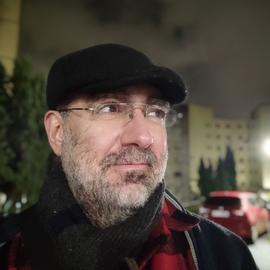
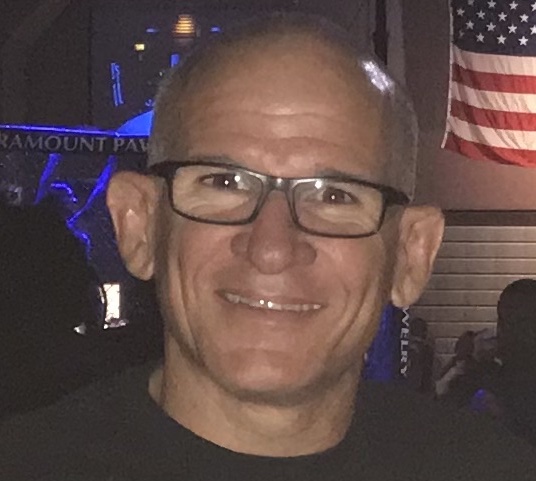
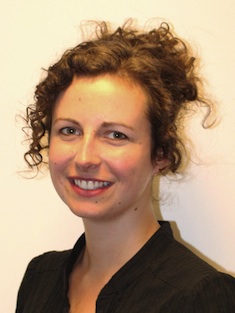
Juan Diego Gutiérrez Gallardo is an Assistant Professor at the Universidade de Santiago de Compostela, specializing in applying Artificial Intelligence to diverse domains. His research emphasizes optimizing low-cost adaptations of base models for specialized tasks, particularly in medical imaging and educational technology. He holds a Doctorate in Modeling and Experimentation from the Universidad de Extremadura (2022), following degrees in Computer Engineering and a Master’s in Secondary Education. Education: BSc in Computer Engineering (2010), MSc in Computer Engineering (2013), Master’s in Education (2016), PhD in Modeling and Experimentation (2022). Research Interests: AI-driven medical imaging, machine learning optimization, and leveraging AI in educational evaluation. His work focuses on reducing computational costs while enhancing model adaptability. His recent articles explore SAM-based medical image segmentation, audio classification via EnCodec latent spaces, and the impact of ChatGPT on engineering education. He has authored over 20 computer science books and translated 10 technical works from English to Spanish. Awards include the JENUI 2023 Best Work Award for impactful research. Teaching responsibilities include 'Technological Tools for Business' and 'Digital Technologies for Cultural Management.' He actively contributes to reproducibility frameworks in data science and hybrid recommendation systems for media.
Dr. Markus Mühling is a Research Fellow in the Department of Mathematics and Computer Science at Philipps-Universität Marburg, working under Prof. Bernd Freisleben. His research focuses on deep learning applications for audio/video content analysis and biomedical data interpretation. He joined the group in 2015 and has contributed to projects involving wildlife monitoring, medical imaging, and heritage digitization. His work spans sensor networks, neural network architectures, and edge computing solutions for real-world challenges. Key research areas include: Deep learning for bioacoustic and visual species recognition Automated analysis of biomedical and histological images Edge-based AI systems for resource-constrained environments Content-based retrieval in video and image archives Publications highlight advancements in biodiversity monitoring (e.g., acoustic sensor networks), medical imaging (e.g., blood cell counting), and cultural heritage (e.g., organ tablature transcription). His work bridges theoretical machine learning with practical ecological and biomedical applications.
Dr. Dadong Wang is a Senior Principal Research Scientist and Group Leader of the Imaging and Computer Vision (ICV) Group at CSIRO Data61. He holds academic roles as a Conjoint Professor at UNSW and an Adjunct Professor at UTS. His expertise spans image analysis, computer vision, artificial intelligence, and medical imaging, with a focus on end-to-end solutions for industrial and scientific applications. Education: PhD in Engineering (2002) Doctor of Engineering (1997) Master of Engineering (1993) Bachelor of Engineering (1990) Research Interests: Dr. Wang’s work emphasizes AI-driven solutions for multi-dimensional image data, including applications in agriculture, healthcare, and environmental monitoring. His research bridges theoretical advancements with practical industrial deployment. Awards & Recognition: Winner of APICTA Research & Development Project of the Year (2023) CSIRO Research Achievement Award (2012, 2009) IEEE Senior Member (2010) Keynote speaker at major AI conferences (e.g., Australasia Joint Conference on AI, 2023) Advising & Grants: His team actively seeks PhD candidates in areas like deep learning and augmented reality. Projects include pneumoconiosis diagnosis, fisheries monitoring, and smart agriculture systems. Collaborations span industry and academia, with grants supporting innovation in imaging technologies. Labs & Teams: Leads the ICV Group, which develops cutting-edge computer vision tools and collaborates with industry partners to commercialize solutions. Recent projects include AI for meat quality control and environmental compliance systems.
Fabian Gröger is a Research Associate, Doctoral Student, and Lecturer at Lucerne University of Applied Sciences and Arts (HSLU), affiliated with the Lucerne School of Computer Science and Information Technology. He is a Scientific Collaborator at the Algorithmic Business (ABIZ) Research Lab and teaches in the CAS Machine Learning program. His roles include Data Scientist, Research Assistant, and Teaching Assistant in machine learning and artificial intelligence programs. Education: Ongoing PhD in Biomedical Engineering, University of Basel Master of Science in Data Science/ML, HSLU Bachelor of Science in Computer Science, HSLU His research focuses on Machine Learning , Deep Learning , Audio Data , and Self-Supervised Learning , with applications in digital dermatology, bioaerosol monitoring, and medical anomaly detection. His work emphasizes scalable foundation models, data quality audits, and reducing annotation needs in healthcare AI. Recent publications highlight contributions to hyperbolic space applications in medical AI, audio representation learning for hearables, and benchmarking strategies like CleanPatrick. His work spans conferences like MICCAI, NeurIPS, and ECCV. Awards: Outstanding Reviewer (JEADV, 2024) Best Lightning Talk (AI Medicine Symposium, 2024) Best Paper (MICCAI 2023) Best Master Thesis (HSLU, 2023) Gröger leads projects such as SelfClean for Audio and AI for All , and collaborates with industries like Prepress Media AG. He advises on algorithms for small-hotel revenue management and exhibits at events like the Museum Exposition on Food & AI. His lab affiliations include the ABIZ Research Lab and the Digital Dermatology group, where he explores ethical AI, clinical decision support systems, and data-centric healthcare solutions.
Eraldo Ribeiro is an Associate Professor of Computer Science at Florida Institute of Technology (FIT), situated in the College of Engineering and Science's Department of Electrical Engineering and Computer Science. He holds a Ph.D. in Computer Vision from the University of York (2001), an M.Sc. in Computer Science from the Federal University of São Carlos (1995), and a B.Sc. in Mathematics from the Catholic University of Salvador (1992). His research focuses on computer vision, pattern recognition, and machine learning, with emphasis on 3-D shape modeling, image registration, human-motion recognition, and non-rigid deformation analysis. Current projects include underwater video mosaicing techniques and spatio-temporal crime pattern modeling. He serves as an associate editor for Machine Vision and Applications and Journal of Signal, Image, and Video Processing . Ribeiro’s recent work spans diverse applications including automated anuran call classification, pollen grain recognition via CNN-RNN hybrid models, and network-centric approaches to image annotation. His lab’s projects address challenges in medical imaging registration, social media analytics, and biofilm adhesion studies. He collaborates on interdisciplinary initiatives such as coral reef texture classification (using SVMs) and data science for urban crime analysis. Ribeiro’s contributions to computer vision education include teaching CSE4001 and CSE5683 courses at FIT.
Jie Luo is a researcher affiliated with Harvard Medical School's Radiology Department, Brigham and Women's Hospital, and collaborates with institutions like Colorado State University and Beihang University. Their work spans biomedical signal processing, machine learning, computer vision, and wireless communication. Key research interests include neuroscience applications such as epileptic zone localization, AI-driven medical imaging with transformers, and telecommunications advancements in hollow-core fiber transmission. Publications reflect interdisciplinary expertise in robot evolution , steganography , and 3D reconstruction . Recent articles focus on integrating high-frequency EEG analysis robust point cloud merging quantum-classical signal co-transmission lightweight AI for industrial quality control across 2025 journals like Biomedical Signal Processing and Control and IEEE Transactions . No awards or student advising data are currently available.
Zalán Bodó is an Associate Professor at the Faculty of Mathematics and Computer Science , Babeș-Bolyai University, Cluj-Napoca, Romania. His research focuses on Artificial Intelligence, Machine Learning, Information Retrieval, Natural Language Processing, Formal Languages, and Computer Vision . He holds an Erdős number of 4 and maintains an active presence in academic networks like Google Scholar and DBLP. His work bridges theoretical and applied computer science, with contributions to malware analysis, explainable AI, and dataset compilation. He has published extensively on topics such as graph-based malware detection, automated code generation, and medical imaging applications. His office is located at Mathematicum Building (room 207), and he can be reached via zalan.bodo@ubbcluj.ro or zalan.bodo@gmail.com .
Wenwen Zhang is a Professor at the Department of Electronic Engineering, College of Information Science and Electronic Engineering, Zhejiang University. With an extensive publication record spanning from 2016 to 2025, Dr. Zhang has established herself as a prominent researcher in multiple interdisciplinary fields at the intersection of computer vision, machine learning, and sensor systems. Her work demonstrates significant contributions to medical imaging, sensor array systems, wireless communications, and AI-assisted applications. Dr. Zhang's research interests encompass a wide range of topics including medical image analysis, sensor array systems, wireless communications, and AI-assisted applications. Her work demonstrates particular expertise in developing innovative deep learning architectures for medical imaging tasks such as cardiac segmentation and nuclei detection, as well as creating sophisticated models for gas sensing and wireless communication systems. She has made significant contributions to the fields of one-shot object detection, medical image segmentation, and sensor fusion techniques, with her research often bridging theoretical advancements with practical applications in healthcare and engineering. Analysis of Dr. Zhang's recent publications reveals a strong focus on cutting-edge deep learning approaches applied to medical imaging and sensor systems. Her work shows increasing sophistication in model architectures, moving from traditional CNNs to more complex transformer-based and hybrid models. There's a clear trajectory toward more explainable and clinically relevant AI systems, particularly in medical applications. Her research also demonstrates growing interest in multimodal approaches, combining different types of data and sensors to improve system performance. Dr. Zhang maintains active collaborations with researchers at Zhejiang University, particularly with Yuanjin Zheng and Zhiping Lin in the field of electronic engineering and sensor systems. She also collaborates extensively with Fei-Yue Wang from the University of Chinese Academy of Sciences, evidenced by multiple publications on parallel vision frameworks. Her international collaborations include work with researchers from institutions in Canada on intelligent knee sleeves and other biomedical applications. Her publication record shows consistent productivity with 12 publications in 2025 (as of this writing), 25 in 2024, and 26 in 2023, indicating an active and growing research program across multiple high-impact journals and conferences.
Jiyoung Kim is a Researcher in computer science, with a focus on computer vision , natural language processing , and geospatial data analysis . She has collaborated extensively across disciplines, particularly in robotics , educational technology , and signal processing . Her research interests include: Developing advanced diffusion models for high-fidelity talking head generation . Creating automated pipelines for detoxifying Korean language in AI systems. Applying deep learning to haze removal and indoor navigation for accessibility. Exploring 6G communication through computer vision-aided beamforming . Recent publications highlight trends in multi-task learning , unsupervised segmentation , and geospatial knowledge graphs . Her work bridges theoretical and applied domains, from hardware design to educational interventions for computational thinking in early childhood.
Jana Holsanova is an Associate Professor and Senior Lecturer in Cognitive Science at Lund University's Department of Philosophy. She holds multiple roles, including project leader, supervisor, and senior researcher within the Linnaeus environment 'Cognition, Communication, and Learning'. Her research focuses on multimodality, cognition, and communication, with emphasis on eye-tracking studies, visual communication, and accessibility through audio description. She coordinates the 'Audio Description and Image Description for Accessible Communication' initiative and chairs the Swedish Braille Authority (Punktskriftsnämnden). Her research explores image perception, language-image interaction, and accessibility for visually impaired individuals. She has authored books on discourse, vision, and cognition, and serves on editorial boards for journals like Frontiers in Communication . Awards include the Inga and John Hains Foundation Prize (2013, 2014) and the Humboldt Prize (1986). Jana has led projects on media accessibility, including studies on audio description efficacy for blind audiences. Her work bridges cognitive science, technology, and societal inclusion, with contributions to educational design and policy-making in accessible media.
Roger Johansson is an Associate Professor and Senior Lecturer in the Department of Psychology at Lund University. He is affiliated with research groups including LAMiNATE (Language Acquisition, Multilingualism, and Teaching), the LU profile areas of Natural and Artificial Cognition, and Proactive Aging. His work focuses on the neurocognitive foundations of eye movements, attention, memory systems, and mental imagery, using techniques like eye-tracking and pupillometry. Key research interests include episodic memory creation/recall, cognitive control, event segmentation, and narrative reasoning. Recent publications emphasize applications of eye-tracking technology, cross-modal perception in audio descriptions, and cognitive processes in diverse populations. He has contributed to projects funded by Riksbankens Jubileumsfond and the Swedish Research Council, investigating topics like cognitive aging and knowledge acquisition in digital contexts. His collaborative network spans international institutions, with active involvement in conference organization and academic mentorship. Johansson's research often bridges experimental psychology with neuroscientific methods, exploring how eye movement patterns reflect memory accessibility and cognitive engagement. He has developed novel methodologies for studying real-world memory formation and employs AI-driven approaches to analyze event perception in media consumption.
Professor Elaine Chew is a Professor of Engineering with a joint appointment between the Department of Engineering in the Faculty of Natural, Mathematical & Engineering Sciences and the Department of Cardiovascular Imaging in the School of Biomedical Engineering & Imaging Sciences at King's College London. An operations researcher and pianist by training, she is a pioneering researcher in music information retrieval (MIR) and computational music structure analysis, forging innovative paths at the intersection of music and cardiovascular science. Her work focuses on mathematical and computational modeling of musical structures in both music and electrocardiographic traces, with applications to music-heart-brain interaction and computational arrhythmia research. Professor Chew's educational background includes: PhD and SM in Operations Research from MIT BAS in Mathematical & Computational Sciences (honors) and Music (distinction) from Stanford University FTCL and LTCL diplomas in Piano Performance from Trinity College, London Her research spans multiple disciplines, with a primary focus on the mathematical and computational modeling of musical structures and their physiological effects. She investigates how musical expressivity affects cardiovascular function, developing novel frameworks for understanding music perception and cognition through computational approaches. Her work integrates operations research, computational mathematics, and human-computer interaction to advance music information retrieval and create innovative applications at the intersection of music science and cardiovascular medicine. Professor Chew's research has evolved from theoretical music structure analysis to applied clinical research with direct medical implications, particularly in music-based therapeutics for cardiovascular conditions. Analysis of Professor Chew's recent publications reveals a strong focus on the intersection of music and cardiovascular science, with increasing application of advanced computational methods including graph neural networks, Bayesian inference, and nonlinear dynamics. Her work demonstrates a progression from pure music analysis to clinical applications, with significant contributions to understanding how musical structures affect physiological responses, particularly in hypertension and cardiovascular disease contexts. She has developed innovative approaches to using music as a therapeutic tool for autonomic modulation and cardiovascular health. Professor Chew's groundbreaking contributions have been recognized with numerous prestigious awards: Falling Walls Art & Science Breakthrough of the Year (2023) European Research Council Advanced Grant (2019) Harvard Radcliffe Institute for Advanced Study Fellowship (2007) US Presidential Early Career Award in Science & Engineering (PECASE, 2005) US National Science Foundation Faculty Early Career Development (CAREER) Award (2004) As Principal Investigator of the European Research Council Advanced Grant COSMOS (Computational Shaping and Modeling of Musical Structures) and Proof of Concept HEART.FM (Maximizing the Therapeutic Potential of Music through Tailored Therapy with Physiological Feedback in Cardiovascular Disease), Professor Chew leads significant interdisciplinary research initiatives that bridge music science and cardiovascular medicine. Her work has secured substantial funding from the European Commission, supporting innovative research that combines data analytics, citizen science, and physiological monitoring to advance understanding of music's effects on the human body. She has mentored numerous researchers through her various positions and projects, fostering interdisciplinary collaboration across music, engineering, and medical domains. Professor Chew founded and directs the Music Theranostics Laboratory, which focuses on developing music-based diagnostic and therapeutic approaches for cardiovascular conditions. She leads the COSMOS and HEART.FM projects, which involve collaborations with researchers across multiple disciplines including cardiology, musicology, computer science, and engineering. Her work often integrates interactive scientific visualizations and lab-grown compositions in live demonstrations, creating unique concert-conversations that bridge artistic performance with scientific discovery. She is a frequent invited keynote speaker who effectively communicates complex interdisciplinary research to diverse audiences.
Chengjia Wang is an Assistant Professor at the School of Mathematical & Computer Sciences, Heriot-Watt University, within the Computer Science department. He joined the Edinburgh Centre for Robotics in 2021 after working at the BHF Centre for Cardiovascular Science (CVS), University of Edinburgh. He holds a PhD from the University of Edinburgh and Toshiba Medical Visualization System, funded by the Scottish Universities Physics Alliance (SUPA). His education includes a European Erasmus Mundus Master in Vision and Robotics, along with two MSc degrees from Heriot-Watt University and the University of Burgundy. His research focuses on deep learning, medical imaging, and AI applications in healthcare, contributing to UN Sustainable Development Goals. His research interests span medical image analysis, machine learning methodologies, and their applications in healthcare diagnostics. Recent work includes studies on bone marrow adiposity using deep learning and genome-wide association analyses, as well as reviews on attention mechanisms in medical imaging. He is actively involved in editorial roles, such as with Frontiers in Computational Neuroscience , and has published widely on topics like image segmentation, graph neural networks, and cross-modal learning frameworks. No scientific awards are explicitly mentioned in the provided texts. Dr. Wang is accepting PhD students and has contributed to collaborative projects at the intersection of robotics, cardiovascular science, and computational neuroscience. His work emphasizes interdisciplinary approaches to advancing medical AI and healthcare technology.
Anina Rich is a Professor at Macquarie University's School of Psychological Sciences and an ARC Future Fellow. She is affiliated with the Performance and Expertise Research Centre and the Perception in Action Research Centre. Her research focuses on sensory processing, particularly selective attention mechanisms and multisensory integration, including synaesthesia studies. She has received numerous awards, including being a finalist in the Australian Museum Eureka Prizes (2001, 2002) and the Australian Postgraduate Award (2001-2004). Her work combines psychophysics, neuroimaging, and cognitive neuroscience to explore attention dynamics and synaesthesia. Research Interests: - Selective attention: Balancing voluntary and involuntary attention, applied in medical imaging contexts, sustained attention, and neural underpinnings. - Multisensory integration: Investigating synaesthesia (e.g., mirror-touch, grapheme-color), exploring how sensory modalities interact. - Neuroimaging techniques: Using fMRI and MEG to study brain regions involved in attention and perception. Awards: 2001-2004 Australian Postgraduate Award 2004 Cognitive Neuroscience Society Graduate Student Award 2005 Australian Psychological Society Excellent PhD Thesis Award Multiple media engagements on synaesthesia and perception Grants/Projects: Dealing with Distraction: Understanding Recovery After Interruption (2024-2028) Improving Inferences from Brain Imaging to Understand Selective Attention (ongoing) Magnetic Resonance-Compatible Audio-Visual Stimulus Delivery System (2014-) Labs/Teams: Active member of the Perception in Action Research Centre and collaborator in the Centre for Elite Performance Expertise and Training (CEPET).
Helena Daffern is a Professor in Music Technology at the University of York, specifically within the School of Physics, Engineering and Technology. Her expertise spans singing voice analysis, vocal pedagogy, choral practices, and voice synthesis, with a focus on voice science and acoustics. She has led initiatives like the York Centre for Singing Science and the York Audio Network to foster cross-disciplinary research. A trained BBC expert, she has appeared on programs such as BBC Breakfast and Click for the World Service. Helena also maintains an active professional singing career as a soloist and ensemble member with groups like Opera Holland Park and Yorkshire Baroque Soloists, alongside recording work for Warner Music UK and Oxford University Press. Education: PhD in Music Technology (University of York, 2008) MA in Singing Performance (University of York) BA (Hons) in an unspecified field Postgraduate training at Trinity College of Music Her research emphasizes the acoustic properties of classical singing techniques, vocal health, and the application of technology in music. By bridging engineering and music, she explores how acoustic spaces and digital tools influence performance and well-being. Recent work includes virtual reality choir interventions for elderly care and the impact of vocal vibrato across genres. She advocates for gender equality in music production and has collaborated on infant vocalization apps like BabblePlay. Scientific Awards: None explicitly mentioned in the provided text. Advising and Grants: While no formal advisees or grant details are listed, Helena leads major research projects such as the York Centre for Singing Science and York Audio Network, which likely involve institutional and collaborative funding. Her work with the BBC Maida Vale Recording Studios and the WHO-Lancet Global Series suggests partnerships with external organizations. Labs and Teams: She runs the York Centre for Singing Science and the York Audio Network, promoting interdisciplinary collaboration in voice research and audio technology. These platforms support her exploration of acoustic environments, immersive music performance, and health-related musical interventions.