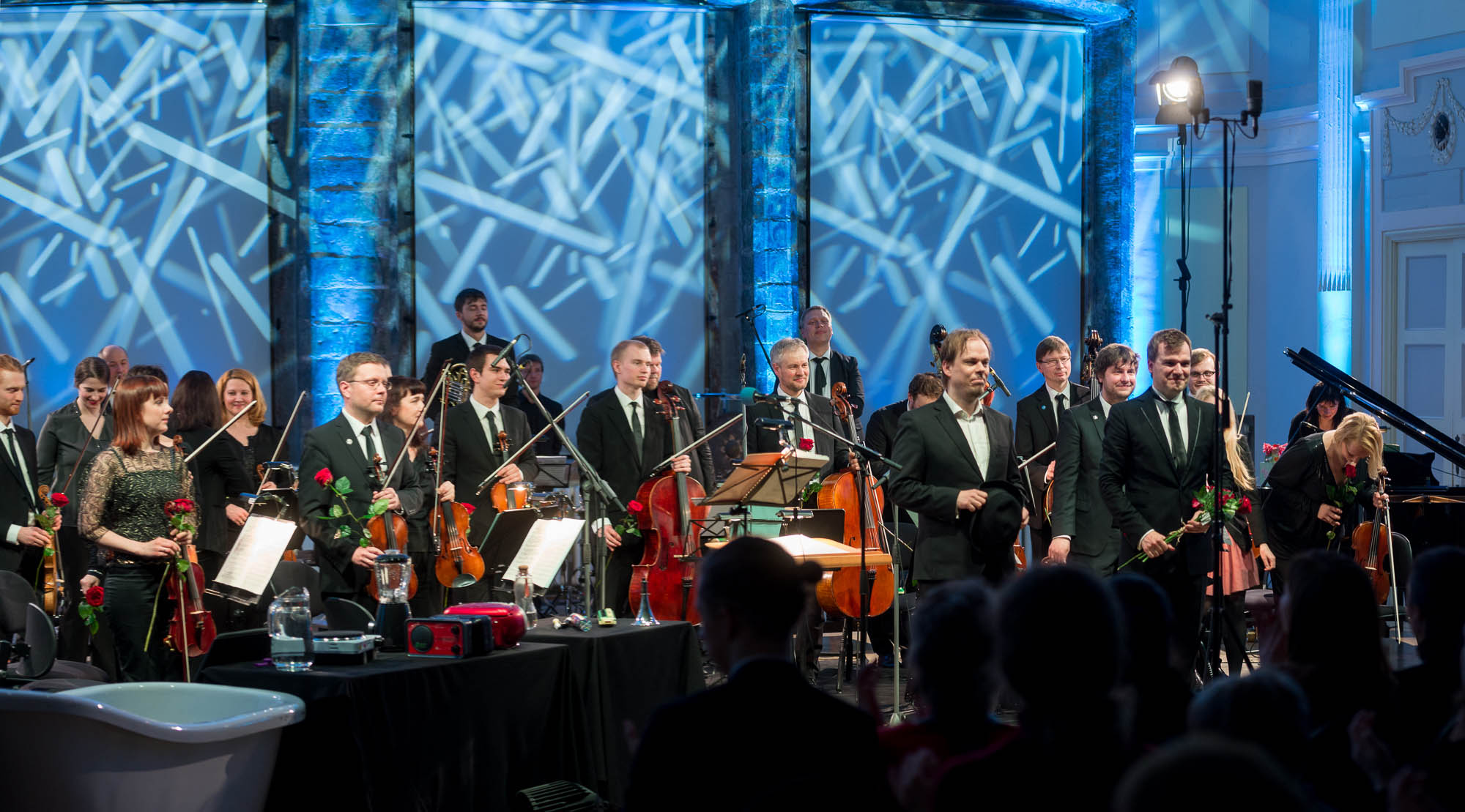
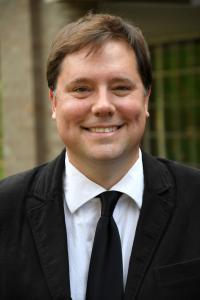
Ardo Ran Varres is a visiting faculty member at the Estonian Academy of Music and Theatre specializing in film music. As a multidisciplinary artist, he combines roles as composer, sound director, musical designer, actor, and dramaturgy expert. His work bridges music with theatrical and cinematic storytelling. Varres' research focuses on integrating dramaturgical principles with sound design, utilizing environmental recordings as musical material. He creates compositions ranging from memorable melodic themes to experimental sound fields, employing computer processing for innovative sonic results. His creative output spans over 25 film, theatre, and dance performance scores. Notable collaborations include YXUS Ensemble, Black Box Studio, and SA NUKU theatre. Varres maintains a sound studio 'TonoScope Records' and actively produces concert showreels.
Giuseppina Emma Puglisi is an external lecturer at the Department of Energy (DENERG) of Politecnico di Torino, specializing in interdisciplinary research at the intersection of acoustics, environmental engineering, and medical technologies . Her work focuses on speech intelligibility in complex acoustic environments, particularly for cochlear implant users, and the development of multi-sensor systems for monitoring indoor environmental quality (IEQ) in university and office settings. Research Themes : Classroom acoustics, virtual reality for auditory testing, face mask noise effects, climate-responsive architecture. Leadership : Participated in organizing committees for major acoustics conferences like Forum Acusticum 2023 and serves as Associate Editor for Frontiers in Built Environment . Her recent publications validate virtual reality tools for acoustic assessment and explore cross-linguistic soundscape descriptors. Awards include the Best Paper Award (European Acoustics Association, 2021) and grants for young researchers. She supervises PhD students Virginia Isabella Fissore and Angela Guastamacchia in projects related to IEQ and clinical acoustics.
Andrea Stevenson Won is a Professor at Cornell University, leading the Virtual Embodiment Lab within the Cornell Ann S. Bowers College of Computing and Information Science. Her research focuses on how immersive technologies like virtual reality (VR) influence human perception and behavior, particularly in clinical applications, nonverbal communication, and accessibility. She holds a PhD from Stanford University’s Virtual Human Interaction Lab and an MS in Biomedical Visualization from the University of Illinois at Chicago. Her work explores mediated experiences, including how avatars and virtual environments can enhance social interactions, support mental health interventions, and address accessibility challenges for neurodivergent populations. Key areas include avatar embodiment, pain management through VR, and designing inclusive systems for blind/low-vision users. Recent studies highlight innovations in AI-driven accessibility tools and the psychological impacts of perspective and avatar customization in VR. Publications from 2024-2025 emphasize clinical VR applications, social VR’s role in mental wellness, and cross-disciplinary collaborations with AI and mixed reality. The lab’s projects often bridge technology with social science, advocating for user-centered design in immersive media.
Dr Salvatore Campisi is an Assistant Professor/Co-Director of Studies (Italian) at Durham University's School of Modern Languages and Cultures. He holds a PhD from the University of Salford (2011) and advanced teaching qualifications including DITALS II and HEA Senior Fellowship. His research bridges language pedagogy, cultural studies, and interdisciplinary arts, with focuses on cinema in language learning, decolonisation of curricula, and music-literature intersections. Education: BA/MA (Catania, 2004), PhD (Salford, 2011) Research interests explore: blended learning methodologies, audio-visual translation, and the works of filmmakers like Pasolini and Kubrick. He has taught at Manchester, Leeds, and Salford, receiving teaching excellence nominations. Currently serves as External Examiner for Italian programs at Lancaster and Warwick Universities. Publications span topics from Hesse's temporal themes to innovative language learning tools like the ITALO project. Engages actively with curriculum decolonisation debates and integrates cinematic analysis into language instruction strategies.
Dr. Sara Ahmadi is a Lecturer in Artificial Intelligence at Radboud University, affiliated with the Donders Institute for Brain, Cognition and Behaviour. Her primary research focuses on Brain-Computer Interfaces (BCI), deep learning techniques, and neurotechnology. She actively contributes to advancing BCI systems through studies on Bayesian methods, auditory attention decoding, and gaze-independent signal processing. Her research interests span dynamic stopping algorithms for BCI, multimodal attention tracking, and optimizing VEP-based systems. She teaches courses such as 'AI in the Professional Workfield' and 'Digital Signal Processing,' reflecting her expertise in both theoretical and applied AI. Dr. Ahmadi’s work bridges neuroscience and engineering, with a focus on improving BCI usability and robustness in volatile environments. Her recent studies include pilot experiments on noise-tagging for covert attention monitoring and reinforcement learning models for decision-making systems. She is part of the Brain Computer Interfacing research group at the Donders Institute, collaborating on cutting-edge neurotechnology projects.
Na-Young Ryu is an Associate Teaching Professor of Korean in the Department of Asian Studies at Penn State University, part of the College of the Liberal Arts. She holds an M.A. in English Linguistics from Hankuk University of Foreign Studies (South Korea) and a Ph.D. in Linguistics from the University of Toronto (Canada). Her research focuses on Korean linguistics, phonology, and innovative language education methods, particularly integrating AI and web-based tools to enhance L2 learners' perception and pronunciation skills. Dr. Ryu’s work emphasizes perceptual training programs using audio-visual techniques and AI-driven conversational chatbots. She explores cross-linguistic perception challenges faced by English and Mandarin learners of Korean, as well as phonological adaptation in heritage Korean communities. Her contributions include developing reliable web-based language tests and mobile-assisted phonetic training tools. Her publications span topics like loanword phonology, vowel harmony in heritage Korean, and the impact of L1 inventory size on L2 perception. She actively promotes Korean culture through campus events like 'Krazy about Korea' and organizes conferences for language educators. Her interdisciplinary approach bridges linguistics, technology, and pedagogy to advance language education methodologies.
Prof. Maura Mengoni is an Associate Professor at the Department of Industrial Engineering and Mathematical Sciences of the University of Macerata (UNIVPM). Her work focuses on human-centered design methodologies integrating advanced technologies like AI-driven systems, XR applications, and affective computing. She leads research in smart manufacturing systems, ergonomic assessment tools, and inclusive technology development for diverse user groups including people with disabilities. Key projects include SOPHIA's IoT architecture for predictive maintenance and emotion-aware interfaces for automotive safety. Research interests span industrial automation, virtual/augmented reality applications, and multimodal interaction design. Recent studies investigate cognitive workload in driving simulators, emotion-based museum experiences, and facial expression analysis for educational evaluation. Her work bridges engineering with humanities through projects like Civitas, enhancing cultural heritage accessibility via spatial augmented reality at Urbino’s Ducal Palace. Publications emphasize interdisciplinary approaches, including collaborative designs with end-users for accessible technologies and data fusion techniques in manufacturing. She has pioneered systems linking customer emotions to shopping experiences and developed tools for ergonomic risk assessment using RGB camera networks.
Charles "Chip" Linscott is an Assistant Professor at Ohio University's J. Warren McClure School of Emerging Communication Technologies within the Scripps College of Communication. He serves as Chair and Director of Undergraduate Studies, and leads the GRID Lab's audio production division. His research investigates intersections of sound, image, technology, and blackness through critical theoretical frameworks. Research focus areas include: XR and Virtual Reality Production Experimental Sound Studies Racialized Media Analysis Black Audiovisual Epistemologies Critical Race Theory in Digital Contexts Linscott contributes to academic discourse through publications in Black Camera , liquid blackness , and ASAP/J , with a notable 2021 textbook chapter on XR technologies. He serves on the editorial board of liquid blackness , recognized for its historical significance by the Library of Congress. Key achievements: Strowger Award Advisory Board Membership Lead audio production initiatives at GRID Lab Published critical interventions on #BlackLivesMatter media dynamics
Prof Mansour Moniri is a Professor at the University of East London , affiliated with the School of Architecture, Computing & Engineering . His research spans deepfake detection, speech enhancement, extended reality, and conversational analysis, with over 8,500 views on his publications. Primary Research Areas: Deepfake speech recognition and mitigation Extended Reality (XR) applications for remote collaboration Speech enhancement algorithms for hearing aids and ASR systems Conversational fraud detection using linguistic markers Adaptive compressive sensing in wireless sensor networks Publication Trends: Recent works focus on hybrid deep learning architectures for audio analysis (2023-2025), with earlier contributions in immersive technologies (2019-2022) and sensor network optimization (2014-2017). His research consistently combines computational methods with real-world applications in security, healthcare, and communication technologies. Contact: Email: mansour@uel.ac.uk
Dr Tommaso Perego is a Senior Lecturer at the University of East London's College of Arts & Creative Industries. With expertise in audio engineering and multimodal perception, his research focuses on integrating spatial audio, wave field synthesis, and dance choreography. Research Interests Audiovisual perception and multimodal integration Spatial audio and immersive sound technologies Dance technology and interactive performance systems Wave field synthesis applications in creative industries Selected Publications His work demonstrates interdisciplinary approaches combining engineering principles with artistic practice, particularly in developing audiovisual environments for dance performance and spatial audio experimentation.
Matthew Plumlee is a Principal Lecturer in the Department of Computer Science at the University of New Hampshire's College of Engineering and Physical Sciences. He holds a Ph.D. and B.S. in Computer Science from the same institution. His research focuses on data visualization, human-computer interaction, and geospatial systems, with notable contributions to weather display design, marine navigation tools, and underwater behavior visualization of animals like humpback whales. Plumlee has authored numerous articles on topics ranging from hydrographic data processing to 3D visualization techniques in oceanography and robotics. His educational background includes advanced degrees from UNH, and he teaches courses such as Introductory Scientific Programming, Data Structures, and Software Engineering. His work frequently integrates interdisciplinary approaches, combining computer science with marine science and environmental modeling. Key projects include the GeoCoastPilot system for port navigation and the GeoZui3D platform for oceanographic data fusion. Plumlee's publications span over two decades, emphasizing user-centered design principles and real-time data visualization challenges. He collaborates with institutions like CCOM (Center for Coastal and Ocean Mapping) to develop innovative geospatial tools for maritime and environmental applications. His research also addresses cognitive aspects of interface design, such as comparing zooming versus multiple window techniques for visual tasks.
Jurgen Bauer is a Lecturer in the Department of Architecture and Built Environment at South East Technological University (formerly Waterford Institute of Technology). He holds a Diplom-Ingenieur (Architecture) from Braunschweig Technical University and has professional experience in architectural offices across Germany, Switzerland, and Ireland. His research focuses on architectural acoustics, soundscape design, and sustainable urban development, particularly in the context of climate adaptation and resilient design. He coordinates initiatives like the ‘Building Change 2022–2025’ project, which aims to integrate climate resilience into architectural education. Bauer is a chartered member of the Royal Institute of Architects of Ireland (RIAI) and the German Chamber of Architects (AKH/AKSH). Education: 1986–1993: Architectural Studies at Braunschweig Technical University, Germany, and ETH Zurich, Switzerland 1993: Diplom-Ingenieur (Architecture) from Braunschweig Technical University 2001: Certificate in Building Energy Consulting from Kassel University Research Interests: Soundscape design and its application in architectural projects Climate-resilient urban development and circular economy strategies Acoustic awareness in architectural education and design processes International collaboration in architectural education and sustainable design Bauer’s publications explore topics like ISO standards for soundscape, acoustic design tools for architects, and the integration of hearing into design education. His work contributes to UN Sustainable Development Goals related to sustainable cities (SDG 11), climate action (SDG 13), and quality education (SDG 4). He has held visiting roles at institutions like Chalmers University of Technology and UNAM (Mexico), and actively engages in professional organizations such as the Acoustical Society of America and the German Society of Acoustics.
Eileen Simpson is a Reader at Manchester School of Art, Manchester Metropolitan University, specializing in the intersection of sound art, digital archives, and information networks. She co-founded the Open Music Archive with artist Ben White, a collaborative initiative focused on sourcing, digitizing, and distributing out-of-copyright sound recordings while facilitating networked artistic projects. Her research centers on archival practices , collaborative sound production , and critical data engagement , exploring how communities interact with historical audio materials through participatory frameworks. Key methodologies include distributed network performance , public domain reactivation , and speculative archival futures , often manifested in large-scale exhibitions that transform institutional spaces into sites of collective sound exploration. Notable projects span British Art Show 8 ( Auditory Learning , 2015), Modern Art Oxford ( Premonition 2037 , 2016), and international venues including Casa Luis Barragán in Mexico City ( Open House: Divided Estates , 2012). Her 2025 works Please Destroy All Previous Lists and All or Together advance critiques of data ownership and collaborative sound production. Simpson's output consistently examines power dynamics in archival systems , community-based knowledge sharing , and temporal dimensions of sound preservation . As a core member of the Art and Performance Research Hub, Simpson operates through long-term collaborations rather than conventional advising structures. Her work integrates institutional partnerships with grassroots community engagement, particularly through the Open Music Archive's distributed network of contributors. Current projects like Toward Usership (2025) investigate collaborative data mining within orchestral archives, bridging historical collections and contemporary participatory practices. The Open Music Archive functions as her primary research vehicle, operating as both a digital platform and physical project space facilitating workshops, exhibitions, and international residencies. This initiative embodies her commitment to decentralized knowledge production and critical engagement with copyright frameworks , creating infrastructure for communities to reclaim and recontextualize historical sound materials.
Sarah Levitan is an Assistant Professor in the Department of Computer Science at Hunter College and a doctoral faculty member in the Computer Science and Linguistics PhD programs at the CUNY Graduate Center. She holds a PhD (2019) and MS from Columbia University and a BS from Brooklyn College. Her research focuses on spoken language processing, with special emphasis on paralinguistic aspects of speech and computational methods for analyzing deception, misinformation, and speaker traits. Her key research areas include acoustic-prosodic and lexical analysis of speech to identify deception cues, trustworthiness perception in conversational agents, and mental health analysis through social media data. She has developed methodologies for detecting hate speech, radicalization content, and psychiatric conditions from online text and speech. Recent work highlights include studies on cross-lingual trust perception in dialogues, multimodal deception detection systems, and computational models for analyzing speaker states. Her research has been supported by NSF grants ($298k as PI), Google Cyber NYC ($80k), and the Air Force Office of Scientific Research ($764k as Co-PI). Levitan leads the Hunter Speech Lab, mentoring 3 PhD students, 4 MS students, and 2 undergraduates. She has published over 30 peer-reviewed articles and received the 2015 Cognitive Conference Best Paper Award. Her teaching portfolio includes undergraduate/graduate courses in Natural Language Processing, Computational Linguistics, and Computer Theory. Funded projects include $20M ARNI Institute (Senior Personnel) and NSF EAGER grant exploring trust perception in AI agents. Current research trends focus on hybrid acoustic-lexical models, human-AI collaboration in speech analysis, and ethical applications of NLP in media.
Maria C. R. Harrington, Ph.D. , is an Associate Professor of Digital Media in the Games and Interactive Media Program at the University of Central Florida (UCF), Nicholson School of Communication and Media. She also directs The Harrington Lab , an interdisciplinary research group that designs, develops, and evaluates immersive AR/VR/XR applications for informal learning and health. Education Ph.D. in Information Science, University of Pittsburgh (2008) M.S. in Information Science, University of Pittsburgh (1990) B.S. in Economics and Art, Carnegie Mellon University (1988) Research Focus Harrington’s scholarship lies at the intersection of virtual reality , human-centered design , and ecological data visualization . Using game engines, GIS datasets, and botanically accurate 3-D models, she creates “virtual nature” experiences—digital twins of forests, arboretums, and museum dioramas—that foster awe, curiosity, and measurable learning gains. Her work explores how information fidelity , navigational freedom , and aesthetic beauty influence emotional and cognitive outcomes in informal settings such as museums, botanical gardens, and K-12 classrooms. Publications & Creative Impact Across 2020-2023 alone, Harrington has advanced the field through Frontiers in Virtual Reality , Multimodal Technologies and Interaction , SIGGRAPH, and I/ITSEC venues. Recent titles such as “Virtual Nature Makes Knowledge Beautiful” and “Learning and Emotional Outcomes in an Immersive Omnidirectional Pilot Study” highlight her dual commitment to rigorous empirical evaluation and public engagement. Scientific Awards & Honors 2024 UCF College of Sciences Teaching & Research Incentive Awards ($10 k each) 2022 UCF College of Sciences Excellence in Research Award 2022 UCF Nicholson School Outstanding Creative Activity Award 2021 AECT Outstanding Digital Learning Artifact Award 2018 Carnegie Museum Artist in Residence Award 2006 Pitt Outstanding Graduate Student Award Advising & Collaborative Grants Harrington mentors a steady stream of undergraduate and graduate research assistants—many co-authoring papers and software releases. Notable mentees include Zachary Bledsoe, Chris Jones, Thomas Pring, and James Miller. Multi-year support has come from Epic Games , UCF Office of Research , and Carnegie Museum of Natural History , enabling flagship projects such as The Virtual UCF Arboretum (100-hectare VR simulation) and AR Perpetual Garden (mobile AR diorama suite). Labs, Teams & Partnerships The Harrington Lab is a hub for cross-disciplinary collaboration with UCF’s Department of Biology, Landscape & Natural Resources, Carnegie Museum of Natural History, Powdermill Nature Reserve, Salzburg University of Applied Sciences, and NASA’s Human Research Program. Current and future efforts target restorative VR for isolated/confined environments, AI-enhanced storytelling in XR, and scalable digital twins of global ecosystems for STEM outreach and climate-change education.