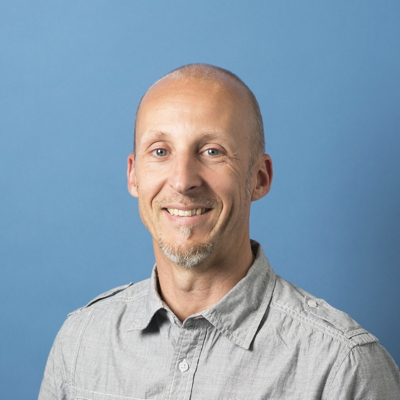
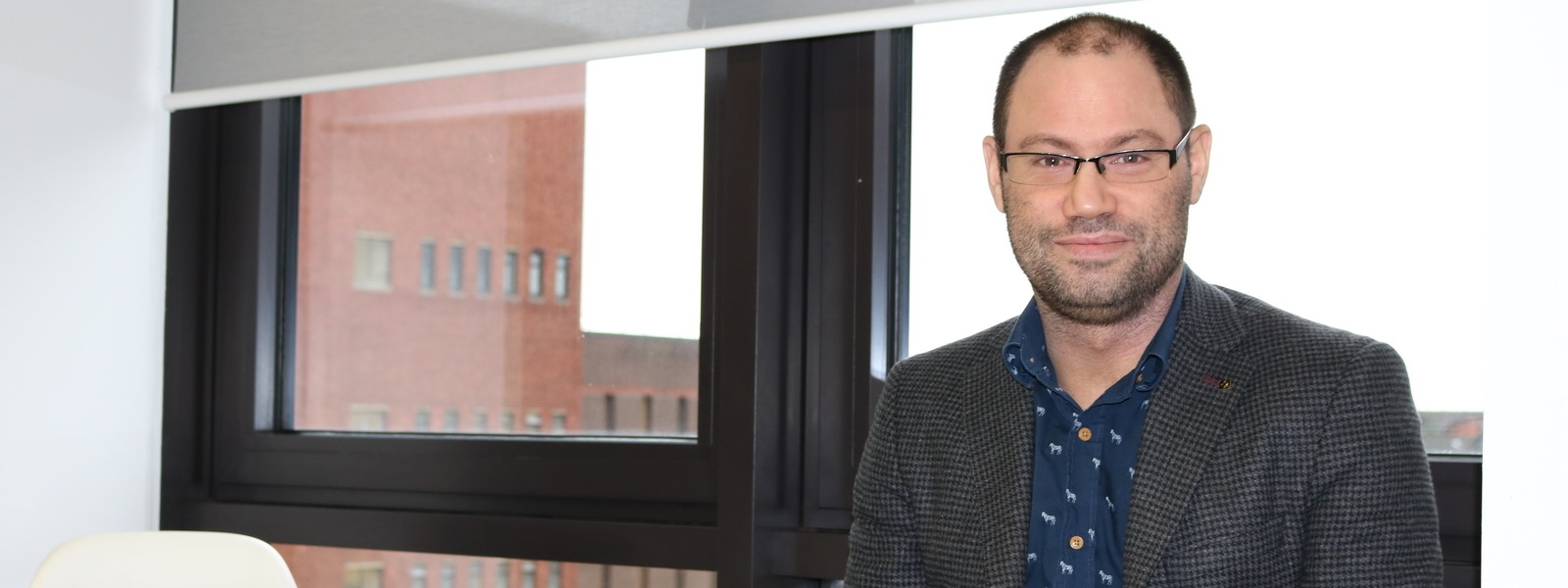
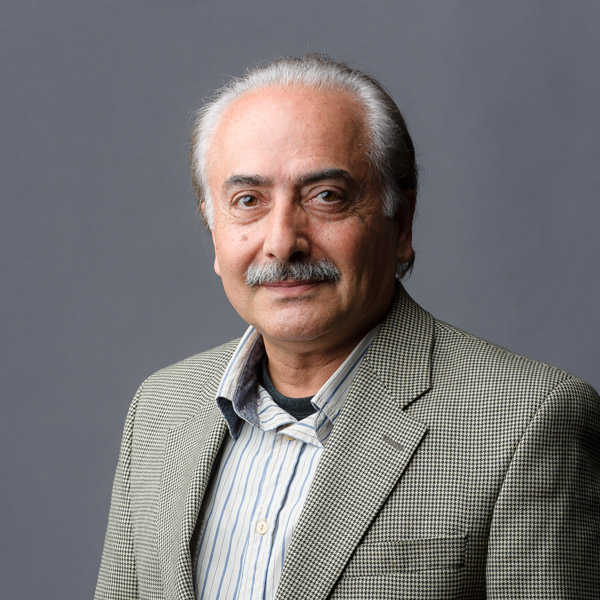
Dr. Mohd. Tasleem Khan is an Assistant Professor at the Institute of Sensors, Signals, and Systems (ISSS), School of Engineering and Physical Sciences (EPS), Heriot-Watt University. Previously, he held roles as Principal Engineer at TSMC (2019), Assistant Professor at IIT Dhanbad (2020–2021), Research Consultant at KAUST (2020–2021), and Postdoctoral Researcher at Linköping University (2021–2024). He earned his Ph.D. in VLSI for signal processing and communication systems from IIT Guwahati (2019). His research focuses on Machine Learning/AI, Signal Processing, and Communication Systems, with expertise in VLSI architectures. Key contributions include energy-efficient designs for neural networks, adaptive filtering algorithms, and 6G systems. His work bridges theoretical algorithms with hardware implementation, emphasizing low-power and high-throughput solutions. Publications span circuits, systems, and interdisciplinary areas like biochemistry, showcasing his interdisciplinary approach. He has contributed to advancements in distributed arithmetic-based architectures, LMS filters, and FPGA implementations. Current affiliations include the Microwaves and Antenna Engineering Group at Heriot-Watt University, a global leader in wireless systems research.
Prof. Dr. Renato Pajarola is the Head of the Visualization and MultiMedia Lab at the Department of Informatics, University of Zurich. His research focuses on computer graphics, scientific visualization, and geometric processing, with applications in 3D scanning, point cloud analysis, and real-time rendering. He leads a team developing advanced visualization techniques for high-dimensional data, parallel rendering frameworks, and interactive systems for complex datasets. Key research areas include: 3D reconstruction of indoor environments Tensor approximation for volume visualization Interactive ray tracing and point cloud processing Parallel rendering frameworks (e.g., Equalizer) Scientific computing and sensitivity analysis His recent publications emphasize: High-dimensional data exploration using tensor methods Efficient rendering techniques for large-scale point clouds Integration of citizen-reported weather data for environmental analysis Prof. Pajarola’s lab collaborates on projects like VIAN (visual annotation tool for film analysis) and Terrender (web-based terrain visualization). His Erdős number is 3, reflecting interdisciplinary research connections in mathematics and computer science.
Adjunct Professor Andrew Bradley is affiliated with Queensland University of Technology (QUT), where he serves as the Associate Dean (Research) for the Science and Engineering Faculty. He holds positions in the Faculty of Engineering and School of Electrical Engineering & Robotics at QUT. Bradley has a PhD from the University of Queensland and extensive industry experience, including roles as Chief Technology Officer at Ausonex Pty Ltd and Principal Biomedical Engineer at Maxwell MRI. His expertise spans biomedical and electrical engineering, computing science, and communications technology. His research focuses on computer-aided diagnosis (CAD) systems in medical imaging, machine learning, medical device design, and statistical pattern recognition. He has contributed to projects involving deep brain stimulation, artificial hearts, neonatal hearing screening, and cancer diagnosis imaging. His work bridges academia and industry, emphasizing commercially oriented solutions while maintaining a strong publication record. Bradley has published over 140 peer-reviewed papers and holds 20 patents across multiple regions. His research has garnered over 8,400 citations with an h-index of 35. He has secured $6M+ in competitive grants and supported startups raising $4M in venture capital. His awards include the ARC Future Fellowship and Fellow of Engineers Australia. He has advised 21 PhD and 4 Research Masters graduates, with three current advisory roles. Bradley’s contributions span interdisciplinary collaborations and innovation in labs focusing on medical imaging, AI, and biomedical engineering applications.
Philip Jackson is a Professor in Machine Audition at the University of Surrey's Centre for Vision, Speech and Signal Processing (CVSSP) within the School of Computer Science and Electronic Engineering. His research focuses on audio-visual machine learning, spatial audio technologies, object-based media production, and responsible AI applications. He has over 200 publications and an h-index of 30, contributing to projects like Nephthys, BALTHASAR, and SAVEE. He served as an associate editor for Computer Speech and Language and reviewer for major journals like IEEE/ACM Transactions on Audio, Speech and Language Processing. Key research interests include sound localization, audio-visual tracking, reverberation modeling, and ethical implications of AI in media. His work spans datasets such as Tragic Talkers, SurrRoom, and ForecasterFlexOBM, advancing immersive audio-visual systems and personalized media experiences. Notable projects include spatial audio reproduction for VR, parametric room acoustics, and citizen council research on algorithmic transparency. He has advised over 20 PhD/Master’s students and collaborates with industry on applications like the Catalan Pavilion's Venice Biennale installation. His grants include UK postdoctoral fellowships and leadership in EU-funded initiatives like UDRC2 and QESTRAL.
Associate Professor Wong Kok Sheik is the Deputy Head (Research) at the School of Information Technology, Monash University Malaysia. He holds a Doctor of Engineering from Shinshu University (Japan) and advanced degrees in Computer Science and Mathematics from Utah State University (USA). His research focuses on multimedia signal processing, cybersecurity, and digital health, with contributions to data hiding, encryption, and smart grid security. He leads a EU-funded WAge project on post-pandemic workplace health interventions. Education: PhD in Engineering, Shinshu University, Japan (2009) Masters in Computer Science & Mathematics, Utah State University, USA (2005-2004) Bachelor of Science, Utah State University, USA (2002) Professional Roles: Associate Editor, IEEE Signal Processing Letters Member, IEEE Signal Processing Society’s IFS Technical Committee Board Member, APSIPA Multimedia Security and Forensics (MSF) Committee His research interests span multimedia forensics, encrypted domain processing, and cybersecurity frameworks. Notable projects include recovery of missing coefficients in compression standards and HDR imaging enhancement. Recent work integrates digital health, addressing workplace mental/physical health in post-pandemic environments. Publications reflect expertise in watermarking, encryption, and biometric security. Key contributions include encryption-resistant data embedding and secure smart grid analytics. Awards include IEEE CES Service Awards (2015, 2016) and Best Paper recognitions. He supervises over 20 PhD/MSc students, focusing on topics like biometric recognition, data hiding, and anomaly detection. Grants include a €2M EU Horizon 2020 project (IDENTITY) and a RM146k smart grid initiative. His teaching emphasizes foundational IT research methods and theoretical computer science.
Ali Adjorlu is an Assistant Professor at Aalborg University's Department of Architecture, Design and Media Technology. His research focuses on innovative applications of Virtual Reality (VR) to support marginalized populations, particularly children with Autism Spectrum Disorder (ASD), hearing impairments, and social anxiety. He leads the Multisensory Experience Laboratory and collaborates on interdisciplinary projects such as the GAMESS initiative, which develops game-based learning tools for social skills training in ASD education. His work bridges technology, education, and healthcare, emphasizing accessibility and user-centric design. Key collaborations include: Co-supervision of the Haptic Feedback for Hearing Impaired PhD project (2022–2025) Leadership in the GAMESS project (2022–2024), addressing ASD social skills through gamified VR Partnerships with Cirkus Summarum and Danish National Children’s Choir for inclusive VR applications Research interests include: VR interventions for ASD life skill training (e.g., public transportation, communication) Music therapy in immersive environments Hearing conservation and auditory training for cochlear implant users Accessibility frameworks for neurodiverse and disabled populations His publications highlight VR's potential in education, healthcare, and social inclusion, with notable contributions to conferences like IEEE VR and SMC. He actively engages with public media to disseminate research outcomes, appearing in articles about VR therapy for autism and hearing impairment interventions. Adjorlu’s work also explores: VR-based empathy training for parents of hearing-impaired children Collaborative music interfaces for ALS patients Remote UX evaluation methodologies for assistive technologies His research has led to practical tools like Earnormous (a hearing health VR game) and DecibelDefender (concert safety training), demonstrating real-world impact. He emphasizes iterative design processes involving end-users to ensure interventions are both effective and accessible.
Erik Nystrom is a composer and academic at City, University of London, specifically affiliated with City St George's, where he conducts research and artistic work in electroacoustic and computer music. His practice centers on multichannel sound, spatial texture, and live interactive performance using algorithmic systems. He previously held a Leverhulme Early Career Fellowship at the University of Birmingham’s BEAST studio, contributing significantly to spatial synthesis and performance aesthetics. Education: PhD in Electroacoustic Music, City University, London (supervised by Denis Smalley) MA in Electroacoustic Music, City University, London (supervised by Denis Smalley) Erik’s research explores the intersection of human and machine agency in improvisation, focusing on post-human cognition, nonconscious processes, and the concept of intra-action. His work integrates machine learning, agent-based systems, and real-time synthesis, particularly through the SuperCollider environment. He investigates how algorithmic systems can co-create with human performers, generating emergent sonic textures through feedback and listening behaviors. Key themes include spatial sound, acousmatic improvisation, and the philosophical underpinnings of technological creativity. His 15 most recent works and publications reveal a strong trend toward algorithmic improvisation, cognitive assemblages, and spatial synthesis. The articles and compositions emphasize machine learning, real-time interaction, and the blurring of composition and performance. Subfields such as post-human attractors, topographic synthesis, and listening agents dominate his recent output, reflecting a deep engagement with both technical innovation and philosophical inquiry in music. Scientific Awards: Leverhulme Early Career Fellowship (2015–2018) The Merciful Company Cordwainer's Prize for Outstanding Achievement on the MA Programme Mercer's Music Prize for Most Outstanding Achievement on the PhD Programme Audience Prize at Metamorphoses International Electroacoustic Composition Competition, Brussels (2010) Erik has advised no formal students listed in the text, but his research has been supported through competitive grants such as the Leverhulme Fellowship. He has presented his work globally at major conferences including ICMC, SMC, NIME, and Beyond Humanism. His compositions have been released by empreintes DIGITALes and performed at institutions like the University of Oxford and De Montfort University. He is actively involved in creative labs and research teams, notably through his work with BEAST (Birmingham Electroacoustic Sound Theatre) and participation in symposia such as the IKO/OSIL Symposium in Graz, Austria. His current practice involves developing interactive systems for live spatial performance, often involving collaborative electroacoustic composition with intelligent agents.
Laurent Girin is a Professor at Grenoble Institute of Technology (Grenoble-INP), a member of Univ. Grenoble Alpes. He teaches within PHELMA (Physics, Electronics and Materials Department) and conducts research at GIPSA-Lab, a CNRS-associated laboratory focused on image, speech, signal, and automation sciences. He also maintains a collaborative relationship with the INRIA-Perception research team, contributing to advanced perception systems and audio-visual signal analysis. His research interests lie primarily in speech and audio signal processing , with applications in human-machine interaction, acoustic modeling, and machine learning for audio. His work bridges engineering and cognitive sciences, aiming to model and understand complex audio signals in real-world environments. Laurent Girin has contributed extensively to the field through publications in signal processing and audio analysis. While specific titles are not listed here, his research trends indicate a strong focus on computational auditory scene analysis, speaker tracking, and multimodal perception systems. Member of GIPSA-Lab, CNRS & Univ. Grenoble Alpes Regular collaborator, INRIA-Perception team He advises students in signal processing and audio technologies, though specific names are not provided. There is no public information on grants or funding sources in the provided text. His work is supported through institutional collaborations between Grenoble-INP, CNRS, and INRIA. Laurent Girin is actively involved in research teams focusing on perception and signal processing, particularly within the GIPSA-Lab and INRIA-Perception environments. These labs specialize in advanced signal analysis, machine learning for sensory data, and intelligent systems development.
Adrian Hilton is a Professor of AI and Computer Vision at the University of Surrey, UK. He serves as the Founding Director of the Surrey Institute for People-Centred AI and Director of the Centre for Vision, Speech and Signal Processing. His research focuses on advanced fields such as 4D Vision, Computer Graphics, and AI-driven Digital Doubles. He holds prestigious fellowships including Fellow of the Royal Academy of Engineering, IET Fellow, and IAPR Fellow. His work spans interdisciplinary areas like Virtual/Augmented Reality, Light Fields, and Audio-Visual Signal Processing. No specific grants, students, or recent publications are detailed in the provided text, but his leadership roles highlight significant contributions to AI and computer vision research.
Xiaoqian (Tiffany) Zhang is an Assistant Professor in the Department of Computer Science at the University of Nebraska at Omaha (UNO) College of Information Science & Technology. Her work focuses on cloud computing, computer networking, and cybersecurity. Education: Ph.D. in Computer Science (University of Massachusetts Boston, 2023), MS in Mathematics (New York University, 2014), BA in Mathematics and Economics (Skidmore College, 2012) Her research explores cloud computing and networking with emphasis on machine learning and cybersecurity . Recent work addresses challenges in disaggregated storage systems , edge computing , and augmented reality . She received the DOE NNSA Joule Award (2022) for her scholarship. Her publications span topics including network congestion control , distributed file systems , and audio noise filtering . She teaches courses in cloud computing and computer networking .
Rodge Glass is a Senior Lecturer in Creative Writing at the University of Strathclyde within the School of Humanities. Specializing in fiction, creative non-fiction, and experimental writing, his academic work emphasizes rigorous engagement with contemporary writers alongside historical research. He holds a PhD funded by the AHRC for his biography of Alasdair Gray, which won the Somerset Maugham Award for Non-Fiction. His dual identity as a novelist and scholar is central to his teaching philosophy, blending creative process with critical analysis. Education: BSc in History/European Politics (Strathclyde), MPhil (Strathclyde/Glasgow), AHRC-funded PhD Key Roles: Convener of MLitt Creative Writing, Director of the International Alasdair Gray Research Network Research focuses on Alasdair Gray’s literary and artistic legacy, Scottish cultural history, and the intersection of memoir with medical narratives. Awards include the Anne Brown Prize for his essay ‘On the Covenant’ (2023). Collaborates widely with institutions like the Alasdair Gray Archive and BBC Radio. Current projects include organizing the 2nd International Alasdair Gray Conference and promoting Gray’s work globally. Publications span novels, biographies, essays, and audio stories for children. Media appearances include BBC Radio 4’s Take Four Books and Sunday Morning panel discussions on topics ranging from faith to geopolitical conflict.
Magda Nenycz-Thiel is a Professor and the Industry Growth Professor at the Ehrenberg-Bass Institute for Marketing Science, University of South Australia. She previously held the Mars Professor of Marketing position and led the Mars Marketing Lab from 2013 to 2016. Her work is centered on advancing evidence-based marketing through rigorous research and industry collaboration. Her core research interests include category and industry growth , e-commerce , and neuromarketing . She explores how brands grow, consumer behavior in retail environments, private label dynamics, and the effectiveness of advertising using biometric and behavioral data. Her interdisciplinary approach integrates marketing theory with empirical data analysis to derive actionable insights for industry stakeholders. The analysis of her recent publications reveals a consistent focus on understanding consumer purchasing patterns, brand performance, and market dynamics using large-scale datasets. Her work spans retail analytics , new product performance , advertising effectiveness , and private label branding , often leveraging scanner data, panel studies, and neuromarketing techniques. She frequently collaborates with leading scholars such as J. Romaniuk and J. Dawes, contributing to foundational knowledge in marketing science. Magda has made significant contributions through her publications in top-tier journals and book chapters in How Brands Grow: Part 2 . She regularly presents her findings to both academic and industry audiences globally, bridging the gap between research and practice. Her work with the Ehrenberg-Bass Institute includes producing influential reports for corporate sponsors on topics such as sustainable marketing, shopping behavior, and brand measurement. She is actively involved in leading the Industry Growth Initiative, which applies research discoveries to improve how organizations make growth investments. Her leadership in R&D initiatives funded by Mars Incorporated highlights her strong industry engagement. While no formal advising or grant details are listed, her role implies mentorship within the institute’s research team and involvement in major funded projects. Magda is affiliated with the Ehrenberg-Bass Institute for Marketing Science, a world-leading center for marketing research, operating under the UniSA Business School. The institute functions as a collaborative hub for marketing scientists, focusing on empirical research and industry application. Her work exemplifies the institute’s mission of promoting evidence-based marketing practices through scientific rigor and real-world relevance.
Dr. Andrea Ng is a Lecturer in Early Childhood Education at the School of Social Sciences, Media, Film and Education, Swinburne University of Technology. Her work bridges research, teaching, and policy in early childhood and primary education, with a strong emphasis on STEAM integration and teacher development. Her research focuses on how educators integrate STEAM (Science, Technology, Engineering, Arts, and Mathematics) into early childhood and primary curricula, particularly in Australian and Southeast Asian contexts. She investigates challenges faced by pre-service and in-service teachers and explores innovative solutions, including the use of generative artificial intelligence and the World Café methodology for participatory research. Her work supports Sustainable Development Goals 4 (Quality Education) and 10 (Reduced Inequalities). Dr. Ng's recent publications reveal a strong trend in STEAM education, teacher professional development, inclusive practices, and the use of robotics for social-emotional learning in children with autism. Her work spans qualitative, integrative, and evidence synthesis methodologies, contributing significantly to early childhood pedagogy and policy. She has secured research funding from the Victorian Department of Education for a project on robotics and child social-emotional development. Her HDR supervision includes doctoral research on teacher digital competency, ecological teaching modes, and TESOL teacher development. Dr. Ng is actively involved in developing practical strategies for teacher wellbeing and student inclusion. Her research outputs include journal articles, book chapters, conference presentations, and evidence synthesis reports, reflecting a comprehensive and impactful scholarly profile.
Dr. Farhad Moeeni is a Professor of Information Systems and Business Analytics at Arkansas State University, affiliated with the Neil Griffin College of Business. He is the founder of the Data Automation Laboratory and holds a Ph.D. in Operations Management and Information Systems from the University of Arizona. His research focuses on data automation technologies such as RFID, bar coding, and the Internet of Things (IoT), particularly in supply chain and service operations. He has developed computational models for RFID-based location sensing and has worked on simulating customer impatience and data collection in simulation modeling. His recent work integrates RFID with live audio/video streaming systems, resulting in a U.S. utility patent. Dr. Moeeni has published in prominent journals including Decision Sciences Journal , International Journal of Production Economics , and International Transactions in Operational Research . His publications reflect strong expertise in operations research, decision sciences, quality management, and production systems. Key themes include data-driven decision making, automation in operations, and intelligent supply chains. He serves on the Editorial Board of the International Journal of RF Technologies: Research and Applications and has been a frequent guest lecturer at the University of Caen, France. He was Co-chair of the Identity Solutions Symposium and Workshop and served as Principal Investigator on a multi-university project funded by the Arkansas Science and Technology Authority. Dr. Moeeni advises graduate students and leads the Data Automation Laboratory, where ongoing research includes modeling service operations and advancing RFID-based indoor tracking systems. His educational background includes a Ph.D. in Operations Management with an MIS minor and an M.S. in Industrial Engineering, both from the University of Arizona.
Gerard de Melo is a Professor and Chair of Artificial Intelligence and Intelligent Systems at the Hasso Plattner Institute (University of Potsdam, Germany). He also serves as a member of the Cognitive Sciences Research Focus and ELLIS Unit Potsdam . Research Interests: AI and Machine Learning Natural Language Processing Cross-modal AI (vision-language models, knowledge graphs) Societal and philosophical aspects of AI Medical Informatics Recommendation Systems Graph Neural Networks Recent Article Trends: His work spans generative AI (Vector Grimoire), medical LLM evaluation (CliMedBench), distributed training (Efficient Parallelization), and social media analysis (WallStreetBets) with a focus on multimodal systems and ethical AI . Scientific Recognition: Rutgers CSGSS Best Professor Award (Teaching, Advising) Best Paper Awards: NeurIPS Workshop, CIKM, EACL LANTERN IEEE TCSE Distinguished Paper Award First Runner-Up ACM WebSci Advising & Grants: Mentored students like Rohan Sawahn (Better World Award) and Maximilian Schall (IEEE TCSE Award). Secured major funding including German BMBF Grant for AI Service Center Berlin-Brandenburg and DARPA SocialSim Program support.