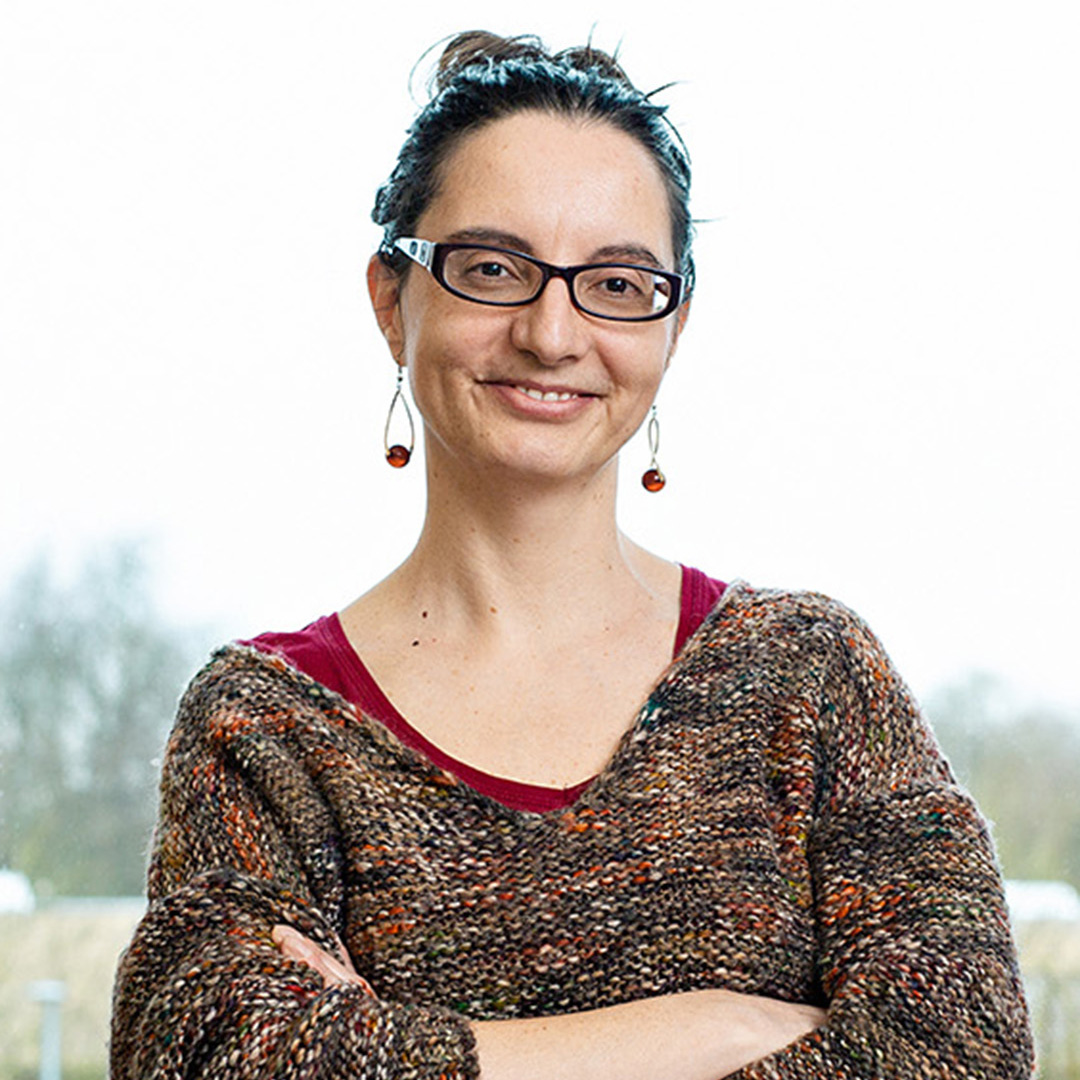
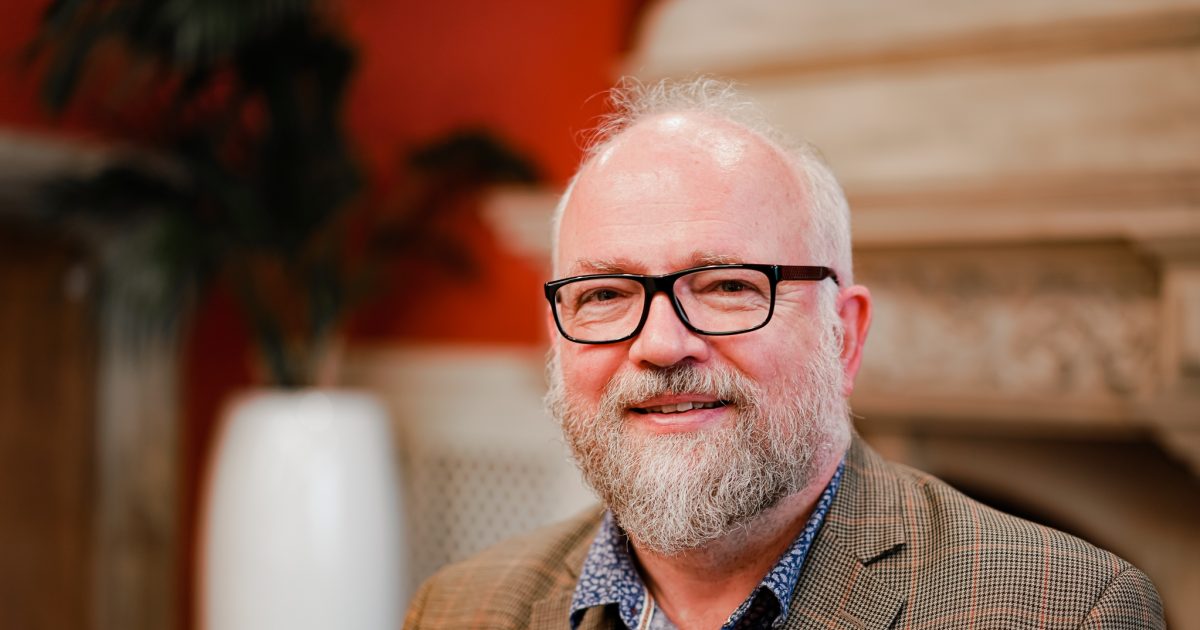
Andrew Zisserman is a Royal Society Research Professor at the University of Oxford's Department of Engineering Science, affiliated with the Visual Geometry Group (VGG). His research focuses on computer vision, artificial intelligence, and neural networks, with significant contributions to multimodal learning, video understanding, and 3D scene analysis. He leads projects exploring visual-language models, audio-visual synchronization, and clinical imaging applications. Key research areas include: Video analysis and temporal modeling Multimodal systems for sign language translation and action recognition 3D shape estimation and physical property inference Foundation models and cross-modal retrieval Recent work highlights: Developed Flamingo and Tapir models for video-language tasks Advancements in spinal MRI analysis and clinical imaging Leadership in EGO4D and VoxCeleb challenges Honors include Fellowship of the Royal Society (FRS) and the ISSLS Prize in Clinical Science 2023 for spinal analysis innovations. His lab collaborates globally, emphasizing real-world applications in healthcare and autonomous systems.
Professor Chris Holmes is a Professor of Biostatistics at the University of Oxford, where he moved from Imperial College London in February 2004. He is a Fellow at St Anne's College and works in the Department of Statistics. His research focuses on applications and statistical methods development in genomic sciences and genetic epidemiology, holding a prestigious Programme Leaders Grant in Statistical Genomics from the Medical Research Council. Prior to his position at Oxford, Professor Holmes completed his doctorate in Bayesian statistics at Imperial College London, investigating novel nonlinear pattern recognition methods. This was followed by a post-doctoral position and then a lectureship at Imperial. Before his academic career, he worked in industry for several years in scientific computing, developing techniques for real-time pattern recognition models in defense and SCADA systems. Professor Holmes has a broad interest in the theory, methods and applications of statistics and statistical modeling, with a particular foundation in Bayesian statistics which he views as providing a unified framework for stochastic modeling and information processing. His specific research interests include: Bayesian statistics and stochastic simulation Markov chain Monte Carlo methods Pattern recognition and nonlinear, nonparametric methods Spatial statistics Statistical genetics and genomics Genetic epidemiology His recent publications (2023-2025) demonstrate a strong focus on the intersection of biostatistics, artificial intelligence, and healthcare applications. His work spans multiple domains including AI-driven disease classification in neurology, genomic data analysis for health equity, machine learning tools for healthcare prediction, and addressing bias in medical AI systems. A notable trend across his research is the application of advanced statistical methods to solve pressing problems in genomics, epidemiology, and medical diagnostics, with an increasing emphasis on health equity and the ethical implications of AI in healthcare. Professor Holmes currently supervises PhD students Oscar Clivio, Sahra Ghalebikesabi, and Natalia Garcia Martin. His research is supported by multiple grants, including the MRC Programme Leaders Grant in Statistical Genomics which funds his work in statistical genomics. He is actively involved in three research groups at Oxford that reflect the breadth of his scholarly interests: Computational Statistics and Machine Learning Statistical Genetics and Epidemiology Statistical Theory and Methodology
Almut Sophia Koepke is a junior research group leader at the Technical University of Munich and University of Tübingen, focusing on multimodal learning problems integrating sound, vision, and text. Her work bridges foundational research in audio-visual understanding with practical applications in few-shot learning, zero-shot translation, and cross-modal attention mechanisms.
Timothy M. Hospedales is a Professor of Artificial Intelligence at the Institute of Perception, Action and Behaviour within the School of Informatics at the University of Edinburgh . He also serves as VP AI and Head of Samsung AI Research Centre Europe . His research focuses on efficient and robust AI , emphasizing meta-learning , lifelong transfer-learning , and domain adaptation in both probabilistic and deep learning frameworks. Applications span computer vision , vision and language , reinforcement learning for robotics , and finance . Professor at University of Edinburgh (2020–present) ELLIS Fellow (2021) Head of Samsung AI Research Europe (2020–present) Founding Director of Applied Machine Learning Lab at QMUL (2012–2016) His work includes pioneering contributions to meta-learning , few-shot learning , and self-supervised methods , with notable awards such as the Best Paper Prize at ICML AutoML 2018 and Best Student Paper at ICPR 2018 . He has co-authored 15+ recent papers on topics like Vision-Language Models , Medical AI Fairness , and Diffusion Model Optimization . He served as Program Co-Chair for BMVC 2018 and AAAI 2022 , and authored a book on Visual Adaptation in the Deep Learning Era (2022). Co-Chair, BMVC 2018 Guest Editor, IET CV Special Issue (2016) Keynote Speaker at TASK-CV Workshop (ECCV 2016) Special Issue on Fewer Labels (IEEE PAMI 2020) His leadership extends to organizing workshops like the Learning-to-Learn Workshop at ICLR 2021 , Meta-Learning Workshop at NeurIPS 2020 , and Domain Generalisation Workshop at ICLR 2023 . Current projects include Meta-Omnium (CVPR 2023) for general-purpose meta-learning and MetaAudio (ICANN 2022) for few-shot audio classification benchmarks.
Professor Carlo Harvey is a creative technologist at the School of Digital Arts (SODA), Manchester Metropolitan University. His interdisciplinary research merges games , machine learning , virtual production , and cultural heritage reinterpretation . He leads industry collaborations with entities like Jaguar Land Rover and Epic Games, focusing on AI-driven interactive audio, real-time visualization, and accessibility solutions. Award-winning projects : TIGA, Innovate UK, and Epic Games MegaGrant for Accession Industry partnerships : Automotive sector, cultural institutions His research spans human-computer interaction , multisensory virtual environments , and acoustic-visual cross-modal perception . Recent publications address robotic simulations, motion alignment, and haptic feedback systems. Scientific recognition : TIGA Award, Innovate UK Funding, Epic Games MegaGrant Advocacy : Digital inclusion, creative collaboration, social impact of technology
Professor Simon Godsill MA PhD FIET FIEEE is a University Professor of Statistical Signal Processing in the Department of Engineering at the University of Cambridge. He heads a research team specializing in statistical signal processing, digital audio restoration, and Bayesian inference. His work addresses the processing and analysis of digital speech, audio, tracking systems, and financial datasets, with a focus on probabilistic modeling and computational methods. Research interests include statistical signal processing , degraded signal restoration , and Bayesian computational methods . Recent publications emphasize Gaussian processes, variational inference, and multi-object tracking for applications in audio enhancement and financial data analysis. He co-founded the audio remastering company CEDAR Audio Ltd in 1988. Scientific awards: Fellow of the Institution of Engineering and Technology (FIET) Fellow of the Institute of Electrical and Electronics Engineers (FIEEE) Outside academia, he enjoys singing, cricket, piano/organ playing, and running. His team at Cambridge's Engineering department focuses on robust tracking algorithms and signal enhancement techniques.
Mark Gales is Professor of Information Engineering at the University of Cambridge and an Official Fellow at Emmanuel College. He is currently on sabbatical leave for the 2024/25 academic year. Prior to his academic career, he worked as a consultant at Roke Manor Research Ltd, developing radar systems, before transitioning to speech and language processing. PhD in 'Model-Based Techniques for Robust Speech Recognition' (University of Cambridge, 1995) BA in Electrical and Information Sciences (University of Cambridge, 1988) His research focuses on speech and language processing , particularly in automated language assessment and low-resource speech technology . He leads the Automated Language Teaching and Assessment (ALTA) Institute , which collaborates with Cambridge University Press & Assessment (CUP&A) to develop commercial tools like Linguaskill and Speak & Improve . These platforms provide automated spoken/written assessment for millions of users globally. Recent publications highlight his work in LLM-driven speech processing , including adversarial attacks on foundation models, end-to-end spoken error correction, and uncertainty estimation frameworks. His team's research spans multilingual capabilities, with deployments in languages ranging from Dholuo to Tok Pisin . Awards : IEEE Fellow, ISCA Fellow Leadership : Fellows' Steward at Emmanuel College Mark has contributed extensively to Hidden Markov Model (HMM) applications in speech recognition, which underpinned early automatic speech systems. His work now bridges LLM-based language assessment with cross-lingual transfer learning and robustness testing for real-world deployments.
Professor Gabriel Brostow is a faculty member in the Department of Computer Science at University College London (UCL), where he leads research in Computer Vision and Human-Computer Interaction. He also serves as Chief Research Scientist and Senior Director of the R&D Team at Niantic, the company behind Pokémon GO. His work bridges academic research and industry applications, focusing on developing AI systems that enhance human capabilities through what he terms 'Human in the Loop AI'—now commonly referred to as Human-Centered AI. Brostow completed his BS in Electrical Engineering at UT Austin, followed by a PhD with Irfan Essa at Georgia Tech. He then pursued postdoctoral research with Roberto Cipolla's Computer Vision & Robotics Group at Cambridge University as a Marshall Sherfield Fellow, and with Marc Pollefeys in ETH Zurich's CVG Group. His research explores how AI, particularly Computer Vision, can serve as 'super-tools' for professionals across various domains including filmmaking, architecture, robotics, and scientific research. Specific interests include assistive technology for everyday life, authoring systems that maximize user effort, 3D reconstruction, depth estimation, and vision-language models. His work often involves creating systems that are validated through real-world human interaction to ensure practical utility. Analysis of his recent publications reveals a strong focus on practical applications of Computer Vision that directly interact with humans. His research spans 3D scene understanding, depth estimation, sketch-based interfaces, and multimodal AI systems. There's a clear emphasis on creating benchmarks and tools that facilitate human-AI collaboration, with applications in assistive technology, urban planning, filmmaking, and biodiversity monitoring. His work frequently appears at top conferences including CVPR, NeurIPS, ECCV, and CHI. Marshall Sherfield Fellowship Brostow actively mentors PhD students, with current advisees including Ross Murphy, Skanda Koppula, Gizem Unlu, Omiros Pantazis, and Jamie Watson. His alumni include numerous PhD graduates and MSc students who have gone on to successful careers in academia and industry. He emphasizes selecting students based on passion and potential rather than just academic credentials, valuing traits like helpfulness, drive, and hunger to learn. His research is supported through collaborations with major institutions and companies including DeepMind, MIT, and the University of Edinburgh. He leads a research group at UCL that collaborates closely with Niantic's R&D team, creating a unique bridge between academic research and industry application. His team's work frequently involves developing novel Computer Vision techniques that are validated through real-world human interaction, ensuring practical utility alongside technical innovation. The group explores blue-sky research problems with applications ranging from assistive technology to professional tools for filmmakers, architects, and scientists studying diverse environments.
Dr A. I. Shihab is a Senior Lecturer at Kingston University's Faculty of Engineering, Computing and the Environment, Department of Networks and Digital Media. He teaches programming languages (C++/Java), data structures, web development, and AI/machine learning. His research focuses on affective computing and machine learning applications including: Acoustic event detection in sports environments Audio signal analysis for tennis match modeling Multi-camera visual surveillance systems Medical imaging analysis using fuzzy clustering techniques Publications demonstrate expertise in combining audio/video modalities for sports analytics (tennis rallies, court-shots) and developing Markov models for sound event sequence analysis. Contact: a.shihab@kingston.ac.uk
Professor Thomas Blumensath is a Professor of Signal and Image Processing at the University of Southampton and a Fellow at the Alan Turing Institute. He is the Academic Lead in Image Processing and Reconstruction at the University's μ-VIS X-ray Imaging Centre and Director of Research at the Institute of Sound and Vibration Research (ISVR). His research focuses on advanced algorithms for solving inverse problems in tomographic imaging, combining machine learning, optimization, and statistical methods. Key areas include X-ray tomography strategies, GPU-accelerated reconstruction, and multimodal imaging applications. Education: B.Sc. (Hons) Music Technology and Audio System Design, University of Derby (2002) PhD in Electronic Engineering (Bayesian Signal Processing), University of London (2006) Research Interests: Professor Blumensath's work spans theoretical and applied signal/image processing, with emphasis on tomographic imaging techniques. His current projects address efficient reconstruction methods, spectral X-ray CT, and applications in manufacturing and plant science. He collaborates with advanced imaging facilities like Diamond Light Source and ISIS neutron imaging beamline. Key Contributions: His research bridges computational methods (e.g., compressed sensing) with practical imaging challenges, including limited-angle tomography and stereo imaging strategies. He leads the National Research Facility for Lab X-ray CT and has developed the TIGRE reconstruction toolbox. Grants & Projects: Active funding includes EPSRC projects on tomographic sensitivity monitoring and CT-based manufacturing inspections. Completed projects cover constrained reconstruction, AM process verification, and industrial CT metrology. Awards: Alan Turing Institute Fellowship Teaching & Leadership: He teaches modules on machine learning, biomedical image processing, and robotics. Leads the BEng Control Engineering program at the Joint Education Institute with Harbin Engineering University. Labs/Teams: Active in the Signal Processing, Audio and Hearing research group (SPAH) and the Institute for Life Sciences. Oversees the μ-VIS X-ray Imaging Centre's research initiatives.
Andrew Markham is a Professor of Computer Science at the University of Oxford , affiliated with Kellogg College . He leads a research group focusing on Cyber Physical Systems (CPS) , specializing in sensors, signal processing, and machine learning to enable machines to better perceive the physical world. His work emphasizes cross-disciplinary collaboration, notably in wildlife tracking and indoor positioning systems. He has held roles as a Postdoctoral Fellow (2008-2012), Associate Professor (2013), and Full Professor (2021). Education : PhD in Electrical Engineering (University of Cape Town, 2008), BSc (Hons) in Electrical Engineering (2004). Research Interests : Tracking and localization in GPS-denied environments (e.g., underground, indoors), magneto-inductive systems, physics-informed machine learning, and data-driven approaches for noisy sensor data. His projects include wildlife monitoring via wireless sensor networks and mmWave radar for human motion capture. Key Projects : CARACAL acoustic monitoring system, mmPoint dense human tracking, and RandLA-Net for large-scale point cloud segmentation. His work spans robotics, environmental sensing, and biomedical applications. Advising & Grants : Supervises over 30 students and collaborates with industrial partners. Research teams include Cyber Physical Systems, Autonomous Ubiquitous Sensing, and Wildlife Monitoring initiatives. Labs/Teams : Leads the CPS research group, focusing on sensor networks, inertial navigation, and multimodal fusion systems. Collaborates with zoology and earth science disciplines on applied projects.
Professor David Clifton is the Royal Academy of Engineering Chair of Clinical Machine Learning at the University of Oxford’s Institute of Biomedical Engineering. He leads the Computational Health Informatics (CHI) Lab, focusing on AI-driven healthcare solutions with a strong emphasis on translational research in low- and middle-income countries (LMICs). His work spans digital health technologies, medical imaging analysis, and AI ethics. Clifton holds multiple fellowships, including from the Alan Turing Institute and Fudan University. Key affiliations include co-directorship of the Oxford-CityU Centre for Cardiovascular Engineering and involvement in the Wellcome Trust’s Flagship Centre in Vietnam. His research has been commercialized through spinouts like OBS Medical and Oxehealth. Notable projects include AI tools for non-invasive vital sign monitoring and pandemic response strategies using audio-based health data. Clifton’s awards include the IEEE Early Career Award (2022) and the Vice-Chancellor’s Innovation Prize. His lab’s Suzhou branch focuses on open-source digital health research using public datasets. Current research themes include multimodal data integration, generative AI in healthcare, and equitable AI deployment across global health systems.
Alec Wright is a Chancellor’s Fellow in Audio Machine Learning at the University of Edinburgh, affiliated with the Edinburgh College of Art and the Music department. He focuses on applying machine learning to musical audio signal processing and synthesis, particularly through neural network-based audio effects modeling. Education: Doctor of Science (DSc) in Neural Modelling of Audio Effects, Aalto University (2023) Master of Science (MSc) in Acoustics and Music Technology, University of Edinburgh (2018) Master of Engineering (MEng) in Mechanical Engineering, University of Manchester (2014) His research explores neural network architectures for real-time audio processing, guitar amplifier emulation, and diffusion-based distortion restoration. Key methodologies include Recurrent Neural Networks (RNNs), neural ordinary differential equations, and synthetic data generation for foundation models. Recent publications highlight sample rate conversion techniques, interpolation filters, and nonlinear distortion modeling. These works span domains like signal processing, computational audio, and physical modeling synthesis. Scientific Awards: Chancellor’s Fellow, University of Edinburgh As an active researcher, he collaborates internationally and contributes to frameworks like Open-Amp for audio effect modeling. No formal student advising details are currently available.
Cecilia Mascolo is a Professor of Mobile Systems at the University of Cambridge , specifically in the Department of Computer Science and Technology . She co-directs the Centre for Mobile, Wearable System and Augmented Intelligence and is a Fellow of Jesus College, Cambridge . Her research focuses on mobile systems , machine learning for mobile health , and earable technology . She has been awarded prestigious grants such as the ERC Advanced Research Grant (2019-2025) and the EPSRC Open Research Fellowship (2025-2030). Currently on sabbatical at Harvard University , her work bridges systems and machine learning for health applications. Education: PhD in Computer Science from the University of Bologna, Italy. Previous Affiliation: Faculty at University College London before 2008. Her research spans mobile and wearable systems for health and behavior monitoring, focusing on on-device machine learning , uncertainty-aware models , and audio-based diagnostics . Key areas include federated learning , edge computing , and respiratory disease progression analysis via wearables. She explores earable technology for physiological monitoring, gait analysis, and even toothbrushing tracking using in-ear sensors. Her recent publications highlight advancements in earable-based health monitoring , including heart rate estimation , respiratory rate detection , and ECG analysis using machine learning. She emphasizes longitudinal health data from consumer devices, advocating for scalable diagnostics beyond traditional clinical standards. Scientific Awards: ERC Advanced Research Grant EPSRC Open Research Fellowship Best Paper Award - IEEE Percom 10-Year Impact Award - ACM Ubicomp Computer Laboratory Ring Hall of Fame Best Paper Award Student: Andrea Ferlini - ACM SIGMOBILE Doctoral Dissertation Runner-up She leads the Mobile Systems Research Laboratory , mentoring a team of 15 researchers (postdocs and PhD students), and has graduated over 25 PhD students. Her teaching includes Mobile Health courses at the University of Cambridge, and she serves as Director of Studies for Computer Science at Jesus College.
David De Roure is Professor of e-Research at the University of Oxford and Academic Director of both the Digital Scholarship initiative and the Laboratory for AI Security Research. He is also an Honorary Research Professor at the Royal Northern College of Music (RNCM), where he serves as Technical Director of the Centre for Practice & Research in Science & Music (PRiSM). His work bridges computer science, digital humanities, cybersecurity, and music through his distinctive interdisciplinary approach. De Roure received his PhD in 1990 supervised by David W Barron and Peter Henderson, with research in Lisp and distributed systems. Prior to joining Oxford in 2010, he was Professor of Computer Science at the University of Southampton and Director of the Centre for Pervasive Computing in the Environment. His career spans multiple institutions and research domains, reflecting his commitment to interdisciplinary work. De Roure's research focuses on new methods of digital scholarship, innovation in knowledge infrastructure, cybersecurity, and computational approaches to music. His work uniquely combines humanities (digital musicology), social sciences (social machines and web science), engineering (Internet of Things), and computer science (distributed systems, AI). A key theme is empowering human creativity through technology rather than replacing humans with AI. He emphasizes co-creation between humans and machines, particularly in music composition where he explores how algorithms can generate fragments for human assembly. His recent publications reveal a strong focus on AI security in IoT systems, digital scholarship methods, and the intersection of music with computational approaches. There's a clear trajectory from foundational work in social machines and web science toward current applications in cybersecurity and music-AI co-creation. His publications consistently bridge technical domains with humanistic inquiry, demonstrating his commitment to interdisciplinary scholarship that addresses real-world challenges. Fellow of the British Computer Society (FBCS) Fellow of the Institute of Mathematics and its Applications (FIMA) Fellow of the Royal Society of Arts (FRSA) Chartered IT Professional (CITP) Turing Fellow at The Alan Turing Institute (2018-2024) De Roure has co-founded three major interdisciplinary initiatives: PETRAS National Centre of Excellence for IoT Systems Cybersecurity (the world's largest socio-technical research center focused on IoT security), the Software Sustainability Institute (dedicated to improving research software), and PRiSM at RNCM. He was Director of the Oxford e-Research Centre from 2012-17 and has led numerous research projects including SOCIAM (The Theory and Practice of Social Machines), FAST (Fusing Audio and Semantic Technologies), and Transforming Musicology. The Laboratory for AI Security Research, which he directs, took its first PhD students in 2024. At Oxford, De Roure chairs the Digital Research Cluster at Wolfson College and oversees the Laboratory for AI Security Research. The PRiSM team at RNCM has produced numerous musical works and performances, including six premieres in New York in 2024. He has been involved in designing gesture recognition software used in many performances and has collaborated on public engagement projects including the Science Together project which released a Hip Hop album. His current work includes exploring Chladni Plates for new musical instrument design and developing algorithmically enhanced instruments.