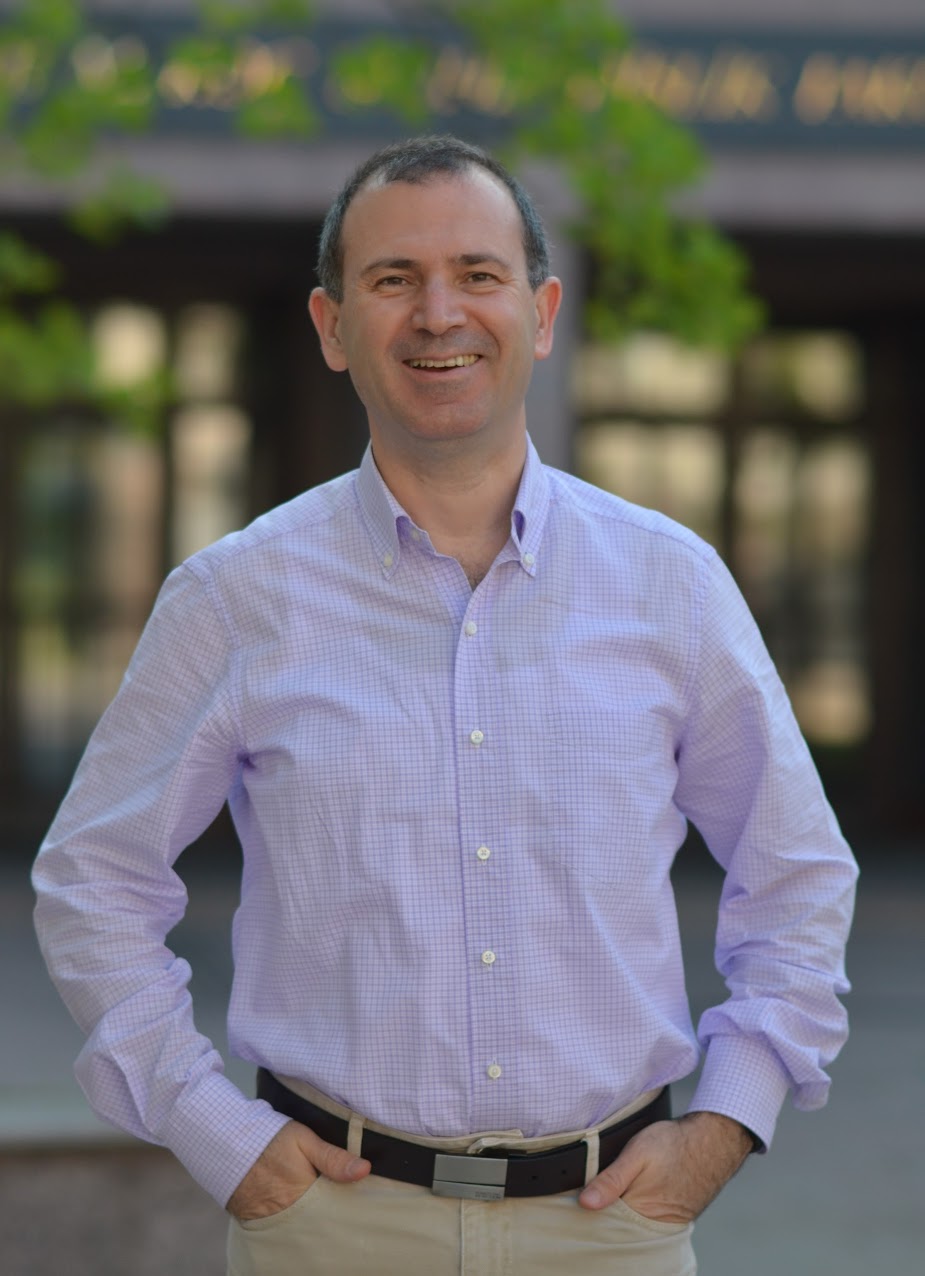
Engin Erzin is a Professor at Koç University's College of Engineering, leading the KUIS AI Lab and Multimedia, Vision and Graphics Lab . His research focuses on AI-driven human-centric systems, affective computing, and multimodal interaction analysis. He has contributed extensively to robotics, speech processing, and human-robot interaction through over 70 peer-reviewed publications since 2008. Research interests include: Affective computing and emotion recognition from speech/gestures Human-robot interaction and socially engaging agents Speech-driven animation and gesture synthesis Multimodal data fusion for interaction analysis Deep learning applications in robotics and biomedical engineering Recent work emphasizes: Developing adaptive pHRI controllers for manufacturing tasks Creating engagement measurement frameworks for human-machine interfaces Advancing Turkish speech recognition through self-supervised learning Designing multimodal databases for interaction studies Labs: KUIS AI Lab : Focuses on AI applications in robotics and human-computer interaction Multimedia Lab : Specializes in vision, graphics, and audiovisual analysis
Tayfun Akgül is a Professor at Istanbul Technical University's Faculty of Electrical and Electronics Engineering, Department of Electronics and Communication Engineering. With academic affiliations spanning decades, he combines engineering rigor with innovative research in signal processing and underwater acoustics. His research focuses on advanced signal processing techniques, including Compressive sensing and cyclostationary analysis Underwater acoustic monitoring and sensor arrays Thermal imaging and infrared reflection modeling Biometric identification through facial attributes Seismic signal processing Recent publications demonstrate expertise in Propeller noise analysis in maritime environments Micro-Doppler helicopter signature detection Seismic activity precursor identification Novel fisheye camera human detection systems Awarded Most Successful Doctoral Thesis Award from TESID (2024) IEEE Top 10 Award (2013) he maintains active IEEE membership since 1992 and has led multiple high-impact projects including casualty detection systems and electric vehicle warning systems.
Erkan Günerhan is a full-time Lecturer in the Department of Computer Technologies at Kağızman Vocational School, Kafkas University, Turkey, holding this position continuously since 2012. He has also served in significant administrative roles including Department Head (2017-2020) and Center Deputy Director (2013-2017) at the same institution. His academic credentials include: BSc in Computer Engineering from Pamukkale University (2003-2009) MSc in Computer Engineering from Atatürk University (2009) Master's Degree in Computer Engineering (Thesis) from Karadeniz Technical University (2019) Günerhan's research spans computational mathematics and artificial intelligence, with early work on numerical methods for differential equations and fractional calculus evolving toward machine learning applications. His expertise demonstrates a clear transition from theoretical mathematical modeling to practical AI implementations, particularly in speech recognition systems. Publication trends reveal a methodological progression: initial focus (2014-2015) on differential transform methods for population models and fractional PDEs shifted toward deep learning techniques by 2022, evidenced by his LSTM-based speaker recognition research. This trajectory highlights his adaptation to emerging computational paradigms while maintaining strong mathematical foundations. He has not received any notable scientific awards. Günerhan has not supervised thesis students nor participated in research projects or intellectual property development. His collaborations include Khatereh Tabatabaei (4 joint publications), Cemal Köse (1 publication), and Ercan Çelik (1 publication), primarily focused on numerical analysis and AI applications.
Mustafa Sert , currently serving as Associate Professor at Başkent University's Department of Computer Engineering and as Vice Dean of the Faculty of Engineering, has made significant contributions to audio signal processing, machine learning, and semantic multimedia. He earned his PhD (2006), MSc (2001), and BSc (1997) in Computer Engineering from Gazi University, supervised by prominent academics. PhD: Gazi University (2006) MSc: Gazi University (2001) BSc: Gazi University (1997) His research focuses on audio-visual content analysis , multimodal information fusion , and machine learning applications in semantic multimedia systems. He leads projects at the intersection of deep learning , speech processing , and acoustic pattern recognition , with work appearing in venues like IEEE Access, ACM Multimedia conferences, and Signal Processing and Communications Applications Conference (SIU). Recent publications demonstrate trends in automated audio captioning , medical speech analysis , and educational data mining , with applications spanning mental health detection, chatbot development, and reviewer selection systems. His work integrates transformer architectures , convolutional networks , and fuzzy decision-making models . Scientific Recognitions: Best Paper Award (7th Eurasian Congress on Emergency Medicine 2021) Outstanding Reviewer Awards (IEEE ICME 2020, 2021) Outstanding Area Chair Award (ACM Multimedia 2024) Academic Leadership includes roles as Senior IEEE Member, technical committee board positions in IEEE CTSoc divisions, and ACM membership. He supervises over 20 graduate students in topics ranging from depression detection through speech to geothermal permeability estimation , while maintaining active involvement in conference organization and journal reviewing for top-tier publications.
Burcu Oltu is a Researcher in the Biomedical Engineering Department at Başkent University. She holds both a Master's Degree (2020) and Bachelor's Degree (2017) from the same institution. Her work focuses on applying machine learning techniques to biomedical signal processing and medical imaging. Education: MSc & BSc in Biomedical Engineering, Başkent University Email: boltu@baskent.edu.tr Her research integrates machine learning with biomedical engineering to solve medical diagnostic challenges. Key areas include: Deep learning for pulmonary disease classification from chest X-rays EEG signal analysis for Alzheimer's disease detection Transfer learning approaches for diabetic retinopathy detection Photoplethysmography and blood pressure signal analysis for sleep apnea detection Heart sound signal processing using wavelet transforms Her publications demonstrate a strong focus on developing AI-powered diagnostic tools for various medical conditions, with recent work appearing in journals like BMC MEDICAL IMAGING and Biomedical Signal Processing and Control. She has received recognition for her work, including: Bronze Medal - Istanbul International Invention Fair (ISIF) 2021 Burcu collaborates with researchers like Prof. Dr. Berna Dengiz and Doç. Dr. Selda Güney on projects involving medical imaging analysis and physiological signal processing. Her technical expertise spans algorithm development, neural networks, and biomedical device design.
Assoc. Prof. Gültekin Işık is affiliated with the Department of Computer Hardware at Iğdır University's Faculty of Engineering. He holds a PhD in Computer Engineering from Hacettepe University (2011–2019), focusing on Turkish dialect recognition using deep learning. His academic roles include serving as Head of the Department from 2019 to 2021. His research interests span deep learning applications in computer vision (e.g., YOLO-based crowd detection), optimization algorithms (e.g., Slime Mould Algorithm), environmental modeling (solar power efficiency prediction), and healthcare (breast cancer detection). He has authored numerous peer-reviewed articles and books, including works on convolutional neural networks for plant disease identification and hybrid optimization techniques for data clustering. Prof. Işık teaches advanced courses such as İleri Derin Öğrenme (Advanced Deep Learning) and Sinir Ağları (Neural Networks). His recent work emphasizes real-time video analysis for public health (social distancing) and energy systems optimization. Despite no listed awards, his contributions to interdisciplinary fields like bioacoustics and renewable energy are notable. He has advised two master’s students: Mehmet Şirin Gündüz (2023) on YOLO-based crowd detection and Seda Bayat (2021) on bird species recognition using deep learning. His research integrates theoretical models with practical applications in domains ranging from agriculture to medical imaging.
Serkan KESER is an Associate Professor in the Department of Electrical and Electronics Engineering at the Faculty of Engineering and Architecture, Ahi Evran University, Turkey. He has been serving as a full-time faculty member since 2018 and previously served as Head of Department from 2018-2021. His educational background includes a PhD in Electrical and Electronics Engineering from Eskişehir Osmangazi University (2009-2018), a Master's degree in the same field from the same institution (2005-2008), and a Bachelor's degree in Electrical and Electronics Engineering from Mustafa Kemal University (1999-2005). Dr. KESER's research focuses on three main areas: Audio and Speech Processing : Including speaker identification, isolated word recognition, and speech coding techniques Signal Processing : With applications in fiber optic sensor systems and acoustic positioning Image Processing : Covering face recognition, image compression, and denoising techniques His recent publications demonstrate a strong trend toward integrating machine learning and deep learning approaches with traditional signal processing methods. He has made significant contributions in applying subspace methods to various domains including speech recognition, image processing, and sensor technologies. His work often bridges theoretical signal processing concepts with practical applications in areas like smart home systems, medical imaging, and environmental monitoring. Dr. KESER has successfully supervised five Master's students to completion, with thesis topics spanning deep learning applications for class attendance systems, photovoltaic systems, speaker identification, brain tumor classification, and speech-controlled robotic arms. He has led four research projects, including development of fiber optic motion sensors, smart home models using Arduino microcontrollers, and science outreach initiatives. His teaching portfolio includes advanced courses in digital image processing, artificial neural networks, digital signal processing, and machine learning at both undergraduate and graduate levels. Dr. KESER's research impact is reflected in his publication metrics: 30 total publications with 117 citations (h-index 5) through the UNIS system, 25 publications with 180 citations (h-index 6) on Google Scholar, and strong representation in Scopus and Web of Science databases.
Prof. Dr. Oğuzhan ERDEM is a faculty member at Trakya University Faculty of Engineering , Department of Electrical and Electronics Engineering since 2023. He earned his PhD in Electrical and Electronics Engineering from Middle East Technical University in 2011 and served at various academic roles across 22 years, including Department Head since 2021. PhD: Middle East Technical University (2011) Visiting Scholar: University of Southern California (2010-2011) His research focuses on machine learning applications in biomedical diagnostics and FPGA-based network processing . Recent publications explore Parkinson's disease detection through keystroke analysis, cough sound diagnostics, and hardware-accelerated network traffic classification. Key article trends show: 2023-2025: Deep learning for medical diagnostics 2016-2020: Hardware-optimized network processing 2010-2015: FPGA-based IP lookup architectures Awards: Middle East Technical University 2011 Doctoral Thesis of the Year He has supervised 6 graduate theses and led 2 major projects including Early Detection of Parkinson's Disease Using Multimodal Signals (2021). Patent co-inventor in systolic array architectures.
Prof. Levent EREN is a Professor and Vice Rector at İzmir University of Economics, leading the Faculty of Engineering's Electrical and Electronics Engineering department. He holds a Ph.D. from the University of Missouri (2002) and has extensive experience in academia and industry, including roles as Vice Dean (2014–2019) and faculty member at Bahçeşehir University (2003–2012). His research focuses on motor fault diagnosis, power quality, and digital signal processing, with over 30 journal and conference publications. Prof. EREN’s work emphasizes innovative applications of neural networks and wavelet transforms in machinery condition monitoring. He has contributed to EU-funded projects like Future Education and Training in Computing (2013–2014). His administrative roles include managing institutional research and academic policies as Vice Rector since 2019. His teaching spans courses on electrical energy conversion, digital signal processing, and senior engineering projects. He has no explicitly listed awards but is recognized for his technical contributions in motor current signature analysis and bearing fault detection.
Ulaş YURTSEVER serves as Assistant Professor in the Department of Computer Engineering at Sakarya University's Faculty of Computer and Information Sciences. He has held academic positions since 1999, including Research Assistant roles at the Computer Research and Application Center (2005-2013) and Faculty of Engineering (1999-2013), and has been Lecturer at Adapazari Vocational School since 2013. His academic credentials include: Doctorate in Computer and Information Engineering (2007-2019): Thesis on "Colon cancer detection using deep learning method on segmented histopathological images" Master's in Electrical and Electronics Engineering (2000-2002): Thesis on "PC-based building automation" Bachelor's in Electrical and Electronics Engineering (1994-1999) Dr. YURTSEVER's research integrates Artificial Intelligence, Machine Learning, and Deep Learning to solve critical problems in medical diagnostics and environmental sustainability. His work focuses on computer vision applications for colon cancer detection in histopathological images and machine learning-driven analysis of plastic degradation across environmental matrices. He actively develops IoT systems for predictive maintenance in industrial settings. His publication trajectory (2018-2025) reveals strong thematic continuity in AI applications, with recent emphasis on plastic waste characterization (2023-2024) and medical AI (2024-2025). The TÜBİTAK 1001 projects on football agility prediction and plastic aging demonstrate his capacity for securing competitive research funding. He has secured multiple TÜBİTAK 1001 grants for interdisciplinary research bridging computer engineering with environmental science and healthcare. His collaborative work spans medical diagnostics (fundoscopy devices, cerebral angiography), environmental monitoring (plastic degradation tracking), and industrial systems (electrical panel anomaly detection).
Prof. Dr. Ümit Güz serves as a full-time Professor in the Department of Electrical and Electronics Engineering at Işık University's Faculty of Engineering and Natural Sciences. With over two decades of academic experience, his expertise spans biomedical signal processing, speech technology, and machine learning applications. Education: Post-Doc (2006-2007): SRI International, Menlo Park, CA - Speech Technology and Research Laboratory Post-Doc (2007-2008): UC Berkeley, International Computer Science Institute PhD (1997-2002): Istanbul University, Electronics Engineering MSc (1995-1997): Istanbul University, Electronics Engineering BSc (1990-1994): Istanbul University, Electrical-Electronics Engineering Associate Degree (1988-1990): Yıldız Technical University, Computer Programming His research centers on multimodal biometric systems using ECG and speech signals, medical image compression techniques, and Turkish language processing. Key innovations include SYMPES speech modeling framework and quadtree-based energy pattern blocks for biomedical image compression. His work bridges theoretical signal processing with practical healthcare and security applications. Publication trends reveal consistent focus on biometric identification (fingertip ECG/speech fusion), efficient compression algorithms for medical data (ECG/EEG/images), and semi-supervised learning for Turkish sentence segmentation. Recent work emphasizes multi-view learning strategies and deep neural network integration in compression systems. Scientific Awards: J. William Fulbright International Fellow (Postdoc Scholar Program, USA) Overseas Postdoctoral Research Award (TÜBİTAK BİDEB, Turkey) Prof. Güz has supervised 9 master's theses and 2 PhD dissertations on biometric recognition, speech compression, and medical image processing. His research is supported by TÜBİTAK grants including Project No 107E182 (Turkish spoken language processing) and Project No 10A301 (ECG-based biometric recognition). He actively contributes to IEEE and IEICE as a longstanding member.
Murat IŞIK is a Lecturer in the Department of Computer Engineering at the Faculty of Engineering and Architecture, Kırşehir Ahi Evran University. He has been serving as a full-time faculty member since 2017 and currently holds additional administrative positions as Department Head (since 2025) and Research Application Center Deputy Director (since 2024). PhD in Computer and Information Engineering, Sakarya University (2011-2017) MSc in Computer Engineering, Sakarya University (2009-2011) Bachelor's Degree from Dicle University, Batman Technical Education Faculty (2002-2006) Dr. IŞIK's research spans multiple areas in computer science and engineering, with a focus on artificial intelligence applications. His primary research interests include Computer System Software, Image Processing, Programming Languages, Computer Software and Software Engineering, Machine Learning, and Artificial Intelligence. His work demonstrates a strong interdisciplinary approach, applying computer vision and deep learning techniques to diverse fields including medical diagnostics, education technology, and accessibility solutions. His recent publications show a trend toward practical applications of AI in education, healthcare, and everyday life challenges. He has developed innovative solutions such as real-time assessment systems for primary schools, assistive technology for visually impaired individuals, and classification systems using deep learning approaches. Research World Medal and Research World Excellent Paper Award (2016) Dr. IŞIK has successfully supervised multiple master's students and is actively involved in numerous research projects funded by higher education institutions. His projects range from BCI-supported deep learning models for motor/facial movement detection to AI-assisted insole production and intelligent test systems for primary school students. He has secured funding for projects extending through 2027, demonstrating sustained research productivity. He leads the Computer Engineering department's research efforts and has established collaborations with researchers both within Turkey and internationally, particularly in Iraq. His laboratory work focuses on implementing practical AI solutions with an emphasis on accessibility and educational applications.
Dilek Günneç Danış is an Associate Professor in the Industrial Engineering Department at Özyeğin University, Turkey. Her academic work spans network optimization, social network analysis, and humanitarian logistics with applications in disaster management, marketing, and public health. Ph.D. in Operations Management/Management Science, University of Maryland (2012) M.Sc. in Industrial Engineering, Koç University (2007) B.Sc. in Mathematics with Minor in Operations Research, Middle East Technical University (2005) Research Interests : Combinatorial optimization and complex systems Network modeling for information propagation New product development under social influences Humanitarian logistics in refugee crises Disaster mitigation and infrastructure resilience Scientific Contributions : Developed agent-based models for refugee migration paths Created capacitated mobile facility location frameworks Advanced influence maximization algorithms for social networks Optimized disaster response logistics systems Scientific Awards : Best Poster Award (Business Analytics Workshop, 2017) Advised team: Third Place INFORMS Student Competition (2020)
Cem Taşkın is an Assistant Professor at the Department of Computer Engineering, Trakya University, and has served as Department Head since January 2023. Previously, he was Assistant Professor at Tunca Vocational School (2011-2014) and held administrative roles as School Director (2013-2017) and Deputy Director (2012-2013). He earned his PhD in Computer Engineering from Trakya University in 2010. High School: Kırklareli Anatolian High School (1999) Bachelor's: Trakya University, Computer Engineering (2003) Master's: Trakya University, Computer Engineering (2006) PhD: Trakya University, Computer Engineering (2010) His research focuses on Computer Engineering , Multimedia Security , and Embedded Systems , with a strong emphasis on encryption techniques for MPEG video streams and mobile/web application development. Recent work includes applying interactive mobile applications for pediatric chemotherapy treatment (2022) and optimizing embedded systems as dashboards (2016). Publication trends reveal expertise in video encryption (I-frames, byte alignment, XOR operations), chaotic algorithms for sound data security, and software development for educational and administrative systems. His work bridges theoretical cryptography with practical implementations in multimedia and embedded environments. Supervised Master's Theses: Altuğ Yiğit - Human Insight in Business Processes with Deep Learning Temel Yavuz - Corporate Content-Information Management Systems Murat Emre Yücel - Text Classification with Active Learning Projects: Led initiatives at Trakya University on mobile application development laboratories (2016), campus automation systems (2016), and MPEG audio querying (2008). Participated in KOSGEB's R&D Innovation Project for Dream Cash Register/Barkot Systems (2012).
Prof. Dr. Rifat EDİZKAN is a distinguished Professor at Eskisehir Osmangazi University's Faculty of Engineering-Architecture, Department of Electrical and Electronics Engineering. He currently serves as the Head of Department since 2023 and previously held the position of Vice Rector from 2019-2022. With a career spanning over three decades at the university, he has progressed from Research Assistant to his current professorship. His educational background includes: Bachelor's Degree: Anadolu University (1987) Master's Degree: Anadolu University (1990) PhD: Eskisehir Osmangazi University (2000) Prof. EDİZKAN's research focuses on cutting-edge areas in artificial intelligence and signal processing. His work primarily centers around Artificial Intelligence, Computer Learning and Pattern Recognition, with specific expertise in Audio and Image Processing, Pattern Classification, and Digital System Design. His research has evolved from traditional pattern recognition techniques to modern deep learning applications across diverse domains including medical imaging, agricultural technology, and robotics. An analysis of his recent publications reveals a strong trend toward practical AI applications, particularly in healthcare technology (fall detection systems, medical imaging), agricultural monitoring (plant disease detection), and industrial automation. His work demonstrates a consistent evolution from theoretical pattern recognition to applied machine learning solutions addressing real-world problems. Prof. EDİZKAN has served as Principal Investigator on numerous research projects, including several TUBITAK-funded initiatives. His leadership extends beyond research to academic administration, having served as Department Head twice and as Vice Rector. He has also been actively involved in peer review activities for journals and conferences, and has served on academic promotion committees. His laboratory work appears to focus on practical implementations of AI systems, with recent projects involving elderly care robots, plant disease detection systems, and industrial monitoring solutions. His research group seems to maintain strong industry connections, particularly in the automotive and healthcare sectors.