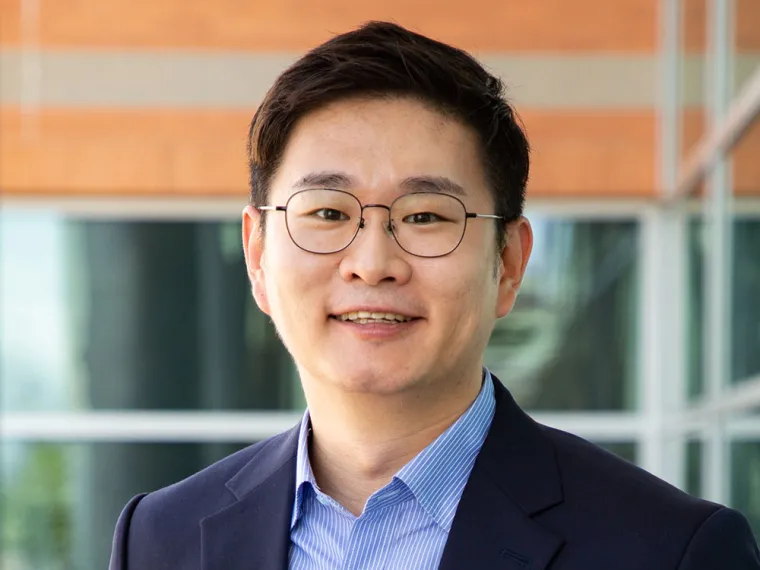
Seokjun Youn is an Assistant Professor in the Department of Management Information Systems at the Eller College of Management, University of Arizona . His research focuses on improving healthcare delivery systems through technological innovations and operational strategies, with additional expertise in supply chain logistics and platform business models. Education: PhD in Operations and Supply Chain Management from Texas A&M University; MS and BS in Industrial Engineering from Texas A&M University and Seoul National University, respectively. Research Areas: Healthcare operational efficiency, patient flow, health IT, human-AI collaboration, and supply chain management. Scientific Awards: DSI Best Theory-Driven Empirical Research Paper Award (2024) CMIH Grant (2020, 2021, 2023, 2024, 2025) POMS Emerging Scholars Program (2021, 2023) Professional Service: Editorial board member for Production and Operations Management and Decision Sciences journals; track chair for conferences like CHITA and DSI. His work combines econometric methods and optimization techniques to address challenges in healthcare systems, with findings published in top journals including Manufacturing & Service Operations Management and Journal of Operations Management .
Robert S. Allison is a Professor in the Department of Electrical Engineering & Computer Science at York University's Lassonde School of Engineering. His research focuses on human perceptual responses in virtual environments, stereoscopic vision, and eye movement analysis. He is affiliated with the York Centre for Vision Research, Sensorium (Digital Arts & Technology), and the Centre for Innovation in Computing at Lassonde. His research interests include depth perception in natural and virtual environments, human-computer interface design for VR, machine vision applications, and the measurement of human motion. He has supervised multiple graduate students and contributed to over 260 publications. His work spans topics like cybersickness mitigation, display lag effects, and perceptual adaptation in VR. Key grants include NSERC-funded projects on perception in virtual environments and collaborations with institutions like the Australian Research Council. His teaching includes courses on human perception in human-computer interaction and digital logic design. Recent articles highlight advancements in understanding motion perception, VR-induced sickness, and multisensory integration. He collaborates widely, with affiliations including the VISTA program and York's Connected Minds initiative.
Pascal Vincent is an Associate Professor at the Department of Computer Science and Operational Research , University of Montreal, and a key member of the Montreal Institute for Learning Algorithms (MILA) . He holds a PhD in Computer Science from the University of Montreal and has been pivotal in advancing machine learning and artificial perception. Education: PhD in Computer Science (University of Montreal, 2003) His research spans machine learning , deep learning , representation learning , and neural networks , focusing on unsupervised methods and geometrically inspired algorithms. He explores how intelligent systems can autonomously build meaningful representations from raw data, driven by principles like the manifold hypothesis . Key projects include generative stochastic networks , contractive autoencoders , and high-dimensional sequence transduction . His work has resulted in 15+ recent publications in top venues like NIPS, ICML, and CVPR. Scientific Awards : Best student-paper award at ICML 2012 Honorable mention at NIPS 2011 Funded by FCI, FRQNT, CRSNG, CIFAR, and IBM Pascal has supervised 15+ doctoral and Master’s students , including Florian Bordes, Tom Bosc, and Nicolas Boulanger-Lewandowski, across topics like representation learning and generative models . He is also a co-founder of the UNIQUE (Union Neurosciences & Intelligence Artificielle Québec) research consortium.
Karan Ahuja is the Lisa Wissner-Slivka & Benjamin Slivka Assistant Professor of Computer Science at Northwestern University, directing the Sensing, Perception, Interactive Computing & Experiences (SPICE) Lab. He earned his Ph.D. in Human-Computer Interaction from Carnegie Mellon University (2023) and a B.Tech. in Computer Science (2017). His research focuses on creating technologies that sense and understand human behavior, with applications in mobile health, extended reality, and natural user interfaces. Key projects include LemurDx for ADHD diagnosis, EITPose for wearable hand pose tracking, and MobilePoser for full-body pose estimation via consumer IMUs. Awards include Forbes 30 Under 30 (2024), MIT 35 Innovators Under 35 Asia Pacific, and ACM SIGCHI's Outstanding Dissertation Award. He has worked at Google, Apple, Microsoft Research, Meta Reality Labs, and IBM Research. His lab emphasizes real-world deployments, with technologies licensed and integrated into products used by millions. Prospective students are invited to join his lab at Northwestern via a dedicated application form. Research spans embedded systems, computer vision, and on-device ML, with a focus on impactful applications in healthcare and XR.
Sophie Seita is a London-based artist, researcher, and Lecturer in Fine Art & History of Art at Goldsmiths, University of London, where she also serves as Director of Critical Studies for the BA Fine Art Extension Degree and Deputy Director of Research for the Department of Art. Her interdisciplinary practice spans performance, video, sound, textiles, books, and installations, with language as a central material. Previously, she was a tenure-track Assistant Professor at Boston University (2019-2022) and a Junior Research Fellow at Queens' College, University of Cambridge (2016-2019). Seita's research interests encompass lecture-performances, poetic essays, video essays, practice-based research, queer studies, trans studies, affect theory, disability studies, deaf studies, creative access, experimental captions and audio descriptions, speculative approaches to archives, fictional collectives, concepts of play, difficulty, opacity, absurdity, ornamentation, deep listening, histories of avant-garde group formation, translation studies, multilingualism, queer ecology, decolonial ecology, and experimental pedagogy. Her creative curiosities include opacity, playfulness, difficulty, artifice, queer abstraction, minor genres, ornamentation, materiality beyond objects, the materiality of language, listening beyond hearing, ambiguity, non-linear narratives, and provisional ideas. Her recent publications demonstrate strong trends in examining the intersections of performance, language, and experimental publishing, particularly focusing on lecture-performances as critical knowledge production, the materiality of language, and speculative approaches to archives. Her work consistently engages with queer and feminist perspectives on avant-garde practices while exploring experimental forms of documentation and presentation. Werner Düttmann Fellowship at Akademie der Künste Berlin (2024) Vice-Chancellor's Public Engagement Award (University of Cambridge) Eccles Centre Fellowship (British Library) PEN/Heim Translation Award Wonder Book Prize Dorothea Schlegel Artist in Residence Seita supervises and examines PhD projects at Goldsmiths and has secured numerous research grants, including funding from the British Academy, Arts Council England, Canada Council for the Arts, and the Early Career Research Fund Award from Goldsmiths. She is co-founder of The Hildegard von Bingen Society for Gardening Companions, an ongoing queer collaborative project with musician Naomi Woo that explores speculative archives and queer ecology through sound, performance, and publications. Her artistic practice often involves collaborative work across disciplines, particularly with The Hildegard von Bingen Society for Gardening Companions, which creates experimental pedagogical frameworks and community-based environmental projects.
Dr. João Henriques is a Research Fellow of the Royal Academy of Engineering (RAEng) at the Visual Geometry Group (VGG), University of Oxford. His research focuses on advancing computer vision, deep learning, and robotics, particularly in areas like 3D scene understanding, reinforcement learning, and multi-agent systems. He is renowned for developing the KCF and SiameseFC visual trackers, which won the VOT Challenge and are deployed in consumer hardware. His work spans 3D geometry, self-supervised learning, causal inference, and neuro-symbolic systems. Key contributions include methods for egocentric video analysis, unsupervised reconstruction, and robot navigation. He leads the VGG's research on neural feature fields, hierarchical scene understanding, and real-time 3D perception. Recent publications emphasize 3D-aware segmentation, universal place recognition, and neuro-symbolic world modeling for robotics. His research often bridges theoretical guarantees with practical applications, such as medical imaging and autonomous systems. Dr. Henriques collaborates with industry and academia on AI ethics, friendly AI, and interpretable learning. His lab hosts DPhil students advancing creative AI applications, such as generative models for gameplay design and LLM evaluations in real-world editorial workflows.
Dr. Caitlin Nunn serves as Reader in Migration and Youth Studies at Manchester Metropolitan University, where she leads research at the intersection of refugee studies and youth studies with emphasis on refugee-background young people's lived experiences. Her work is anchored in the Manchester Centre for Youth Studies (MCYS) and involves significant collaboration with institutions including Manchester Museum and UKRI-funded initiatives. Her educational background demonstrates interdisciplinary training: PhD in Australian Studies (2013), University of Melbourne MA Preliminary (Honours equivalent) in Development Studies (2005), La Trobe University Graduate Diploma in Development Studies (2004), La Trobe University Bachelor of Dramatic Arts in Theatre Production (2000), Victorian College of the Arts, University of Melbourne Professional qualifications include Associate Fellowship of the Higher Education Academy, Certificate II in Applied Language (Vietnamese), and CELTA certification. Nunn's research program critically examines refugee youth resettlement through innovative participatory and arts-based methodologies. Key thematic strands include: Rural and regional refugee resettlement dynamics Environmental dimensions of migration and belonging Transnational generational relations among refugee families Decolonizing research approaches with displaced communities Creative interventions for refugee wellbeing Her work consistently centers youth agency while challenging conventional integration paradigms. Analysis of her 15 most recent publications reveals evolving methodological sophistication with increasing emphasis on environmental migration, cross-disciplinary collaboration (particularly with ecological sciences), and co-produced knowledge generation. The research demonstrates consistent focus on rural resettlement contexts and creative methodological innovations while expanding into digital engagement (e.g., AI/data co-production projects). Current research leadership includes: NERC Future of UK Treescapes Grant (£2m, 2021-2024): 'Voices of the future' exploring children's relationships with treescapes UKRI Citizen Science Collaboration (£343k, 2021-2023): 'Ancient History, Contemporary Belonging' with refugee-background youth EPSRC Public Engagement Scheme (£197k, 2022-2025): 'PEAs in Pods' for AI/data research co-production She actively supervises doctoral research including Nobila Bano's work on intergenerational knowledge transfer and Ahmad Al Shahma's research on equitable ESOL policies. Nunn maintains significant professional engagement as Member of the Editorial Board for Qualitative Research , Member of the AHRC Peer Review College, and Member of the UKRI Interdisciplinary Assessment College, demonstrating her disciplinary leadership beyond direct research outputs.
Maneesh Agrawala is the Forest Baskett Professor of Computer Science and Director of the Brown Institute for Media Innovation at Stanford University. He is also a consulting AI Scientist at Roblox. His research lies at the intersection of computer graphics, human-computer interaction (HCI), and visualization, with a focus on cognitive design principles for improving audio/visual media. He leads a vibrant research group and has advised numerous PhD students and postdocs. His research interests include: Computer Graphics Human-Computer Interaction Visualization and Visual Communication Cognitive Design Principles Generative AI and Diffusion Models Interactive Video and Sketch-based Interfaces Data and Information Visualization His recent publications (2023–2025) reflect a strong trend toward leveraging generative models—particularly diffusion models—for video and image synthesis, editing, and personalization. Key themes include controllable generation (e.g., SparseCtrl, ControlNet), sketch-to-image translation, relightable texturing, and tools that enhance visual storytelling and data communication. His work integrates cognitive science with computational tools to build systems that support human creativity and understanding. His scientific honors include: MacArthur Foundation Fellowship (2009) Alfred P. Sloan Foundation Fellowship (2007) NSF CAREER Award (2007) SIGGRAPH Significant New Researcher Award (2008) Allen Distinguished Investigator Award (2014) Induction into the SIGCHI Academy (2021) ACM Fellow (2022) Okawa Foundation Research Grant (2006) A dedicated mentor, Agrawala has advised a large cohort of students and postdocs, many of whom have gone on to influential positions in academia and industry. His lab develops tools for video editing (e.g., AnimateDiff, ControlNet), sketch-based design, and visualization (e.g., EmphasisChecker), often bridging theory with practical applications in media and education. He continues to be a leading figure in visual computing and interactive systems.
Edward Delp is the Charles William Harrison Distinguished Professor of Electrical and Computer Engineering at Purdue University's College of Engineering. He holds affiliations with both the Department of Electrical and Computer Engineering and the Department of Biomedical Engineering. His research spans computer vision, medical imaging, and data forensics with a focus on synthetic media detection, deep learning applications, and healthcare technologies. Education: Not explicitly listed in the provided text. His work includes developing algorithms for speech forensics, microscopy image analysis, and food/nutrition assessment systems. He leads projects on synthetic speech detection, medical image segmentation, and automated crop disease measurement using RGB imaging. Delp collaborates across disciplines, integrating machine learning with healthcare and agricultural challenges. Recent work emphasizes ethical AI through fairness in synthetic media detection and explainable artifacts in biomedical imaging. He contributes to large-scale datasets like MetaFood3D and 3D nuclear segmentation frameworks for microscopy analysis. His grants and advising focus on interdisciplinary applications, though specific grant details are not provided. Delp is affiliated with the Purdue School of Biomedical Engineering and maintains active collaborations in medical imaging, computer vision, and aerospace anomaly detection.
Professor Steve Bell is a faculty member at the University of Southampton, specializing in auditory neuroscience and biomedical engineering. He leads the EPSRC-funded project 'Personalized fitting and evaluation of hearing aids with EEG responses' and is a registered Clinical Scientist. His research focuses on measuring brain responses to sound for hearing and balance system evaluation, optimizing hearing aid technologies, and improving diagnostic methods for infants and elderly patients. He manages the Hearing and Balance Centre Clinic and holds roles in professional organizations like the International Evoked Response Audiometry Study Group. Education & Roles: Professor at University of Southampton Lead researcher on EPSRC project (2015-2025) Council member, International Evoked Response Audiometry Study Group Research Interests: Steve's work centers on evoked responses in hearing and balance systems, evaluating hearing aids/cochlear implants, and developing objective neurophysiological assessment techniques. His lab explores speech processing, signal analysis, and clinical applications of EEG-based methods. Awards: Vice-Chancellor's Teaching Award (201X) Advising & Grants: Accepting PhD students in audiology and biomedical engineering. Principal investigator on EPSRC grant £X million. Collaborates with Prof. David Simpson and Dr. Ben Lineton in the Signal Processing Audio and Hearing Group. Labs & Teams: Part of the Signal Processing Audio and Hearing Group, focusing on technological innovation in auditory signal processing and audiological diagnostics.
Taein Kwon is a postdoctoral research fellow at the Visual Geometry Group (VGG) within the Department of Engineering Science at the University of Oxford, working under Prof. Andrew Zisserman. Previously, he completed his PhD at ETH Zurich under Prof. Marc Pollefeys and earned master's and bachelor's degrees from UCLA and Yonsei University, respectively. His educational background includes: Bachelor's in Electrical Engineering from Yonsei University, Seoul, Korea Master's degree from UCLA PhD from ETH Zurich (defended July 2024) His research spans Egocentric Vision, Action Recognition, Hand-object Interaction, Video Understanding, AR/VR, and Multi-modal Learning, with emphasis on first-person perspective analysis for AI assistants and human-computer interaction. His work integrates 3D reconstruction, pose estimation, and multimodal signals to model complex human activities and physical interactions. Analysis of his 2021-2025 publications reveals a consistent focus on egocentric vision datasets (H2O, HoloAssist, EgoPressure) and novel frameworks for hand-object interaction, action recognition, and gesture understanding. His research demonstrates strong interdisciplinary connections between computer vision, robotics, and human-centered AI, with increasing emphasis on pressure sensing, co-speech gestures, and cross-modal alignment. His scientific recognition includes: CVPR Egovis 2022/2023 Distinguished Paper Award for HoloAssist (July 2024) SNSF Postdoc.Mobility fellowship (May 2024) He actively mentors students on egocentric vision projects, supervising master's theses, semester projects, and collaboration initiatives leading to publications at top conferences. His research is supported by the SNSF fellowship and industry collaborations with Meta Reality Labs and Microsoft Research. As part of Oxford's Visual Geometry Group, he contributes to cutting-edge computer vision research while maintaining strong ties with ETH Zurich's computer vision community through ongoing collaborations and dataset development efforts.
Tetsunori Kobayashi is a Professor in the School of Fundamental Science and Engineering at Waseda University, Japan, where he has served since 1997. He is renowned for pioneering research in human–robot interaction, spoken language processing, and multimodal conversational systems, leading to over 230 refereed papers and an h-index of 35 (Google Scholar). Education: 1980 B.Eng. in Electrical Engineering, Waseda University 1982 M.Eng. and 1985 Dr.Eng. from Graduate School of Science and Engineering, Waseda University Research Interests: His work spans intelligent robotics , perceptual information processing , pattern recognition , image and audio processing , and conversational AI . He develops algorithms for real-time dialogue systems, multi-party conversation facilitation robots, and non-autoregressive speech recognition leveraging CTC and pre-trained language models. Recent Publication Trends: Since 2020 his group has advanced non-autoregressive end-to-end ASR (Mask-CTC, Intermpl, BECTRA), noise-robust attention , multi-look-ahead conversational ASR , and neural speaker diarization . They integrate BERT-style pre-training with CTC losses to accelerate inference while maintaining accuracy. Parallel work explores vision-and-language topics such as scene-graph generation, video semantic indexing, and personalized summarization for spoken news delivery. Scientific Awards: IEICE Fellow 2023 – for multi-modal multi-party conversation research IPSJ Fellow 2016 – for pioneering robot conversation studies JST Award for Academic Start-ups 2024 Best Paper Awards from IEICE, IEEE BTAS, ACM SIGGRAPH VRCAI, and several IPSJ workshop prizes Advising & Grants: He has mentored dozens of PhD and Master’s students who now lead in academia and industry. Major funded projects include JST CREST on conversational robotics, NEDO and JST-support for AI-based speech interfaces, and industry collaborations with NHK, OKI, and NEC. Labs & Teams: Kobayashi heads the Perceptual Computing Laboratory at Waseda, conducting interdisciplinary research with domestic and international partners such as MIT, ATR, and NHK Science & Technology Labs.
Professor Adrian Hilton is a distinguished faculty member at the University of Surrey, serving as Director of the Centre for Vision, Speech and Signal Processing (CVSSP) and Director of the Surrey Institute for People-Centred AI. He is affiliated with the School of Computer Science and Electronic Engineering and leads the Visual Media Research Lab (V-Lab). His research focuses on pioneering next-generation 4D computer vision technologies that enable machines to understand and model dynamic real-world scenes. Key areas include 3D/4D shape capture, computer vision, machine learning, graphics, and animation for applications in sports analysis, film/TV production, virtual reality, and medical imaging. His work bridges the gap between real and computer-generated imagery, with notable contributions in volumetric capture, motion capture, and free-viewpoint video. Hilton's recent publications demonstrate a strong trend toward multimodal integration, particularly combining audio and visual processing for spatial audio applications, while advancing 4D reconstruction techniques for human performance capture. His work increasingly incorporates transformer architectures and neural rendering techniques for improved illumination estimation, shadow modeling, and multi-view consistency. Scientific Awards and Recognition Two EU IST Innovation Prizes Manufacturing Industry Achievement Award Royal Society Industry Fellowship (2008-2011) Royal Society Wolfson Research Merit Award in 4D Vision (2013-2018) Fellow of the Royal Academy of Engineering (FREng) Fellow of the International Association for Pattern Recognition (FIAPR) Fellow of the Institution of Engineering and Technology (FIET) Hilton actively mentors PhD and post-doctoral researchers through his leadership of CVSSP, which has a grant portfolio exceeding £31M and comprises 170 researchers. He has successfully commercialized several technologies, including systems used by the BBC for sports commentary visualization. His research collaborations span major industry partners including BBC, BT, Sony, Framestore, and The Foundry. He co-founded the G3 Games forum and the CVMP Conference on Visual Media Production, demonstrating strong engagement with the creative industries. Current research projects include the S3A Programme Grant in Future Spatial Audio and InnovateUK's ALIVE project for 360 video reconstruction.
Paolo Prandoni is a Lecturer at École Polytechnique Fédérale de Lausanne (EPFL) in the School of Computer and Communication Sciences (IC). He serves as a Scientist in the Audiovisual Communications Laboratory (LCAV) and teaches in the SSC-ENS and SIN-ENS units, focusing on signal processing theory and practical applications in audiovisual communications. He earned his PhD from EPFL after completing all prior education there, driven by childhood fascination with long-distance telephony. His doctoral work established foundations in communication systems that continue to inform his research. Prandoni's research spans audio/image processing, machine learning for media analysis, and DSP education. Key areas include computational photography (e.g., spectral imaging, stained glass rendering), speech quality assessment via transfer learning, music information retrieval (e.g., fingering prediction), and audience analytics through his company Quividi. His work consistently bridges theoretical signal processing with real-world implementation. Recent publications reveal a strategic shift toward machine learning integration in signal processing tasks, particularly non-intrusive speech assessment and lensless imaging reconstruction. Simultaneously, he advances DSP pedagogy through MOOC development and hands-on teaching tools using off-the-shelf hardware, emphasizing accessibility and practical skill development. No scientific awards are documented in the provided materials. He has advised PhD student Thanikachalam Niranjan (thesis: Image Based Relighting of Cultural Artifacts , 2016) and teaches Communication Systems and Computer Science courses. His educational impact extends through the open-access textbook Signal Processing for Communications (2008) and tools like MultiPub for maintainable online classes. Industry engagement includes Quividi co-founding (2006) and ongoing CSO role in attention analytics. As a core LCAV laboratory member, he collaborates on interdisciplinary projects including cultural heritage digitization, embedded signal processing systems, and real-time audience measurement, leveraging EPFL's infrastructure for both academic and commercial applications.
Dr. Armin Mustafa is an Associate Professor in Computer Vision and AI at the University of Surrey, where he holds a prestigious Royal Academy of Engineering Research Fellow position. He is affiliated with the Centre for Vision, Speech and Signal Processing (CVSSP), the School of Computer Science and Electronic Engineering, and the Surrey Institute for People-Centred Artificial Intelligence (PAI). His research focuses on developing AI systems for visual understanding of complex dynamic scenes, with applications in entertainment, autonomous systems, and augmented/virtual reality. Dr. Mustafa completed his PhD in general dynamic scene reconstruction from multi-view videos in 2016 from the University of Surrey under the supervision of Prof. Adrian Hilton. Prior to his doctoral studies, he worked for three years (2010-2013) at Samsung Research Institute in Bangalore, India, in the field of Computer Vision. His research expertise spans Computer Vision, Scene Understanding, 3D/4D Vision, Virtual Reality, Light Fields, Machine Learning, Video Captioning, Augmented Reality, Artificial Intelligence, and Audio-visual Video Understanding. Dr. Mustafa has pioneered advances in 4D vision, NLP, and Scene Understanding over the past decade, with a particular focus on enabling machines to model and interpret real-world environments for socially beneficial applications. His work bridges theoretical advances in computer vision with practical applications in media production, virtual reality, and autonomous systems. Analysis of Dr. Mustafa's recent publications reveals a strong focus on multimodal learning, particularly the integration of audio and visual information for scene understanding. His work spans diverse areas including shadow detection and removal, audio event classification, video captioning, person image generation, and dynamic scene reconstruction. A notable trend is his exploration of transformer architectures for both vision and audio tasks, as well as the application of self-supervised learning techniques to reduce dependency on labeled data. Dr. Mustafa has received numerous prestigious awards: 2018 - Research Fellowship, The Royal Academy of Engineering, UK 2017 - Young Researcher award, CVPR 2016 - Doctoral Consortium grant, CVPR 2015 - BMVA travel grant for ICCV 2014 - Set-Squared Research to Innovator grant 2013 - Overseas Research Scholarship, FEPS, The University of Surrey 2010 - Cadence Silver Medal, Indian Institute of Technology, Kanpur As a dedicated mentor, Dr. Mustafa supervises several PhD students working on cutting-edge topics including multi-person reconstruction, audio-visual scene understanding, and automatic storyboard generation. His research is supported by significant grants including a £15 million UKRI Prosperity Partnership with the BBC (AI4ME), a 5-year Royal Academy of Engineering fellowship (4D Vision for Perceptive Machines), and multiple projects with industry partners such as Figment Productions and Foundry. Dr. Mustafa is an active member of the Centre for Vision, Speech and Signal Processing (CVSSP), one of the world's leading research centers in vision, speech, and signal processing. He also contributes to the Surrey Institute for People-Centred Artificial Intelligence (PAI), where he serves as a Surrey AI Fellow. His work often involves collaboration with industry partners and other academic institutions across Europe.