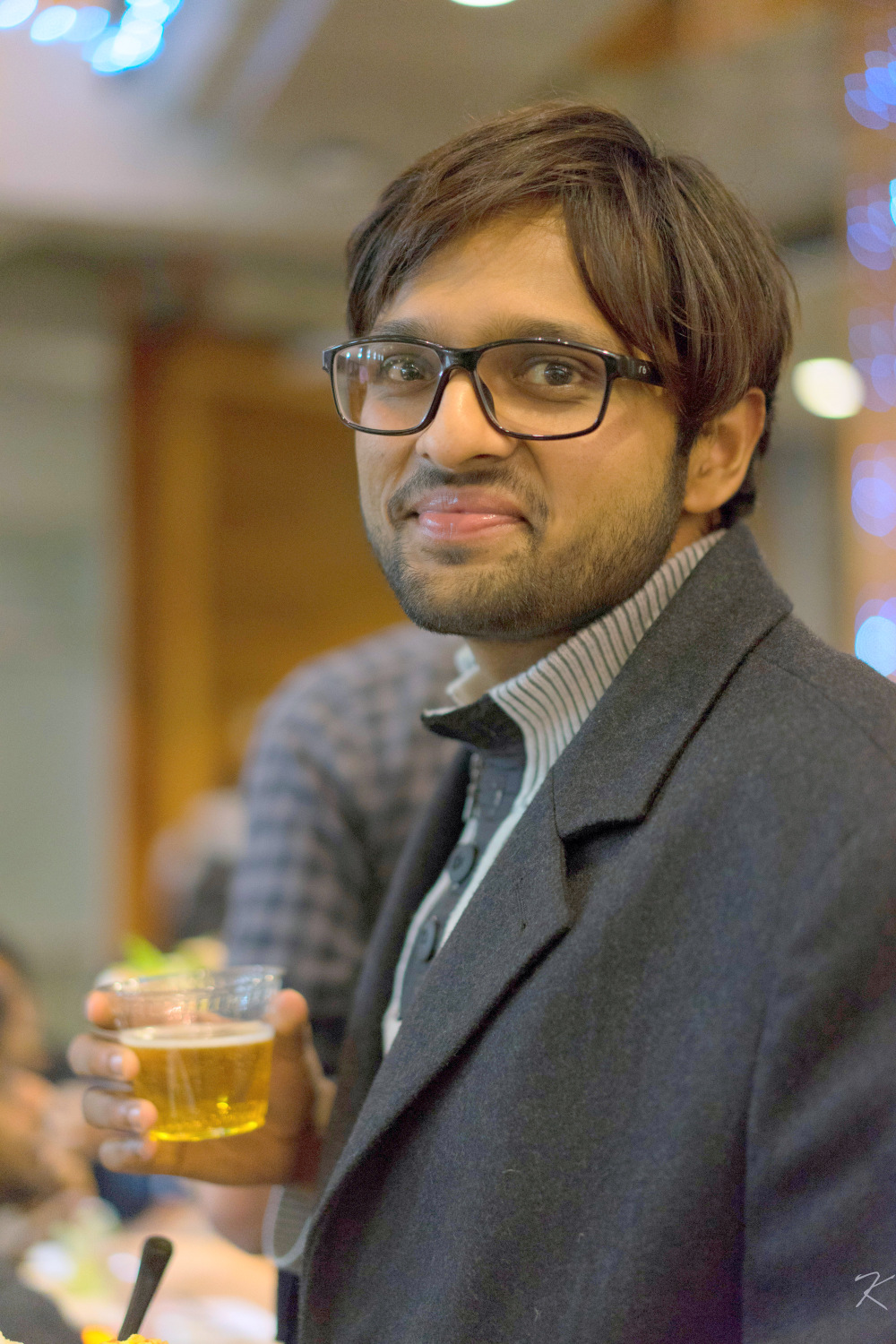
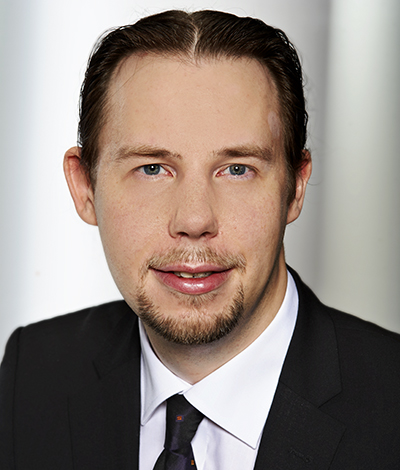
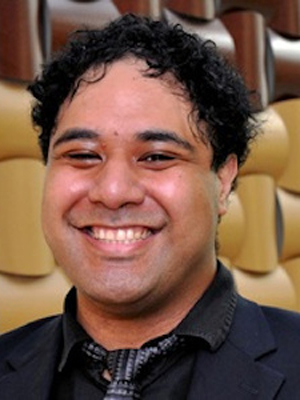
Dhruv Jain is an Assistant Professor in the Computer Science and Engineering Department at the University of Michigan , with affiliations in the School of Information and Michigan Medicine . He leads the Soundability Lab , focusing on transforming hearing into a programmable interface through human-centered AI systems. PhD from University of Washington MS from MIT Media Lab Formerly worked at Microsoft Research, Google, and Apple Research Interests intersect Human-Computer Interaction (HCI) , Audio AI , Accessibility , and Hearing Health . His work develops systems like SoundWatch (smartwatch-based sound awareness) and HomeSound (IoT sound visualization) to expand auditory access for DHH individuals and other domains. Recent Publications (2023–2025) span top venues like CHI , ASSETS , and ICMI , with trends including generative AI for real-time captioning , adaptive soundscapes , and clinical communication tools . SIGCHI Outstanding Dissertation Award (2023) William Chan Memorial Dissertation Award (2023) Best Poster Award at ASSETS 2024 Google Academic Research Award (2024) NIH Grant ($450k, 2023) William Demant Foundation Grant ($740k, 2025) Teaching includes Accessible Computing (undergraduate) and Advanced Accessibility (graduate), alongside global DIY workshops in five countries. The Soundability Lab collaborates with neuroscientists, clinicians, and Deaf scholars to create deployable systems like clinical communication tools now at Michigan Medicine and features integrated into Apple devices.
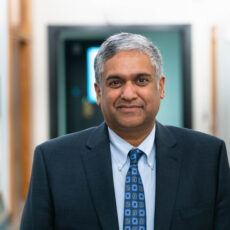
Anantha Chandrakasan is the Vannevar Bush Professor of Electrical Engineering and Computer Science at MIT, serving as Dean of the MIT School of Engineering and Chief Innovation and Strategy Officer. His research focuses on energy-efficient integrated circuits, medical devices, and AI hardware security. He leads the MIT Energy-Efficient Circuits and Systems Group, developing systems for biomedical applications, wireless communication, and quantum computing. He holds appointments at MIT's Microsystems Technology Laboratories and has contributed to collaborations like the MIT-Takeda Program in AI-driven healthcare and a partnership with GlobalFoundries for energy-efficient AI chips. His work spans implantable drug delivery systems, conformable ultrasound patches, and secure edge computing architectures. Chandrakasan's innovations include ultra-low-power circuits for IoT devices, cryptographic processors for post-quantum security, and AI accelerators for edge applications. He emphasizes interdisciplinary research bridging electrical engineering with biomedical and quantum fields, supported by leadership roles in MIT's strategic initiatives. His contributions to energy-efficient computing have led to advancements in wearable health monitors, batteryless sensors, and secure communication protocols for medical devices. Ongoing projects include THz integrated systems and AI-enhanced analog circuit design optimization.
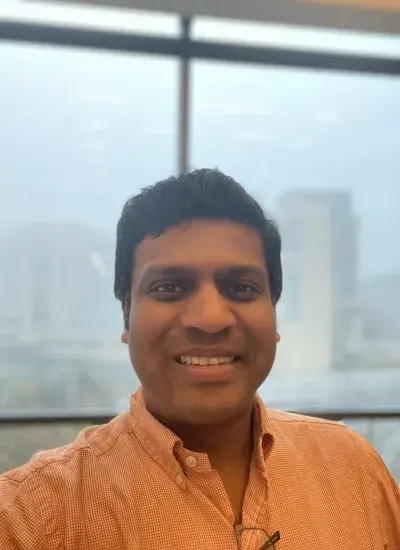
Mark Lee is an Adjunct Professor in the People Analytics department at NYU’s Tandon School of Engineering, specializing in Technology Management and Innovation. He holds a Ph.D. in Engineering Psychology from Georgia Institute of Technology (1996). Currently, he serves as Head of Research, Analytics, and Business Development at UL ComplianceWire, focusing on pharmaceutical and medical device manufacturing training. His research leverages large datasets to improve healthcare safety through regulatory compliance and best practices. Courses taught include Human Factors Engineering, Workplace Design, and Predictive Analytics. Education: Ph.D. in Engineering Psychology, Georgia Tech (1996) Key Roles: Adjunct Professor, Head of Research at UL ComplianceWire Research Focus: Human Factors, Training Systems Design, Healthcare Compliance His work spans auditory display systems for aviation (e.g., 3D audio cockpit interfaces) and ergonomic design for industrial products. Recent projects emphasize data-driven solutions for regulatory challenges in life sciences. Publications highlight studies on visual search strategies, age-related cognitive performance, and application of signal detection theory in decision-making. He actively collaborates with industry and government entities, exemplified by the FDA-UL Cooperative Research Agreement.
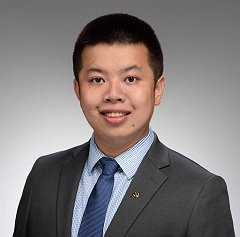
Yuvraj Agarwal is a Professor in the School of Computer Science at Carnegie Mellon University , where he leads the SYNERGY Labs . His research focuses on Systems and Networking with emphasis on Embedded Systems , Security , and Energy Efficiency in computing environments. He has been recognized with the NSF Expeditions in Computing Award for Computational Decarbonization research and multiple best paper awards. Education : PhD in Computer Science from University of California, San Diego Research Leadership : Founder/Director of SYNERGY Labs; Executive Director of NSF Expeditions in Variability (2010-2013) Research Trajectory : Recent publications highlight his work on Privacy-preserving smart classroom systems (EduSense, ClassID) IoT security labeling frameworks Audio privacy protection mechanisms Computational decarbonization of infrastructure His research combines hardware-software co-design with societal impact considerations. Scientific Recognition : NSF Expeditions in Computing Award for CoDec (2024) Ubicomp/IMWUT Distinguished Paper Award (2024) CHI Best Paper Honorable Mention (2022) Advising & Collaboration : Mentors students in IoT systems , privacy research , and green computing . Collaborates with institutions including University of Massachusetts Amherst and industry partners like Johnson Controls. Grants include NSF funding for multi-university research initiatives.
Toby Jia-Jun Li is an Assistant Professor in the Department of Computer Science and Engineering at the University of Notre Dame, where he leads the SaNDwich Lab. He also serves as the Director of the Human-Centered Responsible AI Lab in the Lucy Family Institute for Data & Society and is a Faculty Fellow at the Institute for Educational Initiatives (IEI). Previously, he was affiliated with Carnegie Mellon University's Human-Computer Interaction Institute (HCII) and GroupLens Research. Dr. Li's research spans the intersection of Human-Computer Interaction (HCI), End-User Software Engineering, Machine Learning (ML), and Natural Language Processing (NLP), with recent work focusing on addressing societal challenges in the future of work through human-AI collaborative approaches. His work has resulted in over 40 publications at premier venues including CHI, UIST, CSCW, ACL, and ICSE, with 8 papers winning Best Paper or Honorable Mention awards. His recent publications demonstrate a strong focus on human-AI collaboration across various domains, including code understanding, privacy, accessibility, and creative tools. The work shows a trajectory toward increasingly sophisticated integration of human-centered design with AI capabilities, particularly using large language models to enhance human productivity and address societal challenges. Google Research Scholar Award recipient Recipient of Yahoo! Fellowship ($100,000/year) Best Paper Award at UIST 2020 Best Paper Honorable Mention Award at CHI 2021 Best Paper Award at CSCW 2024 Best Paper Award at CHI 2025 Dr. Li actively mentors Ph.D. students and has established collaborations with Google, Microsoft Research, IBM Research, Adobe, Verizon, and J.P. Morgan. His research has been supported by NSF, Google Research Scholar Program, AnalytiXIN Initiative, Yahoo! InMind project, and J.P. Morgan. He is currently recruiting Ph.D. students and undergraduate researchers for his SaNDwich Lab, which focuses on developing interactive systems to empower individuals to create, configure, and extend AI-powered computing systems.
Professor Peter F. Driessen is a faculty member in the Department of Electrical and Computer Engineering at the University of Victoria, with a cross-appointment in the School of Music. He holds a BSc and PhD from the University of Victoria and is a Professional Engineer (PEng). His research focuses on communication systems, signal processing, control, and interdisciplinary projects in computer music and wireless technologies. Key areas include audio/video signal processing, radio propagation, sound recording, and multimedia systems. He leads the University of Victoria Propagation Laboratory, which explores radio wave propagation and Amateur radio integration with engineering education. His work spans theoretical research and applied projects like ECOSat satellite systems, software-defined radio (SDR), and innovative musical instruments such as the Radio Drum. He supervises undergraduate and graduate projects in these domains through ELEC 499 courses. Notable contributions include the APEGBC Editorial Board Award for Best Paper (2002) and patents in wireless networking and signal processing. His teaching includes courses in signal analysis and electromagnetics, and he collaborates on interdisciplinary programs like the Music/Computer Science degree. Education: BSc in Electrical Engineering, University of Victoria PhD in Electrical Engineering, University of Victoria Research Interests: Audio and video signal processing for music and media Software-defined radio and Amateur radio technologies Satellite communication and ground station development Gesture-based interfaces and musical instrument design Error mitigation in streaming audio/video Optical and microwave-photonic systems Labs & Collaborations: Propagation Laboratory (radio wave research) UVic Experimental Radio Group (Amateur radio club) UVic Satellite Design Team (ECOSat projects) UVic Centre for Aerospace Research Grants & Awards: APEGBC Editorial Board Award (2002) Multiple US patents in wireless systems and signal processing
Gerd Bruder is an Associate Professor at the University of Central Florida , affiliated with the Department of Computer Science . He previously held positions as a Research Associate Professor at UCF's Institute for Simulation and Training (2016-2022), Post-Doc at University of Hamburg (2014-2016), and Post-Doc at University of Würzburg (2011-2014). Habilitation : Computer Science, University of Hamburg (2017) Ph.D. : Computer Science, University of Münster (2011) M.Sc. : Computer Science (minor in Mathematics), University of Münster (2009) Research Interests : Gerd Bruder's work focuses on Extended Reality (XR) systems, spanning Virtual Reality (VR) , Augmented Reality (AR) , and Mixed Reality (MR) . Key areas include human factors , digital twins , 3D user interfaces , and perceptual modeling , with applications in healthcare, military operations, architecture, and smart environments. Recent Publications highlight innovations in XR locomotion , trust calibration with autonomous agents, spatial cognition , and haptic-visual integration . His 2025 articles address task-switching efficiency in XR and collaborative mixed reality design. Scientific Awards : Best Paper at ACM VRST 2023 2021 TechConnect Innovation Award Best Demo at ACM SUI 2021 Multiple Best Paper Awards (2016-2023) Best Poster & Demo Awards (2015-2020) Patents include systems for medical simulation , smart environment interruption management , and adaptive AR interfaces . His work bridges academic research and practical applications across VR, AR, and MR domains.
Habib Ullah is an Associate Professor in Data Science at the Norwegian University of Life Sciences (NMBU), Norway, where he conducts research at the intersection of computer vision and machine learning. He is affiliated with the Institute of Data Science under the Faculty of Science and Technology. He has previously held academic positions at COMSATS University Islamabad, Pakistan, and the University of Ha'il, Saudi Arabia, and served as a postdoctoral researcher at The Arctic University of Norway. Educational Background: PhD in Information and Communication Technology (Computer Vision), University of Trento, Italy (2011–2015) MSc in Electronics and Computer Engineering, Hanyang University, South Korea (2007–2009) BSc in Computer Systems Engineering, NWFP University of Engineering and Technology, Pakistan (2002–2006) Habib Ullah's research is primarily focused on computer vision and machine learning, with applications in aquaculture, agriculture, and human behavior analysis. He investigates underwater fish feeding sounds using audio classification, develops zero-shot learning models for recognizing unseen classes, and applies deep learning to detect stress in salmon via skin dot patterns. He also explores AI-driven controlled environment agriculture, leveraging sensors and automation for optimal crop growth. His work emphasizes practical AI solutions for real-world challenges in environmental and biological domains. The recent publications highlight a strong trend in leveraging deep learning for zero-shot and semi-supervised learning, particularly in computer vision tasks such as sea ice classification, crowd anomaly detection, and agricultural monitoring. His research spans remote sensing, biomedical signal processing, and human activity recognition, demonstrating interdisciplinary versatility. The keywords reflect a focus on robust feature representation, knowledge transfer, and model generalization. Scientific Awards and Funding: Industrial PhD grant 'Advancing Controlled Environment Agriculture AI' from The Research Council of Norway (Project number 354125, 2 million NOK, 2024) Team member (Coordinator-Participant) in the Battery Cell Assembly Twin (BatCAT) project funded by Horizon Europe (7 mEuro, 2023–2027) Development of an AI-Based Image Analysis System for Monitoring Plant Status (Funding: 1.8 mNOK, starting 2025) Habib Ullah actively supervises PhD projects and contributes to academic service through editorial and organizational roles. He has served as an Associate Editor for IEEE Access, Guest Editor for MDPI Remote Sensing, and Editor of the Springer book Machine Learning Techniques and Sensor Applications for Human Emotion, Activity Recognition, and Support (ML-SHEARS) . He has also been a Track Chair and Program Committee Member for several international conferences, reflecting his leadership in the academic community. His research is supported by significant grants and collaborative projects, indicating strong institutional and international engagement. He is involved in multiple research teams and projects, including the BatCAT project on battery manufacturing and AI applications in controlled environment agriculture with RIFT LABS AS. His lab work integrates deep learning, sensor fusion, and data analytics for environmental and biological monitoring systems.
Adam Finkelstein is a Professor in the Department of Computer Science at Princeton University, where he has been a faculty member since 1997. He holds a PhD and Master's in Computer Science from the University of Washington and a dual degree in Physics and Computer Science from Swarthmore College. Finkelstein is renowned for his interdisciplinary work at the intersection of computer graphics, audio processing, and machine learning, and he co-organized the Art of Science exhibition at Princeton. Education: PhD, Computer Science, University of Washington MS, Computer Science, University of Washington BA, Physics and Computer Science, Swarthmore College His research spans audio processing (e.g., speech enhancement, voice conversion, audio metrics), computer graphics (e.g., line drawing algorithms, stylized rendering, image manipulation), and machine learning (e.g., self-supervised learning, differentiable programming). His work often bridges technical and creative domains, exemplified by collaborations at Pixar and Adobe Creative Technologies Lab. Recent publications highlight advancements in audio super-resolution and voice conversion using deep learning frameworks, as well as stylized line rendering for animated 3D models. His contributions to perceptual audio metrics and shader optimization further underscore his impact on human-centric computational systems. Scientific Awards: NSF CAREER Award Alfred P. Sloan Fellowship Fellow of the Association for Computing Machinery (ACM) Finkelstein has secured foundational grants for his research and actively mentors students, though no specific advisees are listed. He also explores collaborative tools for internet music performance, reflecting his broader interest in distributed systems and user interfaces.
Michael Riegler is a Researcher at the AI Department, Simula Research Laboratory , focusing on interdisciplinary applications of Artificial Intelligence in healthcare, sports analytics, and multimedia systems. His work bridges Machine Learning , AI Alignment , and Applied AI across clinical and real-world domains. Key Affiliations: Simula Research Laboratory (AI Department Head) Research Themes: Explainable AI in medicine, multimodal data analysis, and AI-driven health monitoring Research Interests include: Developing AI/ML algorithms for medical imaging (e.g., polyp detection, embryo analysis) Addressing missing data challenges in healthcare through novel imputation techniques Creating multimodal virtual avatars for investigative interview training Designing edge AI systems for sports analytics and sustainable fishing Recent Publications highlight collaborations with institutions in Norway and globally, with a focus on: Medical Applications: Polyp segmentation, ECG analysis, and explainable models for disease detection Sports Analytics: Athlete performance prediction and soccer video processing Data Infrastructure: Lifelogging datasets (ScopeSense), semantic representation frameworks Labs & Teams include leadership in Simula’s AI Department and participation in projects like Medico Multimedia Task , ImageCLEF , and MediaEval workshops. His work emphasizes responsible AI innovation in public sectors and privacy-preserving systems for edge environments.
Mark Bocko is a Distinguished Professor of Electrical and Computer Engineering at the University of Rochester, affiliated with the Hajim School of Engineering & Applied Sciences. He holds roles as Director of the Center for Emerging and Innovative Sciences (CEIS) and Director of Audio & Music Engineering. He earned his PhD in Physics from the University of Rochester in 1984, focusing on gravitational wave detectors. His research spans audio signal processing, sensors, superconductivity, and quantum computing. Notable contributions include flat-panel loudspeaker development, non-contact ECG sensors, and quantum coherence studies in Josephson junctions. Research interests include audio and acoustic signal processing, computer audition, and sensor technologies. His work integrates interdisciplinary approaches, combining electrical engineering, physics, and computer science. Awards include the 2012 Goergen Award for Teaching and Mercer Brugler Distinguished Teaching Professor (2008–2011). Recent publications address modal crossover networks for loudspeakers, vibrational touch sensing, and room impulse response modeling. He has advised PhD students on topics like spatial audio rendering and musical vibrato analysis. His labs focus on advancing audio engineering and smart sensor systems through collaborative industry partnerships.
Paul Taele is an Instructional Assistant Professor and Deputy Lab Director in the Sketch Recognition Lab at Texas A&M University's Department of Computer Science & Engineering. He holds a Ph.D. (2019), M.S. (2010), and dual B.S. degrees in Computer Science and Mathematics from the University of Texas at Austin (2006). His research focuses on sketch recognition, haptics, and intelligent interfaces for education and accessibility, with notable work in mid-air gesture recognition, educational sketching tools, and assistive technologies for disabilities. He has contributed to projects like Kanji Workbook , Hashigo , and HaptiMoto , and has published over 50 peer-reviewed articles across venues like CHI, IUI, and AAAI. Taele has received awards including the NSF Student Travel Grant (2014) and Ford Foundation Honorable Mention (2015). He teaches courses in capstone design, programming, and sketch recognition, and mentors students across all academic levels through strict eligibility criteria for research collaborations. Education : Ph.D. Computer Science, Texas A&M University (2019) M.S. Computer Science, Texas A&M University (2010) B.S. Computer Science & Mathematics, University of Texas at Austin (2006) Concentration in Mandarin Chinese, National Chengchi University (2007) Research Interests : Taele's work bridges HCI and AI to create accessible educational interfaces. His projects emphasize: Sketch Recognition : Developing algorithms for mid-air gestures, children's developmental assessments, and language learning Accessibility : Haptic systems for visually impaired learners and algebra education Educational Tech : Intelligent tutoring systems for music, math, and East Asian languages Awards & Grants : EAAI-20 Travel Grant (2020) Ford Foundation Dissertation Honorable Mention (2015) NSF East Asia-Pacific Summer Institutes (2013, 2012) Royce E. Wisenbaker Fellowship (2009) Lab & Teams : Director of the Sketch Recognition Lab (SRL) and collaborator with global institutions like Singapore Management University and National Taiwan University. Active in organizing workshops like SketchRec at IUI conferences.
Mikael B. Skov is a Vice Dean and Professor at the Technical Faculty of IT and Design of Aalborg University , Denmark. His research spans human-AI interaction, robotics, and user experience, with a focus on trust signaling in clinical AI, swarm robotics, and sound zones for domestic environments. Role: Vice Dean for Research Department: Computer Science Research Interests: Skov investigates how humans interact with AI and robots in healthcare and domestic settings, emphasizing trust calibration, alert design, and acoustic comfort. His work includes developing frameworks for UX maturity in robotics organizations and studying long-term adoption of sound zone systems. Recent Projects: As principal/co-investigator, he leads the HERD project on human-AI collaboration in robot swarms (2021–2025) and supervises Data og Bæredygtig Mad (2020–2023), an HCI perspective on sustainable food systems. Publications: His 2024 work includes studies on AI explanations in clinical training, music applications with intermittent interactions, and multi-robot supervision. Earlier projects (2001–2020) focused on mobile device usability, UX practices, and context-aware computing.
Swati Aggarwal is a Professor in Artificial Intelligence at the Faculty of Logistics, Molde University College (HiMolde). Her research focuses on AI applications in healthcare, ethics, cognitive development, and neural networks. She holds a PhD in Neutrosophic Neural Networks, a Master's in Information Technology, and a Bachelor's in Computer Science and Engineering. Previously, she was a Marie Curie Postdoc Fellow at NTNU, working on AI models for cognitive assessment in infants (AIM_COACH project). Research Interests - AI in Health/Medicine - Ethics in AI and Societal Impact - EEG/BCI for Cognitive Assessment - Machine Learning and Deep Learning Publications Her recent work spans AI ethics, BCI applications, adversarial attacks, and healthcare diagnostics. Notable contributions include EEG-based infant perceptual monitoring (2025) and malaria detection via EfficientNet (2023). She also explores cross-lingual adversarial robustness and blockchain in hospitality systems. Labs/Teams - ABC-AI: Applied, Basic, and Conscientious AI Group - Virtual Technologies and Learning Research Group
Bryan Pardo is a Professor of Computer Science at Northwestern University and head of the Interactive Audio Lab. He co-directs the Northwestern Center for Human Computer Interaction + Design and chairs the Computer Science Diversity Committee. He teaches courses in Deep Learning, Machine Learning, Generative Modeling, and Digital Music Instrument Design. PhD in Computer Science and Engineering, University of Michigan MMus in Jazz and Improvisation, University of Michigan MS in Computer Science, Ohio State University BMus in Jazz Composition, Ohio State University His research focuses on machine understanding and manipulation of sound, particularly in music and speech domains. Key areas include Machine Learning (e.g., automated gradient clipping), Signal Processing (e.g., Multi-scale Common-fate Transform), and Human Computer Interaction. Applications involve inclusive audio interfaces, audio search engines, source separation, natural language-controlled audio effects, privacy-preserving adversarial attacks on voice recognition, and music co-creation tools. Recent publications highlight advancements in neural watermarking (MaskMark), masked acoustic modeling (VampNet), and real-time adversarial privacy systems for speech. His lab's work has been applied in Adobe's AI-powered audio editor and Lexie B2 hearing aids. Scientific Awards: $1.8 million NSF Future of Work award $440K NSF grant for accessible music programming $200K Toyota grant $100K Sony grant TorchCrepe pitch tracker: 20 million+ downloads Bryan Pardo advises PhD student Max Morrison and collaborates with researchers like Patrick O'Reilly, Zeyu Jin, and Prem Seetharaman. His lab develops technologies for blind and visually impaired audio creators, including HaptEQ and Eyes-free tools.