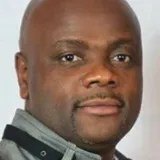
Dr. Ernest Kamavuako is a Reader in Engineering at King's College London's Department of Engineering, part of the Faculty of Natural, Mathematical & Engineering Sciences. His research focuses on biomechanical signal processing, wearable sensors, and human-machine interfaces. He holds a PhD in Biomedical Engineering from Aalborg University and has held academic roles including Adjunct Professor at the University of New Brunswick and Guest Professor at University Kindu. Research Interests: Myoelectric prosthetics, electromyography (EMG), fluid intake monitoring, and cardiovascular signal analysis. His work bridges engineering and medicine, emphasizing practical applications like prosthetic control systems and wearable health monitoring devices. Key Achievements: Awarded the IECBES Best Paper Award (2021) and 1st Place in the PhysioNet Challenge 2022. Editor for journals such as IEEE Transactions on Neural Systems and Rehabilitation Engineering and Frontiers in Neuroscience. Current Projects: Developing low-cost wearable cardiac screening devices and exploring subdermal electrical stimulation for sensory feedback. Collaborates internationally on improving prosthetic control and fluid intake monitoring systems.
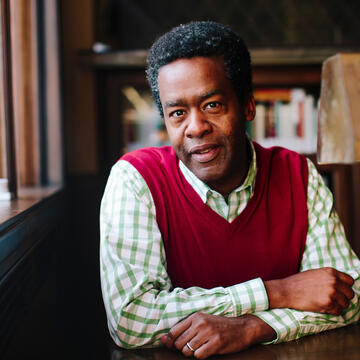
David Guy Brizan is an Associate Professor at the University of San Francisco, specializing in Natural Language Processing, Machine Learning, and Databases. His research focuses on analyzing personal and cultural/demographic information embedded in speech and typing to enhance speech recognition systems and cybersecurity measures. He holds a PhD in Computer Science from the CUNY Graduate Center, alongside an MS from San Francisco State University and a BS from Brooklyn College. Education: PhD, Computer Science, CUNY Graduate Center (2018) MS, Computer Science, San Francisco State University BS, Computer & Information Science, Brooklyn College Brizan's research explores intersections of linguistics and technology, including keystroke dynamics for user authentication, speech-based demographic prediction, and conversational style analysis. His work has applications in cybersecurity, healthcare diagnostics (e.g., Parkinson’s disease detection via speech), and political discourse analysis. He has published extensively in journals like Scientometrics and conferences such as LREC. Prior to academia, he worked as an IT Coordinator for NYC’s Department of Correction, a Software Engineer at IBM, and an Interface Developer at McKesson. His industry experience informs his research on practical machine learning solutions. His advising and grants span collaborations with institutions like the Speech Lab at Queens College, where he previously served as a research assistant. He has no listed awards but is actively involved in interdisciplinary projects linking computational methods to social and medical domains.
Christophoros Nikou is a Professor in the Department of Computer Science and Engineering at the University of Ioannina, Greece. He holds a Ph.D. in Image Processing and Computer Vision from Université Louis Pasteur - Strasbourg I, France (1999), a DEA in Photonics and Image Processing from the same institution (1995), and a Diploma in Electrical Engineering from Aristotle University of Thessaloniki, Greece (1994). His research interests include: Image Processing Computer Vision Pattern Recognition Biomedical Image Analysis Medical Imaging Machine Learning His recent publications (2022–2024) reflect a strong trend toward deep learning, generative models, and multimodal analysis, particularly in document image analysis, super-resolution, and biomedical applications. He has made significant contributions to visual tracking, segmentation, and image registration, with recent work extending into virtual reality, hypercomplex neural networks, and model compression. Scientific awards include: Best paper award, IAPR/IEEE International Conference on Biometrics (ICB’16), 2016 Best paper award, Bayesian and Graphical Models for Biomedical Imaging (BAMBI’16), 2016 He has supervised numerous students, many of whom have co-authored publications with him, and his research has been supported by collaborations across multiple institutions. He has also co-edited a book on biomedical image processing and contributed to several book chapters. His work spans both theoretical and applied domains, with consistent publication in top-tier IEEE and Springer venues.
Maria Teresa León Mendoza is an Associate Professor in the Department of Statistics and Operations Research at the Faculty of Mathematics, Universitat de València. She is affiliated with the IARM (Image Analysis, Modelling and Retrieval) research group, reflecting her interdisciplinary work in data analysis and image processing. Doctorate: Universitat de València, 1992 Thesis: Un algoritmo primal para el problema continuo de programación semi-infinita lineal Supervisor: Dr. Enriqueta Vercher González Her research focuses on Operations Research , Mathematical Programming , and Fuzzy Optimization , with significant contributions to semi-infinite programming, data envelopment analysis (DEA), and portfolio selection under uncertainty. She has also applied mathematical methods to diverse areas such as image retrieval and musical tuning systems, demonstrating a broad interdisciplinary reach. Her publication record since 1992 shows a consistent focus on optimization under uncertainty, fuzzy methods for decision-making, and numerical algorithms. She frequently collaborates with researchers like Vicente Liern and Enriqueta Vercher, and her work is published in top journals such as European Journal of Operational Research and Fuzzy Sets and Systems . There is no mention of scientific awards in the provided sources. Maria Teresa León Mendoza has supervised at least one PhD student (Dr. Enriqueta Vercher González, who later became her supervisor, suggesting a long-standing academic collaboration), and she has been involved in multiple research projects, though specific grant details are not listed. Her work bridges theoretical optimization and practical applications in economics, finance, and engineering. She is actively involved in the IARM research group, which specializes in image analysis and retrieval, indicating ongoing research in machine learning and pattern recognition applications.
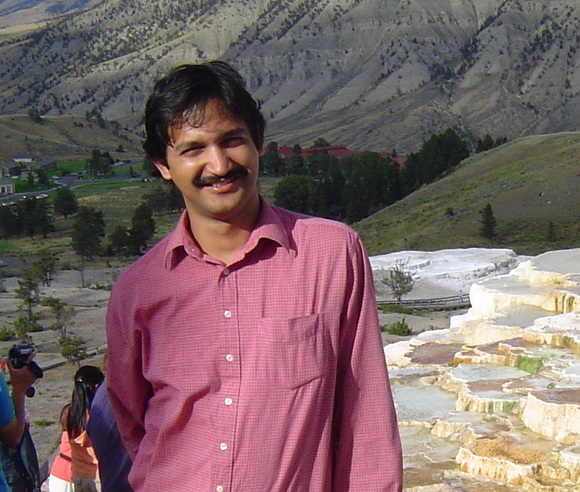
Rajat Raina is a Researcher currently affiliated with Facebook, where he focuses on enhancing the relevance of online advertising through machine learning techniques. He holds a Ph.D. in Computer Science from Stanford University, where he conducted research under the guidance of Andrew Y. Ng at the Stanford AI Lab . His academic background includes undergraduate studies at the Indian Institute of Technology (IIT) Kanpur , India. Education: Ph.D. in Computer Science (Stanford University), B.Tech at IIT Kanpur Rajat's research interests center on statistical machine learning , with particular emphasis on unsupervised learning , semi-supervised learning , and transfer learning . He explores these areas in the context of large-scale problems and high-dimensional data, contributing to diverse applications such as computer vision, text processing, natural language processing, web search, speech/music processing, and online advertising. His publication record spans multiple disciplines within machine learning and AI. Notable trends include advancements in GPU-based deep learning , sparse coding algorithms , and self-taught learning . His work frequently bridges theoretical insights with practical implementations, particularly in optimizing computational efficiency for complex models. Rajat has previously collaborated with prestigious institutions and organizations, including Microsoft Research , Google , and the AI Lab at EPFL , during internship experiences. He has also contributed to organizational workflows at the NIPS 2007 Conference as Workflow Master.
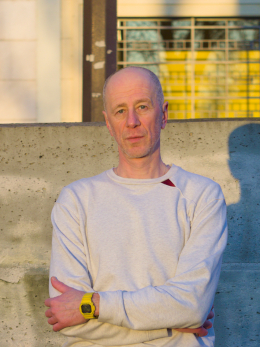
Emmanouil Benetos is a Reader in Machine Listening and Director of Research at Queen Mary University of London's School of Electronic Engineering and Computer Science. He co-leads the School's Machine Listening Lab and is affiliated with the Centre for Digital Music, Centre for Intelligent Sensing, Digital Environment Research Institute, and Centre for Multimodal AI. His research focuses on computational audio analysis applied to music, urban sounds, and bioacoustics. Key areas include machine listening, self-supervised learning, audio representation frameworks, and multimodal AI. Current projects involve resource-efficient audio processing and large language model integration for acoustic tasks. Recent publications highlight advancements in music source separation, lyrics transcription, graph neural networks for audio, and acoustic identification systems. His work bridges machine learning with real-world applications in music technology, environmental monitoring, and audio-language models. Royal Academy of Engineering / Leverhulme Trust Research Fellow Turing Fellow at the Alan Turing Institute Royal Academy of Engineering Research Fellow As academic service, he serves as Secretary for the International Society for Music Information Retrieval (ISMIR), chair of the IEEE Technical Committee education subcommittee, associate editor for IEEE/ACM Transactions and EURASIP Journal, and Deputy Director for the UKRI Centre for Doctoral Training in Artificial Intelligence and Music (AIM).
Abdellah Touhafi is a Professor at the Faculty of Engineering Technology, Department of Electronics and Informatics at Vrije Universiteit Brussel (VUB) in Brussels, Belgium. With an extensive research portfolio spanning nearly three decades, his work focuses on embedded systems, sensor networks, and FPGA technologies with applications in environmental monitoring and smart cities. His current research activities include leading multiple projects related to low-carbon technologies, health technologies, and sustainable sensing systems. Dr. Touhafi's research interests center around Field Programmable Gate Arrays (FPGA), wireless sensor networks, acoustic sensing, and machine learning applications for environmental monitoring. His work bridges hardware engineering with practical applications in smart city infrastructure, water quality monitoring, and sustainable sensing technologies. He has developed innovative approaches for hardware-assisted security mechanisms in environmental monitoring systems and has explored the integration of triboelectric sensors for self-powered sensing applications. His publication record shows consistent output with 154 research outputs, including recent articles in Sensors journal and conference papers at IEEE events. His h-index of 19 (with 1,433 citations) reflects significant impact in his fields of expertise. Current projects include DESTINY (Low-carbon solutions), GEAR (future health technologies), and ILSF 2024 (acoustic mapping). NSIS3: DESTINY: Low-carbon solutions and technology for a new future (2024-2029) OZR4208: Bilateral cooperation for joint PhD VUB-USMBA (2023-2027) IOF3016: GEAR: Future health technologies (2021-2025) BRGEOZ445: ILSF 2024 - This is the Sound of "ME" (2024) IOFACC12: Tech4Health (2024-2025) Dr. Touhafi actively supervises students and has served on PhD committees, including for projects related to sustainable public lighting and environmental monitoring systems. His research group has produced datasets like the AMIVU Acoustic Map Imaging VUB-ULB Dataset, demonstrating practical applications of his theoretical work. He regularly participates in conferences including IEEE events and has organized workshops on industrial electronics.
Professor Islah Ali-MacLachlan is a Professor in Engineering Product Design at Birmingham City University. With nearly 30 years of academic experience and an industry background, he integrates research, teaching, and industry collaboration to develop innovative curricula and enhance student employability. His leadership includes course development, external examining, and faculty-wide initiatives such as establishing industry advisory boards. His research spans acoustics, audio engineering, computational musicology, and product design, with £1.9M in secured grants for projects on building acoustics, live sound, and music technology. Key methodologies include: Psychoacoustic modeling in built environments Machine learning for music information retrieval Multimodal analysis of instrument performance Publication trends emphasize acoustics applications (e.g., cultural heritage, office soundscapes), computational analysis of traditional music, and sensor-based gesture recognition, frequently employing deep learning and signal processing techniques. He actively mentors PhD candidates and early-career academics and collaborates with professional bodies like the Institute of Acoustics and Audio Engineering Society.
Dr. Varuna De Silva is a Reader (Associate Professor) in Machine Intelligence at Loughborough University London, where he serves as Programme Director for the Artificial Intelligence and Data Analytics MSc programme. He joined as a Lecturer in 2016 after industry experience at Apical Ltd, where his patented algorithms were deployed in over 500 million devices. His research focuses on scaling AI to real-world engineering systems through multi-agent reinforcement learning, multimodal computer vision, and simulation modeling. Education: B.Sc. (Hons) Engineering, University of Moratuwa, Sri Lanka (2007) Ph.D. Electronic Engineering, University of Surrey (2011) PG Cert in Academic Practice, Loughborough University (2018) His work spans reinforcement learning architectures, neuromorphic computing, and AI applications in healthcare, environmental systems, and autonomous vehicles. Recent publications demonstrate strong emphasis on interpretable AI, brain-computer interfaces, and causal reasoning in multi-agent environments, with consistent cross-disciplinary integration of machine learning techniques. Awards: IEEE Chester Sall Award, Consumer Electronics Society (2010) Vice Chancellor's Award for Best Post Graduate Research Student (2011) Overseas Research Scholarships Award (2008) He leads EPSRC-funded projects on next-generation machine intelligence and maintains industrial collaborations. As module leader for Bayesian Methods in Deep Learning and Statistical Methods in Finance, he drives curriculum development in AI. His team actively researches autonomous systems and human-AI interaction frameworks.
Dr Xiyu Shi serves as Senior Lecturer and Programme Director for MSc Digital Innovation Management at Loughborough University London's Institute for Digital Technologies. With over two decades of academic experience, he joined the university as a Research Fellow in 2014 before becoming Lecturer (2017) and Senior Lecturer, significantly shaping curriculum development for multiple MSc programs including Cyber Security and Data Analytics. His academic foundation includes a BEng in Radio Engineering from Southeast University (1984), MSc in Communication and Electronic Systems from Beijing University of Aeronautics and Astronautics (1989), and PhD in Computer Science from Cranfield University (2002). Prior to the UK, he accumulated 10+ years teaching experience at China's University of Petroleum. BEng, Radio Engineering, Southeast University (1984) MSc, Communication and Electronic Systems, Beijing University of Aeronautics and Astronautics (1989) PhD, Computer Science, Cranfield University (2002) Dr Shi's research focuses on cybersecurity, explainable AI, deep learning, and digital signal processing , with applications in communication security and audio systems. His work bridges theoretical algorithm development with practical implementation through EU-funded projects like CLOUDSCREEN and industry collaborations for 5G audio coding, emphasizing post-quantum privacy and robust deepfake detection. Analysis of his recent publications reveals a cohesive trajectory toward secure and interpretable AI systems , particularly in audio deepfake detection under communication degradations, IoT security via federated learning, and brain-computer interfaces for autonomous vehicles. These works consistently integrate signal processing fundamentals with cutting-edge machine learning to solve real-world engineering challenges. Scientific recognition includes: Fellow of the Higher Education Academy As Co-Investigator, Dr Shi secured an EPSRC grant on post-quantum privacy for digital healthcare and an industry grant for 5G immersive audio coding. He actively supervises PGR students developing deep learning solutions for cybersecurity and autonomous systems, while directing multiple MSc programs and delivering guest lectures at institutions including Nanjing University. Research activities are conducted within the Institute for Digital Technologies framework, leveraging close industry partnerships to translate theoretical advances into practical applications for communication systems and security infrastructure.
Olivier Cappé is a CNRS research director at the Department of Computer Science of École Normale Supérieure (ENS), which is part of PSL University. He also serves as associate professor at PSL University and director of the IASD (Artificial Intelligence, Systems, Data) Master's program, a collaborative initiative between University Paris Dauphine, ENS, and Mines Paris. His academic career spans over 25 years with significant contributions across machine learning, statistics, and signal processing. Dr. Cappé's research trajectory has evolved from foundational work in speech and audio processing during the 1990s, through Bayesian methods and Markov Chain Monte Carlo in the 2000s, to his current focus on online learning and multi-armed bandit models. His theoretical contributions to reinforcement learning, particularly regarding exploration-exploitation tradeoffs and non-stationary environments, have established him as a leading figure in the field. His work bridges rigorous statistical theory with practical applications in resource allocation, bidding strategies, and influence maximization. His recent publications demonstrate sustained innovation in machine learning theory with practical relevance. Key research themes include bandit algorithms that adapt to changing environments, theoretical foundations of online optimization, and privacy-preserving machine learning techniques. His work consistently appears in top-tier venues including NeurIPS, ICML, and JMLR, reflecting both theoretical depth and practical impact. French Academy of Sciences 2013 Grand prix de la fondation d'entreprise EADS IEEE Signal Processing Society 2005 Signal Processing Magazine Best Paper Award (with E. Moulines, J-C. Pesquet, A. Petropulu and Z. Yang) IEEE SP Society 1995 Young Author Best Paper Award Dr. Cappé has mentored over 20 PhD students and postdoctoral researchers throughout his career, with his advisees securing prestigious positions at institutions including University de Lille, Imperial College London, Twitter, and major research laboratories. His research has been consistently funded through competitive grants including multiple ANR projects (ALICIA, SIMINOLE, MGA, KERNSIG), demonstrating sustained recognition of his research program's significance and quality. He is affiliated with the Centre Sciences des Données (CSD) at ENS and has held significant leadership roles including Deputy Scientific Director of the INS2I Institute of CNRS (2017-2023), director of LTCI laboratory (2013-2016), and head of the STIC department at University of Paris-Saclay (2016-2017). He co-authored the forthcoming illustrated book 'Tout comprendre (ou presque) sur l'intelligence artificielle' published by CNRS éditions in April 2025.
Prof. Hazım Kemal Ekenel is a faculty member at Istanbul Technical University , where he serves as a Professor in the Department of Computer Engineering since 2020. Previously, he held academic roles including Associate Professor (2014), Assistant Professor (2012-2014), and Lecturer (2011-2012) at the same institution, while also serving as a Research Assistant at Karlsruhe Institute of Technology (2004-2009). PhD in Computer Science, Karlsruhe Institute of Technology (2004) MSc in Electrical-Electronics Engineering, Boğaziçi University (2001) BSc in Electrical and Electronics Engineering, Boğaziçi University (1997-2001) His research focuses on Biometrics, Artificial Intelligence, Image Processing, and Computer Vision , with significant contributions to facial expression recognition, deep learning for face recognition, and medical imaging applications. Current projects include deepfake detection , AI-mediated virtual meetings , and super-resolution for consumer goods . Recent publications demonstrate expertise in audio-driven face generation , domain adaptation , and real-world image enhancement . He leads projects like "Deepfake Detection" (PI, 2025) and "Intraocular Pressure Measurement" (PI, 2023). Awards: Science Academy Young Scientists Award Program (BAGEP), 2018 Parlar Foundation Research Encouragement Award, 2018 Young Scientist Award, Science Heroes Association, 2017 He has secured grants for research on lighting effects in face recognition and AI applications in minimally invasive surgery. His work spans collaborations with international institutions and supervision of multidisciplinary projects.
Arda İnceoğlu is a Lecturer in the Department of Computer Engineering at the Faculty of Computer and Information, Istanbul Technical University, where he has served since 2021. His academic career is entirely rooted at this institution, having completed all degrees there. His educational qualifications include: Ph.D. in Computer Engineering, Istanbul Technical University (2018) M.Sc. in Computer Engineering (with thesis), Istanbul Technical University (2015-2018) B.Sc. in Computer Engineering, Istanbul Technical University (2011-2015) Dr. İnceoğlu's research spans robotics, artificial intelligence, and image processing, with specialized expertise in robot manipulation failure detection, multimodal sensor fusion, 3D facial animation from audio, and generative models. His work consistently applies deep learning techniques to solve complex problems in unstructured environments. Analysis of his 11 research outputs (2015-2024) reveals a dominant focus on robotic perception and manipulation, particularly through multimodal frameworks for failure anticipation. His publications demonstrate methodological innovation in knowledge distillation for error prediction, sensor fusion architectures, and cross-domain applications of generative models in architecture and animation. No information is available regarding scientific awards, student advisement, research grants, or laboratory affiliations.
Dr. Melanie Schaller is a researcher at the Institute of Information Processing, Leibniz Universität Hannover. Her work bridges machine learning with engineering applications in biomedical and civil infrastructure domains. PhD in Cyber-Physical Systems for Intracranial Pressure Monitoring (University of Würzburg, 2023) Specializes in end-to-end integration of engineering knowledge into ML models Research focuses on anomaly detection in multivariate time-series and graph signal processing . Recent projects like P-BIM and KI@FlowChief demonstrate applications in structural behavior analysis and water distribution network optimization. Publications emphasize sensor network applications and adaptive learning systems. Dataset contributions include detailed pulsating waterjet cutting experiments and smart beehive monitoring , with methodologies for incremental learning and audio signal classification. Technical reports highlight expertise in heterogeneous graph neural networks and signal processing for material transitions.
Arturo Morgado Estevez is a Professor at the University of Cadiz, working in the Department of Automation, Electronics, Architecture and Computer Networks Engineering. His primary affiliation is with the Engineering school at the University of Cadiz, where he leads research in the TEP940 Applied Robotics research group. His work spans multiple technical domains with a strong focus on neuromorphic engineering and robotics applications. His research interests encompass Neuromorphic Engineering, Robotics, Computer Architecture, Real-Time Computing, FPGA Design, Bio-inspired Computing, Address-Event-Representation Systems, and Embedded Systems. Morgado Estevez specializes in developing spike-based processing systems that mimic biological neural networks, particularly focusing on applications in robotics, computer vision, and sensor systems. His work bridges the gap between biological inspiration and practical engineering implementations, with particular emphasis on real-time performance and hardware efficiency. An analysis of his recent publications reveals a strong trend toward applied robotics and embedded systems, with increasing focus on medical applications, assistive technologies, and energy efficiency. His research has evolved from fundamental neuromorphic architectures to practical implementations in prosthetics, industrial inspection, and environmental monitoring systems. Many of his recent works combine machine learning techniques with specialized hardware implementations for specific application domains. Morgado Estevez has been actively involved in educational initiatives, particularly in computer science education and robotics teaching methodologies. His work includes developing innovative teaching approaches for programming languages and engineering education, with several publications focused on educational technology and pedagogical methods. His laboratory work centers around the TEP940 Applied Robotics research group, where he has developed multiple FPGA-based implementations of neuromorphic systems. His team has created complete spike-based architectures from Dynamic Vision Sensors to robotic motor control, demonstrating practical applications of bio-inspired computing in real-world robotic systems. The research group has made significant contributions to Address-Event-Representation processing and its implementation on parallel computing platforms.