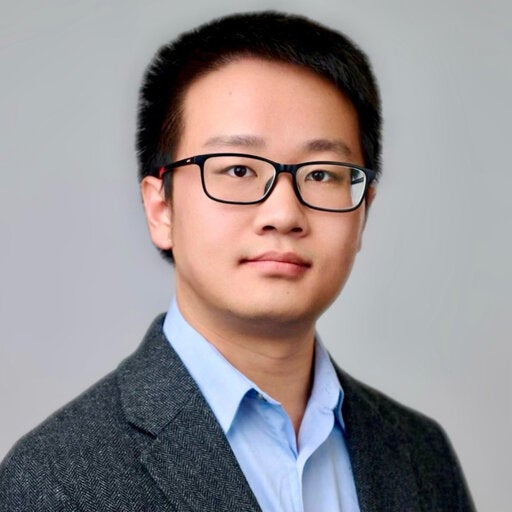
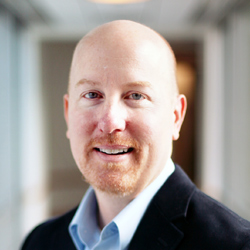
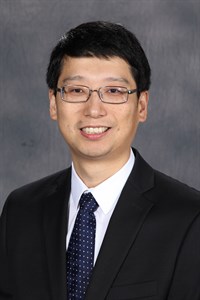
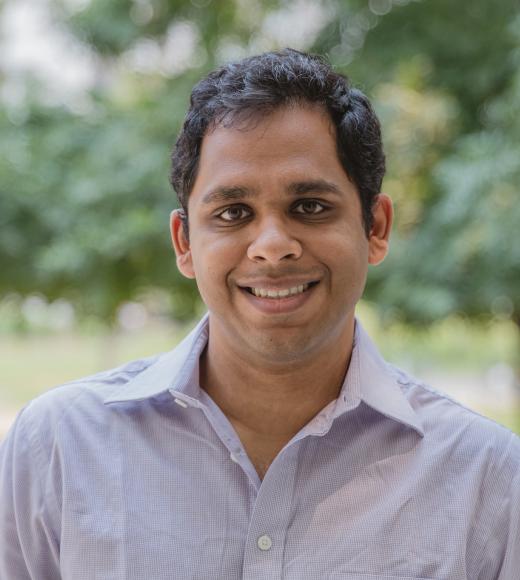
Dr. Peichen Zhong is an Assistant Professor in the Department of Materials Science and Engineering at the National University of Singapore (NUS). He leads the Applied Machine Learning and Materials Modeling (AM³) Group, focused on advancing computational methods for clean energy technologies. His research integrates machine learning with atomistic simulations to tackle challenges in battery materials, disordered materials, and sustainable energy systems. Education: B.S. in Physics from University of Science and Technology of China (2018); Ph.D. in Materials Science from UC Berkeley (2023, advised by Prof. Gerbrand Ceder); Postdoctoral training at Lawrence Berkeley National Lab and BIDMaP, co-advised by Persson, Cheng, and Krishnapriyan. Research Interests: Computational modeling of battery cathodes/electrolytes, AI-driven interatomic potentials, statistical mechanics in disordered materials, and generative models for scientific discovery. Key areas include Li/Na-ion batteries, solid-state reactions, and sustainable energy materials. Awards: BIDMaP Emerging Scholar Fellowship (UC Berkeley CDSS, 202?), 2023 Rising Stars in Materials Science (CMU/MIT/Stanford). Labs/Teams: The AM³ Group at NUS MSE focuses on interdisciplinary research combining theory, computation, and AI4Science. Current openings include PhD students and postdoctoral researchers.
University of California , Santa Barbara (UCSB)United States
Frank L. Brown is a Professor of Chemistry & Biochemistry at the University of California, Santa Barbara, with a joint appointment in Physics and the Biomolecular Sciences & Engineering (BMSE) program. His research focuses on theoretical and computational studies at the interface of physical chemistry and biophysics, particularly biomembrane dynamics and spectroscopy. Dr. Brown received his B.S. in Chemistry and B.A. in Applied Mathematics from UC Berkeley, followed by a Ph.D. in Physical Chemistry from MIT. He has held postdoctoral appointments at UC San Diego and the University of Chicago before joining UCSB in 2001. He is the recipient of prestigious awards including the Alfred P. Sloan Research Fellowship and the Presidential Early Career Award in Science and Engineering. His laboratory employs tools from statistical mechanics, hydrodynamics, and quantum mechanics to study biomembrane structure, dynamics, and interactions with embedded proteins. Key research areas include lipid bilayer fluctuations, membrane protein diffusion, and interpretation of spectroscopic techniques like single-molecule fluorescence and neutron spin echo. Dr. Brown has mentored numerous graduate students and postdoctoral researchers, with notable alumni including Brian Camley, Max Watson, and Golan Bel. His research is supported by grants from agencies such as the National Science Foundation and the Department of Energy. He directs the Brown Research Group, which collaborates with institutions like the CNSI Center for Scientific Computing. His work bridges computational modeling and experimental biophysics, advancing understanding of membrane systems in health and disease.
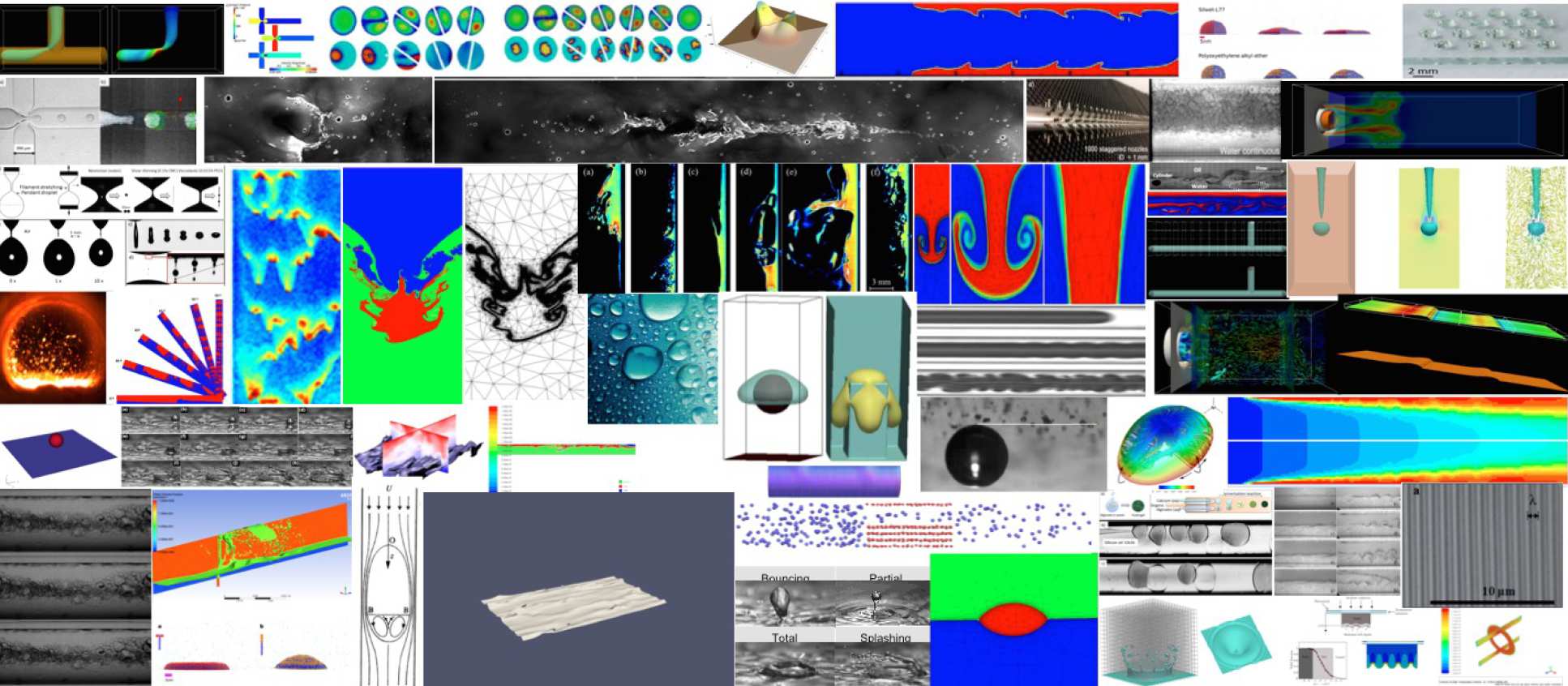
Professor Omar Matar is a Professor of Fluid Mechanics and RAEng/PETRONAS Research Chair in Multiphase Fluid Dynamics at the Department of Chemical Engineering, Imperial College London. He leads the Matar Fluids Group, focusing on interfacial fluid mechanics, multiphase flows, computational fluid dynamics (CFD), and applications in energy, manufacturing, and nanotechnology. His roles include Head of Department of Chemical Engineering, Director of the PETRONAS Centre for Engineering of Multiphase Systems (PETCEMS), and Editor-in-Chief of the Journal of Engineering Mathematics. Education: PhD in Chemical Engineering, Princeton University (1993) MEng Chemical Engineering, Imperial College London (1989) Research Interests: Interfacial fluid mechanics, multiphase flows, CFD, and machine learning 2D materials exfoliation and scale-up, immersive technologies (AR/VR) Applications in energy systems, nanotechnology, and personalized education Awards: Fellow of the Royal Academy of Engineering (2020) Recipient of the Imperial College President’s Medal (2020) EPSRC Programme Grant Principal Investigator (MEMPHIS, PREMIERE) Grants & Projects: MEMPHIS: £5M EPSRC-funded Programme Grant (2012–2017) PREMIERE: EPSRC Programme Grant (2019–present) PETCEMS: PETRONAS-funded Centre for Multiphase Systems Engineering Labs & Collaborations: Leads the Matar Fluids Group, collaborating with institutions like UCL, University of Edinburgh, and industry partners such as BP and First Light Fusion. Active in developing high-performance CFD codes (e.g., BLUE) and machine learning-driven models for multiphase systems.
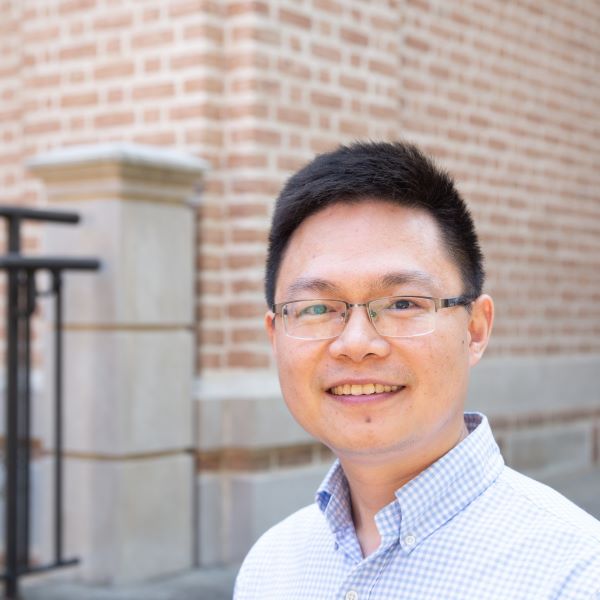
Dr. Kai Gong is an Assistant Professor of Civil and Environmental Engineering at Rice University, with affiliations at the Rice Advanced Materials Institute and Ken Kennedy Institute. His research focuses on sustainable infrastructure materials, environmental sustainability, and materials science. He holds a Ph.D. in Civil & Environmental Engineering and Materials Science from Princeton University, an MEngSci from Monash University (Australia), and dual B.S. degrees from Monash University and Central South University (China). Research Interests: Development of durable, sustainable infrastructure materials Waste encapsulation and conversion to value-added products Carbon mineralization and utilization Advanced characterization techniques (synchrotron/neutron scattering) Data-driven modeling and atomistic simulations Notable Awards: 2023 Le Chatelier Medal (Cement and Concrete Research) 2024 Giatec Award for Best Paper in Sustainability Walbridge Fund Graduate Award (2019) His work integrates computational methods (e.g., molecular dynamics) with experimental techniques to address decarbonization challenges in infrastructure. The Gong Research Group actively seeks motivated researchers for opportunities in sustainable materials innovation.
R. Edwin García is a Professor at the School of Materials Engineering at Purdue University, where he has been faculty since 2005. He holds appointments in the Materials Engineering department within Purdue's College of Engineering, specifically in the School of Materials Engineering located in the Neil Armstrong Hall of Engineering at Purdue's West Lafayette campus. His educational background includes: B.S. in Physics from the National University of Mexico (1996) M.S. in Materials Science and Engineering from Massachusetts Institute of Technology (2000) Ph.D. in Materials Science and Engineering with a minor in Applied Mathematics from Massachusetts Institute of Technology (2003) Professor García's research focuses on the design of materials and devices through the development of a fundamental understanding of the solid state physics of individual phases, their short and long range interactions, and associated microstructural properties and time evolution. His current research emphasizes establishing relationships between material properties and resultant performance and degradation in electrochemical systems. He integrates computational approaches ranging from kinetic Monte Carlo, phase field and level set methods, to finite elements, finite volumes, and symbolic computing. His work particularly addresses microstructure design, crystallographic texture, and grain boundary science and engineering to control the topology of underlying phases and establish practical relations between processing, microstructure, and material properties. His recent publications demonstrate a strong focus on lithium-ion battery technology, ferroelectric materials, and computational modeling of material behaviors. The research trends show increasing integration of machine learning with traditional computational methods, exploration of novel sintering techniques like flash sintering, and deeper investigation into the fundamental mechanisms of material degradation in energy storage systems. His work spans multiple length scales from atomistic to continuum modeling, reflecting a comprehensive approach to materials design and analysis. Professor García teaches several courses including MSE 230 (Structure and Properties of Materials), MSE 350 (Thermodynamics of Materials), MSE 597G (Modeling and Simulation of Materials), MSE 597I (Introduction to Computational Materials), and MSE 597N (Physical Properties of Crystals). He mentors graduate students in areas related to computational materials science, battery technology, and microstructural evolution. His research group, the Laboratory of Computational Microstructures, focuses on developing home-grown analytical theories and algorithms to resolve relevant time and length scales in materials systems. The group's work has significant implications for portable power sources, including rechargeable batteries and fuel cells, as well as for ferroelectric ceramic applications.
Assoc Prof Ng Teng Yong is an Associate Professor at the School of Mechanical & Aerospace Engineering (NTU), specializing in numerical modeling and simulation. With a background as Research Manager at A*STAR Institute of High Performance Computing, his work spans materials science, nanotechnology, and aerospace engineering. Current focus on graphene-based desalination membranes Expertise in molecular dynamics simulations Investigates nanoscale fluid mechanics and structural dynamics Recent publications highlight advancements in energy-efficient electrodialysis, smart robotics, and nonlinear vibration analysis. His interdisciplinary approach integrates computational methods with experimental validation in additive manufacturing and soft material mechanics.
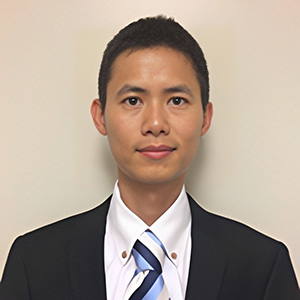
Dr. Wenwu Xu is an Associate Professor in the Department of Mechanical Engineering at San Diego State University (SDSU), affiliated with the College of Engineering. His research focuses on advanced materials science, nanotechnology, and computational modeling of material behavior. He specializes in investigating dislocation dynamics, electric field effects on materials, and the development of novel processing techniques for metallic and ceramic composites. His work spans topics such as hydrogen embrittlement, nanocrystalline material properties, and 3D printing of bioinspired structures. He employs molecular dynamics simulations, atomistic modeling, and experimental validation to study material deformation, sintering mechanisms, and phase stability. Xu’s contributions include pioneering quasi-instantaneous materials processing via high-intensity electrical nano-pulsing and designing recyclable piezoelectric composites for wearable sensors. His research has been published in over 40 peer-reviewed articles since 2007, reflecting a sustained focus on nanoscale material behavior, thermodynamic stability, and industrial applications. While no awards are explicitly listed, his extensive publication record underscores his expertise in materials engineering and computational methods. Dr. Xu’s lab (via mmm.sdsu.edu ) likely explores cutting-edge materials processing and characterization techniques, though specific grants or advising roles are not detailed in the provided text.
Dr. Christopher M. Wolverton is a Professor of Materials Science and Engineering at Northwestern University , where he leads the Wolverton Research Group . His work focuses on computational materials science with applications in energy sustainability , particularly in batteries , hydrogen storage , and thermoelectrics . PhD in Physics from University of California, Berkeley BS in Physics (summa cum laude) from University of Texas, Austin His research leverages first-principles quantum mechanical simulations and machine learning to enable virtual materials synthesis before laboratory testing. The group specializes in hybrid computational methods integrating Density Functional Theory (DFT) , Monte Carlo simulations , and phase-field microstructural models . The article portfolio shows leadership in energy storage materials , with recent work on data-driven nanoparticle facet control , mixed-anion semiconductors , and machine learning-accelerated discovery . Publications span top journals including Nature Energy , Nature Materials , and Science . 2006 Ford Motor Company Technical Achievement Award 2005 Ford Patent & Publication Awards 2003 Ford Environmental/Physical Sciences Recognition As advisor to PhD candidates Zhenpeng Yao , Shiqiang Hao , and Shane Patel , he fosters interdisciplinary research connecting materials informatics with experimental validation . The group maintains active collaborations with Argonne National Lab and MIT/Harvard teams.
University of California , Santa Barbara (UCSB)United States
Frank L. H. Brown is a Professor at the University of California, Santa Barbara with joint appointments in the Department of Physics and Department of Chemistry and Biochemistry. His research focuses on theoretical and computational approaches to understanding biomembrane dynamics and related biophysical phenomena, situated within the College of Letters and Science. Dr. Brown's research interests span the interface between physical chemistry and biophysics. He employs a variety of theoretical tools including statistical mechanics , hydrodynamics , elasticity theory , and quantum mechanics to study complex biological systems. His work particularly emphasizes the dynamics and structure of biomembranes and the interpretation of various spectroscopy experiments including single molecule fluorescence, neutron spin echo, and flicker spectroscopy. Analysis of his publication record reveals a consistent focus on computational modeling of lipid bilayers, membrane proteins, and related phenomena, with particular emphasis on developing novel theoretical frameworks for understanding membrane behavior across multiple scales. Dr. Brown leads an active research group that includes current members Ehsan Noruzifar (Postdoctoral Researcher) and Sean Cray (Graduate Student). His former group members include numerous successful scientists such as Grace Brannigan, Brian Camley, Lawrence Lin, and Max Watson who completed their graduate studies under his supervision, along with several postdoctoral researchers. His research has been supported by funding that enables theoretical and computational investigations of biomembrane systems. The Brown Research Group operates at the intersection of physics, chemistry, and biology, with facilities connected to the Biomolecular Sciences & Engineering Program and the California NanoSystems Institute (CNSI) at UCSB. Their work combines advanced computational techniques with theoretical physics to address fundamental questions about soft and living matter systems, particularly at biological interfaces.
Lawrence Berkeley National LaboratoryUnited States
Dr. Kristin A. Persson is a Professor and Daniel M. Tellep Distinguished Professor in Engineering at the University of California, Berkeley's Department of Materials Science and Engineering. She leads the Persson Group at Lawrence Berkeley National Laboratory (LBNL), focusing on atomistic computational methods for energy materials. As director of the Materials Project, she pioneers high-throughput computing and data-driven approaches to accelerate material discovery for clean energy applications, including batteries, electrolytes, and photocatalysts. Her research spans lithium-ion and multivalent batteries, with a focus on electrolyte design, interfacial chemistry, and sustainable materials. Persson has directed the Materials Project since its inception, a global initiative to computationally predict material properties and provide open-access data. She holds affiliations with LBNL’s Energy Sciences Area and collaborates with industry and academia on projects like the Electrolyte Genome and piezoelectric materials databases. Key achievements include election to the National Academy of Engineering (2025), Royal Swedish Academy of Sciences (2024), and Fellowships from the AAAS (2022) and APS (2021). Her group’s work has produced over 200 publications, with recent highlights on disordered cathodes, ML-driven material predictions, and circular polymers. Persson advises a dynamic team of ~50 graduate students, postdocs, and staff, fostering interdisciplinary innovation in energy storage and materials informatics. Awards include DOE’s Distinguished Scientist Fellowship (2024), Cyril Stanley Smith Award (2022), and Web of Science Highly Cited Researcher recognition (2020). Her lab’s infrastructure supports projects from computational workflows to experimental collaborations, with a focus on translating theory into real-world energy solutions.
Ananth Grama is the Samuel D. Conte Distinguished Professor of Computer Science and Associate Director of the Center for Science of Information at Purdue University. He holds a faculty position in the Department of Computer Science, College of Science. His research focuses on parallel computing, distributed systems, machine learning, and their applications in complex systems such as materials modeling and clinical analytics. He teaches advanced courses like CS525 (Parallel Computing) and CS314 (Numerical Methods). Research interests span parallel algorithms, fault-tolerant learning, quantum machine learning, and data-driven healthcare analytics. Recent work addresses fundamental limits of generative models, online learning under noisy conditions, and clinical outcome predictions. His projects include DOE-funded research on critical element recovery and NIH grants for hearing assessment technologies. Notable contributions include over 50 peer-reviewed publications since 2022, with recent papers appearing at ICLR, NeurIPS, and ICML. Current postdocs include Changlong Wu (collaborating with Wojciech Szpankowski) and Luopin Wang (with Nadia Atallah). He advises seven graduate students and oversees multidisciplinary research teams.
Professor Stefan Goedecker is a distinguished faculty member in the Department of Physics at the University of Basel, Faculty of Science. He holds the position of Professor of Computational Physics and leads an active research group focused on developing advanced computational methods for materials science and quantum physics. Dr. Goedecker received his physics education at the Technical University Munich and the College of William and Mary, followed by a Ph.D. from EPFL Lausanne. His postdoctoral training included positions at Cornell University and the Max-Planck Institute in Stuttgart. In 2003, he was appointed Professor of Computational Physics at the University of Basel, where he has established himself as a leading researcher in computational methods development. His research interests center on computational physics with emphasis on electronic structure calculations, atomistic simulations, and the development of novel algorithms for materials science applications. His work has strong interdisciplinary connections spanning physics, mathematics, material sciences, chemistry, and computer science. Current research directions include machine learning applications in catalysis, fourth-generation neural network potentials for molecular chemistry, and methods for quantifying material synthesizability. Analysis of his recent publications reveals a strong focus on advancing computational methods for electronic structure calculations, with particular emphasis on machine learning potentials, molecular dynamics optimization, and accurate modeling of material properties. His work bridges theoretical physics with practical applications in materials science and nanotechnology, with increasing integration of artificial intelligence techniques into traditional computational physics frameworks. Machine learning for Catalysis (Ongoing) Fourth-Generation Neural Network Potentials for Molecular Chemistry (Completed) Towards Quantifying the Synthesizability of Materials (Completed) Professor Goedecker's research group operates within the Department of Physics at the University of Basel, which is part of the NCCR SPIN initiative focused on silicon-based quantum computing development. The department hosts over 20 research groups with more than 180 teaching staff members, creating a vibrant research environment for computational physics and quantum technologies.
Dr. Xiaofeng Qian is an Associate Professor in the Department of Materials Science & Engineering at Texas A&M University, with joint appointments in Physics and Astronomy, and Electrical & Computer Engineering. His research focuses on materials theory , quantum materials design , and high-throughput computational discovery , particularly for 2D materials and energy applications . Educational Background: Ph.D., Nuclear Science and Engineering, Massachusetts Institute of Technology (2008) B.S., Engineering Physics, Tsinghua University (2001) Research spans first-principles electronic structure methods , nonlinear optical responses , and multiscale modeling of electronic, thermal, and ionic transport. Key areas include quantum spin Hall effect , ferroelectric switching , and machine learning for materials prediction . Notable Awards: Dean of Engineering Excellence Award (2024) Engineering Genesis Multidisciplinary Award (2024) AZZ Faculty Fellow (2021) NSF CAREER Award (2018) Manson Benedict Fellowship (2006) Actively recruiting PhD, MS, and UG researchers with backgrounds in physics, materials science, or computational methods. Collaborates extensively on hybrid AI-materials projects and topological device concepts .
Olle Eriksson is a Professor in the Department of Physics and Astronomy at Uppsala University, specifically affiliated with the Materials Theory division. His research focuses on theoretical and computational approaches to understanding magnetic materials and their properties. His primary research interests include first principles calculations of bulk materials and surfaces, with particular emphasis on magnetism and chemical bonding. His methodological expertise spans full-potential implementations of density functional theory, dynamical mean-field theory, and self-interaction correction. He also conducts calculations of finite temperature magnetism using Monte Carlo simulations and atomistic spin-dynamics simulations, as well as investigations into lattice dynamics and finite temperature effects on phase stability. Professor Eriksson's recent work demonstrates a strong focus on magnetocaloric materials for magnetic refrigeration applications, two-dimensional magnetic materials including van der Waals magnets, topological magnetic textures such as skyrmions, and computational methods for improving density functional theory. His research has significant implications for energy-efficient cooling technologies, next-generation spintronic devices, and fundamental understanding of quantum magnetic phenomena. Materials Science : Magnetocaloric materials, battery materials, 2D materials Computational Physics : Density functional theory, Monte Carlo simulations, spin dynamics Magnetism : Topological textures, chiral magnets, ultrafast dynamics His extensive publication record shows consistent contributions to high-impact journals across physics and materials science, with a notable increase in interdisciplinary work connecting computational physics with materials design for energy applications.
Ambarish Kulkarni is an Assistant Professor in the Department of Chemical Engineering at the University of California, Davis. His research focuses on multi-scale molecular modeling, data science for materials discovery, catalysis, and separations. He combines quantum chemistry methods (e.g., wave function theory, density functional theory) with classical simulations and machine learning to design novel materials for applications in catalysis, energy storage, and environmental remediation. Specific areas of interest include methane activation, CO 2 capture, and heterogeneous electrocatalysis. His work bridges theory and experiment, collaborating with experimental groups to validate computational findings. Notable projects include: Developing catalysts with atomically dispersed metals for enhanced reactivity Designing zeolite materials for selective chemical transformations Creating machine learning workflows to accelerate material discovery Recent research highlights the role of water in CO 2 adsorption mechanisms, the dynamic behavior of confined nanoparticles, and redox-cycling phenomena in zeolite-embedded catalysts. His computational tools like the Multiscale Atomic Zeolite Simulation Environment (MAZE) enable detailed analysis of complex material behaviors. No scientific awards are explicitly listed in the provided information. His advising activities and grants are not detailed in the current data, but his extensive publication record indicates active research collaboration and funding support.