Fabrice DETREZ is an Associate Professor of Engineering Science at University Gustave Eiffel, affiliated with the MSME Lab (Modélisation et Simulation Multi-Echelle). His research focuses on multiscale modeling of polymers and composites, addressing mechanical behavior optimization for sustainable materials. He teaches Materials Science and Engineering Mechanics at both undergraduate and graduate levels. Research Areas: Multiscale modeling, bio-sourced composites, numerical homogenization, atomistic simulations, and structure-property relationships. Key Projects: Includes WAIP (upcycling plastic blends), BIO ART (bio-based epoxy resins), ISCCAP (CO2-based foaming), and BI-STRECH (PET deformation analysis). His recent publications emphasize polymer crystallization mechanics, graphene-polymer nanocomposites, and material sustainability. Collaborations span academia and industry, with a focus on advancing eco-friendly materials through computational and experimental methods.
Yuanyue Liu is an Associate Professor in the Department of Mechanical Engineering at The University of Texas at Austin, supported by the Cockrell Family Fellowship. He leads the Yuanyue Liu Group, focused on developing atomistic modeling methods to study electronic and energy materials, particularly charge transport, electrochemistry, and 2D materials. His research aims to design and discover advanced materials for electronics and energy applications. Education: B.S., University of Science and Technology of China (2008) Ph.D., Rice University (2014) Postdoctoral Research: National Renewable Energy Laboratory (NREL) and California Institute of Technology Research Interests: Atomistic modeling of 2D semiconductors and electrochemical systems Charge transport mechanisms in nanomaterials Design of high-performance electrocatalysts for energy storage/conversion Labs/Teams: Collaborates with the Texas Materials Institute, integrating computational and experimental approaches to advance materials science. His group develops cutting-edge simulation tools like eTran2D for analyzing electronic properties of 2D materials. Grants & Funding: Secure funding through NSF, DOE, and industry partnerships to support his work on electrochemical systems and nanomaterials.
Prof. Felix Höfling holds a W2 non-tenure professorship for 'High-performance computing in molecular dynamics' at Freie Universität Berlin (since 2015). He leads the Computational Statistical & Biological Physics group within the Department of Mathematics and Computer Science. Prior roles include research associate positions at the Max Planck Institute for Intelligent Systems (2010–2015), postdoctoral research at the University of Oxford (2009), and doctoral work at Ludwig-Maximilians-Universität München (2006, summa cum laude). His research focuses on computational methods in statistical and biological physics, including molecular dynamics simulations, anomalous transport in crowded environments, and high-performance computing. Notable contributions include studies on liquid-vapor interfaces, colloidal dynamics, and the interplay between microscopic and macroscopic transport phenomena. His work integrates theoretical modeling, numerical simulations, and interdisciplinary applications in soft matter and biophysics. Editorial Board Member of Communications Physics (since 2023) Director of the CECAM node 'Mathematics and Computation in Molecular Simulation' (since 2022) Head of the MSc Examination Board for Computational Sciences (since 2019) His research articles explore topics such as surface tension modulation, confined fluids, and active matter systems. Key achievements include a highly cited review on anomalous transport in biological cells (2013) and contributions to the development of the H5MD molecular data format. Awarded 'Distinguished Referee' by the European Physical Journal (2013) Recipient of grants for projects on open systems and parallel computing Prof. Höfling oversees the Computational Statistical & Biological Physics lab, emphasizing collaborative research in computational physics and interdisciplinary applications.
Alan McGaughey is a Professor in the Department of Mechanical Engineering at Carnegie Mellon University's College of Engineering. He leads the Nanoscale Transport Phenomena Laboratory, where his research bridges mechanical engineering, materials science, physics, and chemistry to study atomic-level transport of mass, momentum, and energy. His work emphasizes phonon, photon, electron, and fluid particle dynamics using advanced simulation techniques. Bachelor of Engineering, McMaster University (1998) Master of Applied Science, University of Toronto (2000) Ph.D., University of Michigan (2004) Post-doctoral training, University of Florida Alan McGaughey's research interests center on nanoscale thermal transport , with applications in energy technologies , materials for energy efficiency , and multiscale modeling . His lab develops molecular- and meso-scale simulation methods, including molecular dynamics, lattice dynamics, density functional theory, and Boltzmann transport equation modeling. Key research areas include thermal transport in nanostructures and interfaces, hybrid organic-inorganic materials, electrocaloric cooling, and liquid-vapor phase change. The team also applies machine learning to accelerate materials discovery and property prediction. The recent publications (2023–2025) reflect a strong focus on thermal conductivity prediction in diverse systems—from polymers and 2D materials to disordered crystals and thin films. The work integrates first-principles simulations , uncertainty quantification , and machine learning to uncover fundamental mechanisms of phonon transport and interfacial heat transfer. A recurring theme is the role of structural disorder —static, dynamic, or rotational—in modulating thermal properties. Air Force Office of Scientific Research Young Investigator Program (2009) Benjamin Richard Teare Teaching Award (2014) National Academy of Engineering’s Frontiers of Engineering Education Symposium (2015) Professor of the Year by MechE seniors (2012, 2015, 2017) 2019 & 2024 College of Engineering Faculty Awards 2021 Viskanta Fellowship, Purdue University McGaughey has advised numerous Ph.D. and Master’s students, many of whom have gone on to impactful research careers. His group has secured funding from agencies such as the Department of Defense and the Department of Energy, including Scott Institute seed grants for energy research. He collaborates extensively with experimentalists, including Jonathan Malen, Reeja Jayan, Chris Wilmer, and others, ensuring strong theory-experiment integration. He is also involved in educational innovation and was named faculty chair-elect for the College of Engineering. The Nanoscale Transport Phenomena Laboratory is a vibrant research group that combines computational modeling with interdisciplinary collaboration to advance fundamental understanding and enable next-generation thermal materials and devices.
Harley T. Johnson is the Executive Director and CEO of the Illinois Quantum and Microelectronics Park and a Founder Professor in the Department of Mechanical Science and Engineering at the University of Illinois Urbana-Champaign. He holds courtesy appointments as Professor of Materials Science and Engineering and affiliates in the Materials Research Lab (MRL) and the National Center for Supercomputing Applications (NCSA). He directs the Illinois NSF Materials Research Science and Engineering Center (I-MRSEC). His academic roles include Associate Dean for Research (2019–2025) and leadership in various research initiatives. Education: Ph.D. Engineering, Brown University (1999) Sc.M. Applied Math, Brown University (1998) B.E.S.M. Engineering Science and Mechanics, Georgia Institute of Technology (1994) Research focuses on mechanics of electronic/photonic materials, nanostructures, and optical properties. Key areas include quantum dots, MEMS stress modeling, and nanophotonics. His work integrates atomistic and continuum models to address multiphysics phenomena in energy, microelectronics, and materials processing. Recent articles emphasize graphene mechanics, twisted bilayer systems, and machine learning-driven design. His publications span journals like Nature Materials , Physical Review B , and Acta Materialia . Themes include defect dynamics, moiré engineering, and strain-driven phenomena. Awards: SES Fellow (2020), ASME Fellow (2012) Xerox Faculty Research Award, UIUC (2011) UIUC Campus Award for Leadership (2020) Teaching includes TAM 451 (Solid Mechanics) and TAM 559 (Atomistic Solid Mechanics). He advises on interdisciplinary initiatives like the NRT-HDR Materials Informatics program. His labs collaborate on projects such as emergency ventilator design for pandemic response and graphene-mediated surface stabilization.
Harley T. Johnson is the Executive Director and CEO of the Illinois Quantum and Microelectronics Park and a Founder Professor in the Department of Mechanical Science and Engineering at the University of Illinois at Urbana-Champaign (UIUC). He holds courtesy appointments in Materials Science and Engineering, and is affiliated with the Materials Research Lab (MRL) and the National Center for Supercomputing Applications (NCSA). He directs the Illinois NSF Materials Research Science and Engineering Center (I-MRSEC). His roles include past Associate Dean for Research (Grainger College, 2019–2025) and leadership in multiple interdisciplinary initiatives. Education: Ph.D., Engineering, Brown University (1999) Sc.M., Applied Mathematics, Brown University (1998) B.E.S.M., Engineering Science and Mechanics, Georgia Tech (1994) Research Interests: Focuses on mechanics of electronic/photonic materials, nanostructure behavior, and optical properties. Key areas include quantum dots mechanics, stress in MEMS/microelectronics, dislocations in electronic materials, nanophotonics design, and materials processing for solar energy and sensing. His group employs atomistic and continuum modeling to study multiphysics phenomena, aiding experimental design. Publications Trends: Recent work emphasizes 2D materials (graphene, MoS₂), dislocation theory in twisted bilayers, and computational methods for material optimization. Themes include moiré engineering, strain-driven phenomena, and defect dynamics in nanomaterials. Awards: Notable achievements include SES Fellow (2020), ASME Fellow (2012), NSF CAREER Award (2001), and leadership recognition from UIUC. He has pioneered emergency ventilator design during the 2020 pandemic. Advising & Grants: Leads I-MRSEC and collaborates on materials informatics training programs. His grants include NSF, DOE, and industry partnerships. He has advised numerous graduate students through interdisciplinary initiatives. Labs & Teams: Active in MRL and NCSA, focusing on quantum materials, microelectronics, and computational modeling. Collaborates globally, including through Fulbright and invited professorships in France.
Dallas R. Trinkle is an Ivan Racheff Professor and Associate Head of the Department of Materials Science and Engineering at the University of Illinois, Urbana-Champaign. He holds a Ph.D. in Physics from Ohio State University (2003) and joined UIUC's faculty in 2006 after postdoctoral research at the Air Force Research Laboratory. His research focuses on computational methods to study defects in materials at the atomic scale, including density-functional theory and machine learning applications in diffusion and mechanical behavior. Education : Ph.D. in Physics, Ohio State University, 2003 Postdoctoral Researcher, National Research Council (Air Force Research Laboratory), 2003–2006 Research Interests : Trinkle’s work centers on defects in materials, including dislocations, point defects, and interfaces, with applications to structural metals like magnesium, titanium, and palladium. Key areas include: Computational materials science using atomistic methods (DFT, tight-binding) Mechanical behavior of alloys and phase transformations Mass transport mechanisms, including diffusion of interstitials and solutes Machine learning for materials discovery and predictive modeling Awards : TMS Young Leader International Scholar (2008) NSF CAREER Award (2009) Xerox Award for Faculty Research (2011) TMS Brimacombe Medal (2019) Advising & Grants : Trinkle mentors graduate and postdoctoral researchers in computational materials science. His research is supported by NSF, Boeing, and the Department of Energy. He has developed educational modules integrating computation into undergraduate curricula, emphasizing digital materials and atomic-scale simulations. Labs & Groups : His research group maintains a Trinkle Group page with resources on computational tools (e.g., Mg solute database on GitHub) and ongoing projects.
Taras V Pogorelov serves as Visiting Assistant Professor at the National Center for Supercomputing Applications (NCSA) and Research Assistant Professor at the School of Chemical Sciences at the University of Illinois at Urbana-Champaign, where he leads scientific computing initiatives. His academic journey includes: Diploma in Biomedical Engineering from Bauman Moscow State Technical University (1995) M.S. in Mathematics from University of Illinois at Urbana-Champaign (1996) Ph.D. in Chemical Physics from University of Illinois at Urbana-Champaign (2006) Dr. Pogorelov's research program integrates physics, chemistry, biology, and computer science to address fundamental questions in molecular biology and the physical chemistry of cell signaling in health and disease. His team develops innovative computational methods by combining molecular dynamics, quantum chemistry, and molecular evolution frameworks with multi-resolution experimental data. Current research focuses on cell signaling mechanisms, protein dynamics in complex environments, and functional lipids in membrane-associated phenomena. His recent publications (2024-2025) demonstrate strong emphasis on protein folding dynamics, enzyme organization in cytoplasmic environments, and membrane interactions of bioactive molecules, with applications spanning antimicrobial development to climate change research. Dr. Pogorelov's scholarly contributions have been recognized with: Faculty Fellow at NCSA (2014) Illinois Research Board Award (2012) RSOCR Award (2016) Scialog Fellowship (2018) His work has garnered significant academic and public attention, with research featured in 8 news outlets, referenced in 2 Wikipedia pages, shared across social media by numerous X users, and accessed by researchers worldwide through academic platforms. Leading a multidisciplinary research group, Dr. Pogorelov continues to advance computational approaches to understanding complex biological systems with implications for health, disease mechanisms, and environmental science.
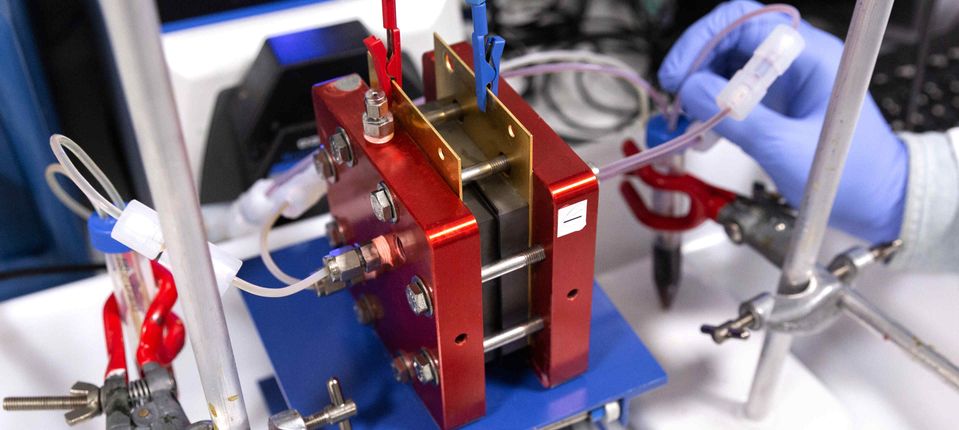
Dr Qilei Song is an Associate Professor in Chemical Engineering and a principal investigator at the Barrer Centre, Imperial College London. He leads the Functional Membranes and Energy Materials Group, focusing on porous materials and membrane technologies for molecular separations, catalysis, and energy systems. Affiliated with Grantham Institute and Institute for Molecular Science and Engineering Co-investigator in £9M EPSRC Programme Grant SynHiSel ERC Starting Grant recipient for membrane development in grid-scale energy storage His research spans CO2 capture , hydrogen production , ion exchange membranes , and advanced battery materials . Key projects include redox flow batteries, fuel cells, and water purification systems. The group maintains strong collaborations with industrial partners like BP-ICAM, Shell, Toyota Motor Europe, and Schlumberger. Notable scientific achievements include the IChemE Nicklin Medal and ERC Starting Grant . The group's publications emphasize ion transport mechanisms, microporous polymers, and electrochemical device optimization. Advising PhD students Charlotte Breakwell, Yijie Yang, Naiqi Meng, and others Alumni include Dr Anqi Wang (now KAUST), Dr Rui Tan (Swansea University), and Dr Zhiyu Fan (clean tech startup) The lab houses argon-filled glovebox systems for battery assembly and testing, supporting projects in lithium-ion batteries and redox flow batteries under inert conditions.
Heather J. Kulik is a Full Professor in the Departments of Chemical Engineering and Chemistry at the Massachusetts Institute of Technology (MIT). She received her B.E. from Cooper Union (2004) and Ph.D. from MIT (2009), followed by postdoctoral training at Lawrence Livermore and Stanford. Her research focuses on computational workflows and machine learning for materials discovery, particularly in catalysis and enzyme modeling. Research interests include Electronic structure and density functional theory Machine learning in chemical discovery Transition metal chemistry and catalysis Computational modeling of functional materials Recent publications emphasize Machine learning-driven catalyst optimization Stable metal-organic frameworks (MOFs) Electronic structure of transition metal complexes Enzyme mechanistic modeling Energy materials design Quantum chemistry applications Scientific awards include the NSF CAREER Award (2019), Sloan Research Fellowship (2021), and AIChE CoMSEF Impact Award (2023).
Dr. Clotilde Cucinotta is an EPSRC Fellow in the Department of Chemistry at Imperial College London, where she has led independent research since 2018. Her work focuses on computational modeling of solid-liquid interfaces, electron transport phenomena, and energy conversion systems using advanced molecular dynamics and first-principles methods. Her educational background includes: Master's in Condensed Matter Physics, University of Messina (Italy) PhD from University of Modena and INFM-CNR-S3 excellence centre (Italy) Dr. Cucinotta's research integrates computational chemistry and materials science to investigate interfacial processes critical for energy technologies. She specializes in modeling electrified interfaces under operational conditions, with emphasis on platinum-water systems, 2D material reactivity, and electrochemical energy conversion. Her methodologies bridge quantum mechanical simulations with macroscopic electrochemical behavior, enabling predictive design of catalysts and energy storage materials. Current projects address CO 2 conversion, battery electrode interfaces, and corrosion mechanisms through atomistic simulations. Analysis of her 2021-2025 publications reveals consistent focus on solid-liquid electrochemical interfaces, particularly platinum-water systems under bias. Her work demonstrates methodological innovation in simulating potential-controlled interfaces while advancing fundamental understanding of capacitive response, wettability, and reaction mechanisms. Key thematic areas include electrocatalysis for sustainable fuels, nanoscale battery materials, and computational tools for realistic interface modeling. Scientific recognition includes: Prestigious EPSRC Fellowship supporting her independent research program Funded by her EPSRC Fellowship, Dr. Cucinotta leads a computational research group developing novel simulation frameworks for electrochemical interfaces. She mentors early-career researchers in computational chemistry and maintains collaborations with experimental groups at Trinity College Dublin and ETH Zurich. Her grant portfolio centers on fundamental interface science with applications in energy conversion and storage. Her research is conducted within Imperial College London's Department of Chemistry, utilizing high-performance computing infrastructure for large-scale molecular dynamics and quantum simulations. The computational laboratory focuses on developing open-boundary methods for realistic electrochemical interface modeling under operational conditions.
Christian Holm is a Professor at the Institute for Computational Physics of the University of Stuttgart. His research focuses on computational modeling of soft matter systems with electrostatic and magnetic interactions, including polyelectrolytes, colloids, and hydrogels. Member of collaborative research centers SFB 716, SFB 1313, SFB 1333, FOR 2811, and MultiXscale Develops machine learning potentials and advanced simulation methods for complex molecular systems Co-developer of the ESPResSo simulation package for soft matter research His recent work explores: Mechanisms of polyelectrolyte complexation and gel swelling Machine learning approaches for quantum-accurate interatomic potentials Dynamics of active colloids and biofilm formation in porous media Multi-agent reinforcement learning for smart active systems He maintains affiliations with CECAM's Soft Matter and Statistical Mechanics node and contributes to open science initiatives through software development.
Xidong Chen is a Professor in the Department of Physics and Engineering at Biola University, affiliated with the School of Science, Technology and Health. His academic journey includes a Ph.D. in Physics from the University of Illinois at Urbana-Champaign, an M.S. in Solid State Physics from the Institute of Physics, Chinese Academy of Sciences, and a B.S. in Theoretical Physics from Shandong University. Ph.D., Physics, University of Illinois at Urbana-Champaign M.S., Solid State Physics, Institute of Physics, Chinese Academy of Sciences B.S., Theoretical Physics, Shandong University Chen's research spans theoretical surface dynamics , Monte Carlo simulations , and fluctuation electron microscopy to study medium-range ordering in amorphous materials. His work combines computational methods like Density Functional Theory and experimental techniques such as Atomic Force Microscopy (AFM) to analyze nanoscale phenomena in materials science and semiconductor physics. His recent publications and presentations highlight studies on oxide film growth , surface phase transitions , and stress relaxation in amorphous carbon . These works appear in prestigious journals like Physical Review Letters and Proceedings of the National Academy of Sciences , covering topics from intermetallic oxidation to AFM-based cell structure analysis. Scientific Awards : Provost Faculty Award for Excellence in Scholarship, Biola University (2016) Faculty Scholar of the Year, Cedarville University (2010-2011) Faculty Excellence in Teaching, Southwestern Ohio Council for Higher Education (2008) Chen's teaching includes calculus-based General Physics , Quantum Mechanics , and Advanced Physics Laboratory , where he emulates real research experiences. He emphasizes active learning and views physics as an act of worship, sharing his passion through pedagogical innovation.
Dr. Adib Samin is an Associate Professor of Nuclear Engineering at the Air Force Institute of Technology (AFIT), specializing in computational materials science and radiation effects on materials. His research focuses on understanding the behavior of alloys under extreme conditions through atomistic simulations and first-principles calculations. He holds a PhD in Mechanical Engineering (The Ohio State University, 2014), an MS in Chemical Physics (2012), and a BS in Chemistry (Wayne State University, 2008). His research interests include materials degradation mechanisms, corrosion science, and the development of advanced alloy systems for nuclear and aerospace applications. He employs density functional theory (DFT), molecular dynamics, and machine learning techniques to study dislocation dynamics, oxygen adsorption, and radiation-induced defects in materials like tungsten, niobium-titanium alloys, and high-entropy alloys. Dr. Samin’s work has been published in journals such as Journal of Applied Physics , Corrosion Science , and ACS Langmuir , with a focus on oxidation thermodynamics, interstitial diffusion, and surface reactivity. He advises graduate students (e.g., L.A. Heaton, T.D. Doležal) on topics like alloy design and corrosion mechanisms. His contributions span interdisciplinary collaborations, addressing challenges in nuclear reactor materials, radiation-resistant magnets, and corrosion mitigation in extreme environments.
Stavros Richard Christopoulos is a Senior Lecturer in Data Science and Mathematics at the Department of Computer Science , School of Computing and Engineering , University of Huddersfield. He is a member of the Centre for Autonomous and Intelligent Systems . Research Expertise : His work spans computational materials science (particularly silicon-based systems and defects), earthquake prediction using statistical physics, and energy storage solutions. Based on 70 research outputs and collaborations with institutions globally, his studies contribute to UN Sustainable Development Goals related to clean energy and disaster resilience. Recent Publications : His 2024–2025 studies include computational modeling of silicon-germanium defects, machine learning approaches to earthquake timing, and Li-ion mobility in MXene-based anodes, reflecting interdisciplinary applications of data science and physics. Activities : He has presented at conferences on topics ranging from seismic statistical methods to atomistic simulations for nuclear applications, including poster presentations on battery materials in 2022.