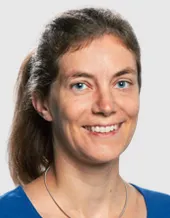
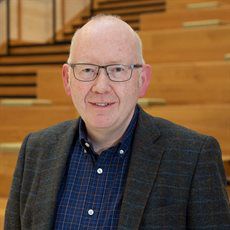
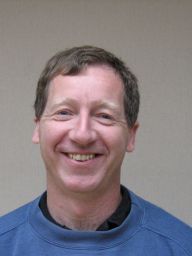
Associate Professor Aron Woldeghiorgis is a Senior Lecturer at the School of Electrical Engineering and Telecommunications, University of New South Wales (UNSW), with a PhD in Electrical Engineering from UNSW. His research focuses on Micro-Electro-Mechanical Systems (MEMS) and Micro-Opto-Electro-Mechanical Systems (MOEMS), including silicon-based fabrication techniques, piezoelectric actuation, CMOS-MEMS integration, and flexible sensors. He has published over 90 scientific works and led innovations in on-chip atomic force microscopy, optical interconnects, and LiDAR technology for autonomous vehicles. B.E. (Hons) in Electrical Engineering, Addis Ababa University (AAU) MEngSc in Electronics and Communication, UNSW PhD in Electrical Engineering, UNSW His research interests span Nano/Micro electro-mechanical systems (N/MEMS) for optical switching, silicon photonics, and carbon nanofibers in flexible sensors. Recent articles highlight advancements in electrothermal actuators, low-thermal-budget silicon films, and piezoelectric micro-lens systems. He has secured grants like the 2021 ARC LIEF ($527K) for maskless lithography and 2018 Innovation Connect Grant ($120K) for MEMS tunable diffraction grating. Awards include the 2010 UNSW Inventor of the Year Award for '3D-Optical Interconnect.' He supervises four PhD students and teaches courses in Integrated Circuit Technology and Microsystems . Collaborations include industry partnerships with Baraja Pty Ltd and Sensornomics, along with academic roles in technical committees for APCOT and Transducers conferences.
Associate Professor Jarryd Pla is an experimental physicist and electrical engineer at the University of New South Wales, specializing in quantum information processing and quantum technologies. He holds a PhD in Electrical Engineering from UNSW (2013) and a first-class honors BEng in Photonic Engineering (2009). Current ARC Future Fellow Former Bragg Gold Medal recipient His research focuses on: Spin-based quantum computation in silicon Superconducting quantum circuits Quantum-noise-limited microwave amplifiers Hybrid quantum systems for quantum memory Quantum sensing and spectroscopy Recent publications highlight: Room-temperature maser amplifiers Kinetic inductance parametric amplifiers Coherent control of donor spins Quantum-limited electron spin resonance Scientific Awards: ARC Future Fellowship (2024-2028) Bragg Gold Medal His grants include: ARC DECRA (2019-2022): Superconducting hybrid quantum technologies ARC Discovery Project (2021-2024): Quantum sensing with semiconductor devices ARC Future Fellowship (2024-2028): Room-temperature diamond-based microwave detection
Dr. Sven Burger is a leading Researcher at the Zuse Institute Berlin (ZIB) within the Modeling and Simulation of Complex Processes department. His work focuses on Nanophotonics , Quantum Technologies , and Optical Resonance Computation , particularly in photonic crystals, plasmonic systems, and quantum light sources. Key projects: NanoLab GRIPS 2024 , MATH+ TES QT , MATH+ PaA-1 (perovskite solar cells), Colour Impression of Solar Cells Collaborations: MATH+ , BIFOLD , Research Campus MODAL His research spans Bayesian optimization for quantum systems, quasinormal mode expansions , chiral plasmonics , and terawatt-scale photovoltaics . Recent work emphasizes RPExpand software for resonance analysis and AAA algorithm applications in photonic design. He contributes to quantum key distribution via plug&play single-photon sources, hot carrier dynamics in plasmonic nanocrystals, and high-efficiency light extraction for deep-UV LEDs. His computational methods address non-Hermitian systems , exceptional points , and self-interference nanoparticle tracking .
Barbara AJ Lechner is a Rudolf Mößbauer Tenure Track Professor in the Department of Chemistry at the Technical University of Munich (TUM). Appointed in October 2020, she leads research in surface science and nanomaterials characterization at TUM's Institute for Advanced Study (TUM-IAS). Her work focuses on understanding dynamic processes in functional nanomaterials under realistic conditions, particularly model catalysts exposed to reactive gas atmospheres. Dr. Lechner received her Chemistry education at the University of Innsbruck, Austria, followed by a Ph.D. in Physics from the University of Cambridge in 2012. Her postdoctoral work was conducted at the Lawrence Berkeley National Laboratory under Prof. Miquel Salmeron before she joined TUM as a group leader at the Chair of Physical Chemistry. Dr. Lechner's research centers on the dynamic restructuring of functional nanomaterials, particularly how model catalysts behave under reactive gas conditions. Using advanced scanning tunneling microscopy with high temporal and spatial resolution, she investigates how the structure of metal clusters and oxide supports changes in real-time. Her work with precisely defined small clusters allows examination of how highly reactive particle structures form, decay, and influence material function. This research has significant implications for catalyst design and optimization. Analysis of Dr. Lechner's recent publications reveals a consistent focus on surface science and catalysis, with particular emphasis on in-situ characterization techniques. Her work spans fundamental surface processes on materials like iron oxide, titanium dioxide, and platinum surfaces, examining phenomena such as cluster sintering, surface reconstruction, and reaction mechanisms under realistic conditions. The integration of advanced microscopy techniques with controlled gas environments represents a distinctive approach in her research portfolio. ERC Starting Grant (2019) Fellow of the Bavarian Academy of Sciences and Humanities as one of the members of their "Young Academy" (2018) Marie Skłodowska-Curie Individual Fellowship (2017-2019) Max Auwachter Prize (2016) Humboldt Research Fellowship (2016-2017) Springer Thesis Prize (2013) Dr. Lechner has secured significant research funding through prestigious grants including the ERC Starting Grant and Marie Skłodowska-Curie Fellowship. Her research group develops and applies advanced microscopy techniques to study dynamic processes in catalytic systems. She collaborates extensively with researchers across TUM and international institutions, particularly focusing on understanding the fundamental mechanisms that govern catalytic activity and material stability under operating conditions. As a Rudolf Mößbauer Tenure Track Professor, Dr. Lechner leads a research group focused on the development and application of in-situ surface characterization techniques. Her laboratory employs scanning tunneling microscopy integrated with controlled gas environments to observe dynamic processes at the atomic scale. This approach allows her team to directly correlate structural changes with catalytic function, providing insights that could lead to more efficient and stable catalyst designs.
Dana Weinstein is a Professor in the Department of Electrical and Computer Engineering at Purdue University, West Lafayette campus. Her research focuses on cutting-edge MEMS resonators, RF device integration, and acoustoelectronic systems. Academic Rank: Professor Department: Electrical and Computer Engineering University: Purdue University Email: danaw@purdue.edu Research Interests: Microelectronics and MEMS Resonators Radio Frequency (RF) Devices and 2D Materials Silicon Photonics and Ferroelectric Transducers Acoustoelectronics and GaN/SiC Heterostructures Integrated Nonreciprocal RF MEMS Devices Scientific Awards: NSF CAREER Award (2017) NSF CAREER Award (2012) Editorial Leadership in IEEE Nanotechnology Express (2015) Key Article Trends: Her recent publications explore advanced MEMS resonators, high-frequency RF devices, acoustoelectric interactions, and integration of 2D materials into CMOS-compatible platforms. Topics include Sezawa wave SAW devices, GaN/SiC heterostructures, BEOL-compatible transistors, and ferroelectric-based transducers.
Haydn N. Wadley is a University Professor and Edgar A. Starke Professor of Materials Science and Engineering at the University of Virginia’s School of Engineering and Applied Science. His academic roles include Courtesy Professorships in Mechanical and Aerospace Engineering. He holds a B.S. in Chemical Physics and a Ph.D. in Physics from the University of Reading, UK. Research focuses on high-temperature materials, thermal/environmental barrier coatings, microarchitectured materials (lattice and opal structures), and impact/shock mitigation. Key areas include ceramic thermal management for gas turbines, hypersonic vehicle materials, and nanoscopic material assembly. His work addresses atomic-scale material assembly, cellular material topology, and high-temperature coating processing. Notable awards include election to the Virginia Academy of Science, Engineering and Medicine (VASEM). Recent research trends emphasize coating durability under thermal cycling, granular material dynamics, and additive manufacturing of lattice structures. Collaborative projects include heat-pipe thermal management and composite blast protection systems. His lab develops multifunctional materials via combinatorial synthesis and high-throughput screening. Key facilities include a high-temperature engine materials test facility and systems for plasma spray deposition optimization.
Ethan Hill is an Assistant Professor in the Department of Chemistry and Biochemistry at Auburn University. His research focuses on synthetic inorganic chemistry, particularly the use of long-range interactions to control transition metal complex reactivity. These interactions include metal-ligand cooperativity, electron delocalization, and external electric fields to develop sustainable catalysts for energy and chemical synthesis. Education: Ph.D. in Inorganic Chemistry, University of California - Irvine (2016) B.S. in Chemistry (ACS Certified), Colorado State University (2011) Research interests emphasize ligand design, spectroscopic characterization (NMR, UV-vis, IR, EPR), and catalytic transformations. The Hill Group aims to innovate methods for bond formation/breaking and train scientists skilled in both academic and industrial environments. Members engage in outreach, mentoring, and conference participation. Lab activities include developing electric field applications in catalysis, studying metal-ligand cooperativity with phosphorus-based ligands, and exploring functional group storage via multi-component reactions. The group prioritizes green oxidation and cross-coupling strategies for sustainable chemistry.
Dr Carl Anthony is a Senior Lecturer and Head of Education in the Department of Mechanical Engineering at the University of Birmingham, within the School of Engineering. He has been a key figure in microsystems research and education since joining the university in 2006. Educational Background: BSc (Hons) in Physics with Optoelectronics, University of Surrey, 1993 PhD in Electrical and Electronic Engineering, Newcastle University, 2006 His research focuses on Microsystems Engineering , particularly microsensors, energy harvesting, nonlinear resonators, and bio-MEMS tactile sensors. His work bridges fundamental physics with practical engineering applications, especially in autonomous sensing systems. He has pioneered research in Focused Ion Beam microfabrication and wireless sensor powering solutions. The recent publications highlight a consistent trajectory in MEMS and microfabrication technologies , with increasing emphasis on bio-integrated sensors, energy autonomy, and advanced characterization techniques. His work spans materials, devices, and system-level integration, demonstrating interdisciplinary depth. Scientific Awards: EPSRC First Grant (2010) for developing a battery-less clockwork energy harvester for in-wheel tyre pressure sensors Carl Anthony is actively involved in research funding and supervision. He has secured competitive grants such as the EPSRC award and supervises PhD students in areas including micro energy harvesters, coupled resonators, and micro-vacuum systems. He is a member of the Energy Harvesting Network and collaborates with European consortia on bio-MEMS projects. He leads research in the MicroEngineering Group , where his team investigates dynamic behavior of micro-resonators, fabrication-induced material damage, and novel sensor architectures. The group leverages advanced tools like FIB and SEM for nanoscale engineering and characterization.
Philip Nakashima is an Associate Professor in the Department of Materials Science & Engineering within the Faculty of Engineering at Monash University. He is an active researcher with a PhD in Physics from the University of Western Australia (2002) and has over 25 years of experience in advanced transmission electron microscopy (TEM) and quantitative convergent-beam electron diffraction (QCBED). He is currently accepting PhD students and is involved in cutting-edge research in materials characterization and quantum information technology. His research focuses on the development and application of advanced electron microscopy techniques to study the structure, bonding, and properties of materials such as metals, alloys, ceramics, and nanostructures. Key areas include quantitative CBED, electron crystallography, digital image restoration, noise quantification, and multi-parameter optimization. He has made seminal contributions to understanding chemical bonding in aluminum and has extensive experience in high-performance computing for materials analysis. His most recent publications demonstrate a strong trend toward integrating machine learning with materials design, particularly for magnesium alloys, while maintaining core expertise in electron diffraction and microscopy. He continues to publish in high-impact journals such as Science , Physical Review Letters , and Acta Materialia . Philip Nakashima has received several prestigious awards for his research excellence: John Sanders Medal (2012) : Awarded by the Australian Microscopy and Microanalysis Society for excellence in electron microscopy techniques. Barry Inglis Medal (2011) : Awarded by Australia’s National Measurement Institute for outstanding achievement in measurement research. The Cowley-Moodie Award (2006) : Recognizing research excellence in electron microscopy in the physical sciences. He has been a visiting researcher at the ARC Future Fellowship (2012–2016) and is currently an Associate Investigator in the Quantum Information Technology project (2023–2027). He teaches advanced crystallography to undergraduate and postgraduate students and has been invited to lecture at international schools on electron and quantum crystallography. His research involves collaboration with leading scientists in Australia and internationally, and he leads work on advanced microscopy for materials engineering applications.
Dr. Darryl Jones is a Senior Research Fellow at Flinders University's College of Science and Engineering and the Flinders Institute for Nanoscale Science and Technology. His research focuses on experimental and theoretical studies of electron and photon collisions with atoms, molecules, and condensed matter systems. His educational background includes a Doctor of Philosophy from Flinders University (2008) and a Japanese Society for the Promotion of Science Post-Doctoral Fellowship at Tohoku University, Japan (2008-2010). Dr. Jones' research interests span electron collisions with applications in medical radiation therapies and plasma processing technologies. His work involves experimental studies of electron-impact excitation, ionization, and fragmentation processes, combined with quantum chemical computations to describe atomic and molecular phenomena. He has specialized in photon- and electron-impact processes and has developed novel chemical processing platforms for materials synthesis. Most recently, he managed a Photoemission Electron Microscopy (PEEM) facility within Flinders Microscopy and Microanalysis (2020-2022). His recent publications demonstrate a strong focus on electron-molecule interactions, materials characterization, and scattering cross-section measurements, with applications spanning from fundamental physics to practical technological implementations. ARC Future Fellowship (FT210100264) - Molecular movies using time-resolved momentum spectroscopies ARC Linkage Infrastructure and Equipment Fund (LE240100073) - A femtosecond beamline for time-resolved momentum microscopy Australia's Spectroscopy & Molecular Physics Research Field Leader (2018) Flinders Prize in Theoretical Physics (2003) The Max Clark Prize in Science and Engineering (2003) Dr. Jones has secured significant research funding including multiple ARC grants totaling millions of dollars. He serves on the editorial boards of international journals Atoms and the European Physical Journal D , and is currently vice-chair of the SA Branch of the Australian Institute of Physics (AIP). His research contributes to UN Sustainable Development Goals, particularly in the areas of clean energy and advanced materials development. He has established collaborative networks with researchers across multiple countries, with recent external collaborations spanning Australia, Japan, and Europe.
Dr. Lluis Batet Miracle is a Professor at the Universitat Politècnica de Catalunya (UPC) with the Department of Physics . He leads the Advanced Nuclear Technologies Research Group (ANT) and has contributed extensively to nuclear fusion technology, thermal hydraulics, and liquid metal systems. His work spans reactor safety analysis, tritium processing, and magnetohydrodynamic modeling. Expertise : Nuclear Engineering, Plasma Physics, Computational Fluid Dynamics, Fusion Reactor Design, Tritium Management Notable Projects : CONSOLIDER TECNO-FUS (2009-2013), EURATOM collaborations, HCLL Breeding Blanket Systems for ITER Research Trends : Recent publications focus on helium solubility in liquid metals, bubble dynamics in fusion blankets, and MHD simulations under nuclear conditions. His work combines atomistic modeling, high-fidelity CFD, and experimental validation for tritium and hydrogen systems in fusion reactors. Collaborations : Regularly works with Luis Sedano, Eduardo Ríos, Jordi Martí, Francesc Reventos, and Elisabet Mas de les Valls Grants : Involved in Horizon Europe, EURATOM, and Spanish National Research programs
Yves Joly is a Research Director at the CNRS (French National Center for Scientific Research) and a member of the SIN team (Surfaces, Interfaces and Nanostructures) at the Institut Néel in Grenoble, France. His primary research focuses on the theory and development of X-ray spectroscopies as probes for studying materials, with particular emphasis on the development and dissemination of the FDMNES ab initio computation code. His work bridges theoretical physics and experimental materials science, enabling detailed analysis of electronic, magnetic, and structural properties across diverse material systems. Dr. Joly received his education at the Institut National Polytechnique in Grenoble, where he earned his Physicist Engineer degree in 1982. He continued his studies at the Laboratoire de Spectrométrie-Physique, Université Joseph Fourier (UJF), Grenoble, where he obtained his PhD in Physics of Matter and Radiation in 1984. His doctoral thesis focused on 'Study of alloy surfaces using Low Energy Electron Diffraction.' Dr. Joly's research interests center on X-ray absorption, emission, and scattering spectroscopies, particularly at energies close to absorption edges (XANES, valence to core X-ray emission spectroscopy, resonant X-ray diffraction). He has dedicated significant effort to developing the FDMNES ab initio computation code, which simulates these spectroscopies and allows comparison with experimental data typically recorded at synchrotrons. His work has applications across various material classes, with a special focus on oxides. Throughout his career, he has also contributed to surface science, studying carbides, nitrides, and semiconductors using techniques like Low Energy Electron Diffraction and Low Energy Positron Diffraction. Analysis of Dr. Joly's recent publications reveals a consistent focus on advancing X-ray spectroscopic techniques and their applications to increasingly complex materials systems. His work spans fundamental theoretical developments, computational methodology improvements, and practical applications to diverse materials including quantum materials, battery cathodes, catalysts, and magnetic systems. A significant portion of his recent work continues to center on the FDMNES code and its applications, demonstrating his ongoing commitment to making advanced X-ray analysis tools accessible to the broader scientific community. Dr. Joly has held various academic positions throughout his career. After completing his PhD in 1984, he conducted postdoctoral research at the CHU of Sherbrooke, Department of Nuclear Medicine, in Canada. He joined CNRS as a Junior Researcher in 1986, first at the Laboratoire de Spectrométrie-Physique and later at the Laboratoire de Cristallographie. In 2006, he became a Senior Researcher at the Laboratoire de Cristallographie, which became part of the Institut Néel in 2007. From 2011 to 2015, he served as Deputy Director of the MCMF department of the Institut Néel, demonstrating his leadership within the research institution. At the Institut Néel, Dr. Joly is a key member of the SIN team within the QUEST department (Électronique QUantique, Surfaces et spinTronique). His work is closely connected to synchrotron radiation facilities, where experimental data for comparison with his computational models is typically collected. The FDMNES code he developed has become an important tool in the X-ray spectroscopy community, facilitating the interpretation of complex spectral data across numerous research fields. His research has significant implications for understanding quantum materials, energy storage systems, and catalytic processes.
Harry Morgan is a Lecturer in Computational and Theoretical Chemistry, actively contributing to interdisciplinary research at the intersection of chemistry and physics. He specializes in computational modeling of quantum materials, structural chemistry, and electronic state analysis. Research Outputs: 26 publications focusing on thin films, nuclear clocks, catalysts, and topological insulators Expertise: Mass Spectrometry, Structural Chemistry, Plane Wave Methods, and Gold Nanoparticle Systems His work aligns with UN Sustainable Development Goals through advancements in quantum materials and sustainable chemical processes. Current research includes: Radioactive decay in solid-state systems Electronic transport in crystalline structures Chemical bonding models for quantum materials Stability analysis of catalytic nanoparticles He is accepting PhD students for projects related to chemical bonding models of quantum materials.
Prof. Dr. Michael Veith is a Professor at the Westphalian University of Applied Sciences, serving as Vice Dean and Chair of the Examination Board in Molecular Biology within the Department of Engineering and Natural Sciences. He leads the Biophysics Laboratory and Laboratory for Physical Chemistry, focusing on biomaterials and biomedical applications. Research areas: Biomaterials, Medical Implants, Biosensors, Nanotechnology, Biophysics, Nano-Biotechnology Key methods: Ellipsometry, SPR spectroscopy, Laser confocal scanning microscopy, SEM/EDX, Atomic Force Microscopy He teaches modules including Thermodynamics, Biophysics, Quantum Physics, and Bio-Nanotechnology, with a focus on surface functionalization of medical implants. His supervised students include Michael Lehnert (2012), Stefan Pfeifer (2013), and Volker Ettelt (2017).
Jiaqing He is a Chair Professor and Vice Dean at the College of Science , Southern University of Science and Technology (SUSTech) , and serves as Head of the Department of Physics. He obtained his PhD in Physics from Wuhan University and Germany Juelich Research Center in 2004, followed by postdoctoral and faculty roles at Brookhaven National Laboratory (2004–2008), Northwestern University (2008–2012), and Xi'an Jiaotong University (2012–2013) before joining SUSTech in 2013. Education PhD in Physics (2004), Wuhan University & Juelich Research Center BS in Physics (1998), Wuhan University Research Focus : His lab specializes in Transmission Electron Microscopy (TEM) for atomic-scale characterization of materials, particularly thermoelectric materials for energy conversion. Key areas include defect analysis, phase transformations, and structure–property correlations in chalcogenides, skutterudites, and 2D systems. Techniques span HRTEM, STEM, EELS, and in-situ TEM. Recent Publications highlight advancements in high-entropy materials, nanostructure engineering, and resonant phonon scattering mechanisms. His work bridges fundamental physics and scalable device applications. Awards & Honors : Pengcheng Scholar Distinguished Professor (2014) Ministry of Education Natural Science Second Prize (2017) Shenzhen Natural Science Second Prize (2017) & First Prize (2022) Shenzhen May 1st Labor Medal (2018) Laboratory Overview : The JQHe Research Lab integrates TEM with thermoelectric material development, emphasizing atomic-level insights into defects and interfaces. It also explores flexible Bi2Te3 films and high-entropy GeTe-based systems for power generation.