Dr. Laurens Mandemaker is an Assistant Professor at Utrecht University's Faculty of Veterinary Medicine, Department of Population Health Sciences, and affiliated with the Institute for Risk Assessment Sciences (IRAS). His research focuses on microplastics, nanotechnology, and catalysis, utilizing advanced techniques like atomic force microscopy and spectroscopy . Key Projects: MOMENTUM (Microplastics & Human Health), AURORA (Early-Life Health Impacts), NWO-XS (Nanoplastics in Babies), SPARK (Dialysis-Related Plastic Detection) His work bridges environmental toxicology and materials science , with recent publications on nanoplastic detection, bioplastic films, and MOF-based catalysts. He contributes to courses like Chemistry and Sustainability and collaborates on interdisciplinary exposomics studies.
Jürgen Eckert is a Professor and Director at the Erich Schmid Institute of Materials Science of the OAW and holds the Chair of Materials Physics at the University of Leoben . He is a Corresponding Member of the Division of Mathematics and Natural Sciences in Austria since 2017. His research spans Materials Science , Condensed Matter Physics , and Metallurgy , focusing on metallic glasses , high-entropy alloys , microstructure engineering , and additive manufacturing . He has pioneered work on crystallization kinetics , phase transformations , and mechanical property optimization . Recent publications (2024-2025) highlight advances in 3D-printed titanium alloys , nitrogen-stabilized nanocrystalline alloys , and multi-stage heterostructures , reflecting his interdisciplinary approach combining experimental physics , computational modeling , and materials engineering . THERMEC 2023 Distinguished Award Gottfried Wilhelm Leibniz-Preis (2009) ERC-Advanced Grant (2013) DGM-Preis der Deutschen Gesellschaft für Materialkunde (2014) Dr. honoris causa, Slovak Technical University (2018) He leads the ERC Project INTELHYB and collaborates with institutions in India , Germany , and Europe , advancing heterogeneous materials design and sustainable metallurgical solutions .
Jenny Young is a Research Fellow at the School of Health and Social Care , Edinburgh Napier University , with a focus on cancer care , holistic needs assessment , and caregiving dynamics . Her work spans qualitative and quantitative research, examining emotional intelligence in nursing, gender roles in male caregiving, and patient self-management through holistic assessment tools. Key Research Areas: Cancer survivorship, Public health, Patient-centered care, Emotional intelligence in healthcare education. Projects: Evaluated Macmillan Cancer Support-funded programs like 'Improving Cancer Journeys' (2015-2024, £183,530) and 'Holistic Needs Assessment in Cancer Care' (2016-2023, £130,839). Collaborations: Worked with Prof. Austyn Snowden, Prof. Graeme Smith, and teams in Scotland and international contexts. Students: Supervised PhD student Susan Dawkes in studying male caregiving perspectives in cancer care. Scientific Outputs: 15+ peer-reviewed articles in journals like Journal of Advanced Nursing and Cancer Medicine , with themes in cancer policy, community health, and emotional intelligence.
Natalia Alekseevna Evseeva serves as an Associate Professor at the Department of Automobiles, Heat Engines and Hybrid Power Plants within the Faculty of Transport at Zaporizhzhia Polytechnic National University. She has been active at the institution since 2001 and holds the academic title of Candidate of Technical Sciences. She also holds the prestigious position of Vice-Academician of the Academy of Technical Sciences of Ukraine. Her educational foundation includes a degree from Zaporizhia Industrial Institute (1993) with a specialty in 'Metallurgy of non-ferrous metals' and qualification as a 'metallurgical engineer'. She further solidified her academic credentials by defending her Candidate's thesis in 2015 titled 'Improving the mechanical and operational properties of special-purpose chromium-nickel-manganese steel'. Dr. Evseeva's research portfolio demonstrates significant expertise in internal combustion engines, heat engineering, and automotive systems. Her work particularly emphasizes engine cooling systems, thermal management, fuel injection technology, and alternative fuel systems. She has published 22 scientific papers, including a textbook and a patent, with her most recent publications appearing in 2025. Her scholarly contributions show a consistent progression toward more sophisticated modeling techniques and innovative solutions for engine performance optimization, particularly in the areas of electric pump integration for cooling systems and advanced fuel injection technologies. Certificate from the Department of Education and Science of Zaporizhzhia City Council (November 2023) Certificate from Oleksandrivska District Administration of Zaporizhzhia City Council (December 2019) Honorary Certificate from ZNTU (May 2016) Honorary Certificate from the Department of Education and Science of Zaporizhzhia Regional State Administration (2015) Honorary Certificate from Zhovtneva District Administration (2006) Dr. Evseeva actively contributes to academic governance as a member of the scientific and methodological council of the Faculty of Transport and the labor conference. She serves as the guarantor of the bachelor's educational program 'Internal Combustion Engines'. Her professional development includes internships at PJSC 'Zaporizhabraziv' (2020) and recent training in academic integrity (2025) and educational leadership (2025), reflecting her commitment to both research excellence and educational innovation.
Dr. Vennapusa Sivaranjana Reddy is an Associate Professor in the Department of Chemistry at the School of Chemistry, Indian Institute of Science Education and Research Thiruvananthapuram (IISER TVM). With a career spanning theoretical and computational chemistry, her research focuses on ultrafast excited-state intramolecular proton transfer (ESIPT), intersystem crossing (ISC), and triplet state formation in organic molecules. She leads a dynamic research group investigating these phenomena through quantum molecular simulations and computational techniques. Education: M.Sc. and Ph.D. from the University of Hyderabad (2003-2010); B.Sc. from Government Arts College, Kadapa (2000-2003). Professional Experience: Associate Professor (2022–present) and Assistant Professor (2013–2022) at IISER TVM; postdoctoral fellowships at Nagoya University (Japan), Heidelberg University (Germany), and CSIR-HRDG/SERB-funded projects. Her research group explores ESIPT mechanisms in 5- and 6-membered proton transfer cycles, ultrafast ISC pathways in naphthalene and pyrene derivatives, and triplet formation in ESIPT tautomers. The 15 most recent articles highlight her expertise in designing optoelectronic materials, fluorescent probes for H2S detection, and computational modeling of spin-vibronic dynamics. She has secured significant grants from CSIR and SERB and collaborates with institutions across India and abroad. Her students have received prestigious PMRF fellowships and presented award-winning work at international conferences. Scientific Awards: Early Career Research Award (SERB, 2016), Alexander von Humboldt Postdoctoral Fellowship, GATE-2005 (All India Rank 6), UGC-CSIR qualification, and merit scholarship during M.Sc. Dr. Reddy’s group utilizes advanced computational tools like GAUSSIAN 09, TURBOMOLE 7.4, and MCTDH for electronic structure calculations and quantum nuclear dynamics. She mentors Ph.D. students and alumni, including those now at institutions like the University of Vienna and Ludwig-Maximilians-Universität München. Her teaching portfolio includes courses in physical chemistry, quantum chemistry, and computational methods.
Björn Möller, a researcher at the Department of Signal Processing and Machine Learning within the Faculty of Electrical Engineering, Information Technology, and Physics at Technical University of Braunschweig, specializes in machine learning and computer vision applications. His academic journey includes a diploma in Business Information Systems from TU Dresden (2012–2019), with a focus on Business Intelligence. Research Interests His work bridges deep learning with practical applications in two distinct domains: Advancing microscopy techniques through low-resolution data-driven super-resolution models Optimizing viticulture operations via object detection and yield prognosis systems His publications demonstrate expertise in algorithm development for both scientific imaging and agricultural technology. Publication Trends Research spans atomic-scale imaging (2024, 2023) and agricultural AI (2019, 2021). Notably, he explores how transformer architectures and super-resolution methods can solve domain-specific challenges in microscopy and vineyard management. Contact Information Email: bjoern.moeller@tu-braunschweig.de Location: Schleinitzstraße 22 (Room 302), Braunschweig Phone: +49 (0) 531 391 - 2446
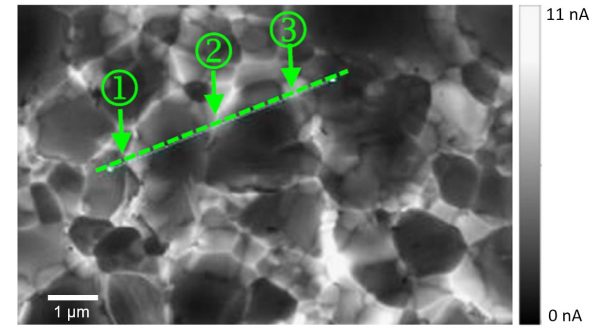
Heayoung Yoon serves as an Associate Professor in the Electrical & Computer Engineering department and Adjunct Associate Professor in Materials Science & Engineering at the University of Utah's College of Engineering. Her research focuses on advanced fabrication and nanoscale characterization of optoelectronic materials and devices, with particular expertise in engineering micro/nanostructures of semiconductor materials to enhance functionality and stability in optoelectronic devices including translucent solar cells and radiation-hard systems. Dr. Yoon earned her BS in Physics with a Computer Science minor from Chungnam National University in South Korea, an MS in Physics from Pohang University of Science and Technology, and a PhD in Electrical Engineering from The Pennsylvania State University. Her academic journey includes positions at Samsung, Penn State University, and NIST where she conducted research on molecular junction devices, pillar array solar cells, and near-field optoelectronic imaging techniques. Her research interests span multiple cutting-edge areas in energy technology and materials science. Dr. Yoon leads investigations into radial junction solar cells that decouple light absorption from carrier collection, thin-film solar cells with enhanced efficiency through microstructural optimization, translucent solar cells for diverse applications like skylights and self-powered facades, multi-probe microscopy techniques for nanoscale characterization, and molecular junction devices for advanced optoelectronics. Her work bridges fundamental research with practical applications to address global sustainability challenges. Analysis of Dr. Yoon's 15 most recent publications reveals a strong focus on solar cell technology and nanoscale characterization. Her research consistently explores patterned back contacts, micro/nanostructured solar cells, and perovskite materials, with particular attention to grain boundaries, surface potential variations, and carrier dynamics at the nanoscale. The publications demonstrate interdisciplinary approaches combining electron microscopy, optical spectroscopy, and device engineering to advance photovoltaic technologies. Outstanding Teaching Award (2024, ECE Department) Chair's Award (2022, ECE Department) CAREER Award (2021, National Science Foundation) Dr. Yoon actively mentors students through thesis research and undergraduate research projects, and leads the Yoon Research Group which develops in-situ, local measurement techniques using electron beams and focused light sources. Her lab focuses on elucidating structure-property relationships in micro/nanomaterials and devices, with applications in energy, optoelectronics, and chemical and biomedical fields. The group leverages cross-disciplinary collaborations to advance energy technologies, particularly in creating exploratory optoelectronic systems that address emerging global challenges in sustainability.
Haozhe Wang serves as Assistant Professor of Electrical and Computer Engineering within Duke University's Pratt School of Engineering. He joined Duke in July 2023 and leads the Wang Lab, focusing on advanced nanomaterials research with applications spanning quantum systems, robotics, and electronic devices. His research centers on two-dimensional quantum materials—particularly MXene—with emphasis on synthesis techniques, atomic-scale properties, and device integration. Current investigations explore nanofabrication methods for quantum systems, MXene-based robotics, and autonomous experimentation frameworks for accelerated materials discovery, leveraging collaborations with institutions like MIT and Caltech. Recent publication trends reveal concentrated advancement in MXene applications across three domains: atomic layer processing for semiconductor manufacturing, soft robotics actuation, and AI-driven materials experimentation, indicating strategic convergence of nanomaterials science with autonomous systems engineering. Key recognitions include: NSF CAREER Award (2025) Early Career Distinguished Presenter at Materials Research Society Fall Meetings (2023) Dr. Wang secured the NSF CAREER grant to develop autonomous materials experimentation systems, mentoring lab members including postdoctoral researchers in MXene synthesis and robotics applications. His team actively participates in national conferences while building industry-academic partnerships for nanofabrication technology transfer. The Wang Lab maintains active research thrusts in MXene atomic layer etching, quantum material characterization, and soft robotics development, operating through collaborations with NNCI network facilities and hosting annual graduate recruitment events since 2024.
Professor Virginia Lorenz is a faculty member at the University of Illinois at Urbana-Champaign's Department of Physics, where she focuses on experimental quantum optics, atomic and molecular spectroscopy, and optical magnetometry. She previously held positions at the University of Delaware (2009–2014) and the University of Oxford (2007–2009). Her research group has pioneered advancements in quantum networks, including launching the first publicly accessible quantum network in 2023, and developing efficient methods for photon-pair generation and quantum state characterization. Her work spans quantum memory optimization, photonic quantum state engineering, and quantum sensing of astronomical objects. Using ultrashort laser pulses, her team explores quantum estimation theory and table-top experiments to understand imaging limitations and potential quantum advantages in interferometric astronomy. Key contributions include broadband Λ-type quantum memory protocols and novel techniques for capturing joint spectral density of photon pairs via stimulated emission, enabling faster and higher-resolution analysis of quantum states. Professor Lorenz's research has been supported by the National Science Foundation and Department of Energy. She received the Dean's Award for Excellence in Research (2020). Her publications span journals like Advances in Atomic, Molecular, and Optical Physics , Physical Review A , Nature Nanotechnology , and Optica , with a focus on quantum information, nonlinear optics, and spintronics. Collaborations include Paul Kwiat and international partners in quantum network development. Dean's Award for Excellence in Research (2020) NSF and DOE funding The Lorenz research group has mentored students like Kai Shinbrough, Bin Fang, and Halise Celik, with former students defending theses on topics ranging from spin-orbit torque measurements to photonic quantum state manipulation. Lab renovations at UIUC in 2015 expanded facilities for quantum optics experiments, including fiber-based photon-pair sources and ensemble quantum memory studies.
Prof. Bert Weckhuysen is a University Professor of 'Catalysis, Energy & Sustainability' at Utrecht University since 2018, previously serving as Faculty Professor at the Faculty of Science since 2012 and Professor of Inorganic Chemistry & Catalysis since 2000. His research is centered at the Chemistry Institute for Sustainable and Circular Chemistry within the Faculty of Science at Utrecht University, where he leads the Inorganic Chemistry and Catalysis research group. Prof. Weckhuysen's research focuses on developing structure-activity relationships in heterogeneous catalysis and materials science, with special emphasis on advanced in situ and operando characterization techniques. His work spans several critical areas including: Development and application of spatiotemporal operando spectroscopy to elucidate active sites in catalyst materials Catalytic conversion of biomass, plastic waste, and CO 2 Molecular design of materials for catalysis, adsorption, and separation Pathways to Sustainability with focus on Energy in Transition and Circular Economy His most recent publications demonstrate strong trends in operando characterization techniques, sustainable catalysis for CO 2 conversion, plastic waste valorization, and advanced materials design. The research spans fundamental understanding of catalyst behavior under working conditions to practical applications in energy transition and circular economy. Prof. Weckhuysen has received numerous prestigious awards including: Michel Boudart Award for the Advancement of Catalysis (2025) Karl Wamsler Innovation Award (2024) Chemistry Europe Award (2023) Spinoza Award (2013) - the highest scientific honor in the Netherlands Francqui Chair at the University of Antwerp (2024-2025) As a dedicated educator and mentor, Prof. Weckhuysen coordinates the Da Vinci Project and the Syllabus Catalysis Course. He has secured significant research funding including ERC Advanced Grants, Gravitation grants, and serves as Scientific Director of major research initiatives including SUNERGY, ARC-CBBC, and MCEC. His leadership extends to editorial roles for numerous high-impact journals including serving as Editor-in-Chief of Catalysis Science and Technology. Prof. Weckhuysen leads a vibrant research group focused on operando spectroscopy and sustainable catalysis, with strong connections to industry through initiatives like ARC-CBBC and SUNERGY. His group is actively working on developing the "Refinery of the Future" concept, which envisions producing fuels, chemicals, and materials from renewable resources and energy.
Stephen Beaudoin is a Professor of Chemical Engineering at Purdue University and serves as Director of the Purdue Energetics Research Center. He joined Purdue in 2003 and holds affiliations with the Davidson School of Chemical Engineering. B.S. in Chemical Engineering from MIT (1988) M.S. in Chemical Engineering from University of Texas-Austin (1990) Ph.D. in Chemical Engineering from North Carolina State University (1995) His research focuses on adhesion/cohesion in energetic materials, polymer adsorption onto crystals, and enhanced centrifuge-based powder characterization. Supported by the Department of Homeland Security Science and Technology Directorate and the Department of Education, his work bridges fundamental studies of interfacial phenomena with applications in security and pharmaceuticals. Recent publications highlight advancements in atomic force microscopy techniques for Hamaker constant estimation, trace explosive detection, and pharmaceutical powder adhesion mechanisms. His team develops novel sensors, swabs, and computational models to address challenges in energetic materials and drug delivery systems. Teaching Academy Fellow (2018) NSF CAREER Award (2000) University Faculty Scholar (2006-2011) Multiple awards for undergraduate instruction and mentorship Beaudoin's research group includes current graduate students and has produced alumni now employed at Intel, Microsoft, Pfizer, and academic institutions. His laboratory combines experimental and computational approaches to study particle-scale interactions, surface functionalization, and material behavior under extreme conditions.
Dr. Anna Louise Smith is an Associate Professor in the Reactor Physics and Nuclear Materials section at the Radiation Science and Technology department of Delft University of Technology (TU Delft). She is a physical chemist and materials scientist specializing in nuclear materials, with expertise in both experimental and computational approaches to studying advanced nuclear fuel systems. Dr. Smith earned her "diplôme d'ingénieur" from Chimie ParisTech in 2011, conferring a Master of Science in Chemistry and Chemical Engineering. She simultaneously completed an M.Phil. in Advanced Chemical Engineering from the University of Cambridge. She received her PhD in Materials Science and Metallurgy from Cambridge in 2015, after spending three years at the Joint Research Centre in Karlsruhe, Germany, where she developed expertise in nuclear fuel chemistry and chemical thermodynamics of actinide materials. Her research focuses on the chemistry of advanced nuclear fuels, including ceramics (oxides) and molten salts (fluorides and chlorides), with particular interest in structure-property relationships. She combines experimental and computational studies to investigate physico-chemical properties from atomic to macroscopic scales, with applications to next-generation nuclear reactor technologies emphasizing safety and sustainability. Her current interests include the chemistry of fission products in oxides and molten salts, interaction chemistry between fuel, coolant, and cladding materials, and corrosion issues at high temperatures in nuclear reactor environments. Analysis of Dr. Smith's recent publications (2022-2025) reveals a strong focus on thermodynamic properties of molten salt systems, particularly those relevant to nuclear fuel cycles. Her work spans fundamental studies of actinide chemistry in molten fluorides and chlorides, corrosion mechanisms between molten salts and structural materials, and the development of thermodynamic models for complex multi-component systems essential for molten salt reactor design. She has made significant contributions to understanding the behavior of thorium-based fuel systems and corrosion products in high-temperature environments. Dr. Smith has established a research team and laboratory at TU Delft specifically designed for handling uranium and thorium materials. Her work contributes to several major European projects focused on advanced nuclear technologies, including the MIMOSA and ENDURANCE projects that explore the safety and performance of molten salt reactors for deployment in the European Union. She collaborates extensively with researchers across Europe and has published over 50 research outputs including articles, book chapters, and review papers.
Prof. Vivek Pachauri holds the Chair of Materials for Electrical Engineering I at RWTH Aachen University, leading research at the Institute of Materials for Electrical Engineering. His work bridges materials science and bioelectronics, focusing on graphene-based transducers, silicon nanowires, and metal-organic frameworks (MOFs) for biosensing applications. University: RWTH Aachen University (Germany) Department: Materials for Electrical Engineering Academic Rank: Professor Email: pachauri@iwe1.rwth-aachen.de His research spans nanoscale sensor development , microfluidic platforms , and bioelectronic systems , with applications in disease detection, environmental monitoring, and cellular analysis. Recent work highlights programmable molecular amplification and multi-parametric point-of-care diagnostics. Key trends in his publications include: Advanced 2D materials (graphene oxide, MoS 2 ) Metal-organic frameworks for fluorescence sensing Microfluidic integration of biosensors Plasmonic and Fano resonance-based detection Low-cost cellular assays using organic electronics
Professor Kislon Voitchovsky is the Head of Condensed Matter Physics and a Professor in the Department of Physics at Durham University, where he is also affiliated with the Biophysical Sciences Institute. His research bridges condensed matter physics, biophysics, and nanotechnology, focusing on nanoscale phenomena at biological and synthetic interfaces. Research Interests: Voitchovsky's work explores the molecular-scale behavior of complex systems, including lipid membranes, nanoparticle interactions, ionic dynamics at solid-liquid interfaces, and advanced atomic force microscopy (AFM) techniques. His group studies hydration landscapes, nanomechanical properties, and electrokinetic processes to understand fundamental interfacial science with applications in biomedicine, energy, and materials design. Recent Publications: His 2023-2025 publications emphasize nanoscale mapping of hydration, ionic ordering, lipid membrane mechanics, and nanoparticle-biomembrane interactions. These works demonstrate consistent innovation in high-resolution AFM methodologies and molecular dynamics simulations to probe interfacial phenomena in biological and environmental contexts. Supervision: He currently mentors five PhD students: Amal Alamri, Ke Sun, Michael Rennick, Ruth McTiernan, and Thomas Williamson. Labs & Teams: As Head of Condensed Matter Physics, Voitchovsky leads a research group specializing in nanoscale characterization, leveraging AFM and computational tools to study soft matter and biological interfaces.
Reika Katsumata is an Assistant Professor in the Department of Polymer Science and Engineering at the University of Massachusetts Amherst. Her research focuses on establishing design rules for extremely confined soft/hard interfaces, bridging precise polymer synthesis with nanoscale material miniaturization. She investigates how extreme confinement ( B.Eng. & M.Eng., Tokyo Institute of Technology (2009, 2011) Ph.D., Chemical Engineering, University of Texas at Austin (2016) Her work employs fluorescence spectroscopy, rapid thermal annealing, and film-stress measurements to address challenges in nanocomposites, ultra-thin coatings, and 2D materials. Recent studies explore defect healing in graphene, polymer-assisted porous carbon synthesis, and interfacial control of ferroelectric capacitors. She received an NSF CAREER award in 2021 for her work on multi-scale polymer dynamics. Key trends in her publications include polymer dynamics under nanoconfinement, interfacial interactions in hybrid materials, and scalable fabrication methods like roll-to-roll processing. Her research has implications for electronics, energy systems, and sustainable materials. Scientific Awards: NSF CAREER Award (2021)