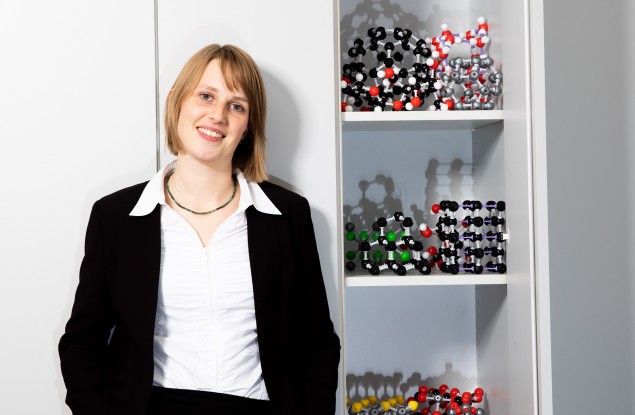
Prof. Olga Smirnova is a leading researcher at the Max Born Institute for Nonlinear Optics and Short Pulse Spectroscopy, heading the Strongfield Theory Group. Her work focuses on ultrafast phenomena, attosecond science, and quantum control in strong laser fields. She specializes in chiral dynamics, valleytronics, and high-harmonic generation, with contributions to understanding spin polarization and enantiosensitivity in molecular systems. Research interests include manipulating light-matter interactions at attosecond timescales, exploring topological photonics, and developing novel spectroscopic techniques like TACOS (Terahertz-Assisted Chiro-Optical Spectroscopy). Her theoretical advancements bridge fundamental physics and applications in chiral discrimination, ultrafast imaging, and valleytronics in 2D materials. Recent studies highlight discoveries such as multi-THz quantum beats in superfluorescent emission and polarization-shaped control of valley polarization in MoS 2 . Her work frequently interfaces with experimental groups, driving advancements in free-electron laser technologies and attosecond interferometry. Awards: Ahmed Zewail Award in Ultrafast Science and Technology (2020) Collaborations: Extensive international partnerships with institutions like DESY, Lund University, and the University of Rostock. Labs/Groups: Strongfield Theory Group at MBI, focusing on theoretical and computational modeling of ultrafast processes in intense laser fields.
Patrick Cordier is a Distinguished Professor of Physics at the University of Lille, France, and a Senior Member of Institut Universitaire de France. He has held academic positions since 1989, including leadership roles at UMET Institute and significant contributions to mineral physics and materials science. Education: Habilitation (1995), PhD (1989), and M.S. (1985) in Materials Science from University of Lille. His research focuses on nanomechanical testing of minerals, plastic deformation mechanisms under high pressure, and multiscale numerical modeling of material behavior. He pioneered TEM-based defect characterization and developed physics-based models for mantle rheology. Recent publications highlight stress-induced amorphization, pure climb creep mechanisms, and TEM-based dislocation analysis, spanning materials science, geophysics, and solid-state physics with applications to Earth's mantle dynamics. Scientific Awards: Dana Medal (2016), ERC Advanced Grants (2011, 2018), Fellowships (American Geophysical Union, Mineralogical Society of America), and French academic honors. Cordier supervised 18 completed PhDs, 3 ongoing, and 8 habilitations. He served as Chief Editor of European Journal of Mineralogy and led major research groups and infrastructure projects at University of Lille.
Prof. Wolf Widdra leads the Max Planck Fellow Group in experimental surface science at the Martin-Luther-Universität Halle-Wittenberg, established in July 2010. His research focuses on the atomic and electronic structure of oxide surfaces and thin films, employing advanced laser-based photoemission techniques such as ARPES, 2PPE, PEEM, and DPE. His group pioneered high-repetition-rate pulsed laser systems and unique fiber-based laser systems for time-resolved spectroscopy. Key developments include MHz-repetition-rate light sources and ultrashort laser pulse pairs for studying electron-electron correlations and dynamic screening in complex materials. Materials research emphasizes transition metal oxides, including NiO(100) models and Perovskite surfaces, extending to 2D oxide quasicrystals. The group collaborates closely with the Collaborative Research Center 762 (Functional Oxide Interfaces). Research activities integrate cutting-edge methodologies like scanning tunneling spectroscopy (STS) and higher-harmonic generation light sources to explore both occupied and unoccupied electronic states. The team’s innovations enable efficient time-resolved studies and address electronic behaviors beyond traditional one-electron models. Prof. Widdra’s work bridges fundamental physics with advanced material characterization, maintaining international research partnerships.
Dr. Nadine Meyer is a researcher at the Nanophotonics Systems Laboratory (light.ethz.ch/) within ETH Zurich, Switzerland. Her work focuses on levitation optomechanics with nanoparticles, developing hybrid levitation platforms and metasurfaces for fundamental and applied research in cavity optomechanics and inertial sensing applications. Her research centers on quantum optomechanics using optically levitated nanoparticles in vacuum environments. Key investigations include ground-state cooling of mechanical modes, mechanical squeezing phenomena, and the development of ultrathin tunable optomechanical metalenses. She also pioneers applications in chemical nanoreactors and ultra-precise inertial sensing systems, leveraging quantum effects at the nanoscale. Analysis of her 15 most recent publications (2019-2025) reveals a clear trajectory toward integrating metasurfaces with levitated optomechanical systems and advancing quantum control techniques for nanoparticles. Her work consistently bridges fundamental quantum physics with practical sensor development, particularly through collaborations within the Nanophotonics Systems Laboratory. The Nanophotonics Systems Laboratory, led by Professor Romain Quidant, provides the experimental infrastructure for Dr. Meyer's research. Located at CLA E 17.1, Tannenstrasse 3, Zürich, the laboratory specializes in optical trapping technologies, vacuum systems, and quantum measurement techniques for levitated nanoparticles.
Jouko Nieminen is a University Lecturer and Docent of computational materials physics at Tampere University, affiliated with the Faculty of Engineering and Natural Sciences and the Department of Physics. His research focuses on computational modeling of two-dimensional (2D) and layered materials, particularly their interfaces and electronic properties, with applications in quantum technologies and superconductivity. He leads the Computational Physics Laboratory and collaborates with groups such as BIO, EST, M&MM, QCAD, and SCM. Research interests include transition metal dichalcogenides (TMDs), high-temperature cuprate superconductors, and surface/interfaces analysis using techniques like scanning tunneling microscopy/spectroscopy (STM/STS). His work explores phenomena such as proximity-induced superconductivity, charge density waves, and topological states in materials like MoS2 and NbSe2. Key projects include modeling superconductivity in monolayer MoS2 on Pb (collaborating with Temple University) and edge states in silicene and Ag/Si(111) surfaces. Recent studies extend to strain effects in NbSe2, heterostructure design, and quantum device applications. No scientific awards are explicitly listed, but his contributions span over 50 peer-reviewed articles since 1992. Labs/Teams: Computational Physics Laboratory, Tampere University; affiliated with research groups BIO, EST, M&MM, QCAD, and SCM.
Kirsten Andrea Schnorr is a Researcher at the Paul Scherrer Institute (PSI) in Switzerland, working within the Center for Photon Science and Laboratory for Femtochemistry. She joined the SwissFEL team in 2018 to develop the Maloja endstation for atomic, molecular, and non-linear physics, leading its design, construction, and operational commissioning for cutting-edge XUV/X-ray experiments. Her educational background includes: PhD in Physics (2014), Ruprecht Karl University Heidelberg, completed at the Max Planck Institute for Nuclear Physics under PD Dr. Robert Moshammer; thesis focused on XUV pump-probe experiments of electron rearrangement and interatomic Coulombic decay in diatomic molecules. Schnorr's research centers on photo-induced ultrafast relaxation mechanisms in atoms, molecules, and nanoparticles using time-resolved techniques at Free-Electron Lasers and High Harmonic Generation sources. She pioneers multi-color pump-probe schemes with ultrashort X-ray pulses to steer non-local decay processes like Interatomic Coulombic Decay and Electron Mediated Decay, enabling real-time observation of electron dynamics and proton transfer in molecular systems. Her publication trends (2025-2020) reveal dual expertise in fundamental molecular dynamics and instrumental innovation. Key themes include proton transfer in water dimers (Science Advances 2023), Coulomb explosion in iodinated compounds (2025), and engineering breakthroughs like compact gas attenuators (2023) and polarization control systems (2024), frequently published in Physical Review Letters, Nature Communications, and Journal of Synchrotron Radiation. Scientific awards: Peter Paul Ewald Fellowship from the Volkswagen Foundation (2015), supporting her research on non-linear relaxation processes at UC Berkeley's Physical Chemistry Department under Prof. Stephen Leone. No formal advisees or student supervision are documented. The Volkswagen Foundation fellowship served as her primary grant, funding postdoctoral work on real-time relaxation studies; no additional grants are specified. Her instrumental leadership at SwissFEL suggests mentorship of junior scientists, though no individual students are named. Schnorr directs the Maloja instrument at SwissFEL while contributing to the ATHOS beamline development. She collaborates extensively with PSI's detector teams (e.g., JUNGFRAU advancements) and international groups like UC Berkeley's Physical Chemistry Department, driving initiatives in ultrafast beamline technology and molecular dynamics experiments.
Tran Trung Luu is an Assistant Professor at the Department of Physics , Faculty of Science , The University of Hong Kong . He earned his B.Sc. from Vietnam National University (2007), M.Sc. from Korea Advanced Institute of Science and Technology (2010), and Ph.D. from Ludwig-Maximilians-Universität München (2015). Currently, he leads research in Ultrafast Optics , Strong-Field Laser Physics , and Attosecond Science , with a focus on probing coherent lattice vibrations and electron-phonon coupling in solids using high-harmonic spectroscopy. Education: B.Sc. in Physics, Vietnam National University (2007) M.Sc. in Physics, Korea Advanced Institute of Science and Technology (2010) Ph.D. in Physics, Ludwig-Maximilians-Universität München (2015) Research Interests revolve around Ultrafast Optics and Strong-Field Laser Physics , particularly Attosecond Science applications in condensed matter. His work bridges Nonlinear Spectroscopy with Quantum Dynamics in Solids , utilizing High-Harmonic Generation to study Electron-Phonon Coupling and Anharmonic Phonon Scattering . Publications highlight trends in Coherent Lattice Dynamics , Time-Resolved Photoelectron Spectroscopy , and Optical Manipulation of Bandgaps . Scientific Awards include the ISUILS Young Researcher Award (2015) and an ETH Postdoctoral Fellowship (2015) . As a Principal Investigator , he has secured grants such as RGC ECS project 27300820 and GRF project 17315722 , totaling over HKD 2,819,760. He actively supervises PhD and MPhil students in Ultrafast Optics projects and contributes to invited lectures on Attosecond Science at institutions like Phenikaa University and ETH Zurich.
Prof. Dr. Vera Krewald is a Professor for Quantum Chemistry at Technische Universität Darmstadt, Department of Chemistry. She leads a research group focused on theoretical and quantum chemistry approaches to understand electronic structures and properties of inorganic and transition metal complexes. Her work bridges computational methods with experimental spectroscopy to explore magnetic interactions, electron transfer processes, and catalytic mechanisms. Professor for Quantum Chemistry (W3) at TU Darmstadt (since 11/2023) Professor for Theoretical Chemistry (W2, tenure track) at TU Darmstadt (12/2018-10/2023) Research Group Leader at University of Bath (01/2017-11/2018) Prof. Krewald's research focuses on applying quantum chemistry methods to understand the electronic structure and functioning of inorganic complexes. Her group makes predictions about spectroscopic, magnetic, and other measurable properties of transition metal complexes, with particular interest in systems that exhibit unexpected properties, magnetic coupling, challenging molecular transformations, or promising catalytic activity. Key research areas include electron transfer processes, photophysics and photochemistry of transition metal complexes, nitrogen activation and splitting, oxygen reduction catalysis, and the development of theoretical methods like the Angular Overlap Model. Analysis of Prof. Krewald's recent publications reveals a strong focus on iron-based catalysis, particularly for energy-related applications like the oxygen reduction reaction in fuel cells. Her work frequently combines computational quantum chemistry with experimental spectroscopy, especially Mössbauer spectroscopy, to characterize active sites in catalysts. There's also significant emphasis on electron transfer processes, photochemical activation of small molecules like dinitrogen, and the development of computational tools for analyzing magnetic properties and metal-ligand bonding. 2022: Dozentenpreis from the chemical industry fund (Fonds der Chemischen Industrie) 2021: Award from the Dr. Hans Messer Stiftung for early career researchers 2021: ADUC Award from the German association of university professors in chemistry 2014: Otto Hahn Medal of the Max-Planck-Society 2013: Participant at 63rd Lindau Nobel Laureate Meeting 2008-2013: German National Academic Foundation fellowship Prof. Krewald leads a research group with 2 postdocs, 6 PhD candidates, and several B.Sc./M.Sc. students. Her group has secured funding from multiple sources including the DFG, Leverhulme Trust, Merck'sche Gesellschaft für Kunst und Wissenschaft e.V., NHR Verein e.V., and Deutsche Bundesstiftung Umwelt. She serves as vice-speaker of SFB 1487 "Iron, upgraded!" (2022-2025), demonstrating her leadership in coordinated research efforts. Her group actively collaborates with experimental researchers to elucidate reaction mechanisms and identify catalytically active species. The Krewald Research Group operates within the Department of Chemistry at TU Darmstadt, with strong connections to collaborative research centers including SFB 1487 "Iron, reimagined!", SFB 1633 "Pushing Electrons with Protons", and SPP 2491 "Interactive Switching of Spin States". The group is also involved in the Quantum Bio-Inorganic Chemistry Society, which Prof. Krewald co-founded and serves as Secretary General. Their work combines high-level quantum chemical calculations with experimental validation to address fundamental questions in inorganic chemistry and catalysis.
Alice Sciortino is a Researcher at the Department of Physics and Chemistry - Emilio Segrè within the School of Science at the University of Palermo. Her position code PHYS-03/A indicates a research-focused academic track in the Italian university system. She maintains regular office hours on Tuesdays from 11:30 to 12:30 through the university's student portal system. Her research centers on advanced photonic nanomaterials with particular expertise in carbon nanodots , quantum dot superstructures , and metal-organic frameworks . Key research themes include: Nanoscale light emission and lasing phenomena Design of optical sensors for environmental and biomedical applications Photocatalytic systems for environmental remediation Hybrid nanomaterial interfaces for energy transfer Ultrafast photophysical characterization of nanomaterials Analysis of her recent publications (2023-2025) reveals a strong trajectory toward multifunctional nanoplatforms combining optical, magnetic, and catalytic properties. Her work increasingly bridges fundamental photophysics with practical applications in environmental monitoring and biomedicine, particularly in heavy metal detection (Hg²⁺, Ni²⁺) and tissue engineering. The publication record shows consistent high-output research with frequent collaborations across Italian institutions. While no formal scientific awards are documented in the provided materials, her extensive publication record in high-impact journals demonstrates significant scholarly contributions to nanophotonics and materials science. Dr. Sciortino's research program appears to focus on experimental nanomaterials development with strong emphasis on optical characterization techniques. Her work on carbon dot-MOF hybrids and quantum dot superparticles suggests leadership in designing next-generation photonic nanomaterials with tunable properties. The consistent funding evident from her publication output likely supports laboratory infrastructure for nanomaterials synthesis and advanced optical spectroscopy.
Martin Huppert is a laser engineer at the Paul Scherrer Institute (PSI), working in the Laboratory for Nonlinear Optics . Since 2017, he has focused on developing and maintaining laser systems for the SwissFEL facility, particularly the photocathode and seeding lasers. His academic background includes a Master's degree from the MIT-Harvard Center for Ultracold Atoms and a doctoral degree (Dr. sc. ETH Zurich, 2016) under Prof. Hans Jakob Wörner. ETH Zurich – Interdisciplinary Sciences (Master's) MIT-Harvard Center for Ultracold Atoms – Master Thesis ETH Zurich – Doctoral Degree in Physical Chemistry (2016) Research interests center on applied laser engineering , attosecond pulse generation , and atomic/molecular physics . He bridges laser technology with electron accelerators for coherent X-ray production. Current work involves SwissFEL's Athos beamline to achieve attosecond free-electron laser radiation in the soft X-ray range. Recent publications emphasize ultrafast laser systems , attosecond pulse characterization , and X-ray spectroscopy . Key contributions include developing stabilization systems for optical frequency combs and studying photoionization dynamics in molecules like N₂O and H₂O. Technical advancements in beamline design and mid-infrared drivers dominate his work. Institutional responsibilities include maintaining SwissFEL's laser systems for reliable, high-performance operation. His career spans hands-on laser engineering, academic research, and technology development at major institutions (ETH Zurich, PSI), with expertise in femtosecond and attosecond time-resolved experiments.
Prof. Dr. Barbara A. J. Lechner is a Professor of Functional Nanomaterials at the Technical University of Munich (TUM), holding her position within the Department of Chemistry at the TUM School of Natural Sciences. Appointed as a Rudolf Mößbauer Professor in October 2020, she leads an active research group investigating dynamic processes in functional nanomaterials under realistic conditions. Her work bridges surface science, catalysis, and nanotechnology with significant funding through prestigious grants including an ERC Starting Grant. Prof. Lechner's educational background includes a Mag. rer. nat. in Chemistry from the University of Innsbruck (2008) followed by a PhD in Physics from the University of Cambridge. Her postdoctoral work was conducted at the Lawrence Berkeley National Laboratory under Prof. Miquel Salmeron before she became a group leader at TUM's Chair of Physical Chemistry in 2016. Her research program focuses on understanding dynamic restructuring processes in functional nanomaterials, particularly model catalysts in reactive gas atmospheres. Using time- and space-resolved scanning tunneling microscopy directly in gas mixtures, her group investigates how metal particle and oxide support structures change and influence material functionality. A key innovation is their use of size-selected clusters with precisely defined atom counts to isolate specific structural effects. Her group also employs synchrotron-based X-ray photoelectron spectroscopy for complementary chemical information. Analysis of Prof. Lechner's recent publications reveals a strong focus on atomic-scale dynamics in catalytic systems, with particular emphasis on iron oxide and platinum-based catalysts. Her work increasingly combines advanced microscopy techniques with computational approaches to understand restructuring mechanisms. Notable trends include investigations of strong metal-support interactions (SMSI), cluster encapsulation effects, and the role of lattice oxygen in catalytic processes. Her 2023-2025 publications demonstrate growing interest in 2D materials and their stability on metal surfaces. Dozentenpreis des Fonds der Chemischen Industrie (2023) ERC Starting Grant (2019) Stipendium im Jungen Kolleg der Bayerischen Akademie der Wissenschaften (2018) Marie Skłodowska Curie Stipendium (2017) Max Auwärter Preis (2016) Springer Thesis Prize (2013) Prof. Lechner leads two major research projects: TACCAMA (Atomic-Scale Motion Picture: Taming Cluster Catalysts at the Abyss of Meta-Stability, 2020-2026), an ERC-funded project focusing on atomic-scale motion in cluster catalysts, and CRC1441 (Tracking the Active Site in Heterogeneous Catalysis for Emission Control, 2021-2024), which investigates active sites in catalytic emission control systems. Her teaching includes experimental methods in physical chemistry and research practicums, indicating active student mentorship though specific advisees aren't listed in the available materials. Her laboratory specializes in advanced surface characterization techniques, particularly movie-rate scanning tunneling microscopy (STM) capable of operating at elevated temperatures and near-ambient pressures. This unique capability allows her team to observe dynamic processes in reactive gas atmospheres, providing unprecedented insights into catalyst restructuring during operation. The group also maintains strong collaborations with synchrotron facilities for complementary X-ray photoelectron spectroscopy measurements.
Ian Robinson is a Professor at the London Centre for Nanotechnology, University College London, and Group Leader of the X-ray Scattering group in the Condensed Matter Physics and Materials Science Division at Brookhaven National Laboratory since 2016. His group specializes in advanced X-ray scattering techniques including Bragg Coherent Diffraction Imaging, surface scattering, and ultrafast X-ray science. Education: • M.A. Natural Sciences, Cambridge University (1973-76) • Ph.D. Biophysics, Harvard University (1976-81) Research Focus: Robinson's work centers on phase transitions, nanocrystal dynamics, cuprate superconductors, and domain structures in materials. He pioneered Crystal Truncation Rods analysis and Bragg Coherent Diffraction Imaging, enabling 3D nanoscale imaging of crystal strains and defects. Current research explores ultrafast material excitation using X-ray free-electron lasers. Publication Trends: Recent articles (2015-2020) demonstrate strong focus on coherent X-ray imaging techniques applied to quantum materials, superconductors, and nanocrystals, with emphasis on time-resolved studies of material dynamics at synchrotron and XFEL facilities. Awards & Recognition: Gregori Aminoff Prize (2015) ICSOS Surface Structure Prize (2011) Royal Society Wolfson Merit Award (2006-10) ACA Warren Prize (2000) APS Fellow (1995) Bell Labs Distinguished Member of Technical Staff (1990) Leadership: Directs X-ray scattering research at Brookhaven Lab and coordinates international scientific advisory committees for major facilities including European XFEL, LCLS, and ALBA synchrotron.
Anh-Thu Le is an Assistant Professor in the Department of Physics at the University of Connecticut, within the College of Liberal Arts and Sciences. Her research focuses on Attosecond and Strong-Field Physics, particularly tunneling ionization, high-harmonic generation, and laser-induced electron diffraction. She holds a Ph.D. and B.Sc. in Physics from Belarusian State University (1994). Prior to UConn, she held professorial roles at Missouri University of Science and Technology (2018–2021) and Kansas State University (2001–2018). She is a member of the American Physical Society and American Chemical Society. Education: Ph.D., Physics, Belarusian State University, 1994 B.Sc., Physics, Belarusian State University, 1994 Research Interests: Ultrafast electron dynamics in molecules Laser-atom/molecule interactions Attosecond spectroscopy and imaging Quantum control of high-harmonic generation Molecular structure determination via electron diffraction Recent Trends in Articles: Recent work emphasizes attosecond-scale imaging of molecular structures, coherent electron dynamics, and control of quantum pathways in laser fields. Key themes include symmetry analysis in photoelectron spectroscopy and ultrafast molecular vibration studies. Awards: None explicitly listed. Advising & Grants: Advises students like Phi-Hung Tran. Research supported by grants focusing on ultrafast physics and strong-field phenomena. Labs/Teams: Leads the Ultrafast AMO Theory Group , conducting theoretical research on intense laser-molecule interactions and attosecond physics. Collaborates on imaging techniques like laser-induced electron diffraction.
Jun Yan is an Associate Professor in the Department of Physics at the University of Massachusetts Amherst, College of Natural Sciences. His research focuses on experimental condensed matter physics, particularly exploring quantum materials, 2D materials, and nanoelectronics. He holds a Ph.D. from Columbia University (2009) and has contributed to advancements in valleytronics, excitonics, and topological materials. His work emphasizes phenomena such as valley polarization in heterojunctions, magnetophonon resonance in graphene systems, and pressure-induced phase transitions in novel materials. Recognized for award-winning teaching, Yan’s research also spans experimental techniques like Raman spectroscopy and ultrastrong light-matter coupling. Key themes include quantum transport in low-dimensional systems and the interplay between electronic, magnetic, and optical properties in emerging materials. Research interests extend to exploring excitonic states in twisted bilayer graphene, interfacial effects in heterostructures, and the development of novel detectors for terahertz and optical frequencies. His studies often address fundamental questions in condensed matter physics with implications for next-generation electronics and optoelectronics. Awards highlight both his research and pedagogical contributions to the field.
Jörg Evers is a physicist at the Max Planck Institute for Nuclear Physics (MPIK) in Heidelberg, Germany, where he is a staff scientist and coordinator of the International Max Planck Research School for Quantum Dynamics in Physics, Chemistry and Biology. He holds the academic rank of Adjunct Professor at Heidelberg University and has been affiliated with MPIK since 2004, progressing from group leader to W2 Fellow and then to staff scientist. His research is centered on quantum optics, nuclear quantum optics, and cavity quantum electrodynamics, with a focus on X-ray interactions with Mössbauer nuclei and quantum control techniques. His research interests span Quantum Optics , Nuclear Quantum Optics , X-ray Quantum Optics , Cavity QED , Mössbauer spectroscopy , Quantum Control , and Ultrafast Science . His work explores coherent manipulation of nuclear excitations, precision spectroscopy, and quantum interference effects in complex atomic and nuclear systems. He has made significant contributions to the development of nuclear clocks, particularly using scandium-45, and has pioneered methods for controlling X-ray emission and absorption in thin-film cavities. His recent publications reveal a strong trend toward inverse design in quantum systems, coherent control of nuclear excitons , and precision metrology using X-rays. These works often appear in top-tier journals such as Nature , Science , and Physical Review Letters . The research integrates theoretical modeling with experimental feasibility, often in collaboration with leading institutions and facilities like DESY and European XFEL. His scientific awards include: Röntgen-Preis (2014) Dulger Prize (2010) APS Outstanding Referee (2009) Institute of Physics PhD Thesis Prize (2005) Erasmus Scholarship (1999–2000) He has served as a referee for over 25 physics journals and funding agencies and has held leadership roles in research schools and conference panels. He has mentored students and early-career researchers through the International Max Planck Research School and has been involved in organizing key workshops in quantum optics and X-ray science. His laboratory work is conducted within the Division of Quantum Dynamics at MPIK, where he collaborates closely with Director Christoph H. Keitel and other leading physicists. His team focuses on theoretical and computational modeling of quantum optical phenomena with potential applications in next-generation atomic clocks, quantum sensors, and fundamental tests of quantum mechanics.