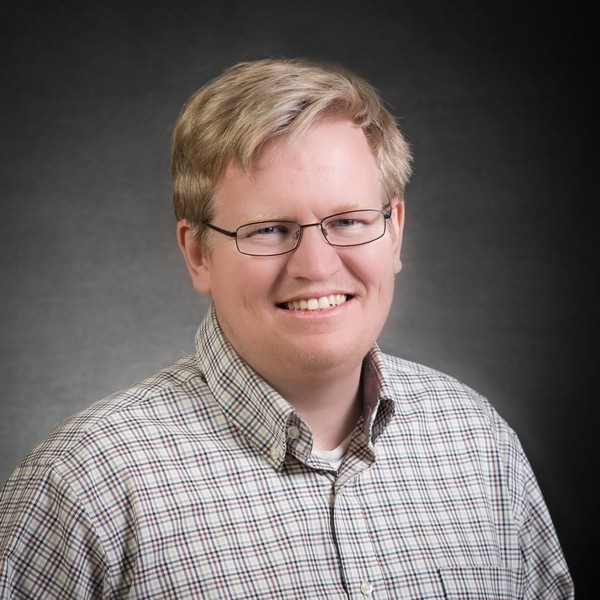
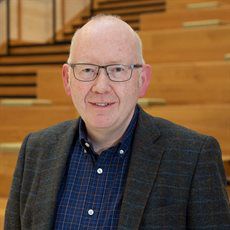
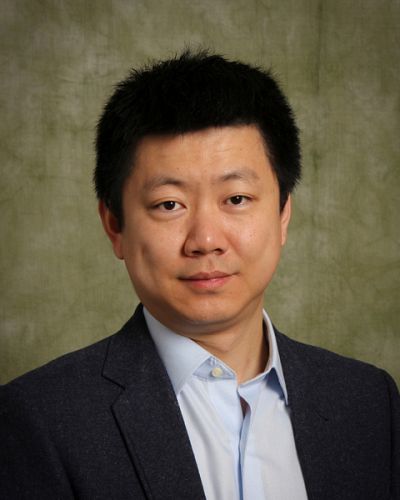
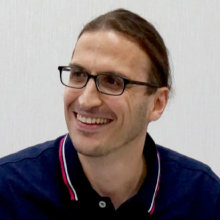
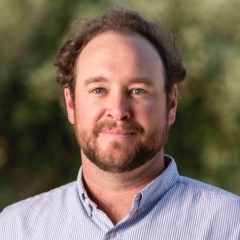
Gavin King is a Professor in the Department of Physics at the University of Missouri. His research focuses on precision single-molecule biophysics and applications of atomic force microscopy (AFM) to study membrane proteins. He developed an ultrastable AFM to investigate protein structure, energetics, and conformational dynamics in physiologically relevant conditions. Key areas include understanding how protein dynamics influence function, particularly in medically relevant systems like P-glycoprotein and Candida albicans virulence factors. Education: PhD from Harvard University. His work bridges biophysics, nanotechnology, and infectious disease, with a focus on lipid membrane interactions, peptide assembly, and drug transport mechanisms. Recent advancements include ice lithography for nanomanufacturing and machine learning-enhanced AFM data analysis. Research emphasizes membrane-active peptides, protein translocation machinery (e.g., E. coli Sec translocase), and antifungal toxin mechanisms. Collaborative efforts integrate computational modeling with experimental AFM to achieve quantitative insights at the single-molecule level. Awards: None explicitly listed in the provided text. Grants: His work is supported by initiatives in biophysics and nanotechnology. Labs/Teams: Leads the Precision Single Molecule Biophysics Group, focusing on AFM innovation and biological applications.
Jérôme Creuze is a Professor of Chemistry at Université Paris-Saclay, affiliated with the Institute of Molecular Chemistry and Materials of Orsay (ICMMO - UMR 8182) under the SP2M unit. He co-leads the Synthesis, Properties and Modeling of Materials team, focusing on thermodynamics of metallic nanoalloys , environmental effects on alloy surfaces , and metal-on-metal heteroepitaxy using atomic-scale simulations. Research Themes : Nanoalloys Thermodynamics, Surface Segregation, Heteroepitaxy, Ab Initio Modeling, Defects and Diffusion in Solids Recent Publications : 15+ studies on nanoalloy surface energy, dislocation loops, Vegard’s rule deviations, and environmental impacts on alloys. Collaborations : Partners include teams from ONERA (Châtillon), CEA Saclay, IWD-SINAP (Shanghai), and universities in Marseille, Montpellier, and Paris. Teaching : Coordinates CPGE L'Essouriau chemistry program and leads courses on thermodynamics, defects, and diffusion in crystalline solids at Master's level.
Jean-Marie Tarascon, a Professor at Collège de France 's Chemistry of Materials and Energy chair, specializes in Electrochemistry , Solid State Chemistry , and Energy Storage . He founded the RS2E (French Electrochemical Energy Storage Network) and ALISTORE-ERI (European Network), focusing on next-generation batteries like Na-ion , Zn-MnO2 , and All-Solid-State systems. His work bridges Supramolecular Chemistry with Battery Self-Repair and Intelligent Battery Design via sensor integration. Over his career, Tarascon has delivered annual lectures tracing his research trajectory, including 2025's Na-ion Electrolyte Innovations , 2024's All-Solid-State Pragmatism , and 2021's Diagnostic/Repair Techniques . These lectures emphasize eco-efficient synthesis , 3D electrode materials , and battery traceability . As head of the CSE Lab (Solid-State Chemistry and Energy) at Collège de France, he collaborates with CNRS and Sorbonne Université to advance smart battery systems. His research trends highlight a shift from Li-ion fundamentals (2010-2017) to self-repair mechanisms (2018-2021) and eco-responsible alternatives (2024-2025).
Brian S.Y. Kim serves as Assistant Professor of Materials Science and Engineering and Physics at the University of Arizona, holding a joint appointment since January 2024. Previously, he conducted postdoctoral research at Columbia University (2018-2023) in Mechanical Engineering and Physics. His laboratory focuses on atomic-scale engineering of quantum materials for next-generation electronic and photonic technologies. His educational background includes: PhD in Electrical Engineering, Stanford University (2018) MS in Electrical Engineering, Stanford University (2013) BS in Electrical Engineering, Northwestern University (2011) Professor Kim's research spans 2D quantum materials and heterostructures , experimental condensed matter physics , and advanced nanofabrication . His group employs robotic nano-manufacturing systems, reconfigurable device architectures, and nano-optical imaging to investigate emergent phenomena in van der Waals materials. Key methodologies include plasmonic cavity engineering, moiré superlattice fabrication, and atomic-scale device characterization. His publication record demonstrates consistent contributions to quantum materials science, with recent emphasis on plasmon-exciton interactions in layered antiferromagnets, novel FET architectures using 2D transition metal dichalcogenides, and thermal transport phenomena in nanostructured materials. The work bridges fundamental condensed matter physics with practical device applications. His scientific recognition includes: Outstanding Young Researcher Award (2024) from AKPA/KPS APL Photonics Early Career Editorial Advisory Board membership (2025-26) Research funding includes the Vertically Integrated Projects Catalyst Seed Fund Award (2024) for "twisting two-dimensional atomic sheets." The Kim Lab actively mentors undergraduate researchers like David Tashchyan and collaborates with institutions including Kyung Hee University and Sungkyunkwan University. Current projects focus on developing programmable hyperbolic polaritons and Fermi-level engineered 2D electrodes. The Brian SY Kim Lab operates within UArizona's Materials Science and Engineering department, utilizing state-of-the-art facilities for nanofabrication and quantum device characterization. Ongoing initiatives explore cavity-altered superconductivity and magnetically confined excitons, with potential applications in quantum computing and ultra-sensitive photodetection.
Luke N. Brewer is a Professor in the Department of Metallurgical and Materials Engineering at The University of Alabama, with an adjunct appointment in Mechanical Engineering. He serves as Associate Department Head for Graduate Studies and Director of the Center for Advanced Manufacturing and Materials Design Integration within the College of Engineering. His research focuses on advanced manufacturing technologies, particularly cold spray additive manufacturing and repair of metallic structures. His educational background includes a Ph.D. in Materials Science and Engineering from Northwestern University (2001), and dual B.S.E. degrees in Materials Science and Engineering and Applied Mathematics, also from Northwestern University (1996). Dr. Brewer's research interests center on processing-microstructure-mechanical property relationships in metallic alloys and ceramics. He actively investigates cold spray deposition, atomization of metallic powders, rapid solidification, friction stir welding, resistance welding, and materials characterization technique development. His work has significant applications in aerospace, automotive, and defense sectors. He has been involved in high-impact research initiatives, including a $3.8 million Department of Energy grant focused on jet biofuel solutions and research on 3D printing technologies for military applications. His leadership is recognized through roles in major research centers and contributions to the Capstone engineering program. Scientific Awards and Recognition: Featured in Alabama Innovation Fund award (2015) supporting advanced research at The University of Alabama Advising and Grants: Dr. Brewer advises graduate students in materials science and engineering, including Ph.D. graduate Dr. Pallavi Pant. He leads research funded by federal agencies such as the U.S. Department of Energy and collaborates on projects with military applications. His team receives support through institutional and state-level innovation funding. Labs and Research Teams: He leads research activities at the Center for Advanced Manufacturing and Materials Design Integration. His group conducts experimental work on cold spray deposition, welding technologies, and materials characterization. The team hosts regular group events, including an annual potluck, and provides student research opportunities in advanced manufacturing.
Prof. Dr. Vera Krewald is a Professor for Quantum Chemistry at Technische Universität Darmstadt, Department of Chemistry. She leads a research group focused on theoretical and quantum chemistry approaches to understand electronic structures and properties of inorganic and transition metal complexes. Her work bridges computational methods with experimental spectroscopy to explore magnetic interactions, electron transfer processes, and catalytic mechanisms. Professor for Quantum Chemistry (W3) at TU Darmstadt (since 11/2023) Professor for Theoretical Chemistry (W2, tenure track) at TU Darmstadt (12/2018-10/2023) Research Group Leader at University of Bath (01/2017-11/2018) Prof. Krewald's research focuses on applying quantum chemistry methods to understand the electronic structure and functioning of inorganic complexes. Her group makes predictions about spectroscopic, magnetic, and other measurable properties of transition metal complexes, with particular interest in systems that exhibit unexpected properties, magnetic coupling, challenging molecular transformations, or promising catalytic activity. Key research areas include electron transfer processes, photophysics and photochemistry of transition metal complexes, nitrogen activation and splitting, oxygen reduction catalysis, and the development of theoretical methods like the Angular Overlap Model. Analysis of Prof. Krewald's recent publications reveals a strong focus on iron-based catalysis, particularly for energy-related applications like the oxygen reduction reaction in fuel cells. Her work frequently combines computational quantum chemistry with experimental spectroscopy, especially Mössbauer spectroscopy, to characterize active sites in catalysts. There's also significant emphasis on electron transfer processes, photochemical activation of small molecules like dinitrogen, and the development of computational tools for analyzing magnetic properties and metal-ligand bonding. 2022: Dozentenpreis from the chemical industry fund (Fonds der Chemischen Industrie) 2021: Award from the Dr. Hans Messer Stiftung for early career researchers 2021: ADUC Award from the German association of university professors in chemistry 2014: Otto Hahn Medal of the Max-Planck-Society 2013: Participant at 63rd Lindau Nobel Laureate Meeting 2008-2013: German National Academic Foundation fellowship Prof. Krewald leads a research group with 2 postdocs, 6 PhD candidates, and several B.Sc./M.Sc. students. Her group has secured funding from multiple sources including the DFG, Leverhulme Trust, Merck'sche Gesellschaft für Kunst und Wissenschaft e.V., NHR Verein e.V., and Deutsche Bundesstiftung Umwelt. She serves as vice-speaker of SFB 1487 "Iron, upgraded!" (2022-2025), demonstrating her leadership in coordinated research efforts. Her group actively collaborates with experimental researchers to elucidate reaction mechanisms and identify catalytically active species. The Krewald Research Group operates within the Department of Chemistry at TU Darmstadt, with strong connections to collaborative research centers including SFB 1487 "Iron, reimagined!", SFB 1633 "Pushing Electrons with Protons", and SPP 2491 "Interactive Switching of Spin States". The group is also involved in the Quantum Bio-Inorganic Chemistry Society, which Prof. Krewald co-founded and serves as Secretary General. Their work combines high-level quantum chemical calculations with experimental validation to address fundamental questions in inorganic chemistry and catalysis.
Manabendra Chandra is a full-time Professor in the Department of Chemistry at the Indian Institute of Technology Kanpur . He obtained his PhD from IISc Bangalore in 2009 and subsequently held a post-doctoral position at Florida State University & National High Magnetic Field Laboratory (2009–2013) before joining IIT Kanpur. His research group employs advanced single-particle spectroscopic and imaging techniques to unravel the fundamental optical properties of plasmonic nanostructures, with clear translational impact on solar-energy conversion, high-resolution imaging and forensic sensing. Education PhD, Indian Institute of Science (IISc) Bangalore — 2009 Research Interests Prof. Chandra’s work lies at the intersection of physical chemistry , nanoscience and optics . Core themes include: Localized surface plasmon resonances in metallic and hybrid nanoparticles Geometry-dependent optical resonances and size effects Collective plasmonic phenomena: Fano resonances, EIT, sub-/super-radiance Single-particle nonlinear optical spectroscopy for quantitative structure–property mapping Applications in photovoltaic light-harvesting, super-resolution imaging and forensic detection Publication Trends Between 2009 and 2013, Prof. Chandra published eight high-impact articles that collectively advance the understanding of plasmonic behaviour in noble-metal nanostructures—from isolated hollow gold nanospheres to complex aggregates—using ultrafast and nonlinear spectroscopy. The works bridge fundamental physics with potential device-oriented applications. Scientific Awards & Fellowships No specific awards or honours are listed in the provided material. Students & Funding Narrative While no individual students are named, Prof. Chandra actively mentors PhD and master’s researchers within the department. His laboratory is funded through national and international competitive grants supporting nanoscience and energy research initiatives. Laboratory & Team His laboratory is located in FB-424, Department of Chemistry, IIT Kanpur. The group maintains state-of-the-art single-particle spectroscopy and electron-microscopy correlation facilities, enabling atomic-level insight into plasmonic systems.
Christina M. Rost is an Assistant Professor in the Department of Materials Science and Engineering at Virginia Polytechnic Institute and State University (Virginia Tech) , part of the College of Engineering . She holds a Ph.D. in Materials Science and Engineering from North Carolina State University (2016), following a B.S. and M.S. in Physics from Indiana University of Pennsylvania. Prior to joining Virginia Tech, she served as an Assistant Professor of Physics at James Madison University. Research Focus: Atomic-level disorder in ceramics, particularly high entropy and compositionally complex systems. Key Techniques: X-ray absorption/emission spectroscopy, multi-length-scale characterization. Applications: Functional materials for extreme environments, energy, and electronics. Research Interests include designing materials with tunable properties via controlled disorder, leveraging high entropy oxides and amorphous systems. Her work integrates advanced spectroscopy, computational modeling, and machine learning to accelerate materials discovery. Recent emphases include understanding local structure- property relationships in entropy-stabilized oxides and spinel ferrites. Publications reflect a focus on high entropy materials' synthesis, thermal stability, magnetic behavior, and functional applications. Notable trends include: (1) exploring cation roles in rock salt oxides, (2) optimizing thin film growth for pyroelectric applications, and (3) studying phase evolution under thermal/mechanical stress. Scientific Awards : 2023 Provost Award for Excellence in Research (James Madison University) 2017 Postdoctoral Teaching Fellowship (University of Virginia) 2015 First Place, Best Student Presentation (ACerS) Lab Team includes 5 graduate students (e.g., John Barber, Gerald Bejger), 4 undergraduates, and former members now at institutions like Pratt & Whitney. Lab Facilities : Located in Holden Hall, equipped with state-of-the-art characterization tools.
Dr Carl Anthony is a Senior Lecturer and Head of Education in the Department of Mechanical Engineering at the University of Birmingham, within the School of Engineering. He has been a key figure in microsystems research and education since joining the university in 2006. Educational Background: BSc (Hons) in Physics with Optoelectronics, University of Surrey, 1993 PhD in Electrical and Electronic Engineering, Newcastle University, 2006 His research focuses on Microsystems Engineering , particularly microsensors, energy harvesting, nonlinear resonators, and bio-MEMS tactile sensors. His work bridges fundamental physics with practical engineering applications, especially in autonomous sensing systems. He has pioneered research in Focused Ion Beam microfabrication and wireless sensor powering solutions. The recent publications highlight a consistent trajectory in MEMS and microfabrication technologies , with increasing emphasis on bio-integrated sensors, energy autonomy, and advanced characterization techniques. His work spans materials, devices, and system-level integration, demonstrating interdisciplinary depth. Scientific Awards: EPSRC First Grant (2010) for developing a battery-less clockwork energy harvester for in-wheel tyre pressure sensors Carl Anthony is actively involved in research funding and supervision. He has secured competitive grants such as the EPSRC award and supervises PhD students in areas including micro energy harvesters, coupled resonators, and micro-vacuum systems. He is a member of the Energy Harvesting Network and collaborates with European consortia on bio-MEMS projects. He leads research in the MicroEngineering Group , where his team investigates dynamic behavior of micro-resonators, fabrication-induced material damage, and novel sensor architectures. The group leverages advanced tools like FIB and SEM for nanoscale engineering and characterization.
Blair Kennedy is a Research Fellow at the School of Chemistry, University of St Andrews, United Kingdom, specializing in advanced materials research with emphasis on thermoelectric systems and carbon capture technologies. His experimental work integrates neutron diffraction and mechanical processing techniques for novel material development. His core research spans Materials Science and Crystallography , focusing on sustainable synthesis of Thermoelectric Materials like half-Heusler compounds and CO2 Capture materials such as sodium zirconate. Key methodologies include ball milling , slow-heating rate synthesis , and neutron diffraction analysis to characterize crystal structures and material properties under operational conditions. Recent publications demonstrate consistent innovation in energy materials, with 2025 work optimizing copper-doped TiNiSn thermoelectrics and 2024 research decoding CO2 adsorption mechanisms. His studies emphasize sustainable processing routes and atomic-level structural understanding through diffraction techniques. Scientific Awards: No awards or fellowships were documented in available sources. Advising and Grants: No information regarding student supervision or research funding was identified in institutional records.
Reika Katsumata is an Assistant Professor in the Department of Polymer Science and Engineering at the University of Massachusetts Amherst. Her research focuses on establishing design rules for extremely confined soft/hard interfaces, bridging precise polymer synthesis with nanoscale material miniaturization. She investigates how extreme confinement ( B.Eng. & M.Eng., Tokyo Institute of Technology (2009, 2011) Ph.D., Chemical Engineering, University of Texas at Austin (2016) Her work employs fluorescence spectroscopy, rapid thermal annealing, and film-stress measurements to address challenges in nanocomposites, ultra-thin coatings, and 2D materials. Recent studies explore defect healing in graphene, polymer-assisted porous carbon synthesis, and interfacial control of ferroelectric capacitors. She received an NSF CAREER award in 2021 for her work on multi-scale polymer dynamics. Key trends in her publications include polymer dynamics under nanoconfinement, interfacial interactions in hybrid materials, and scalable fabrication methods like roll-to-roll processing. Her research has implications for electronics, energy systems, and sustainable materials. Scientific Awards: NSF CAREER Award (2021)
Hao Liu is an Assistant Professor in the Department of Chemistry at Binghamton University. His research focuses on energy storage and conversion, particularly investigating the mechanisms governing material function and failure in battery systems. He employs advanced techniques like in-situ X-ray scattering and synchrotron radiation to study structural changes in electrodes during operation. Key research interests include solid-state and materials chemistry, structure-function relationships in energy materials, and the application of X-ray-based techniques to analyze battery electrode dynamics. Liu’s work addresses challenges such as cathode degradation, oxygen loss, and reaction heterogeneity in lithium-ion and sodium-ion batteries. Awards: NSF CAREER Award (2022) Liu’s studies emphasize practical solutions for enhancing battery performance and longevity, with a focus on surface engineering, substitution strategies, and operando analysis. His research group develops novel materials and methodologies to tackle energy storage challenges at both fundamental and applied levels.
Leonardo PUPPULIN is a Researcher at the Department of Molecular Sciences and Nanosystems, Ca' Foscari University of Venice. He specializes in Physical Chemistry, with a focus on nanoscale material characterization, biomaterials, and sustainable chemistry. His work includes advanced microscopy techniques such as high-speed atomic force microscopy (HS-AFM) to study biological systems, molecular dynamics, and material degradation mechanisms. He oversees laboratory safety and teaching activities, including courses in Physical Chemistry, Colloids and Interfaces, and Electron Microscopy techniques at both undergraduate and doctoral levels. Research interests span diverse areas: Dynamic imaging of proteins and channels (e.g., TRPV1, TMEM16F) using HS-AFM Development of protective silica-based coatings for cultural heritage artifacts Upcycling chitin into catalytic materials for green chemistry applications Biomedical materials analysis, particularly polyethylene and ceramic implants Optical properties of nanomaterials like NaBiF4 for photonics applications Teaching responsibilities include laboratory supervision and theoretical modules for Chemistry and Nanomaterials programs. He collaborates on interdisciplinary projects combining physical chemistry with biomedical and environmental applications. His 15 most recent articles (2023–2025) highlight advancements in HS-AFM imaging, nanomaterial synthesis, and biomaterial degradation studies, reflecting a strong emphasis on experimental techniques and interdisciplinary applications.
Phillip Christopher is a Professor and Vice Chair in the Department of Chemical Engineering at the University of California, Santa Barbara (UCSB). He holds the Mellichamp Cluster Chair in Sustainable Manufacturing and specializes in catalytic processes for sustainable chemical production. His research integrates principles from chemical engineering, materials science, and physical chemistry to develop novel catalytic materials for energy-efficient and environmentally friendly chemical conversions. Education: PhD in Chemical Engineering, University of Michigan (2011) MS in Chemical Engineering, University of Michigan (2008) BS in Chemical Engineering, University of California, Santa Barbara (2006) Research focuses on molecular-level insights into catalytic reactions, combining quantum chemical calculations with experimental techniques. Key areas include polyurethane recycling via acidolysis, single-atom catalyst design, and photocatalytic processes. His work emphasizes industrial applications, such as ammonia and chemical production pathways aligned with net-zero goals. Scientific Awards: Guiseppe Parravano Award for Excellence in Catalysis Ipatieff Prize NSF Early CAREER Award Presidential Early Career Award for Scientists and Engineers (PECASE) His research group explores catalyst stability, reaction mechanisms, and sustainable manufacturing strategies. Notable contributions include advancements in plasmon-driven catalysis and high-throughput catalyst screening methodologies.
Jiaqing He is a Chair Professor and Vice Dean at the College of Science , Southern University of Science and Technology (SUSTech) , and serves as Head of the Department of Physics. He obtained his PhD in Physics from Wuhan University and Germany Juelich Research Center in 2004, followed by postdoctoral and faculty roles at Brookhaven National Laboratory (2004–2008), Northwestern University (2008–2012), and Xi'an Jiaotong University (2012–2013) before joining SUSTech in 2013. Education PhD in Physics (2004), Wuhan University & Juelich Research Center BS in Physics (1998), Wuhan University Research Focus : His lab specializes in Transmission Electron Microscopy (TEM) for atomic-scale characterization of materials, particularly thermoelectric materials for energy conversion. Key areas include defect analysis, phase transformations, and structure–property correlations in chalcogenides, skutterudites, and 2D systems. Techniques span HRTEM, STEM, EELS, and in-situ TEM. Recent Publications highlight advancements in high-entropy materials, nanostructure engineering, and resonant phonon scattering mechanisms. His work bridges fundamental physics and scalable device applications. Awards & Honors : Pengcheng Scholar Distinguished Professor (2014) Ministry of Education Natural Science Second Prize (2017) Shenzhen Natural Science Second Prize (2017) & First Prize (2022) Shenzhen May 1st Labor Medal (2018) Laboratory Overview : The JQHe Research Lab integrates TEM with thermoelectric material development, emphasizing atomic-level insights into defects and interfaces. It also explores flexible Bi2Te3 films and high-entropy GeTe-based systems for power generation.