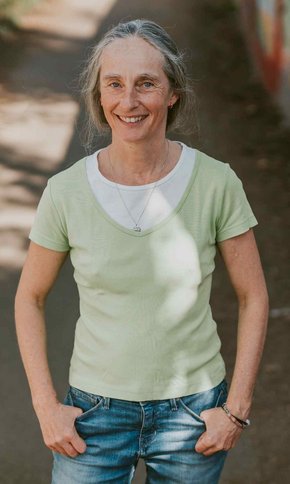
Prof. Dr. Ana Bastos is a Research Professor and Group Leader at the Max Planck Institute for Biogeochemistry (MPI-BGC) in Germany, affiliated with Leipzig University's Institute for Earth System Science and Remote Sensing. She holds a PhD in Geophysical and Geoinformation Science (2015, U. Lisbon) and a BSc+MSc in Environment and Energy Engineering (2011, U. Lisbon). Her research bridges atmospheric science, ecology, and biogeochemistry to study carbon-cycle dynamics, climate extremes, and ecosystem disturbances. She leads major projects such as the ERC Starting Grant-funded ForExD initiative and contributes to global carbon cycle assessments like RECCAP-2. Key roles include membership in the World Climate Research Programme's Safe Landing Climates initiative and leadership in the ICOS-RI Drought Task Force. She has over 40 international conference presentations and organizes sessions at AGU and EGU meetings. Her awards include the EGU Outstanding Early Career Scientist Award (2022) and the Beutenberg Campus Award (2021). She actively mentors early-career researchers through PhD and postdoc programs focused on forest disturbance modeling and remote sensing applications.
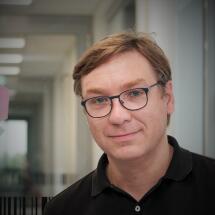
Prof. Richard L. Peters is a Professor and Head of the Chair of Tree Growth and Wood Physiology at the Technische Universität München (TUM) since 2024. His research focuses on tree physiology, wood formation, and climate-forest interactions. He holds a doctorate summa cum laude from the University of Basel (2018) and has conducted postdoctoral research at the Swiss Federal Institute for Forest Science (WSL) and Ghent University. His work integrates forest ecology, dendrochronology, and ecophysiology to address climate change impacts on forests. Education: B.Sc./M.Sc. in Biology at Utrecht University, Ph.D. from University of Basel (2018). Key career steps include a Swiss National Science Foundation (SNSF) fellowship at Ghent University and coordination of the Swiss Canopy Crane II project (2021). Research Interests: Tree water-use strategies, drought tolerance mechanisms, carbon allocation dynamics, and the physiological basis of tree growth. He leads interdisciplinary projects to monitor forest responses to environmental stress using tools like the TreeNet network. Awards: Early Postdoc Mobility Fellowship (SNSF, 2019), Doctorate summa cum laude (2018). Contributions: Authored >180 publications, co-developed the datacleanr R package for ecological data processing, and pioneered methods linking tree-ring data with climate models. His work emphasizes the need for better observational data to improve vegetation models.
Veronika Eyring serves as Head of the Earth System Model Evaluation and Analysis Department at the German Aerospace Center (DLR) Institute of Atmospheric Physics and Professor of Climate Modelling at the University of Bremen. She holds dual appointments at these leading institutions, directing cutting-edge research at the intersection of climate science and artificial intelligence. Education: 2008: Habilitation in Environmental Physics at the University of Bremen 1999: PhD in Physics from the University of Bremen 1994: Diploma in Physics from the University of Erlangen Professor Eyring's research program focuses on improving climate models and projections through innovative integration of machine learning techniques and spaceborne Earth observations. Her work spans process-oriented modeling, development of observationally-based performance metrics, and understanding systematic biases in climate models. She has pioneered approaches to weighting model projections based on their performance using machine learning, significantly advancing the field of climate model evaluation. Her research has critical applications across multiple sectors including aeronautics, space research, transportation, and energy systems. Analysis of her recent publications reveals a clear trajectory toward deeper integration of machine learning with traditional climate modeling approaches. Her work has increasingly focused on developing community tools like the Earth System Model Evaluation Tool (ESMValTool) and leading major international initiatives such as the USMILE project (Understanding and Modelling the Earth System with Machine Learning). The publications span climate science, machine learning, Earth system modeling, and remote sensing, with specific emphasis on climate model evaluation, parameterization techniques, and improved climate projections. Scientific Awards: AGU Ambassador Award (2024) TUM Distinguished Affiliated Professor (2024) Gottfried Wilhelm Leibniz Prize (2021) ERC Synergy Grant (2019) Thomson Reuters Highly Cited Researcher (2016-2021) Top female researchers award, Helmholtz-Society (2015) Professor Eyring actively supervises a large research group comprising PhD students working on ML-based sea ice parameterizations, causal model evaluation for air-sea interactions, and machine learning-based detection of droughts in climate projections. She leads the prestigious ERC Synergy Grant USMILE and secured significant funding through the DFG Gottfried Wilhelm Leibniz Prize. Her research group at DLR includes multiple postdocs, research scientists, and software engineers working collaboratively on climate informatics projects. Professor Eyring leads the Earth System Model Evaluation and Analysis Department at DLR, which encompasses research groups focused on CMIP model evaluation, ESMValTool development, and machine learning applications in climate science. She founded and supervises the 'Climate Informatics' Group at the DLR Institute for Data Science in Jena. Her department maintains strong international collaborations, particularly with the National Center for Atmospheric Research (NCAR) in Boulder, Colorado, where she serves as an Affiliate Scientist.
Prof. Vasilis Ntziachristos is a Professor and Chair of Biological Imaging at the Technical University of Munich (TUM), leading the Institute of Biological and Medical Imaging at the Helmholtz Centre Munich. His research focuses on developing novel optical and optoacoustic imaging techniques for early disease detection, diagnostics, and theranostics. He holds a PhD in Bioengineering from the University of Pennsylvania and previously served as an Assistant Professor at Harvard University and Massachusetts General Hospital. Affiliations: TUM School of Medicine and Health, Helmholtz Munich, Institute of Biological and Medical Imaging. Key Research Themes: Non-invasive imaging methods, molecular imaging, optoacoustic technology, and clinical translation. His work bridges theoretical developments with clinical applications, including advancements in glucose monitoring, cancer imaging, and drug delivery systems. Notable awards include the Leibniz Prize (2013) and the World Molecular Imaging Society Gold Medal (2015). Labs/Teams: Imaging to Sensing I2S, Optoacoustic Mesoscopy, Fluorescence Imaging, and AI in Optoacoustics. Grants/Projects: Involvement in Horizon Europe initiatives and collaborations with TranslaTUM and Helmholtz Munich. Prof. Ntziachristos actively contributes to education via courses like 'Biological Imaging' and 'Introduction to Bioengineering', fostering the next generation of imaging scientists.
Vijay Laxmi is a Professor in the Department of Computer Science and Engineering at Malaviya National Institute of Technology (MNIT) Jaipur, India. With over a decade of active research publication from 2014-2024, Dr. Laxmi has established themselves as a prominent researcher in network security, Android security systems, and Network-on-Chip architectures. Their work demonstrates consistent collaboration with Manoj Singh Gaur and numerous doctoral students at MNIT Jaipur. Dr. Laxmi's research interests span Network Security, Android Security, Malware Analysis, Network-on-Chip Architectures, Routing Protocols, Side-Channel Attacks, Wireless Networks, and Mobile Security. Their work bridges theoretical security frameworks with practical implementations, particularly in mobile and embedded systems. Recent publications indicate a growing focus on AI-based security approaches including GAN applications for fuzzing and deep learning for image dehazing. The research trajectory shows increasing sophistication in security analysis techniques, evolving from basic malware detection to advanced side-channel attack analysis and sophisticated network security protocols. Recent publications demonstrate expertise in both theoretical frameworks and practical implementations with applications in real-world security challenges. Dr. Laxmi has mentored numerous graduate students including Vineeta Jain, Anugrah Jain, Sonal Yadav, Mohit Singh, and Gaurav Singal, who appear as co-authors across multiple publications. Their collaborative network extends to researchers at international institutions, indicating strong academic connections beyond their home institution.
Dieter Braun is a Professor in the Faculty of Physics at Ludwig Maximilian University of Munich (LMU), leading the Functional NanoSystems research group. He serves as speaker of the CRC 235 Emergence of Life and coordinates the Molecular Origins component of the Origins Cluster. Dr. Braun holds an ERC Synergy Grant (starting April 2025), leads the CRC 392 Molecular Evolution (starting April 2024), and is a Fellow in the Max Planck School Matter to Life (since October 2023). His research focuses on understanding the physical mechanisms that could have led to the emergence of Darwinian evolution from prebiotic molecules on early Earth. Braun's laboratory investigates non-equilibrium settings, particularly asymmetrically heated open cracks in rocks, which create intricate wet-dry cycles, temperature gradients, and fluidic effects that could drive molecular evolution. His work bridges physics, chemistry, and biology to explore how dead molecules might combine through physical forces into autonomous mechanisms of evolution. Analysis of Braun's recent publications reveals a strong focus on thermal gradients and non-equilibrium physics in prebiotic environments. His research demonstrates how heat flows can concentrate molecules, drive polymerization, create pH gradients, and enable non-enzymatic replication of nucleic acids. The publications span high-impact journals including Nature, Nature Physics, and Nature Chemistry, showing interdisciplinary work connecting physics, chemistry, geology, and biology in the context of life's origins. Klung-Wilhelmy Weberbank Price (2011) Technology Transfer Price of the DPG (with LMU and NanoTemper) Deutscher Innovationspreis (2012) Step Award (2012) Dr. Braun has successfully mentored numerous PhD students, including Stefan Duhr and Philipp Baaske who founded the award-winning startup NanoTemper Technologies. His research is supported by multiple prestigious grants including ERC Starting, Advanced, and Synergy Grants, as well as funding from the Simons Collaboration on the Origins of Life. His laboratory collaborates extensively with other researchers across disciplines and institutions, particularly with Hannes Mutschler in the new ERC Synergy project. The Braun laboratory operates within the CRC 235 Emergence of Life and the Origins Cluster at LMU Munich, with strong connections to the Max Planck Society through the Max Planck School Matter to Life. The research group maintains active collaborations with geochemists, biophysicists, and molecular biologists to create comprehensive experimental models of prebiotic environments.
Leibniz Institute for Tropospheric ResearchGermany
Dr. Heike Wex is a prominent atmospheric scientist at the Leibniz Institute for Tropospheric Research in Leipzig, Germany, where she serves as a Researcher in the Atmospheric Microphysics department. With over two decades of continuous research since completing her PhD in 2002, she has established herself as a leading expert in aerosol-cloud interactions and ice nucleation processes. Her work spans multiple international collaborations and major research initiatives including (AC)³, PICNIC, MarParCloud, and PI-ICE projects. Her research focuses on experimental investigations and theoretical descriptions of aerosol-cloud interactions, with specific expertise in hygroscopic growth at high relative humidities (>99% RH), particle activation to cloud droplets, heterogeneous ice nucleation processes, and the role of atmospheric aerosol particles as nuclei for cloud droplets and ice formation. Her work bridges atmospheric physics, climate science, and environmental chemistry, with significant contributions to understanding how microscopic processes affect cloud formation and climate. Analysis of her recent publications reveals a strong focus on polar and marine environments, with particular attention to biological contributions to ice nucleation, seasonal variations in Arctic aerosols, and the development of advanced measurement techniques. Her work consistently addresses fundamental questions about how aerosols influence cloud properties and climate systems, with increasing emphasis on climate-relevant processes in polar regions. Dr. Wex has held significant leadership positions, including serving as Vice President of the International Commission on Clouds and Precipitation (ICCP) from 2021-2024. She is also actively engaged with Scientists for Future in Leipzig, demonstrating her commitment to addressing climate change through scientific expertise and public engagement. Beyond her research, she has organized numerous scientific workshops and field campaigns, including leadership roles in the LExNo experiment, FROST projects, and the 16th International Conference on Clouds and Precipitation. Her work has established important methodological approaches for studying ice nucleation and has contributed significantly to our understanding of aerosol impacts on cloud formation across diverse environments from the Arctic to the tropics.
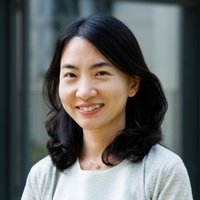
Sarah Kang is the Director of the Department of Climate Dynamics at the Max Planck Institute for Meteorology in Hamburg, Germany, a position she has held since August 2023. She leads the Director's Research Group (CDY) focusing on fundamental climate dynamics. Prior to this, she served as Professor in the Department of Urban and Environmental Engineering at Ulsan National Institute of Science and Technology (UNIST) in South Korea from 2011-2023, progressing through assistant, associate, and full professor ranks. Her research examines complex climate system dynamics, with emphasis on: Large-scale atmosphere and ocean circulation patterns Tropical-extratropical climate interactions Hydrological cycle responses to climate change Mechanisms of polar amplification Teleconnections between ocean basins and climate zones Analysis of her recent publications reveals dominant research themes: Ocean-atmosphere coupling mechanisms Radiative forcing and climate sensitivity Hemispheric climate asymmetries Tropical precipitation dynamics Polar warming impacts on global circulation with consistent methodology employing high-resolution climate modeling and observational verification. Major scientific recognitions include: AGU Atmospheric Sciences Ascent Award (2022) AOGS Kamide Lecture Award (2018) Editor's Citation for Excellence in Refereeing (GRL 2018) UNIST Teaching Excellence Award (2012) NCAR Advanced Studies Fellowship (2009) She maintains extensive professional engagement as: Co-chair of CLIVAR Climate Dynamics Panel Science Steering Committee member for CFMIP Associate Editor for Frontiers in Climate Editor for AGU Advances Board member of Korean Meteorological Society
Markus Reichstein is a Professor for Global Geoecology at Friedrich Schiller University (FSU) Jena and Director of the Biogeochemical Integration Department at the Max Planck Institute for Biogeochemistry. His research focuses on ecosystem responses to climate variability, climate extremes, and the application of AI in Earth system science. He holds a PhD in Plant Ecology from the University of Bayreuth and has pioneered interdisciplinary approaches combining machine learning with environmental modeling. Key roles include leadership in the Michael-Stifel-Center Jena for Data-driven and Simulation Science and founding director of the ELLIS Unit Jena. He contributed to the IPCC Special Report on Climate Extremes and has received prestigious awards such as the Leibniz Prize. His work bridges ecology, hydrology, and atmospheric science, addressing critical global challenges like carbon cycle feedbacks and ecosystem resilience. Recent research emphasizes AI-driven early warning systems for climate risks, integrating observational data with mechanistic models. His team explores land-atmosphere interactions, soil-vegetation dynamics, and the impacts of climate extremes on societal systems. Notable projects include GartenDiv, a citizen science initiative for garden biodiversity, and advancements in global water cycle modeling using hybrid AI-physics frameworks. Awards include the Piers J. Sellers Award (2018), ERC Synergy Grant (2019), and Leibniz Prize (2020). He collaborates with international networks like ELLIS and Future Earth, advancing data-driven solutions for sustainability science.
Dr. Philipp Porada is a Junior Professor of Ecological Modeling at the University of Hamburg, affiliated with the Department of Biology within the Faculty of Mathematics, Computer Science and Natural Sciences. He works at the Institute of Plant Sciences and Microbiology, specifically in the Applied Plant Ecology group, based at the Otto Warburg House. His research integrates process-based modeling with ecological field studies to investigate non-vascular vegetation, biogeochemical cycles, and climate-vegetation interactions across multiple temporal and spatial scales. Porada's research focuses primarily on non-vascular vegetation (bryophytes, lichens, and biocrusts), examining their role in global biogeochemical cycles, biodiversity-ecosystem functioning relationships, and paleoclimate dynamics. His work spans from contemporary ecosystem processes to geological time scales, with particular emphasis on the impacts of climate change on non-vascular communities. He has developed several process-based models including LiBry for lichen and bryophyte communities, LiDELS for soil-vegetation interactions, and LYCOm for early vascular plants. His research demonstrates how non-vascular vegetation influences carbon sequestration, water cycling, and soil processes across diverse ecosystems from urban forests to polar regions. Analysis of Porada's publication record reveals a strong interdisciplinary approach combining ecological theory, biogeochemistry, and computational modeling. His work spans multiple ecosystems including peatlands, drylands, urban forests, and coastal blue carbon systems. A consistent theme across his research is understanding how non-vascular vegetation mediates the relationship between environmental conditions and ecosystem functions. His most recent work increasingly focuses on climate change impacts and potential mitigation strategies through vegetation management. Porada leads two major research projects funded by the German Research Foundation (DFG): 'Effects of nutrient limitation on non-vascular vegetation under climate change' and 'The role of early plants for palaeoclimate dynamics'. These projects reflect his dual interest in contemporary environmental challenges and deep-time ecological processes. His collaborative work, evident in his extensive publication record with international researchers, demonstrates strong interdisciplinary connections across ecology, biogeochemistry, and climate science. Dr. Porada maintains an active research laboratory focused on ecological modeling, with particular expertise in non-vascular vegetation dynamics. His team develops and applies process-based models to address questions ranging from micro-scale lichen water relations to global biogeochemical cycles. The research group collaborates extensively with field ecologists, climate scientists, and biogeochemists to ground-truth model predictions and explore new ecological phenomena.
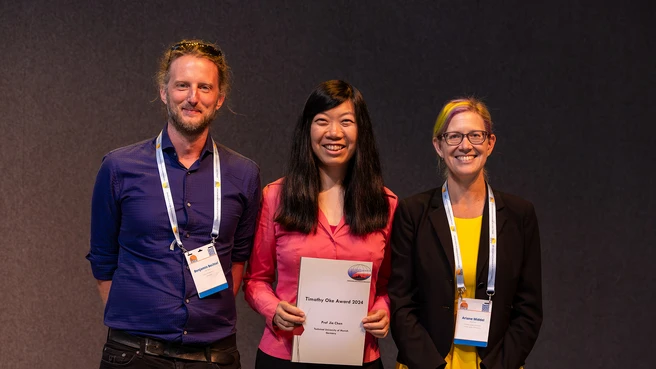
Professor Jia Chen is a Professor of Environmental Sensing and Modeling at the Technical University of Munich (TUM), holding positions in both the TUM School of Computation, Information and Technology (CIT) and the Department of Electrical and Computer Engineering, as well as the Department of Civil, Geo and Environmental Engineering. She also maintains an affiliation as an Associate at Harvard University. Her pioneering work focuses on developing novel optical sensors and atmospheric models to monitor and quantify greenhouse gas emissions in urban environments. Professor Chen's most significant contribution is the development of the differential column measurement method and the establishment of MUCCnet, the world's first permanent urban column sensor network. This groundbreaking work enables continuous, city-wide monitoring of greenhouse gases. Her research team has made notable discoveries, including quantifying methane emissions from events like the Munich Oktoberfest and identifying previously underestimated urban emission sources. Her research spans atmospheric science, environmental engineering, and climate change mitigation, with particular emphasis on: Urban greenhouse gas monitoring systems Advanced atmospheric modeling techniques Sensor network development for environmental monitoring Integration of machine learning with emission quantification Urban air quality assessment methodologies Professor Chen has received numerous prestigious awards including: Timothy Oke Award (2024) for original research in urban climatology ERC Consolidator Grant (2022) Arnold Sommerfeld-Award (2021) Germany's "Top 40 under 40" recognition by Capital Magazine (2020) Membership in the Global Young Academy (2021) She leads an extensive research group with numerous PhD students and postdoctoral researchers, and her work is supported by major funding from ERC, EU Horizon 2020, United Nations Environment Programme, NASA, ESA, German Federal Ministry of Education and Research, and German Research Foundation. Professor Chen has authored over 180 publications and 12 patents, with an h-index of 35.
Prof. Dr.-Ing. Elisabeth Clausen is a Professor and Director of the Chair and Institute for Advanced Mining Technologies at RWTH Aachen University. She holds key roles in the Specialist Group for Raw Materials and Disposal Technology, serves as a rectorate representative, and leads the Commission for EU Research Funding. Her research spans Underground mining automation Acoustic emission diagnostics Sustainable mining systems Space resource extraction Advanced sensor technologies Her recent publications focus on autonomous mining machinery, underground communication systems, and acoustic emission analysis across 15+ studies from 2013–2025, with particular emphasis on Ultra-wideband positioning Thermographic detection Crack monitoring in planetary gearboxes Explosive atmosphere safety Mineral processing diagnostics Digitalization trends Prof. Clausen contributes to mining education reform through initiatives like CDIO™ and has developed innovative learning spaces in underground mines. She coordinates international educational labs and integrates sustainability into mining engineering curricula, with publications on Adaptive ventilation systems Mining education frameworks Future-proof mineral extraction Entrepreneurial mindset in engineering
Max Planck Institute for the Physics of Complex SystemsGermany
Prof. Dr. Holger Kantz serves as Head of the research unit "Nonlinear Dynamics and Time Series analysis" at the Max Planck Institute for the Physics of Complex Systems in Dresden, Germany. He also holds an Adjunct Professorship (Honorprofessor) in Statistical Physics at the Institute of Theoretical Physics within the Department of Physics at the Technical University Dresden. Dr. Kantz's research spans multiple disciplines within nonlinear dynamics and statistical physics. His work focuses on time series analysis, nonlinear dynamics, stochastic processes, and complex systems. He has made significant contributions to understanding anomalous diffusion, extreme events prediction, and the statistical properties of chaotic systems. His research has applications in atmospheric science, climate modeling, power grid dynamics, and biological systems. Analysis of Dr. Kantz's recent publications reveals a strong interdisciplinary approach connecting statistical physics with climate science, energy systems, and scientometrics. His work demonstrates sophisticated applications of stochastic modeling to real-world complex systems, with particular attention to anomalous diffusion processes, extreme events, and predictability limits in chaotic systems. The publications show increasing methodological sophistication in handling nonstationary time series and developing predictive models for rare events. Dr. Kantz leads a research group focused on nonlinear dynamics and time series analysis at the Max Planck Institute. His work has significant implications for understanding and predicting complex phenomena across multiple scientific domains, from climate dynamics to power grid stability, with practical applications in risk assessment and system reliability.
Professor Bjoern Braunschweig is a W2 Professor for Physical Chemistry at the Institute of Physical Chemistry within the Faculty of Chemistry and Pharmacy at the University of Muenster. His research group focuses on fluid interfaces, hierarchical materials, and responsive systems, utilizing advanced nonlinear optical spectroscopy techniques such as sum-frequency generation (SFG) and second-harmonic scattering (SHS) to investigate molecular structures at interfaces. He leads the ERC-funded SUPERFOAM project, which aims to establish molecular-level understanding of foam formation and stability. His research interests span across interface science, soft matter physics, electrocatalysis, and responsive materials. Braunschweig's work particularly emphasizes molecular self-assembly at fluid interfaces, electrode/electrolyte interfaces in ionic liquids, and the development of light- and temperature-responsive materials. His group investigates how molecular building blocks like surfactants, polymers, and proteins determine macroscopic properties of soft materials such as foams and emulsions. The research group has published extensively on photoswitchable arylazopyrazole surfactants, thermoresponsive polymer systems, CO 2 electrocatalysis in ionic liquids, and ion-specific effects at interfaces. Their recent publications demonstrate a strong focus on molecular-level understanding of interface phenomena with applications in energy conversion, smart materials, and environmental processes. ERC Starting Grant (2014) BASF fellowship (2014) Max Buchner research fellowship (2012) DAAD Travel Grant (2012) Feodor Lynen fellowship (2009) Dissertation award (2009) Professor Braunschweig supervises multiple PhD students and postdoctoral researchers, including Billura Shakhayeva, Tim Blinzer, Tan Phat Pham, and Zugang Cong. His former students include notable researchers such as Natalia García Rey, Marco Schnurbus, and Eric Weißenborn. The group maintains strong collaborations with researchers across Europe, particularly with Michael Ryan Hansen, Andreas Heuer, and Monika Schönhoff at the University of Muenster, as well as international partners in Poland and the United States. Their research combines experimental approaches with theoretical modeling to develop fundamental understanding of interface phenomena with practical applications in materials science and energy technologies.
Thomas Berger is a Professor at the University of Hohenheim , affiliated with the Faculty of Agricultural Sciences and leading the Department of Economics of Land Use . He also contributes to the Computational Science Hub and Hohenheim Tropics initiatives. Focus Areas: Climate change adaptation, land-use modeling, biodiversity-productivity trade-offs, agent-based simulation, and machine learning in agricultural systems. Key Projects: Simulation frameworks for smallholder resilience in Ethiopia, bioeconomic modeling in the Amazon, and hybrid intelligence applications in European agricultural policy. Recent Publications: 2025 study on climate change effects on insecticide reduction in Germany, 2024 work on reconciling biodiversity with productivity via hybrid models, and 2023 methodological contributions to surrogate modeling and seasonal forecast integration. Research Trends: Interdisciplinary integration of climate science, agricultural economics, and computational modeling, with increasing emphasis on AI-assisted decision support systems and sustainability policy validation. Teaching & Outreach: Offers Agricultural Economics seminars and Hohenheim Tropics discussions, requiring advance email registration for office hours.