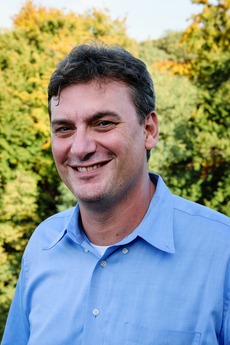
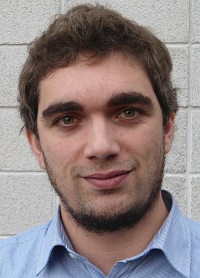
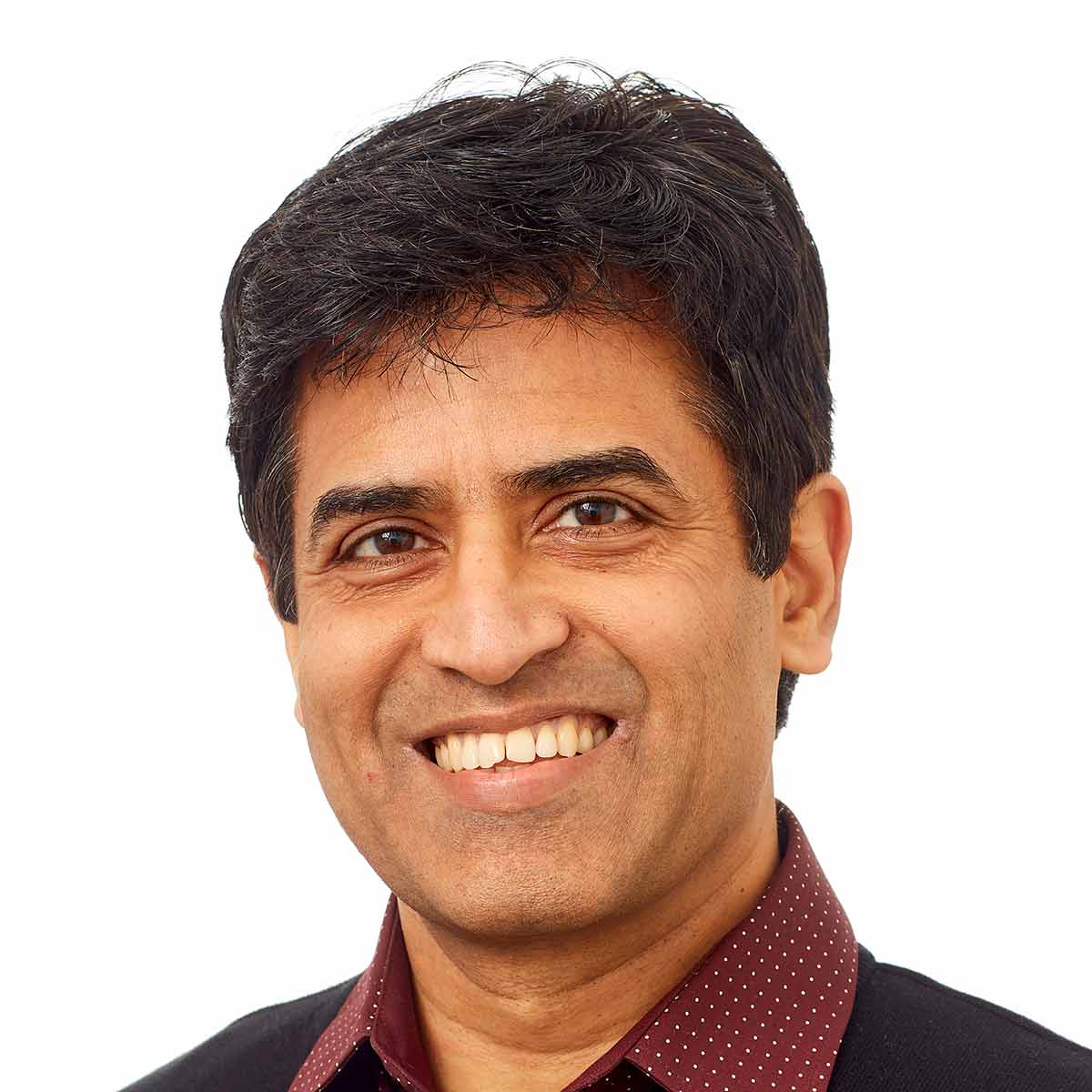
Dr. Samuel Cheng is an Associate Professor at the Gallogly College of Engineering , University of Oklahoma , specializing in Electrical and Computer Engineering . He holds a Ph.D. in Electrical Engineering from Texas A&M University (2004), preceded by M.S. and M.Phil. degrees from the University of Hawaii and Hong Kong University of Science and Technology. Education: B.S. (University of Hong Kong, 1995), M.Phil. (HKUST, 1997), M.S. (University of Hawaii, 2000), Ph.D. (Texas A&M, 2004) Professional Experience: Senior Research Engineer at Advanced Digital Imaging Research (2004-2005), prior internships at Microsoft Asia and Panasonic Technologies His research focuses on Information Theory , Signal and Image Processing , and Pattern Recognition , with applications in remote sensing, urbanization analysis, and disaster monitoring. His publications span topics including urban impervious surface mapping , nighttime light analysis , and machine learning for environmental data . His work often integrates multi-source datasets (e.g., Landsat, LiDAR, social media) for spatiotemporal modeling. Technical Expertise: Spectral unmixing, machine learning, thermal remote sensing, GIS integration Key Applications: Power outage detection, vegetation-crime correlation, PM2.5 estimation, smart meter data fusion Dr. Cheng holds three US patents in digital watermarking and is affiliated with IEEE, Sigma Xi, and AAAS. His recent articles demonstrate a trend toward leveraging AI for remote sensing challenges and analyzing urbanization impacts on ecosystems.
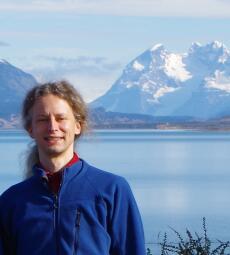
Mingfang Ting is a Professor of Climate at the Columbia Climate School , affiliated with the Lamont-Doherty Earth Observatory . She co-directs the M.S. in Climate program and serves as Co-Senior Director for Education at the Columbia Climate School. Her research focuses on climate variability, extremes, Asian monsoons, Arctic sea ice, and climate change impacts on agriculture and health. Education: Ph.D. in Climate Dynamics (Princeton University, 1990), M.S. and B.S. from Peking University (1985, 1983). She has taught climate science at Columbia since 2004. Research Interests: Investigates weather/climate extremes in a warming world, Asian monsoon dynamics, Arctic sea ice variability, decadal climate modes, and hydroclimate impacts. Recent work emphasizes heatwaves, drought-flood linkages, and climate model projections. Key Projects (2020–2023): Advancing predictive understanding of North American drought Asian monsoon response to climate change Causal mechanisms of dry/humid heat extremes Arctic transport pathways and sea ice loss Scientific Contributions: Authored/co-authored over 200+ peer-reviewed articles. Her 2022 analysis of the 2021 North American heatwave and 2022 Pakistan floods exemplifies climate attribution science. Awards: AMS Distinguished Scientific Award (2021) AGU Fellow (2022) NSF CAREER Award (1995) Reuters' World’s Top Climate Scientists (2021) Leadership: Former Co-Editor-in-Chief of Journal of Climate (2020–2023). Active in climate education and global resilience initiatives through the Decarbonization Network. Labs/Teams: Leads interdisciplinary teams at LDEO focusing on climate dynamics and extreme event analysis. Collaborates internationally on monsoon systems and Arctic research.
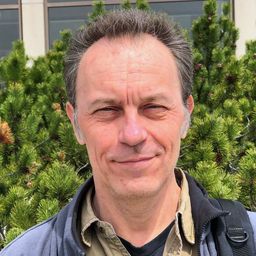
Professor Joaquim Pinto is a leading climate scientist at the Karlsruhe Institute of Technology (KIT), where he serves as Head of the Working Group "Regional Climate and Weather Hazards" and as Spokesperson of the collegial institute management team. He holds the prestigious AXA Research Fund Chair position at the Institute of Meteorology and Climate Research - Troposphere Research (IMK-TRO). His academic background includes a Licenciate in Geophysical Sciences - Meteorology from the University of Lisbon (1990-1996), PhD studies at the University of Cologne (1998-2002), and academic positions at the University of Cologne (2002-2016) and University of Reading (2013-2016) before joining KIT in 2016. He became a Privatdozent (lecturer) at the University of Cologne in 2011 and earned his habilitation with research on extreme European wind storms. Professor Pinto's research focuses on mid-latitude meteorology and climatology, with special emphasis on extreme weather events , climate variability in Europe across multiple time scales, regional climate modeling and downscaling methods , and the diagnostic modeling and quantification of risks associated with extreme events affecting Europe. His work bridges fundamental climate science with practical applications for risk assessment and management. His extensive publication record demonstrates expertise in analyzing European windstorms, heatwaves, and compound extreme events. Recent work examines the impacts of climate change on wind energy potential, extreme precipitation events, and the complex interactions between atmospheric circulation patterns and regional climate extremes. His research often employs high-resolution climate modeling, statistical-dynamical downscaling approaches, and interdisciplinary collaborations to address pressing climate challenges. AXA Research Fund Chair in Regional Climate and Weather Hazards Professor Pinto teaches graduate and undergraduate courses including "Climate Modelling and Dynamics with ICON," "IPCC Assessment Report," "Climatology," "Energy Meteorology," "Methods of Data Analysis," and "Regional Climate and Weather Hazards." His teaching reflects his research expertise in climate modeling, extreme events, and regional climate change impacts.
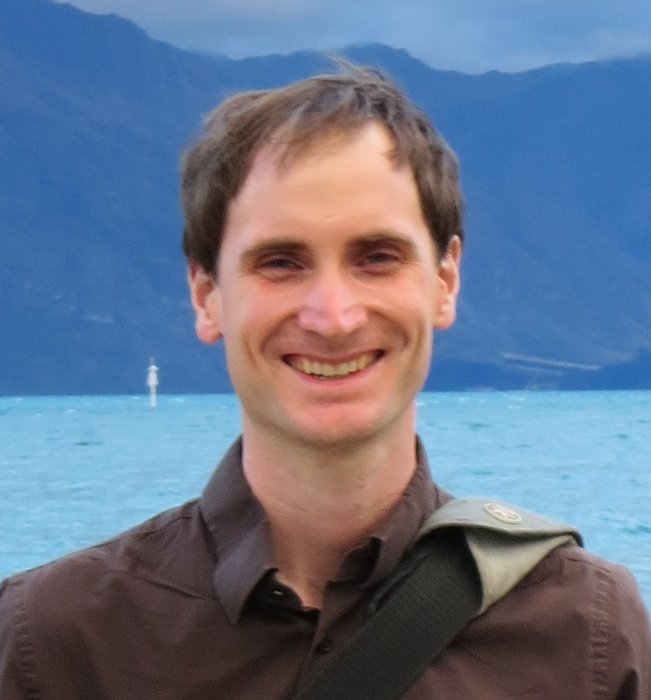
Rupert Klein is a Professor at Freie Universität Berlin in the Department of Mathematics and Computer Science , specializing in Geophysical Fluid Dynamics . His research spans atmospheric dynamics, numerical methods, and gas dynamics of combustion. Research Interests : Geophysical Fluid Dynamics and Atmospheric Modeling Multiscale Asymptotic Analysis Wave Propagation and Turbulence Combustion and Pressure Gain Combustion Climate Dynamics and Data Assimilation Scientific Awards : DRS Award for Excellent Supervision (2014) ECMWF Fellowship (renewed 2017) His recent work includes multiscale models for atmospheric flows, vortex dynamics, and combustion processes. Key collaborations involve DFG SPP 1276, CRC 1029 (TurbIn), and CRC 1114 (SCCS) projects. He contributes to numerical methods for low-Mach-number flows and geophysical simulations.
Hyemi Kim is an Adjunct Professor at the School of Marine and Atmospheric Sciences (SoMAS), Stony Brook University. Her research focuses on climate variability across subseasonal to decadal timescales, including topics like the Madden-Julian Oscillation (MJO), tropical-extratropical interactions, and extreme weather events such as atmospheric rivers and tropical cyclones. Education: Ph.D., 2008, School of Earth and Environmental Sciences, Seoul National University, South Korea Research Interests: Hyemi Kim's work spans four primary areas: (1) Climate prediction from subseasonal to decadal scales, (2) Tropical-extratropical interactions, (3) Extreme events (atmospheric rivers, storm tracks, tropical cyclones), and (4) Machine learning applications for subseasonal-to-seasonal (S2S) prediction. Publication Trends: Her research output emphasizes the MJO, its interactions with other climate modes (QBO, ENSO), and implications for extreme weather. Recent works analyze atmospheric rivers, storm tracks, and tropical cyclone activity, often linking these to large-scale climate variability. Publications frequently employ climate models (e.g., CESM1, SubX, NMME) to assess predictability and improve forecasting frameworks. Labs & Teams: She collaborates with institutions like the National Center for Atmospheric Research (NCAR) and contributes to multi-model experiments such as the Subseasonal Experiment (SubX) and North American Multi-Model Ensemble (NMME).
Lukas Papritz is a Lecturer at the Department of Environmental Systems Science at ETH Zürich , Switzerland. He specializes in atmospheric dynamics, focusing on large-scale weather systems, Arctic climate processes, and air-sea interactions. Research Interests : Dynamics of extratropical cyclones and atmospheric blocking Arctic climate system, including air mass transformations Atmospheric and oceanic energy exchanges Physics of temperature extremes (cold/warm) Development of dynamical frameworks for weather system analysis His recent publications examine baroclinic wave energetics, heatwave thermodynamics, cold-air outbreak dynamics, and synoptic-scale moisture transport. These works integrate Lagrangian methods, climatological analysis, and regional climate modeling. Current Affiliation : Professorship for Atmospheric Dynamics (Professur für Atmosphärendynamik), ETH Zürich
Dr. Tamas Mona is a Postdoctoral Research Associate in the Department of Plant Sciences at the University of Cambridge , affiliated with the Epidemiology and Modelling Group . His work focuses on environmental suitability models for large-scale epidemiological forecasting, particularly in wheat rust outbreaks across Africa, the Middle East, and Asia. Collaborations include the UK Met Office, CIMMYT, and institutions in Ethiopia, Kenya, Bangladesh, and Nepal. PhD in Environmental Sciences (2019), Eötvös Loránd University MSc in Meteorology (2013), Eötvös Loránd University BSc in Physics with Meteorology (2011), Eötvös Loránd University Research interests integrate meteorological applications with epidemiological models to predict crop disease outbreaks. Key projects involve tracking transmission pathways for stem rust pathogens and analyzing how irrigation creates green bridges for intercontinental pathogen spread. Publications emphasize environmental science and computational epidemiology . Current collaborations span Sub-Saharan Africa (EIAR, ATI, KARLO) and South Asia (BWMRI, NARC) through initiatives like the Global Food Security IRC . Modeling frameworks developed by Mona contribute to policy advisory systems for emerging pest threats, aligning with DEFRA and UK government strategies.
Professor Jason Evans is a leading climate scientist at the University of New South Wales (UNSW), serving as Chief Investigator at the Climate Change Research Centre. He completed his undergraduate degrees in physics and mathematics at Newcastle University in 1996 and earned his PhD in Environmental Management from the Australian National University in 2001. After six years as a postdoctoral and research fellow at Yale University, he returned to Australia in 2007 to join UNSW's Climate Change Research Centre. Education: Bachelor's degrees in Physics and Mathematics, Newcastle University (1996) PhD in Environmental Management, Australian National University (2001) Research Interests: Professor Evans specializes in regional climate dynamics, focusing on land-atmosphere interactions and the water cycle in the context of climate change. His research integrates advanced modeling tools with extensive observational datasets, particularly emphasizing satellite-based remote sensing and earth observations . His work addresses critical questions about regional climate change impacts, including urban climate dynamics, extreme weather events, drought mechanisms, and renewable energy implications under changing climate conditions. His research spans multiple interconnected domains: from developing novel approaches for moisture source identification using Lagrangian methods , to investigating flash drought prediction using deep learning techniques , and evaluating the performance of high-resolution climate simulations across diverse geographical regions including Australia, Alaska, and Saudi Arabia. Scientific Recognition: Lead Author, IPCC Special Report on Climate Change, Desertification, Land Degradation, Sustainable Land Management, Food Security, and Greenhouse Gas Fluxes in Terrestrial Ecosystems Member, Science Advisory Team for CORDEX (World Climate Research Programme) Editor, Journal of Climate (2016-2022) Fellow, Modelling and Simulation Society of Australia and New Zealand (2020) Biennial Medal, Modelling and Simulation Society of Australia and New Zealand (2021) Fellow, Royal Society of New South Wales (2021) Research Impact and Contributions: Professor Evans has made significant contributions to understanding regional climate change through his extensive publication record of over 50 articles since 2021. His work has advanced knowledge in areas including urban climate dynamics , drought mechanisms and prediction , extreme weather events , and renewable energy impacts under climate change . His research has informed climate policy through his role as a Lead Author for the IPCC and his involvement with international climate research initiatives like CORDEX.
Dr. Ambrogio Volonté is a Senior Research Fellow at the Department of Meteorology, University of Reading, and a member of the National Centre for Atmospheric Science (NCAS). His research focuses on cyclone dynamics, particularly Arctic, extratropical, and Mediterranean cyclones, sting jets, and monsoon systems. He leads and contributes to projects funded by NERC and international collaborations, such as the THINICE field campaign investigating Arctic cyclones and the MiLCMOP project studying monsoon progression. He holds a PhD from the University of Reading (2018) and has extensive experience in numerical weather prediction, Lagrangian analysis of air masses, and process-based weather phenomena. His work includes studying the impact of sea ice on Arctic cyclones, the role of midlatitude dry air in monsoon withdrawal, and evaluating AI models against traditional forecasting methods. Key projects include the global climatology of sting-jet cyclones and the dynamics of extreme windstorms like Storm Ciarán and Eunice. Volonté collaborates on interdisciplinary projects such as COSMIC (convection-scale modeling in China) and INCOMPASS (monsoon dynamics in India). His research has been published in journals like Quarterly Journal of the Royal Meteorological Society and Weather and Climate Dynamics . He currently serves as a researcher in several grants, focusing on Arctic cyclones, sting jets, and monsoon processes.
Prof. Dr. Klaus-Holger Knorr is a Professor of Hydrology at the University of Münster's Institute of Landscape Ecology, where he leads the Ecohydrology and Material Cycles research group. His academic journey includes a Diplom in Geoecology (2005) and a Dr. rer. nat. (2008) from the University of Bayreuth, followed by postdoctoral work and habilitation (2017) in biogeochemistry. He became a professor in 2018 after serving as an Academic Councillor at Münster. Knorr's research focuses on biogeochemical processes in wetland ecosystems, with emphasis on: Carbon and greenhouse gas dynamics in peatlands and lake sediments Redox-controlled organic matter transformations Hydrological-biogeochemical coupling in restoration contexts Impacts of climate change on wetland biogeochemistry His publications predominantly explore methane/CO 2 production pathways, peat decomposition controls, and ecosystem responses to disturbance, using approaches spanning field monitoring to isotopic tracing. He has secured significant research funding including multiple DFG projects like ReDOCs (DOC mobilization), ReVersal (peatland restoration), and SPURT (peatland resilience). Awards include the Bernd Rendel-Preis (2007) and Humboldt Society recognition. He leads laboratory facilities for ecohydrological analysis and mentors doctoral researchers in wetland biogeochemistry.
Dr. Yun Qian is a distinguished Earth Scientist and Lab Fellow at Pacific Northwest National Laboratory (PNNL), where he leads the Earth System Modeling Group with over 80 scientists and staff within the Atmospheric, Climate, and Earth Sciences (ACES) Division. He joined PNNL in 2000 and has established himself as a renowned expert in climate modeling, particularly in regional climate systems, aerosol-climate interactions, and urban climate effects. Dr. Qian is also an AMS Fellow with significant contributions to understanding human influences on the Earth system. Dr. Qian received his academic training in China: Ph.D. in Atmospheric Science from Nanjing University, Nanjing, China B.S. in Atmospheric Science from Nanjing University, Nanjing, China Dr. Qian's research focuses on advancing our understanding of climate systems through sophisticated modeling approaches. His work spans regional and global climate modeling, aerosol-climate interactions, snow and glacier impurities and their climatic impacts, land-atmosphere-water interactions, urban and coastal environment modeling, and uncertainty quantification in climate modeling. His pioneering work on Asian aerosols revealed their dominant role in shaping climatic trends in East Asia, while his research on snow and ice impurities provided new insights into changes in snowpacks in the western United States and the Himalayas. Dr. Qian has also made significant contributions to understanding how atmosphere-land-water interactions modulate the influence of human activities on the environment. Analysis of Dr. Qian's recent publications shows a strong focus on urban climate effects, regional climate modeling, and the impacts of human activities on climate systems. His work increasingly incorporates advanced computational methods including machine learning for weather pattern identification. There's a clear trend toward studying the interactions between urban environments and climate systems, with particular attention to heat stress, precipitation patterns, and regional warming effects. His research also shows growing interest in extreme weather events and their changing patterns under climate change scenarios. Dr. Qian has received numerous prestigious awards and recognitions: Fellow of American Meteorological Society Chair of AMS Coastal Environment Committee Program Chair for Annual AMS Coastal Environment Symposium Editor of JGR-Atmospheres, Atmospheric Chemistry and Physics, and Advances in Atmospheric Sciences Director of international workshop on Uncertainty Quantification in Climate Modeling and Projection Member of Scientific Steering Committee for IPCC CMIP6 Global Monsoons Modeling Inter-comparison Project NSR 2020 Best Paper AAS Esteemed Review Paper Award PNNL Exceptional Contribution Program Award PNNL EBSD Mentor of the Year Editors' Citation for Excellence in Refereeing at AGU (2015, 2019) Contributing Author of IPCC Assessment Report Fellowship Award of International Council for Science (ICSU), 1997 Xue-Du-Feng-Zheng Award in Chinese Academy of Sciences, 1998 With over 200 peer-reviewed articles and 20,000 citations (h-index of 74), Dr. Qian has made substantial contributions to climate science. His work has garnered significant media attention, with features in top-tier scientific publications like Nature and Science, as well as major news outlets including the Associated Press, New York Times, Washington Post, BBC, NBC, and NPR. He has served as chair of the AMS Coastal Environment Committee, Program Chair for the Annual AMS Coastal Environment Symposium, and as a member of the Scientific Steering Committee for the IPCC CMIP6 Global Monsoons Modeling Inter-comparison Project. Dr. Qian has also directed international workshops on uncertainty quantification in climate modeling and served as an editor for three prestigious journals. Dr. Qian leads the Earth System Modeling Group at PNNL, which comprises over 80 scientists and staff. His team focuses on developing and applying atmospheric and land surface models to advance understanding of human influence on the Earth system. The group's work spans regional climate modeling, aerosol-climate interactions, snow and glacier impurities, land-atmosphere-water interactions, urban and coastal environment modeling, and uncertainty quantification. Their research has significant implications for understanding climate change impacts and developing adaptation strategies.
Philippe Gachon is a Professor in the Department of Geography at the University of Quebec at Montreal (UQAM), Director of the ESCER Research Centre, and leader of the Quebec InterSectoral Flooding Network (RIISQ). He specializes in hydro-climatology and climate risk assessment, with extensive experience at Environment Canada and as a Strategic Research Chair holder on Hydrometeorological Risks Related to Climate Change. His research examines climate change impacts on extreme weather events including floods, droughts, and heat waves. Recent work focuses on improving risk identification and adaptation strategies through intersectoral approaches. Key research themes include: Regional climate modeling and validation Hydro-meteorological hazard intensification Systemic risk assessment Community-scale resilience building Climate services development His recent publications demonstrate advanced statistical approaches for modeling non-stationary flood regimes, evaluating wildfire risks under climate change, and quantifying vector-borne disease transmission. Collaborative projects with 16 universities address physical climate risks and socioeconomic vulnerabilities across Quebec.
Edwin P. Gerber is a Professor of Mathematics and Atmosphere/Ocean Science at New York University’s Courant Institute of Mathematical Sciences. He holds joint affiliations with the Department of Environmental Studies and the Center for Data Science. His research focuses on understanding climate variability and dynamics, particularly the role of stratosphere-troposphere interactions and simplified climate models. Gerber earned his Ph.D. in Applied and Computational Mathematics from Princeton University (2006), following an M.A. (2002) and B.S. in Mathematics and Chemistry from the University of the South (2000). His work bridges theory and Earth System models, investigating topics like the Brewer-Dobson Circulation, sudden stratospheric warmings, and ozone layer dynamics. Key achievements include the DynVarMIP initiative for CMIP6 and contributions to gravity wave parameterization. Gerber has received awards such as the Friedrich Wilhelm Bessel Research Award (2021) and Hertz Foundation Fellowship (2000-2005). His research has been supported by grants from NSF, NASA, and international collaborations. Gerber’s lab explores machine learning applications in climate modeling, including data-driven parameterization of gravity waves. He serves as Associate Editor for the Quarterly Journal of the Royal Meteorological Society and has led initiatives like the SPARC Reanalysis Intercomparison Project (S-RIP). His recent studies address tropical teleconnections, stratospheric ozone responses to global warming, and extreme event predictability. Gerber’s teaching includes courses on atmospheric dynamics, climate change, and differential equations. He emphasizes interdisciplinary approaches, integrating theory, computation, and observational data to advance climate science understanding.
Prem Kumar is a Professor in the Department of Physics at Swansea University, holding a Personal Chair position. He is affiliated with the Particle Physics and Cosmology Theory (PPCT) group. His research focuses on the intersection of Quantum Field Theory and String Theory/Gravity, including specialized areas like gauge/gravity duality and supersymmetric Yang-Mills theories. Kumar earned his undergraduate degree in Electrical Engineering from the Indian Institute of Technology Madras and a PhD in Theoretical Physics from Carnegie Mellon University. He held postdoctoral positions at the University of Washington and Cambridge University before joining Swansea under a 5-year PPARC Advanced Fellowship. He has been a faculty member since 2005 and Professor since 2012. His research employs analytical and computational methods to explore quantum phenomena in high-energy physics, thermal field theories, and random matrix applications in theoretical frameworks. Recent publications analyze atmospheric physics and climate extremes, with recurring themes in synoptic-scale precursors to extreme weather and climate model downscaling. Scientific awards include the prestigious PPARC Advanced Fellowship and Personal Chair recognition. Kumar actively advises postgraduate students and contributes to theoretical physics research groups exploring quantum-gravitational interactions.
Prof. Bruno Tremblay serves as a Professor in the Department of Atmospheric and Oceanic Sciences at McGill University's Faculty of Science. His office is located in Burnside Hall 823, with contact information including telephone (514) 398-4369 and fax (514) 398-6115. Dr. Tremblay's research focuses on high-latitude climate systems , particularly sea ice dynamics at the ocean-atmosphere interface. His work examines the Arctic's transition from perennial to seasonal ice cover ("Antarctification of the Arctic Ocean"), investigating drivers such as ocean heat fluxes, radiative processes, and moisture transport. Key methodologies include Global Climate Models (GCMs), coupled ice-ocean models, and field studies in the Canadian Arctic. His publication analysis reveals dominant themes in Arctic climate modeling (83%), sea ice mechanics (75%), and numerical method development (67%). Recent work emphasizes sea ice rheology, seasonal forecasting, and freshwater budget impacts on ocean circulation. Dr. Tremblay leads multiple collaborative projects with institutions including Colorado State University, NCAR, Columbia University's Lamont-Doherty Earth Observatory, and Environment and Climate Change Canada. His research integrates paleoclimate data, observational field work, and advanced computational techniques to address critical questions about Arctic sea ice decline and predictability across multiple time scales.