Dr. Christina Allen is a Professor of Orthopaedics & Rehabilitation at Yale School of Medicine, where she serves as Chief of Yale Sports Medicine and Vice Chair of Athletic Medicine and Community Outreach. She is the Orthopaedic Team Physician for Yale Athletics and has extensive experience with U.S. national teams, including U.S. Soccer and USA Taekwondo. Education: BS in Biomedical Engineering, Duke University (1983); MD, UCLA School of Medicine (1995) Training: Orthopaedic Residency and Sports Medicine Fellowship, University of Pittsburgh Research Interests focus on: Revision ACL reconstruction outcomes and predictors Meniscus transplantation and cartilage repair Proximal hamstring avulsion repair Quantitative MRI for joint kinematics and cartilage changes Post-ACL revision infection risk factors Scientific Awards include: Kappa Delta Ann Doner Vaughn Award (2019) NIH R01 Competitive Renewal Grant (2017) AOSSM O’Donoghue Award (2014) Clinical Roles span: Team physician for U.S. Soccer (Women's/Men's National Teams) Former team physician for San Francisco Deltas (NASL Champions 2017) Medical Board member, World Taekwondo (London Olympics 2012, Rio Olympics 2016) Publications highlight a 20-year longitudinal focus on: Machine learning models for surgical outcome prediction Graft choice impact on revision ACL longevity Cartilage degeneration after meniscectomy Biomechanical MRI analysis of joint kinematics Infection rates in revision surgeries Return-to-sport protocols for athletes
Prof. Daniel Memmert is a Professor at the German Sport University Cologne, leading research in Sport Informatics and Sports Games within the Institute of Exercise Training and Sport Informatics. His work focuses on cognitive aspects of sports performance, decision-making, and data-driven analysis in football (soccer) and other sports. He has published extensively on topics like penalty kick strategies, home advantage dynamics, artificial intelligence applications in coaching, and route-setting in climbing. Memmert's research bridges sports science, computer science, and psychology, with over 550 publications and 41 projects to his name. He frequently engages with media, explaining complex sports phenomena to the public. Key Research Areas: Football analytics, cognitive psychology in sports, sports technology, decision-making under pressure Media Contributions: Over 50 media features discussing topics such as AI in coaching, referee bias, and athlete creativity Projects: Includes initiatives on sports data visualization, performance metrics, and prevention of sports betting addiction His work emphasizes translating academic findings into practical tools for athletes, coaches, and sports organizations, combining rigorous data analysis with real-world applications.
Matthew Garver is a Professor and Chair of the Department of Nutrition, Kinesiology, and Health at the University of Central Missouri (UCM). He joined UCM in Fall 2016 after completing his Ph.D. in Exercise Science at The Ohio State University and teaching for five years in Abilene, Texas. Education: Ph.D. in Exercise Science (The Ohio State University) Garver’s research focuses on applied human performance, with emphasis on resistance training, interlimb asymmetry in athletes, and the intersection of exercise science with diversity, equity, and inclusion (DEI). His work spans collegiate sports, track and field, and health interventions for special populations. Recent publications highlight his exploration of artificial intelligence in sport science ethics, DEI initiatives in exercise research, and position-specific training in collegiate female soccer. His studies also address exercise-induced bronchoconstriction, biomechanical asymmetry in American football players, and affective responses to resistance training. Garver has contributed to understanding physical activity’s role in older adults, particularly patients with knee osteoarthritis, through the IMPACT-P trial. His interdisciplinary approach bridges kinesiology, physiology, and social science in promoting health and athletic performance. At UCM, he teaches courses in Kinesiology and leads research initiatives aimed at optimizing human performance and health outcomes through evidence-based strategies.
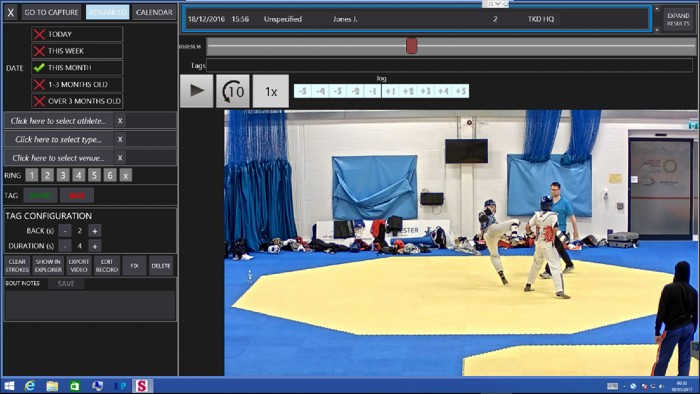
Dr. Simon Goodwill is the Head of Research in Sport and Physical Activity and Head of the Sports Engineering Research Group (SERG) at Sheffield Hallam University's Academy of Sport and Physical Activity. He holds a PhD focused on tennis ball-racket impact modeling and has collaborated with the International Tennis Federation. His expertise includes novel photogrammetry techniques, software development for athlete performance analysis, and camera calibration systems like check2d/check3d. He led projects supporting Team GB athletes in multiple Olympics, contributing to 42 medals at Rio 2016. Currently, he oversees the Advanced Wellbeing Research Centre (AWRC), applying sports performance methodologies to health research. His work integrates machine vision, data acquisition hardware, and elite athlete monitoring systems, with notable contributions to the EIS Innovation Partnership and sports tech exhibits like Le Tour Yorkshire's bike simulator. Education & Research: Simon’s PhD (modeling tennis impacts) and extensive software engineering background underpin his research. His projects span biomechanics, sports engineering, and health tech, with collaborations involving UK Sport, FIFA, and Adidas. He has developed systems used by athletes in London 2012, Rio 2016, and Glasgow 2014 Commonwealth Games. Research Themes: His work emphasizes performance analysis through photogrammetry, real-time athlete tracking, and health-related applications of sports tech. Key projects include court pace rating for the ITF, iBoxer2 boxing data tools, and the AWRC’s health innovations. Grants & Impact: The AWRC, funded by UK DoH and ESIF (£15.7M), reflects his role in translating elite athlete tech to public health. His work is cited in UK government reports on Olympic legacy and has received media attention, including BBC features on GB Boxing’s iBoxer software. Advising & Leadership: Supervised 17 PhD students on topics like machine learning in taekwondo, swimming analysis, and tennis racket dynamics. Served as External/External advisor and led 10+ Olympic cycle projects. Active in the International Sports Engineering Association as Director.
Dr. Bill Sheel is a Professor and Distinguished University Scholar at the School of Kinesiology, University of British Columbia. His research focuses on the integrative physiology of exercise, particularly respiratory and cardiovascular interactions. Email: bill.sheel@ubc.ca Office: Chan Gunn Pavilion, Room 221B, Vancouver, BC Lab: Health and Integrative Physiology Laboratory Research Interests: Dr. Sheel investigates respiratory physiology during exercise, cardiovascular modulation by breathing patterns, and human performance optimization. His work spans elite athletes, aging populations, and clinical applications. Publication Trends: Recent studies include pulmonary mechanics in exercise physiology, respiratory muscle training applications, and socio-cultural factors in sports science. Collaborative works address aging interventions and environmental influences on athletic performance. Scientific Recognition: Distinguished University Scholar, UBC Laboratory & Collaborations: Leads the Health and Integrative Physiology Laboratory at UBC, focusing on respiratory-cardiovascular integration and exercise tolerance mechanisms.
Michael Riegler is a Researcher at the AI Department, Simula Research Laboratory , focusing on interdisciplinary applications of Artificial Intelligence in healthcare, sports analytics, and multimedia systems. His work bridges Machine Learning , AI Alignment , and Applied AI across clinical and real-world domains. Key Affiliations: Simula Research Laboratory (AI Department Head) Research Themes: Explainable AI in medicine, multimodal data analysis, and AI-driven health monitoring Research Interests include: Developing AI/ML algorithms for medical imaging (e.g., polyp detection, embryo analysis) Addressing missing data challenges in healthcare through novel imputation techniques Creating multimodal virtual avatars for investigative interview training Designing edge AI systems for sports analytics and sustainable fishing Recent Publications highlight collaborations with institutions in Norway and globally, with a focus on: Medical Applications: Polyp segmentation, ECG analysis, and explainable models for disease detection Sports Analytics: Athlete performance prediction and soccer video processing Data Infrastructure: Lifelogging datasets (ScopeSense), semantic representation frameworks Labs & Teams include leadership in Simula’s AI Department and participation in projects like Medico Multimedia Task , ImageCLEF , and MediaEval workshops. His work emphasizes responsible AI innovation in public sectors and privacy-preserving systems for edge environments.
Benjamin Larkin is an Academic Dean of Management and Marketing and Co-Director of the Girard School of Business at Merrimack College. His research bridges technology, media consumption, and sports, analyzing modern consumer behavior in sports fandom and digital engagement. Ph.D. in Management from UMass Amherst M.S. in Sport Management from Southern New Hampshire University B.S. in Business Administration from the University of Maine His work focuses on Consumer Behavior , Sport Marketing , and the Intersection of Sport and Politics , particularly how technology alters traditional sports consumption patterns. Recent studies examine identity conflict in politically engaged fans, dehumanization of athletes, and the psychological impact of fantasy sports. Key trends in his publications include brand attachment , fan loyalty dynamics , collective narcissism , and media-driven consumer behavior in sports contexts. North American Society for Sport Management Research Fellow, 2024 Outstanding Professional Paper Award, Sport Marketing Association, 2018 Ph.D. Program Research Award, Isenberg School of Management, 2017 Larkin advises students in sports marketing and consumer behavior research. His work has been supported by grants from the Sport Marketing Association and Isenberg School of Management.
Tim Woodman is a Professor in Sport & Exercise at the School of Psychology and Sport Science , Bangor University. He is a leading expert in Performance Psychology , focusing on personality, stress, anxiety, and risk-taking in elite sports. His groundbreaking theory positions risk as central to human development and performance. Research Interests : Narcissism, anxiety-performance relationships, risk-taking behavior, athlete mental health, agentic emotion regulation. Scientific Contributions : Over 150 peer-reviewed publications, including 2025 studies on cricket mental health, coach support dynamics, and pressure training methodologies in elite sports. Projects : Leads the North West Air Ambulance performance psychology initiative and collaborates with Manchester City Football Club on personality-climate change research. Teaching & Supervision : Accepts PhD students interested in risk-taking, personality, and performance psychology topics.
Dr. Shirley Coyle is an Assistant Professor in the School of Electronic Engineering at Dublin City University (DCU) and Programme Chair for the BSc Global Challenges. She holds a BEng in Electronic Engineering from DCU (2000) and a PhD in Biomedical Engineering from NUI Maynooth (2005). Her career includes roles as a Telecoms Engineer at Siemens, Research Fellow at the National Centre for Sensor Research, and Team Leader of Wearable Sensors in the INSIGHT Centre for Data Analytics. She also studied part-time at the Grafton Academy for Fashion Design and later founded a consultancy in wearable technologies. Her research focuses on smart garments, wearable sensors, and sustainable textiles, with applications in healthcare, sports performance, and S.T.E.A.M. integration. Key interests include developing wearable chemical sensors, energy-autonomous sensing systems, and IoT-enabled rehabilitation devices. She has pioneered work on wearable sensors for monitoring chronic diseases, athlete training, and home rehabilitation using VR. Dr. Coyle’s work spans interdisciplinary collaboration, combining biomedical engineering with textile design. Her contributions include innovations in electrospun textiles, self-powered sensors, and sensor integration with microfluidics. She has held leadership roles in DCU’s Governing Authority and promotes STEM education through design-focused initiatives.
Jo Wood is Professor of Visual Analytics in the Department of Computer Science at City, University of London, where she has been employed since January 14, 2000. Her work bridges computer science, geographic information science, and human-computer interaction, focusing on innovative methods for visualizing complex spatial and behavioral data. Her research interests center on visual analytics , information visualization , and geovisualization , with applications in transportation, public health, crisis response, and citizen science. She investigates how interactive visual interfaces can support exploratory data analysis, decision-making, and storytelling, particularly through small multiples, faceted views, and sketch-based rendering techniques. The trends in her recent publications reflect a consistent focus on user-centered design , spatial data abstraction , and interactive exploration of multivariate datasets. Her work often integrates real-world behavioral data such as GPS tracks, cycling patterns, and crowd-sourced information to build meaningful visual narratives and support analytical reasoning. Throughout her career, Jo Wood has contributed significantly to the advancement of visual analytics through high-impact publications in top-tier venues such as IEEE Transactions on Visualization and Computer Graphics and Computer Graphics Forum. Her collaborations with researchers like Jason Dykes and Aidan Slingsby highlight her role in a vibrant research community. She has supervised numerous research projects and mentored students in visualization and geospatial analytics, though specific names are not listed in the provided text. Her work has been supported by various research grants, particularly in domains involving urban mobility, energy modeling, and crisis informatics, though grant details are not specified here. Jo Wood has also contributed to the design of visual analytics systems for applications including disease spread modeling, bicycle-hire scheme monitoring, and persuasive technology for health and leisure, demonstrating a strong commitment to impactful, interdisciplinary research.
Dr. Kris Beattie is a Lecturer in the Department of Sport and Health Science at Technological University Dublin (TU Dublin). He specializes in sports science education, coordinating modules such as Human Physiology 2, Sport & Exercise Physiology, and Applied Coaching Science. His research focuses on the physiological adaptations of strength, speed, and endurance training in athletes, particularly in endurance athletes and combat sports like boxing. Beattie holds a PhD from the University of Limerick (2012–2016), an MSc in Sports Physiology from Liverpool John Moores University (2008–2009), and a BSc (Hons) in Sport and Exercise Sciences from Ulster University (2005–2008). He is a UKSCA-accredited Strength & Conditioning coach. Beattie’s research interests include strength training modalities for sprint performance, physiological adaptations in Gaelic football and boxing, and the biomechanics of athletic movements. His work bridges theoretical and applied aspects of sports science, emphasizing practical applications in coaching and athlete development. Recent studies explore sprint testing methods in Gaelic games, strength characteristics of female athletes, and the role of maximal strength in punch impact force in boxing. His publications span peer-reviewed journals like the International Journal of Performance Analysis in Sport and Journal of Strength and Conditioning Research , with a focus on systematic reviews and empirical studies. Though no specific awards are listed, his h-index of 7 reflects growing recognition in sports physiology. Beattie actively collaborates with sports organizations and coaches to inform evidence-based training practices. He currently contributes to TU Dublin’s BSc (Hons) Sports Science with Exercise Physiology program, integrating his research into teaching. Future work likely continues exploring interdisciplinary approaches to athlete development and performance optimization.
Dr. Peter L. Latchman serves as a Professor in the Department of Health and Movement Sciences at Southern Connecticut State University. He holds a Doctorate in Applied Physiology from Columbia University and is an Overseas Fellow of the Royal Society of Medicine. His academic career spans decades of research in autonomic cardiovascular regulation with applications to diverse populations including Young adults post-COVID-19 infection Ethnic disparities in baroreflex sensitivity Autonomic dysfunction in obese children Central hemodynamic analysis Recent scholarship focuses on autonomic modulation patterns and their implications for cardiovascular health, while his teaching portfolio encompasses both graduate and undergraduate courses in exercise physiology, cardiac rehabilitation, and medical terminology. Dr. Latchman has delivered presentations at international symposia on topics including Baroreflex sensitivity in African American populations Effects of aerobic capacity on autonomic recovery Vascular physiological assessment techniques Scientific contributions include Overseas Fellowship, Royal Society of Medicine $10,000 grant for cardiovascular assessment in autistic children (2023) He maintains active research collaborations with institutions such as East China Normal University and Hong Kong Baptist University.
Barbara Gail Montero is the Rev. John A. O’Brien Professor of Philosophy at the University of Notre Dame, where she holds a faculty position in the Department of Philosophy within the College of Arts and Letters. She earned her BA from the University of California, Berkeley, and her PhD from the University of Chicago. Her research focuses on two core areas: the metaphysical relationship between mind and body, and the role of consciousness in expert action. Notably, she explores how physicalism interacts with abstract entities and how athletes defy skill plateaus through orthogonal models of attention and automaticity. Her key publications include Continuous Improvement: Intertwining Mind and Body in Athletic Expertise (2022, co-authored), A Very Short Introduction: Philosophy of Mind (2021), and Thought in Action: Expertise and the Conscious Mind (2016). She has also published influential papers on pain memory gaps, expertise-induced amnesia, and critiques of flow-state theories. Montero’s interdisciplinary work bridges philosophy with dance performance, as seen in collaborations like Curved Spacetimes: Where Friedrich Nietzsche Meets Virginia Woolf . Her teaching spans philosophy of mind, logic, and science, emphasizing neural plasticity and conscious engagement in expertise.
Babett Lobinger is a Researcher at the Institute of Psychology at the German Sport University Cologne, specializing in Performance Psychology and Applied Sport Psychology. She holds academic qualifications including Dipl.-Psych., MA Sportwiss, and Dr. in Sport Sciences. Her research focuses on Performance Psychology , Motor Control Disorders (e.g., Yips in Golf), Movement Safety in Aging , and Coaching Psychology . She has collaborated with organizations like the DFB (German Football Association) and clubs like Arminia Bielefeld and 1.FC Köln, providing sport psychological consulting and research. Key Projects include: DFG-funded studies on Yips in Golf Cross-cultural training needs analysis for football coaches Development of the Athlete Competency Questionnaire for Employability (ACQE) She teaches in the German Football Association’s (DFB) coaching academy and contributes to sport psychology curricula for trainers. Her work appears in journals like InMind and conferences such as FEPSAC.
Kimberly A. Whitler serves as the Frank M. Sands Sr. Associate Professor of Business Administration at the University of Virginia's Darden School of Business. With nearly 20 years of industry experience in general management, strategy, and marketing roles within CPG and retailing sectors, she brings practical expertise to her academic work. Her career includes significant positions at Procter & Gamble, Aurora Foods, David's Bridal, and PetSmart, where she helped build $1B+ brands including Tide, Bounce, Downy and Zest. Dr. Whitler's educational background includes: B.A. in psychology and business administration from Eureka College MBA from the University of Arizona, Eller School of Business M.S. and Ph.D. from Indiana University, Kelley School of Business Whitler is an authority on marketing strategy, brand management, and marketing performance, with particular expertise in understanding how a firm's marketing performance is affected by its C-suite and board. Her research focuses on C-level marketing management challenges, digital marketing transformation, employer branding, and the emerging field of athlete branding through NIL (Name, Image & Likeness). She has authored over 350 articles as a Forbes senior contributor and published in top journals including Harvard Business Review, Journal of Marketing, and Journal of the Academy of Marketing Science. Her award-winning publications demonstrate a consistent progression from traditional brand management topics toward more strategic considerations of marketing's role at the executive and board levels. Recent work examines digital transformation, brand purpose, and the evolving CMO role, reflecting her deep understanding of how marketing strategy intersects with organizational leadership. Whitler has received numerous professional accolades: Ranked as a Top Influencer of CMOs Named Favorite Professor of Top MBA Students in Poets and Quants Winner of Darden's Morton Award in 2018 and 2021 Finalist for Journal of Marketing's 2018 MSI/Paul H. Root Award Winner of 2017 Robert D. Buzzell Best Paper award Winner of 2020 Sheth Foundation Award As an active consultant and speaker, Whitler has worked with numerous C-level organizations including Coca-Cola, McDonald's, U.S. Department of Defense, and Gartner. She has been cited over 3,600 times in major media outlets including Wall Street Journal, New York Times, and Bloomberg, establishing herself as a leading voice in marketing strategy. Her industry experience informs her teaching and research, creating a valuable bridge between academic theory and practical application. Whitler leads research initiatives focused on marketing leadership and brand strategy, often collaborating with industry partners to ensure practical relevance of her work. Her recent projects include examining the impact of marketers on corporate boards and developing frameworks for effective marketing technology implementation, positioning her at the forefront of strategic marketing research.