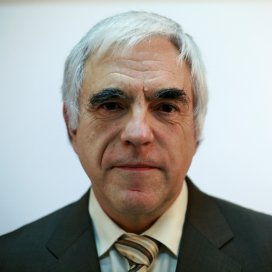
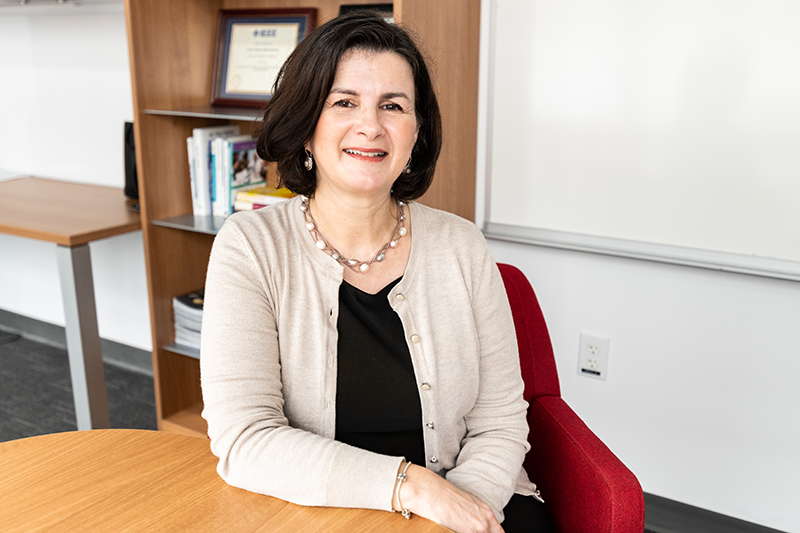
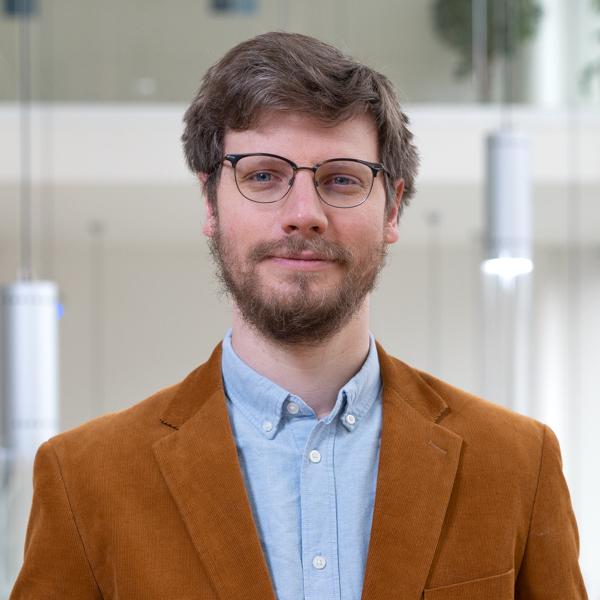
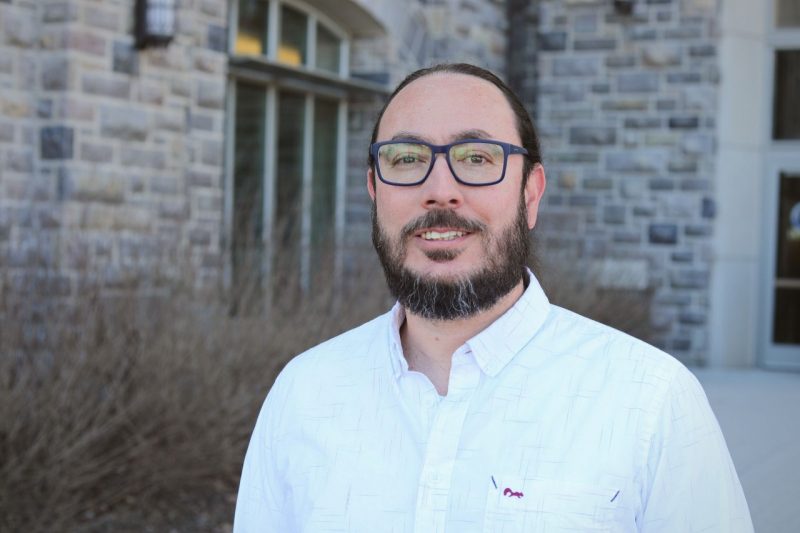
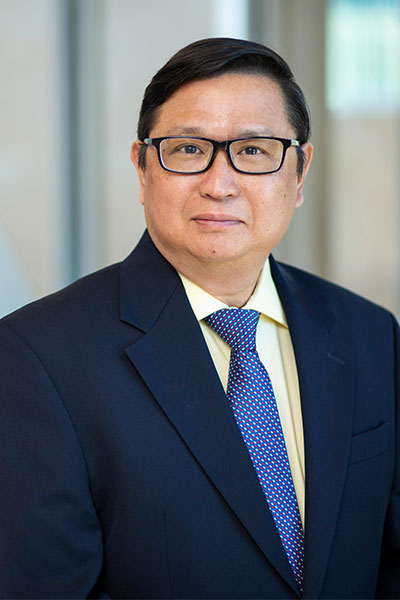
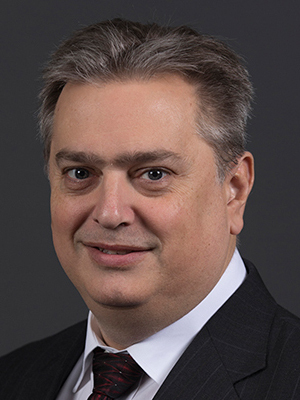
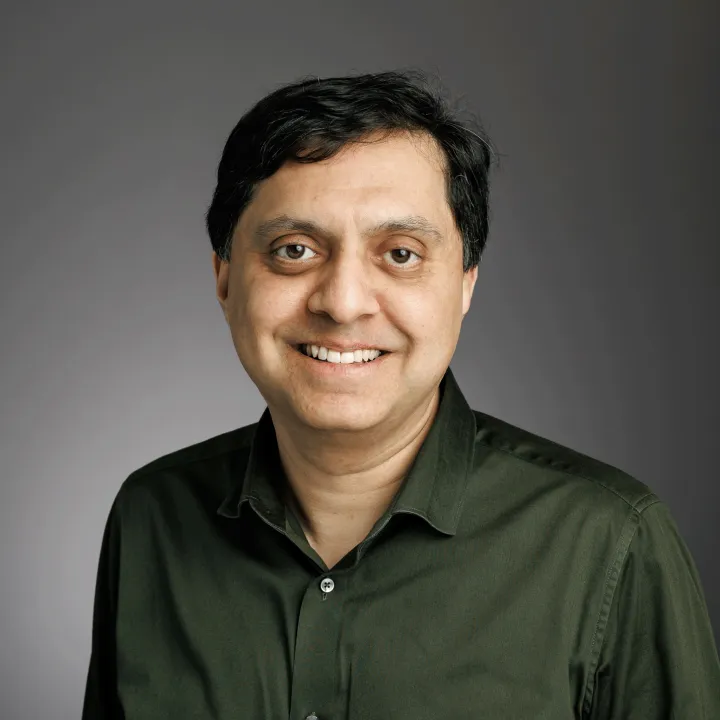
Erik Brunvand is an Associate Professor of Computer Science in the School of Computing at the University of Utah and serves as Director of the Computer Engineering Program, a separately accredited cross-departmental degree program. His research expertise spans: Computer architecture and VLSI implementation Special-purpose ray tracing hardware for realistic graphics Asynchronous system/circuit design frameworks Arts/technology interdisciplinary collaborations Innovative computer science pedagogy Professor Brunvand pioneered the "Embedded Systems and Kinetic Art" course with Department of Art faculty, where CS and art students co-create computer-controlled sculptures. He developed the general-education course "Making Noise: Sound Art and Digital Media" using circuit-bending techniques, and co-founded Saltgrass Printmakers—a nonprofit studio/gallery exhibiting his kinetic artworks including at ACM SIGGRAPH 2014. His academic leadership includes organizing ACM GLSVLSI 2012 and IEEE Async conferences (2011, 2001, 1994), delivering ACM SIGGRAPH courses (2013-2015), and keynotes at major venues including ACM GLSVLSI 2015 and IEEE Async 2014. His TEDx Salt Lake City 2015 talk addressed technological literacy through hands-on electronics education.
Gérard Berry is a Professor at the Collège de France, holding the permanent Algorithms, Machines, and Languages chair since 2012. He previously held the Computer Sciences and Digital Technologies annual chair in 2007-2008 and 2009-2010. He is a member of the Académie des Sciences , Académie des Technologies , and Academia Europaea . His career spans academia at École des Mines de Paris and Inria, and industry as Chief Scientist at Esterel Technologies. His research focuses on formal verification of programs and circuits , parallel and real-time programming , and synchronous programming languages . He created the Esterel language and its industrial compiler, which became foundational for safety-critical systems in avionics and hardware design. His recent work includes the Hop and HipHop languages for multitier web orchestration. His publications highlight trends in formal methods , real-time systems , and program verification . These works bridge theoretical computer science with practical applications in embedded systems and digital transformation. Scientific Awards: CNRS Gold Medal (2014) Chevalier de la Légion d'Honneur (2012) Great Prize of EADS Foundation (2005) Science and Defense Award (1999) Gérard Berry has supervised 17 PhD theses and contributed to numerous academic collaborations. He co-founded Inria's evaluation committee and served on scientific boards for institutions like Institut Pasteur and IRCAM.
Mykhailo Igorovich Kotsur is an Associate Professor at the Department of Electrical and Electronic Devices within the Electrical Engineering Faculty of Zaporizhzhia National Technical University. With over 14 years of academic service since 2011, he has established himself as a specialist in electromechanics and electromagnetic field modeling. His work bridges theoretical research with practical applications in industrial power systems, particularly focusing on energy efficiency improvements in electrical machinery and power distribution systems. Education: 2008: Graduated from Zaporizhia National Technical University with a degree in "Electrical Machines and Devices" 2012: Defended PhD thesis at Sevastopol National Technical University in specialty 05.09.03 "Electrical Complexes and Systems" on "Improving the Efficiency of the Pulse Regulation System of an Asynchronous Motor with a Phase Rotor" Professor Kotsur's research focuses on the investigation of electromagnetic, energy and thermal processes in electromechanical complexes and systems. His work particularly addresses challenges in electric drive systems, power quality issues related to harmonic distortions, and energy efficiency optimization in industrial applications. He has developed novel approaches for modeling electromagnetic fields in electrical machines and power distribution systems, with special attention to busbar systems and crane power supply networks. His methodologies combine theoretical analysis with practical field simulation techniques to solve real-world engineering problems. Analysis of Professor Kotsur's 15 most recent publications reveals a strong trend toward advanced electromagnetic field simulation methods applied to industrial power systems. His work consistently focuses on improving the accuracy of parameter determination for electrical systems, particularly busbar configurations and electric drive components. A significant portion of his recent research addresses the impact of higher current harmonics on industrial equipment performance, with practical applications in overhead crane systems and workshop power networks. His publications demonstrate a progression from fundamental electromagnetic modeling to increasingly sophisticated applications in energy-efficient industrial systems. Professor Kotsur actively contributes to academic training through teaching courses including "Automation of the design of electrical and electronic devices," "Methodology of scientific research in electromechanics," and "Optimization of engineering and design solutions in electromechanics." He has developed numerous instructional materials and laboratory guides for students specializing in electrical engineering and electromechanics. His work with students extends to supervising qualification projects and providing guidance on research methodology in the field of electromechanical systems. His research has resulted in multiple Ukrainian patents related to electric drive systems and control mechanisms, demonstrating the practical application of his theoretical work. These innovations focus on improving energy efficiency in industrial applications, particularly in systems involving asynchronous motors with phase rotors.
Марина Володимирівна Антонова serves as Senior Lecturer at Zaporizhzhia Polytechnic National University's Faculty of Electrotechnics, Department of Electrical Machines since 2016. Holding a Master's degree with honors in Electromechanical Automation Systems and Electric Drives from Dniprodzerzhyn State Technical University (2008), she specializes in power electronics and industrial drive systems. Her research focuses on power electronics applications in industrial electromechanical systems, particularly centrifugal compressor control and drive optimization. Key interests include dynamic modeling of electromechanical systems, mathematical simulation of compression processes, and energy-efficient control algorithms for industrial drives. Her work bridges theoretical electrical engineering with practical industrial implementation. Analysis of her publications reveals consistent focus on compressor-drive system integration (2009-2014), demonstrating expertise in both theoretical modeling and hardware implementation. The research trajectory shows progression from basic control systems to sophisticated dynamic modeling and thermodynamic analysis, reflecting deepening technical specialization in industrial electromechanics. Proficient in Ukrainian, English, and Russian, she teaches core courses including Fundamentals of Power Electronics , Electrical Appliances , and Elements of Power Electronics Devices and Systems . Her scholarly work is indexed through ORCID (0000-0002-8480-4414), Scopus (57202603690), Web of Science, and Google Scholar.
Diana Marculescu is Department Chair, Cockrell Family Chair for Engineering Leadership #5, and Professor, Motorola Regents Chair in Electrical and Computer Engineering #2 at the University of Texas at Austin. She previously served as the David Edward Schramm Professor at Carnegie Mellon University, where she was Founding Director of the College of Engineering Center for Faculty Success (2015-2019) and Associate Department Head for Academic Affairs (2014-2018). Her educational background includes: Dipl.Ing. degree in computer science from Polytechnic University of Bucharest, Romania (1991) Ph.D. degree in computer engineering from University of Southern California, Los Angeles (1998) Dr. Marculescu's research bridges hardware design and machine learning, focusing on energy- and reliability-aware computing, hardware-aware machine learning, and computing for sustainability. She leads the EnyAC (ENergY Aware Computing) research group and founded the iMAGiNE Consortium for industry-university collaboration in engineering intelligent machines from cloud to edge. Her work addresses the critical need for efficient AI systems across diverse hardware platforms. Analysis of her recent publications reveals a strong trend toward hardware-efficient machine learning, with emphasis on neural architecture search, model compression, and energy-aware deep learning systems. Her research tackles the fundamental challenge of co-designing machine learning models and hardware to achieve optimal performance and efficiency. Dr. Marculescu has received numerous prestigious awards: National Science Foundation Faculty Career Award (2000-2004) ACM SIGDA Technical Leadership Award (2003) Carnegie Institute of Technology George Tallman Ladd Research Award (2004) IEEE Circuits and Systems Society Distinguished Lecturer (2004-2005) Australian Research Council Future Fellowship (2013-2017) Marie R. Pistilli Women in EDA Achievement Award (2014) Barbara Lazarus Award from Carnegie Mellon University (2018) Fellow of ACM, IEEE, and AAAS Dr. Marculescu has advised more than a dozen doctoral students, 35+ master students, and more than two dozen undergraduates. Her research has been supported by significant grants including the NSF Career Award and Australian Research Council Future Fellowship. She has served as Technical Program Chair and General Chair for multiple major conferences including ACM/IEEE International Symposium on Low Power Electronics and Design, IEEE/ACM International Symposium on Networks-on-Chip, and IEEE/ACM International Conference on Computer-Aided Design. She leads the EnyAC research group which focuses on sustainable computing and computing for sustainability, and founded the iMAGiNE Consortium to foster industry-university collaboration in engineering intelligent machines from cloud to edge.
Nico Döttling is a faculty member at the CISPA Helmholtz Center for Information Security, where he leads research in cryptographic foundations. His work focuses on advancing theoretical and practical aspects of modern cryptography, with particular emphasis on homomorphic encryption, post-quantum cryptography, and secure multi-party computation. Dr. Döttling received his PhD in Computer Science from the Karlsruhe Institute of Technology in 2014 under the supervision of Jörn Müller-Quade. Prior to joining CISPA in 2018, he held positions as an Assistant Professor at Friedrich-Alexander University Erlangen-Nuremberg (2017-2018), a postdoctoral researcher at UC Berkeley (2016-2017) supported by a DAAD fellowship, and a postdoctoral researcher at Aarhus University's Cryptography Group (2014-2016) working with Ivan Damgård and Jesper Buus Nielsen. Dr. Döttling's research centers on the theoretical foundations of cryptography with practical applications. His work spans public-key encryption, communication-efficient secure multi-party computation, homomorphic encryption, and post-quantum cryptographic systems. He has made significant contributions to laconic cryptography, time-lock puzzles, and verifiable delay functions, with his ERC Starting Grant project 'Next Generation Laconic Cryptography (LACONIC)' driving innovation in communication-efficient cryptographic protocols. His research bridges theoretical computer science with practical security applications, addressing fundamental questions while developing usable cryptographic primitives. Analysis of Dr. Döttling's recent publications reveals a strong focus on efficient cryptographic primitives with particular attention to communication complexity, security proofs, and practical implementations. His work spans theoretical foundations of cryptography, post-quantum security, and novel applications of cryptographic techniques to real-world problems. A notable trend is his exploration of laconic cryptography - developing protocols with minimal communication overhead - which has applications in resource-constrained environments and large-scale distributed systems. Dr. Döttling's scientific achievements have been recognized with several prestigious awards: ERC Starting Grant for the project 'Next Generation Laconic Cryptography (LACONIC)' (2021) Best Paper Award at Crypto for 'Identity-Based Encryption from the Diffie-Hellman Assumption' (2017) Postdoctoral Fellowship at UC Berkeley sponsored by DAAD (2016) Best Paper Award at ProvSec 2015 for 'From Stateful Hardware to Resettable Hardware Using Symmetric Assumptions' (2015) Biennial dissertation award for best dissertation in computer science at Karlsruhe Institute of Technology (2014) As a faculty member at CISPA, Dr. Döttling leads an active research group focused on cryptographic foundations. His ERC Starting Grant provides significant research funding to advance laconic cryptography. While specific information about his advisees is not provided in the source material, his extensive publication record with multiple co-authors suggests active collaboration with students and researchers. His work bridges theoretical cryptography with practical security applications, making contributions that advance both academic understanding and real-world cryptographic implementations. Dr. Döttling leads the Algorithmic Foundations and Cryptography research group at CISPA, focusing on developing theoretically sound yet practically efficient cryptographic protocols. His team explores innovative approaches to longstanding cryptographic challenges, particularly in making cryptographic protocols more communication-efficient without sacrificing security. Current research directions include post-quantum cryptographic systems, verifiable delay functions, and novel applications of homomorphic encryption to privacy-preserving computation.
Bruno Delord is a University Professor of Computational Neuroscience at Sorbonne University, affiliated with the ACID team. He works in Tower 65, Room 307, at 4, Place Jussieu, Paris. Education: Ecole Normale Supérieure de Lyon (ENS-Lyon) Ph.D. in Computational Neuroscience (Sorbonne University, 1993) Habilitation in Computational Neuroscience (Sorbonne University, 2010) His research focuses on biophysical modeling of neurons and networks, with emphasis on neuromodulation, plasticity, and collective dynamics underlying cognition in rodents and primates. He has developed models for recurrent networks, attractor dynamics, and spike-timing dependent plasticity. Key trends in his publications include studies on dopamine signaling , endocannabinoid-mediated plasticity , inhibitory network control , and computational models of cortical and basal ganglia circuits . Scientific awards: Pierre Delattre Prize (French Society of Theoretical Biology, 1998) Delord collaborates extensively with researchers like Emmanuel Procyk, Hugues Berry, and Bruno Cessac. He contributes to experimental-theoretical frameworks bridging molecular pathways and cognitive function. He is part of the ACID team at Sorbonne University's Institute for Intelligent Systems and Robotics (ISIR), focusing on interdisciplinary research in neural dynamics.
Juan David Ortega Alvarez is an Assistant Professor in Engineering Education at Virginia Tech's College of Engineering. He holds a Ph.D. in Engineering Education (Purdue University, 2019), M.S. in Process Engineering and Energy Technology (Hochschule Bremerhaven, 2006), and B.S. in Process Engineering (Universidad EAFIT, 2001). His teaching philosophy emphasizes authenticity, feedback, and respect, focusing on real-world applications and student-centered learning. He teaches courses in process simulation, automatic control systems, and separation processes. Research interests include the scholarship of teaching and learning, simulation tools for complex concepts, and engineering faculty development. He has published extensively on pedagogical strategies, online learning adaptation, and team dynamics in engineering education. Notable awards include the Bilsland Dissertation Fellowship (2017) and Colciencias Scholarship for Ph.D. studies. Professional affiliations include ASEE and SHPE. His work bridges industry experience with academic innovation, particularly in fostering equitable team environments and leveraging technology for conceptual mastery.
Oenardi Lawanto is a Professor in the Department of Engineering Education at Utah State University, part of the College of Engineering. He holds a PhD in Human Resource Education from the University of Illinois at Urbana-Champaign (2008), an MS in Electrical Engineering from the University of Dayton (1988), and a BS in Electrical Engineering from Iowa State University (1986). His research focuses on cognition in engineering education, e-learning, problem-solving, and AI-based learning tools. He has been recognized with prestigious awards including the NSF CAREER Award (2011) and multiple teaching excellence honors. Dr. Lawanto’s teaching spans courses such as Fundamental Electronics for Engineers and The Role of Cognition in Engineering Education. He has mentored numerous graduate students, including Linda Ahlstrom and Harry B. Santoso. His research explores topics like self-regulated learning strategies, student engagement in online environments, and systems thinking in engineering design. Over 30 journal articles highlight his contributions to engineering education and cognitive science. Notable achievements include developing an online certificate program in engineering education and advancing understanding of student motivation during the pandemic. His work bridges traditional engineering pedagogy with modern digital tools, emphasizing metacognition and adaptive learning strategies.
Professor Ivan Bjerre Damgård is affiliated with the Department of Computer Science at Aarhus University, where he holds a full academic rank of Professor. His primary research focus lies in cryptography, secure communication, and privacy-preserving technologies. Key areas include multi-party computation (MPC), homomorphic encryption, and differential privacy. He has contributed to foundational work on secure protocols for dynamic networks, threshold cryptosystems, and resilient distributed systems. His recent publications (2023–2024) emphasize advancements in MPC protocols with optimized communication and round complexity, secure computation in unstable networks, and privacy-preserving techniques. Notable work includes 'Phoenix' (2023) addressing network instability and 'Broadcast-Optimal MPC' frameworks minimizing setup requirements. Professional activities include organizing conferences like TCC 2009 and ICALP 2008, as well as delivering lectures on cryptography and IT security. No scientific awards are explicitly listed in the provided information. His research collaborates extensively with global institutions, reflected in co-authored papers with researchers like Agarwal, Braun, and Ciampi. Ongoing work appears to prioritize practical implementations of theoretical cryptographic constructs in real-world distributed environments.
Jakob Lechner is an External Lecturer in the Computer Engineering department at Vienna University of Technology. His work focuses on fault-tolerant digital circuit design, asynchronous systems, and robust hardware architectures. Education : PhD in Computer Engineering (2014), Diploma in Computer Engineering (2008) Research interests include: Fault-tolerant computing Asynchronous circuit design Transient error mitigation in FPGAs Triple Modular Redundancy (TMR) Metastability containment Single Event Transients (SET) resilience His publications (2006–2018) emphasize fault injection techniques, robust GALS circuits, and asynchronous communication protocols. Key projects include Intel CARS (2017–2019) on delay-insensitive codes. Supervision : Guided K. D. Pados' thesis on AXI4 bus systems (2013).
Dr. Paul Beckett is an Honorary Associate Professor in the School of Engineering at RMIT University. His research focuses on cutting-edge areas such as computer architecture, nanoscale microelectronics, digital logic design, and photonics. He specializes in low-power circuit design, FPGA-based systems, and sensor technologies with applications in healthcare and environmental monitoring. Beckett's teaching interests include embedded systems, VLSI design, and hardware description languages (VHDL). His research spans disciplines such as electronics, communications engineering, and distributed computing, with notable contributions to null convention logic (NCL) circuits, plasmonic sensors, and spectral imaging systems. He has collaborated on innovative projects like the TIARA apnea monitoring system and wearable health technologies. His recent work emphasizes interdisciplinary applications, including healthcare technology and biomimetic optical systems. Notable publications include advancements in gas sensing (H2S detection), THz spectrum analysis, and machine learning optimization for embedded systems. Beckett actively supervises research projects in asynchronous computing architectures and nanotechnology.
Dr. Robert Woodley is an Associate Teaching Professor and Advising and Recruiting Specialist in the Department of Electrical and Computer Engineering at Missouri University of Science and Technology (Missouri S&T). He joined the faculty in January 2018, bringing 14 years of industry experience including co-founding a company. His role emphasizes academic advising, course redesign, and student recruitment. He holds a PhD, MS, and BS in Electrical Engineering from Missouri S&T. Research interests include Computational Intelligence, Embedded Systems, Digital Logic, and Control Systems. He co-authored a textbook for CpE 2210 and developed an online lab for digital logic courses. Dr. Woodley restructured the CpE 2210 course into an online format during the pandemic, introduced entrepreneurial components in senior design projects, and uses Kahoot! for interactive circuits education. He serves as IEEE Rolla Subsection treasurer and has received notable awards: 2023 Dean’s Educator Award, 2022 IEEE Outstanding Educator, and 2022 Missouri S&T Faculty Achievement Award. His industry roles include Senior Scientist at Triplet Tech Corporation and 21st Century Systems, Inc.
Sylvain Sené is a Professor of Computer Science at Aix-Marseille University (AMU), affiliated with the Department of Computer Science and Interactions (DII) and the Computer Science and Systems Laboratory (LIS). He leads the ANR-funded project FANs (Foundations of Automata Networks) and focuses on discrete mathematics, theoretical computer science, and computational properties of automaton networks. His research bridges abstract computational models with applications in biology, particularly gene regulatory networks and cellular reprogramming. Research Interests: Automaton networks, Boolean networks, and cellular automata Computational complexity and dynamical systems Discrete mathematics and theoretical computer science Applications in systems biology and genetic networks Key Projects: Principal investigator of the ANR project FANs (2019–2023), focusing on advancing automata network theory Collaborations with CNRS, Chilean universities, and international institutions Advising & Grants: Directed PhD students including Pacôme Perrotin and Martín Ríos Wilson Secured funding through ANR and other national/international grants Labs & Teams: LIS (Computer Science and Systems Laboratory), collaborating with interdisciplinary teams in biology and mathematics.
Rajit Manohar is the John C. Malone Professor of Electrical & Computer Engineering at Yale University, with appointments in Applied & Computational Mathematics and Computer Science. He is a core member of the interdisciplinary Computer Systems Lab (CSL), which bridges ECE and CS departments. His research focuses on asynchronous VLSI design, neuromorphic computing, and hardware-software co-design. Education: Manohar holds a B.S., M.S., and Ph.D. from the California Institute of Technology. His academic career spans over two decades, with notable contributions to asynchronous circuit theory and neuromorphic engineering. Research Interests: Manohar's work emphasizes energy-efficient asynchronous architectures, concurrency control, and biologically inspired computing. He explores topics like formal methods for circuit verification, cognitive systems, and dynamic sensor networks. His lab develops tools like Fluid (asynchronous synthesis) and Neurobench (neuromorphic benchmarking). Publications: Recent work includes advancements in asynchronous logic synthesis (Maelstrom), neuromorphic frameworks (Neurobench), and scalable brain-computer interfaces (SCALO). His research often intersects NSF-funded projects in energy-aware computing and neuromorphic systems. Awards: Inaugural Misha Mahowald Prize (2025), MIT TR35 (2000s), IBM Goldberg Award (2023) Grants & Labs: Manohar leads NSF-supported initiatives in carbon-aware networking and neuromorphic hardware. The Computer Systems Lab collaborates across disciplines to advance sustainable computing and neuro-inspired architectures.