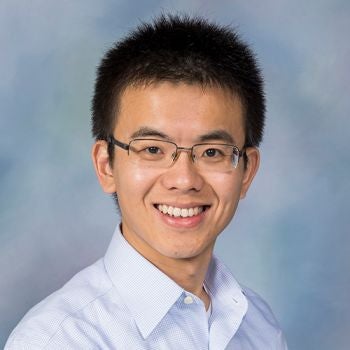
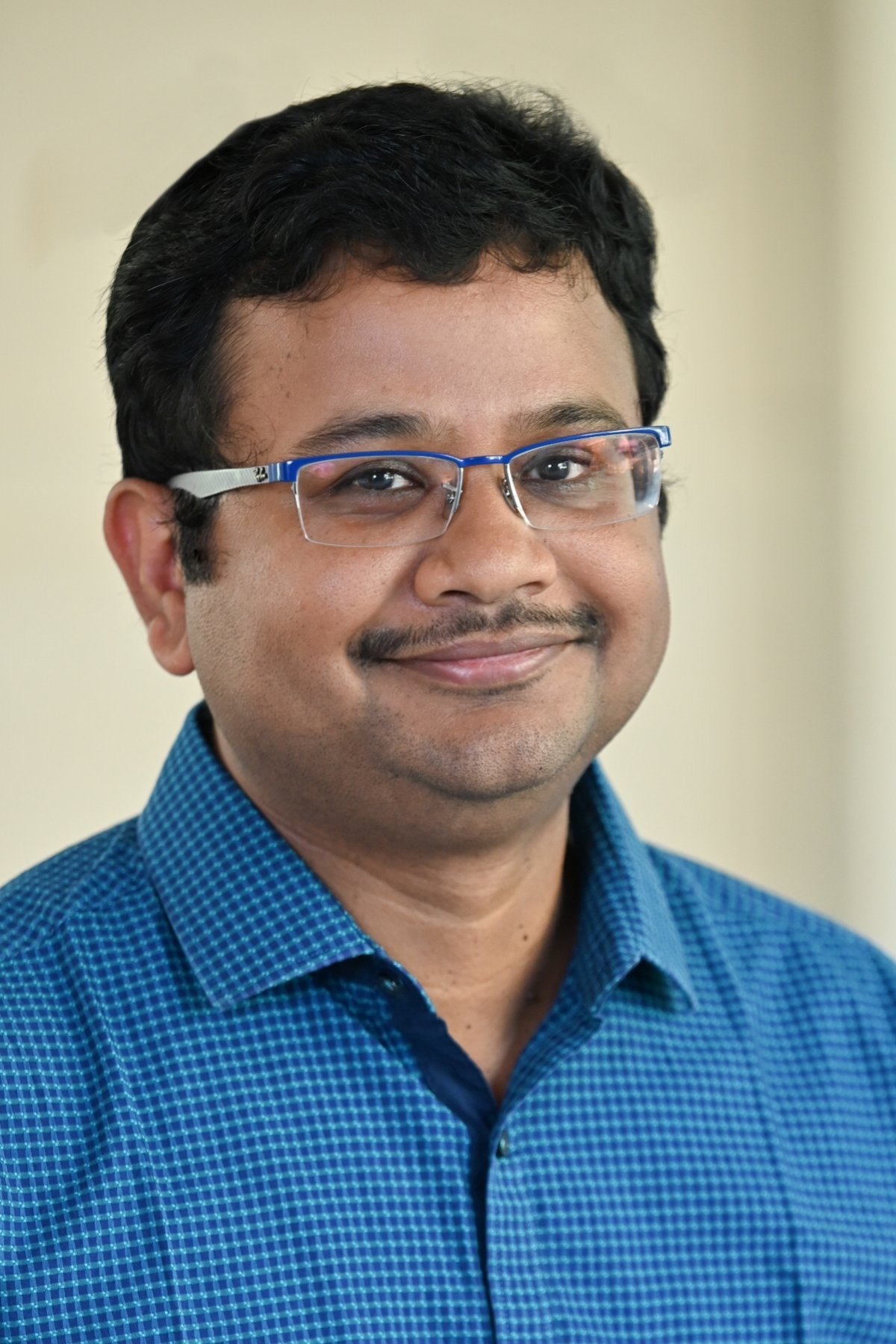
Harold D. Chiang is an Assistant Professor in the Department of Economics at the University of Wisconsin-Madison. His research focuses on econometric theory and methods, particularly robust inference techniques for clustered and network data, machine learning applications, and causal inference frameworks like regression discontinuity/kink designs. He employs computational statistics and asymptotic theory to address methodological challenges in high-dimensional and complex datasets.
Meng Li is the Noah Harding Associate Professor of Statistics at Rice University's School of Engineering. He specializes in Bayesian analysis, machine learning, and statistical theory. His research bridges methodological development and applications in biomedical sciences, materials informatics, and neuroimaging. Li holds a Ph.D. from North Carolina State University and a B.S. from Sun Yat-sen University. He has been recognized with awards including the 2020 Rice Engineering Excellence Award and the Ralph E. Powe Junior Faculty Enhancement Award. Li's research focuses on probabilistic modeling of complex data such as images, functional data, and networks. His funded projects include AI frameworks for pancreatic cancer biomarkers and Bayesian spatiotemporal modeling of marine ecosystems. He collaborates with institutions like Houston Methodist and Baylor College of Medicine on medical applications. His teaching includes advanced courses like Bayesian Statistics and Advanced Bayesian Inference. He advises over 30 students, many of whom have pursued academic and industry roles. Li serves as an associate editor for Bayesian Analysis and the new ACM Transactions on Probabilistic Machine Learning.
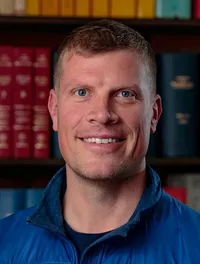
Yuxin Chen is a Professor at the University of Pennsylvania , holding joint appointments in the Department of Statistics and Data Science and the Department of Electrical and Systems Engineering . Prior to UPenn, he was an Assistant Professor at Princeton University (2017-2021) and a Postdoctoral Researcher at Stanford University (2015-2017). His research spans statistics, optimization, reinforcement learning theory, diffusion models, and information theory , with a focus on theoretical foundations and practical algorithms for machine learning. Education : Ph.D. in Electrical Engineering (Stanford, 2015), M.S. in Statistics (Stanford, 2013), M.S. in Electrical and Computer Engineering (UT Austin, 2010), B.E. in Electrical/Microelectronics (Tsinghua, 2008). Research Interests encompass theoretical and applied aspects of machine learning, including nonconvex optimization , sample complexity analysis , low-dimensional adaptation , and generative modeling . His work bridges mathematical rigor with real-world applications, particularly in scientific imaging and high-dimensional data analysis. Scientific Awards include the SIAM Activity Group on Imaging Science Best Paper Prize (2024) Alfred P. Sloan Fellowship (2022) NSF Career Award (2022) Google Research Scholar Award (2022) IEEE Transactions on Power Electronics Prize Paper Award (2024) Advising and Grants : He has mentored numerous students who have transitioned to academic roles at institutions like UIUC and UW-Madison. His research is supported by grants from the NSF , Amazon , and Google , with recent projects focusing on controllable diffusion models and efficient reinforcement learning algorithms .
Grace Y. Yi is a Professor and Tier I Canada Research Chair in Data Science at the University of Western Ontario, holding a joint appointment in the Departments of Statistical & Actuarial Sciences and Computer Science. She previously served at the University of Waterloo (2000-2019) and earned degrees from Sichuan University (B.Sc., M.Sc. in Mathematics), York University (M.Sc. in Statistics), and the University of Toronto (Ph.D. in Statistics). Her research focuses on statistical methodology for missing/mismeasured data, biostatistics, causal inference, and machine learning. She has authored influential monographs and co-edited major handbooks in her field. Recognized for leadership, she served as SSC President (2021-2022) and holds editorial roles at top journals. Awards include the SSC Gold Medal (2025), CRM-SSC Prize (2010), and Fellowships from the Institute of Mathematical Statistics and American Statistical Association. Her doctoral thesis (2000) under Don Fraser explored asymptotic distributions. She has supervised 23 Ph.D. students, three of whom won the Pierre Robillard Award. She mentors actively and advocates for statistical education globally, including founding the ICSA Canada Chapter. Her work bridges statistical theory and modern machine learning challenges like label noise and domain adaptation.
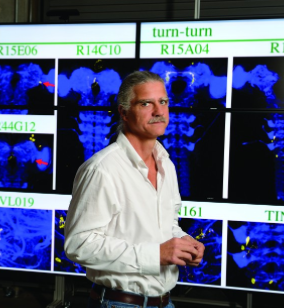
Prof. Mathias Drton holds the Chair of Mathematical Statistics at the Technical University of Munich (TUM), within the Department of Mathematics and School of Computation, Information and Technology. His research focuses on graphical models, algebraic statistics, causal inference, and multivariate data analysis. He has authored numerous publications in top-tier journals and conferences, including work on conditional independence, sparse factor analysis, and causal discovery in linear models. Drton has supervised a large number of theses, mentoring students in areas like high-dimensional statistics, graphical models, and causal inference. He is actively involved in teaching advanced courses such as 'Graphical Models in Statistics' and 'Fundamentals of Mathematical Statistics.' His academic contributions span theoretical developments in statistical methodology and computational tools, including R packages like SEMID and symRC . Drton collaborates internationally, contributing to projects like the TUM-ICL Mathematical Sciences Hub and Exzellenzcluster MCQST. His work bridges algebraic methods with statistical challenges, addressing identifiability in latent variable models and robust graphical modeling under non-Gaussian assumptions. Recent research emphasizes causal structure learning under partial homoscedasticity, distribution-free independence tests, and multi-domain causal representation learning. Drton’s lab actively explores applications in genomics, epidemiology, and machine learning, leveraging both theoretical rigor and practical computational methods.
Malay Ghosh is a Distinguished Professor in the Department of Statistics at the University of Florida. He holds a B.A. (1962) and M.A. (1964) in Statistics from Calcutta University, and a Ph.D. (1969) in Statistics from the University of North Carolina at Chapel Hill. His research focuses on Bayesian statistics, small area estimation, and survey sampling methodologies. Ghosh has contributed extensively to statistical theory and applications, including foundational work in probability matching priors and generalized linear models for small area estimation. Research Interests : His key areas include advanced statistical modeling, methodological developments in survey sampling, and Bayesian approaches to complex data analysis. His work bridges theoretical rigor with practical applications in diverse fields requiring precise estimation techniques. Awards: Fellow, American Statistical Association Fellow, Institute of Mathematical Statistics Elected Member, International Statistical Institute Recipient of TIP (1994) and PEP (1996) Awards Editorial Roles: Editor of Sequential Analysis (since 1996), Co-Editor of Sankhya (since 2000), and Associate Editor of the American Statistician (since 2000). His editorial contributions reflect his leadership in advancing statistical discourse.
Ye Zhisheng is the Dean’s Chair and Associate Professor in the Department of Industrial Systems Engineering & Management at the National University of Singapore (NUS). His research focuses on reliability engineering, inventory control, emergency response systems, and statistical modeling. He holds a PhD in Industrial and Systems Engineering from NUS, along with a BEng in Material Science and Engineering and a BEco in Economics from Tsinghua University. His work emphasizes practical applications in mission-critical systems, predictive maintenance, and data-driven decision-making. Current research initiatives include optimal maintenance policies for manufacturing systems, degradation analysis of bearings, and federated learning approaches for battery lifecycle prediction. He has pioneered methods for integrating physics-informed neural networks into prognostics and health management (PHM) systems. Key technical contributions span advanced statistical methodologies like sieve estimation for survival data, phase-type distributions modeling, and condition-based maintenance optimization. His interdisciplinary approach bridges operations research, mechanical engineering, and computer science to address complex reliability challenges. Recent projects include resilient consensus-based power grid management and contamination source identification frameworks. Notable collaborations involve developing intelligent cross-domain fault diagnosis systems using transformer networks and advancing the Internet of Federated Things (IoFT) for distributed data analytics. His work has been applied in aerospace, telecommunication infrastructure, and medical emergency response systems.
Yannick BARAUD is a Full Professor in Mathematics at the University of Luxembourg, leading the group 'Developing Contemporary Mathematical Statistics' within the Department of Mathematics. He holds the ERA-Chair 'SanDAL' in Mathematical Statistics and Data Science, funded by the European Commission. His research focuses on robust estimation, model selection, hypothesis testing, and nonparametric methods. He serves as the Study Programme Director for the Master in Data Science and has held academic positions at the University of Nice Sophia Antipolis and CNRS. His career includes roles as a researcher at École Normale Supérieure (Paris) and a lecturer at the same institution. He earned his PhD from Université Paris-Sud and studied at École Normale Supérieure de Cachan. His work emphasizes rigorous statistical methodologies, including rho-estimation and robust Bayes-like approaches. Notable contributions include advancements in density estimation under shape constraints and robust regression techniques. He has published extensively on topics such as loss functions, empirical processes, and statistical inference, with applications in epidemiology and data science. His leadership in the SanDAL initiative underscores his commitment to bridging mathematical statistics and practical data science challenges. Collaborations and grants further highlight his role in advancing interdisciplinary research.
Dr. Janis Nötzel is a senior researcher at the Chair of Theoretical Information Technology (Technische Universität München) and leads his independent Emmy Noether research group. Previously, he held a postdoctoral position at Universitat Autónoma de Barcelona and contributed to 5G practical implementations at TU Dresden's 5G Lab. His research spans quantum information theory, physical layer security, and machine learning applications. Key focuses include Quantum channel capacities under adversarial conditions Entanglement-assisted communication Quantum software frameworks (QuNetSim, QuReed) Interplay between classical and quantum communication Security analysis for 6G networks Resource optimization in quantum systems Recent publications (2023-2025) showcase innovations in Quantum satellite communication architectures Hybrid quantum-classical clustering algorithms Photonic processor instability modeling Covert capacity of compound channels Quantum key distribution resilience Free-space Bessel beam communication He actively collaborates with 6G-life research hub and contributes to quantum network simulation tools. Grants include funding from DFG (Leibniz Program), BMBF (6G-life, Q.Link.X), and StMWi (6G Zukunftslabor Bayern).
Richard Nickl is a Professor of Mathematical Statistics at the University of Cambridge, affiliated with the Department of Pure Mathematics and Mathematical Statistics (DPMMS) and the Statistical Laboratory. His research focuses on high-dimensional inference, Bayesian nonparametrics, statistics for partial differential equations, and inverse problems. He has held significant grants, including an ERC Advanced Grant (2024–2029) and an EPSRC Programme Grant (2022–2027). His work bridges statistics, probability, and analysis, with contributions to theoretical foundations and computational methods in non-linear inverse problems. Key research interests include Bayesian posterior consistency, statistical inference for diffusions, and polynomial-time algorithms for high-dimensional posteriors. Notable publications include foundational monographs such as Mathematical foundations of infinite-dimensional statistical models (2016), which earned a PROSE Award, and recent advancements in Bayesian nonparametric inference for McKean-Vlasov models (2025). His group organizes workshops, such as the 2024 Statistical Aspects of Non-Linear Inverse Problems conference. Awards: 2017 PROSE Award in Mathematics. Grants: ERC Advanced Grant, EPSRC Programme Grant. Lab/Team: Research Group in Mathematical Statistics at DPMMS, focusing on inverse problems and Bayesian methodology.
Pragya Sur is an Assistant Professor of Statistics at Harvard University and currently on leave as a Visiting Professor at MIT’s Laboratory for Information and Decision Systems (LIDS). Her research focuses on high-dimensional statistics, machine learning, and artificial intelligence, particularly in overparametrized models, causal inference, and learning under distribution shifts. She has held postdoctoral positions at Harvard’s Center for Research on Computation and Society (hosted by Cynthia Dwork) and was a Simons Institute Long-Term Participant at UC Berkeley. She earned her Ph.D. in Statistics from Stanford University under Emmanuel Candès, and completed her B.Stat and M.Stat at the Indian Statistical Institute, Kolkata. Sur’s work has been supported by NSF awards, the Eric and Wendy Schmidt Fund, and the William F. Milton Fund. She was named an International Strategy Forum (ISF) Fellow (2023) and led the Institute of Mathematical Statistics (IMS) New Researchers Group (2022–2024). She serves as an Associate Editor for Statistical Science and Guest Co-Editor for a special issue on AI and statistics. Her research contributions span theoretical guarantees for machine learning, transfer learning, and debiasing techniques in high-dimensional inference. Awards: NSF CAREER Award, Theodore W. Anderson Dissertation Award, Ric Weiland Fellowship Education: Ph.D. in Statistics (Stanford, 2019); M.Stat (ISI Kolkata, 2014); B.Stat (ISI Kolkata, 2012) Professional Roles: Associate Editor, Statistical Science ; ISF Fellow (2023); former IMS New Researchers Group Lead Her current research emphasizes statistical theory for modern machine learning, including foundational work on overparametrized models and robust inference across heterogeneous environments.
Bruce E. Hansen is the Mary Claire Aschenbrener Phipps Distinguished Chair and Trygve Haavelmo Professor of Economics at the University of Wisconsin-Madison, Department of Economics. He maintains an active research program with publications extending through 2025, demonstrating his continued prominence in econometric methodology. His research interests include: Econometric theory and methodology Time series analysis and forecasting Model selection, averaging, and shrinkage techniques Threshold and structural change models Statistical inference for clustered and dependent data Hansen's recent work focuses on innovative approaches to model averaging, standard error estimation for complex data structures, and unit root testing. His publications demonstrate both theoretical rigor and practical applicability to economic data analysis, with particular attention to handling clustered data, serial correlation, and model uncertainty. His influential publications include 'Least Squares Model Averaging' in Econometrica (2007) which introduced Mallows Model Averaging, and 'A Modern Gauss-Markov Theorem' (2022), both representing significant theoretical contributions to econometrics. His two textbooks 'Probability and Statistics for Economists' and 'Econometrics' (Princeton University Press, 2022) reflect his commitment to teaching and disseminating econometric knowledge. Hansen's research has been supported by multiple National Science Foundation grants (SES-9022176, SES-9120576, SBR-9412339, and SBR-9807111), highlighting the significance and quality of his contributions to the field.
Carey E. Priebe is a Professor in the Department of Applied Mathematics and Statistics at the Whiting School of Engineering, Johns Hopkins University. He maintains strong affiliations with multiple research centers including the Johns Hopkins University Center for Imaging Science, the Mathematical Institute for Data Science, and the Human Language Technology Center of Excellence. His academic career spans several decades with significant contributions to statistical methodology and theory. Dr. Priebe's research focuses on computational statistics, statistical pattern recognition, and statistical inference for high-dimensional and graph data. His work bridges theoretical statistics with practical applications in areas such as brain connectome mapping, network analysis, and image processing. He has made significant contributions to spectral graph theory, graph matching, and vertex nomination, with applications ranging from neuroscience to national security. His publication record demonstrates consistent contributions to statistical methodology, with a notable emphasis on graph-based statistical methods. His research trajectory shows increasing focus on network data analysis, particularly in the last decade, with applications to brain mapping and connectome analysis as evidenced by his NSF BRAIN Initiative grant and Nature publication. 2013 Erskine Fellow (University of Canterbury) 2011 McDonald Award for Excellence in Mentoring and Advising 2010 ASA SDNS Distinguished Achievement Award 2009 Erskine Fellow (University of Canterbury) 2008 National Security Science and Engineering Faculty Fellow 2008 Pond Award for Excellence in Teaching NSF BRAIN EAGER grant recipient (2014) Professor Priebe has supervised an extensive number of doctoral students whose work spans statistical methodology, network analysis, and machine learning. His students have secured positions at prestigious institutions including academia (University of Wisconsin, Boston University), government research labs, and major technology companies (Microsoft, Facebook, Amazon). His research has been supported by significant grants from NSF, DARPA, and other agencies focused on national security applications and fundamental statistical methodology development. He maintains active collaborations across multiple disciplines and institutions, as evidenced by his numerous conference presentations and visiting appointments including at The Alan Turing Institute and The Isaac Newton Institute. His work bridges theoretical statistics with practical applications in neuroscience, security, and data science.
Arnab Sen is an Associate Professor at the School of Mathematics, University of Minnesota. His research focuses on probability theory and discrete harmonic analysis, with emphasis on models from statistical physics such as spin glasses, random graphs, random matrices, and random polynomials. PhD in Statistics, UC Berkeley (2010), advised by Steven N. Evans and Elchanan Mossel Postdoctoral Fellow, Statistical Laboratory, University of Cambridge His research spans discrete probability , statistical physics , and random matrix theory , addressing topics like disorder chaos in spin glasses, eigenvalue distributions, and quantum percolation. He has taught graduate and undergraduate courses including Random Matrix Theory , Introduction to Stochastic Processes , and Multivariable Calculus . His recent publications analyze spin glass models, random matrices, and combinatorial systems.
Samuel Johnston is a Lecturer in Probability Theory at the Department of Mathematics, King's College London, affiliated with the Faculty of Natural, Mathematical & Engineering Sciences. He joined King's in 2022 after postdoctoral roles at the University of Bath, University of Graz, and University College Dublin. MMath, University of Oxford (2014) PhD in Probability, University of Bath (2017) Johnston's research spans probability theory, with a focus on stochastic processes involving branching, coalescence, and fragmentation. He actively explores free probability, random matrices, integrable combinatorics, and combinatorial approaches to the Jacobian conjecture. His work intersects with statistical physics and asymptotic geometric analysis. Recent publications highlight coalescent structures in heavy-tailed branching processes, integrable probability models, free probability via entropic transport, and convexity in high dimensions. Keywords include universality classes, Berry-Esseen bounds, and fragmentation-scaling limits. Samuel has not been mentioned to have received specific scientific awards or honors. He advises PhD students Rohan Shiatis (2023-) and Neil Mukerji (2024-). Collaborations span institutions in the UK, USA, Mexico, Austria, and Poland, with invited talks at global conferences including Xiangtan University, Imperial College London, and UCLA.