- Exoplanets
- Planet Formation
- Orbital Dynamics
- +۶ مورد دیگر
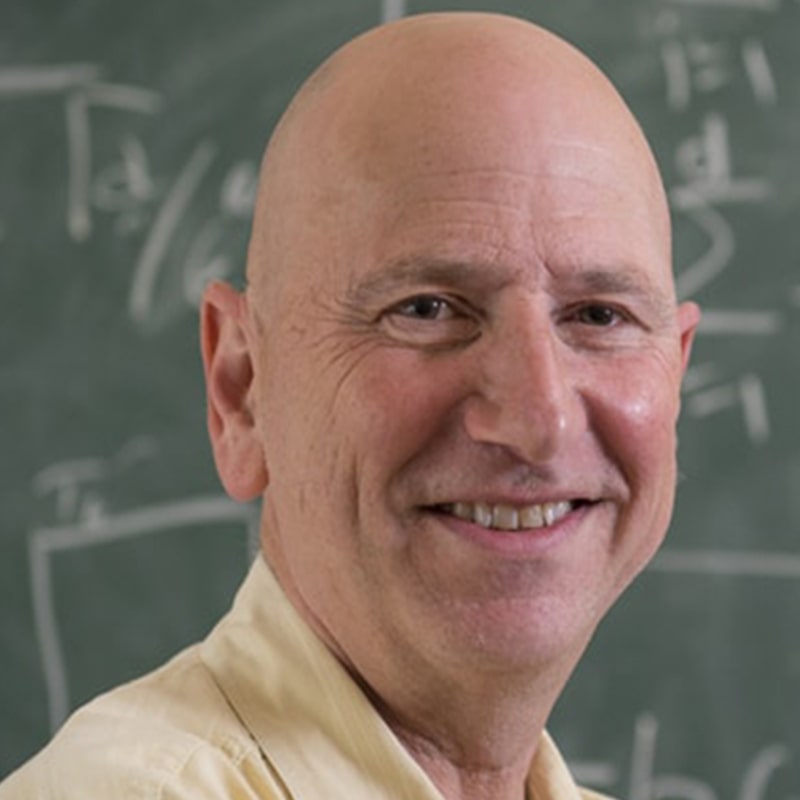
Eric B. Ford is a Professor in the Department of Astronomy & Astrophysics at Pennsylvania State University, with affiliations at the Institute for Computational & Data Sciences, Center for Exoplanets & Habitable Worlds, Center for Astrostatistics, and Astrobiology Research Center. Dr. Ford received his BSc in Physics and Mathematics from MIT in 1999, followed by a PhD in Astrophysical Sciences from Princeton University in 2003. His postdoctoral work included a Miller Research Fellowship at UC Berkeley (2003-2006) and a Hubble Fellowship at Harvard-Smithsonian Center for Astrophysics (2006-2007). Dr. Ford's research centers around exoplanets, with long-term goals of improving our understanding of planet formation and the dynamical evolution of planetary systems. His work emphasizes the interface between theory and observation, including techniques for characterizing extrasolar planets, statistical analysis of exoplanet observations, methodology for exoplanet demographics, and the efficient design of extrasolar planet surveys. He collaborates with leading planet surveys, including NASA's Kepler mission, the Habitable Zone Planet Finder and NEID teams. His research encompasses several key areas: planetary populations (Kepler data, hierarchical Bayesian models, machine learning), radial velocity surveys (extremely precise RV measurements), transit surveys (characterizing planets using transit data), orbital dynamics of planetary systems, planet formation theory, astrostatistics & astroinformatics (Bayesian computing, MCMC), high-performance scientific computing, and astrobiology & future missions. His recent publications focus on overcoming stellar activity challenges in radial velocity measurements, exoplanet population statistics, and developing advanced statistical methods for exoplanet detection. Hubble Fellow (2006-2007) Miller Research Fellow (2003-2006) Dr. Ford leads or contributes to several major exoplanet surveys and initiatives, including the NEID Earth Twin Survey, which aims to detect Earth-like planets around nearby stars using the NEID spectrograph. His research group develops sophisticated statistical and computational tools to extract planetary signals from noisy data, with a particular focus on overcoming challenges posed by stellar activity. He has secured significant research funding for instrumentation development and exoplanet surveys, supporting both graduate students and postdoctoral researchers in his group.