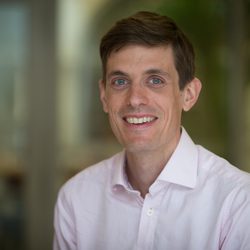
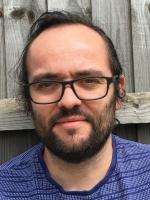
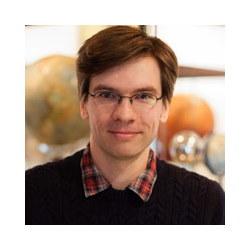
Peter Gingell is a Researcher at the University of Warwick's Physics Centre for Fusion, Space and Astrophysics. His work focuses on plasma dynamics in fusion and space environments, particularly ion-gyro-scale blobs in magnetically confined plasmas. He developed a 2D hybrid code for simulating plasma blob evolution, combining kinetic ion treatments with electron fluid models. His research addresses coherent plasma structures critical to understanding energy transport in fusion devices like tokamaks. Funded by the Engineering and Physical Sciences Research Council (EPSRC), his project is supervised by Prof Sandra Chapman and Prof Richard Dendy. He has published in Plasma Physics and Controlled Fusion , contributing to advancements in plasma simulation methodologies. His office is PS143, and he can be reached at p.gingell@warwick.ac.uk.
Michael A Osborne is Professor of Machine Learning at the University of Oxford and leads the Bayesian Exploration Lab . He serves as Director of the EPSRC Centre for Doctoral Training in Autonomous Intelligent Machines and Systems and co-directs the Oxford Martin AI Governance Initiative. His research focuses on Bayesian optimization, Gaussian processes, and probabilistic numerics with applications in quantum devices, battery modeling, and AI governance. Key Positions: Professor of Machine Learning, University of Oxford Official Fellow, Exeter College Co-founder of Mind Foundry Lead Researcher, Oxford Martin Programme on Technology and Employment Research Themes: Probabilistic modeling for quantum systems Uncertainty quantification in energy storage AI safety and societal impact analysis Automated experimental design Quantum device calibration Probabilistic numerical methods Technical Contributions: Bridging reality gap in quantum devices Efficient Bayesian quadrature techniques Personalized neurostimulation algorithms Automated measurement protocols Quantum-classical hybrid ML
Sebastian Riedel is a Professor at University College London (UCL) and a Researcher at DeepMind, leading the UCL NLP Lab. His work focuses on teaching machines to read, reason, and write, integrating Natural Language Processing (NLP) with Machine Learning. He holds an Allen Distinguished Investigator award and has held roles at FAIR, UMass Amherst, Tokyo University, and the University of Edinburgh. Education: PhD in Computer Science from the University of Edinburgh (advisor: Ewan Klein), postdoctoral research at UMass Amherst (advisor: Andrew McCallum), and research at Tokyo University (advisor: Tsujii Junichi). Research Interests: NLP, machine learning, information extraction, and multimodal models like Gemini. He develops tools such as UCLEED (BioNLP event extractor), frontlets (Scala map wrappers), and thebibbrag (BibTeX to HTML converter). Awards: Allen Distinguished Investigator. Software contributions include GitHub repositories for NLP, machine learning, and data tools. Contact: s.riedel@ucl.ac.uk | Office: 1st Floor, 90 High Holborn, London WC1V 6LJ | Office Hours: Mondays 11 AM–12 PM.
Professor Jorge Eduardo Pinto Santos holds the position of Professor of Theoretical Physics at the Department of Applied Mathematics and Theoretical Physics (DAMTP) at the University of Cambridge. His career includes roles as Reader (2018–2022), Lecturer (2013–2018), and a Junior Visiting Professorship at the Institute for Advanced Study in Princeton (2019–2020). He completed his Ph.D. at DAMTP between 2006 and 2010, followed by postdoctoral fellowships at Stanford University (2013–2014) and the University of California, Santa Barbara (2010–2013). His research focuses on general relativity, quantum gravity, and gravitational aspects of string theory. Key areas include numerical relativity and applications of general relativity to condensed matter physics via holography. Notable contributions involve studies on black hole binaries, extremal black holes, and the AdS/CFT correspondence. His recent work explores topics such as spinning black binaries in de Sitter space, gravitational instabilities in anti-de Sitter space, and entanglement islands in higher dimensions. He is affiliated with the High Energy Physics and Relativity and Gravitation research groups at DAMTP. His advising record includes seven doctoral students, with ongoing supervision of William Boyce (2024–present) and John Crump (2021–present). Publications highlight interdisciplinary advances, including investigations into black hole thermodynamics, cosmic censorship violations, and holographic models of condensed matter systems. His research bridges fundamental physics and numerical methods, addressing both theoretical and applied questions in gravitational physics.
Timothy John O'Brien is a Professor of Astrophysics and Associate Director of the Jodrell Bank Centre for Astrophysics at the University of Manchester, Faculty of Science & Engineering, Department of Physics & Astronomy. He also served as Director of Teaching & Learning in the Department of Physics & Astronomy from 2016-2020 and as Associate Dean for Social Responsibility for the Faculty of Science & Engineering during the same period. His educational background includes a B.Sc. (Hons) in Physics with Astrophysics from the University of London (1985) and a Ph.D. in Astrophysics from the University of Manchester (1990). Professor O'Brien's research concentrates on the study of exploding stars—mainly nova outbursts caused by thermonuclear explosions on the surface of white dwarfs in binary star systems. Over the years, he has developed expertise in a wide range of astrophysical techniques, working across the spectrum from radio waves to X-rays while also carrying out numerical simulations of the aftermath of explosions using his own hydrodynamic codes. Recently, he has developed an interest in the search for extra-terrestrial intelligence (SETI) using radio telescopes. His research fingerprint shows strong activity in Novae (100%), Optical Bursts (94%), Recurrent Novae (56%), Ejecta (45%), Planetary Nebula (38%), Emissions (32%), Classical Novae (32%), and Nebula (28%). His recent publications demonstrate a continued focus on nova outbursts, particularly in symbiotic novae systems like RS Ophiuchi, with high-resolution imaging techniques and multi-wavelength observations. His work spans theoretical modeling, observational astronomy across the electromagnetic spectrum, and data analysis from major telescope facilities. Kelvin Medal of the Institute of Physics (2014) for Public Engagement Professor O'Brien has extensive teaching experience, having worked as a lecturer in three universities since 1988. He has taught a wide range of courses in astronomy & astrophysics, physics, applied mathematics, and computing. From 1999-2009, he directed a distance learning program in astronomy that enrolled over 1,300 students. His current teaching includes Dynamics, Physics of the Solar System, and a course on the Search for Extraterrestrial Life. He has also supervised numerous project students throughout his career. He is actively involved in public engagement, including regular media appearances and events at the Jodrell Bank Centre for Engagement. He was a co-founder of the bluedot festival and contributed to the successful nomination of Jodrell Bank Observatory as a World Heritage Site in 2019.
Joshua Nall is the Director of the Whipple Museum of the History of Science at the University of Cambridge's Department of History and Philosophy of Science, a role he has held since 2022. Previously, he served as Curator of Modern Sciences at the same museum from 2013. His research focuses on the material culture and mass media of the physical sciences, particularly exploring how scientific instruments and media shaped modern astronomy and imperial science. He has curated major exhibitions like Astronomy and Empire (2017) and co-edited influential volumes such as Victorian Material Culture: Science and Medicine (2022). Nall's 2019 book News from Mars won the Philip J. Pauly Prize, analyzing how mass media influenced 19th-century astronomical debates about potential life on Mars. His work bridges museum curation, historical scholarship, and digital humanities, notably through projects like Tools of Knowledge , which used data analysis to study the British instrument trade. He is also a leading voice in forgery studies, examining counterfeit scientific artifacts. Key interests include the history of scientific instruments, British imperial astronomy, and the social dimensions of science communication. His collaborative work extends to exhibitions like Craftswomen: Uncovering Hidden Labour in the History of Science , which highlighted overlooked contributions of women in scientific craftsmanship.
Professor Emilio Artacho is a faculty member in the Department of Physics at the University of Cambridge, based at the Cavendish Laboratory. He transitioned from the Department of Earth Sciences in 2011, where he was granted a Professorship in 2006. His research focuses on computational simulations of non-equilibrium processes in condensed matter, particularly using first-principles molecular dynamics and density-functional theory. He co-developed the SIESTA program for linear-scaling electronic structure calculations, widely utilized in computational materials science. Artacho’s work spans far-from-equilibrium phenomena in irradiated matter, multiferroics, nanoconfined water systems, and surface chemistry. His contributions include studies of electronic stopping power in materials, 2D electron gas formation at ferroelectric interfaces, and the structural dynamics of water under confinement. His academic roles include adjunct positions at Ikerbasque (Nanogune, Spain) and visiting professorships at institutions like the University of California, Berkeley, and École Normale Supérieure de Lyon. Research interests are anchored in theoretical condensed matter physics, with applications to nanomaterials, radiation effects, and interfacial phenomena. His computational methods bridge quantum mechanics and classical dynamics, enabling insights into complex systems like proton-irradiated solar cells and confined water films.
Professor Peter Y. K. Cheung is a Professor of Digital Systems at Imperial College London, holding dual affiliations within the Department of Electrical and Electronic Engineering and the Dyson School of Design Engineering. His work focuses on reconfigurable systems, FPGA architectures, and high-level synthesis tools. He co-founded one of the UK's leading FPGA research groups with Professor Wayne Luk, addressing challenges in variability mitigation, reliability, and application-specific FPGA deployments. His research spans Field-Programmable Gate Arrays (FPGAs) Reconfigurable computing Neural network acceleration Cryptographic protocols Embedded systems He has pioneered techniques such as logic shrinkage for FPGA-based neural networks and developed frameworks like LUTNet for efficient inference. His contributions also include fault-tolerant FPGA designs and methodologies for distributed computation protocols. Key collaborations include work with the Department of Computing on FPGA-based AI acceleration and cybersecurity applications. His recent work explores edge computing, secure decentralized systems, and pandemic modeling using adaptive control strategies. Notable projects include the DSCS protocol for secure distributed computation, acceleration of gravitational wave detection algorithms, and energy-efficient CNN implementations. His research bridges hardware-software co-design with real-world applications in healthcare, finance, and aerospace.
Professor Thomas Meier is a Visiting Professor at the Department of Life Sciences, Imperial College London (since 2015), and Director of the Centre for Structural Biology (2017–2021). He leads research on ATP synthase structure, drug targets for tuberculosis, and molecular mechanisms of disease. Previously, he was a Group Leader at the Max-Planck-Institute of Biophysics (2006–2015) and ETH Zurich's Institute of Microbiology. His work combines structural biology (X-ray crystallography, electron microscopy) with biochemical studies. Education: Dr. sc. nat. (2002) and Dipl. sc. nat. (1998) from ETH Zurich. Awards include the Wellcome Trust Investigator (2015–present). Research focuses on ATP synthase's role in energy conversion, drug development, and structural biology. His lab includes postdocs and students like Lisa Uhrig and Anthony Cheuk. Key affiliations: Centre for Structural Biology, Membrane Biology Group, and Bacterial Pathogenesis studies. Languages: German, English, French (fluent), Latin (read/write). Publications span structural biology, planetary science, and drug discovery. His work on ATP synthase inhibitors for TB has clinical implications, while astrophysical studies explore planetary formation via giant impacts.
Professor Saskia Goes is a Professor of Geophysics at Imperial College London's Department of Earth Science & Engineering within the Faculty of Engineering. She specializes in geodynamics, subduction dynamics, and seismic hazard analysis using numerical modeling and geophysical data interpretation. Her affiliations include the Dynamic Earth and Hazards groups at the Imperial Centre for Geohazards Dynamics. Education: PhD in Geophysics from UC Santa Cruz (1995), Drs (BSc/MSc equivalent) from Utrecht University (1990). Prior roles include SNF Professor of Tectonophysics at ETH Zurich (2003-2005), Visiting Assistant Professor at the University of Michigan (1995-1996), and postdoctoral research at Utrecht University (1996-1999). Research focuses on mantle dynamics, lithosphere structure, and subduction zone processes. Her work integrates seismic imaging, machine learning, and numerical simulations to study phenomena like slab dynamics, mantle plumes, and fluid migration. Key themes include the interplay between tectonic forces and geochemical processes in continental and oceanic settings. Publications emphasize subduction zone processes, seismic tomography, and induced seismicity. She has led projects like the VoiLA initiative studying volatile recycling in the Lesser Antilles. Awards and recognition include invited lectures at leading conferences (AGU, EGU) and universities worldwide. Teaching includes undergraduate geodynamics, geohazards courses, and advanced MSc modeling modules. Active in promoting geohazard research through interdisciplinary collaboration and public engagement.
Professor Gary Gibbons is a distinguished academic at the University of Cambridge, holding the position of Professor of Theoretical Physics within the Department of Applied Mathematics and Theoretical Physics (DAMTP), part of the Faculty of Mathematics. His research focuses on general relativity, quantum gravity, cosmology, and black hole physics. He is a core member of the Relativity and Gravitation Group, known for contributions to gravitational wave theory, black hole thermodynamics, and geometric methods in physics. His work intersects with areas such as the memory effect of gravitational waves, Carroll symmetry, and the mathematical structure of spacetime. Prof. Gibbons collaborates internationally, publishing extensively in top journals like Physical Review D and Classical and Quantum Gravity . His research also extends to applied mathematics, including studies on abrasion processes and shape evolution in geosciences. He maintains an active role in theoretical physics, advising graduate students and contributing to the academic community through lectures and seminars.
Prof Ineke De Moortel is a Professor in Applied Mathematics at the University of St Andrews, affiliated with the School of Mathematics and Statistics. Her research focuses on magnetohydrodynamic (MHD) waves in the solar corona, coronal seismology, and numerical modeling of solar phenomena. She has led projects funded by organizations like the Leverhulme Trust and STFC, contributing to understanding coronal heating mechanisms and wave dynamics. Prof De Moortel has supervised PhD students including Elisabeth Enerhaug and Anmol Kumar. She holds editorial roles, including at the Monthly Notices of the Royal Astronomical Society, and has received prestigious awards such as the Phillip Leverhulme Prize (2009) and the RAS Fowler Award (2010). Research Highlights: MHD wave propagation, coronal seismology, numerical simulations of solar plasma dynamics. Projects: Includes 'Joining up an Unprecedented View of our Sun' (Leverhulme Trust) and collaborations on the Multi-slit Solar Explorer (MUSE) mission. Awards: Royal Society of Edinburgh Young Academy Co-Chair (2012), Deputy Chair of UK Solar Physics Council (2013).
Moira Jardine is Professor of Astronomy at the University of St Andrews School of Physics and Astronomy, where she became the first female physics professor in 2010. Education: Ph.D. Applied Mathematics, University of St Andrews B.Sc. Astronomy and Astrophysics, University of St Andrews Research investigates stellar magnetic activity to understand planetary habitability and solar system evolution. Uses magnetic field measurements to model stellar winds, coronal X-ray emissions, and their impact on planetary atmospheres. Work supports exoplanet detection initiatives including JWST, GAIA, and WFIRST. Publications focus on stellar coronae, magnetic confinement processes, star-planet interactions, and coronal rain dynamics. Current projects model magnetic interactions in systems like AB Dor and HD 189733. Collaborates with international consortia including MagIcS and Bcool for stellar magnetic field surveys. Awards: Fellow of the Royal Society of Edinburgh and Suffrage Science Award (2019).
Pierre Raphaël is the Herchel Smith Professor of Pure Mathematics at the Department of Pure Mathematics and Mathematical Statistics (DPMMS) at the University of Cambridge, where he joined in 2019. His academic career spans prestigious institutions including École Polytechnique, University of Cergy-Pontoise, Princeton University, and various research positions in France before his appointment at Cambridge. Professor Raphaël's research lies at the border between physics and pure mathematics, focusing on understanding energy concentration mechanisms and singularity formation during the propagation of non-linear waves. His work is deeply connected to fundamental nonlinear structures occurring in electromagnetism, astrophysics and turbulent fluid flows. He has made significant contributions to the mathematical analysis of nonlinear partial differential equations, particularly in understanding blow-up phenomena and singularity formation. His publications reveal a consistent research trajectory focused on nonlinear wave phenomena, with particular emphasis on energy concentration mechanisms and singularity formation across various mathematical models. His work spans multiple areas including nonlinear Schrödinger equations, heat equations, Korteweg-de Vries equations, and harmonic heat flows, demonstrating his expertise in analyzing critical and supercritical regimes where singularities may form. Grand Prix Alexandre Joannides 2014 from the French Academy of Sciences Royal Society Wolfson Fellowship 2019 Invited Speaker at International Congress of Mathematicians 2014 ERC Advance Grant recipient Professor Raphaël has secured significant research funding including European Research Council grants, demonstrating his leadership in the field. His research group at Cambridge focuses on singularity formation for nonlinear PDEs, as evidenced by the conference he organized at St Catharine's College in September 2024. His work bridges pure mathematics with physical applications, particularly in understanding extreme regimes of nonlinear wave propagation.
Professor Kellogg Stelle is a distinguished academic in the Department of Physics at Imperial College London, affiliated with the Faculty of Natural Sciences. He holds the title of Professor of Physics and is part of research groups including the Physics of Universe and Theoretical Physics. His academic career includes a PhD from Brandeis University (1972–1977) and an AB in History and Science from Harvard University (1966–1970). His research focuses on Atomic, Molecular, Nuclear, Particle and Plasma Physics; Mathematical Physics; Quantum Physics; Astronomical and Space Sciences; Pure and Applied Mathematics. He has made significant contributions to supergravity, string theory, and cosmology, exploring topics like higher-order gravity, braneworld models, and quantum gravity phenomena. His work often bridges theoretical frameworks and cosmological implications, emphasizing unification theories and symmetry principles. Professor Stelle’s publications reflect a deep engagement with advanced topics such as compactification on Calabi-Yau manifolds, localized gravity in braneworld scenarios, and the ultraviolet problem in supergravity. His research often intersects with cutting-edge areas like quantum geometry and holography, contributing to foundational debates in theoretical physics. Affiliations include the Physics of Universe and Theoretical Physics groups at Imperial College, reflecting his interdisciplinary approach to fundamental physics. He is fluent in French, Russian, Italian, and German, enhancing his international collaborations.