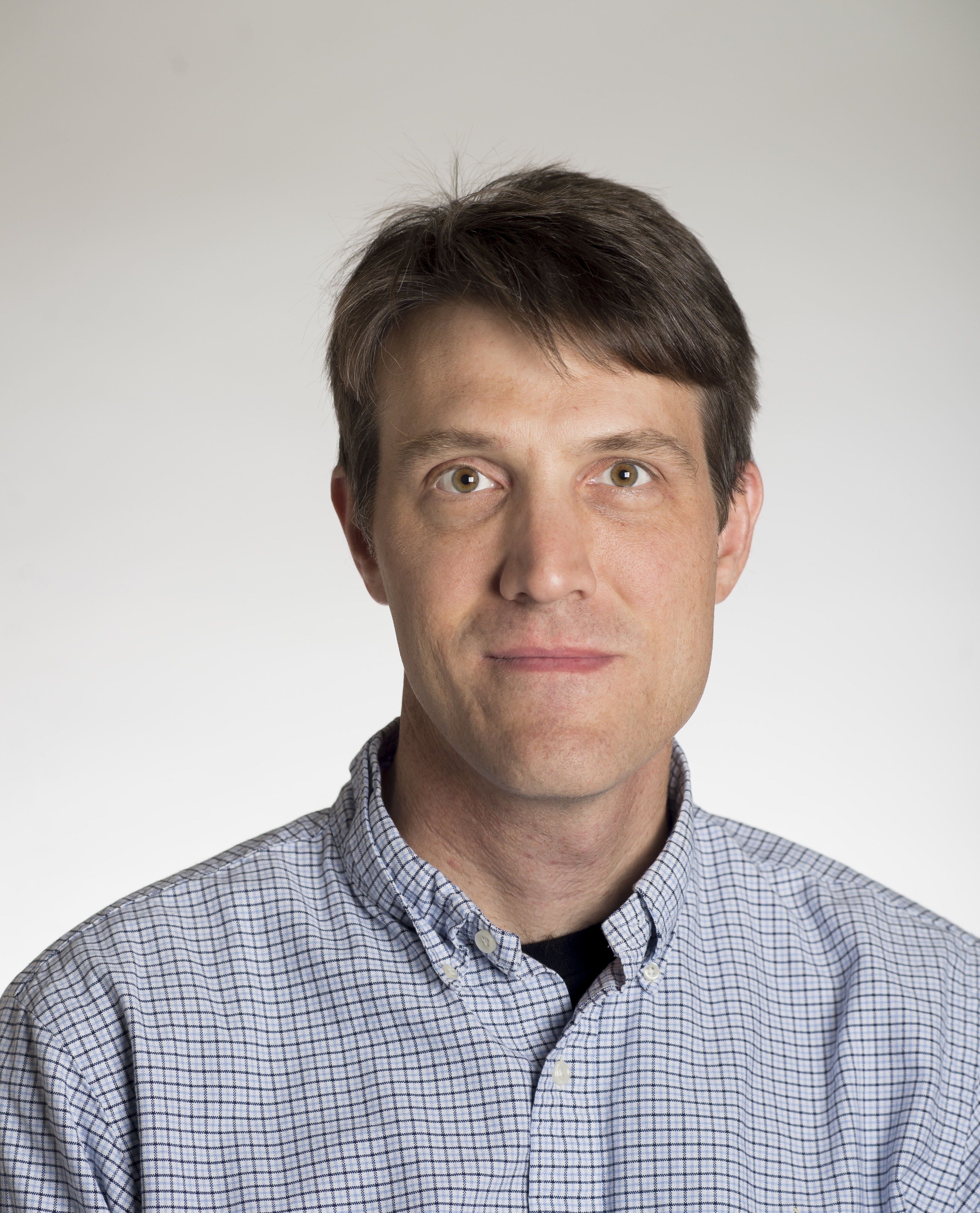
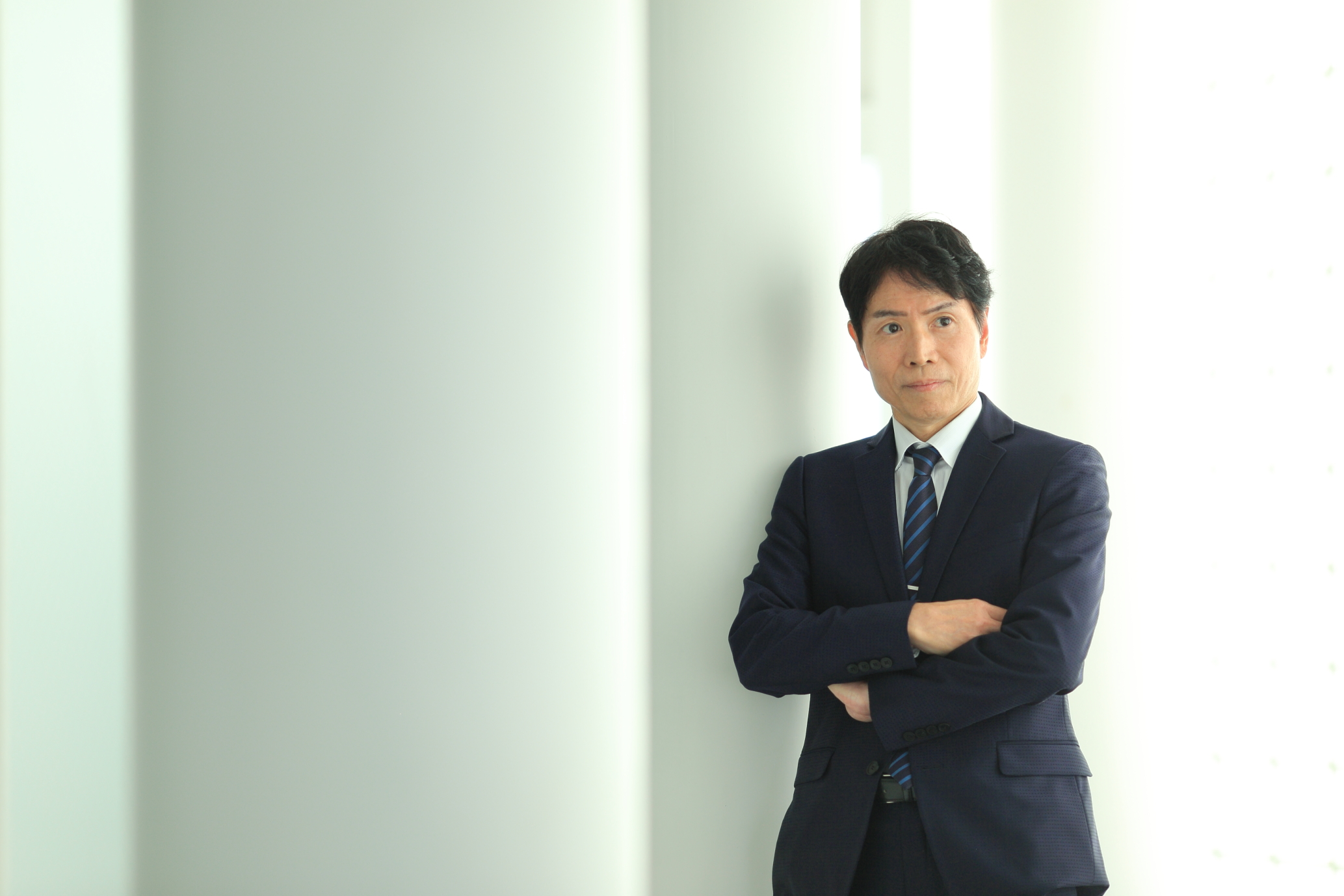
Prof. Dr. Matthias Weidlich is a faculty member at Humboldt University of Berlin within the Institute of Computer Science under the Faculty of Mathematics and Natural Sciences . His research focuses on Process Mining , Complex Event Processing , and Data Privacy with applications in Business Process Management and Scientific Workflows . Research Interests: Business Process Management and Process Mining Complex Event Processing and Stream Data Analysis Data Privacy and Security in Process Systems Scientific Workflow Systems and User Behavior Heterogeneous Network Embeddings Algorithm Design and Optimization Recent Publications (2023-2025) demonstrate expertise in: Efficient stream processing techniques Privacy-preserving process mining frameworks Scientific workflow analysis tools Graph neural network applications Multi-modal data integration Adaptive querying systems Contact: Office: Unter den Linden 6, 10099 Berlin Phone: 030 2093-41277 Email: matthias.weidlich@hu-berlin.de Web: hu.berlin/data
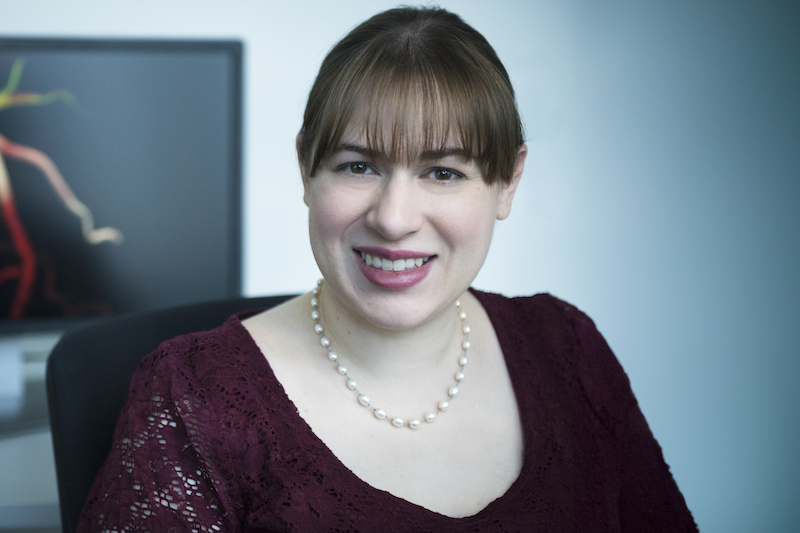
Michelle Borkin is an Assistant Professor in the Khoury College of Computer Sciences at Northeastern University’s Boston campus, where she co-leads the Visualization @ Khoury Lab and co-directs the Northeastern Visualization Consortium (NUVis). She additionally serves as Affiliated Faculty with the NULab for Text, Maps, and Networks and with the Information Design & Data Visualization Program in the College of Arts, Media, and Design. Education PhD, Applied Physics, Harvard University School of Engineering and Applied Sciences (2014) MS, Applied Physics, Harvard University BS, Astronomy & Astrophysics and Physics, Harvard University Research Interests Borkin’s research integrates data visualization and human-computer interaction to create novel techniques that enable discovery across disciplines. Her work spans: Multidimensional brushing-and-linking methodologies 3D data visualization and selection techniques Tree and network visualization Visualization evaluation methodologies and perception/cognition theory Accessibility and visualization for social good Medical and astrophysical visualization applications Publication Trends Across more than 50 peer-reviewed papers, Borkin’s research exhibits three dominant threads: (1) foundational studies on visualization perception and memorability, (2) design and evaluation of novel interactive tools for complex data (medical, astronomical, political, and social media), and (3) methodological contributions such as the Design Study “Lite” Methodology that accelerate visualization pedagogy and community-engaged research. Awards & Honors CHI 2020 Best Paper Award IEEE VIS 2020 Best Poster Honorable Mention IEEE VIS 2018 Best Poster Award NSF Graduate Research Fellowship NDSEG Graduate Fellowship TED Fellow Advising & Grants Borkin currently advises five PhD students—Jane Adams, Mackenzie Creamer, Franc O, Aditeya Pandey, and Laura South—and has previously mentored Michail Schwab and Uzma Haque Syeda. Her research has been supported by NSF, NDSEG, and TED fellowships, as well as internal Northeastern awards. Labs & Teams Co-Lead, Visualization @ Khoury Lab Co-Director & Co-Founder, Northeastern Visualization Consortium (NUVis) Affiliated Faculty, NULab for Text, Maps, and Networks Affiliated Faculty, Information Design & Data Visualization Program, CAMD
Professor Christopher Fluke is a Professor at Swinburne University of Technology, holding a position within the Centre for Astrophysics and Supercomputing and serving as Director of the Advanced Visualisation Laboratory (AVL). His research focuses on advanced visualization technologies, human-AI teaming, and data-driven decision-making in space systems, public health, and defense contexts. Prof Fluke leads interdisciplinary collaborations with entities such as CGI Space, Defence and Intelligence Australia, and Propel Health AI. His work aligns with UN Sustainable Development Goals including Climate Action, Good Health, and Industry Innovation. Grants & Projects: Recent grants include leadership in SmartSat CRC projects on space system data fusion (2020–2023), and collaborations on carbon accounting using satellite data and digital health platforms. He also oversees the AVL, a key facility for visualizing complex scientific data. Awards: He has received the Vice Chancellor's Award for Excellence in Innovation and the David Allen Prize for contributions to astronomy education. His expertise extends to teaching roles in space technology and science communication. Labs & Teams: Directs the AVL, a国家级研究平台, and contributes to Swinburne's SmartSat initiatives. His research bridges astrophysics, AI, and real-world applications in health and defense sectors.
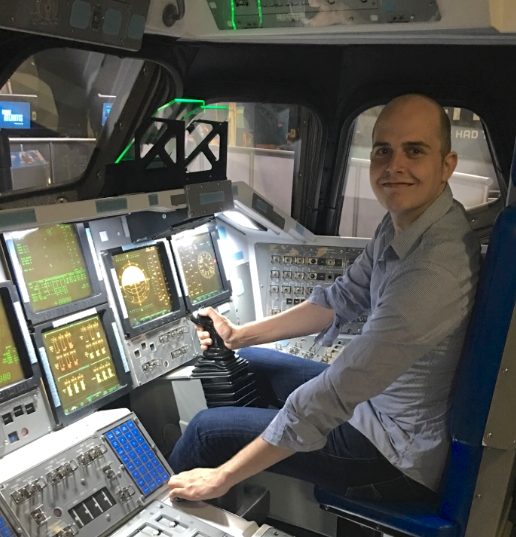
Francisco Javier Oliver Bernal is a Lecturer at the University of Deusto in Bilbao, Spain, within the Faculty of Education and Sport and the Department of Physical Activity and Sports Sciences. He teaches across Computer Engineering, Physical Activity and Sports Sciences, and Primary Education bachelor's programs, as well as the Master's in Secondary Education. He earned his Doctor of Medicine and Surgery from the University of the Basque Country. His research spans Human-Computer Interaction, Educational Technology, and Science Education, with a strong emphasis on accessibility for visually impaired users. He has developed tools for e-learning, digital resource centers, and innovative teaching methodologies in computer science and natural sciences, aiming to enhance educational experiences through technology. His scholarly output, spanning from the 1990s to 2023, demonstrates a consistent focus on technology-enhanced learning, evolving from early work in 3D interfaces and computer graphics to recent applications in health, music, and interdisciplinary educational contexts. Key trends include the integration of accessibility features, the development of domain-specific educational tools (e.g., for biology and astronomy), and responses to contemporary challenges like the COVID-19 pandemic. He has supervised multiple theses on digital accessibility and cooperative systems, though student names were not listed. Details on research grants were not provided in the available text. As a member of the eVida research group (officially recognized by the Basque Government), he contributes to projects advancing accessible educational technologies, including the ACCE project for audiovisual accessibility and READIS digital resource centers for visually impaired users.
Kerstin Bunte is a Professor of Machine Learning for interdisciplinary data analysis at the University of Groningen, affiliated with the Faculty of Science and Engineering and the Bernoulli Institute's Intelligent Systems Group. She holds an Honorary Fellowship at the University of Birmingham and leads the Intelligent Systems Group. Her research focuses on interpretable machine learning, interdisciplinary applications (e.g., astrophysics and biomedical data), and visualization techniques. Research Interests: - Machine Learning - Artificial Intelligence - Explainable AI (XAI) - Interpretable Models - Dimensionality Reduction - Data Visualization - Astrophysical Data Analysis - Medical Imaging Awards & Grants: - DSSC XS funding (2023) - NWO VIDI grant (2020) - Rosalind Franklin Fellowship (2016–present) Advising & Students: Supervised PhD students include Elisa Oostwal, Janis Norden, Matteo Marcantoni, and Petra Awad. Research spans topics like tumor segmentation in medical imaging, astrophysical structure detection, and autonomous navigation systems. Labs & Collaborations: Leads the Intelligent Systems Group, collaborating with institutions like the University of Birmingham and the University of Warwick. Work involves interdisciplinary projects combining machine learning with astronomy, biomedical sciences, and robotics.
Professor Virginia Kilborn is Swinburne University of Technology's inaugural Chief Scientist, leading initiatives in education, research policy, and equity. She is a radio astronomer at the Centre for Astrophysics and Supercomputing, specializing in galaxy evolution via neutral hydrogen studies using ASKAP and SKA telescopes. Her academic leadership roles include Deputy Director (2011–2013), Acting Director (2013), Chair of Physics & Astronomy (2015–2018), and Dean of Science (2019–2021). Education: BSc (Hons) and PhD (Astrophysics) from the University of Melbourne. Postdoctoral work included a UK stint at Jodrell Bank and an ARC-CSIRO fellowship at Swinburne (2003). Research focuses on environmental impacts on galaxies, HI gas dynamics, and cutting-edge survey techniques. She pioneered Swinburne's online astronomy education and space programs, emphasizing STEM outreach with schools and public engagement. Notable awards include the 2015 Vice-Chancellor's Award for Culture and Values and 2012 OLT Citation for student learning excellence. Active in Australian astronomy through roles like ASA President (2015–2017) and CSIRO telescope committee leadership. Current grants include Quantum Australia (2024–2027) and AquaWatch collaborations. Supervised eight PhD students exploring HI gas evolution, galaxy dynamics, and visualization tech for radio astronomy data.
Jaime S. Cardoso is a prominent researcher at the University of Porto and Institute for Systems and Computer Engineering, Technology and Science (INESC TEC) in Portugal. His extensive publication record spanning two decades demonstrates his leadership in computer vision, medical image analysis, and pattern recognition. His research primarily focuses on applying artificial intelligence to healthcare challenges, particularly in medical imaging and diagnostics. Cardoso's research interests center on explainable AI for medical applications, biometrics, and computer vision. His work bridges the gap between theoretical machine learning and practical medical solutions, with significant contributions to breast cancer diagnosis, medical image segmentation, and biometric security systems. He has developed innovative approaches to medical image analysis, including virtual staining techniques and privacy-preserving explanation methods for medical AI systems. His recent publications (2023-2025) reveal a strong emphasis on explainable AI in medical contexts, with multiple papers addressing how to make deep learning models more transparent and trustworthy for healthcare applications. He has also made significant contributions to face recognition technology, video anomaly detection, and specialized medical imaging techniques for breast cancer and neonatal EEG analysis. Among his scientific contributions are numerous collaborations with researchers across Portugal and internationally. His work has appeared in top-tier journals including IEEE Access, Medical Image Analysis, and Neurocomputing, reflecting the high impact of his research. Cardoso has supervised numerous students who have become established researchers in their own right, including Ricardo P. M. Cruz, Kelwin Fernandes, and Ana Filipa Sequeira. His research group appears to focus on the intersection of deep learning, medical imaging, and biometrics, with strong connections to clinical applications.
Marc Chaumont is an Associate Professor at the University of Nîmes since 2005 and a senior researcher at LIRMM Montpellier. He holds an HDR (Habilitation à Diriger des Recherches) and is an IEEE Senior Member. Since October 2024, he has been an associate collaborator at IRISA laboratory in Vannes, France. His career spans academic research, teaching, and interdisciplinary collaborations with institutions like MARBEC, CIRAD, and CNRS. PhD in Computer Science from IRISA Rennes (2003) Engineer Diploma from INSA Rennes (1999) His research focuses on visual data analysis , remote sensing , and digital forensics , particularly in steganography and steganalysis . He has contributed to creating large-scale databases like LSSD , a 2 million JPEG image dataset for deep-learning steganalysis. His work extends to AI applications in marine ecology, medical imaging, and poverty estimation from satellite data. Recent publications highlight collaborations across disciplines, including transformer models for socioeconomic indicator prediction, 3D fish tracking in coral reefs, and self-supervised encoder pretraining for chronic wound segmentation. He has supervised interns like Ayman El Mannouy (2024) and Abir Zahi (2023) in projects related to weakly supervised segmentation and marine biodiversity. IEEE Senior Member (2020) Top-3% Best Reviewer at IEEE ICIP 2020 Marc has taught courses ranging from signal processing to image compression since 1999. His technical contributions include software tools for image databases and steganalysis algorithms. He actively participates in European projects like DFUC'2024 and ConvEntion for astronomical data classification.
Chad M. Schafer is an Associate Professor in the Department of Statistics & Data Science at Carnegie Mellon University , specializing in statistical methodology for astronomy and cosmology. He co-chairs the LSST Informatics and Statistics Science Collaboration and is affiliated with the McWilliams Center for Cosmology at CMU. His research focuses on rigorous handling of complex models and high-dimensional data in the sciences, particularly astronomy. Ph.D. in Statistics, University of California, Berkeley (2004) M.S. in Statistics, University of Illinois at Urbana-Champaign B.S. in Statistics, Western Michigan University Former staff at Argonne National Laboratory (Mathematics and Computer Science Division) His research spans topics such as likelihood-free inference, Bayesian computation, photometric redshift estimation, and semi-supervised learning for supernova classification. He has applied statistical methods to cosmological surveys like SDSS and LSST, as well as climate modeling and hurricane track analysis. Recent publications highlight applications of statistical techniques to astrophysics, including Approximate Bayesian Computation for supernovae, SCA-based photometric redshift estimation , and high-dimensional density modeling . His work intersects astronomy, data science, and computational statistics. He has served in multiple educational roles, including: Teaching data science courses for CMU's Master of Science in Computational Finance (MSCF) program Steering Committee member for MSCF Instructor for the Summer School in Statistics for Astronomers at Penn State's Center for Astrostatistics Moderator of the methodology subsection of the arXiv Statistics area (2007-2018) Director of CMU's Summer Undergraduate Research Experience in Statistics program (2015-2018) His departmental affiliations and committee roles underscore his interdisciplinary approach, bridging statistical theory with practical applications in astronomy and finance.
Dr. Frank Soboczenski is a Lecturer in the Department of Computer Science at the University of York, with an affiliate scientist position at King's College London supported by the NVIDIA GPU Grant Program. His research spans multiple domains including healthcare, space research, and quantum machine learning applications. He serves as a STEM scientist for NASA's and NOAA's GLOBE program and is actively involved in various NASA initiatives including the Frontier Development Lab. Dr. Soboczenski's primary research interests include Transformers and Large Language Models, Machine Learning with focus on Uncertainty Quantification and Explainability, and advanced applications of Quantum Machine Learning in Healthcare/Biomedicine and Space Research domains. His work on the RobotReviewer project applies Deep Learning and Natural Language Processing to healthcare. Previously, he has worked in Human-Computer Interaction, Cyber-Security, and Real-Time Systems in cooperation with organizations including the German Police Force, GCHQ, Rapita Systems, INRIA, Barcelona Supercomputing Center, and Airbus. His recent publications demonstrate a strong focus on applying machine learning techniques to healthcare informatics and space research, with particular emphasis on systematic reviews, clinical decision support, atmospheric retrieval for exoplanets, and medical data analysis. His work bridges the gap between theoretical AI advancements and practical applications in critical domains. NASA TechLeap Prize - Quantum Machine Learning NASA/NOAA/U.S. Department of State Outstanding Efforts to Mentor and Support Students (2019-present) NASA Frontier Development Lab AI Research Award of Merit Data Samaritan Award Steely Eyed Operator Award NASA Kennedy Space Center OsirisREx launch invitation SpaceApps 3M Thesis Competition UK National Winner (2013) Deggendorf Institute of Technology Robotics Challenge Award Dr. Soboczenski actively mentors students, as evidenced by his NASA/NOAA award for mentoring. His research is supported by the NVIDIA Corporation through the GPU Grant Program. He serves on multiple program committees including NeurIPS (2019-present), AAAI (2019-present), and various specialized workshops at major AI conferences. He is also involved in organizing NASA Space Apps challenges and serves on the NASA GeneLab Analysis Working Group on AI/ML. As an active member of the academic community, Dr. Soboczenski participates in numerous professional organizations including the NASA Nancy Grace Roman Spacecraft Science Working Group, NASA Technosignatures research group, IBM Quantum Researchers Program, PolarAI Research Group of the ACM, Huggingface BigScience Team, International Astronomical Union, and several others focused on AI and space research.
Prof. Dr. rer. nat. habil. Stephan Kopf is a faculty member at the Faculty of Spatial Information, where he holds the Professorship in Informatics and Geoinformatics. He actively contributes to research in geographic information systems (GIS), computer graphics, computer vision, and multimedia technologies. His academic leadership roles include serving as Dean and as a member of the Faculty Council, with advisory roles in the Senate. His research spans crowd simulation , image/video retargeting , augmented reality platforms , and interactive learning systems . He focuses on algorithm development for GIS, temporal effects in re-captured video, and scalable solutions for classroom interactivity. His work frequently integrates machine learning, mobile computing, and geospatial data. For teaching, he oversees courses such as Internet Technologies, Informatics, and Programming in degree programs like Geoinformatics/Management and Surveying. He supervises theses involving programming-centric topics like mobile app development , VR applications , and astronomical analysis of geospatial data .
Prof. Dr. Sıtkı Çağdaş İnam is a faculty member at Başkent University's Department of Electrical and Electronics Engineering. With a PhD in Physics from Middle East Technical University (2004), his research spans high-energy astrophysics, X-ray astronomy, and neutron star dynamics. His work focuses on timing analysis, spectral modeling, and accretion processes in X-ray pulsars, magnetars, and binary systems. Recent studies include observations of transient X-ray sources using RXTE and Swift satellites, with notable discoveries of glitches and quasi-periodic oscillations. 2022: Spectral analysis of 2S 1417-624 during its outburst 2021: Deep learning applications in voice pathology detection 2020: Comprehensive study of MAXI J1409-619 2019: Magnetar pulse frequency variability He has led multiple projects on X-ray binaries and magnetic field effects in neutron stars, serving on the Turkish Astronomical Association's board. His collaborations extend to international teams analyzing high-energy cosmic phenomena.
Naonori Ueda is a Research Professor and Deputy Director at RIKEN Center for Advanced Intelligence Project. He also serves as a Visiting Fellow at NTT Communication Science Laboratories, Research Supervisor for Mathematical Information Platform at Japan Science and Technology Agency (JST), and Visiting Professor at Kobe University's Graduate School of System Informatics. His distinguished career spans academia, government research institutions, and industry collaboration, with significant contributions to advancing artificial intelligence and machine learning applications across multiple scientific domains. Dr. Ueda's research interests focus on the intersection of machine learning, artificial intelligence, and physical sciences. He specializes in physics-informed deep learning approaches that integrate governing physical equations with neural network architectures. His work spans geophysical data analysis, remote sensing applications, computational seismology, and environmental monitoring systems. He has pioneered methods for crustal deformation modeling, earthquake prediction, tsunami inundation forecasting, and satellite imagery analysis using advanced machine learning techniques. His research demonstrates how AI can solve complex scientific problems by bridging the gap between data-driven approaches and physical domain knowledge. His publication record reveals a strong trend toward applying machine learning to solve real-world geophysical and environmental challenges. His recent work shows increasing sophistication in physics-informed neural networks that incorporate domain-specific knowledge into deep learning architectures. The publications span high-impact journals like Nature Communications, demonstrating the interdisciplinary significance of his work. His research consistently focuses on practical applications of AI for disaster prevention, environmental monitoring, and scientific discovery. Fellow of IEICE (Institute of Electronics Information and Communication Engineers) Member of Japan Prize field review committee Selection Committee Member for Brilliant Female Research Award (The Jun Ashida Award) Member of Kyoto Prize Selection Committee Dr. Ueda has secured substantial research funding through multiple government-sponsored projects including RIKEN Pioneering Project 'Prediction Science,' JST AIP Acceleration Research projects on weather prediction and drug discovery, and AMED-funded medical research initiatives. His leadership extends to serving as Sub-project Director for Japan's Moonshot R&D Project. He actively mentors researchers through his roles at RIKEN, NTT, and various academic institutions, fostering the next generation of AI scientists. As Deputy Director of RIKEN Center for Advanced Intelligence Project, Dr. Ueda leads one of Japan's premier AI research initiatives. He also serves on the Advisory Board of Kobe University's Mathematical and Data Science Center and Kyoto University's Graduate School of Informatics. His leadership extends to coordinating the AI Seminar at Osaka Industrial Association and supervising the Keihanna 'Edison Society' at the International Institute for Advanced Studies, demonstrating his commitment to bridging academic research with industrial applications.
Jochen Liske is a Professor of Observational Astronomy at the University of Hamburg , affiliated with the Hamburger Sternwarte (Hamburg Observatory) and the Quantum Universe Cluster of Excellence . He leads the Observational Astronomy Research Group and contributes to major international collaborations like GAMA , WAVES , and 4MOST . Research Focus: Extragalactic astronomy, observational cosmology, galaxy evolution, dark energy, and real-time cosmology via redshift drift measurements. Instrumentation: Key roles in the 4MOST and ELT-ANDES spectrograph projects, including calibration and software development. Outreach: Creator of the Hubblecast and ESOcast video podcasts, presenter of documentaries like "Eyes on the Skies" and "The Eye 3D" , and frequent public speaker. His recent publications span galaxy surveys, gravitational wave detection methods, and instrumentation design. Notable awards include the MEDEA Special Jury Award 2009 for science communication and an ESO Fellowship . He teaches astrophysics courses and mentors students through projects like the Quantum Universe Cluster.
Ákos Lédeczi is a prolific researcher with significant contributions to computer science, sensor networks, robotics, and K-12 education. His work spans hardware-software co-design, wireless localization, and accessible programming environments. Co-developed NetsBlox and DeepForge for novice-friendly distributed computing. Created PinPtr high-precision GPS cloud service and inTrack mobile node tracking systems. Pioneered Browser-based robotics simulation and smartphone IoT education for K-12 students. Explored RF interferometry , Doppler shift tracking , and acoustic shooter localization in urban environments. Contributed to medical capsule robot design and security co-design for embedded systems. His recent focus includes project-based AI curricula for female high school students and collaborative visual programming environments . While specific university affiliations aren't detailed here, his collaborations with Péter Völgyesi, Miklós Maróti, and others highlight his role in advancing distributed and sensor network research.