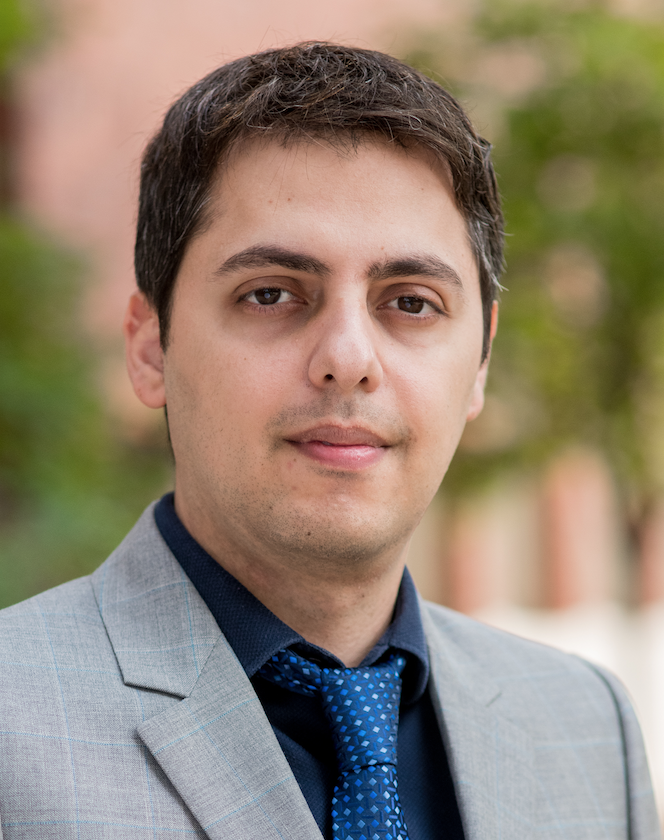
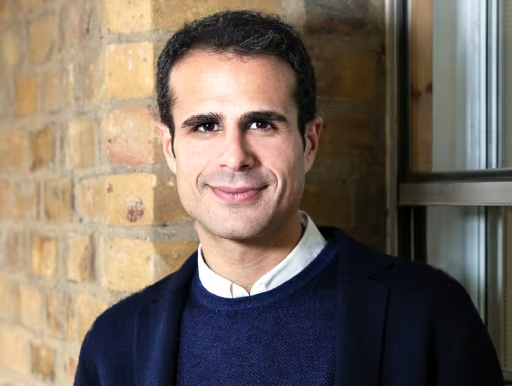
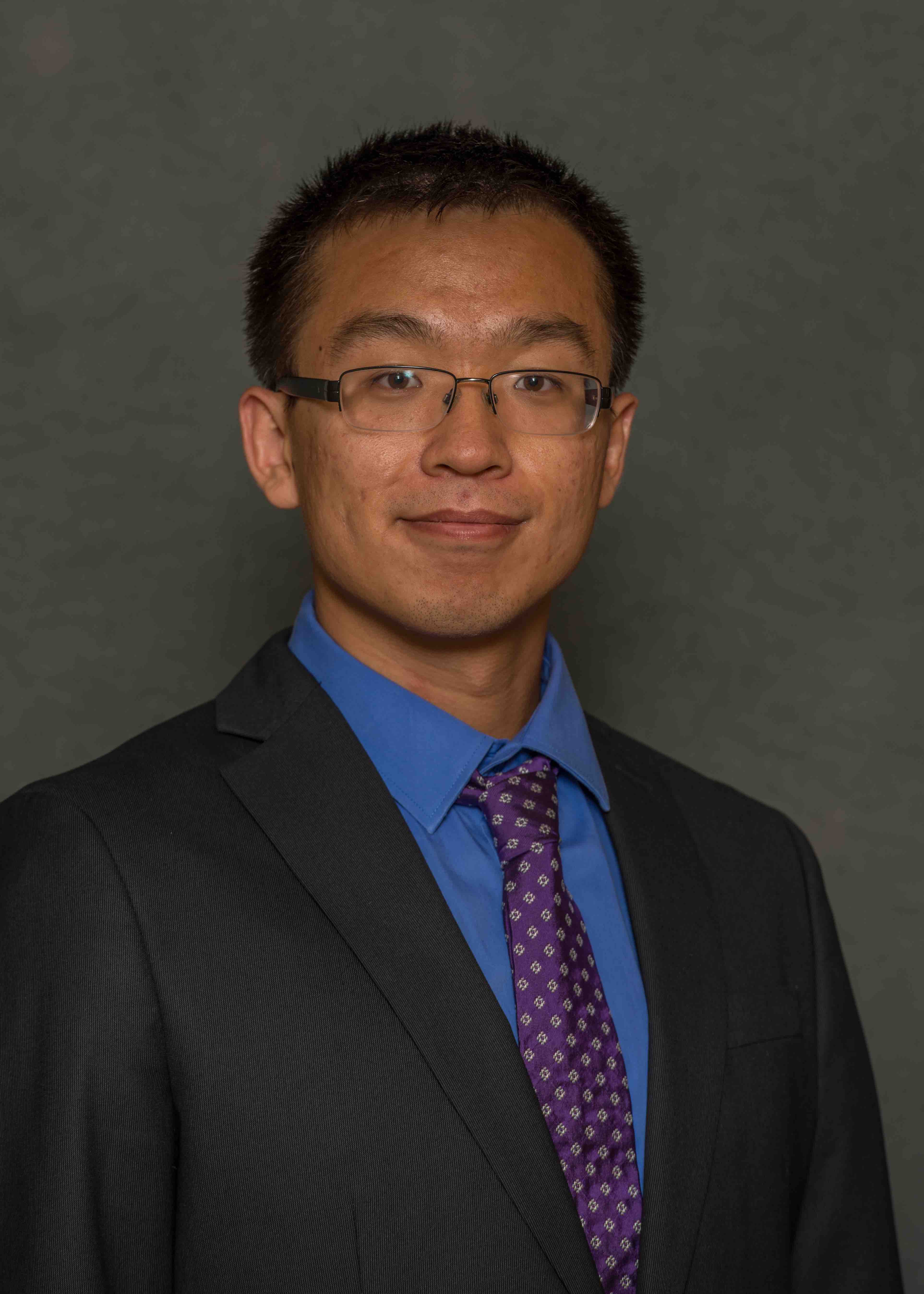
Jinglong Zhao is an Assistant Professor in the Department of Operations and Technology Management at Boston University's Questrom School of Business. He holds the Dean’s Research Scholar title and maintains an office at 615C, Rafik B. Hariri Building, 595 Commonwealth Avenue, Boston, MA 02215. Education: PhD from Massachusetts Institute of Technology (2021) B.Eng. from Tsinghua University (2016) Research Interests: Zhao specializes in operations management and dynamic pricing strategies, with expertise in experimental design and statistical modeling. His work explores algorithmic pricing under static calendars, causal inference in sequential experiments, and balanced design frameworks for online matching. Publication Trends: Zhao's research focuses on quantitative methods for pricing optimization, experimental design in dynamic environments, and statistical approaches to sequential decision-making. His work bridges operations management with machine learning techniques for market analysis.
Laurent Lehmann is a Full Professor at the University of Lausanne, holding a position in the Department of Ecology and Evolution within the Faculty of Biology and Medicine. He has served as director of the master's program 'Behaviour, Economics, and Evolution' since 2015. Previously, he was an Assistant Professor at the University of Lausanne (2011-2015) and the University of Neuchâtel (2009-2011). His academic journey includes postdoctoral research at Stanford University with Prof. Marc Feldman, Cambridge University with Dr. François Balloux, and the University of Helsinki with Prof. Hanna Kokko. Lehmann's research focuses on mathematical and simulation models to study the evolution of social behaviors, including cooperation, altruism, and learning. His work spans three primary areas: individual decision processes, life-history evolution, and the transition to large-scale human societies. His theoretical approach addresses fundamental questions about how social behaviors evolve through natural selection, with particular attention to the roles of kinship, spatial structure, and cultural transmission. Analysis of his recent publications reveals a strong emphasis on mathematical modeling of social evolution, with recurring themes including Hamilton's rule, kin selection, cultural transmission, and evolutionary game theory. His work bridges theoretical biology with anthropological questions about human social evolution, particularly examining how large-scale cooperation emerged in human societies. Recent papers demonstrate increasing integration of cultural evolution with traditional population genetic approaches. As an academic mentor, Lehmann has supervised doctoral students including Fumagalli E. (2014), with research focusing on information sharing and social network dynamics. His work has received funding from major research agencies including ERC and SNSF Starting Grants, as noted on his departmental profile. Lehmann leads a research group within the Department of Ecology and Evolution that develops mathematical models to understand social behavior evolution. His group collaborates across disciplinary boundaries, connecting evolutionary theory with economics, anthropology, and cognitive science to address fundamental questions about human sociality and cooperation.
Rui Li serves as an Associate Professor in the Department of Accounting & Finance at the University of Massachusetts Boston, where his research centers on corporate finance, macroeconomics, and game theory with emphasis on dynamic contractual relationships and firm behavior under uncertainty. His academic foundation includes: PhD in Economics Dr. Li's research portfolio spans corporate finance, financial economics, macroeconomics, and game theory, developing theoretical models to analyze moral hazard in dynamic settings, investment under limited commitment, and risk-taking mechanisms. His work bridges microeconomic firm decisions with macroeconomic outcomes through rigorous mathematical frameworks. Analysis of his recent publications (2017-2025) reveals consistent focus on agency problems and contractual design in evolving environments. His research trajectory has expanded to address contemporary challenges like climate policy impacts on business strategy and digital transformation, while maintaining core emphasis on incentive structures and information asymmetry through theoretical modeling approaches.
Rasoul Etesami is an Associate Professor in the Department of Industrial and Systems Engineering and holds affiliate appointments in the Department of Electrical and Computer Engineering and the Coordinated Science Laboratory at the University of Illinois Urbana-Champaign . He earned his Ph.D. and M.Sc. degrees in Electrical and Computer Engineering from UIUC in 2015 and was a Postdoctoral Research Fellow at Princeton University (2016-2017). Education Ph.D. Electrical and Computer Engineering, University of Illinois Urbana-Champaign (2015) M.Sc. Applied Mathematics, University of Illinois Urbana-Champaign (2015) M.Sc. Industrial and Systems Engineering, University of Illinois Urbana-Champaign (2012) Research Interests Dr. Etesami's work focuses on multiagent decision-making systems using tools from game theory, control theory, and optimization. His research spans networked control systems , dynamic games , distributed optimization , and cyber-physical security . He investigates social network dynamics and smart grid applications , with recent emphasis on federated learning and adversarial robustness in machine learning systems. Recent Publication Trends His 2024-2025 publications demonstrate expertise in: Dynamic games for social network influence and resource allocation Federated learning algorithms and poisoning attacks Optimization techniques for over-parameterized models and caching Control theory applications to smart grids and opinion dynamics Submodular optimization for social welfare maximization Bandit learning in constrained Colonel Blotto games Honors & Editorships NSF CAREER Award (2020) AFOSR Young Investigator Award (2023) James Franklin Sharp Teaching Award (2023) Associate Editor, IET Smart Grid (2018-2024) Conference chair/co-chair for AAAI, Allerton, and CDC events Academic Service Dr. Etesami actively participates in departmental governance as a member of: Faculty Hiring Committee Qualification Exam Committee Graduate Committee Research and Scholarly Enhancement Committee Seminar Chair Organizer
Monica Costa Dias serves as Associate Director and Research Economist at the Institute for Fiscal Studies (IFS), Centre for Economics and Finance, and holds a Research Fellow position at the University of Porto, Portugal. Her work centers on modeling individual and household behavior to understand education/employment choices, skill formation, earnings dynamics, and public policy impacts. Her educational background includes a PhD in Economics from the University of London (2002). Her research program spans: Women's labor supply and career trajectories over the life-cycle Interconnections between education, marriage, and employment histories Life-cycle inequality and redistribution mechanisms Advanced micro-econometric methods for policy evaluation Dynamic impacts of active labor market programs Recent publications reveal concentrated expertise in assortative matching and income inequality across UK/US contexts, alongside granular analysis of women's wage progression. These works demonstrate methodological sophistication in life-cycle modeling while addressing urgent policy questions about gender equity and social mobility. Her leadership at IFS provides access to significant research infrastructure including government data partnerships and major grant funding streams for economic policy analysis. As a Research Fellow at University of Porto, she contributes to academic training while driving IFS's mission to translate rigorous economics into actionable fiscal policy through direct engagement with UK government departments.
Ali Aouad is an Assistant Professor at MIT Sloan School of Management (Department of Management Science and Operations) and holds an Associate Professor title (on leave) at London Business School . He earned a PhD in Operations Research from MIT and MS/BS in Applied Mathematics from École Polytechnique (Paris). His research focuses on algorithms and decision processes at the intersection of operations, computer science, and economics, with applications to supply/demand management, market design, public sector operations (e.g., food security), and online platforms. Education: BSc & MSc (École Polytechnique), PhD (MIT) Work Experience: Applied Scientist at Uber Technologies (2017-2018), consultant at Boston Consulting Group (Paris/Casablanca), and collaborations with tech firms. His research interests span algorithmic market design, stochastic optimization, approximation algorithms, and digital platform mechanisms . Recent work explores layout optimization for cultural institutions, food subsidy efficacy in underserved communities, and dynamic pricing in matching systems. He co-advises PhD students at MIT and collaborates internationally. Awards: Multiple student paper competitions (POMS, INFORMS, IBM), Nicholson Prize finalist, and JFIG Paper Competition winner. Grants & Labs: Collaborates with industry partners (e.g., Uber) and leads research teams in public sector operations and matching systems design.
Hanzhe Zhang is an Associate Professor and incoming Director of Graduate Admissions in the Department of Economics at Michigan State University (MSU), and an incoming Co-Editor of the Canadian Journal of Economics . He holds affiliations with the Asian Studies Center, Diversity Research Network, and other interdisciplinary programs at MSU and the Human Capital and Economic Opportunity Global Working Group at the University of Chicago. His research focuses on microeconomic theory, including matching theory, game theory (bargaining, auctions), labor economics, and family economics, with applications to interdisciplinary fields like sustainability and team dynamics. He earned his PhD in Economics from the University of Chicago under Nobel laureate Gary Becker and Phil Reny, with earlier degrees from the University of Pennsylvania. Notable research contributions include studies on marital sorting patterns in the US, gender-biased migration in China, and the design of lender-of-last-resort policies. His work has been published in top journals such as the Journal of Political Economy , Review of Economic Studies , and Proceedings of the National Academy of Sciences . He has secured funding from the National Science Foundation, Amazon, Microsoft, and others. His grants include projects on interdisciplinary team collaborations, institutional concentration among economists, and the impact of AI on accounting fraud. Zhang actively mentors students, with former research assistants advancing to top PhD and master’s programs. He leads MSU’s Microeconomic Theory Group and has contributed to teaching resources, including tractable cost functions for microeconomics education. His recent recognitions include the Paul Van Arsdell Best Paper Award and coverage in outlets like The Atlantic and Financial Times .
Kaniska Dam is a Senior Lecturer in the Department of Economics at the University of Bath, specializing in Microeconomic Theory. He holds a Doctor of Philosophy in Economics awarded on 14 July 2003. His research focuses on market competition, price theory, vertical integration, and financial stability, with particular attention to firm boundaries, centralized organizations, and free rider problems in economic systems. Recent research contributions include studies on bank competition and risk-taking dynamics in integrated markets, the impact of productivity heterogeneity on firm structures, and the role of collusive threats in multi-bank lending environments. His work bridges theoretical economic models with real-world applications in financial stability and organizational behavior. No scientific awards or grants are explicitly listed in the provided information. Dr. Dam is currently accepting doctoral students and has published extensively in journals like Management Science , Journal of Economics and Management Strategy , and Journal of Economic Theory .
Mira Frick is a Professor in the Department of Economics at Princeton University. Her research focuses on decision-making under uncertainty, social learning dynamics, mechanism design, and game theory applications. She collaborates extensively with researchers like Ryota Iijima and Yuhta Ishii, producing influential work in top journals such as Econometrica, the American Economic Review, and the Journal of Political Economy. Her recent research explores topics including contagious ambiguity in strategic interactions, welfare implications of biased learning processes, and the efficiency of multi-agent information systems. She also examines how dispersed social behaviors arise in assortative societies and the fragility of collective learning when agents misinterpret others’ information. Key contributions include foundational work on dynamic random utility models and objective rationality frameworks for ambiguity preferences. Her methodologies often combine rigorous mathematical analysis with insights from behavioral economics and information theory. No scientific awards are explicitly listed in the provided materials. While no advising relationships or grants are detailed, her prolific collaboration network suggests significant contributions to academic mentorship and research initiatives. She is actively engaged with the economics community through publications, conferences, and editorial roles.
Vineet Goyal is a Professor in the Department of Industrial Engineering and Operations Research at Columbia University's School of Engineering and Applied Science. His research focuses on Machine Learning & Analytics Optimization , with applications to energy markets, revenue management, and healthcare systems. Education: Bachelor's in Computer Science (IIT Delhi, 2003) Ph.D. in Algorithms, Combinatorics and Optimization (Carnegie Mellon, 2008) Postdoctoral research at MIT's Operations Research Center (2008-2010) Professor Goyal develops data-driven algorithms for large-scale dynamic optimization problems, particularly addressing robustness in uncertain environments. His work bridges theoretical advances in optimization with practical implementations in: Energy market resource allocation Revenue management systems Healthcare decision support Recent publications show a strong focus on multi-armed bandits , assortment optimization , and proactive medical interventions , with methodologies spanning from robust optimization to online learning. His research has been supported by: NSF CAREER Award (2014) Google Faculty Research Award (2013) NSF grants for dynamic optimization Professor Goyal also contributes to fundamental algorithmic research with theoretical advances in: LP-based approximation techniques Adjustable robust optimization Stochastic reward modeling Value iteration acceleration methods
Erina Ytsma is an Assistant Professor of Accounting at the Tepper School of Business, Carnegie Mellon University, and a Research Affiliate at MIT Sloan School of Management. She holds a PhD in Economics from the London School of Economics (2015), with prior degrees from Tilburg University and University College Utrecht. Her research focuses on incentive systems, organizational dynamics in the digital/knowledge economy, and labor economics. Key themes include performance pay effects, spillovers in knowledge work, and digitization impacts on work structures. Education: PhD Economics (LSE, 2015), MRes Economics (LSE, 2010), MPhil Economics (Tilburg, 2008), BSc (Utrecht, 2004). Research emphasizes empirical analysis of work organization in digital contexts, exploring topics like gender differences in incentive responsiveness and innovation in public sector institutions. She has held visiting roles at Ludwig-Maximilians-Universität München and affiliations with IZA, CESifo, and the World Economic Forum’s Global Future Council on Work (2020–2022). Teaching includes courses on financial and managerial accounting at both undergraduate and graduate levels. Professional activities span journal refereeing (e.g., Labour , Econometrica ), grant evaluations, and academic committee service.
Daniela Saban is an Associate Professor of Operations, Information, and Technology at Stanford Graduate School of Business (GSB). She holds the Botha-Chan Faculty Scholar title for 2024–25 and has been recognized with multiple awards, including the MSOM Young Scholar Prize and the 2024 Revenue Management and Pricing Practice Award. Her research focuses on market design, procurement mechanisms, and online marketplace operations, with industry collaborations in government procurement and volunteer-matching platforms. Saban teaches core MBA courses like Optimization and Simulation Modeling and advanced PhD courses such as Engineering Online Markets . She is an associate editor for Management Science , Operations Research , and other top journals. Education: PhD in Operations Management (Columbia University, 2015); M.Sc. and B.Sc. in Computer Science (University of Buenos Aires, 2009 and 2006). Research Interests: Procurement mechanisms, supply chain management, market design, matching markets, auctions, game theory, and combinatorial optimization. Her work bridges operations research, economics, and computer science, with applications in government procurement, dating apps, and volunteer platforms. Awards: Winner of the 2024 Revenue Management & Pricing Practice Award, 2022 INFORMS Revenue Management Prize, and finalist for Stanford GSB’s Distinguished Teaching Award (2020–2022). Recognized for contributions to algorithmic fairness and operational efficiency in marketplaces. Professional Service: Program co-chair of EC ’24; reviewer for journals including Mathematics of Operations Research and Games and Economic Behavior . Prior experience includes a visiting scholar role at UC Berkeley’s Simons Institute.
Thomas Jungbauer is an Assistant Professor of Strategy & Business Economics at Cornell University's Johnson Graduate School of Management. He holds a PhD from Northwestern University's Kellogg School of Management and master's degrees in Managerial Economics and Economics from the Vienna Institute of Advanced Studies. His research focuses on strategic interactions in labor markets, industrial organization, and market design, particularly addressing how information asymmetries and institutional frameworks influence economic outcomes. He teaches core strategy modules in MBA programs and has published widely on topics such as referrals in expert markets, poaching dynamics, sponsored search platforms, and self-reported signaling mechanisms. Educationally, he earned his PhD in Managerial Economics & Strategy from Northwestern University (2016), with prior master's degrees from Northwestern and Vienna Institute of Advanced Studies. His research integrates applied microeconomics with strategic management, exploring themes like strategic delegation in recruiting, branding strategies under product confusion, and the welfare impacts of market mechanisms. His work spans theoretical and applied domains, including studies on resume padding in signaling games, espionage effects in innovation, and data-sharing dynamics in online advertising. He frequently presents at conferences such as IIOC and the NBER Summer Institute, contributing to both academic and practitioner discussions on strategic behavior in modern economies.
Fanyin Zheng is an Assistant Professor at Imperial College Business School, specializing in Management Science and Business Analytics. She previously held an Assistant Professor position at Columbia Business School. Her research focuses on empirical operations management, business analytics, and applied econometrics, with an emphasis on decision-making in complex service systems like healthcare operations and platform markets. She earned her PhD from Harvard University, Cambridge, United States. Her research explores how individuals and firms leverage data-driven strategies in dynamic environments, particularly in healthcare systems and two-sided platforms. She serves as an Associate Editor for Management Science and Manufacturing & Service Operations Management . Her work addresses challenges such as resource allocation in hospitals, congestion management in transportation networks, and optimal design of marketplaces. Key themes in her publications include healthcare resource optimization, customer preference modeling in transportation systems, and structural estimation of intertemporal externalities in ICU admissions. She actively contributes to advancing methodologies in causal inference and network analysis for complex operational systems.
Omar El Housni is Assistant Professor at Cornell Tech and Cornell University's School of Operations Research and Information Engineering. His research develops robust optimization methods for dynamic decision-making in revenue management and matching platforms. Key research areas include assortment customization under uncertainty, approximation algorithms for matching problems, and probabilistic analysis of affine policies. His NSF-supported work applies to retail, ridesharing, and digital marketplace operations. Honors include the INFORMS Nicholson Prize (2020) and Amazon Inventor Award. He currently supervises five PhD students in optimization and machine learning applications.