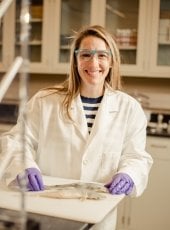
Jill A. Olin is an Assistant Professor in the Department of Biological Sciences at Michigan Technological University, affiliated with the College of Sciences and Arts. She holds a PhD in Environmental Science from the University of Windsor, an MS in Marine Biology from Hofstra University, and a BS in Marine & Freshwater Biology from the University of New Hampshire. Her research focuses on community ecology, trophic interactions, and marine ecosystems, with an emphasis on conservation through biomarker and modeling approaches. Key interests include ecosystem stability, anthropogenic impacts, and food web dynamics. She teaches Ecology and Evolution, Marine Ecology, and Ecogeochemical Tracer Techniques. Her work integrates stable isotope analysis, DNA metabarcoding, and ecological modeling to address questions about species distribution, trophic niche partitioning, and resilience to environmental stressors. Notable projects include studies on Lake Superior fish ecotypes, Gulf of Mexico oil spill impacts, and salt marsh restoration. Dr. Olin collaborates with NOAA on restoration research and has published extensively on trophic ecology, resource partitioning, and ecosystem responses to human activities. While no formal grants or awards are listed, her contributions highlight interdisciplinary approaches to ecological challenges.
Dr. Francis Ward is Assistant Professor in Music Education at Dublin City University's Institute of Education. His interdisciplinary work connects academic scholarship, creative practice, and technology-enhanced learning with emphasis on socially engaged education and inclusive community arts. Research spans music education across formal/informal contexts, technology in music pedagogy, multicultural music education, Irish traditional music/dance, and responsible integration of generative AI in higher education. Current projects include GenAI in capstone assessment and Creative Linguistic Strategies for Irish Dance. Awarded Fulbright Scholar Fellowship (2019-20) and Irish Research Council PhD scholarship. Publications appear in Q1 journals covering virtual transmission of traditional arts, social justice in music education, and playful pedagogies. Creative outputs include compositions and choreography presented internationally. Teaches undergraduate/postgraduate courses in music/arts education and research methods. Co-developed Socially Inclusive Music Education specialism and MEd in Arts Education Practice. Supervises doctoral candidates in music/arts education and creative practice research.
Emily Callander is a Professor of Women’s Health Economics at the Monash Centre for Health Research and Implementation, Monash University, and Head of Discipline in Health Services Management at the University of Technology Sydney (UTS). She leads the Women’s Economics and Value Based Care research program and holds leadership roles in national health policy, including as Vice President of Women's Healthcare Australasia and member of the Pharmaceutical Benefits Advisory Committee Economics Subcommittee. BA in Economics and Policy, Griffith University PhD in Health Economics, University of Sydney Postdoctoral training at NHMRC Clinical Trials Centre and Charles Perkins Centre, University of Sydney Her research focuses on maternal and women's health, utilizing linked administrative data, economic evaluation, and modelled analysis to influence health policy and delivery. Her work spans efficient staffing models, rural health access, national maternity initiatives (e.g., Safer Baby Bundle, Normal Birth Strategy), and cost analyses for global maternal health programs supported by the Gates Foundation. Her recent publications reflect a strong trend in health economic evaluations of maternity care models, medication use in pregnancy, digital health implementation, and preterm birth prevention. These works emphasize real-world applicability, equity, and cost-effectiveness, aligning with her mission to embed economic evidence into health systems. She has been supported by prestigious NHMRC awards, including a Doctoral Scholarship, Early Career Fellowship, and Career Development Fellowship. Her scientific contributions are recognized through active research projects and expert media commentary on maternity care policy. NHMRC Doctoral Scholarship NHMRC Early Career Fellowship NHMRC Career Development Fellowship Emily Callander advises on multiple national and international research projects, often as Chief or Associate Investigator, and collaborates with institutions such as Coventry University. She is actively accepting PhD students and contributes to policy through advisory roles in government and non-profit organizations. Her research is supported by grants from NHMRC, government departments, and international foundations. She leads the Women’s Economics and Value Based Care program at Monash and is a key member of the Transforming Maternity Care Collaborative. Her work is embedded in real-world health systems, partnering with consumers, providers, and policymakers to improve women’s health outcomes globally.
Stephanie Jean Alexander is an Assistant Professor in the Department of English at Indiana State University's College of Arts & Sciences. She holds a Ph.D. in English from Louisiana State University (2014) with emphasis in Women's and Gender Studies and has been teaching at ISU since 2014. She also serves as the Faculty Fellow for Instructional Tools and Program Coordinator for the Master Teacher program. Ph.D., English, Louisiana State University, 2014 M.A., English, Indiana State University, 2008 B.S., English, Indiana State University, 2006 Her research centers on contemporary Irish literature, particularly the works of Seamus Heaney and Paul Muldoon, and intersects with feminist, queer, and trauma theories. She explores themes of maternity, abjection, surveillance, and pastoral poetics in literary texts. Her scholarship also extends into composition, literacy pedagogy, and popular culture studies , where she investigates how media representations shape gender and identity. Her recent publications reveal a strong focus on Irish literary modernism and postmodernism , with increasing attention to gendered narratives during the Troubles and feminist re-imaginings of motherhood . She frequently employs interdisciplinary lenses from psychoanalysis, cultural studies, and feminist theory. Scientific Awards and Honors: Charlotte Zietlow Women Faculty Research Award (2023) Honors College Faculty of the Year (2023) Outstanding Supervisor Award (2018) Professing Excellence and Inspiring Instruction (2019) Nominated for Foundational Studies Excellence in Instruction Award (2025) Nominated for College of Arts and Sciences Outstanding Professor Award (2025) Multiple nominations for Foundational Studies Teaching Award Stephanie Alexander actively contributes to academic service and faculty development. She has chaired technology and curriculum committees, served on the Graduate Council and Foundational Studies Council, and led initiatives in instructional design and academic integrity. As Faculty Fellow for Instructional Tools and Master Teacher Coordinator, she mentors colleagues in pedagogical innovation. She has not received external grant funding as principal investigator, but has contributed to collaborative projects such as the sensory garden initiative. She regularly presents at national conferences including the American Conference for Irish Studies, Popular Culture Association, and National Women's Studies Association. She is involved in developing academic programs and faculty support systems, particularly through her leadership in the Faculty Center for Teaching Excellence and the Learning Management System committees. Her work emphasizes inclusive, empathetic, and technology-enhanced teaching practices.
Xiaoming Guan, MD, PhD is a Professor in the Department of Obstetrics and Gynecology at Baylor College of Medicine and serves as the Division Chief and Fellowship Director of Minimally Invasive Gynecologic Surgery at Texas Children’s Hospital. He is also the Program Director of the Center of Excellence in Gynecologic Surgery (COMIGS) at Texas Children's Hospital, Houston, Texas. His clinical and academic roles highlight his leadership in advanced gynecologic surgical innovation and education. MD – Fujian Medical College, Fuzhou, China MS – Fujian Medical University, Fuzhou, China PhD – Zhejiang University, Zhejiang, China (Medicine/Surgery) Residency – St. Joseph's Hospital and Medical Center, New Jersey (Obstetrics and Gynecology) Fellowship – Baylor College of Medicine, Houston (Minimally Invasive Gynecologic Surgery) Dr. Guan specializes in treating complex gynecologic conditions including endometriosis, uterine fibroids, pelvic masses, and pelvic organ prolapse using state-of-the-art minimally invasive techniques. He is a pioneer in robotic single-site surgery and transvaginal Natural Orifice Endoscopic Surgery (NOTES), applying these methods to advanced pelvic procedures such as sacrocolpopexy, abdominal cerclage, and endometriosis resection. His work emphasizes multidisciplinary collaboration with colorectal, thoracic, and urologic surgeons to optimize patient outcomes. The selected publications reflect a strong focus on surgical innovation, particularly in laparoscopic, robotic, and NOTES-based approaches. Trends include comparative effectiveness studies, technical development, and fertility-preserving strategies. His research bridges clinical application with technological advancement in gynecologic surgery. Surgeon of Excellence in Minimally Invasive Gynecology – Texas Children's Hospital Pavilion for Women Dr. Guan is actively involved in training future surgeons as Fellowship Director and leads a robust research program with over 80 publications. He serves on the editorial boards of the Journal of Minimally Invasive Gynecology , Clinics in Surgery , and Gynecology and Obstetrics Clinical Medicine Journal . He also holds leadership in professional societies, including President of the North American Society of Chinese Obstetricians and Gynecologists. Dr. Guan leads a multidisciplinary surgical team focused on advanced endometriosis and complex pelvic reconstruction. His lab and clinical team integrate robotic platforms and innovative endoscopic techniques to improve surgical precision and patient recovery. Ongoing work includes expanding NOTES applications and refining robotic single-site procedures for broader clinical use.
Shilpa Amin is an Assistant Clinical Professor in the Department of Obstetrics & Gynecology at McMaster University. With over two decades of clinical and research experience, she specializes in reproductive medicine and infertility treatment, contributing to advancements in embryo selection, genetic testing, and ovarian stimulation protocols. Academic affiliation: McMaster University Department: Obstetrics & Gynecology Contact: aminsh@mcmaster.ca Her research focuses on improving fertility outcomes through: Preimplantation genetic testing (PGT-A) Embryo quality assessment Hormonal stimulation optimization Environmental factors in reproductive health PCOS management Clinical adaptations during global health crises Recent work analyzes mi-PGT-A techniques (2025), bisphenol exposure impacts (2024), and pandemic-related treatment modifications (2024), demonstrating her commitment to clinical innovation and evidence-based practice.
Kat Richards (they/them) serves as Assistant Professor of Art Practice in Printmaking at Portland State University's Schnitzer School of Art + Art History + Design, maintaining office hours Tuesdays and Thursdays from 12:00-1:00 pm. Contact is available via katr@pdx.edu at SH 151. Education: Masters of Fine Art in Printmaking, Tyler School of Art, Temple University Richards' research centers on print media as a vehicle for exploring queerness, personal narratives, and archival practices. Their practice fuses traditional printmaking with digital technology to investigate fragmented queer bodies, community protection, and nourishment. Key methodologies include monoprint stenciling, digital replication of analog processes, and participatory projects that activate viewer engagement with themes of identity, grief, and political resistance. The work consistently interrogates the relationship between physical embodiment and reproductive technologies through a trans-queer lens. Recent works (2023-2025) demonstrate intensified exploration of LGBTQIA+ archives through watercolor, gouache, and mixed media. Series like Daily Button Diary transform everyday objects into archival portals, while public installations such as Good Grief merge poetry with community participation. Technical diversity spans monoprint, etching, risograph, and sculptural button installations, unified by consistent engagement with queer symbolism and political commentary. The Color Play series particularly exemplifies the integration of historical queer imagery with contemporary practice. Scientific Awards: No scientific awards or fellowships were mentioned in available documentation Advising and Grants: The provided materials contain no information regarding graduate students advised, research grants, or funded projects. Richards' professional activities focus on creative production and exhibition rather than traditional academic advising structures. Labs and Teams: Richards has participated in residencies at Anderson Ranch Art Center, Vermont Studio Center, The Queer Material Labs, and Women’s Studio Workshop. These engagements involve collaborative printmaking environments, particularly noted in the University of Nebraska Printmaking Department collaboration for Butterfly Cliches are True . No permanent lab affiliation or research team is documented beyond these temporary artistic collaborations.
Andrea Boggio serves as Professor of Legal Studies in Bryant University's College of Arts and Sciences, Department of History and Social Sciences, teaching graduate and undergraduate courses in business law, health law, and international law. He is currently on sabbatical for 2025-26 as Fulbright-Lund University Distinguished Scholar in Public International Law at Sweden's Lund University, fostering US-Sweden human rights research collaboration. His academic credentials include: JSD, Stanford Law School JSM, Stanford Law School LLD, Università Cattolica del Sacro Cuore, Italy Professor Boggio's research pioneers the human right to science framework, examining legal-ethical dimensions of biosciences through lenses of science diplomacy, innovation policy, and global health governance. His seminal 2024 Oxford University Press book The Human Right to Science: History, Development and Normative Content establishes foundational principles for applying human rights law to emerging technologies. Current work investigates gene editing regulation, biobank governance, and scientific freedom during global health emergencies, emphasizing transnational policy coherence and equitable benefit-sharing mechanisms. Analysis of his recent publications reveals a critical trajectory connecting international human rights instruments with contemporary scientific challenges, particularly in biotechnology regulation where he advocates for human rights-based approaches over purely ethical frameworks. His scholarship demonstrates increasing focus on operationalizing the right to science through indicator development and model legislation. Key recognitions include: Santander Faculty Research Collaboration Award (2017) Fulbright-Lund University Distinguished Scholar (2025-26) Multiple MERIT Awards (2009-2015) Summer Research Stipends (2013-2015) As Associate Editor of Human Reproduction (European Society of Human Reproduction publication) and Journal of Legal Studies Education , he shapes scholarly discourse while serving on the Massachusetts Science & Technology Policy Fellowship Advisory Board, College Board's CLEP Business Law Committee, and as GESDA Foundation consultant. A New York Bar member, he maintains active legal practice alongside academia. His Faculty Fellowship at Bryant's Center for Health and Behavioral Sciences drives interdisciplinary integration of legal perspectives into health sciences research, particularly through science diplomacy initiatives examining how human rights frameworks can guide international scientific collaboration during geopolitical tensions.
Dr. Laura Oakley is an Associate Professor and Co-Programme Director for the Distance Learning Epidemiology programme at the London School of Hygiene and Tropical Medicine (LSHTM), within the Department of Non-communicable Disease Epidemiology in the Faculty of Epidemiology and Population Health. She also holds an affiliated researcher position at the Centre for Fertility and Health (CeFH) at the Norwegian Institute of Public Health in Oslo, Norway, facilitating international collaborations on perinatal epidemiology using Scandinavian registry data. Dr. Oakley's educational background includes: Undergraduate degree in Sociology from the London School of Economics MSc in Epidemiology from LSHTM PhD from LSHTM focusing on determinants of infertility in women Prior research experience at the Centre for Research in Primary Community Care, University of Hertfordshire Research position at the National Perinatal Epidemiology Unit, University of Oxford (2009-2014) As an epidemiologist specializing in maternal, reproductive, and child health, Dr. Oakley's research spans the epidemiology of infertility, pregnancy complications, perinatal outcomes, effects of in-utero exposures, and infant feeding practices. Her work emphasizes health inequalities and socioeconomic determinants of breastfeeding across diverse global settings. Methodologically, she combines interventional and observational approaches, leveraging large-scale registry data from high-income countries while conducting research in low- and middle-income contexts. Her affiliation with CeFH provides access to exceptional Scandinavian registry linkages that support her perinatal epidemiology research. Dr. Oakley's publication record reveals a strong focus on the intersection of infectious disease (particularly COVID-19) with pregnancy outcomes, reflected in her leadership of the Nordforsk-funded SCOPE projects. She also maintains significant contributions to reproductive health through the British National Surveys of Sexual Attitudes and Lifestyles (Natsal), and leads epidemiological research on sickle cell disease in pregnancy. Her work on breastfeeding patterns across sub-Saharan Africa demonstrates her commitment to understanding long-term health and educational outcomes. Dr. Oakley serves as Co-Programme Director for the Epidemiology by Distance Learning programme at LSHTM, teaching multiple modules including Fundamentals of Epidemiology, Basic Epidemiology, Foundations of Reproductive Health, and Research, Design and Analysis. She provides academic guidance as a personal tutor for MSc Reproductive and Sexual Health Research and MSc Epidemiology students, while supervising research projects. Her grant portfolio includes the Research Council of Norway-funded program on assisted conception and cancer risk, the NIHR-funded TAPS2 feasibility trial on sickle cell disease in pregnancy, and the MRC-funded GUIDES trial on gestational diabetes in Uganda and India. Through her international collaborations with institutions across Norway, Sweden, Denmark, Canada, Uganda, and India, Dr. Oakley maintains a global research perspective that bridges academic epidemiology with practical applications for improving maternal and child health worldwide. Her work on the socioeconomic determinants of breastfeeding and pregnancy outcomes in women with sickle cell disease addresses critical health disparities in maternal care.
Dr. Siun Gallagher is a Research Fellow at the Sydney School of Public Health , affiliated with the Faculty of Medicine and Health at the University of Sydney. Her work bridges biomedical ethics, health policy, and qualitative research methodologies. Education : Bachelor of Medicine, Trinity College Dublin Master of Public Health, University of Sydney PhD in Medicine, University of Sydney Research Interests focus on: ethical challenges in clinical practice, professionalism in commercialized medicine, health technology assessment, and equity in healthcare resource allocation. She explores how systemic complexity affects medical decision-making, particularly in assisted reproductive technology (ART) and genomic screening. Recent Publications examine commercial influences in ART, ethical frameworks for ‘add-ons’ in reproductive care, testimonial injustice in patient-clinician interactions, and macroallocation dynamics in health systems. Her work emphasizes qualitative insights into professional values and policy conflicts. Current Projects include the gEnomics4newborns initiative, which integrates ethics and equity into genomic newborn screening. She also critiques informed financial consent and analyzes patient-led demand in ART. Teaching involves the Master of Bioethics program, where she imparts expertise in ethical reasoning and health policy.
Nicole Magaldi is a Professor in the Department of Communication Sciences and Disorders at Long Island University, School of Health Professions. With over 20 years of clinical experience in hospitals, early intervention, schools, and private practice, she brings a strong applied perspective to her academic work. Her expertise centers on child language disorders, particularly Developmental Language Disorder and Autism Spectrum Disorder. Educational Background: B.S., Cortland University M.A., Kean University Ph.D., New York University Dr. Magaldi's research focuses on evidence-based practice in child language disorders, clinical education methods, and the impact of reproductive factors on neurodevelopmental outcomes. She has published extensively on terminology navigation, pedagogical tools like problem-based learning, and early identification of autism. Her work bridges clinical practice and academic training, emphasizing practical solutions for clinicians and educators. The recent publications highlight a growing interest in integrating educational strategies with clinical rigor, particularly in training future speech-language pathologists. Her research also explores environmental and reproductive risk factors associated with Autism Spectrum Disorder, contributing to broader public health understanding. Scientific Awards: Dissertation of the Year, New York University Dr. Magaldi is actively involved in professional development through her membership in the American Speech-Language-Hearing Association (ASHA) and service on the Professional Development Committee for ASHA’s Special Interest Group 1 (SIG 1). While specific grant details are not listed, her sustained research output suggests ongoing scholarly and possibly funded activity. She mentors graduate students through research collaboration and clinical supervision, though no named advisees are listed. She is affiliated with the Department of Communication Sciences and Disorders, which operates under the School of Health Professions at LIU. Her work contributes to both clinical innovation and academic advancement in speech-language pathology.
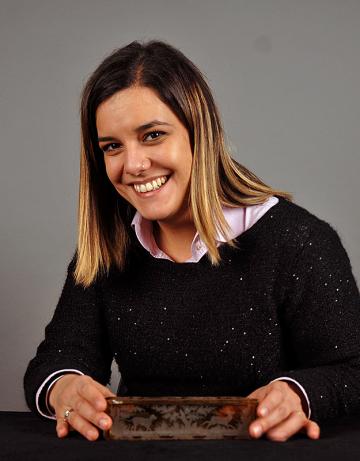
Inês Coutinho is a permanent Assistant Professor in the Department of Conservation and Restoration at NOVA University Lisbon’s Faculty of Sciences and Technology (FCT). She teaches and conducts research at the intersection of conservation science, archaeometry, and glass studies, with a particular focus on Portuguese and European heritage glass. Education PhD in Conservation Sciences, 2016 – specialisation in glass archaeometry. Research Interests Her scientific agenda centres on the archaeometry of glass and ceramics , integrating experimental archaeology , materials science , and heritage conservation . She investigates: Historical recipes, trade routes, and technological transfer of glass production in Portugal and Europe. Glass corrosion mechanisms to devise improved conservation treatments. Provenance studies using chemical and isotopic fingerprinting of raw materials and artefacts. Non-invasive imaging (µ-CT) for documentation and diagnosis of degradation pathologies. Publication Trends Across 25 peer-reviewed works (2016-2025), Coutinho’s research spans Roman to Early Modern periods , with case studies in Troia, Lisbon, Zadar, Granada, Dublin, and beyond. A clear trend emerges: combining micro-analytical techniques (SEM-EDS, LA-ICP-MS, µ-CT) with experimental reconstructions to reconstruct technology, provenance, and conservation protocols for luxury, utilitarian, and stained glass. Grants & Projects Principal Investigator (team member) on The Stained Glass Collection of King Ferdinand II of Portugal – Assembling the Puzzle (2012-2016). Laboratories & Teams She carries out analyses within the Conservation and Restoration laboratories at FCT/UNL, collaborating with national museums, international partners, and the Doctoral Programme in Heritage Conservation and Restoration.
Corinne Wallace is an Adjunct Assistant Professor in the Department of Civil Engineering at McMaster University , with research expertise at the intersection of water security, climate change, public health, and gender equity. Her work spans both technical engineering analysis and community-engaged studies, particularly focusing on marginalized populations in Canada, East Africa, and South America. Dr. Wallace's research interests include: Water-Health Nexus Climate Change Impacts on Disease Gender Equity in Water Access Indigenous Water Governance Mosquito-Borne Disease Modeling Rainwater Harvesting Systems Her publication trends show increasing focus on climate-health interactions (2025), gender-water linkages (2024), and machine learning applications for water quality analysis (2025). She employs mixed-methods approaches and works closely with First Nations communities and international development organizations. Dr. Wallace utilizes art-science communication strategies like the Virtual Water Gallery to transform water and climate knowledge dissemination. Her recent work explores EDI (Equity, Diversity, Inclusion) implementation in large research networks and conceptual frameworks for climate-water equity.
Dr. Sanne Frequin is an Assistant Professor in Art History at Utrecht University within the Faculty of Humanities. Her work bridges traditional art historical research with digital methodologies. Academic coordinator of the Master’s program in Art History Board member of the Utrecht University Teaching Academy (T@UU) Coordinator of the Digital ArtLab Her research focuses on digital and 3D reconstruction of medieval and early modern art , particularly lost or damaged artefacts. Key projects include: The 3D reconstruction of Guy of Avesnes’ tomb Digital analysis of the Lindau Master’s panel painting Development of the #MedievalMe serious game She actively engages in science communication through: Radio appearances (NPO Radio 1’s De Wild in de Middag , OVT ) Collaborations with heritage institutions (Museum Catharijneconvent, KB National Library) Public projects like the Medieval Meme Machine
Kevin Coward is an Associate Professor at the University of Oxford's Nuffield Department of Women's and Reproductive Health (NDWRH), where he serves as Director of Taught Programmes and Lead for Testicular Cryopreservation Research. With expertise in reproductive physiology and endocrinology, he has directed the MSc in Clinical Embryology for 16 years and supervises numerous DPhil students in the fields of male infertility, fertilization mechanisms, and fertility preservation. Dr. Coward earned his BSc and PhD from the University of Stirling before holding post-doctoral positions at several prestigious London institutions. His educational background includes a Postgraduate Diploma in Learning & Teaching in Higher Education from Oxford, where he is a Senior Fellow of the Higher Education Academy and Fellow of the Royal Society of Biology. His research focuses on the molecular mechanisms of oocyte activation at fertilization, particularly the role of sperm-specific phospholipase C (PLCζ) in male infertility. His team investigates how PLCζ relates to conditions such as oocyte activation deficiency and total fertilization failure, while also developing nanoparticle- and exosome-mediated delivery systems for gametes and embryos. A significant aspect of his work involves fertility preservation strategies for prepubertal boys undergoing cancer treatment. Dr. Coward's recent publications demonstrate strong focus on male infertility research methodology, testicular tissue cryopreservation techniques, and the application of nanotechnology in reproductive medicine. His work shows increasing emphasis on developing standardized outcome measures for male infertility research and refining techniques for preserving fertility in young cancer patients. 2019 - Masters Teacher of the Year (FindAMasters and FindAPhD) 2018 & 2017 - Bronze Employer Award for STEM outreach 2018, 2014, 2013 - OxTALENT Awards for teaching innovation 2016 - Finalist, Royal Society of Biology Higher Education Bioscience Teacher of the Year 2015 - University Teaching Excellence Award and Nanoscience Research Leadership Award 2012 - University of Oxford Major Educator Teaching Excellence Award Dr. Coward has supervised 19 DPhil students to completion, 72 MSc students in laboratory settings, and numerous undergraduate and outreach students. His research group has secured funding from diverse sources including The Royal Society, Wellcome Trust, and European Commission. The group collaborates with clinical partners at Oxford University Hospitals NHS Foundation Trust on fertility preservation for young cancer patients. The Coward Research Group, based in the Nuffield Department of Women's and Reproductive Health, maintains active collaborations with The Fertility Partnership (Oxford), University of Dundee, University of Edinburgh, and industry partners like U-Ploid. The group regularly hosts school outreach activities and has won multiple awards for their STEM engagement efforts.