Sean Ehlman is an Assistant Professor in the Department of Biological Sciences at the University of South Carolina's McCausland College of Arts and Sciences. He leads the Ehlman Lab, which focuses on evolutionary behavioral ecology using integrated lab, field, and theoretical approaches. His research examines how ecological and evolutionary processes shape animal behavior development, with specific interests in: Phenotypic plasticity in response to environmental changes Origins and maintenance of behavioral individuality Aquatic ecosystem dynamics using Poeciliid fish models Application of tracking technology and AI in behavioral mapping Recent publications (2023-2024) demonstrate his interdisciplinary approach, combining behavioral ecology with data science to study: Developmental impacts of predator exposure Reproductive individuality in controlled environments Genotype-phenotype relationships in evolution Big data applications in behavioral research
Jennifer Kosmin serves as an Associate Professor in the History Department within Auburn University's College of Liberal Arts. She joined Auburn University in fall 2022 after previously holding an Assistant Professor position at Bucknell University from 2015-2022. Her academic career includes a postdoctoral fellowship at Rutgers University's Center for Historical Analysis (2019-2020) and a Fulbright scholarship in Italy (2011-2012). Dr. Kosmin specializes in the history of medicine and science with a focus on early modern Italy. Her research explores the intersections of gender, the body, sexuality, and knowledge production, particularly regarding women's roles in medical and scientific knowledge formation. She engages with topics including anatomical modeling, reproductive technologies, midwifery education, and the history of the fetus. Her scholarly output reveals a consistent focus on the social and political contexts of medical practices in early modern Europe, particularly examining how institutions regulated reproduction and gendered medical knowledge. Her work demonstrates expertise in both textual analysis of historical medical treatises and material culture approaches to medical history. Dr. Kosmin teaches courses including the Technology and Civilization sequence, History of Sexuality, History of Madness, and Special Topics in Gender & Medicine. She actively mentors graduate students interested in the history of medicine, reproduction, and sexuality.
Christiane Woopen is a Professor for Ethics and Theory of Medicine at the University of Cologne , where she serves as Executive Director of the Cologne Center for Ethics, Rights, Economics, and Social Sciences of Health (ceres) . Her leadership extends to roles such as Head of the Research Unit Ethics and former Vice-Dean for Academic Development and Gender at the Medical Faculty, University Hospital Cologne. Educational Background: Medical degree from the University of Bonn, followed by specialization in gynecology and obstetrics before transitioning to bioethics. Her research focuses on ethical dimensions of reproductive medicine, neuroethics, personalized medicine, genome editing, and health in the digital age . She leads international projects addressing aging, health literacy, and AI governance. Recent publications emphasize genome editing policy, AI in healthcare, and ethical challenges of deep brain stimulation , reflecting her interdisciplinary approach to bioethics. Scientific Awards: Federal Cross of Merit 1st Class (2018) Member, European Academy of Sciences and Arts (2014) She has held advisory roles in national and international ethics bodies, including the European Group on Ethics in Science and New Technologies and UNESCO's International Bioethics Committee. Her leadership in ceres involves fostering research on aging, health literacy, and digital transformation, with a commitment to public engagement and interdisciplinary collaboration.
Rebecca Jordan-Young is the Ann Whitney Olin Professor in the Department of Women's, Gender and Sexuality Studies at Barnard College. Her interdisciplinary scholarship bridges feminist science and technology studies, neuroscience, endocrinology, and public health, critically examining how gender, sexuality, race, and class shape scientific knowledge and practice. Research Interests: Her work focuses on the intersection of science and social hierarchies, particularly how biological concepts like testosterone and brain sex differences are culturally constructed and politically deployed. She challenges entrenched narratives in neuroscience and endocrinology, advocating for more rigorous, context-sensitive, and ethically grounded research. Her recent publications reveal a consistent trend of interrogating the scientific validity of hormone-based gender assumptions, especially in sports, reproduction, and neurodevelopment. Keywords across her work include feminist STS, gender in science, health disparities, and neurogenderings. She emphasizes methodological reform and social justice in scientific practice. Scientific Awards: Gold Medal in Science, Independent Publisher Book Awards Distinguished Book Award, Association for Women in Psychology (2011) John Simon Guggenheim Fellowship (2016-17) ACL Fellow (2016-17) Tow Professorship, Barnard College (2013-15) Visiting Professor Award, Royal Dutch Academy (2013-14) Health Disparities Scholar, NCMHD (2003-04) Advising and Grants: While specific students are not listed, she has led multiple funded research projects, including NSF and NIH grants. Her grants focus on testosterone models, gender verification in sports, and sexual minority health. She has served as Principal Investigator on projects funded by the National Science Foundation, NIH (NIDA), and Barnard College, reflecting sustained external support for her critical science scholarship. Labs and Collaborative Networks: She is an active member of the international Neurogenderings Network , collaborating with scholars across neuroscience, anthropology, sociology, and political science. Her interdisciplinary collaborations span from physical chemistry to cultural studies, emphasizing dialogic and feminist approaches to science.
Neil Maddox is an Associate Professor in the Law Department at Maynooth University. He holds a doctoral degree from University College Dublin (UCD) and was a Government of Ireland Postgraduate Scholar. Prior to joining Maynooth, he taught law at UCD and the Dublin Institute of Technology. His research focuses on property rights in human biomaterials, regulatory challenges in artificial reproductive technology (ART), and broader areas of property law, health law, biotechnology law, and constitutional law. Education: Doctorate in Law (Government of Ireland Postgraduate Scholarship), University College Dublin Graduate of King's Inns (Legal Education) Research Interests: Property rights in human body tissues and biomaterials Legal frameworks for ART, including fertility preservation and posthumous conception Constitutional dimensions of property law and housing rights Biotechnology ethics and legal regulation Publications Trends: Neil’s work bridges legal theory and practice, with a focus on contemporary issues like cryptocurrency regulation, derelict site law reforms, and the intersection of health law with biotechnology. His recent articles address pandemic legal responses and ethical challenges in fertility preservation for minors. Awards: No scientific awards explicitly listed. Advising & Grants: No formal advisees or grant details provided. His contributions focus on legal commentary, book publications, and conference engagements. Labs/Teams: Active in interdisciplinary legal research networks, including the Irish Association of Law Teachers and the European Association of Health Lawyers.
Farren Yero is an Assistant Professor in the History Department at Lehigh University's College of Arts and Sciences, where she specializes in the history of health, medicine, and gender with a focus on Latin America and the Caribbean. Her interdisciplinary scholarship bridges medical history, gender studies, and Atlantic world history, examining how race, gender, and power have shaped health experiences and medical practices in the early modern period. Dr. Yero received her Ph.D. in History and Gender, Sexuality and Feminist Studies from Duke University in 2020, an M.A. in History from Duke University in 2016, an M.A. in Latin American Studies from Tulane University in 2013, and a B.A. in Anthropology from the University of Florida in 2010. Her academic journey began with archaeological work at the Kingsley Plantation in Jacksonville, Florida, which shaped her interest in Atlantic history and the transatlantic slave trade. Yero's research focuses on health disparities, care practices, and disease experiences in the early modern Atlantic world, with particular attention to smallpox vaccination history. Her current book project, Atlantic Antidote: Race, Gender, and the Birth of the First Vaccine , explores racial and gendered intersections of labor, childrearing, and disease prevention in the Spanish Americas. She is also developing a history of the Caribbean's earliest smallpox epidemic (1519) through the life of America's first "patient zero." Her work consistently examines how marginalized communities navigated health challenges within colonial contexts. Her publications reveal a strong emphasis on vaccine history, gender and medicalization, Afro-Caribbean religious practices during epidemics, and the intersections of race, citizenship, and public health. Yero's scholarship demonstrates how medical history provides critical insights into broader social structures, particularly regarding race, gender, and power dynamics in colonial societies. Nineteenth Century Studies Dissertation Award from the Latin American Studies Association (LASA) Richmond Brown Dissertation prize, Honorable Mention, from the Latin American and Caribbean Section of the Southern Historical Association Dr. Yero has received significant research support from the National Endowment for the Humanities, American Council of Learned Societies, Fulbright-Hays program, Andrew W. Mellon Foundation, John Carter Brown Library, Newberry Library, Institute of Advanced Studies in the Humanities at the University of Edinburgh, and Omohundro Institute of Early American History and Culture. She previously held postdoctoral positions at Binghamton University, College of William and Mary, University of Edinburgh, and Duke University. At Lehigh, she teaches courses on health and society in Latin America, gender and medicine, pandemics, and digital/public history methods.
Roberto Andorno is an Associate Professor ('Privatdozent') of biomedical law and bioethics at the Faculty of Law, University of Zurich, and a Research Associate and PhD Program Coordinator at the Institute of Biomedical Ethics and History of Medicine. He holds doctoral degrees in law from the University of Buenos Aires (1991) and Paris-Est Créteil (1994), and has held visiting and fellowship positions at Laval University, University of Göttingen, and University of Tübingen. He is actively involved in international bioethics through UNESCO, including serving on the International Bioethics Committee (1998–2005) and the Expert Group on the Ethics of Neurotechnology (2024). Doctor of Law, University of Buenos Aires (1991) Doctor of Law, Paris-Est Créteil University (1994) Privatdozent, University of Zurich PhD Program Coordinator, Institute of Biomedical Ethics, University of Zurich His research focuses on the intersection of law, human rights, and bioethics, with key interests in neuroethics, human germline editing, scientific integrity, and end-of-life care. He has extensively published on mental privacy, cognitive liberty, and the ethical implications of neurotechnologies. His work emphasizes human dignity as a foundational principle in bioethics and law. His recent publications (2021–2023) reveal a strong trend toward neuroethics and neurorights, with significant contributions to debates on mind-reading technologies, neurosurveillance in the workplace, and the need for new human rights in the age of neuroscience. He also continues to publish on assisted suicide, palliative sedation, and global bioethics post-pandemic, reflecting a broad and evolving research agenda. Member, UNESCO International Bioethics Committee (1998–2005) President, European Society for Philosophy of Medicine and Healthcare (2014–2016) Researcher, EU Project 'INTEGRITY' on Scientific Integrity (2019–2021) Member, UNESCO Expert Group on the Ethics of Neurotechnology (2024) Roberto Andorno has not publicly listed specific advisees, but as Coordinator of the PhD Program in Biomedical Ethics and Law, he plays a central role in mentoring doctoral candidates. He has participated in major research projects funded by the EU and UNESCO, indicating substantial grant involvement. He leads discussions on bioethics education and integrity training, advocating for stronger integration of research ethics in medical curricula. He is affiliated with the Institute of Biomedical Ethics and History of Medicine at the University of Zurich, a leading center for bioethics research in Europe. His work often involves collaboration with international scholars and institutions, contributing to global policy development in bioethics and human rights.
Sue Hum serves as Professor of English in the Department of English at the University of Texas at San Antonio (UTSA), College of Liberal and Fine Arts, where she has held significant administrative roles including Undergraduate Advisor of Record and Assistant Dean of Assessment for the Quality Enhancement Plan. Her research critically examines intersections of race, gender, and digital media through visual rhetoric and quantitative literacy frameworks. She investigates how racialized gazes operate in cultural artifacts like Disney's Mulan while developing pedagogical approaches for integrating numerical reasoning into professional writing instruction, bridging theoretical composition studies with practical classroom applications. Publications reveal consistent thematic evolution from foundational work in Asian American rhetoric (2006-2010) toward contemporary explorations of quantitative literacy in technical writing (2017), demonstrating sustained engagement with critical race theory's application to writing pedagogy and digital communication environments. Scientific Awards: President's Distinguished Award for Core Curriculum Teaching (2015) As Undergraduate Advisor of Record, she guided English majors through degree requirements while contributing to institutional assessment through the Quality Enhancement Plan. Her teaching portfolio spans undergraduate courses in composition and popular culture to graduate seminars on race/rhetoric and e-composition theory, reflecting deep commitment to curriculum development across educational levels.
Fernando Campos serves as an Assistant Professor in the Department of Anthropology at The University of Texas at San Antonio (UTSA), College of Liberal and Fine Arts. His research investigates evolutionary responses of nonhuman primates to environmental change, with direct applications for conservation amid the global primate extinction crisis driven by anthropogenic pressures. His academic credentials include: PhD in Anthropology, University of Calgary (2014) MA in Anthropology, University of Calgary (2008) BSc in Biology, California Institute of Technology (2002) Dr. Campos' research integrates behavioral ecology , biodemography , and conservation science to study primate life histories, aging, and responses to global change. Using a biodemographic approach, he examines links between environmental variability, health outcomes, and life trajectories in wild populations through long-term field studies of white-faced capuchins in Costa Rica and baboons in East Africa. Analysis of his recent publications reveals a methodological emphasis on non-invasive biomarkers (fecal proteomics, DNA methylation) to quantify physiological impacts of stress and aging. This work demonstrates how social structures and ecological conditions interact to shape survival and reproductive success, providing critical data for evidence-based primate conservation strategies. He directs the Campos Lab , which maintains active field sites in Costa Rica and Kenya, and contributes to cross-species primate life history databases for comparative analyses of demographic processes.
Robyn B. Adams is an Assistant Professor in the Department of Advertising & Brand Strategy at Texas Tech University's College of Media & Communication. Their research focuses on Black feminist health communication, particularly exploring reproductive justice for Black LGBTQ+ communities through narrative-based methodologies. Robyn holds a B.A. and M.A. from Texas Tech University and is completing a Ph.D. in Information and Media from Michigan State University. Key research areas include: Reproductive health disparities among marginalized populations Storytelling as an empowerment tool in healthcare Health communication in digital spaces Intersectional approaches to public health advocacy Current projects center on a groundbreaking dataset of Black queer birthing experiences, combining ethnographic storytelling with health justice frameworks. Their work frequently intersects with community activism, including volunteer efforts at Dallas-based reproductive justice organizations. Publications span topics from vaccine hesitancy to telemedicine barriers, consistently emphasizing equity-centered communication strategies. Methodological interests include qualitative content analysis and participatory action research.
Marsha J. Tyson Darling is a Professor in the Department of African, Black and Caribbean Studies and the History Department at Adelphi University, where she also serves as Director of the Center for African, Black & Caribbean Studies Programs and Special Assistant to the President for Strategic Initiatives. She holds a Ph.D. from Duke University and has held faculty positions at Georgetown University, Columbia University, and Wellesley College, among others. Ph.D., Duke University (1982) M.A., Duke University (1975) B.A., Vassar College (1973) A.A. w/ Honors, CUNY College of Staten Island (1971) Her research centers on the intersection of race, gender, and biotechnology, with a focus on reproductive justice, civil rights, voter suppression, and the ethical implications of genetic technologies. She explores how marginalized communities, especially women of color, are impacted by emerging biotechnologies and public policies. Her work critically examines consumer-driven eugenics, surrogacy, and the privatization of genetic knowledge. Her recent publications reflect a strong thematic focus on reproductive rights, globalization, and historical justice. She has contributed extensively to edited volumes on Africana Studies, voting rights, and reproductive ethics. Her scholarship spans historical analysis, policy critique, and feminist bioethics. Recipient of Fulbright and Rockefeller Fellowships Named in Diverse Issues in Higher Education’s Top 25 Women in Higher Education (2017) NAACP Excellence in Higher Education Award (2009) Anna and Samuel Pinanski Endowed Award for Excellence in Teaching (1984) She has advised numerous senior theses across multiple institutions and has been a dedicated mentor to students. She has also led curriculum development initiatives, including freshmen seminars on social justice and human rights. Her leadership extends to community outreach, public lectures, and media appearances on civil rights and reproductive justice. She serves on advisory boards and is actively engaged in national conversations on racial healing and transformation.
Jonathan Y. Huang, PhD, serves as an Assistant Professor in the Department of Epidemiology at the University of Hawaiʻi at Mānoa, focusing on translating epidemiological research into actionable public health interventions through rigorous quantitative methods. His academic credentials include: PhD in Epidemiology with Certificate in Public Health Genetics from the University of Washington, Seattle MPH in Community-Oriented Public Health Practice from the University of Washington, Seattle BSc in Biochemistry and English Literature from the University of Virginia Dr. Huang’s research examines social and biological determinants of early child health and development, with specific emphasis on environmental contaminant effects, exposome social determinants, placental multi-omic pathways, paternal health influences, and mHealth interventions for expectant couples. His methodological expertise strengthens causal inference in life-course epidemiology. Publication trends reveal consistent contributions to environmental-child health interfaces, with recent work addressing pandemic impacts on children, socioeconomic exposome mapping, and multi-omic mediation analysis across international birth cohorts. He directs competitively funded birth cohort studies across four continents and holds editorial positions at the International Journal of Epidemiology (Associate Editor) and Fertility & Sterility (Methodological Editor), reflecting his methodological leadership.
Dr. Gábor Koloh is a contemporary Assistant Professor and Research Fellow at the Eötvös Loránd University (Department of Economic and Social History) and the HUN–REN RCH Institute of History . His scholarly work focuses on demographic history , social history , and rural economic structures , with particular emphasis on fertility transitions , household organization , and modernization processes in 19th-20th century Hungary. Education : Law (ELTE), Aesthetics (BA), MA and PhD in Economic and Social History (supervised by György Kövér) Research Themes : Demographic change in interwar Hungary Ethnic agricultural practices in Baranya Temporal/spatial patterns in peasant communities Social mobility of Protestant clergy Methodology : Micro-historical analysis, family reconstitution, manuscript source interpretation Current Projects : Interdisciplinary studies on pronatalist discourse, cooperative territorial development, and aristocratic demographic patterns
Maria Pilar Coy Fuster is a Full Professor at the University of Murcia , affiliated with the Faculty of Veterinary Medicine and the Department of Physiology . Her research focuses on reproductive physiology, in vitro fertilization (IVF), oviductal mechanisms, epigenetics, and assisted reproductive technologies (ART) in mammals, particularly pigs and cattle. Education : Degree in Veterinary Medicine, University of Murcia (1987) PhD in Veterinary Medicine, University of Murcia (1991) Diplomate in Animal Reproduction, European College of Animal Reproduction (2001) Research Interests encompass understanding oviductal glycoproteins like OVGP1 that regulate polyspermy, genomic and proteomic analysis of reproductive fluids, epigenetic impacts of ART, and developing biobanks for reproductive biofluids. She co-discovered a conserved oviductal mechanism in ungulates (absent in humans) that enhances IVF efficiency, leading to a PNAS publication and a patent. Scientific Awards include: Mention of Quality by the Spanish Ministry of Education Mention of Excellence by the Spanish Ministry of Education She has secured substantial funding, including a €3.8 million European Horizon 2020 grant for the Rep-Biotech Marie Sklodowska-Curie program, producing 15 international PhDs. Currently, she leads the AFRODITA network. Teaching Contributions include designing the internationally recognized Master and PhD programs in Reproductive Biology and Technology at the University of Murcia. She plays a leadership role as an Associate Editor for journals like Molecular Reproduction and Development and Molecular Human Reproduction .
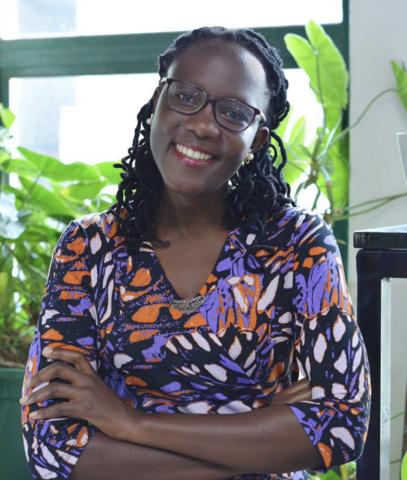
Dr. Dorothy Atuhura is an Assistant Professor of Black Studies at the University of Missouri's College of Arts and Science. She holds a Ph.D. in English from the University of Missouri, and M.A. degrees in Literature and Linguistics from Makerere University (Uganda) and the University of Leeds (UK). Her interdisciplinary research focuses on Black gender and sexuality studies in global contexts, particularly Black women and girls' experiences with race, migration, health, and educational access. Education: PhD - English (MU), MA - Literature (Makerere University), MA - Linguistics (University of Leeds) Her research explores intersections of gender/sexuality with race, global migration patterns, healthcare frameworks, and educational equity. She analyzes Black literary/cultural expressions from Africa and the diaspora, challenging dominant narratives about marginalized communities. Her recent publications (2016-2023) critically examine themes like technology in African education, pandemic discourse metaphors, humanitarian film ethics, and queer visibility in transnational contexts. She is currently developing two book projects: Culture Wars: Unmasking Persistence of Gendered 'Harmful' Bodylore and Queer Voices and Shadows: Examining Gender and Sexuality through Africa . Teaching includes courses on Black women's historical studies, reproductive justice, and Black Studies foundations.