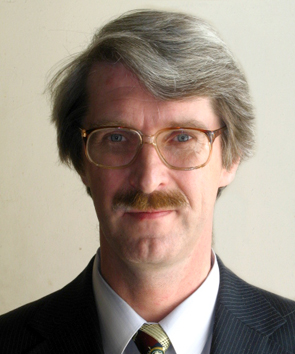
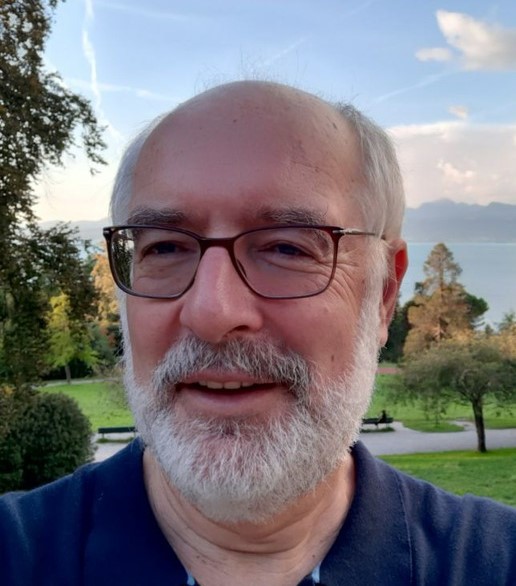
Max Klimm is an Assistant Professor for Discrete Optimization at Technische Universität Berlin, affiliated with Faculty II – Mathematics and Natural Sciences and the Department of Mathematics. He leads the research group in Discrete Optimization and holds editorial roles at journals like the International Journal of Game Theory and Operations Research Forum . His academic journey includes a PhD in Mathematics from TU Berlin (2012), followed by roles as an Assistant Professor at Humboldt-Universität zu Berlin and Head of the Junior Research Group at the Einstein-Center for Mathematics. His research focuses on mathematical optimization, game theory, and mechanism design applied to multi-agent systems in traffic, telecommunications, and economics. Recent work addresses equilibrium computation in congestion games, stochastic optimization, and algorithmic challenges in network design. Key projects include Combinatorial Network Flow Methods for Gas Markets and the Math+ projects on mechanism design and evolutionary models for networks. Teaching responsibilities include courses on Discrete Optimization, Algorithmic Game Theory, and introductory mathematical courses. His research has been funded by DFG, Einstein Center, and Math+ initiatives. Notable contributions include advancements in parametric flow algorithms, impartial selection mechanisms, and reconstructing historical road networks using cost-benefit models.
Prof. Thomas Tröger is a Professor of Economics at the University of Mannheim since 2010. His expertise lies in Game Theory and Microeconomics, with notable contributions to mechanism design, auctions, and collective action problems. He holds a doctorate in Economics from the University of Bonn and has held positions at the University of California, Santa Barbara (Assistant Professor) and the University of Bern (Associate Professor). His research focuses on informed-principal problems, voting mechanisms, and task allocation dynamics. Education: Doctorate in Economics, University of Bonn Postdoctoral Fellowship at University College London Studies in Mathematics at Darmstadt and Karlsruhe Research Interests: Game theory applications in mechanism design Auctions and resale dynamics Volunteer coordination in unpleasant and pleasant tasks Social distancing policies with private health signals Articles Trends: Recent work explores solutions to the informed-principal problem via the Neo-Optimum framework and analyzes social distancing strategies with private health data. Earlier contributions include the Multiple-Volunteers Principle for task assignment and analysis of eBay’s second-chance offers. Advising & Grants: While specific advisees are not listed, his academic roles suggest extensive mentoring in graduate economics. Grants and labs are not explicitly mentioned in the text.
Frank Puppe is a Full Professor of Computer Science at the University of Würzburg, Germany, where he holds the Chair of Computer Science VI (Artificial Intelligence and Applied Computer Science) within the Faculty of Mathematics and Computer Science. He is also affiliated with the Center for Artificial Intelligence and Data Science (CAIDAS) and leads research in artificial intelligence, knowledge systems, and applied computer science. His educational background includes a Diploma in Computer Science from Bonn University (1983), a dissertation on Diagnostic Problem Solving from Kaiserslautern University (1986), and a habilitation on Problem Solving with Expert Systems from Karlsruhe University (1991). Professor Puppe's research spans multiple domains of artificial intelligence and its applications. His primary focus areas include Medical Image Analysis , where he develops AI systems for endoscopic disease detection and medical information extraction; Document Analysis and OCR , with significant contributions to processing historical documents and musical manuscripts; and Information Extraction from diverse domains including medical, legal, and literary texts. His work in E-Learning and E-Assessment has led to innovative systems for automatically evaluating programming assignments and argumentation structures. His recent publications demonstrate a strong interdisciplinary approach, bridging computer science with medicine, digital humanities, and law. A notable trend is the application of deep learning techniques to historical document analysis and medical imaging, while maintaining a strong foundation in knowledge-based systems. His research consistently focuses on practical applications of AI that solve real-world problems across multiple domains. 2015-2017: Senator at University of Würzburg 2011-2013: Dean at University of Würzburg 2008-2011: Dean of Students at University of Würzburg Professor Puppe leads multiple significant research projects including KINERGY (optimization of heating systems), DZ-PTM (order entry optimization in radiology), Corpus Monodicum (edition of medieval Latin music), and projects related to adenoma detection in colonoscopy. His laboratory develops tools such as OCR4all for historical document processing and it4all for programming assessment.
Mario Günzel is a Researcher at the Department of Computer Science, Faculty of Computer Science at Technical University of Dortmund, where he works in the Design Automation for Embedded Systems research group under Prof. Dr. Jian-Jia Chen. Having completed his PhD in 2024 with a dissertation on property-based timing analysis of distributed real-time systems, he has established himself as a leading researcher in real-time systems with over 30 publications and multiple prestigious awards including Best Paper Awards at ECRTS 2023 and EMSOFT 2024, as well as an Outstanding Paper Award at RTSS 2024. PhD in Computer Science, Technical University of Dortmund (2024) M.Sc. in Mathematics, University of Duisburg-Essen (2019) B.Sc. in Mathematics, University of Duisburg-Essen (2017) Günzel's research focuses on the theoretical and practical aspects of real-time systems, particularly in self-suspending tasks and end-to-end latency analysis of cause-effect chains. His work bridges formal methods with practical applications in embedded systems, automotive systems, and robotics. He has developed evaluation frameworks like SSSEvaluation and E2EEvaluation that have become important tools in the real-time systems community. His research demonstrates exceptional depth in both theoretical foundations and practical implementations, with significant contributions to scheduling algorithms, timing analysis, and real-time operating systems. The recent publication trend shows Günzel's expanding research scope from core real-time scheduling problems to applications in automotive systems, electric vehicle scheduling, and ROS 2 integration. His work consistently addresses fundamental challenges in real-time systems while developing practical solutions with real-world applicability. The publications reveal a strong focus on eliminating timing anomalies, optimizing priority assignments, and developing distribution-agnostic analysis methods that advance the theoretical foundations of real-time systems. Outstanding Paper Award at IEEE RTSS (2024) Best Paper Award at ACM EMSOFT (2024) Best Paper Award at ECRTS (2023) Outstanding Bachelor Thesis Award (2017) UDE Scholarship (2014-2019) Günzel actively supervises bachelor's and master's theses, with recent completed works including 'Odometry and IMU Fusion for Pose Estimation' and 'Evaluation Framework for End-to-End Analysis'. He has served in various organizational roles for major conferences including Publicity Co-Chair for RTSS 2025 and Publicity Chair for ECRTS 2025. His service to the community extends to editorial roles for journals including Real-Time Systems Journal and ACM Transactions on Embedded Computing Systems. Under Günzel's supervision, the research group maintains important open-source tools including SSSEvaluation (Evaluation Framework for Schedulability of Self-Suspending Tasks) and E2EEvaluation (Evaluation Framework for End-to-End Latency of Cause-Effect Chains), which have been adopted by researchers worldwide. He is also involved in collaborative projects with institutions including Scuola Superiore Sant'Anna in Pisa (planned research stay Feb-Apr 2025) and Eindhoven University of Technology.
Rainer Kolisch is a Professor of Operations Management at the TUM School of Management, Technical University of Munich , where he has held a chair since 2002. He currently serves as Head of the Operations & Technology Department (since 2024) and previously as Dean of the QTEM Masters Network (2016–present) and Vice Dean of International Affairs (2007–2020). His career includes academic roles at Technical Universities of Dresden (Full Professor, 2002) and Darmstadt (Associate Professor, 1999–2002). Affiliations: TUM School of Management, Technical University of Munich Editorial Roles: Editor-in-Chief of OR Spectrum (2014–2020), Member of editorial boards for journals like International Journal of Production Research Research Interests focus on Airport Operations Management , Health Care Operations Management , Project Management and Scheduling , and Engineer-to-Order Manufacturing . His work addresses dynamic scheduling, resource allocation, and robust optimization in transportation and healthcare systems, with recent studies on electric vehicle charging networks and agile project management. Scientific Awards include: Best Teaching Award (2022) Excellence in Reviewing (2022) OMEGA Best Paper Award (2021) Handelsblatt Research Recognition (2005) DFG Habilitation Fellowship Advising spans numerous PhD and Master’s students , including Christopher Bersch, Robert Brachmann, and Giacomo Dall'Olio. His grants likely include DFG funding, though specifics are not detailed here.
Prof. Frank Müller is a Universitätsprofessor at Forschungszentrum Jülich GmbH , leading the Molecular Sensory and Neurobiology research group. His work bridges computational methods and biological systems. Research focuses on: Graph-based machine learning for biological networks Transformer architectures for molecular data Computational approaches to sensory neuroscience Parameter-efficient models for multi-task learning Key article trends show expertise in graph transformers , molecular foundation models , and multi-agent reasoning systems . No awards explicitly mentioned. Current affiliation: IBI (Institute of Biological Information Processing), Forschungszentrum Jülich
Ahmet Cürebal is an External Doctoral Researcher at the Institute of Information Systems, part of the Business School at the University of Hamburg. He holds B.S. and M.S. degrees in Industrial Engineering from Kirikkale University, Turkey, and is currently pursuing his Ph.D. His research focuses on Operations Research with specializations in Linear Programming (LP), Mixed-Integer Programming (MIP), Combinatorial Optimization, Scheduling, Assignment, and Routing problems within Supply Chain contexts. Key research interests include solving real-world optimization challenges such as staff scheduling in retail sectors, driver workload balancing in logistics firms, and pandemic-era security personnel allocation. His work often involves applying metaheuristic methods like Variable Neighborhood Search (VNS) and Fixed Set Search (FSS) to complex operational problems. Notable publications explore applications such as straddle carrier routing in container terminals, bus route optimization for high-speed rail integration, and competency-based scheduling during crises. His methodologies frequently integrate Goal Programming and Analytical Network Process (ANP) for multi-criteria decision-making scenarios. Cürebal’s research demonstrates a strong emphasis on practical implementations across diverse industries, including healthcare, logistics, and retail, with a focus on balancing efficiency and real-world constraints through advanced mathematical modeling and algorithmic approaches.
Max Klimm is an Assistant Professor for Discrete Optimization at Technische Universität Berlin, affiliated with the Department of Mathematics within Faculty II – Mathematics and Natural Sciences. He holds a PhD in Mathematics from TU Berlin (2012) and previously served as an Assistant Professor for Operations Research at Humboldt-Universität zu Berlin (2014–2016) and led the Junior Research Group for Optimization under Uncertainty at the Einstein-Center for Mathematics (2014–2016). His research focuses on algorithmic game theory, mathematical optimization of multi-agent systems in traffic, telecommunications, and economics. Key areas include network flows, congestion games, mechanism design, and infrastructure networks. He actively contributes to academic activities as an associate editor for journals like International Journal of Game Theory and Operations Research Forum , and has served on program committees for conferences such as AAAI, EC, and WINE. Recent work includes studies on evolutionary road network reconstruction, robustness of potential-based flows, and algorithmic solutions for knapsack and assignment problems. His research bridges theoretical foundations with practical applications in transportation and resource allocation.
Professor Peter Franklin is a faculty member at the University of Konstanz's Konstanz Institute for Corporate Governance (KICG), specializing in intercultural communication and international business management. His academic profile demonstrates over three decades of research focused on cultural diversity in global workplaces, cross-cultural adaptation, and intercultural competence development. Franklin's research interests center on practical applications of intercultural theory in corporate settings, with particular emphasis on Sino-German cooperation, expatriate management, and organizational change in international contexts. His work bridges academic theory and business practice through numerous monographs including Global fitness for global people (2022) and The Mindful International Manager (2014), which have become standard references in international management education. His publication history reveals an evolution from theoretical frameworks in the 2000s toward applied case studies addressing contemporary global challenges, particularly visible in his 2016-2022 works on cultural synergy in mergers, offshoring, and Sino-German business relations. This trajectory demonstrates increasing focus on actionable strategies for leveraging cultural diversity as a business asset rather than merely managing it as a challenge. Franklin has made significant contributions through software-based learning tools including the Delta Intercultural Academy platform and multiple CD-ROM/online business communication courses developed with York Associates. His collaborative approach is evident through frequent partnerships with scholars like Spencer-Oatey and Barmeyer across publications spanning monographs, edited volumes, and journal articles in outlets such as Asia Pacific Journal of Human Resources.
Andrey I. Lyakhov is a Professor and Doctor of Computer Science at the Institute for Information Transmission Problems of the Russian Academy of Sciences. He serves as the Head of Laboratory №18 and has been active since 1959. His research focuses on wireless networks, particularly IEEE 802.11 and 802.16 protocols. Position: Laboratory Chief Affiliation: Institute for Information Transmission Problems, Russian Academy of Sciences Research Interests: Wireless Networks, MAC Protocol Analysis, Network Performance, Distributed Control, Multicast QoS, Channel Assignment His work includes analytical modeling of data transmission, beaconing in mesh networks, and studies on network unfairness and congestion. He has contributed to patents in wireless sensor networks and piconet beacon management. Notable publications span wireless LANs, WiMAX, and sensor network optimization. Lyakhov's research has involved collaborations with international conferences and journals, focusing on throughput estimation, channel contention, and quality of service in wireless systems. Recent publications include studies on bandwidth piggybacking (2010), intra-flow interference in mesh networks (2010), and multicast QoS support in WLANs (2007). Earlier works from 1983-2008 cover foundational topics in queueing theory, cache efficiency, and distributed control systems.
Prof. Dr. Yuri Luchko serves as a Professor in the Department of Mathematics at Berliner Hochschule für Technik (Berlin University of Applied Sciences), where he teaches courses in Analysis and Mathematics as evidenced by his current Sommersemester 2025 teaching assignments including Analysis IIa, Analysis IIb, and Mathematik I for engineering students. Professor Luchko is a world-renowned expert in Fractional Calculus, with research focusing on Fractional Differential Equations, General Fractional Calculus with Sonin Kernels, Fractional Diffusion-Wave Equations, and Special Functions including the Wright Function. His work bridges theoretical mathematics with applications in mathematical physics, diffusion processes, and anomalous transport phenomena. Over his prolific career, he has developed operational methods for solving fractional differential equations and contributed significantly to the theoretical foundations of fractional calculus. Analysis of Professor Luchko's recent publications reveals a strong trend toward General Fractional Calculus with Sonin Kernels, representing a cutting-edge direction in the field. His work increasingly focuses on establishing rigorous mathematical frameworks for fractional operators, developing comparison principles for fractional differential equations, and exploring the properties of generalized fractional derivatives. These contributions are shaping the next generation of fractional calculus theory with applications spanning physics, engineering, and mathematical modeling of complex systems. Throughout his career, Professor Luchko has made substantial contributions to the academic community through his extensive publication record, including numerous journal articles, book chapters, and several influential books such as the "Handbook of Fractional Calculus with Applications" series where he served as co-editor for Volumes 1 and 2. His work has established him as a leading authority in the fractional calculus community, with significant impact across multiple disciplines requiring advanced mathematical modeling techniques.
Silke von Lewinski serves as a Scientific Advisor at the Max Planck Institute for Innovation and Competition and holds the position of Extraordinary Professor at the Faculty of Law, University of Zagreb since 2020. With a distinguished career spanning over three decades, she has established herself as a leading authority in intellectual property law, particularly in copyright and related rights. Her work bridges academic scholarship with practical policy development at national, European, and international levels. Dr. von Lewinski earned her Doctor of Law (Dr. jur.) from the Free University of Berlin. She completed her legal clerkship (Assessorin) in Munich before joining the Max Planck Institute for Innovation and Competition as a scientific staff member. Since 1995, she has served as Head of Department for International Law and Special Problems of Developing Countries at the Institute. Her academic credentials were further recognized in 2020 when she was appointed as an Extraordinary Professor at the University of Zagreb's Faculty of Law. Her research interests focus on intellectual property law with particular expertise in copyright law, international copyright treaties, European copyright harmonization, digital copyright challenges, and the protection of traditional knowledge. She has extensively examined the intersection of copyright law with emerging technologies, including artificial intelligence and digital platforms. Her scholarly work addresses critical issues such as cross-border licensing, collective rights management, exceptions and limitations in the digital environment, and the implementation of the Digital Single Market Directive in Germany. Dr. von Lewinski's publication record demonstrates consistent engagement with evolving copyright challenges. Her recent work shows increasing focus on platform liability (particularly Article 17 implementation), artificial intelligence and copyright, performers' remuneration in digital environments, and the practical implications of CJEU case law. She has maintained a strong scholarly output through her editorial work on the comprehensive 'Copyright Throughout the World' series while producing timely analyses of specific copyright developments in Germany and Europe. The Hosier Distinguished Visiting IP-Scholar, DePaul University, Chicago (2005) First Distinguished Visitor to the Intellectual Property Research Institute of Australia (IPRIA) (2002) First Walter Minton Visiting Scholar, Center for Law and the Arts, Columbia University School of Law, New York (1998) Heinrich-Hubmann-Preis für die beste Monographie im Urheberrecht (1991) Dr. von Lewinski has advised numerous governments and international organizations on copyright matters. She has served as legal advisor to the European Commission, participated in WIPO diplomatic conferences that led to the Marrakesh and Beijing Treaties, and provided expertise to countries in Central and Eastern Europe, the former Soviet Union, and Asia through PHARE, TACIS, and other programs. Her extensive conference presentations across Europe, North America, Asia, and Australia demonstrate her global influence in copyright scholarship and policy development. At the Max Planck Institute, Dr. von Lewinski contributes to one of the world's leading research centers in intellectual property and competition law. She collaborates with an international team of scholars and participates in major research projects examining the future of copyright in the digital age. Her work with organizations like ALAI (where she serves as Vice President) and ATRIP connects her research to broader international intellectual property discourse.
Sebastian Otte is a Professor at the Institute for Robotics and Cognitive Systems at the University of Lübeck, where he leads the Adaptive AI research group. Prior to this, he was a postdoctoral researcher and substitute professor at the University of Tübingen, contributing significantly to the Cognitive Modeling and Distributed Intelligence groups. University of Lübeck, Professor (since 2023) University of Tübingen, Postdoc and Substitute Professor (2016–2023) Centrum Wiskunde & Informatica (CWI), Humboldt Fellow (2022–2023) His research focuses on recurrent and spiking neural networks, bio-inspired computing, efficient learning, and adaptive AI systems. He explores how neural models can perform online learning, handle multiple time scales, and solve complex cognitive tasks such as binding, prediction, and motor control. His work bridges machine learning with cognitive science and robotics. The recent publications show a strong trend toward physics-informed neural networks, finite volume methods for PDE modeling, and explainable AI via counterfactual reasoning. His work integrates deep learning with scientific computing, emphasizing robust, interpretable, and efficient models for real-world applications. Scientific awards include: Best Paper Award at ICANN 2019 Humboldt Research Fellowship Editor's Highlight in Water Resources Research He has supervised over 70 bachelor’s and master’s theses and actively mentors students in areas such as spiking neural networks, reservoir computing, and robotics. His teaching includes core computer science and advanced neural network courses. He has been involved in research projects with industry partners like Daimler AG and Mercedes-Benz AG. Otte leads the Adaptive AI research group, which focuses on developing next-generation AI systems that learn efficiently, adapt dynamically, and model complex cognitive and physical processes using biologically inspired architectures.
Soha Hussein is an Assistant Professor at Ain Shams University in Egypt. She is actively involved in the software engineering research community, serving in various roles including Publication Co-chair for ASE 2025 and Posters/Tools/SRC Co-Chair for SPLASH/ISSTA 2026. Dr. Hussein received her Ph.D. and M.S. in Computer Science from the University of Minnesota. She also completed the Early Career Teaching and Learning program and the Prepare Future Faculty program at the University of Minnesota, demonstrating her commitment to both research and education. Her research focuses on enhancing software reliability and security through advanced program analysis techniques. Specifically, she specializes in symbolic execution, fuzzing, formal verification, and software testing. Her work addresses the critical challenge of path explosion in symbolic execution through innovative path-merging approaches. Dr. Hussein's research has practical applications in verifying Java programs and improving automated program verification techniques, with recent work extending to AWS Lambda applications. Her publications demonstrate a consistent trajectory of advancing verification techniques while maintaining strong theoretical foundations. Dr. Hussein has received multiple prestigious awards for her work on Java Ranger, including Gold Medals at SV-COMP 2020, 2021, and 2025, as well as a Bronze Medal at SV-COMP 2020. These awards recognize the effectiveness of her path-merging approach in reducing path explosion and improving verification efficiency. She is actively involved in mentoring students, particularly through the Google Summer of Code program where she serves as an organization admin and mentor for the Java Pathfinder (JPF) Organization. Dr. Hussein encourages excellent students to reach out for research opportunities in her lab, having successfully mentored students like Kunha Kim who accepted a Master scholarship at University of Colorado Boulder. Dr. Hussein leads research related to Java Ranger, an extension to Symbolic Pathfinder that implements path-merging techniques for Java verification. Her team continues to advance this work, with recent developments supporting string and array operations and applying the technology to AWS Lambda applications. She maintains active contributions to the SymbolicPathFinder/jpf-symbc repository on GitHub, demonstrating her commitment to open-source verification tools.
Christian Basteck is a Research Fellow at the WZB Berlin Social Science Center's Research Department Market Behavior. He holds a PhD in Economic Sciences (2016) and MSc in Mathematics (2009) from the Technical University of Berlin. His research focuses on game theory, mechanism design, fair allocation, and strategic complementarities. Basteck has held previous research roles at ECARES (Université libre de Bruxelles) and the Technical University of Berlin under Frank Heinemann. His work addresses topics like school choice mechanisms, equilibrium selection, and fairness in allocation processes. His research interests emphasize applications of game theory to real-world allocation problems, particularly in education markets. Notable contributions include analyzing cognitive ability effects in school choice and equilibrium stability in strategic environments. Basteck's recent work explores strategy-proof mechanisms balancing efficiency and fairness, with applications to school admissions and resource distribution. Publications appear in top journals like Games and Economic Behavior and Journal of Economic Theory. He maintains active collaborations in Europe, with funding through F.R.S.-FNRS and WZB. Basteck's webpage links to Google Scholar and ResearchGate for full publication details.