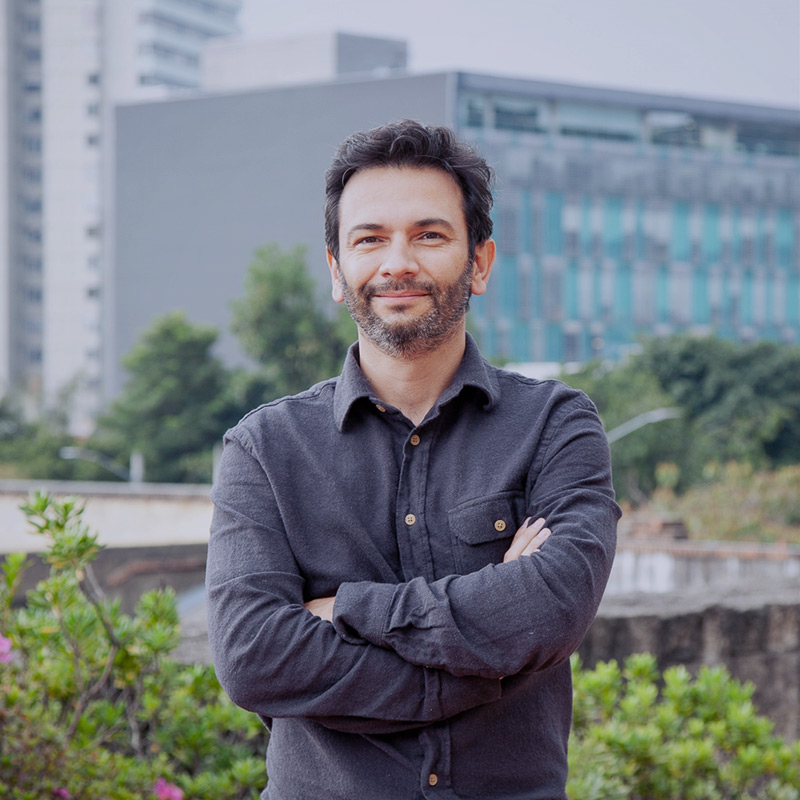
Bonnie Hancock is a Professor of Practice in the Department of Accounting and Executive Director of the Enterprise Risk Management Initiative at North Carolina State University's Poole College of Management. She holds an MS in Taxation from Georgetown University (1989). Her expertise covers: Corporate governance frameworks and compliance Business and asset valuation methodologies Personal finance strategies and wealth management Enterprise risk assessment and mitigation She provides expert commentary on economic policy programs including the Paycheck Protection Program and credit card market trends.
Lara Mauri is a Postdoctoral Researcher in Computer Science at the Department of Computer Science, University of Milan, where she is a member of the SEcure Service-oriented Architectures Research Lab. She currently oversees the HH4AI project at Human Hall, focusing on AI-human rights impact assessment frameworks. Her educational background includes a Ph.D. in Computer Science (dissertation in Machine Learning security), a Master's degree in Information Security, and a Bachelor's degree in Computer Science, all earned summa cum laude from the University of Milan. Dr. Mauri's research spans several critical areas at the intersection of artificial intelligence and security. Her primary interests include Artificial Intelligence security , Adversarial Machine Learning , Distributed Ledger Technology , and Data Protection and Privacy . Her work demonstrates particular expertise in developing security frameworks for machine learning systems and analyzing blockchain technologies. Analysis of her publication record from 2018-2025 reveals a clear research trajectory moving from foundational blockchain analysis toward increasingly sophisticated AI security frameworks, culminating in her current work on human rights impact assessment for AI systems under the EU AI Act. Her research shows consistent contributions to both theoretical security frameworks and practical implementation approaches. Her scientific contributions focus on cybersecurity and AI ethics, with particular emphasis on: Machine Learning security frameworks Blockchain and distributed ledger technologies AI ethics and regulatory compliance Critical infrastructure protection As lead researcher on the HH4AI project, Dr. Mauri directs interdisciplinary work connecting technical AI development with human rights considerations, particularly within the context of the European regulatory landscape. Her research lab focuses on developing methodological approaches to assess potential human rights impacts of AI systems before deployment.
Mr. Linus Hoffmann is a Lecturer in the Law department at the University of Strathclyde, affiliated with the Faculty of Humanities & Social Sciences. His research employs law & economics frameworks to analyze competition, commodification, and distribution dynamics in the digital economy. Key focuses include digital platforms' strategies for controlling and monetizing information, competition law enforcement's impact on market landscapes, and the broader commodification of digital resources. Recent work explores how the separation of 'noise' from relevant information in cyberspace becomes a commercialized asset. He teaches courses on competition law, law & economics, and company law, including specialized seminars like 'Competition Law and the Digital Economy' and 'Law & Economics for Digital Markets.' His publications span academic journals and policy contributions, including analysis of the EU Digital Markets Act and House of Lords Digital Assets Bill evidence. Hoffmann seeks interdisciplinary collaborations with computer scientists specializing in NLP for future projects.
Mason Mathews is an Assistant Research Professor at the Knowledge Exchange for Resilience (KER) within Arizona State University's School of Geographical Sciences and Urban Planning. He is affiliated with the Spatial Analysis Research Center (SPARC). His work focuses on social networks, social capital, and geographic information systems (GIS) to study community resilience, disaster management, and cross-organizational collaboration. He has developed tools such as the SSEER Map and Global Hazards and Disaster Center Mapping Platform to enhance research collaboration globally. Education: PhD in Interdisciplinary Ecology (Human Geography), University of Florida MA in International Affairs – Natural Resources and Sustainable Development, American University and United Nations University for Peace B.S. in Natural Resource Recreation and Tourism, Colorado State University Research Interests: Mason explores how social networks and GIS can improve community responses to environmental, economic, and social shocks. He studies university-community partnerships, disaster resilience, and Latin America-focused social movements. His work emphasizes creating practical tools for collaboration and disaster preparedness. Key Projects: Development of the SSEER Census Survey and Mapping Tool Global Hazards and Disaster Center Mapping Platform Analysis of VOAD collaboration in Arkansas and Nebraska Studies on social capital dynamics in the Brazilian Amazon Advising & Grants: While no formal students are listed, Mason advises projects related to disaster research and collaboration. His work is funded through partnerships with institutions like the Natural Hazard Center and Save the Children – US. Labs/Teams: SPARC and KER are central to his research activities, alongside collaborations with global disaster research networks.
Daniel Mantilla García is an Associate Professor at the School of Management, Universidad de los Andes, Colombia, and a research associate at Netspar (Netherlands) and EDHEC-Risk Institute (France). He holds a PhD and MSc in Finance from EDHEC Business School and an Industrial Engineering degree from Universidad de los Andes. His career bridges academia and industry, with prior roles as Head of Research at Optimal Asset Management (California) and Head of R&D at Koris International (France), where he developed investment strategies for pension funds and institutional investors. PhD in Finance – EDHEC Business School, France MSc in Risk & Asset Management – EDHEC Business School, France Industrial Engineering – Universidad de los Andes, Colombia His research centers on long-term investment strategies, pension systems, portfolio optimization, and regulatory design. He investigates how pension funds can better align incentives with retiree outcomes, improve retirement income security, and manage interest rate and market risks. His work emphasizes practical solutions such as retirement bonds, SELFIES, and target-income frameworks that integrate accumulation and payout phases. His recent publications (2021–2024) reveal a consistent focus on redefining performance metrics, fee transparency, funding ratio measurement, and regulatory incentives in defined contribution systems. These works advocate for a shift from asset-centric to income-centric pension management, supported by empirical modeling and policy recommendations. Daniel has contributed to major policy discussions through seminars with Colombia’s Financial Superintendency and international conferences (e.g., BALAS, AIOS-IDB). His opinion columns address pressing questions about the future of pension systems in Latin America. Research Associate, Netspar – Network for Studies on Pensions, Aging and Retirement Research Associate, EDHEC-Risk Institute Project Lead – 'Target Pensions', funded by Inter-American Development Bank (BID) Advisor to graduate theses on retirement bonds and pension reform He actively supervises students and leads impactful research that bridges academic rigor and real-world application in pension policy and financial innovation.
Dr Aaron Gracey is a visiting lecturer at Buckinghamshire New University and Southampton Universities, teaching on the MSc Managing Organisational Risk and Resilience program. He is affiliated with the Faculty of Arts, Business and Social Sciences and contributes as a part-time academic with deep industry experience in resilience and emergency management. PhD in Organisational Resilience MSc in Organisational Change Management MSc in Executive Leadership and Management MSc in International Politics, Strategic Relations and Modern Conflict PGCE in Adult Learning Dr Gracey's research and professional work focus on organisational resilience, crisis management, business continuity, risk assessment, and military training innovation . His interdisciplinary approach bridges public sector security, transportation infrastructure, and educational reform. He has pioneered the use of virtual reality in military training and developed the Organisational Resilience Maturity System for benchmarking resilience capabilities. His recent publications reflect a strong trend in critical infrastructure resilience, national preparedness, and organisational culture change , particularly within the rail and defence sectors. Themes include cross-sector collaboration, emergency planning, and standards development. Certified Business Continuity Practitioner (DRI) Contributor to UK Organisational Resilience standard (BS:65000) Developer of Resilience Maturity Model Leader in virtual reality military training innovation Dr Gracey advises on national resilience frameworks and has led major cross-industry programs in the UK rail sector. He has not formally advised PhD or Master’s students in academia but mentors professionals through industry training and DRI programs. He is involved in the MoD Apprenticeship programme and military education reform. He is actively involved in the UK Resilience Association as Vice-chair and contributes to military education through 100 Regiment Royal Artillery. His work integrates academic research with real-world implementation in both government and industry resilience programs.
Prof. Dubravka Klasiček is a full professor at the Department of Civil and Family Law, Faculty of Law, JJ Strossmayer University of Osijek. She has been employed there since 2001, becoming an associate professor in 2019. Her research focuses on inheritance law, obligation law, and the impact of digital technologies on civil law, with a recent emphasis on animal law and digital inheritance. Education: Bachelor of Law (2001), Faculty of Law in Osijek Doctorate (2011), Faculty of Law in Zagreb (thesis: "Forced Share as a Limitation of Freedom of Testation" ) Teaching: She instructs courses such as Civil Law 1 , Civil Law and Technology , and supervises doctoral programs. Her lectures address modern challenges like digital contracts, AI in legal frameworks, and cyber law. Research interests: Her work bridges traditional civil law with digital age challenges, including: Legal status of digital assets in inheritance AI impact on contractual validity Animal rights within property law frameworks EU legal modernization strategies Grants and collaborations: While specific grants aren’t listed, her active participation in international conferences indicates sustained academic partnerships. She frequently contributes to EU law harmonization initiatives and interdisciplinary projects at the Faculty of Economics.
Prof. Marcus Tiggs is an Adjunct Professor of Law at the School of Law, University of West Los Angeles (UWLA), specializing in Bankruptcy Law since 2001. A retired U.S. Army Lt. Col. with combat experience in Afghanistan (OEF 08-09), he is also a Bronze Star recipient. He holds a B.A. in French & Broadcasting from Pepperdine University (1984) and a J.D. from UWLA School of Law (1988). His practice focuses exclusively on bankruptcy litigation and appeals, representing debtors, creditors, and trustees. He serves as a Certified Specialist in Bankruptcy Law by the State Bar of California and maintains active membership in legal organizations such as the Central District Consumer Bankruptcy Attorneys Association. His pro bono efforts include volunteering with Public Counsel’s Debtor Assistance Project and the Mesereau, Ephraim, Villaraigosa (MEV) Legal Clinic. Professor Tiggs has published influential cases including In re Walker (2016) and In re Dettmar (1995), reflecting expertise in appellate bankruptcy law and debtor-creditor dynamics. His accolades include AV Preeminent rating and multiple nominations as a 'Top Bankruptcy Lawyer.' Community involvement spans over 12 years on Fiesta La Ballona Committee (Past Chair), two terms as Culver City Planning Commissioner, and board roles in local heritage initiatives. His teaching emphasizes practical application of bankruptcy procedures and legal strategy.
Prof. Dr. Sophie Schönberger is a Professor of Public Law, Art, and Cultural Law at Heinrich Heine University Düsseldorf, where she has held her chair since the winter semester 2018/19. She is also co-director of the Institute for German and International Party Law and Party Research (PRuF). Previously, she was Chair of Constitutional and Administrative Law, Media Law, and Art and Cultural Law at the University of Konstanz (2012–2017). She has held fellowships at the Advanced Study Center for Humanities in Konstanz (2017/18) and the Käte Hamburger Center for Advanced Study in the Humanities "Law as Culture" (2021/22). She studied law in Berlin, Rome, and Paris, earning her doctorate from Humboldt University of Berlin in 2006. After legal traineeship in Berlin, Venice, and Paris, she worked at Ludwig Maximilian University of Munich, completing her habilitation there in 2012 with a thesis on "Public Cultural Law. Tangible and Intangible Cultural Works between Protection, Promotion, and Value Creation" . Her research interests focus on public cultural law, constitutional and administrative law, media law, art law, and political parties law. She examines topics such as cultural heritage protection, the restitution of Nazi-looted art and cultural assets, democracy studies, legal frameworks for political parties, and the intersection of law with cultural and societal issues. Her interdisciplinary approach bridges legal theory with practical governance and cultural policy. Recent publications explore themes including the legal challenges of cultural restitution, the dynamics of political parties in democratic systems, and the emotive turn in constitutional law. These works reflect her rigorous engagement with both historical injustices and contemporary governance challenges. In addition to her academic leadership at PRuF, her work encompasses grants and collaborative projects, particularly in strengthening legal frameworks for political parties in Mongolia, South Africa, Tanzania, Thailand, and Venezuela. She leads initiatives analyzing political party systems and democratic governance internationally, contributing to global debates on institutional resilience and legal reform.
Patrick Butchard is a Senior Lecturer in Law at the University of Liverpool's School of Law, Criminology, and Policing, and an International Law Researcher for the UK Parliament's House of Commons Library (since 2022). His expertise lies in international law, conflict and security law, and the Responsibility to Protect (R2P), with a focus on the legal frameworks governing state use of force, UN Security Council failures, and post-conflict accountability. He authored The Responsibility to Protect and the Failures of the United Nations Security Council (2022) and edited International Law after the Ukraine War (2025). Previously, he served as General Editor of the Journal on the Use of Force and International Law 's Digest of State Practice (2018–2022). His research includes analyzing the UN Charter's Article 2(4) prohibition on force, the legal implications of Russia's invasion of Ukraine, and global responses to atrocity crimes. Butchard has advised the APCR2P on UN General Assembly powers to address atrocity crimes and provided expert commentary for BBC Radio, BBC Merseyside, and Insider. Teaching includes courses on public law, human rights, and international business law. He contributes to the UN Sustainable Development Goals, particularly regarding global peace and justice. His work bridges academic research, parliamentary policy analysis, and international legal practice.
Anne Rozan is a Professor at the École Nationale du Génie de l'Eau et de l'Environnement de Strasbourg (ENGEES), affiliated with the University of Strasbourg and the SAGE laboratory (Sociétés, acteurs, gouvernement en Europe). Her research bridges environmental economics, behavioral economics, and public policy, focusing on the valuation of ecosystem services, regulatory design, and sustainable environmental management. Her research interests include environmental economics, experimental economics, behavioral economics, contingent valuation, agro-climatic risk, and public goods. She employs experimental and stated preference methods to understand consumer and public behavior in environmental decision-making, with applications in water infrastructure, biodiversity conservation, and climate risk management. Her recent publications reflect a strong trend in interdisciplinary environmental valuation, combining economic modeling with ecological assessment tools. Key themes include the economic evaluation of constructed wetlands, biodiversity in agroforestry systems, flood vulnerability, and public preferences for infrastructure management. She frequently uses choice experiments and contingent valuation to inform policy. Anne Rozan has not been explicitly listed with scientific awards in the provided text. She teaches economics across the three-year engineering cycle at ENGEES and in co-accredited master’s programs such as the ISIE, Environmental Geography, and DGEDD masters at the University of Strasbourg. While no direct list of advisees is provided, her extensive publication record and supervisory role in collaborative research suggest active mentorship. She has contributed to national and international research programs on water governance, ecological restoration, and environmental policy evaluation. Her work is closely tied to the SAGE laboratory and ENGEES, where she contributes to research on environmental governance, risk management, and sustainable development. She has been involved in field experiments, policy evaluations, and interdisciplinary projects on topics ranging from brownfield reuse to agri-environmental contracts.
Mohammed Nadeem is an Adjunct Professor (part-time) at the University of San Francisco, specializing in marketing disciplines. He holds a Ph.D. from Union Institute & University (2002) and has over two decades of academic and industry experience. His research focuses on consumer behavior, marketing analytics, and the evolving role of Chief Marketing Officers (CMOs), particularly in cybersecurity branding and post-pandemic strategies. Nadeem has received prestigious awards including the Fulbright Scholar Award (2013) and Distinguished Teaching Award (2015). He actively serves on committees such as the Distinguished Adjunct Teaching Award Committee and Policy Board of the Part-Time Faculty Association. Nadeem has supervised numerous Ph.D. students and currently acts as an external examiner at Indian universities like Visvesvaraya Technological University. His professional development includes certifications from Harvard University’s Digital Marketing program (2013) and Stanford’s Demand Creation course (2017). Research themes emphasize ethical AI in marketing, hybrid workforce strategies, and leveraging machine learning for digital innovation. His articles span topics from cyber-security branding to Bitcoin’s impact on social entrepreneurship. Nadeem advocates for an entrepreneurial mindset in leadership and integrates community engagement into academic practice.
Catherine K. Ettman is an Assistant Professor at the Johns Hopkins Bloomberg School of Public Health in the Department of Health Policy and Management. She is affiliated with the Center for Health Services and Outcomes Research (CHSOR), the Center for Mental Health and Addiction Policy, and the Hopkins Business of Health Initiative. Education: PhD, Brown University School of Public Health, 2022 AB, Princeton University, 2013 Dr. Ettman’s research focuses on population mental health, social determinants of health, health policy, and health disparities, particularly how economic factors and assets influence mental health outcomes. Her work has extensively examined the mental health impact of the COVID-19 pandemic across different socioeconomic groups. Through longitudinal studies and policy analyses, she investigates depression, anxiety, and health care access, with a focus on equity and resilience. Her recent publications reveal a strong trend in analyzing mental health through the lens of financial strain, racial disparities, and policy interventions. She frequently employs large-scale datasets and collaborates with leading public health researchers to assess national trends and inform health policy. Scientific Awards: Best Poster Award, Society for Epidemiologic Research, 2024 Top Cited Article 2021-2022, Journal of Traumatic Stress, 2022 Top Ten Most Talked About Articles of 2020, JAMA Network Open, 2020 The Lancet Cover for Access to Health Care and the US 2020 Election, 2020 PROSE Award (Nursing & Allied Health) for Urban Health, 2020 BUSPH Spot Award for operational excellence, 2020 American Journal of Nursing Book of the Year Award (Environmental Health) for Urban Health, 2019 Dr. Ettman has advised and collaborated on multiple high-impact research projects, particularly on mental health during the pandemic. She has contributed to influential books on urban health and migration. Her work has been widely disseminated and covered by news media, indicating significant public and academic engagement. She does not appear to lead a formal lab but is embedded in major research centers focused on health outcomes and policy.
Christine Farion is an Instructor in the Faculty of Computer Science at Dalhousie University, Nova Scotia, Canada. She brings extensive experience in wearable technologies, prototyping, and microcontrollers for impactful human-centered interactions. Previously, she served as a Post Graduate Lecturer at The Glasgow School of Art, UK, where she taught innovation and interaction design with a focus on physical computing and electronics. PhD in Media & Arts Technology, Queen Mary University of London (EPSRC-funded) MSc in Creative Technology (Distinction), Leeds Beckett University, UK Her research focuses on enhancing quality of life through wearable technologies, particularly using conductive fabrics and experience-centred design. She specializes in creating interactive systems that support interpersonal communication and community well-being, often targeting accessibility for individuals with sensory impairments. Christine's recent work spans wearable prototypes—from clap-sensitive gloves to social distancing hats—using platforms like Arduino, ESP32, and Circuit Playground. Her projects emphasize participatory design, rapid prototyping, and open-source sharing. She has authored The Ultimate Guide to Informed Wearables and developed over 50 hands-on activities for building intelligent wearables. Her scientific recognition includes a 4-year EPSRC scholarship and project funding from the Arts Council and British Council (UK). 4-year EPSRC scholarship Arts Council, UK funding British Council, UK funding Christine actively mentors through tutorials, online courses (including a free soldering course on Patreon), and public installations. She has collaborated on projects like Sonic Bodies for visually impaired audiences and developed apps for cultural institutions. Her work bridges academic research, maker culture, and community engagement. She leads initiatives in physical computing education and maintains active involvement in DIY electronics, with a focus on accessibility and creative reuse. Her lab-style practice emphasizes iterative prototyping and open sharing of techniques.
Dr. Silvana Canales Gutierrez is a Lecturer in the Department of Private Law at the University of Girona, Spain, where she leads research in Private International Law. Her work bridges European Union regulations and Latin American legal systems, focusing on digital innovation in tourism, cryptocurrency, and consumer rights. She directs the Private International Law division and collaborates with the Grup de Recerca en Història de la Ciència Jurídica. Education: PhD in Law (Universitat Rovira i Virgili) - cum laude with international mention and extraordinary award Master in Business and Contract Law (URV) - Honors and extraordinary award Master in Law (National University of Colombia) - Highest distinction Specialization in Commercial Law (Santo Tomás University) Law Degree (Santo Tomás University) Research Focus: Her interdisciplinary research examines legal challenges in digital economies, including cryptocurrency frameworks, tourist accommodation platforms, cross-border consumer disputes, and sustainable development goals. She critically analyzes EU regulations alongside Latin American jurisdictions (Colombia, Mexico, Argentina, Brazil) in contractual, property, and inheritance matters. Publication Trends: Recent works (2019-2024) demonstrate a strong emphasis on platform economy regulation, cryptocurrency legalization, and pandemic-era tourism law. Over 60% of publications address digital consumer protection mechanisms, while 30% explore blockchain applications in property rights. Comparative EU-Latin American analyses feature prominently. Awards & Honors: Extraordinary Doctoral Award Extraordinary Master's Award Research Projects: Active participation in seven funded initiatives including: PID2020-112609GB-I00: Real rights in Private International Law (€25,500, EU-funded) 2021 SGR 00170: Transformative Private Law (Catalan Government) Tourist Housing Ordinance Project for Salou City Council Collaborative Housing (Spanish Ministry of Education)